
Concrete Mixing Plant Mixer Selection: Twin-Shaft Power, Slump, Discharge
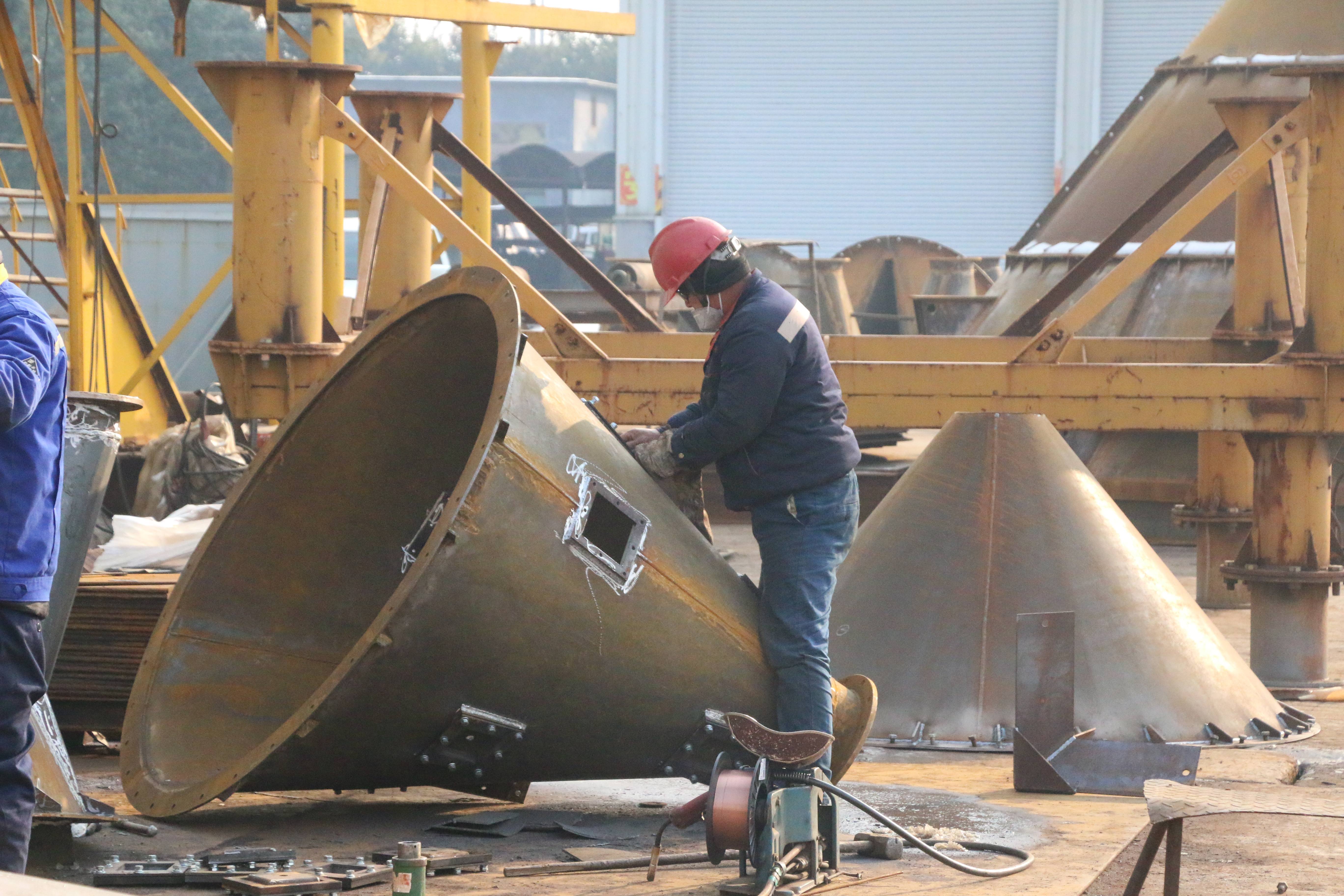
Manufacturing base of Hangzhou Jusheng Machinery & Equipment Co., Ltd. (DKTEC), where HZS series concrete mixing plants and their main mixing units are pre-assembled.
Which mixer is best for a concrete batching plant? For commercial ready-mix concrete and large-scale concrete production, a twin-shaft compulsory mixer is the practical answer — it mixes fast and intensively at high throughput. Where excellent mixing uniformity matters more than throughput, including precast concrete, dry concrete and special concrete, a planetary mixer is often the more suitable choice. Everything after that answer is a matching exercise: batch size against required output, motor power against the material, slump control against the mix design, and discharge geometry against the trucks waiting below.
This guide is written for buyers at the decision-to-execution stage — the point where the site layout is close to fixed and the remaining question is which main mixing unit goes into the tower, how it should be powered, how homogeneity will be controlled, and how the unit will be kept supplied over the years the plant is expected to run.
The Real Risk: A Plant Rated at 120 m³/h Says Nothing About Its Mixer
A concrete mixing plant is quoted in cubic metres per hour, but that number is produced by three things working together: the mixer's batch size, the length of the mixing and discharge cycle, and the speed at which the batching system refills the skip, hopper or belt. Mixers of the same nominal class behave very differently once the mix design changes. A buyer who compares suppliers on a single line such as “120 m³/h” is comparing a system number, not a mixing capability.
Three failure patterns repeat in this stage of procurement:
- Power deficit under a heavier mix. A plant that produces fine results on a lean commercial mix can lose cycle time and mixing uniformity once the buyer moves to a richer mix, higher mineral powder content, or manufactured sand. The visible symptom is longer mixing time, not a broken machine.
- Uniformity risk in special concrete. Precast, dry and special concrete place uniformity above throughput. Specifying a high-throughput twin-shaft unit for a mix that really needs planetary action creates quality problems that no amount of operator experience fully removes.
- Wear and downtime risk. The mixer is the highest-wear unit in the plant. Shaft-end sealing, liner and arm quality determine whether the plant runs continuously or spends days waiting for parts.
The correct sequence is therefore to specify the mixer against the concrete, the duty cycle and the supply chain — not against the plant brochure.
Industry Background: Mixer Specification Has Become a Procurement Discipline
The mixer is the single component that decides whether a concrete mixing plant reaches its rated output, and the market data shows why the decision now carries more financial weight than it did a decade ago.
The global concrete batch plants market was valued at USD 3.8 billion in 2024, according to Global Market Insights. Asia-Pacific accounted for a 38% revenue share of the global concrete batch plants market in 2024, per Credence Research. On the supply side, China's exports of concrete or mortar mixers under HS code 847431 reached USD 276.9 million in 2023, based on UN Comtrade / WITS data. Within the mobile segment, infrastructure accounted for 39.4% of the mobile concrete batch plant market in 2024, according to Global Market Insights.
Standardisation matters here as well. ISO 19720-1:2017 (published 22 June 2017) establishes terminology and commercial specifications for concrete mixing and batching plants. For a buyer, the practical value of that standard is vocabulary: batch size, plant designation and commercial specification can be written the same way across quotations, so two offers can be compared line by line rather than slogan by slogan.
Two technical shifts shape modern mixer selection. First, control systems have moved from single-station, single-control operation toward data-integrated packages. Second, aggregate supply has changed: manufactured sand, fine sand and mineral powder now appear in mix designs where washed natural aggregate once dominated. Both shifts push the mixer from a mechanical commodity into an engineering choice.
Detailed Solution: Matching Twin-Shaft Power, Slump and Discharge to Your Mix
Start from the concrete, not the catalogue
Twin-shaft mixers are widely used for ready-mix concrete and large-scale concrete production because they provide fast and intensive mixing with high throughput. Planetary mixers are particularly suitable for applications requiring excellent mixing uniformity, including precast concrete, dry concrete and special concrete. A plant that allows the main mixing unit to be selected from several brands according to concrete type, output and project requirements gives the buyer a way to match machinery to mix design instead of accepting whatever the supplier's own product line happens to offer.
The practical rule is straightforward: for commercial ready-mix and large infrastructure projects, a twin-shaft mixer is generally a practical choice. For precast, dry or special concrete requiring very high mixing uniformity, a planetary mixer may be more suitable.
Main mixing unit options and what each one buys you
A twin-shaft main unit is normally selected from a family of sizes rather than a single model, and each size class in that family carries different mass, arm count and price position.
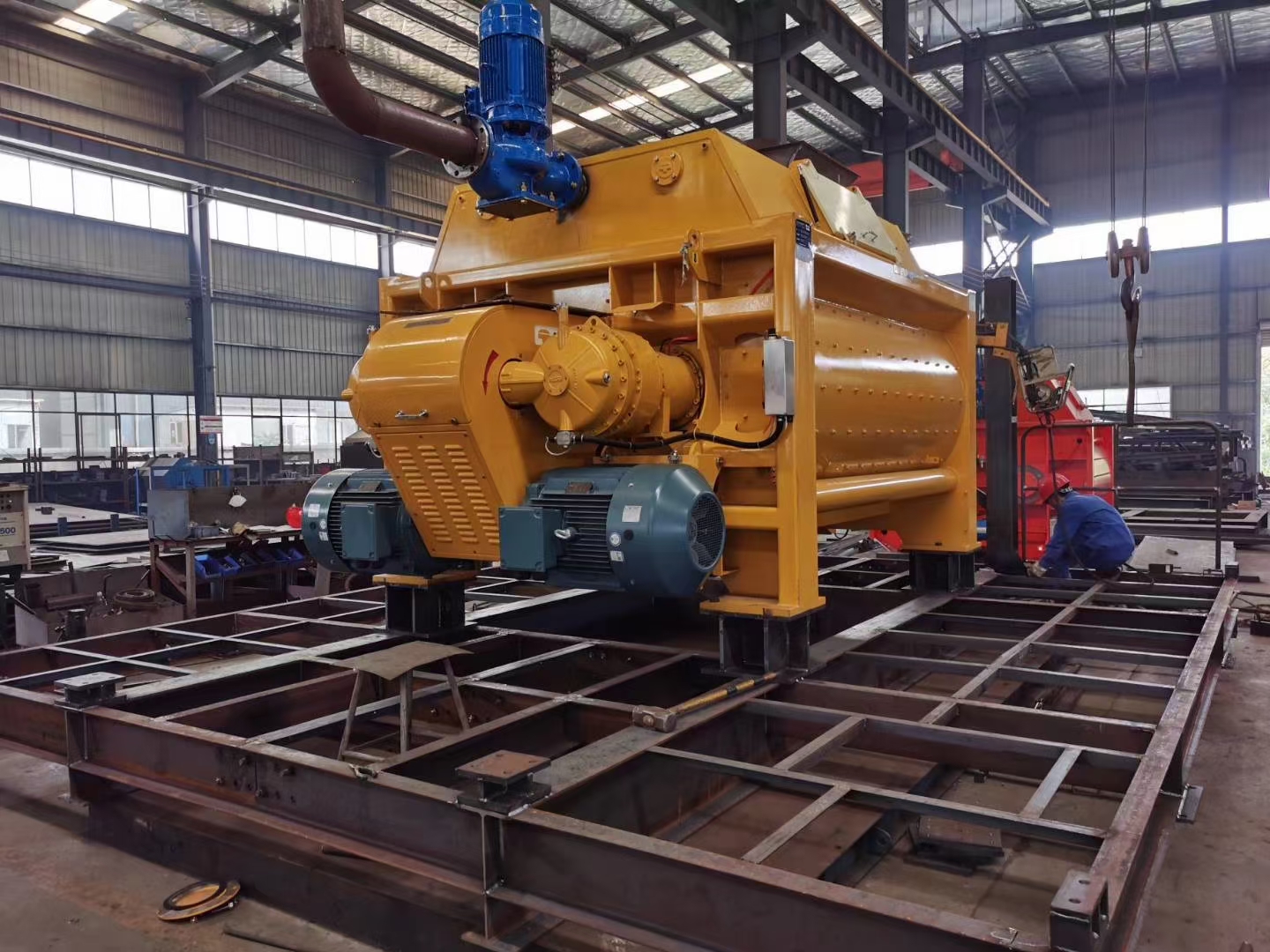
On an HZS120-class plant, the standard configuration is a SICOMA MAO3000/2000 twin-shaft mixer with dual 37 kW motors (74 kW total), a 2000 L mixing capacity, an integral hexagonal main shaft and 14 high-strength mixing arms arranged as 2 × 7. The unit weighs approximately 7,500 kg, which reflects the structural mass behind the shaft and drum. The same class of machine is also supplied in a 3000 L configuration, the SICOMA MAO4500/3000, with dual 55 kW motors (110 kW total), 2 × 8 mixing arms and a machine weight of 9,700 kg.
Where a project specifies a German-brand main unit, the comparable option is the BHS DKXS3.0: the same 4500/3000 L capacity and the same dual 55 kW motor rating, but with dual SOG315 reducers, 2 × 9 mixing arms and a machine weight of 10,500–10,900 kg. It is positioned as a high-end precision mixer, and its unit cost is approximately twice that of the SICOMA MAO4500/3000. That price gap is a configuration decision, not a quality verdict — both are twin-shaft compulsory mixers with dual motors, OEM gearboxes and automatic lubrication pumps.
SICOMA units use a hexagonal mixing shaft with straight alloy arms; liners, arms and shaft seals for the SICOMA range cost significantly less than the equivalent BHS OEM parts, and replacement items correspond directly to the machine bill of materials with ready stock availability. For export-bound plants, SICOMA main units are supported in multiple voltage and frequency configurations — 380V / 220V / 400V / 440V, 50 / 60 Hz.
Power per unit capacity: the number that travels across size classes
Motor power alone is a poor comparison basis because it rises with mixer size. Power per unit of mixing capacity is more useful.
- SICOMA MAO3000/2000: 74 kW ÷ 2.0 m³ ≈ 37 kW/m³
- SICOMA MAO4500/3000: 110 kW ÷ 3.0 m³ ≈ 36.7 kW/m³
- BHS DKXS3.0: 110 kW ÷ 3.0 m³ ≈ 36.7 kW/m³
The values are effectively identical, which tells a buyer something important: choosing a larger class does not buy more nominal power intensity. What a larger class buys is torque reserve, structural mass and a larger batch, which is what actually protects cycle time when the mix gets heavier. Below this mainstream range, small concrete batching plants and skip hoist concrete mixing plants commonly run a 1 m³ twin-shaft mixer driven by 2 × 22 kW motors — a configuration sized for lower throughput and lighter mixes rather than for continuous commercial output.
At plant level the same logic appears. A stationary HZS120 plant has an installed power of 210 kW against a rated 120 m³/h, giving a specific energy figure of approximately 1.75 kWh/m³. The mobile HZS120Y delivers the same 120 m³/h from the same 2000 L mixer class but with 160 kW installed, which works out to approximately 1.33 kWh/m³ — roughly 24% lower installed power for the same nominal capacity.
Manufactured sand, fine sand and mineral powder: where the mixer earns its money
Fine and powdery materials are the point at which a mixer specification starts to matter more than a plant specification. Manufactured sand, fine sand and mineral powder behave differently from washed natural coarse aggregate: higher fines content, greater surface area, and a stronger tendency to bridge in hoppers and cling to chute walls.
Dual-pivot internal vibration is designed for exactly these materials. Internal vibration technology is reported to improve vibration effectiveness by 20%, which keeps fine and powdery material moving into the weighing hopper instead of accumulating on the walls. That matters twice over: it protects weighing accuracy, and it protects the batching cycle from slow refills that quietly cut hourly output.
Material flow geometry should be checked together with the mixer. Seamless material flow design in DKTEC-equipped plants is reported to increase belt conveying efficiency by 20% and to reduce the time required to discharge the first load by 10% — both effects show up as recovered cycle time rather than as a headline specification.
Slump control: reading the mix from the motor current curve
The industry default is manual testing after the concrete leaves the plant. Online slump monitoring based on the mixer's motor current curve is the alternative that has changed how ready-mix producers manage consistency. The current drawn by the twin-shaft motors responds to the resistance of the mix inside the drum, so the current curve acts as a continuous proxy for consistency during the batch rather than a snapshot after discharge.
Real-time, online slump monitoring is available as part of the intelligent control package described below, alongside other data functions such as intelligent powder silo level monitoring at ±2% accuracy relative to maximum capacity. For a plant running manufactured-sand mixes, where water demand varies from delivery to delivery, in-batch visibility is the difference between correcting a drift during production and rejecting it after the truck has left.
Boundary condition: current-based slump monitoring is a proxy, not a replacement for laboratory slump testing against the governing acceptance standard. Use it for trend control, alarm thresholds and operator guidance.
Discharge: the interface that decides real cycle time
Rated discharge height on this class of plant is 3.8 m or above, and that figure is set by the mixer truck fleet rather than by the mixer. If trucks must reposition under the chute, cycle time is lost regardless of how fast the mixer mixes. Combining an adequate discharge height with seamless material flow reduces the time to discharge the first load by 10%, which compounds across a shift.
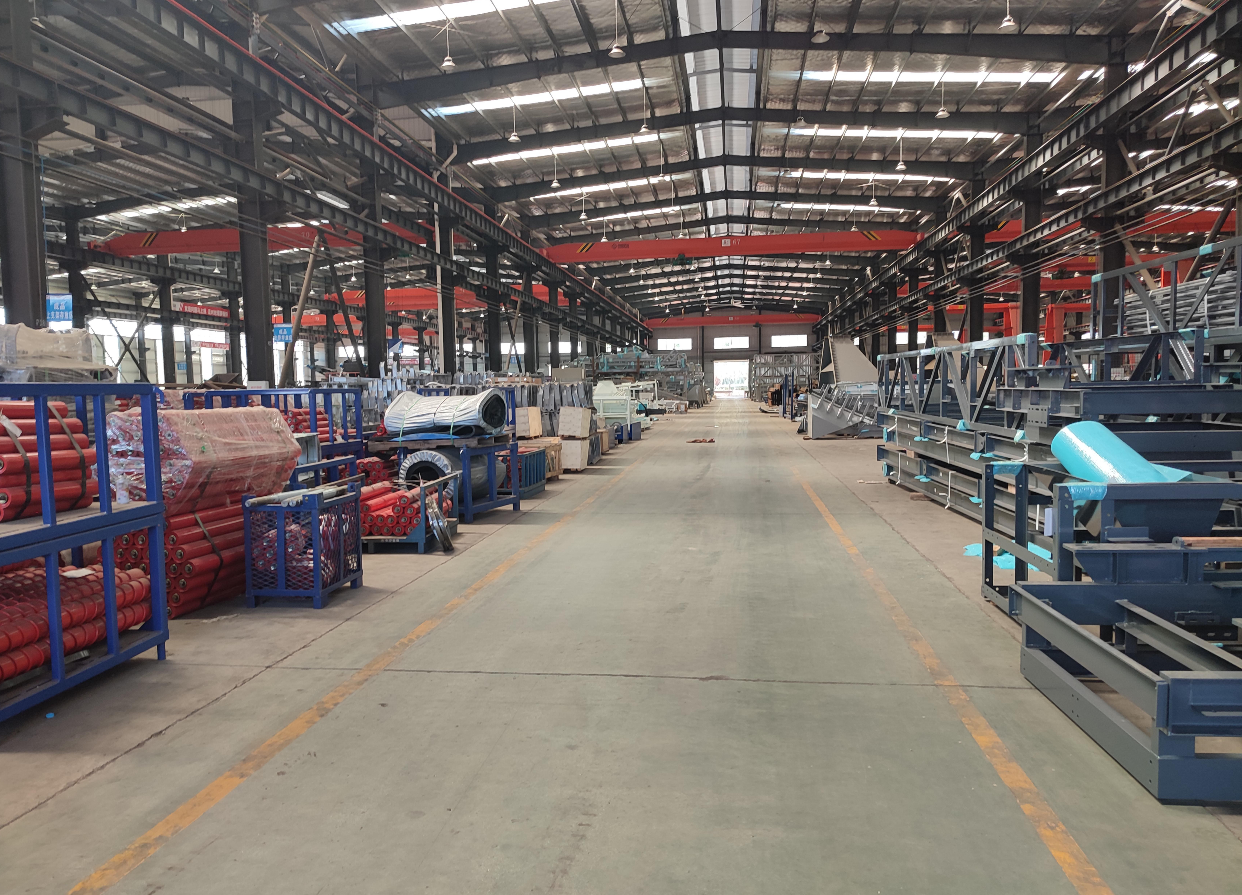
Assembly workshop: main mixing units, skip hoists and batching frames are integrated and debugged before shipment.
Step-by-Step Breakdown: A Mixer Selection Workflow
- Convert required output into a batch size. Divide the required hourly production by the realistic number of batches per hour for your mix design, not by a theoretical cycle. This produces the mixing capacity the mixer must hold. For reference, common plant capacities in the market are 25, 35, 60, 90, 120, 180, 240 and 270 m³/h; small construction projects typically fall in the 25–60 m³/h range, commercial ready-mix in the 60–180 m³/h range, and large infrastructure projects in the 120–270+ m³/h range.
- Set a power floor, not a power target. Use power per unit mixing capacity as the comparable figure. A 2000 L mixer at 74 kW and a 3000 L mixer at 110 kW both land near 37 kW/m³, so the decision is which class of machine you need, not which has the larger motor figure.
- Test the candidate mixer against your actual aggregate. If your batching plant will run manufactured sand, fine sand or mineral powder, confirm how the unit handles fines — internal vibration configuration, hopper geometry, chute slope and belt transfer points.
- Decide how slump will be controlled. Choose between manual post-discharge testing and online slump monitoring based on the mixer motor current curve, and define how the readings will be used in production.
- Confirm discharge geometry and cycle time. Match discharge height (3.8 m or above on this class of plant) and gate design to the actual truck fleet, and check first-load discharge time as part of the cycle calculation.
- Fix the wear-part and spare-part route before signing. Confirm liner, arm and shaft-seal part numbers correspond to the machine bill of materials, confirm whether parts come from the mixer OEM or the plant supplier, and confirm voltage/frequency configuration for the destination market (380V / 220V / 400V / 440V, 50 / 60 Hz).
- Validate with a pre-shipment test. Pre-shipment testing is the standard acceptance criterion for these plants, and it is the point at which mixing uniformity, weighing accuracy and discharge behaviour can be observed before the unit leaves the factory.
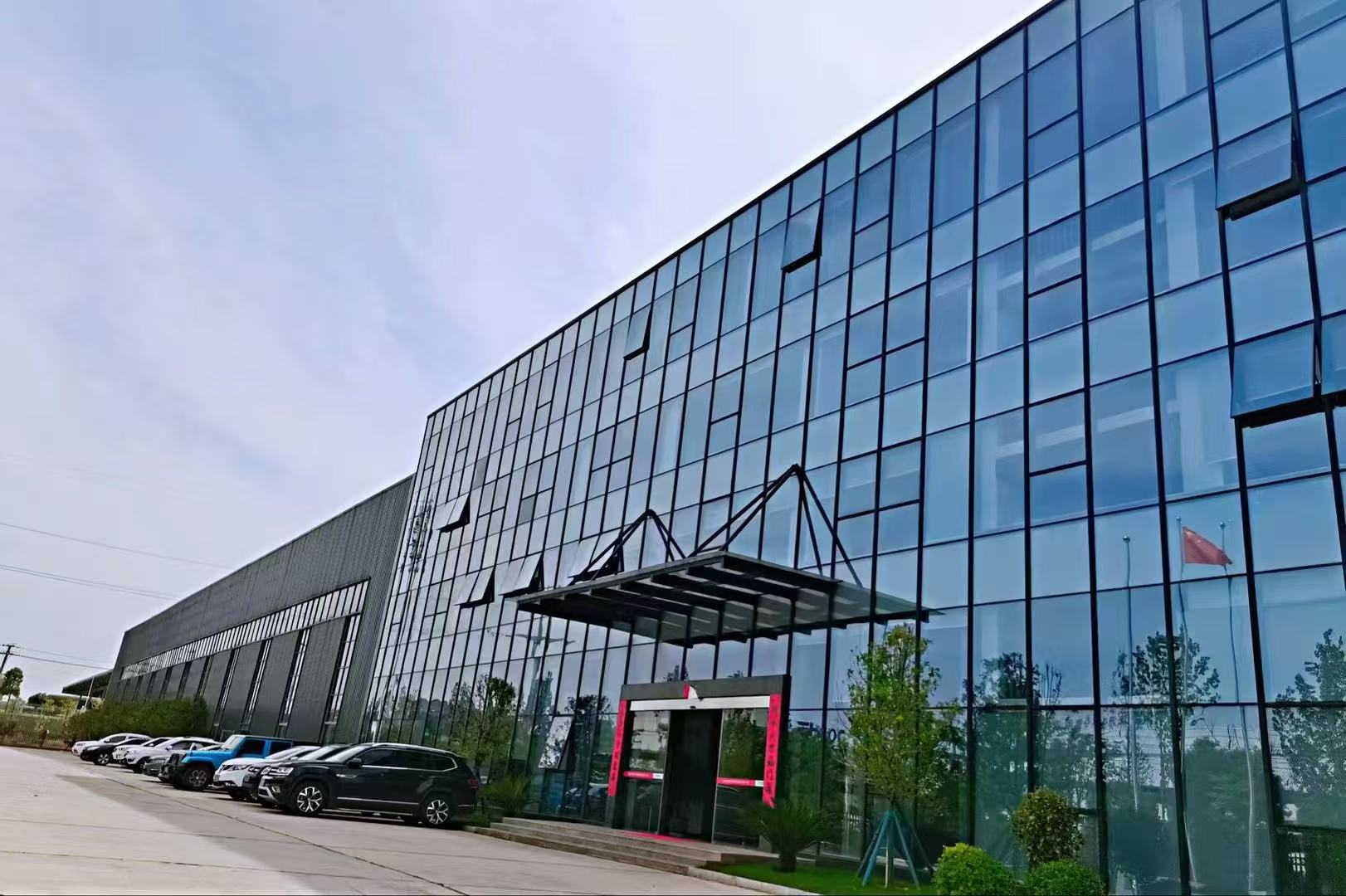
Production facility: modular, factory pre-assembled plant structures reduce on-site installation workload by 20% compared with site-welded construction.
Use Cases: Matching the Mixer Configuration to the Plant Type
Commercial ready-mix concrete batching plant
A ready-mix concrete batching plant running a continuous commercial schedule is the classic twin-shaft application. An HZS120-class plant with a SICOMA MAO3000/2000 main unit, aggregate weighing accuracy of ±2% and cement / fly ash weighing accuracy of ±1% covers mainstream commercial production; larger and medium commercial plants move to the 3000 L class where higher batch volume protects throughput.
Multi-plant and data-integrated operations
Where one operator must manage more than one station, the intelligent control package becomes relevant. Dual-control functionality for a single unit allows one operator to manage two mixing plants simultaneously, reducing labour cost by 50% based on the manufacturer's internal data. The same package includes intelligent powder silo level monitoring at ±2% accuracy relative to maximum capacity, real-time online slump monitoring based on the mixer motor current curve, and an ERP interface with PLC and mobile app access. This suits multi-plant group operations, commercial concrete producers and clients requiring data management or ERP integration.
Mobile and portable plants for phased projects
A mobile concrete batching plant (available as a portable beton plant configuration in some markets) suits highway and railway construction, phased projects and operations requiring frequent relocation. The HZS120Y integrates all components onto a single-piece chassis with axles and tyres, delivers the same 120 m³/h theoretical capacity with a 2000 L SICOMA or SDMIX 2.0 m³ mixer, and can be ready for operation approximately three days after arrival. Relocation requires no dismantling or heavy lifting in the same way a stationary unit does.
Small concrete batching plant and skip hoist plants
Small concrete batching plants and skip hoist concrete mixing plant configurations serve lower-throughput duties where continuous commercial output is not the objective. A 1 m³ twin-shaft mixer driven by 2 × 22 kW motors is the matching main unit at this scale.
Precast concrete mixing plant
A precast concrete mixing plant places mixing uniformity above throughput, and for precast, dry or special concrete a planetary mixer may be more suitable than a twin-shaft unit. In DKTEC configurations the mixer can be selected from SICOMA, BHS, SDMIX or DK options so that the main unit follows the concrete rather than the reverse.
Urban sites with environmental constraints
For urban ready-mix plants in markets with strict environmental regulation, the environmental package carries measurable specification points: forced membrane bag filters with dust removal efficiency of 99.9% or above, WAM SILOTOP series units with emissions below 10 mg/Nm³ using B.I.A.-certified filter media, an enclosed waiting hopper that reduces open area by 75%, a counter-current internal circulation air duct, and a rotary screw air compressor that reduces noise by 20 dB relative to piston alternatives. In markets where standard configurations still emit in the 20–50 mg/Nm³ range, this is a permitting issue rather than a comfort issue.
Comparison Table: Main Mixing Unit Options
| Main mixing unit | Mixing capacity | Motor power | Mixing arms | Machine weight | Power per unit capacity | Typical configuration position |
|---|---|---|---|---|---|---|
| SICOMA MAO3000/2000 | 3000 / 2000 L | 2 × 37 kW (74 kW total) | 2 × 7 alloy arms | Approx. 7,500 kg | ≈ 37 kW/m³ | Standard main unit on HZS120-class plants; commercial ready-mix; export projects |
| SICOMA MAO4500/3000 | 4500 / 3000 L | 2 × 55 kW (110 kW total) | 2 × 8 alloy arms | Approx. 9,700 kg | ≈ 36.7 kW/m³ | Large and medium commercial plants; high-output projects prioritising cost-performance |
| BHS DKXS3.0 | 4500 / 3000 L | 2 × 55 kW (110 kW total) | 2 × 9 arms | Approx. 10,500–10,900 kg | ≈ 36.7 kW/m³ | High-end project plants; projects specifying German brands or high-grade concrete; unit cost approx. twice that of SICOMA MAO4500/3000 |
Plant-level reference points: stationary versus mobile at the same capacity
| Parameter | HZS120 stationary | HZS120Y mobile |
|---|---|---|
| Theoretical capacity | 120 m³/h | 120 m³/h |
| Installed power | 210 kW | 160 kW |
| Main mixer | 2000 L (SICOMA MAO3.0 class, 37 kW × 2) | 2000 L (SICOMA / SDMIX 2.0 m³) |
| Approximate specific energy | ≈ 1.75 kWh/m³ | ≈ 1.33 kWh/m³ |
| Time to production after arrival | Significantly longer; civil foundations required | Approximately 3 days |
The Long-Term View: Mixer Choice as a Ten-Year Supply Decision
A main mixing unit is not a one-off purchase. It is the component that determines spare-parts dependency, service response and whether the plant can be kept running under an annual delivery schedule for a ready-mix contract.
Hangzhou Jusheng Machinery & Equipment Co., Ltd. (DKTEC) is a heavy industry enterprise founded in 2015 that develops, manufactures and services complete concrete mixing and mining machinery sets. The company operates a 120,000 m² facility with 430 employees, an annual output of 2,000 units, and a research and development team of 80 engineers. It serves markets in the Middle East, Southeast Asia, Africa, Europe, Central Asia, West Asia, Australia and South America, with approximately 80% of products exported. The company transitioned from trading to robot-assisted production of mixing stations in 2017.
For a mixer decision specifically, three long-term factors matter:
- Multi-brand component architecture. Because the main unit can be specified from SICOMA, BHS, SDMIX or DK, and screw conveyors and butterfly valves from SICOMA or WAM options, spare parts can be sourced from the component OEM or directly from the plant supplier. That structure reduces single-source supply-chain risk compared with a single-brand integrated plant.
- Standardised wear parts against a defined bill of materials. Liners, mixing arms and shaft seals that correspond exactly to the machine BOM are what keep an annual delivery schedule realistic; inconsistent part specifications are a common cause of extended downtime in plants assembled from mixed components.
- A single service chain through the equipment lifecycle. Customised solutions, equipment delivery, installation and commissioning, and lifelong maintenance are offered as one continuous service chain rather than separate transactions.
As an indication of pre-commitment risk, the commercial terms support a low-risk first step: the minimum order quantity is 1 unit, which allows a single-unit trial order before bulk purchasing. Standard incoterms for shipment are FOB and CIF. Payment for orders, including long-term and repeat orders, is structured as a 30% down payment by T/T with the full remaining balance settled before delivery. Pre-shipment testing is the standard acceptance criterion, which is also the natural point to validate mixing uniformity and discharge behaviour before the unit is shipped.
FAQ
Does ISO 19720-1:2017 affect how a mixer is specified for a concrete mixing plant?
ISO 19720-1:2017, published on 22 June 2017, establishes terminology and commercial specifications for concrete mixing and batching plants. It is a terminology and commercial specification standard rather than a performance-limit standard, so it does not prescribe a mixer model. Its practical effect is commercial: it gives buyers and suppliers a common vocabulary for batch size, plant designation and specification, which makes quotations from different suppliers directly comparable line by line. A buyer should still define output, mix design and acceptance testing independently of the standard.
Which mixer is best for a concrete batching plant?
Twin-shaft mixers are widely used for ready-mix concrete and large-scale concrete production because they provide fast and intensive mixing with high throughput. Planetary mixers are particularly suitable for applications requiring excellent mixing uniformity, including precast concrete, dry concrete and special concrete. A supplier able to configure SICOMA, BHS or other suitable mixer options according to concrete type, output and project requirements allows the main unit to follow the mix design. For commercial ready-mix and large infrastructure projects, a twin-shaft mixer is generally a practical choice; for precast, dry or special concrete demanding very high uniformity, a planetary mixer may be more suitable.
What are the purchasing terms and acceptance criteria for a batching plant order?
The minimum order quantity is 1 unit, which permits a single-unit trial order before bulk purchasing. Standard incoterms are FOB and CIF. Acceptance is based on pre-shipment testing. Payment terms are a 30% down payment by T/T with the full remaining payment made before delivery. For long-term and repeat concrete batching plant orders, the same structure applies: a 30% down payment by T/T, with the balance settled in full before delivery. These terms apply equally to single-unit orders and to repeat supply arrangements.
How can slump and mixing consistency be checked before the concrete leaves the plant?
Online slump monitoring based on the mixer's motor current curve provides real-time monitoring during the batch. The current drawn by the twin-shaft motors responds to the resistance of the mix, so the curve can be used as a continuous indicator of consistency instead of relying only on a manual test after discharge. This function is part of the intelligent control package, which also includes intelligent powder silo level monitoring at ±2% accuracy relative to maximum capacity. It is a proxy indicator for trend control and alarms; laboratory slump testing against the applicable acceptance standard remains the formal verification method. Pre-shipment testing is the acceptance criterion used for equipment orders.
Can a supplier support long-term concrete mixing plant supply for ready-mix projects with annual delivery schedules?
Long-term supply depends on component architecture and service continuity rather than on the initial quotation. A plant structured around selectable SICOMA, BHS, SDMIX or DK main units, with SICOMA or WAM screw conveyor and valve options, allows wear parts and spares to be obtained either from the component OEM or from the plant supplier, which reduces dependency on a single source. DKTEC supports this with a service chain covering customised solutions, equipment delivery, installation and commissioning, and lifelong maintenance, and with a minimum order quantity of 1 unit that allows a first unit to be trialled before committing to an annual programme. To discuss a specific annual schedule, request a quotation and confirm the quantities, delivery windows and destination port.
Conclusion
Mixer selection for a concrete mixing plant comes down to four checks that can all be verified before contract signature. First, match the mixer class to the batch size your required output actually needs, not to the plant's headline capacity. Second, compare power per unit mixing capacity — roughly 37 kW/m³ across the mainstream twin-shaft classes — and choose the size class for torque reserve, not for a bigger motor number. Third, confirm how the unit handles your real aggregate, especially manufactured sand, fine sand and mineral powder, and decide whether slump will be controlled manually or through online monitoring based on the motor current curve. Fourth, lock down discharge geometry and the spare-parts route, because those two items decide cycle time and uptime long after commissioning.
Twin-shaft units remain the practical choice for commercial ready-mix and large infrastructure concrete; planetary units serve precast, dry and special concrete where uniformity dominates. A plant design that lets the main mixing unit be selected from several brands, with wear parts tied to a defined bill of materials and a service chain that extends to lifelong maintenance, converts a single equipment purchase into a supply relationship that can carry an annual delivery schedule.
Next Step: Match a Mixer to Your Mix Design
If you are specifying a mixer for a concrete mixing plant, the fastest route is to send us your required output, mix design, aggregate types and destination port. We will come back with a main unit recommendation, a preliminary configuration and indicative FOB or CIF terms. The minimum order quantity is 1 unit, so a single trial unit is possible before a larger commitment.
Download the DKTEC concrete batching plant catalogue: DKTEC Concrete Batching Plant Brochure (PDF)
Official website: www.dongkunchina.com
Email: linder@dongkunchina.com
Tel / WhatsApp: +86 18888972181
Hangzhou Jusheng Machinery & Equipment Co., Ltd., Zhongjiao Fortune Mansion, Gongshu District, Hangzhou, Zhejiang, China
Hangzhou Jusheng Machinery & Equipment Co., Ltd. — 120,000 m² manufacturing facility, 80 in-house engineers, exports to the Middle East, Southeast Asia, Africa, Europe, Central Asia, West Asia, Australia and South America.