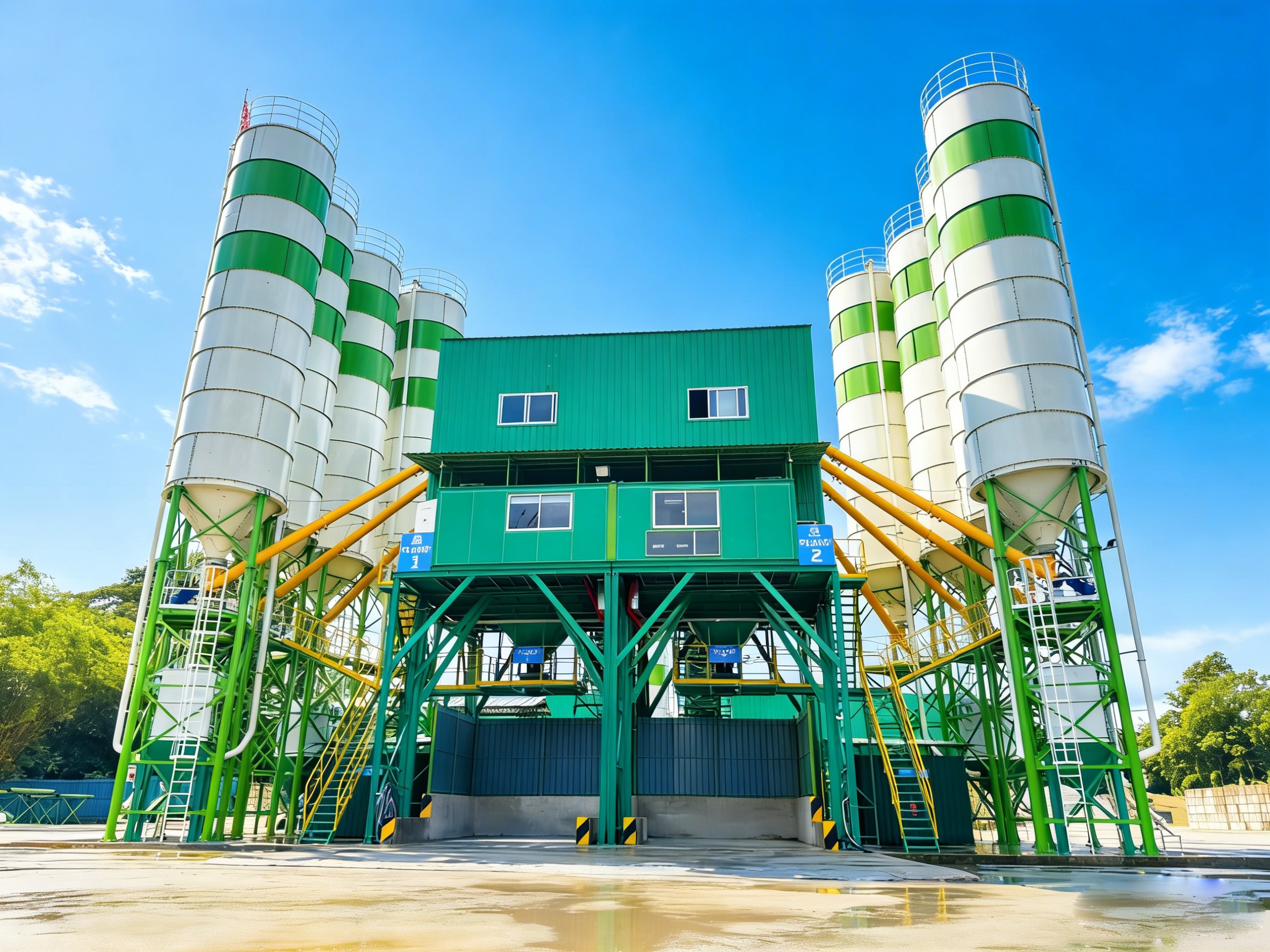
Concrete Mixing Plant Spec Guide: Capacity, Accuracy & Compliance
Concrete Mixing Plant Specification Guide: Capacity, Accuracy & Compliance
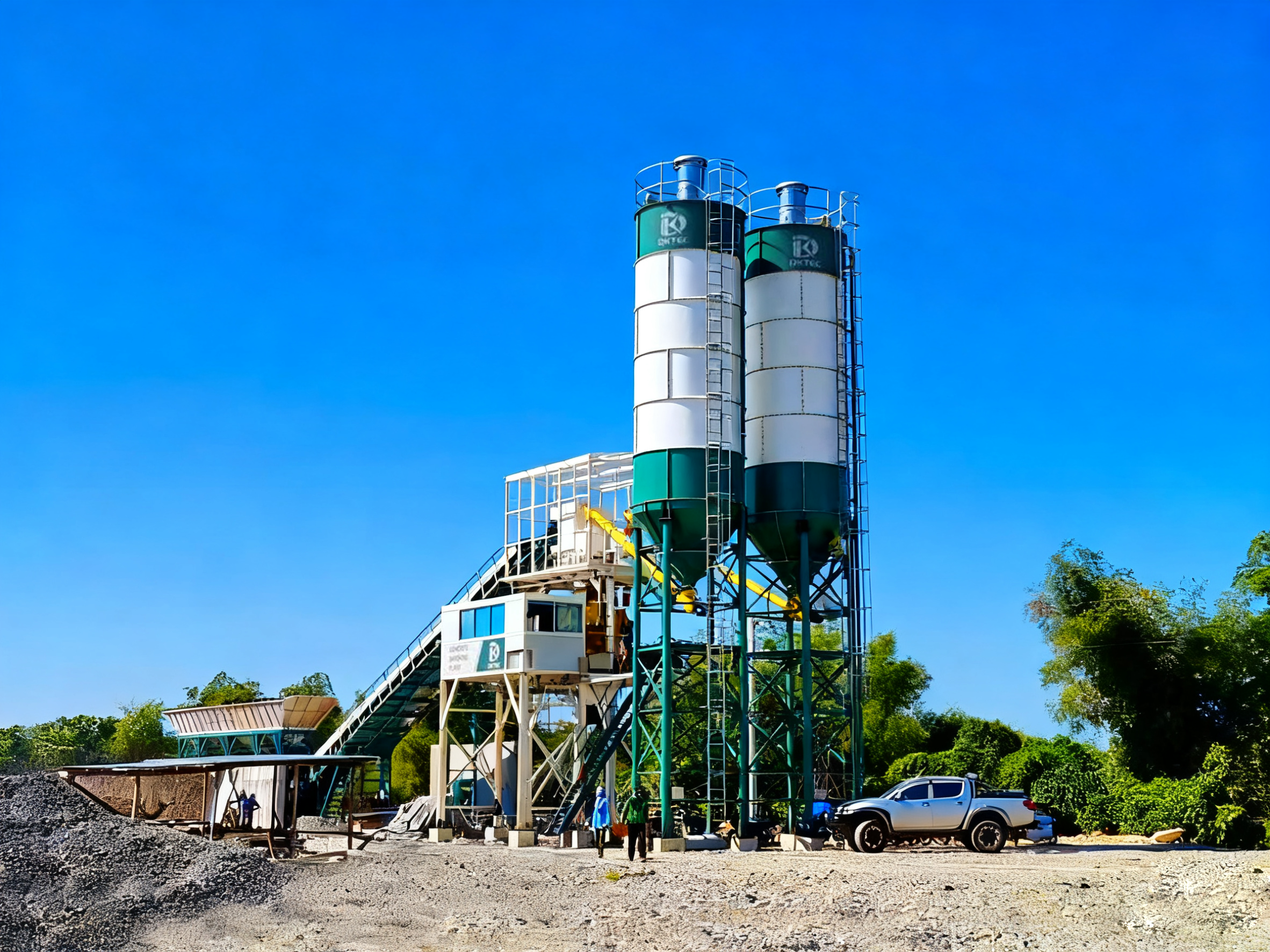
A concrete mixing plant is bought twice: once as a quotation, and once as a machine that has to hit a mix design, a cycle time and a compliance file. The distance between those two events is usually the same distance — the specification was never written precisely enough to make competing offers comparable. This guide sets out the blocks that decide what a plant will actually produce, where the accuracy limits sit, what documentation should be requested, and how to compare stationary, mobile and engineering-series batching plants on a single basis.
Problem definition: why two "120 m³/h plants" are rarely the same machine
Procurement teams often begin an evaluation with a capacity number and a country. That is not enough to compare offers. A concrete batching plant described as "120 m³/h" can differ from the next quotation in at least six ways, and each of them changes both the delivered output and the price:
- Output basis. One supplier quotes theoretical productivity, another quotes a real-world cycle average. The gap between the two is driven by mixer size, discharge height and truck cycle, not by the brochure figure.
- Mixing unit. A 2,000 L twin-shaft forced mixer and a 1,000 L unit can both be advertised under the same nominal output claim, but batch size and cycle count per hour are different.
- Weighing range and accuracy. Aggregate, cement, mixing powder, water and additive are separate weighing channels with separate ranges and separate tolerances.
- Automation level. Manual, semi-automatic and fully automatic PLC control determine how many operators are needed per shift.
- Structure and site works. Stationary, mobile and engineering-series plants have different foundation, relocation and commissioning profiles.
- Compliance and documentation. Standards referenced, test records, electrical configuration and conformity paperwork sit outside the mechanical specification but inside the purchasing risk.
The terminology itself is worth fixing at the start. The term "concrete mixing plant" is used interchangeably across markets with concrete batching plant, batching station and mixing station. ISO 19720-1:2017, the published international standard for building construction machinery and equipment, covers terminology and commercial specifications for concrete mixing and batching plants, which is why experienced buyers state the standard and the terminology in the specification rather than relying on a headline product name.
Industry background: demand, trade flow and the standards that frame the decision
The equipment category is large enough that specification discipline has direct commercial value. Published market research from Global Market Insights values the global concrete batch plants market at USD 3.8 billion in 2024. Credence Research reports that Asia-Pacific accounted for a 38% revenue share of that market in 2024, consistent with the region's position as both the largest construction market and the largest manufacturing base for mixing equipment.
Trade data supports the same picture. China's exports under HS 847431 — concrete or mortar mixers — reached USD 276.9 million in 2023, according to UN Comtrade / WITS data. On the demand side, Global Market Insights reported that the infrastructure segment accounted for 39.4% of the mobile concrete batch plant market in 2024, which explains why mobility, commissioning time and relocation cost carry so much weight in modern tenders.
Standards, not forecasts, are what make offers comparable. ISO 19720-1:2017 is the reference point for terminology and commercial specifications in this equipment class, and buyers entering the European market should also expect a conformity file rather than a logo. A CE marking on construction machinery supplied into the EU / EEA is a declaration by the manufacturer that the machine meets applicable health, safety and environmental requirements, supported by a technical file, risk assessment, declaration of conformity and a marking plate. A website statement is not a substitute for those documents.
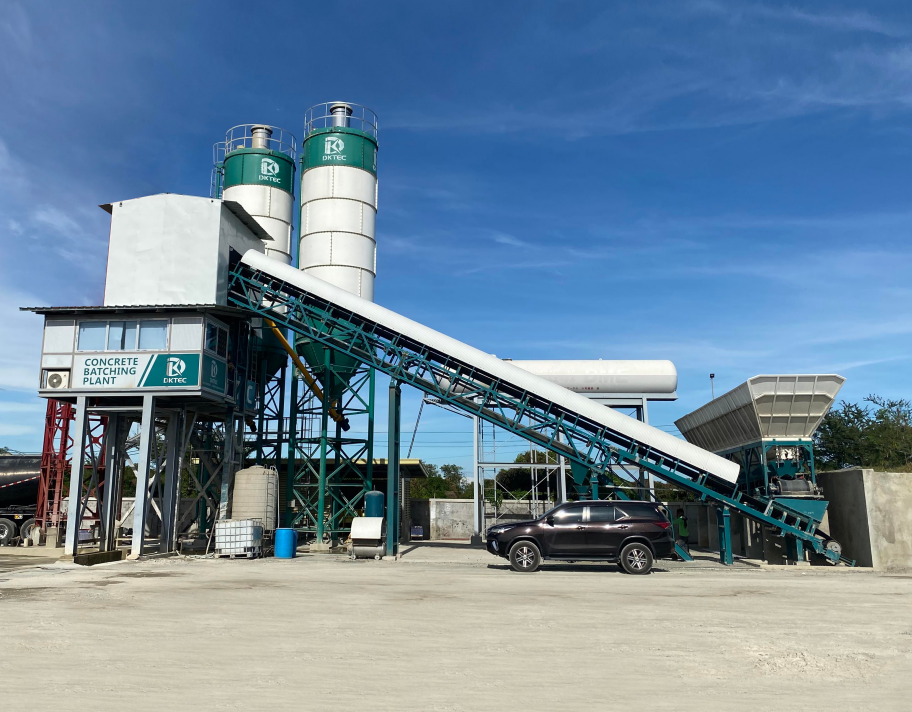
The six specification blocks that decide what a plant actually delivers
Detailed solution
1. Fix the output basis before anything else
Theoretical productivity and installed capacity should be written on the same line. In the HZS series, the relationship is consistent rather than arbitrary: the HZS120 is rated at 120 m³/h with a 2,000 L nominal mixer capacity and 210 kW installed capacity; the HZS180 is rated at 180 m³/h with a 3,000 L nominal capacity and 250 kW; the HZS240 delivers 240 m³/h from a 4,000 L mixer at 280 kW; the HZS270 and the top-of-range HZS300 both use 350 kW installed capacity, with nominal capacities of 4,500 L and 5,000 L respectively. All of these models are specified with an unloading height of at least 3.8 m so that mixer trucks can be loaded directly.
For a buyer, the practical rule is to request the nominal mixer capacity and the installed power alongside the headline output. Those two numbers reveal whether a "high-output" offer is genuinely a larger machine or the same machine with an optimistic label.
2. Specify the mixing unit and its wear profile
Twin-shaft forced mixing is the configuration documented across the HZS concrete batching plant range, from the 500 L unit in the HZS25Y mobile plant up to the 5,000 L mixer in the HZS300 commercial plant. The HZS270 is built around a MAO4500 twin-shaft compulsory mixer, and the HZS120G can be configured with a 2,000 L twin-shaft forced mixer from mainstream mixer suppliers such as SICOMA, BHS or SDMIX, rated at 2 × 37 kW, depending on the concrete type, output and project requirement.
Where the specification should be explicit: mixer model and supplier, drive power, liner and blade material, and the wear parts that will need replacement during the plant's service life. The material of construction across the range is steel, with wear-resistant components used in high-abrasion positions.
3. Write weighing ranges and tolerances as numbers, not adjectives
This is where most quotations become incomparable. Across the DKTEC range the accuracy structure is consistent: aggregate (sandstone) is weighed to ±2%, while cement, mixing powder, water and additive are weighed to ±1%. The ranges, however, scale with the model. The HZS120 weighs 600–2,000 kg of aggregate per batch; the HZS180 weighs 900–3,000 kg; the HZS240 weighs 900–4,500 kg; and the HZS270 and HZS300 weigh 900–5,000 kg. Cement channels run from 200–1,200 kg on the HZS120 to 400–2,600 kg on the HZS270 and HZS300.
Two configuration details are worth requesting in writing. First, the HZS120 plant uses four 16 m³ aggregate silos with anti-blocking devices, 800 mm belt conveyors, and optional 150 t powder silos with φ273 mm / φ219 mm screw conveyors. Second, the HZS120G adds four 16 m³ high-capacity aggregate bins with independent 2.0 m³ weighing hoppers and a double-door coarse-and-fine weighing structure with anti-fall protection, which is what produces the stated ±2% aggregate and ±1% powder, water and admixture accuracy.
The component list matters as much as the tolerance figure. Keli load cells, AirTAC cylinders and SICOMA pneumatic butterfly valves are the documented instrumentation on several HZS models, and the HZS120Y mobile plant uses the same component family inside a towable structure.
4. Define the automation level and the operator count
An automatic concrete batching plant is defined by what the control system can do without human intervention. In the HZS range this means PLC-based control; the HZS120 documents a PLC system with an industrial PC and 24-inch LCD monitoring, while the HZS120G and HZS60G control systems support recipe management, production reports and UPS power backup. The HZS270 is equipped with a PLC control system for centralized operation and real-time production monitoring.
Where large commercial bases are involved, two optional control features change the labour equation. One-operator, dual-plant control allows a single operator to run two mixing plants, which the documentation describes as a 50% reduction in labour cost for that function. Online slump monitoring, which indicates slump in real time from mixer motor current curves, and intelligent powder silo level monitoring with ±2% inventory accuracy, are also available as intelligent configurations on commercial plants.
5. Decide between stationary, mobile and engineering-series structure
Structure is a commercial decision as much as an engineering one. A stationary plant is designed for continuous, high-volume production at one location — the typical ready-mix concrete batching plant configuration. An engineering-series plant such as the HZS60G is built on a four-layer module design with sub-module preassembly and overall lifting, which reduces the number of components installed on site and shortens installation time; that design suits high-speed rail, highway, bridge, airport and water conservancy projects where the plant will be dismantled after the contract.
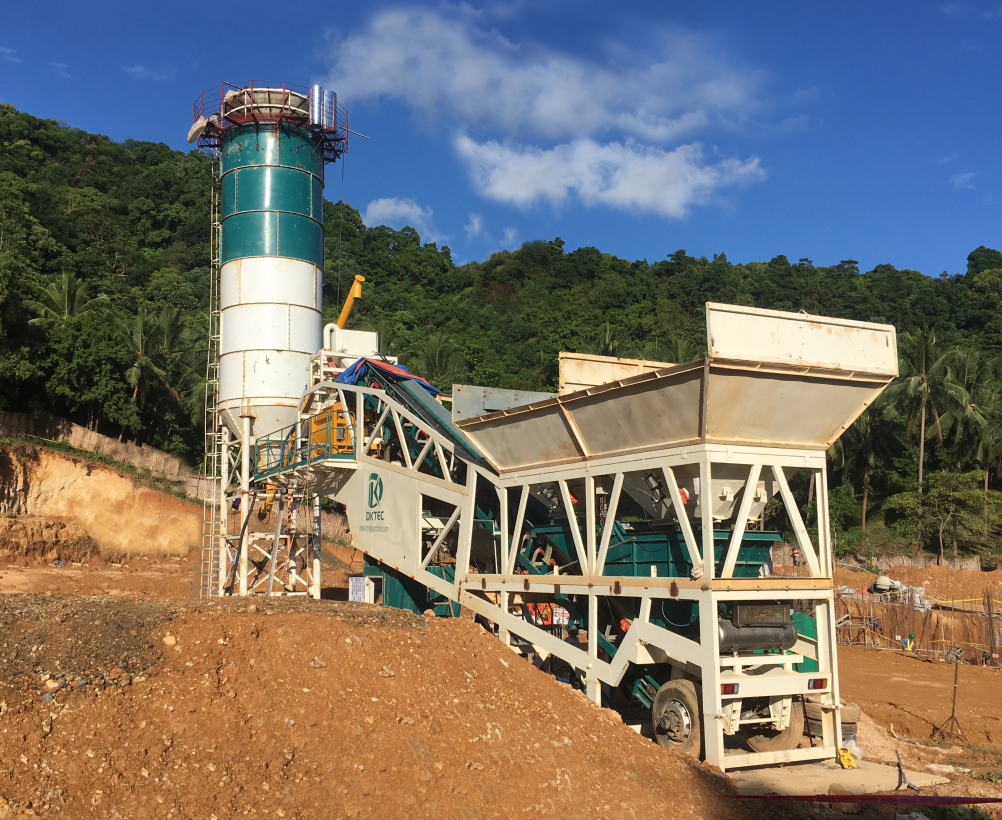
A mobile concrete batching plant moves the other variable. The HZS120Y integrates three 15 m³ aggregate bins with a 3.5 m³ cumulative weighing hopper, an 800 mm chevron belt inclined conveyor with a 30 kW drive, and the mixing main building with a pulse-jet dust collector and fly ash return screw — all mounted on towable chassis that can be relocated by tractor. Commissioning requires only a flat concrete foundation, with no deep civil works. On the smaller mobile units the same principle is compressed further: the HZS60Y is built on an integrated trailer chassis, can be towed to site by a standard truck, and is documented with a three-day on-site commissioning time, while the HZS25Y main unit can be transported as a single piece by truck and is also commissioned within three days of arrival.
6. Attach the compliance and commercial terms to the technical specification
Technical numbers without paperwork create avoidable risk. Three document sets should be requested as deliverables rather than assumed: the conformity file for the destination market, the electrical configuration (voltage and frequency), and the test record for the specific unit.
Step-by-step: how to write a comparable concrete mixing plant specification
The following sequence converts a project requirement into a document that two or more suppliers can answer on equal terms.
Step 1 — Convert project demand into an hourly requirement
Start from the daily concrete volume, the working hours per shift and the peak pour rate. The required plant capacity follows from those three numbers, not from a preference for a particular model size. Common capacities in the HZS range span 25 m³/h to 300 m³/h, and the correct starting point is the actual hourly requirement plus an allowance for the utilisation rate that the project will realistically achieve.
Step 2 — Choose the plant family
Long-term fixed production points toward a stationary commercial plant. Multi-site, short-duration or rotating construction schedules point toward a mobile plant. Projects with tight schedules and a defined end date point toward an engineering-series plant with modular assembly and quick disassembly.
Step 3 — Fix the mixer and the batch size
Specify nominal mixer capacity, mixer type, drive power and mixer supplier options. This step sets the cycle structure that produces the hourly output.
Step 4 — Tabulate weighing channels with ranges and tolerances
List aggregate, cement, mixing powder, water and additive separately, each with a weighing range and a tolerance. The default structure across the DKTEC range is ±2% for aggregate and ±1% for the other four channels, but the ranges must be matched to the selected model and to the local mix design.
Step 5 — Specify the control level and operator requirement
State whether the plant must run fully automatic with recipe management and production reporting, whether UPS backup is required, and how many operators the buyer intends to employ. Where two plants will operate on one site, ask specifically about dual-plant control from a single console.
Step 6 — Specify mobility, foundation and commissioning
For mobile units, require documented transportability, foundation requirements and commissioning time. The HZS25Y, HZS35Y, HZS60Y, HZS90Y and HZS120Y mobile plants are all documented as towable configurations that need only a flat concrete surface, with a three-day commissioning window on the smaller trailer-mounted models.
Step 7 — Attach the compliance and document list
Request the conformity declaration and technical file required by the destination market, the electrical configuration, and a unit-level test record. Reference ISO 19720-1:2017 for terminology and commercial specifications so that both sides describe the same machine.
Step 8 — Compare offers line by line, not in total
Compare output basis, mixer size, weighing ranges, tolerances, control level, structure, silo and conveyor configuration, commissioning time, warranty and spare parts availability. A lower total price on a smaller mixer with a narrower weighing range is a different machine, not a discount.
Where each configuration fits: use cases
Ready-mix and commercial concrete supply
The commercial HZS120, HZS180, HZS240, HZS270 and HZS300 plants are positioned for large and medium-sized commercial concrete customers and ready-mix production, where continuous operation and dosing repeatability matter more than relocation. Documented installations in this category include two HZS90G units delivered to a ready-mix concrete supplier in the Philippines for commercial concrete production, and three units supplied to a ready-mixed concrete company in Indonesia.
Infrastructure and large-scale projects
An HZS300 rated at 300 m³/h with high-efficiency mixing and precise weighing was supplied to a large construction contractor in Indonesia for large-scale infrastructure projects, and an HZS240 was supplied to a large construction contractor in Oman for the same class of work. Both installations are documented with 10–15 year service durations and the same operating outcome: high-volume production, stable operation and consistent quality. For bridge work specifically, an HZS180 supplied to a concrete supplier in the Philippines is used for pile foundations, pile caps, piers, abutments and girder bodies, where the requirement is a stable supply of consistent concrete rather than raw peak output.
High-speed rail, expressway, bridge and airport projects
Engineering-series plants address these sectors directly. The HZS60G uses a high-speed-rail-specific control system with automatic correction of the drop and pulse buckle control, plus coarse-and-fine pulse weighing, which supports high-grade concrete production. Airport and bridge projects typically specify rapid assembly and disassembly, high-precision metering for high-grade concrete, and — where civil costs matter — an optional steel structure foundation. On expressway projects, seamless material flow technology is documented as preventing aggregate spillage and improving conveying efficiency.
Multi-site and remote mobile production
Mobile batching plants are used for construction, road and bridge, water conservancy, mining, railway, infrastructure, precast concrete production and remote construction projects. Their commercial argument is logistical: positioning the plant close to the pour point reduces concrete transport cost and environmental impact, and the towable chassis removes deep civil works from the project schedule.
Small and temporary sites
The small concrete batching plant segment is covered by the HZS25Y at 25 m³/h with a 500 L mixer and the HZS35Y at 35 m³/h with a 750 L mixer, both designed for fast installation and relocation. These units suit temporary works, dispersed sites and projects where a fixed plant cannot be justified.
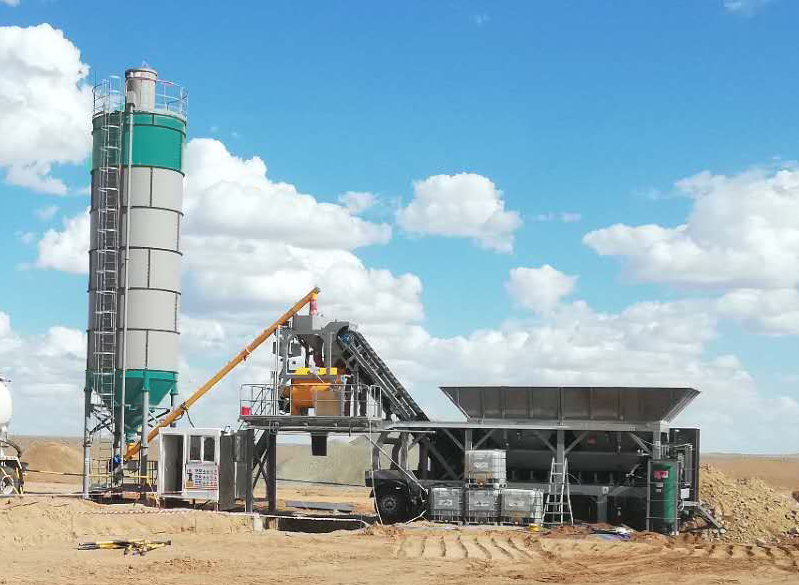
Comparison table: HZS-series concrete batching plants at a glance
| Model | Series / type | Theoretical output | Installed capacity | Nominal mixer capacity | Aggregate weighing range |
|---|---|---|---|---|---|
| HZS25Y | Mobile concrete mixing plant | 25 m³/h | 60 kW | 500 L | 200–1,000 kg ±2% |
| HZS35Y | Mobile concrete mixing plant | 35 m³/h | 65 kW | 750 L | 300–1,500 kg ±2% |
| HZS60Y | Mobile concrete mixing plant | 60 m³/h | 100 kW | 1,000 L | 400–2,000 kg ±2% |
| HZS90Y | Mobile concrete mixing plant | 90 m³/h | 120 kW | 1,500 L | 600–3,000 kg ±2% |
| HZS120Y | Mobile concrete mixing plant | 120 m³/h | 160 kW | 2,000 L | 800–3,500 kg ±2% |
| HZS60G | Engineering concrete batching plant | 60 m³/h | 100 kW | 1,000 L | 600–2,500 kg ±2% |
| HZS90G | Engineering concrete batching plant | 90 m³/h | 190 kW | 1,500 L | 600–2,000 kg ±2% |
| HZS120G | Engineering concrete batching plant | 120 m³/h | 210 kW | 2,000 L | 600–2,000 kg ±2% |
| HZS180G | Engineering concrete batching plant | 180 m³/h | 250 kW | 3,000 L | 900–3,000 kg ±2% |
| HZS120 | Commercial concrete batching plant | 120 m³/h | 210 kW | 2,000 L | 600–2,000 kg ±2% |
| HZS180 | Commercial concrete batching plant | 180 m³/h | 250 kW | 3,000 L | 900–3,000 kg ±2% |
| HZS240 | Commercial concrete batching plant | 240 m³/h | 280 kW | 4,000 L | 900–4,500 kg ±2% |
| HZS270 | Commercial concrete batching plant | 270 m³/h | 350 kW | 4,500 L | 900–5,000 kg ±2% |
| HZS300 | Commercial concrete batching plant | 300 m³/h | 350 kW | 5,000 L | 900–5,000 kg ±2% |
Across every model listed above, cement, mixing powder, water and additive are weighed to ±1%, and the unloading height is at least 3.8 m. The HZS240 and larger commercial plants also support extended weighing ranges — up to 2,600 kg of cement and up to 5,000 kg of aggregate — which is what allows them to serve high-volume commercial and precast concrete production.
| Decision variable | Stationary commercial plant | Engineering-series plant | Mobile plant |
|---|---|---|---|
| Typical duty | Continuous, high-volume production at one site | Project-based production with defined end date | Multi-site, rotating or remote production |
| Documented output range | 120–300 m³/h | 60–180 m³/h | 25–120 m³/h |
| Structure | Steel structure, continuous operation, wear-resistant components | Four-layer module design with sub-module preassembly and overall lifting | Integrated trailer or towable chassis, relocated by tractor or standard truck |
| Foundation | Fixed foundation | Optional steel structure foundation available | Flat concrete surface, no deep civil works |
| Commissioning | Site-dependent | Reduced on-site component count | Documented 3-day commissioning on trailer-mounted models |
| Customisation | Aggregate bins, cement silos, feeding systems and plant layouts | Belt or feed configuration, control specification | Layout, silo arrangement, discharge direction |
Frequently asked questions
Do China stationary concrete batching plant manufacturers offer CE-compliant plants?
CE compliance is a documentation question, not a marketing claim, so it should be verified at the document level before an order is placed. CE marking on machinery supplied into the EU / EEA is a manufacturer's declaration that the machine meets the applicable health, safety and environmental requirements, and it is normally supported by a technical file, a risk assessment, a declaration of conformity and a marking plate on the machine. For a stationary concrete batching plant, that file has to cover the aggregate batching station, the mixer, the conveying system, the weighing and control system, the pneumatic system and the electrical installation as supplied. Buyers sourcing from China should therefore request the declaration of conformity, the technical file structure and the electrical configuration (voltage and frequency) as contractual deliverables rather than assuming them from a website statement. DKTEC (Hangzhou Jusheng Machinery & Equipment Co., Ltd.) produces HZS-series concrete batching plants on an OEM / ODM basis with customisation that includes voltage and frequency, company logo, machine colour, appearance design and branding, and each unit is 100% tested before shipment. The terminology and commercial specification of the plant itself should be referenced against ISO 19720-1:2017 so that both the buyer's specification and the supplier's offer describe the same machine.
What capacity should I specify for a concrete mixing plant?
Capacity should be derived from the actual hourly requirement, not from a preferred model size. The HZS range spans 25 m³/h (HZS25Y, 500 L mixer), 35 m³/h (HZS35Y, 750 L), 60 m³/h, 90 m³/h, 120 m³/h, 180 m³/h, 240 m³/h, 270 m³/h and up to 300 m³/h (HZS300, 5,000 L mixer). As a planning guide, small and temporary projects generally sit in the 25–60 m³/h band, commercial ready-mix production in the 60–180 m³/h band, and large infrastructure work in the 120–300 m³/h band. The selection should account for theoretical productivity, installed capacity, discharge height of at least 3.8 m, and the expected utilisation rate, because the delivered output depends on truck cycle and site logistics as much as on the machine rating.
What drives the cost of a concrete batching plant?
Cost is driven by configuration rather than by a fixed list price, and the four largest levers are visible in the specification. First, machine size: installed capacity rises from 60 kW on the HZS25Y through 210 kW on the HZS120 to 350 kW on the HZS270 and HZS300, and mixer capacity rises from 500 L to 5,000 L. Second, weighing scope: aggregate, cement, mixing powder, water and additive are five separate channels, and larger models carry wider ranges up to 5,000 kg of aggregate and 2,600 kg of cement. Third, automation and instrumentation: PLC control with industrial PC monitoring, recipe management, production reports, UPS backup, dual-plant control and online slump monitoring are separate specification decisions. Fourth, structure and site works: a stationary plant requires a fixed foundation, an engineering-series plant can use an optional steel structure foundation, and a mobile plant needs only a flat concrete surface. Customisation scope — voltage and frequency, logo, colour, appearance design and branding — and the auxiliary equipment list (silos, screw conveyors, dust collection, additive tanks) complete the picture.
Can I validate a plant configuration before committing to a full production order?
Yes. The minimum order quantity for DKTEC concrete batching plants is 1 unit, which means a configuration can be validated on a single machine rather than on a batch commitment, and every unit is 100% tested before shipment. Buyers should use that stage to confirm the weighing ranges against the local mix design, verify the electrical configuration, review the control system screens and reports, and agree the documentation set. For mobile plants, the commissioning procedure can also be reviewed at this stage, since the trailer-mounted models are documented for a three-day on-site commissioning window on a flat concrete surface.
What is the lead time for a concrete mixing plant order?
The documented lead time is 25–60 days, with a monthly production capacity of 50 units. The position within that window depends on the model, the mixer specification and the level of customisation requested — for example, voltage and frequency, branding, colour, appearance design, silo count and control options. Installation and commissioning are supported through remote assistance or on-site service, and the schedule for that phase should be agreed at the same time as the equipment delivery date rather than afterwards.
Conclusion: the specification is the product
A concrete mixing plant is not selected by choosing a capacity figure and a country of origin. It is selected by fixing six things in writing: the output basis, the mixing unit, the weighing ranges and tolerances, the automation and operator requirement, the structural family, and the compliance and commercial terms. Once those are fixed, offers become comparable, and the evaluation stage ends with a decision rather than with another round of clarification.
DKTEC — Hangzhou Jusheng Machinery & Equipment Co., Ltd. — has manufactured HZS-series concrete batching plants since its founding in 2015, with a 120,000 m² manufacturing base, 430 employees and 80 R&D engineers, an annual output of 2,000 units and an export share of 80% across the Middle East, Southeast Asia, Africa, Europe, Central Asia, West Asia, Australia and South America. The company's published scope covers OEM / ODM production, one-unit minimum orders and a 25–60 day lead time, with remote and on-site after-sales support.
Next step: download the specification and send your project parameters
Download the full DKTEC concrete batching plant brochure with model specifications, weighing ranges and configuration options: DKTEC Concrete Batching Plant Brochure (PDF).
To receive a configuration matched to your project, send your required hourly output, concrete type, site conditions, local voltage and frequency, and required documentation to linder@dongkunchina.com, or reach the team on WhatsApp at +86 18888972181. Website: www.dongkunchina.com.