
Concrete Mixing Plant Specs & Compliance: HZS Selection Guide
Concrete Mixing Plant Specs & Compliance: HZS Selection Guide
A concrete mixing plant is bought against a specification sheet, not a brochure. The parameters that decide whether the plant performs — theoretical output, mixer size, weighing ranges, dosing accuracy, discharge height, electrical configuration and the conformity documentation a destination market requires — are effectively locked in before the purchase order is signed, and are expensive to correct afterwards.
This guide is written for procurement managers, ready-mix producers, precast manufacturers and contractors who are working through the research and evaluation stage of a concrete mixing plant purchase. It explains how to read an HZS-series specification sheet, which compliance and constraint questions to settle early, how stationary and mobile configurations differ in daily operation, and what a realistic cost and lead-time picture looks like. Supplier facts throughout the article refer to Hangzhou Jusheng Machinery & Equipment Co., Ltd. (branded DKTEC), a concrete batching plant manufacturer based in Hangzhou, Zhejiang, China, whose HZS product line is used as a concrete specification example.
The Real Constraint Is Not Capacity — It Is Specification Match
Most first-round plant inquiries fail for the same four reasons, and none of them is a shortage of suppliers.
- Theoretical output is treated as delivered output. A plant rated at 240 m³/h under laboratory conditions will not deliver 240 m³/h across a full shift with real aggregate moisture, mixer truck turnaround and operator changeovers. Buyers who anchor the entire project schedule to the theoretical figure, rather than to the expected utilisation rate, discover the gap on site.
- Weighing ranges are ignored. Two plants with the same rated output can have very different aggregate and cement weighing capacities per batch. If the mix design calls for high cement content or a coarse aggregate gradation near the top of the hopper range, a plant that looks adequate on output can be short on dosing headroom.
- Electrical and control configuration is assumed rather than specified. Voltage, frequency, control architecture, recipe management and backup power are commercial terms, not technical footnotes. They are also the items most often changed late, and the ones that most often cause commissioning delays.
- Compliance documentation is requested after the order. Import documentation, conformity declarations and technical files have to be assembled by the manufacturer during production. Buyers who raise the question at the shipping stage narrow their own options.
The practical conclusion is that a concrete mixing plant purchase should be managed as a specification-matching exercise first and a commercial negotiation second. The remainder of this article works through the constraint layer: what the numbers mean, which documents matter, and how to compare two plants that both claim to be the right size.
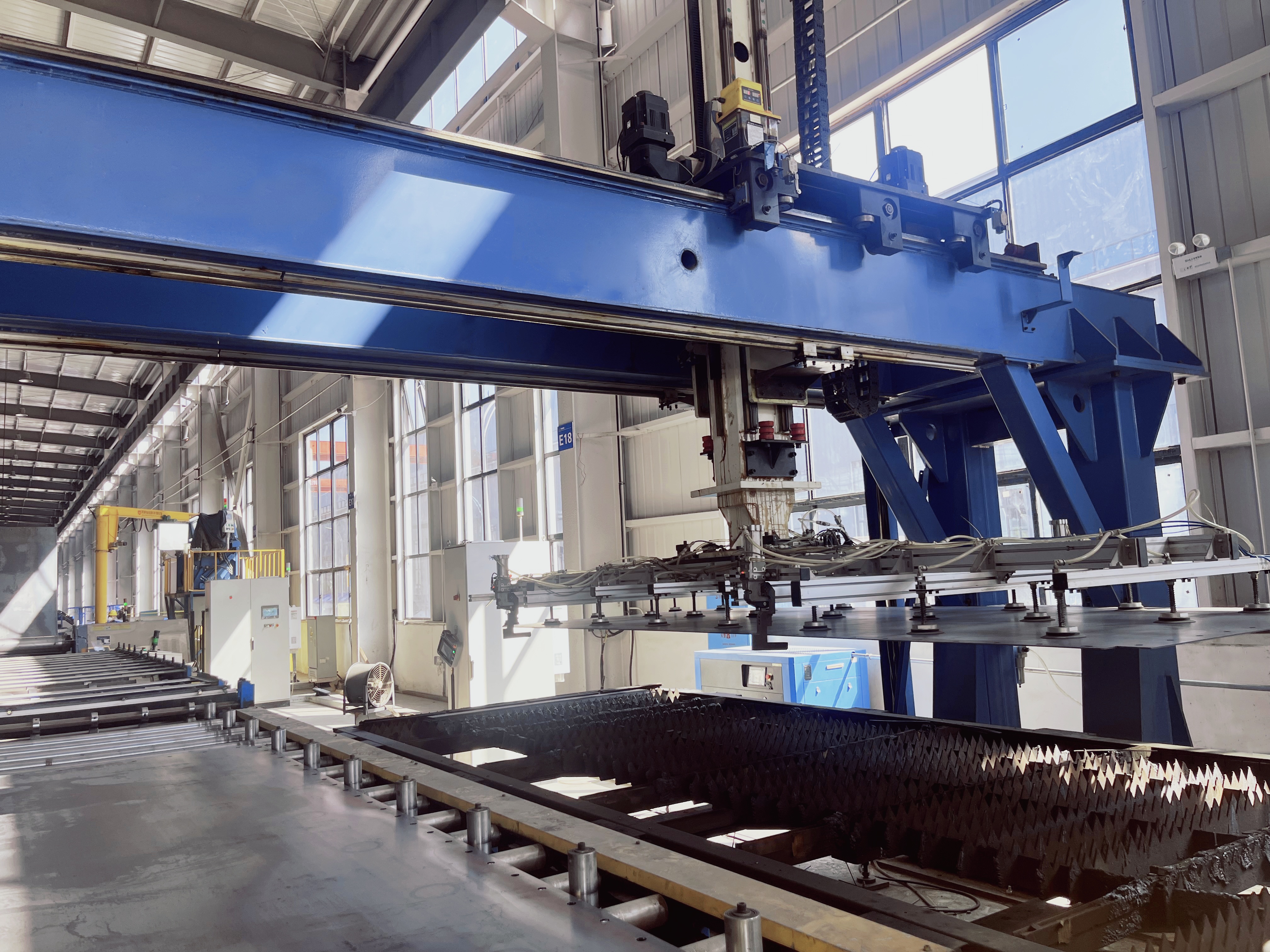
Manufacturing workshop of Hangzhou Jusheng Machinery & Equipment Co., Ltd. (DKTEC), Hangzhou, China — plants are built against a project-specific specification sheet rather than a catalogue default.
Industry Background: A Market Measured in Dollars and Defined by Standards
The concrete batching plant category is large, geographically concentrated, and increasingly shaped by compliance and automation requirements rather than by raw tonnage alone.
- The global concrete batch plants market was valued at USD 3.8 billion in 2024, according to Global Market Insights (Concrete Batch Plants Market Size, Forecast Report 2025–2034).
- Asia-Pacific accounted for a 38% revenue share of that market in 2024, according to Credence Research, making the region both the largest production base and the largest consumption base.
- China exported USD 276.9 million of concrete or mortar mixers (HS code 847431) in 2023, per UN Comtrade / World Bank WITS data — a figure that captures only mixer-classified trade, not complete plants shipped under other customs headings.
- Within the mobile segment specifically, the infrastructure application accounted for 39.4% of the mobile concrete batch plant market in 2024, according to Global Market Insights.
- On the standards side, ISO 19720-1:2017 establishes terminology and commercial specifications for concrete mixing and batching plants. Published by ISO on 22 June 2017, it is the reference point that lets a buyer compare specification sheets from different suppliers on the same vocabulary.
Company-level context matters too. Hangzhou Jusheng Machinery & Equipment Co., Ltd. was founded in 2015 and transitioned from trading into robot-assisted production of mixing stations in 2017, according to the company profile published on its own domain. That trajectory — trading origin, then in-house manufacturing — is a common pattern among Chinese concrete batching plant suppliers, and it is one of the reasons buyers should verify manufacturing capability separately from export experience rather than treating the two as the same thing.
The Parameter Set That Constrains a Concrete Mixing Plant Specification
Five parameter groups decide whether a plant fits a project. Each one has a visible value on a specification sheet and a hidden consequence on site.
1. Output, Mixer Capacity and Plant Class
Theoretical productivity and nominal mixer capacity are bound together: the mixer dictates how much concrete can be produced per batch cycle, and the batching system dictates how fast the next batch can be prepared. In the DKTEC HZS range, the pairing runs from the compact HZS25Y mobile plant at 25 m³/h with a 500 L nominal mixer capacity, up to the HZS300 commercial plant at 300 m³/h with a 5,000 L nominal mixer capacity and 350 kW installed power.
The range is also split by plant class, and this split is more useful to buyers than the raw output figure:
- Engineering plants (HZS60G, HZS90G, HZS120G, HZS180G) — configured for project-based concrete supply where the plant follows the work: high-speed rail, highway, bridge, tunnel and airport packages. The design intent here is precision, structural strength and adaptability to constrained or remote sites.
- Commercial plants (HZS120, HZS180, HZS240, HZS270, HZS300) — configured for continuous, high-volume supply to ready-mix customers and large construction programmes, with the widest configuration range and the most automation options.
- Mobile plants (HZS25Y, HZS35Y, HZS60Y, HZS90Y, HZS120Y) — integrated onto a towable chassis for projects that relocate, where the plant's ability to move matters as much as its output.
Every model in the range shares a discharge height of at least 3.8 m, which is the geometric constraint that allows direct loading into a standard mixer truck rather than into a transfer hopper.
2. Weighing Channels, Ranges and Accuracy
Dosing accuracy is quoted as a tolerance, and the tolerance is only meaningful when it is read together with the weighing range. Across the range, aggregate is dosed to ±2% and cement, mixing powder, water and additive are dosed to ±1%.
The ranges themselves scale with plant size. The HZS60G, for example, weighs sandstone from 600–2,500 kg and cement from 100–700 kg. The HZS240 weighs sandstone from 900–4,500 kg, cement from 400–2,500 kg, mixing powder from 200–1,200 kg, water from 200–1,000 kg and additive from 15–80 kg. At the top of the range, the HZS300 covers sandstone 900–5,000 kg, cement 400–2,600 kg, mixing powder 300–1,800 kg, water 200–1,200 kg and additive 20–100 kg.
What sits behind those numbers is the part buyers usually cannot see on a quotation. The DKTEC plants use Keli load cells, AirTAC cylinders and SICOMA pneumatic butterfly valves, and the control logic applies coarse-and-fine pulse-buckle weighing rather than a single-stage cut-off. On the HZS120G, the aggregate bins use independent 2.0 m³ weighing hoppers with a double-door coarse-and-fine weighing structure. This is the mechanism that makes a ±2% tolerance repeatable across thousands of batches instead of holding only on a calm morning.
3. Control, Automation and Production Data
Control architecture is a specification item with a direct labour consequence. Across the range, the control method is fully automatic PLC control, with UPS backup on the plants where continuous supply matters most. The HZS120 pairs a PLC-based system with an industrial PC and 24-inch LCD monitoring; the HZS120G adds recipe management and production reporting; dust-proof control cabinets, emergency stop switches and anti-fall protection appear as standard safety items on the commercial models.
The automation ceiling varies by plant. On large commercial configurations, online slump monitoring gives a real-time slump indication derived from mixer motor current curves, and intelligent powder silo level monitoring is offered with a stated inventory accuracy of ±2%. At the plant-management level, an optional one-operator, dual-plant control arrangement allows a single operator to run two mixing plants — a configuration the manufacturer documents as reducing labour cost by 50%.
4. Structure, Mobility and Foundation Requirements
Foundation design is one of the most under-estimated cost lines in a plant project, because it is usually quoted by a local contractor rather than by the plant supplier.
Mobile plants remove most of it. The HZS60Y, for example, is built on an integrated trailer chassis that can be towed to site by a standard truck; it requires only a flat concrete surface, needs no deep foundations, and is documented as commissioning within three days on site. The HZS120Y carries three 15 m³ aggregate bins with a 3.5 m³ cumulative weighing hopper, an 800 mm chevron belt inclined conveyor with a 30 kW drive, a pulse-jet dust collector and a fly ash return screw, all mounted on towable chassis.
Stationary plants trade that flexibility for lower operating cost at scale, and the modular designs reduce the on-site work. The HZS60G uses a four-layer module design with sub-module preassembly and overall lifting, which reduces the number of components installed on site and shortens installation time. On larger commercial configurations, the modular approach is documented as cutting on-site installation workload by 20%, and a steel structure foundation option is available where civil works are impractical or too slow — a configuration that appears specifically in airport and bridge project scopes.
Discharge and material-flow details are worth checking at the same stage. The HZS120 series uses four 16 m³ aggregate bins with anti-blocking devices and 800 mm belt conveyors, with optional 150 t powder silos and φ273 mm / φ219 mm screw conveyors. The HZS240 uses four 30 m³ underground bunker silos, 1,000 mm conveyors with double-sided maintenance walkways, and video surveillance at the belt tail and discharge port. On large-scale ready-mix configurations, a dual-pivot internal vibration structure is documented as improving vibration efficiency by 20% and resolving discharge issues with manufactured sand, fine sand and mineral powder.
5. Electrical Configuration and OEM Customisation
Voltage and frequency are the single most common late-stage change on an export order, because the plant's electrical specification has to match the site supply, not the manufacturer's domestic standard. DKTEC's stated OEM/ODM scope covers voltage and frequency, company logo, machine colour, appearance design and branding, alongside plant-level customisation of aggregate bins, cement silos, feeding systems and overall layout.
Manufacturing capacity is the other half of this constraint: the company operates a 120,000 m² facility with 430 employees, an 80-engineer R&D team and an annual output of 2,000 units, with a stated monthly capacity of 50 units, a minimum order quantity of one unit, and 100% test as its quality-control standard. Roughly 80% of output is exported, with main markets spanning the Middle East, Southeast Asia, Africa, Europe, Central Asia, West Asia, Australia and South America.
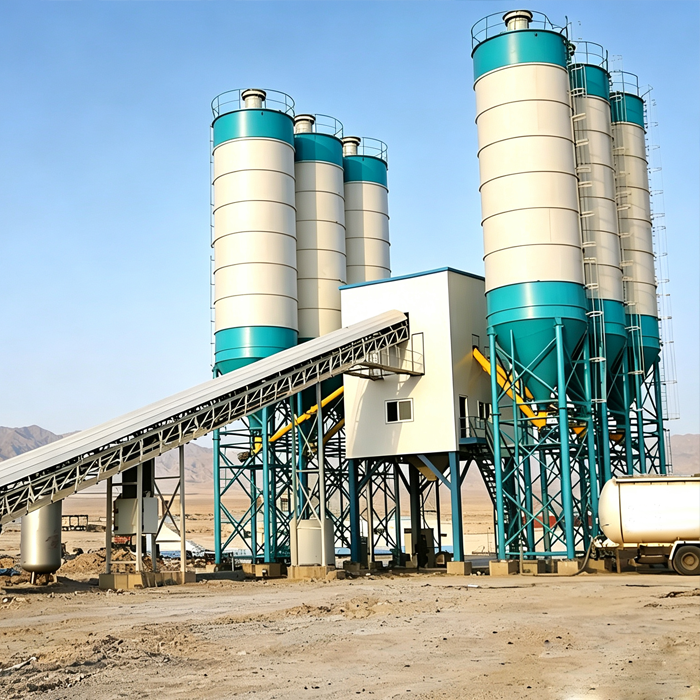
HZS240 commercial concrete batching plant: 240 m³/h theoretical output, 4,000 L nominal mixer capacity, 280 kW installed power, aggregate dosing at ±2% and powder, water and additive dosing at ±1%.
How to Read a Concrete Mixing Plant Specification Sheet: 7 Steps
The following sequence converts a supplier's data sheet into a decision. It is deliberately ordered so that the cheapest items are settled last.
- Convert required delivery rate into a theoretical capacity target. Start from the concrete volume the project must place per working day, divide by realistic working hours, and treat the result as the minimum theoretical productivity. A project needing 60 m³/h of sustained supply should not be specified with a 60 m³/h plant unless the site can absorb shortfall; the HZS series ranges from 25 m³/h to 300 m³/h precisely so the target can be met with headroom.
- Match the mixer to the concrete type. Twin-shaft mixers are widely used for ready-mix and large-volume production because they mix fast and intensively at high throughput, while planetary mixers suit applications needing very high mixing uniformity, including precast, dry concrete and special concrete. The HZS commercial and engineering range uses twin-shaft forced mixers, with nominal capacities from 500 L to 5,000 L; SICOMA, BHS and SDMIX mixer options are available on several configurations.
- Check the weighing ranges against the mix design. Compare the top of each weighing range with the maximum batch quantity the mix design requires. If the cement per batch approaches the upper limit of the specified range, the plant has no headroom for a richer mix later.
- Verify how the accuracy is achieved, not just what it is. Ask for the load cell brand, the valve and cylinder suppliers, and whether coarse-and-fine weighing is used. The DKTEC answer is Keli load cells, AirTAC cylinders and SICOMA pneumatic butterfly valves, with double-door coarse-and-fine weighing on configurations such as the HZS120G.
- Lock the electrical and control specification in writing. Confirm voltage, frequency, PLC architecture, whether recipe management and production reporting are included, and whether UPS backup is fitted. Confirm this before the technical agreement, because it is the item most likely to be re-engineered later at the buyer's cost.
- Choose stationary or mobile, and confirm the foundation scope. If the project relocates, verify chassis design, towing arrangement, commissioning time and the exact foundation requirement. If the plant is fixed for a decade or more, verify modular assembly method and whether a steel structure foundation option is available.
- Settle documentation, acceptance criteria and lead time. Lead time for DKTEC plants is stated at 25–60 days depending on configuration. Agree what will be tested before shipment, who signs off, and what documentation accompanies the unit — then build the site programme around the lead time plus shipping plus commissioning.
Where the Constraints Bite: Five Concrete Mixing Plant Scenarios
Specification priorities shift by application. The five scenarios below cover most of the concrete mixing plant inquiries that reach a manufacturer at the evaluation stage.
Highway and Expressway Packages
Expressway work spreads a plant along a route rather than concentrating it. The controlling constraints are high-precision metering — cement and powder to ±1%, sand and gravel to ±2% — combined with adaptability to different site conditions, plant layouts and discharge directions. Seamless material flow technology is used here to prevent aggregate spillage, sustain continuous supply and improve conveying efficiency by 20%. A plant that cannot be re-laid out for the next section is a liability on this type of work.
Commercial Ready-Mix Production
Ready-mix producers buy uptime and consistency, not peak capacity. The relevant configuration features are continuous operation, wear-resistant components, customisable aggregate bins, cement silos, feeding systems and plant layouts, and the control layer that keeps quality stable across shifts — recipe management, production reports, online slump monitoring and dust-proof cabinets. The optional one-operator, dual-plant control is most relevant here, because labour is a recurring cost in commercial concrete production.
Precast Concrete Manufacturing
Precast operations typically need tighter batch consistency and different aggregate handling than site-mixed supply, and they frequently run on fixed sites with fixed electrical supply. This is where the mobile-to-stationary decision usually resolves clearly toward a stationary plant, and where mixer selection deserves more attention than output rating: mixing uniformity, not throughput, is the performance variable that reaches the finished element.
High-Speed Rail and Bridge Projects
High-grade structural concrete brings the precision requirements forward. Control systems configured for high-speed rail work apply automatic correction of the drop and pulse-buckle control, with dual-stage coarse-and-fine aggregate metering and precision pulsating metering to suit different grades. Bridge scopes add durability requirements, smooth internal-vibration-assisted discharge, a robust discharge hopper, an optional dual-auger system for precise feeding, and an optional steel structure foundation. Four-level modular design allows integrated hoisting and rapid installation where the programme is tight.
Remote, Temporary and Multi-Site Work
Where the plant has to move, the mobile range takes over. These units integrate feeding, weighing, mixing and control onto a single chassis, are transportable between project sites, and are designed for remote and temporary construction. The practical test is commissioning time and foundation cost: a mobile plant documented as commissioning within three days on a flat concrete surface, with no deep foundations, removes an entire category of civil engineering from the project schedule.
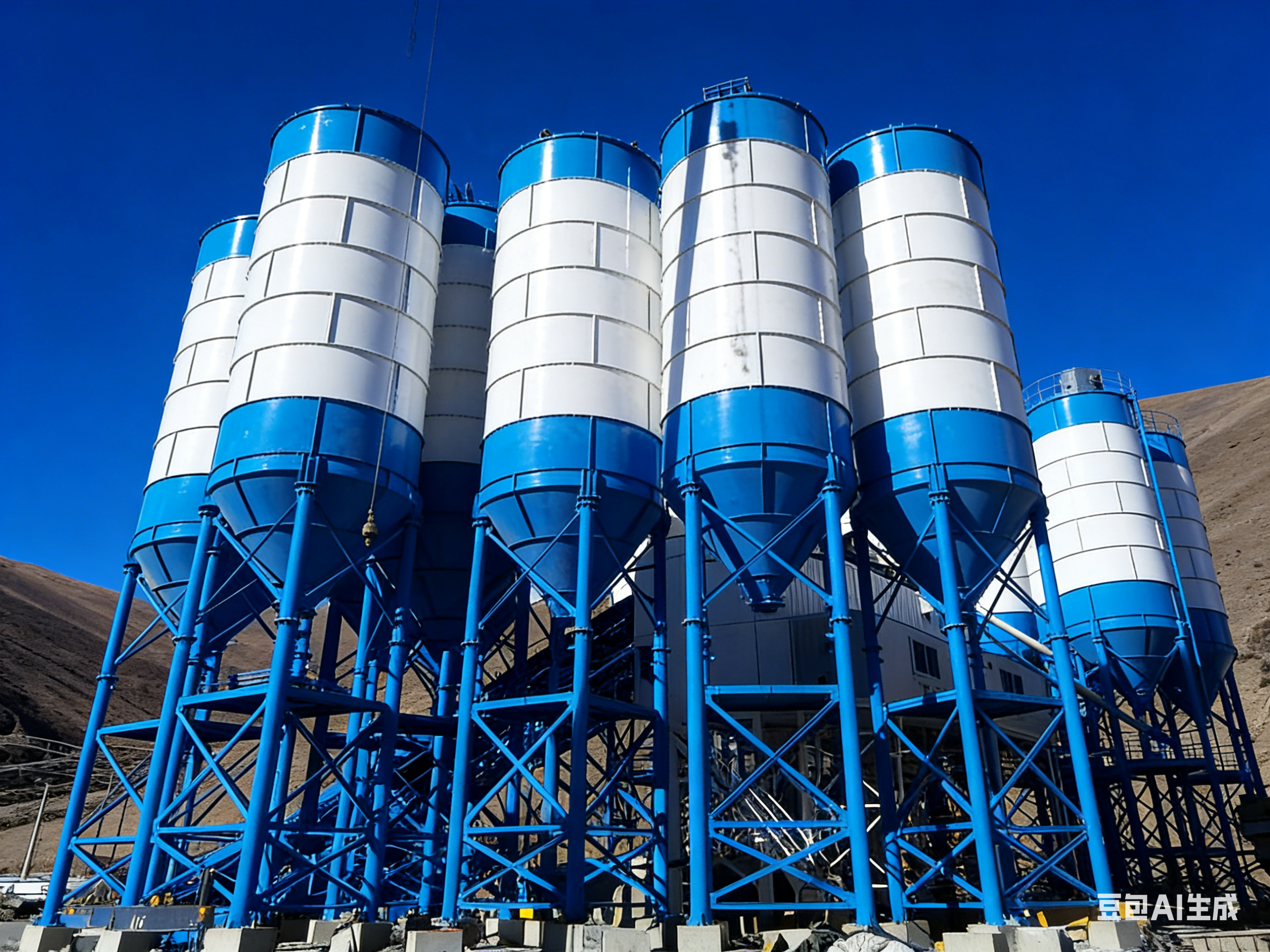
Reference installation: a DKTEC HZS300 commercial concrete batching plant supplied to a large construction contractor in Indonesia for large-scale infrastructure projects, with 300 m³/h capacity and a 5,000 L mixer.
Stationary vs Mobile Concrete Batching Plant: Model-Level Comparison
The tables below use published DKTEC HZS specifications so that the comparison is made on comparable values rather than on category generalities. Every plant listed shares the same dosing accuracy structure — aggregate ±2%, cement, mixing powder, water and additive ±1% — and the same minimum discharge height of 3.8 m. The real differences are output, installed power, mixer volume and the structural decisions that follow from them.
Table 1 — Stationary HZS series (engineering and commercial configurations)
| Model | Plant class | Theoretical productivity | Installed capacity | Nominal mixer capacity |
|---|---|---|---|---|
| HZS60G | Engineering | 60 m³/h | 100 kW | 1,000 L |
| HZS90G | Engineering | 90 m³/h | 190 kW | 1,500 L |
| HZS120 | Commercial | 120 m³/h | 210 kW | 2,000 L |
| HZS120G | Engineering | 120 m³/h | 210 kW | 2,000 L |
| HZS180 | Commercial | 180 m³/h | 250 kW | 3,000 L |
| HZS180G | Engineering | 180 m³/h | 250 kW | 3,000 L |
| HZS240 | Commercial | 240 m³/h | 280 kW | 4,000 L |
| HZS270 | Commercial | 270 m³/h | 350 kW | 4,500 L |
| HZS300 | Commercial | 300 m³/h | 350 kW | 5,000 L |
Table 2 — Mobile HZS-Y series (towable chassis configurations)
| Model | Plant type | Theoretical productivity | Installed capacity | Nominal mixer capacity |
|---|---|---|---|---|
| HZS25Y | Mobile | 25 m³/h | 60 kW | 500 L |
| HZS35Y | Mobile | 35 m³/h | 65 kW | 750 L |
| HZS60Y | Mobile | 60 m³/h | 100 kW | 1,000 L |
| HZS90Y | Mobile | 90 m³/h | 120 kW | 1,500 L |
| HZS120Y | Mobile | 120 m³/h | 160 kW | 2,000 L |
A practical reading of the two tables: the mobile range tops out at 120 m³/h with 160 kW installed, while the stationary range reaches 120 m³/h with 210 kW installed and continues up to 300 m³/h. The stationary HZS120 at 210 kW carries a heavier installed drive package than the mobile HZS120Y at 160 kW, reflecting different conveying and batching arrangements. Buyers comparing the two on price alone are comparing different machines.
Cross-checks worth running on any comparable shortlist:
- Rated output above 120 m³/h exists only in the stationary range (HZS180, HZS240, HZS270, HZS300).
- Relocation without new civil works exists only in the mobile range, where a level concrete surface is sufficient.
- Project-scoped precision control — automatic drop correction and pulse-based weighing compensation — is concentrated in the engineering configurations used for high-speed rail and similar work.
- High-volume commercial automation — online slump monitoring, intelligent silo level monitoring, dual-plant control — is concentrated in the commercial configurations.

HZS120Y mobile concrete batching plant: 120 m³/h theoretical output at 160 kW installed power, with three 15 m³ aggregate bins and an 800 mm chevron belt conveyor on a towable chassis.
FAQ: Concrete Mixing Plant Compliance, Capability, Cost and Lead Time
How do I verify CE compliance and standards when buying a stationary concrete batching plant from a China manufacturer?
Machinery supplied into a regulated market such as the European Union generally has to be assessed against the applicable directives before it can be placed on the market, and the specific conformity route depends on the machine configuration and the destination country. The practical approach is to request the declaration, technical file and test documentation during the inquiry stage, so that the achievable documentation package is confirmed before the technical agreement is signed rather than after the plant is built. For terminology and commercial specifications, ISO 19720-1:2017 — Building construction machinery and equipment, published by ISO on 22 June 2017 — establishes terminology and commercial specifications for concrete mixing and batching plants, which makes it a useful reference for writing a specification sheet that can be compared across suppliers. Hangzhou Jusheng Machinery & Equipment Co., Ltd. (DKTEC) exports concrete batching plants to markets including the Middle East, Africa, Europe, Southeast Asia, Central Asia, West Asia, Australia and South America, and its OEM/ODM scope covers voltage and frequency, company logo, machine colour, appearance design and branding. State any market-specific conformity requirement in the first inquiry so that it can be reflected in the configuration and documentation schedule.
Can one manufacturer cover both a small project plant and a large commercial plant?
Yes, provided the product line is genuinely continuous rather than assembled from unrelated designs. The DKTEC HZS range runs from the HZS25Y mobile plant at 25 m³/h with a 500 L mixer and 60 kW installed power, through the engineering configurations HZS60G, HZS90G, HZS120G and HZS180G at 60–180 m³/h, to the commercial configurations HZS120, HZS180, HZS240, HZS270 and HZS300 at 120–300 m³/h with nominal mixer capacities of 2,000 L to 5,000 L. Supporting capability for that range is stated as a 120,000 m² facility, 430 employees and an 80-engineer R&D team, an annual output of 2,000 units, a monthly capacity of 50 units, a minimum order quantity of one unit and 100% test as the quality-control standard. Customisation covers aggregate bins, cement silos, feeding systems and plant layout, which is the mechanism that lets one platform serve a 60 m³/h tunnel package and a 300 m³/h ready-mix base.
What drives the price band of a concrete mixing plant, and how do I avoid comparing two different machines on price?
No single list price applies, because a concrete mixing plant is priced against a completed specification. The main cost drivers are theoretical output and installed capacity; mixer size and type, since twin-shaft forced mixers are specified across the HZS commercial and engineering range with SICOMA, BHS and SDMIX options on several models; the number and range of weighing channels, together with the load cell, cylinder and valve suppliers; the number of aggregate bins and powder silos, including options such as 150 t powder silos and a 5 m³ corrosion-resistant PE admixture tank; the feeding method, such as the 800 mm chevron belt conveyor with a 30 kW drive or a 1,000 mm conveyor with double-sided maintenance walkways; the foundation approach, where a steel structure foundation option can replace civil works; mobility, where a towable chassis adds cost but removes site works; the automation level, from PLC control with UPS backup through to online slump monitoring, intelligent silo level monitoring and one-operator dual-plant control; and optional items such as dust collection, fly ash return screws and video surveillance. To compare fairly, normalise every quotation to the same output, the same mixer option, the same electrical specification and the same documentation scope — then compare the total cost of ownership, since the modular design documented as cutting on-site installation workload by 20% and the dual-plant control documented as reducing labour cost by 50% affect lifecycle cost rather than the purchase price alone.
Is there a sample stage before a concrete mixing plant ships?
Capital equipment does not have a consumable-style sample, so the equivalent control point is pre-shipment validation. In practice this means agreeing the test items, the weighing verification procedure and the sign-off document before production ends, and using a factory inspection or a third-party inspection at that point — which is why a documented quality-control standard such as 100% test matters more on this product than on small components. Because the minimum order quantity is one unit for DKTEC plants, the unit the buyer orders is the unit that will be validated, so acceptance criteria should be written into the order rather than assumed. Configuration-level testing also applies to customised items: voltage and frequency, machine colour, appearance design, logo and branding are all specified before build, and each is verifiable at the pre-shipment stage.
What lead time should a buyer plan for, and when does installation start?
DKTEC states a lead time of 25–60 days depending on configuration, which is the production window before shipping rather than the date the plant produces concrete. Installation timing depends on the platform: mobile plants such as the HZS60Y are documented as commissioning within three days on site using only a flat concrete surface with no deep foundations, while stationary plants rely on modular assembly to compress site work — the HZS60G uses a four-layer module design with sub-module preassembly and overall lifting to reduce the number of components installed on site, and larger commercial configurations are documented as cutting on-site installation workload by 20%. The realistic project programme therefore runs lead time plus shipping plus site preparation plus commissioning, with site preparation started in parallel rather than after delivery. Sharing the required output, mix design, site electrical conditions and foundation constraints in one package is the fastest way to convert a lead-time estimate into a firm delivery schedule.
Next Step: Turn the Specification Into a Quotation
The value of this framework is that it converts an open-ended supplier search into a defined comparison. Once output, mixer capacity, weighing ranges, control architecture, foundation approach and documentation scope are written down, quotations become comparable and the evaluation stage shortens considerably.
Hangzhou Jusheng Machinery & Equipment Co., Ltd. (DKTEC) manufactures the HZS series of engineering, commercial and mobile concrete batching plants in Hangzhou, Zhejiang, China, with OEM/ODM customisation covering voltage and frequency, logo, colour, appearance design and branding, and after-sales support delivered through remote assistance and on-site installation.
Send Your Specification, Get a Configuration Proposal
Share your required output, concrete type, site conditions, local electrical specification and any market conformity requirements, and the DKTEC team will confirm a matching HZS configuration, the achievable documentation package, and a delivery schedule.
Contact: Linder — linder@dongkunchina.com — Tel / WhatsApp: +86 18888972181
Website: www.dongkunchina.com
Download the full DKTEC concrete batching plant catalogue (PDF): DKTEC concrete batching plant brochure
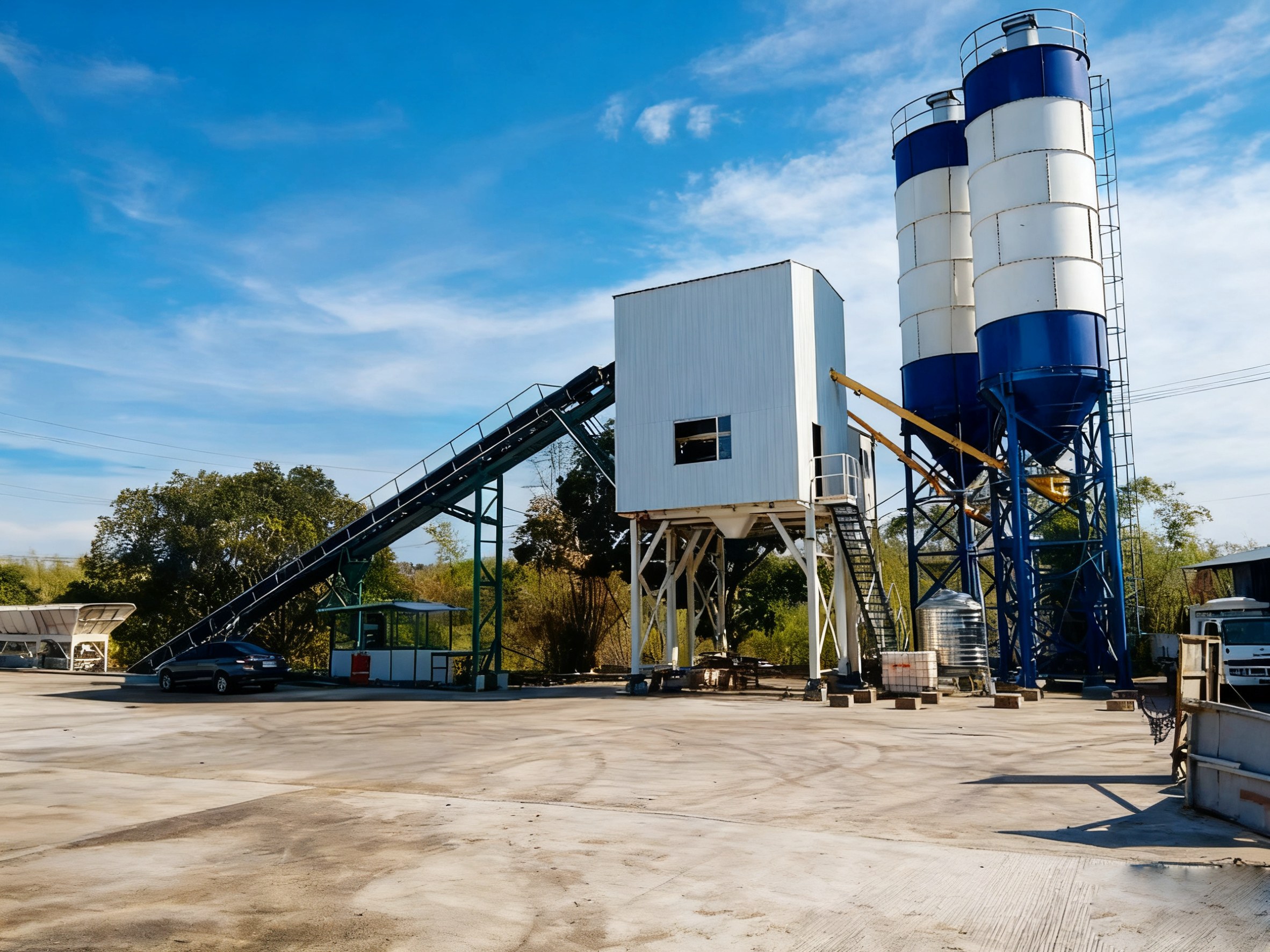
A concrete mixing plant is only comparable once output, mixer option, weighing ranges, electrical specification and documentation scope are fixed.