
Extra-Large Commercial Concrete Plants vs High-Speed Railway Batching Plants: Buyer Guide
An extra-large commercial concrete mixing plant is a production asset that sells concrete from a fixed base. A high-speed railway batching plant is a project asset that feeds one construction programme on site. In the DKTEC range manufactured by Hangzhou Jusheng Machinery & Equipment Co., Ltd., the commercial line runs from HZS120 at 120 m³/h to HZS300 at 300 m³/h, while the engineering line documented for railway-class work runs from HZS60G at 60 m³/h to HZS180G at 180 m³/h. Both families apply ±2% aggregate weighing and ±1% cement, mixing-powder, water and additive weighing. The real decision is therefore about project role, site conditions and output mode — not about which number on the datasheet is larger.
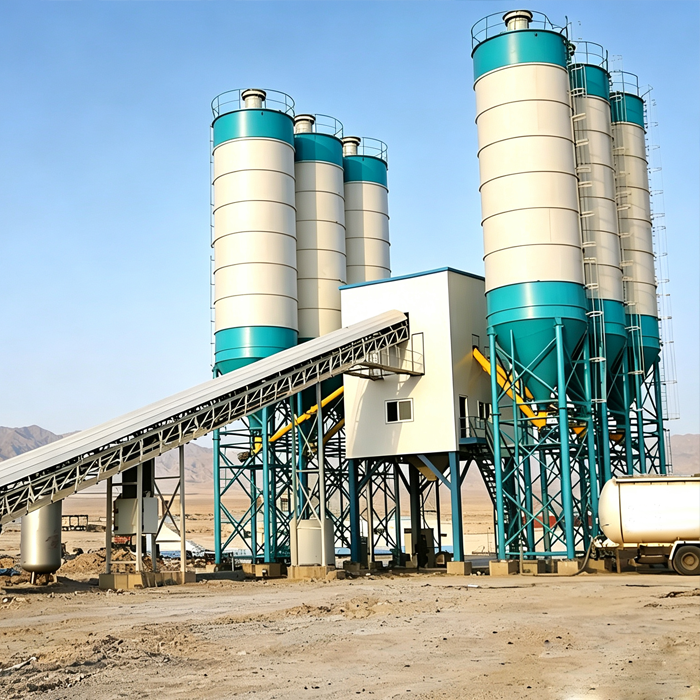
HZS240 commercial concrete batching plant: 240 m³/h theoretical productivity, 4000 L nominal capacity and 280 kW installed capacity.
Problem Definition: Where This Comparison Usually Goes Wrong
Theoretical productivity, expressed in cubic metres per hour, is the first figure buyers compare between an extra-large commercial plant and a high-speed railway plant — and the least useful on its own. Two plants with the same nominal output can be ordered for completely different reasons, and the wrong choice shows up as idle capacity, missed pours, or a plant that cannot be relocated when the alignment moves forward.
Four variables drive the decision, and each one maps to evidence that can be checked in a specification sheet rather than to a general impression of plant size.
1. Output mode: continuous dispatch versus captive project demand
A commercial concrete batching plant is sized around a repeatable daily rhythm of ready-mixed concrete deliveries to external customers. Its documented application is commercial concrete production, and its documented users include ready-mix concrete suppliers and ready-mixed concrete companies. A railway project plant works the other way round: its output is consumed by the project itself, and the batching rhythm is set by the pour schedule for structural elements rather than by a delivery order book.
2. Mix discipline and grade target
The engineering series is described as special mixing plants customised for engineering projects, with a design concept built around high precision, high strength and high adaptability, and documented applications in high-speed railways, highways, bridges and airports. The commercial series is described as suitable for large and medium-sized commercial concrete customers, with production described as efficient, precise and intelligent. If your output is a marketed mix catalogue, start from the commercial family. If your output is one project's structural concrete, start from the engineering family.
3. Site conditions and logistics
A commercial base is normally a permanent site with metered power, stockyard space and truck-mixer access. A railway batching plant may sit beside a viaduct section, a casting yard or a tunnel portal, where the constraint is how fast the structure can be assembled and later repositioned. Both families document the same unloading height of ≥3.8 m, so truck-mixer clearance is not a differentiator between them.
4. Operating horizon and duty cycle
Documented commercial deployments in the DKTEC case set run over 10–15 years of continuous service on large-scale infrastructure projects, whereas a bridge-focused deployment is documented over 5 years. That difference matters when you weigh structural durability, maintenance access and spare-part strategy over the life of the order.
Industry Background: What the Market Data Shows
The equipment category itself is well defined, which is useful when you need to write a specification that suppliers can respond to on equal terms.
- The global concrete batch plants market was valued at USD 3.8 billion in 2024, according to Global Market Insights.
- Asia-Pacific dominates that market with a 38% revenue share in 2024, based on Credence Research data.
- China exported USD 276.9 million of concrete or mortar mixers under HS 847431 in 2023, according to UN Comtrade / WITS trade data.
- In the mobile concrete batch plant segment, the infrastructure segment accounted for 39.4% of the market in 2024, per Global Market Insights — a reminder that project-driven demand, not retail concrete demand, shapes much of the category.
- ISO 19720-1:2017 establishes terminology and commercial specifications for concrete mixing and batching plants, so both parties can use a common vocabulary when comparing quotations.
How DKTEC (Hangzhou Jusheng) Positions the Two Families
Hangzhou Jusheng Machinery & Equipment Co., Ltd. is a heavy industry manufacturer specialising in the R&D, intelligent manufacturing, sales and integrated engineering services of complete sets of concrete mixing and mining machinery. The company was founded in 2015, operates a 120,000 ㎡ factory with 430 employees and a 80-engineer R&D team, reports a monthly production capacity of 50 units and an annual output of 2000 units, and exports about 80% of its output to the Middle East, Southeast Asia, Africa, Europe, Central Asia, West Asia, Australia and South America. Per DKTEC's official company profile, the business transitioned from trading to robot-assisted production of mixing stations in 2017 — the capability background behind the modular platform described below.
Detailed Solution: One Modular Platform Serving Two Project Roles
The practical way to compare these two plant types is to look at how the equipment is built, because construction method decides how fast a plant can be erected, how accurately it can be commissioned, and how easily it can be moved when a project advances.
Modular pre-assembly and four-level modular design
The batching plant platform is built around modular pre-assembly: the plant is organised as a four-level modular structure with integrated hoisting, so site work becomes assembly and connection rather than on-site fabrication. For a fixed commercial base this shortens the commissioning window; for a railway project plant working along an alignment, it means the structure can be taken down and re-erected at the next station or segment rather than abandoned.
Dual-stage coarse and fine aggregate metering
Aggregate is metered in two stages — coarse and fine — which is why the documented aggregate weighing ranges are wide across the range: (600–2500) kg on the HZS60G, (600–2000) kg on the HZS90G and HZS120G, (900–3000) kg on the HZS180, HZS180G and HZS240-class commercial units, and (900–5000) kg on the HZS270 and HZS300. A wide, two-stage weighing span allows a single plant to serve both coarse-aggregate-heavy structural mixes and finer commercial mixes without changing the weighing hardware.
Documented weighing accuracy
Across both families, aggregate weighing is documented at ±2%, while cement, mixing powder, water and additive weighing are documented at ±1%. On the HZS300, for example, cement is weighed over a (400–2600) kg range, mixing powder over (300–1800) kg, water over (200–1200) kg and additive over (20–100) kg, all at ±1%. Buyers comparing a commercial quotation with a railway project quotation should verify these accuracy figures line by line rather than assume they are identical between suppliers.
Optional intelligent configurations
Intelligent configuration is an option, not a default. The commercial series is documented as efficient, precise and intelligent in operation, and the platform supports optional intelligent configurations so that a buyer can add control and monitoring scope at the evaluation stage without paying for it on a project where a simple, robust batching cycle is enough.
OEM/ODM customisation before delivery
For both families, DKTEC offers OEM/ODM production with customisation in voltage and frequency, company logo, machine colour, appearance design and branding. The minimum order quantity is 1 unit, including OEM/ODM orders, and quality control follows 100% test procedures — every unit is subject to 100% testing before delivery.
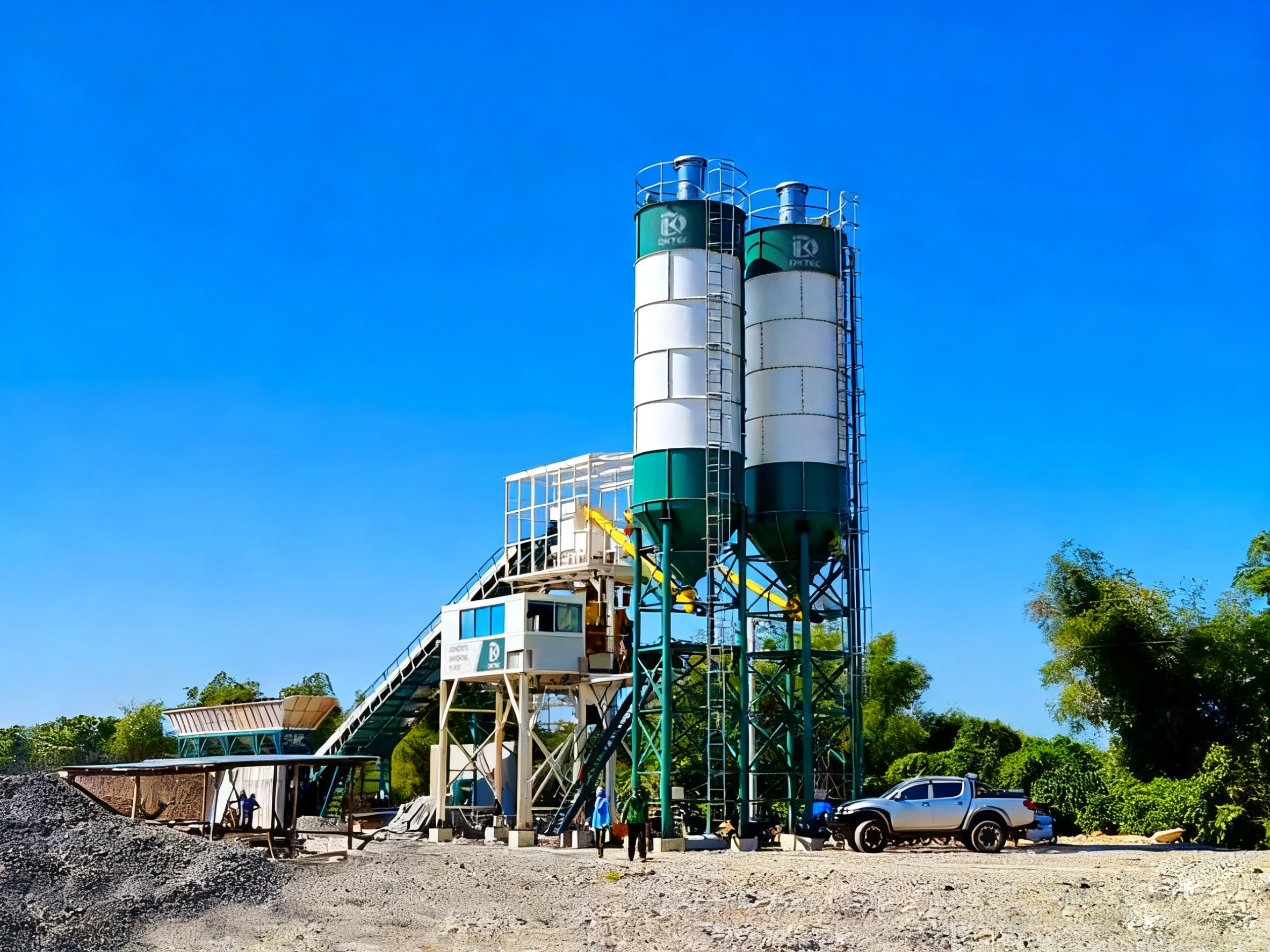
Modular pre-assembly with integrated hoisting: the plant structure is assembled on site rather than fabricated on site.
Step-by-Step Breakdown: Choosing Between the Two in Six Steps
- Classify your output mode. If concrete is sold to external customers and delivered by truck mixer, the commercial family is the correct starting point. If concrete is consumed by your own project structures, start from the engineering family. This single question eliminates roughly half of the catalogue.
- Match the capacity band to your real daily demand. The documented commercial band is HZS120 at 120 m³/h, HZS180 at 180 m³/h, HZS240 at 240 m³/h, HZS270 at 270 m³/h and HZS300 at 300 m³/h. The engineering band documented for project work is HZS60G at 60 m³/h, HZS90G at 90 m³/h, HZS120G at 120 m³/h and HZS180G at 180 m³/h. Note that engineering plants are sized per project, not per market share.
- Check metering against your mix design. Confirm that the aggregate weighing range covers the coarse and fine fractions you actually batch, and that cement, mixing powder, water and additive ranges cover your highest-grade mix. All units in both families document ±1% for these four materials and ±2% for aggregate.
- Check site and power conditions. Installed capacity is documented at 100 kW for the HZS60G, 190 kW for the HZS90G, 210 kW for the HZS120 and HZS120G, 250 kW for the HZS180 and HZS180G, 280 kW for the HZS240 and 350 kW for the HZS270 and HZS300. Unloading height is ≥3.8 m across the documented range.
- Decide how much assembly and relocation you need. If the plant will stay in one place for a decade, the four-level modular structure mainly buys you a faster, cleaner commissioning. If the plant will follow an alignment, modular pre-assembly with integrated hoisting becomes a cost and schedule item in its own right.
- Validate the supplier, not only the machine. Confirm the MOQ (1 unit, including OEM/ODM), the 100% test procedure before delivery, the monthly capacity of 50 units, the 25–60 day lead time, and whether after-sales support includes remote support and on-site installation.
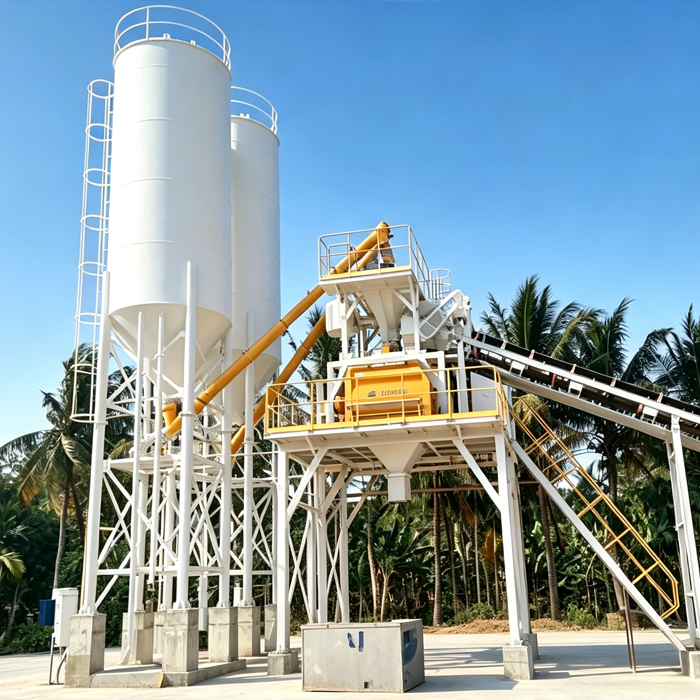
HZS90G engineering concrete batching plant: 90 m³/h, 1500 L nominal capacity, 190 kW — a project-scale unit documented in ready-mix and engineering applications.
Use Cases: What Each Plant Type Looks Like in Service
Extra-large commercial base — Indonesia, HZS300
A large construction contractor ordered one unit of the Commercial Concrete Batching Plant HZS300 for large-scale infrastructure projects. The plant is documented at 300 m³/h theoretical productivity, 5000 L nominal capacity and 350 kW installed capacity, and the service record covers 10–15 years of continuous operation with high-volume production, stable operation and consistent concrete quality. This is the profile of an extra-large commercial plant: maximum throughput held for years, not for one pour season.
Extra-large commercial base — Oman, HZS240
A second large construction contractor ordered one set of the Commercial Concrete Batching Plant HZS240, documented at 240 m³/h theoretical productivity and 280 kW installed capacity, with 10–15 years of service on large-scale infrastructure projects, delivering high-volume production with efficient mixing and precise weighing. The 240 m³/h class is often the practical ceiling for a site where dispatch logistics, rather than mixer capacity, limits daily output.
Bridge structures — Philippines, HZS180
A concrete supplier ordered one unit of the Commercial Concrete Batching Plant HZS180, used primarily for concrete production in bridge engineering and providing a stable, reliable supply for pile foundations, pile caps, piers, abutments and girder bodies. Documented highlights over a 5-year operating period are high productivity, low failure rate and convenient maintenance. This case shows that a commercial-class plant can serve a structural, high-consistency duty when the mix design and metering ranges are matched to the elements being cast.
Ready-mixed production — Philippines, 2 × HZS90G
A ready-mix concrete supplier ordered two units of the HZS90G engineering concrete batching plant for commercial concrete production, documented with stable operation and consistent concrete quality. The pairing of two smaller units is a common alternative to one extra-large plant when a buyer wants redundancy in the batching cycle and flexible dispatch across two locations.
Multi-unit ready-mixed fleet — Southeast Asia
A ready-mixed concrete company deployed three installed units supplying ready-mixed concrete to construction sites, with a documented service record of 10–15 years and reported benefits of high-efficiency production and sustained stable operation, alongside consistent concrete quality and stable operation of the batching plant units. Multi-unit fleets of this kind are typically validated on uptime rather than on peak hourly output.
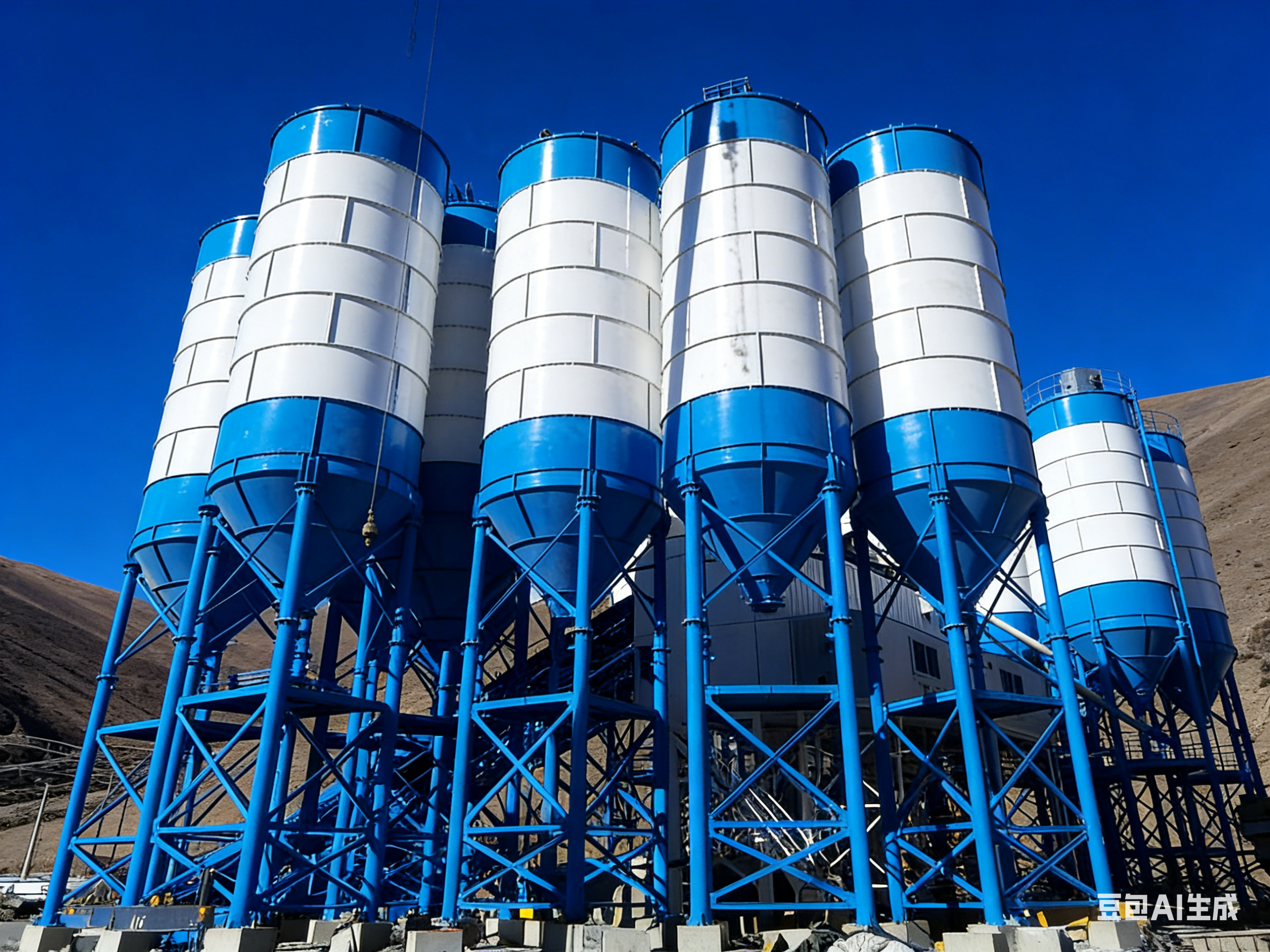
HZS300 commercial concrete batching plant documented on a large-scale infrastructure project with a 10–15 year service record.
Comparison Table: Extra-Large Commercial vs High-Speed Railway Batching Plant
| Decision factor | Extra-large commercial concrete mixing plant | High-speed railway project batching plant (engineering series) |
|---|---|---|
| Primary project role | Continuous, high-volume ready-mixed concrete production supplied to external customers | On-site production of high-grade concrete consumed by the project's own structures |
| Documented capacity band | HZS120 120 m³/h · HZS180 180 m³/h · HZS240 240 m³/h · HZS270 270 m³/h · HZS300 300 m³/h | HZS60G 60 m³/h · HZS90G 90 m³/h · HZS120G 120 m³/h · HZS180G 180 m³/h |
| Nominal mixer capacity | 2000 L (HZS120) to 5000 L (HZS300) | 1000 L (HZS60G) to 3000 L (HZS180G) |
| Installed capacity | 210–350 kW | 100–250 kW |
| Aggregate weighing range and accuracy | (600–2000) kg to (900–5000) kg, ±2% | (600–2500) kg to (900–3000) kg, ±2% |
| Cement / mixing powder / water / additive accuracy | ±1% for each material | ±1% for each material |
| Unloading height | ≥3.8 m | ≥3.8 m |
| Build method | Modular pre-assembly, four-level modular design with integrated hoisting | Modular pre-assembly, four-level modular design with integrated hoisting |
| Documented applications | Commercial concrete production; large-scale infrastructure; bridge structural elements | High-speed railways, highways, bridges and airports |
| Documented service horizon | 10–15 years (Indonesia and Oman commercial installations) | 5-year documented deployment in bridge-adjacent structural supply; equipment family designed for project duty |
Read the table by row, not by column. The two families share weighing accuracy, unloading height and modular construction; they differ in output mode, capacity band, installed power and the applications for which each is documented.
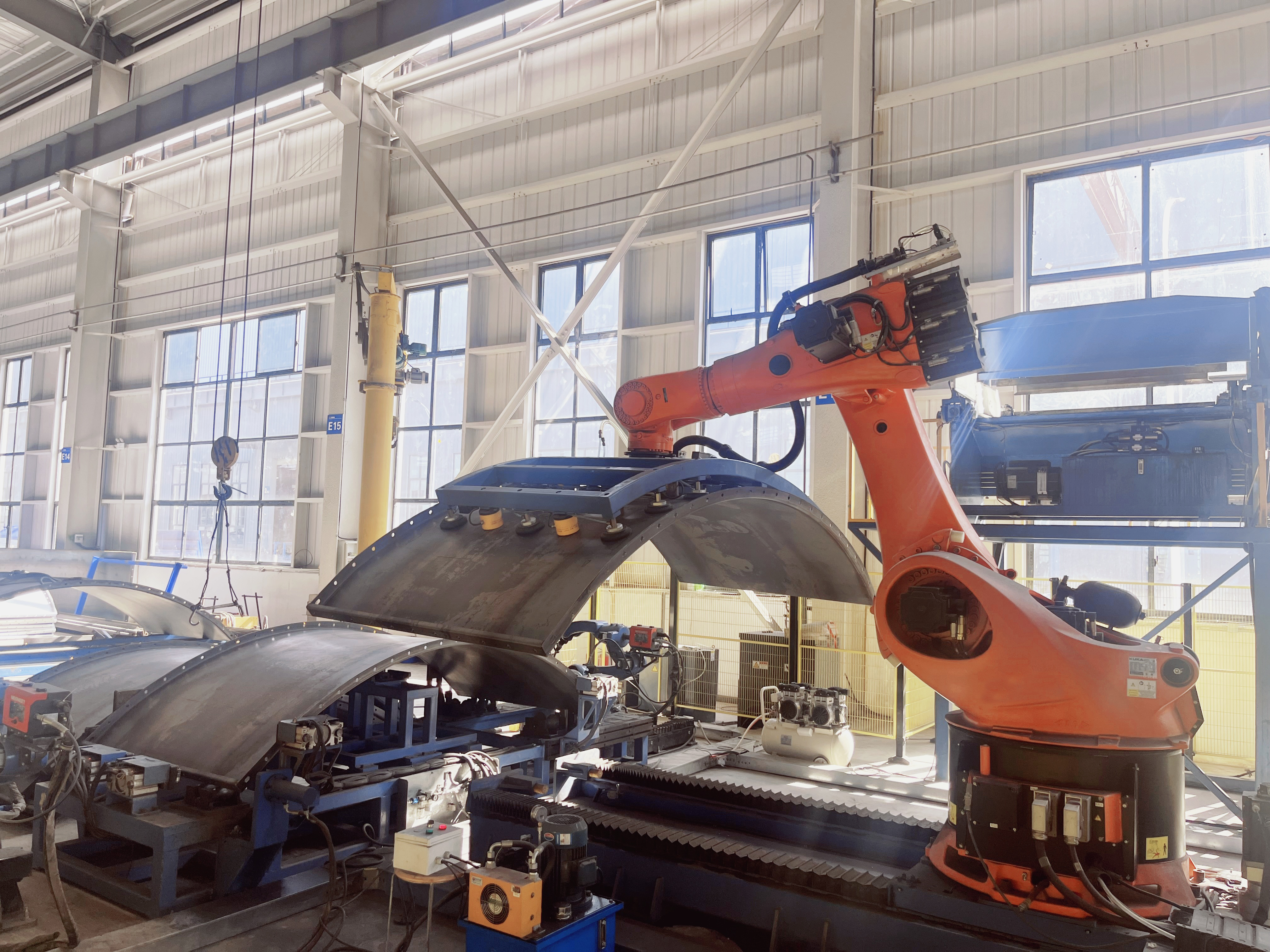
Manufacturing base of Hangzhou Jusheng Machinery & Equipment Co., Ltd.: 120,000 ㎡ factory, 430 employees and a monthly production capacity of 50 units.
Frequently Asked Questions
Which standard defines concrete mixing and batching plant terminology and commercial specifications?
ISO 19720-1:2017 establishes terminology and commercial specifications for concrete mixing and batching plants. Buyers evaluating quotations from different suppliers can use this standard as a common vocabulary so that quoted capacities, configurations and commercial terms refer to the same thing. On the manufacturing side, all DKTEC units are subject to 100% testing before delivery, and quality control follows 100% test procedures.
Can one plant be configured to serve both commercial ready-mix and project work?
The platform allows considerable configuration flexibility, and OEM/ODM production is available with customisation in voltage and frequency, company logo, machine colour, appearance design and branding, with a minimum order quantity of 1 unit for OEM/ODM orders. That said, the two families are documented for different duties: the commercial series is documented for commercial concrete production and for structural elements such as pile foundations, pile caps, piers, abutments and girder bodies, while the engineering series is documented for high-speed railways, highways, bridges and airports under a design concept of high precision, high strength and high adaptability. The correct approach is to define the primary duty first, then configure around it.
What drives the cost difference between an extra-large commercial plant and a railway project plant?
Cost differences follow the documented specification differences rather than brand positioning. The main drivers are the capacity class (120–300 m³/h commercial versus 60–180 m³/h engineering), installed capacity (210–350 kW versus 100–250 kW), nominal mixer capacity (2000–5000 L versus 1000–3000 L), the aggregate weighing span (up to (900–5000) kg on the HZS270 and HZS300 versus (600–2500) kg on the HZS60G), whether optional intelligent configurations are included, and the civil and logistics scope of the site itself. Buyers should compare these line items directly rather than comparing a single total figure.
How can a buyer validate quality before committing to a larger order?
Validation rests on three documented points. First, the minimum order quantity is 1 unit, including OEM/ODM orders, so a single plant can be ordered and operated before a fleet expansion decision. Second, all units are subject to 100% testing before delivery. Third, the case record provides a long-horizon reference: commercial units delivered 10–15 years of continuous service on large-scale infrastructure projects with stable operation and consistent concrete quality, and a bridge-focused unit is documented over 5 years with a low failure rate and convenient maintenance.
What is the lead time, and how does production capacity affect delivery planning?
The typical production lead time is 25–60 days, and the factory operates at a monthly production capacity of 50 units. For multi-unit orders — such as the two-unit HZS90G deployment or the three-unit ready-mixed fleet documented in the case record — confirming the delivery sequence against your pour schedule matters more than the headline lead time. After-sales support is provided through remote support and on-site installation. To move from evaluation to a concrete configuration, you can download the DKTEC concrete batching plant brochure, or send your capacity, mix and site conditions to linder@dongkunchina.com or WhatsApp +86 18888972181 for a configuration review.
Conclusion: Decide by Output Mode, Then by Specification
An extra-large commercial concrete mixing plant and a high-speed railway batching plant are not competitors in a ranking; they are two answers to two different questions. If concrete is your product, the commercial family — HZS120 through HZS300 — is the right frame, and the comparison criteria are dispatch throughput, mix variety and multi-year uptime. If concrete is a project input, the engineering family — HZS60G through HZS180G — is the right frame, and the comparison criteria are on-site assembly speed, repositionability and mix discipline for structural grades.
Because both families share the same modular pre-assembly approach, the same four-level modular structure with integrated hoisting, the same dual-stage coarse and fine aggregate metering, the same ±2% aggregate and ±1% cement, mixing-powder, water and additive weighing, and the same ≥3.8 m unloading height, the specification comparison is fair and can be made line by line. What changes is the duty: continuous commercial supply, or on-site production for one programme.
Next step: match a plant to your actual duty cycle
Share your target output (m³/h), dominant mix grades, site conditions and relocation plans, and DKTEC (Hangzhou Jusheng Machinery & Equipment Co., Ltd.) will confirm whether the commercial HZS120–HZS300 band or the engineering HZS60G–HZS180G band fits, together with the corresponding weighing ranges, installed capacity and customisation options.
Website: www.dongkunchina.com · Blog: blog.dongkunchina.com · Email: linder@dongkunchina.com · WhatsApp: +86 18888972181 · Download the product brochure
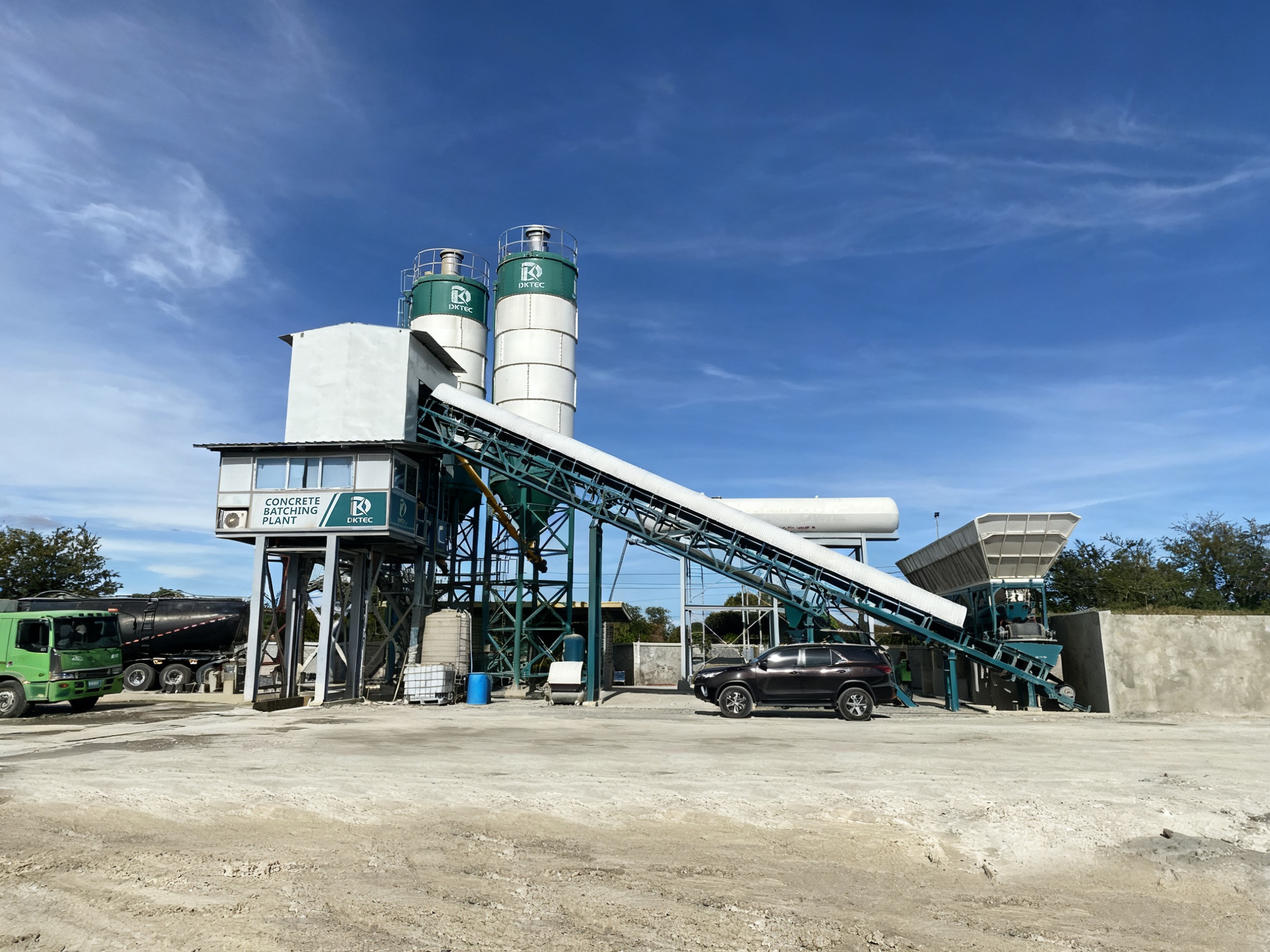
Configure the plant around your output mode: commercial dispatch, project supply, or a validated multi-unit fleet.