Smart Concrete Mixing Plant Compliance: Documenting Intelligent Options for Global Projects
Short answer: the compliance file that most often stalls a global concrete mixing plant project is not the certificate folder — it is the missing paper trail behind the optional intelligent functions that were written into the specification. Four options need explicit documentation: online slump monitoring based on the mixer motor current curve, intelligent powder silo level monitoring at ±2% inventory accuracy, a dust-protected screw-type air compressor with 20 dB noise reduction, and a fully enclosed standby hopper. This guide shows how to assemble that evidence file, and which supporting equipment and control-room records reviewers expect to see verified alongside it.
Problem Definition: Why Intelligent Options Fail Regional Review
A concrete mixing plant can pass a general equipment review and still be stopped at the environmental or owner-engineering stage, for one recurring reason: the intelligent functions exist in the sales conversation but not in the document set. Reviewers in the EU, the Middle East, Southeast Asia, Africa and Latin America increasingly ask the same three questions — what does the function actually measure, how is that measurement produced, and what record proves it was verified before shipment.
When those questions cannot be answered from the submitted file, the intelligent option is downgraded to “unverified claim” and the plant is treated as a standard configuration. That downgrade has real consequences: a plant sold with online slump monitoring may be reviewed as if slump were still checked manually after the concrete leaves the plant, and a plant sold with ±2% powder silo level monitoring may be reviewed as if inventory were still managed by manual tank tapping.
Working rule for buyers: every intelligent claim must be traceable in three places at once — the technical specification, the control-room narrative, and the supporting equipment bill of materials. If the claim appears in only one of the three, assume the reviewer will treat it as unconfirmed.
The problem is not that intelligent features are hard to justify. It is that they are usually described in marketing language rather than in the format a reviewer can check: measured variable, sensor or signal source, accuracy statement, verification method, and responsible document. Building the file in that format is the practical task this guide addresses.
Industry Background: What Global Buyers Are Reviewing Now
The volume and geography of batching plant trade explains why documentation expectations have tightened. According to Global Market Insights, the global concrete batch plants market was valued at USD 3.8 billion in 2024. Credence Research reports that Asia-Pacific accounted for a 38% revenue share of that market in 2024, which means the largest supply base and the largest review burden sit in the same region.
Export flows confirm the global review pattern. UN Comtrade and WITS data show that global exports of concrete or mortar mixers under HS code 847431 reached USD 276.9 million from China in 2023. On the demand side, Global Market Insights reports that the infrastructure segment accounted for 39.4% of the mobile concrete batch plant market in 2024 — a segment where equipment is frequently relocated and re-reviewed in a new jurisdiction.
On the standards side, ISO 19720-1:2017 establishes terminology and commercial specifications for concrete mixing and batching plants. That standard gives buyers and reviewers a shared vocabulary, but vocabulary alignment is not the same as evidence. A plant described in ISO 19720-1 terminology still needs a document that states what its intelligent monitoring functions measure and how the measurement was checked.
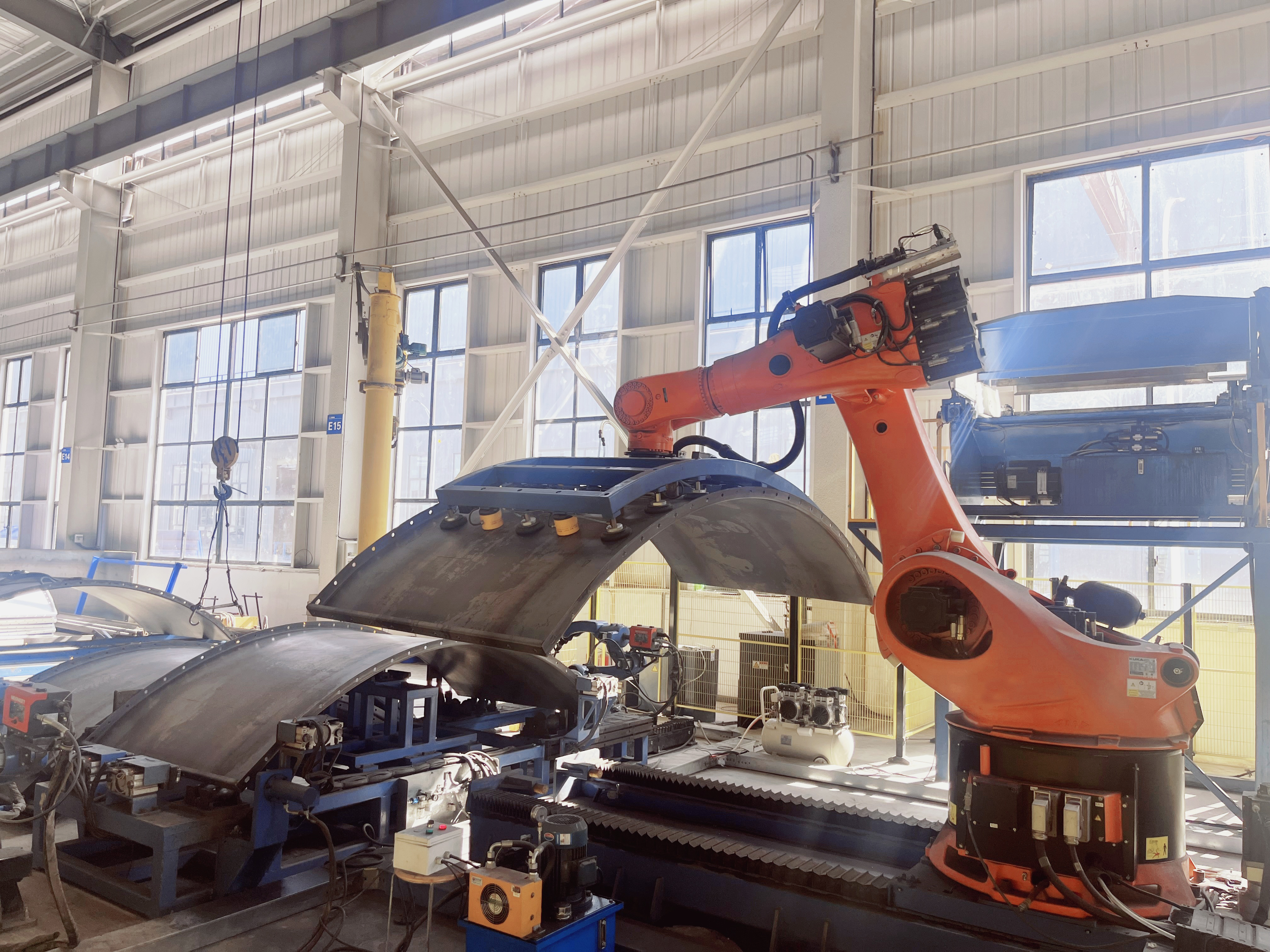
Hangzhou Jusheng Machinery & Equipment Co., Ltd., which operates under the DKTEC brand, is a concrete mixing plant manufacturer based in Hangzhou, Zhejiang, China, with a stated transition in 2017 from trading to robot-assisted production of mixing stations. Its export orientation — reported at 80% of output, serving the Middle East, Southeast Asia, Africa, Europe, Central Asia, West Asia, Australia and South America — makes documentation portability a practical requirement rather than a marketing preference.
Detailed Solution: Documenting the Four Intelligent Options
The four options below are the ones most frequently specified for commercial and engineering batching plants and most frequently under-documented. For each, the correct approach is to state the measured variable, the signal source, the accuracy or performance claim, and the verification document.
1. Online Slump Monitoring Based on the Mixer Motor Current Curve
In a standard plant, slump is confirmed manually after the concrete leaves the plant. Jusheng provides real-time, online slump monitoring based on the mixer's motor current curve, which moves the measurement upstream into the mixing cycle. For a reviewer, the value of this function depends entirely on whether the signal source and the correlation method are documented.
What to document:
- The signal source — confirmation in writing that the slump indication is derived from the mixer motor current curve, not from a separate post-discharge sensor.
- The sampling regime — how often current data is captured during a mixing cycle.
- The correlation record — how the displayed slump indication was checked against laboratory slump tests during commissioning.
- The control-logic narrative — what the system does when the indication falls outside the target band, and who receives the alert.
Typical reviewer question: “Who reads this value, at what point in the cycle, and what happens if the mix drifts?” A one-page control narrative answers this better than a specification sentence.
2. Intelligent Powder Silo Level Monitoring at ±2% Accuracy
Jusheng's intelligent powder silo level monitoring offers ±2% accuracy relative to maximum silo capacity. The comparison point matters for review: manual tank tapping or standard plumb-bob level gauges carry significantly larger errors, because the reading depends on operator judgement. Where a reviewer is assessing material accountability or dust-control practice, a calibrated continuous level reading is a materially different claim from a manual check.
The same control architecture supports ERP, PLC and mobile app integration for real-time material level monitoring. That integration is usually the second question in review, because it determines whether level data is a local display or a record that can be audited.
What to document:
- Sensor model, mounting position and installation drawing for each silo.
- The calibration method used to establish the ±2% figure relative to maximum capacity.
- Data retention and export format — the fields that pass from PLC to ERP, and how historical level data is retrieved.
- The mobile app access model, including who holds accounts and at what permission level.
Documented level monitoring also supports a practical operational argument during review: precise level monitoring and intelligent material ordering minimize air compressor idling and emergency pneumatic conveying, because conveying is triggered by an actual level value rather than by an operator's estimate.
3. Dust-Protected Screw-Type Air Compressor with 20 dB Noise Reduction
The rotary screw air compressor used in the intelligent package reduces noise by 20 dB compared with piston models. On an urban or near-residential project, that single figure often determines whether the plant clears a noise review without an additional acoustic enclosure.
The dust-protection element is equally reviewable. The compressor supplies pneumatic conveying and valve actuation in an environment where cement and fly ash dust are present; a protected intake and filtration specification is what separates a durable installation from a maintenance liability. Reviewers assessing housekeeping and equipment protection will ask for the compressor model, its filtration grade, and where it sits relative to the silo and main tower.
What to document:
- Compressor type and model, stated as a screw-type machine.
- The 20 dB noise reduction claim, together with the reference condition under which it is measured (comparison against piston-type units).
- Intake filtration specification and dust-protection arrangement.
- Layout drawing showing compressor position relative to silo, main tower and control room, which supports the noise statement at the site boundary.
4. Fully Enclosed Standby Hopper
The fully enclosed standby hopper reduces open area by 75% compared to standard configurations. This is a structural and sealing claim rather than a control claim, and it is best evidenced by drawings plus a cleanliness inspection of the main tower after a production run.
The enclosed hopper is designed to work as part of a wider environmental package: a forced membrane bag filter, the fully enclosed waiting hopper, and a counter-current internal circulation air duct. Dust removal efficiency reaches ≥99.9% with membrane-coated filter bags, against approximately 99% for standard fabric bags. Where the WAM SILOTOP series is specified, dust emissions are below 10 mg/Nm³, against an industry standard of 20–50 mg/Nm³.
The closed design also has a maintenance consequence that reviewers accept as supporting evidence: an enclosed hopper minimizes dust leakage and keeps the interior of the main tower clean, whereas standard configurations accumulate dust. Membrane-coated filter bags are water- and oil-repellent and use pulse-jet cleaning, giving lower maintenance frequency and longer service life than simple fabric bags prone to caking.
5. Supporting Equipment and Control-Room Records That Must Be Verified
Intelligent options do not stand alone. Reviewers verify them against the equipment that produces the signal, and against the room where the signal is read. For a 120 m³/h class HZS120 configuration, the verifiable items typically include:
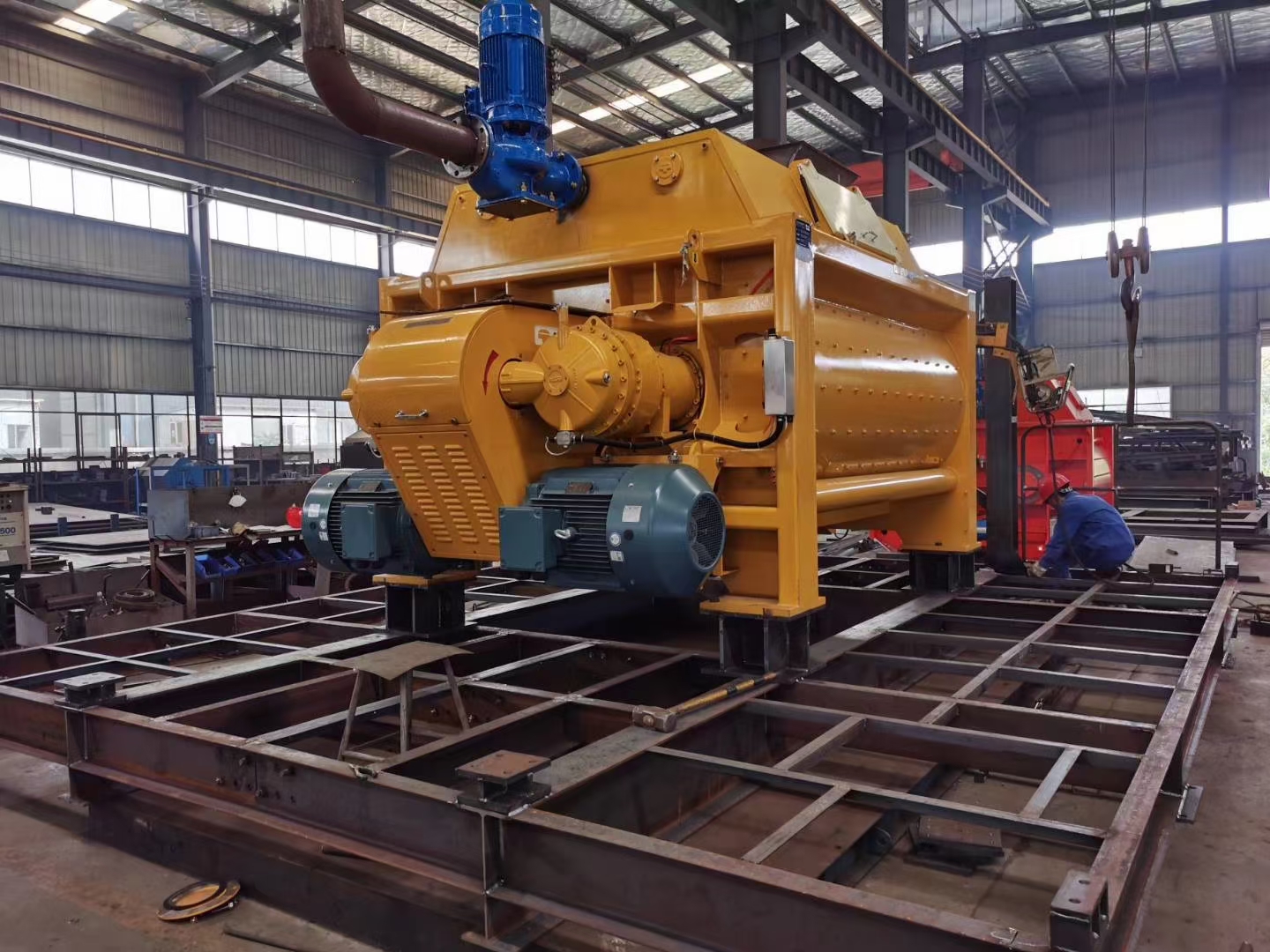
- Main mixer: SICOMA or BHS mixer fitted as standard; a SICOMA MAO3000/2000 unit uses dual 37 kW motors, an integral hexagonal main shaft and 14 high-strength mixing arms.
- Load cells: Meidia/Keli load cells, supporting weighing accuracy of ±2% for aggregates and ±1% for cement.
- Pneumatic components: Erip/Airtac cylinders, which govern valve actuation reliability and therefore the repeatability of automated batching.
- Conveying and valves: screw conveyors and butterfly valves available with SICOMA or WAM options, allowing parts to be traced to an original manufacturer.
- Plant parameters stated in the review file: theoretical capacity 120 m³/h, 2000 L mixer, discharge height ≥3.8 m, installed power 210 kW.
Control-room documentation should cover the PLC and ERP interface, the mobile app used for real-time material level monitoring, alarm logic for out-of-range slump or low silo level, and the operator workstation arrangement. Where dual-station control is specified, the control room file should also state how the two stations are coordinated — the “one operator, two plants” arrangement consolidates two stations under one operator and, based on internal data, reduces labor costs by 50% compared with standard control.
Buyers should treat the supporting equipment BOM as a compliance document, not a procurement document. Verifying component brands at the point of order is what makes the intelligent claims auditable later, and it also preserves spare-parts traceability: a multi-brand component system allows parts to be sourced from OEMs such as SICOMA, BHS and WAM or directly from the plant manufacturer.
Step-by-Step Breakdown: Six Steps to a Review-Ready File
- Map the regional review questions before writing the specification. Establish what the environmental authority, owner's engineer or EPC reviewer will ask about dust, noise, material accountability and control-room practice. Answers to those questions determine which intelligent options need documentary depth.
- Freeze the intelligent configuration in the technical specification. Name each option with its measured variable and accuracy statement — for example, powder silo level monitoring at ±2% relative to maximum capacity, or slump monitoring based on the mixer motor current curve. Vague wording such as “smart control” cannot be verified later.
- Match every intelligent claim to a document type. Control claims need a control narrative and a correlation record; structural claims need drawings and an inspection record; environmental claims need a filter media specification and an emission statement.
- Cross-verify the supporting equipment BOM against the control narrative. If the narrative describes ±2% aggregate weighing, the BOM should show the load cell supplier and range. If the narrative describes a dust-protected screw compressor, the BOM should show its filtration specification.
- Request factory pre-assembly and test records. Modular plants are pre-assembled and debugged before delivery, which allows sealing, alignment and control-point checks to be documented at the factory rather than argued on site. Modular construction also reduces on-site installation workload by 20% compared with traditional site-welded plants.
- Prepare the control-room handover pack. Include PLC and ERP interface documentation, mobile app accounts, alarm set points, and operator training records. This is the pack that converts an intelligent option from a shipped feature into an operating record.
Sequencing note: steps 1 and 2 must happen before the order is placed. Once the specification is frozen without accuracy statements, no amount of factory testing can restore the missing evidence.
Use Cases: Where the Evidence File Changes the Outcome
Urban ready-mix plants in strictly regulated markets
Urban ready-mix concrete plants and markets with strict environmental regulations — such as urban projects in the EU, the Middle East and Southeast Asia — are the settings where the dust and noise documentation carries the most weight. The combination of membrane-coated filter bags at ≥99.9% dust removal efficiency, an enclosed hopper reducing open area by 75%, and a screw compressor with 20 dB noise reduction answers the three most common objections in one package. Standard configurations remain appropriate for remote sites with lenient environmental requirements, and stating that boundary clearly in the file reduces unnecessary challenge.
Container-shipped export projects with short site windows
Projects delivered by shipping container depend on documentation that survives the sea voyage. Modular plants are suitable for export via container, fast-track overseas projects and phased projects requiring relocation, and modular stations can be dismantled and reused, retaining residual value after project completion. Mobile stations can be operational within approximately three days of arrival. A documentation pack built around factory pre-assembly records fits this model, because the verification work is completed before the container is loaded.
Multi-plant group operations
Group operators running several stations gain the most from documented intelligent control. The intelligent control package is designed for multi-plant group operations and commercial concrete producers, while standard industry control suits small-scale single-plant operations without strict intelligent automation requirements. Dual-station control enables load sharing during peak and off-peak periods, which optimizes overall power consumption compared with stations that rely on manual experience and leave air compressor loading times and frequency uncontrolled. For a group, the compliance argument and the operating argument are the same argument: auditable data replaces operator judgement.
Comparison Table: Standard Configuration vs Documented Intelligent Option
The table below converts each intelligent option into the document a reviewer will actually request. Performance figures are drawn from the manufacturer's stated configuration data.
| Configuration item | Standard industry configuration | Documented intelligent option | Evidence to request |
|---|---|---|---|
| Slump control | Manual testing after the concrete leaves the plant | Real-time online slump monitoring based on the mixer motor current curve | Control narrative; sampling regime; correlation record against laboratory slump tests |
| Powder silo inventory | Manual tank tapping or standard plumb-bob level gauges | Intelligent powder silo level monitoring at ±2% accuracy relative to maximum capacity | Sensor model and mounting drawing; calibration method; ERP field mapping |
| Operator coverage | Single-station, single-control mode | Dual-station control; labor cost reduced by 50% versus standard control (based on internal data) | Control-room layout; workstation configuration; operator training record |
| Air compressor | Piston-type units | Dust-protected screw-type air compressor with 20 dB noise reduction versus piston models | Compressor model; filtration grade; noise reference condition; layout drawing |
| Standby hopper | Open or partially open design | Fully enclosed standby hopper; open area reduced by 75% versus standard configuration | Structural and sealing drawing; main-tower cleanliness inspection record |
| Dust collection | Simple bag filters or cyclone collectors | Forced membrane bag filter at ≥99.9% removal efficiency; WAM SILOTOP series below 10 mg/Nm³ | Filter media specification; emission statement; pulse-jet cleaning maintenance schedule |
| Air duct design | High-airflow exhaust-type dust extraction | Counter-current internal circulation air duct | Airflow diagram; fan power rating; comparison of exhaust-air volume |
| Data management | Data silos; manual inventory checks; on-site fault diagnosis | ERP, PLC and mobile app integration for real-time material level monitoring | Interface documentation; app account model; alarm set points and escalation logic |
Frequently Asked Questions
What compliance evidence does a global reviewer expect for the intelligent options on a concrete mixing plant?
A reviewer expects each intelligent option to be traceable to a measured variable, a signal source, an accuracy or performance statement, and a verification document. For powder silo monitoring, that means a calibrated ±2% accuracy statement relative to maximum capacity plus the calibration method. For dust control, it means a membrane-coated filter bag specification, a stated removal efficiency of ≥99.9%, and where applicable a WAM SILOTOP series emission figure below 10 mg/Nm³ against an industry standard of 20–50 mg/Nm³. For the standby hopper, it means a drawing showing an open area reduced by 75% compared with standard configurations. Certificates alone do not satisfy this requirement, because they describe the equipment category rather than the specific option installed.
Can online slump monitoring and powder silo level monitoring operate from the same control system?
Yes. The Jusheng intelligent control system incorporates over a dozen intelligent technologies within one platform, including dual-control functionality for a single unit, intelligent powder silo level monitoring at ±2% accuracy, and real-time slump monitoring based on the mixer motor current curve. The system supports ERP, PLC and mobile app integration for real-time material level monitoring, so level data and slump data are accessible from the same control layer rather than from separate systems. Standard industry batching plants, by contrast, typically operate in single-station, single-control mode with manual raw material inventory management and manual slump testing after the concrete leaves the plant. Buyers reviewing this capability should request the interface documentation that shows how both data streams are exposed.
How should a buyer compare the cost of an intelligent option package with a standard control configuration?
The comparison should be made over the operating period rather than at the quotation stage. The intelligent package requires a higher initial investment than standard control, but it recovers labor cost by consolidating two stations under one operator — the “one operator, two plants” arrangement reduces labor costs by 50% compared with standard control, based on internal data — and it reduces losses from bin overflows or material shortages. A standard configuration has a lower initial investment but higher long-term labor costs, and inaccurate inventory data can lead to price premiums on emergency material purchases. Buyers should also account for the environmental side: the eco-friendly filter system costs more than basic dust collection upfront, but it avoids the risk of environmental fines or work stoppages and recovers cement and fly ash that would otherwise be lost. On the mixer side, a SICOMA unit carries a higher unit price than an OEM-assembled equivalent, but extended service life of shaft seals and liners results in a lower total cost of ownership.
Can the intelligent configuration be verified before the plant ships?
It can, and it should be. Modular batching plants are pre-assembled and debugged in the factory before delivery, which allows control points, sealing details and alignment to be checked against the specification while the equipment is still accessible. Modular construction also reduces on-site installation workload by 20% compared with traditional site-welded plants, so more of the verification work is completed under factory conditions. For intelligent functions specifically, buyers should ask for the control narrative, the alarm set points, and — for slump monitoring — the correlation record produced during commissioning. A witness test at the factory is the most direct way to confirm that the shipped configuration matches the documented configuration.
What is a realistic timeline from order to documented commissioning?
Timelines depend on configuration and destination, but two verified reference points are useful. Modular and mobile stations can be operational within approximately three days of arrival on site, because the machine is pre-assembled and pre-tested before shipment; traditional fixed stations, by contrast, often require weeks of on-site welding. The installation phase itself is also shorter for modular equipment, which reduces on-site installation workload by 20% compared with traditional site-welded plants. Buyers should confirm delivery schedules against their own project milestones at the quotation stage. To request a sample configuration sheet, a quotation against a specific project profile, or the full product catalogue, contact the manufacturer directly at linder@dongkunchina.com or via WhatsApp at +86 18888972181.
Conclusion
Smart concrete mixing plant compliance is a documentation problem before it is a technology problem. Online slump monitoring based on the mixer motor current curve, intelligent powder silo level monitoring at ±2% accuracy, a dust-protected screw-type air compressor with 20 dB noise reduction, and a fully enclosed standby hopper are all verifiable — but only when each claim is tied to a signal source, an accuracy statement, and a record produced during factory pre-assembly or commissioning.
The practical sequence for any global project is straightforward: map the regional review questions first, freeze the intelligent configuration with explicit performance statements, verify the supporting equipment BOM and control-room documentation against those statements, and capture the evidence at the factory rather than on site. Buyers who build the file this way present a plant that a reviewer can audit option by option, instead of a specification that has to be defended line by line.

Request a Documented Configuration for Your Project
Hangzhou Jusheng Machinery & Equipment Co., Ltd. (DKTEC) supplies intelligent concrete mixing plants for commercial, engineering and export projects, supported by factory pre-assembly, commissioning and multilingual technical documentation. Share your project profile and receive a configuration sheet that states the intelligent options, their measured variables and the verification records provided with shipment.
Website: www.dongkunchina.com | Email: linder@dongkunchina.com | WhatsApp: +86 18888972181
Download the full product catalogue: DKTEC Concrete Batching Plant Catalogue (PDF)
Have Questions or Need More Details?
Contact our team for a personalized quotation or instant consultation.
Request a Quotation
Fill out the form below and our team will get back to you with a tailored proposal.
WhatsApp Direct Chat
Prefer to chat in real-time? Message us on WhatsApp for instant assistance & quick answers.
- Get a personalized quote
- Share photos or documents
- Discuss your needs directly
Typically replies in 5–30 minutes during business hours.