
Cosmetic Bag Application Guide for Gift Packaging & Retail
Cosmetic Bag Application Guide for Gift Packaging & Retail
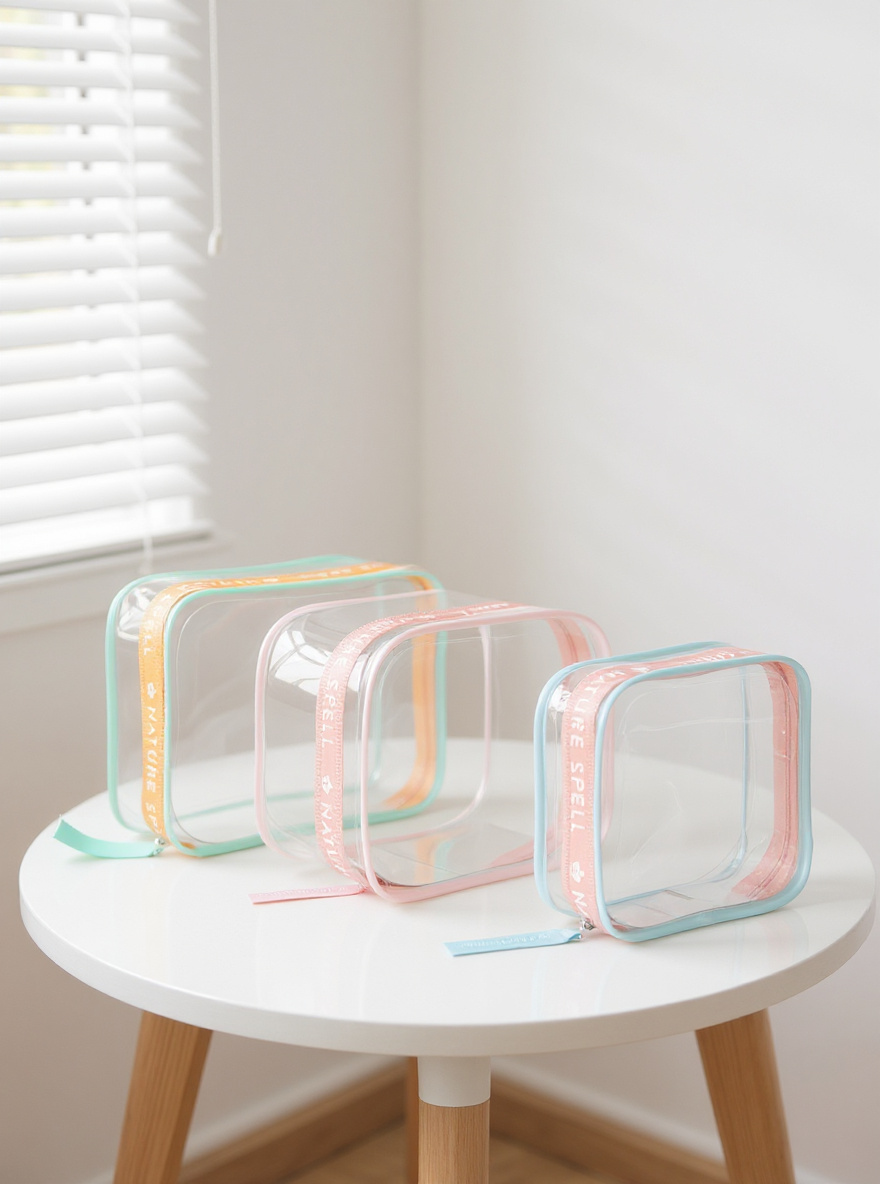
A cosmetic bag produced for gift packaging has to survive being handed over, carried daily, and stored in real bathrooms and handbags while keeping a brand logo readable. This application guide explains how to adapt a cosmetic bag to two specific project types: China-based brand promotional gift programmes and supermarket retail supporting projects. It covers the specification points that decide whether such a project holds up in use — material and compliance requirements, accessory configuration, decoration method, and the operating conditions the finished bag has to tolerate.
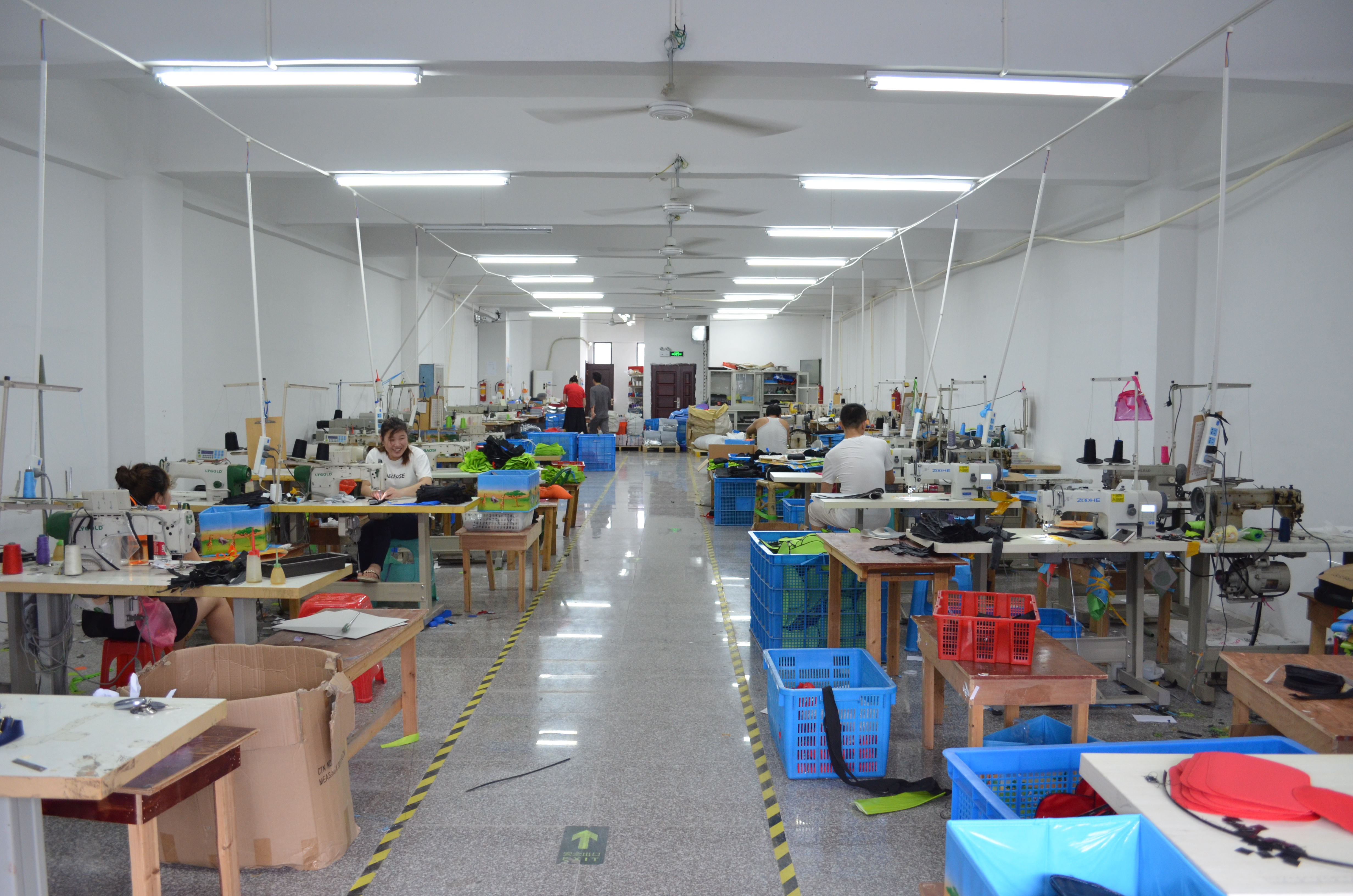
Zhejiang Hansun Arts & Crafts Co., Ltd. (Hansun) is a China-based manufacturer founded in 1996 that produces tote bags and PVC bags, including cosmetic bag model CB-2026-002. The company operates a 25,000 m² facility in Longgang, Wenzhou, Zhejiang, with 200 employees, a 25-engineer R&D team, an annual output of 20,000,000 units, and a 70% export ratio across worldwide markets.
The product referenced throughout this guide is model CB-2026-002, offered as a PVC clear cosmetic bag, a PU leather cosmetic bag, a travel toiletry cosmetic bag or a mini zipper cosmetic pouch. Sizes are customizable, decoration can be applied by hot stamping, UV printing, embossing or heat sealing, and unit weight sits between 20 g and 80 g per piece.
Problem definition: where gift-packaging cosmetic bag projects break down
Gift-packaging cosmetic bag projects rarely fail because of appearance. They fail on four specification constraints, each of which can be written into the order before production starts.
- Logo wear. A logo printed on a bag that is carried every day sits against hands, keys, coins and zipper pulls. When the decoration method is chosen without a wear requirement attached, the brand mark degrades before the promotion period is over.
- Compliance mismatch. Retail buyers and brand compliance teams request quality-management and social-compliance evidence before purchase orders are released. If the supplier cannot document certification coverage for the destination market, the project stops at sample stage.
- Accessory mismatch. Hang tags, webbing and brand stickers are often treated as decoration only, but they also determine how the bag is displayed, attached and identified on a retail floor or in a gift set.
- Use-condition mismatch. A bag specified for indoor display is in practice carried outdoors and stored in humid bathrooms. Material choice has to reflect the real use cycle, not the catalogue photograph.
The practical consequence is that the specification conversation should happen before tooling and before artwork is finalised. Once material, decoration and accessories are fixed, changing any one of them mid-project affects the sample round and the delivery window.
Industry background: market size, material mix and regulatory timing
Third-party research published by Deep Market Insights valued the global makeup bags market at approximately USD 2.8 billion in 2025, with a projected value of USD 4.5 billion by 2031. Reported figures vary with the scope of each study — The Insight Partners has published a narrower bags-and-cases figure of USD 232.55 million — so market numbers are best used as directional context for planning, not as a procurement benchmark.
On material mix, Cognitive Market Research identifies nylon as the dominant material in the makeup bag market as of 2025, with aluminum cases as the fastest-growing segment for professional use. For gift-packaging and retail-support projects the relevant shortlist is narrower: clear PVC, PU leather, canvas, nylon and mesh formats, each with a different balance of visibility, printability and hand feel.
Regulatory timing matters for programmes shipped from China in 2026. China's GACC Decree No. 284, effective December 1, 2026, introduces a risk-based customs supervision system for exported cosmetics and related products, with emphasis on digital verification and traceability. In the United States, the FDA's Modernization of Cosmetics Regulation Act (MoCRA) requires facility registration and product listing, which affects supply-chain compliance for cosmetic accessories. Buyers assembling promotional or retail programmes should confirm how their supplier's documentation supports these requirements before the shipping window, not after.
Detailed solution: scenario-adapted specification for promotions and retail
Material and compliance baseline
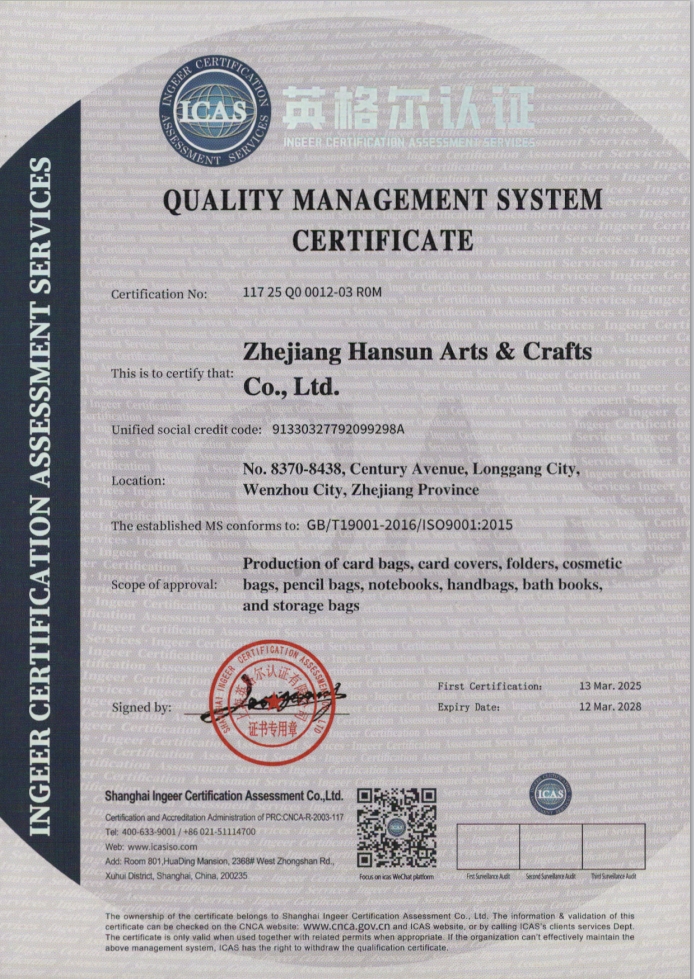
Certification coverage for model CB-2026-002 is documented across four schemes, each with a defined market scope:
- ISO 9001:2015 — certification number ISO-2026-7890, issued by an International Certification Body, applicable to the Global market. The certification scope covers product design, production, quality control and delivery processes, and is based on the ISO 9001:2015 Quality Management System standard.
- BSCI (Business Social Compliance Initiative) — certification number BSCI-2026-4567, issued by an Amfori BSCI Approved Audit Firm, applicable to the EU, Middle East and global retail brands markets. The scope covers factory social responsibility, ethical sourcing and working conditions, under the Amfori BSCI Code of Conduct.
- Sedex 4 Pillars (SMETA) — certification number SEDEX-2026-0123, issued by a Sedex Approved Audit Body, applicable to the EU, UK, North America and Australia markets, under the Sedex SMETA 4 Pillars Code.
- Disney FAMA — certification number DSN-FAMA-2026-001, issued by Disney International, applicable to the Global market (including the US, EU and Asia) for the production and supply of Disney licensed promotional bags and gifts, under the Disney Code of Conduct & Product Safety Standards.
Because audit cycles renew on their own schedule, buyers should confirm the current validity period against the certificate copies at the time of order rather than relying on a date quoted in an earlier document set.
Special requirements for this scenario
The gift-packaging scenario described here carries four hard requirements that separate a project-grade bag from a generic pouch: food-grade eco-friendly PVC, REACH compliance, scratch resistance, and logo printing wear resistance. Each one is a written specification point, not an assumption.
- Food-grade eco-friendly PVC. This requirement applies when the pouch can come into contact with skin or sit alongside personal-care products in the same kit. It has to be stated in the material specification so the correct PVC grade is quoted, not substituted at production.
- REACH compliance. EU-facing programmes normally require chemical-compliance documentation covering both the base material and the decoration inks. Buyers should request the material declaration and test documentation that match the exact colour, grade and printing method used on their order.
- Scratch resistance. A transparent panel makes surface condition more visible over a long use cycle, which is why scratch resistance belongs in the acceptance criteria for clear PVC formats rather than being treated as a visual preference.
- Logo printing wear resistance. Define how the logo must perform after repeated handling, then select between hot stamping, UV printing, embossing and heat sealing on that basis. The decoration method should follow the wear requirement, not the other way around.
Accessories: hang tags, webbing and brand stickers
Accessories are supplied as part of the matched configuration for this scenario — hang tags, webbing and brand stickers. Their functions differ, and each one should be specified separately.
- Hang tags carry printed project information such as brand story, care instructions or promotion details, and they are usually the first element a recipient reads.
- Webbing provides the textile attachment element: it creates the physical connection point that gives a mini pouch or travel format a carry option.
- Brand stickers add identification on the product itself or on its outer packaging, and their adhesive behaviour should be checked against the storage environment described below.
Operating conditions to design for
The use profile for this project type is specific: room-temperature indoor storage and daily outdoor carrying, with occasional humid environments, under high-frequency repeated daily use. That combination drives three decisions.
First, closure format. The cosmetic bag line includes zipper-closure formats such as the mini zipper cosmetic pouch, which keep contents contained during daily carrying. Second, material resilience — PVC, PU leather, canvas, nylon and mesh behave differently when a bag is folded, packed and unpacked repeatedly. Third, decoration durability, because the same bag may be handled several times a day for the entire promotion period.
Step-by-step breakdown: specifying the bag in seven steps
- Define the scenario and the usage load. Record who receives the bag, how often it is carried, where it is stored, and whether the environment is dry or occasionally humid. This determines the acceptance criteria for every later step.
- Fix the compliance baseline. Confirm which markets the programme ships to, then map that against ISO 9001:2015, BSCI, Sedex 4 Pillars (SMETA) and Disney FAMA coverage, plus REACH documentation for EU-facing orders.
- Choose format, material and size. Select from PVC clear, PU leather, travel toiletry or mini zipper pouch formats, in PVC, PU leather, canvas, nylon or mesh. Common sizes are 15×10 cm, 20×15 cm and 25×18 cm, all customizable, with unit weight between 20 g and 80 g per piece.
- Choose the decoration method. Hot stamping, UV printing, embossing and heat sealing are all available. Match the method to the logo wear requirement, and specify the exact artwork position so that high-friction areas such as zipper pull zones are avoided.
- Configure accessories. Confirm the hang tag material and print, the webbing position and width, and the sticker format. Check that each element survives the storage and carrying conditions set in step one.
- Validate with a physical sample. Test scratch resistance, logo wear, zipper operation, accessory attachment and overall appearance after simulated daily carrying. Quality control is configured to the customer's requirements, so the acceptance criteria have to be supplied by the buyer.
- Plan production. Standard lead time is 30–45 days, the minimum order quantity is 3,000 pcs, monthly capacity is 1,500,000 units, and after-sales support is provided remotely. Booking the shipping window against the regulatory timelines described above is part of this step.
Use cases
1. Beauty brand promotional gift set
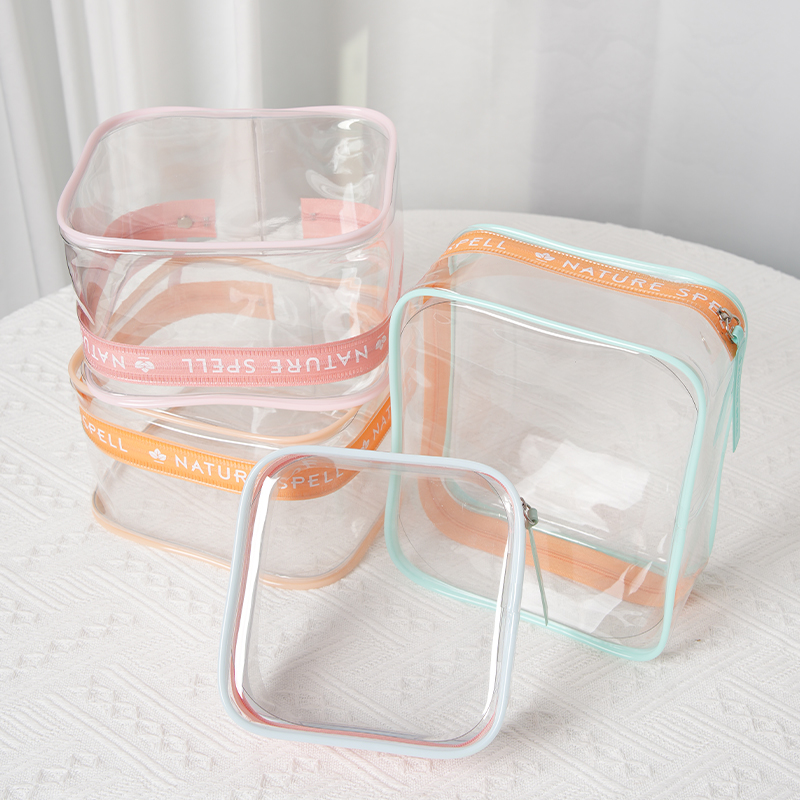
A beauty brand distributes a mini zipper cosmetic pouch inside a gift set, with a hang tag carrying the campaign message and a brand sticker on the outer packaging. The bag is used daily for cosmetics storage and travels in a handbag, so decoration wear resistance and scratch resistance are the two acceptance points that matter most. Transparent PVC keeps the contents visible, which suits beauty brands whose product colours are part of the brand identity.
2. Supermarket retail supporting project
Supermarket and chain-retail programmes typically pair a reusable bag with promotional items distributed at point of sale. Hansun has delivered this type of programme before: a Japan-based OEM/ODM client ordered 1,000,000 units of reusable shopping bags (model SB-2026-001) for chain supermarket daily shopping and promotional gifts over a one-year project. The supplier reported a 99.7% product qualification rate, zero delivery delay, repeated orders across three consecutive years, and compliance with Japan's eco-friendly standards. Cosmetic bags such as CB-2026-002 follow the same programme logic — retail branding, repeat distribution and quality documentation — but the acceptance criteria are set per project.
3. Travel and hotel amenity kits
Travel toiletry formats in clear PVC are used in hotel amenity programmes and tourism promotions, where the bag is stored in a bathroom and carried between rooms or vehicles. Here the occasional humid environment in the use profile is not an edge case but the normal condition, which makes the material and closure specification the primary decision rather than an afterthought.
Comparison table: material and format options for gift-packaging projects
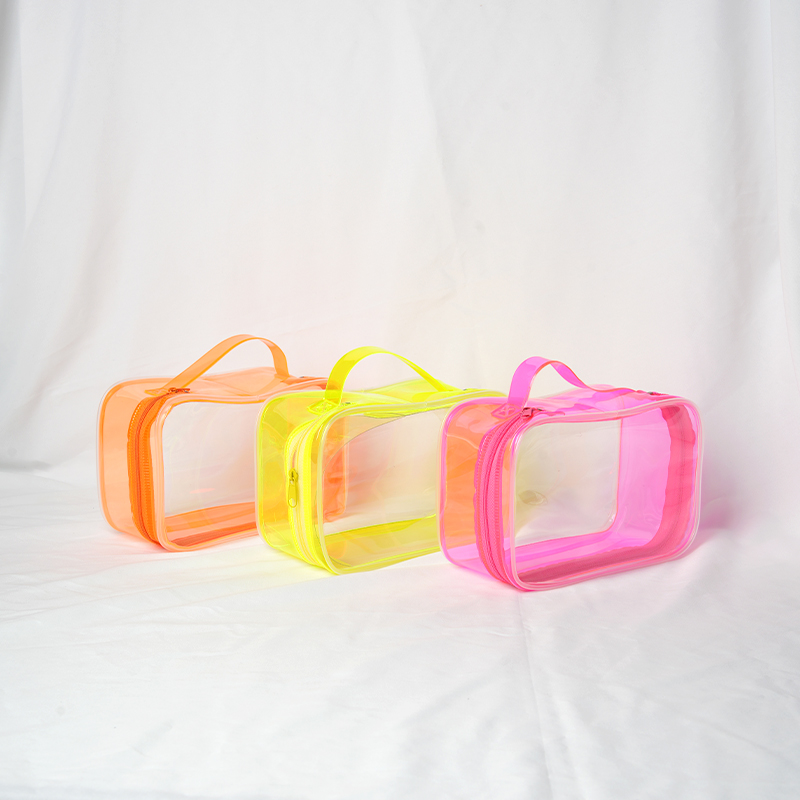
Decoration methods (hot stamping, UV printing, embossing, heat sealing), size options (15×10 cm, 20×15 cm, 25×18 cm, customizable) and the 20–80 g/pc unit weight range are shared across the cosmetic bag line. The table below compares the material and format choices, their certification coverage, and the verification point a buyer should raise for each.
| Material | Product format | Typical fit in gift packaging / retail | Documented certification coverage | Buyer verification point |
|---|---|---|---|---|
| PVC (clear) | PVC Clear Cosmetic Bag | Gift sets and retail promotions where contents visibility supports the brand | ISO 9001:2015 (ISO-2026-7890), BSCI (BSCI-2026-4567), Sedex 4 Pillars SMETA (SEDEX-2026-0123), Disney FAMA (DSN-FAMA-2026-001) | Food-grade eco-friendly PVC grade and REACH documentation for the exact colour and print |
| PU leather | PU Leather Cosmetic Bag | Premium promotional gifts where an opaque, structured look is preferred | Same four schemes as above, per certificate scope | Decoration adhesion after repeated friction on the fold and edge |
| Canvas | Travel Toiletry Cosmetic Bag | Travel, tourism and corporate welfare programmes | Same four schemes as above, per certificate scope | Print definition on textured surface and colour consistency across the run |
| Nylon | Travel Toiletry Cosmetic Bag | Daily-carry programmes where a lighter, flexible pouch is required | Same four schemes as above, per certificate scope | Water-resistance expectation stated against the daily outdoor carrying condition |
| Mesh | Mini Zipper Cosmetic Pouch | Multi-piece gift sets and travel organisers | Same four schemes as above, per certificate scope | Stitch integrity at the zipper seam under repeated opening and closing |
FAQ
1. Which certifications apply to this cosmetic bag, and for which markets?
Cosmetic bag model CB-2026-002 is documented under four certifications. ISO 9001:2015 (number ISO-2026-7890, issued by an International Certification Body) applies to the Global market and covers product design, production, quality control and delivery processes. BSCI (number BSCI-2026-4567, issued by an Amfori BSCI Approved Audit Firm) applies to the EU, Middle East and global retail brands markets and covers factory social responsibility, ethical sourcing and working conditions. Sedex 4 Pillars (SMETA) (number SEDEX-2026-0123, issued by a Sedex Approved Audit Body) applies to the EU, UK, North America and Australia markets. Disney FAMA (number DSN-FAMA-2026-001, issued by Disney International) applies globally to the production and supply of Disney licensed promotional bags and gifts. Buyers should confirm current validity periods against the certificate copies when the order is placed.
2. Can the bag be customized in size, material and logo, and what are the MOQ and capacity?
Yes. Production mode is OEM/ODM with customization of logo, size and material. The minimum order quantity is 3,000 pcs, monthly capacity is 1,500,000 units, and the standard lead time is 30–45 days. Material options are PVC, PU leather, canvas, nylon and mesh. Common sizes are 15×10 cm, 20×15 cm and 25×18 cm, all customizable, and unit weight ranges from 20 g to 80 g per piece. Logo decoration can be applied by hot stamping, UV printing, embossing or heat sealing.
3. What drives the unit cost of a promotional cosmetic bag?
Unit cost is driven by four variables: the material selected, the bag size, the decoration method, and the accessory set, which here means hang tags, webbing and brand stickers. Order quantity relative to the 3,000 pcs minimum order quantity is the fifth variable, since volume affects how the run is scheduled. Because these factors interact, pricing is quoted per project after the specification is fixed rather than published as a list price.
4. How should a sample be validated for a gift-packaging project?
Validate the sample against the actual use cycle, not against a photograph. Check scratch resistance on the visible panel, logo wear resistance after repeated handling, zipper operation through repeated open-and-close cycles, the attachment strength of hang tags and webbing, and sticker adhesion after storage in a humid environment. Quality control is configured to the customer's requirements, which means the acceptance criteria must be supplied by the buyer with the sample request.
5. What is the standard lead time, and how does a project start?
Standard lead time is 30–45 days from confirmed specification, with a minimum order quantity of 3,000 pcs and monthly production capacity of 1,500,000 units; after-sales support is provided remotely. A project starts with a specification and a sample request. To begin, contact the Hansun team at hansungift.com or by email at hansun20@hansungift.com for a sample and quotation against your material, size, decoration and accessory requirements.
Conclusion
A cosmetic bag for gift packaging is a specification exercise before it is a design exercise. The four constraints that decide the outcome — food-grade eco-friendly PVC and REACH compliance, scratch resistance, logo printing wear resistance, and a correctly matched accessory set of hang tags, webbing and brand stickers — all have to be written into the order before sampling, and each has to be tested against the real use cycle: room-temperature indoor storage, daily outdoor carrying, occasional humidity and high-frequency repeated handling.
Hansun produces cosmetic bag model CB-2026-002 in a 25,000 m² facility in Wenzhou, Zhejiang, supported by ISO 9001:2015, BSCI, Sedex 4 Pillars (SMETA) and Disney FAMA certification coverage, with OEM/ODM customization of logo, size and material, a 3,000 pcs MOQ, 1,500,000 units of monthly capacity, and a 30–45 day standard lead time. For brand promotional gift programmes and supermarket retail supporting projects, that combination turns an appearance-led purchase into a documented, repeatable specification.
Next step: sample and quotation
Send your material, size, decoration and accessory requirements, and Hansun will prepare a sample and a project-specific quotation. Ask for the product brochure with the full specification range.
Email: hansun20@hansungift.com | Tel / WhatsApp: +86 13655771851 | www.hansungift.com
Have Questions or Need More Details?
Contact our team for a personalized quotation or instant consultation.
Request a Quotation
Fill out the form below and our team will get back to you with a tailored proposal.
WhatsApp Direct Chat
Prefer to chat in real-time? Message us on WhatsApp for instant assistance & quick answers.
- Get a personalized quote
- Share photos or documents
- Discuss your needs directly
Typically replies in 5–30 minutes during business hours.