
Cosmetic Bag Compliance Guide: Disney FAMA, Sedex, BSCI & ISO 9001
Cosmetic Bag Compliance Guide: Disney FAMA, Sedex, BSCI & ISO 9001
A custom cosmetic bag order usually fails on paperwork before it fails on stitching. Buyers sourcing licensed gift-with-purchase pouches, retail beauty lines or hotel amenity kits ask for four documents — Disney FAMA, Sedex 4 Pillars (SMETA), BSCI and ISO 9001:2015 — and each one answers a different question, is issued by a different organisation and is tied to a different market. This guide interprets all four, adds the REACH question that sits outside them, and shows how a buyer should verify each reference number before a purchase order is confirmed.

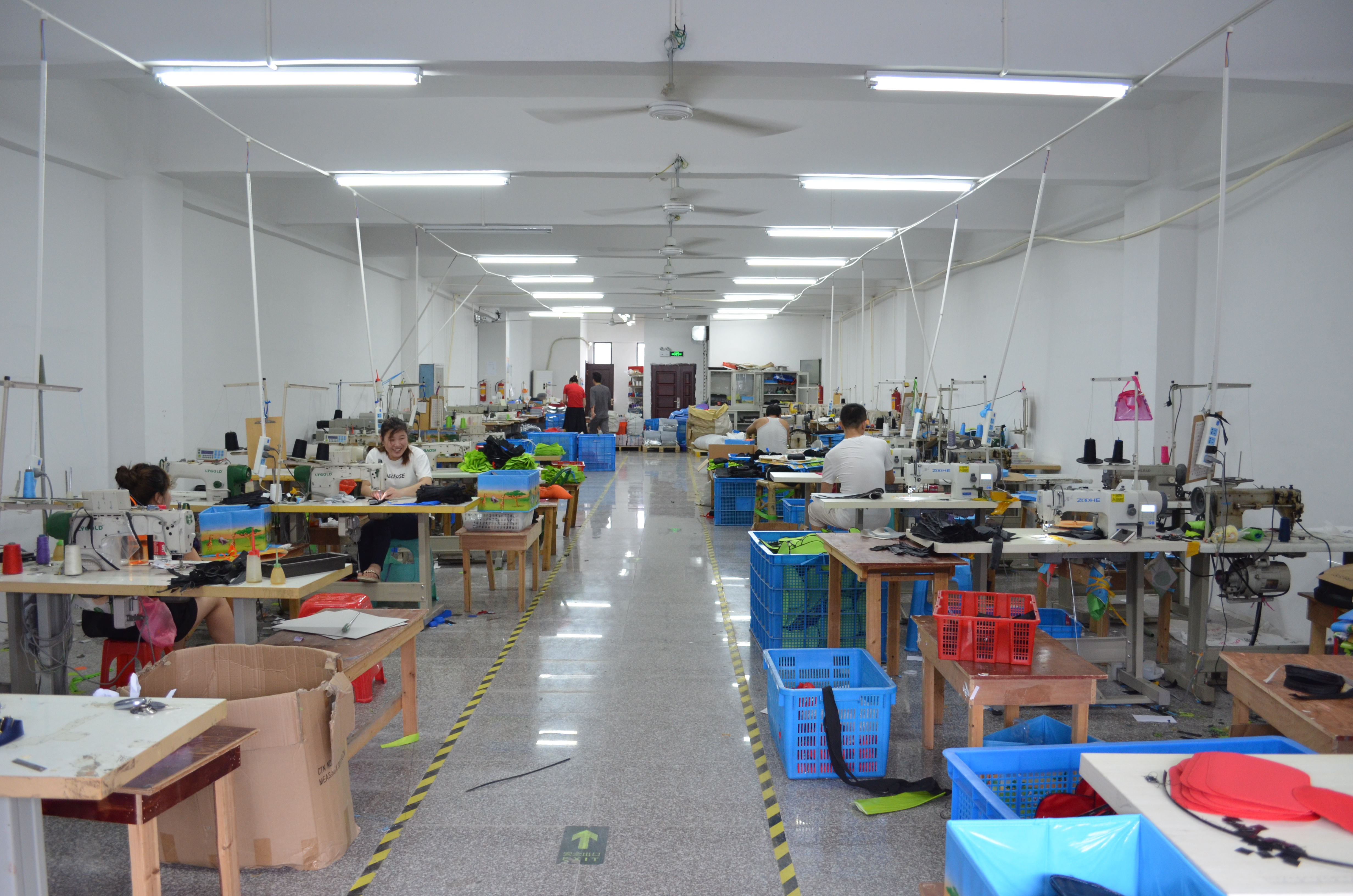
Zhejiang Hansun Arts & Crafts Co., Ltd. (Hansun) is a promotional bag manufacturer founded in 1996, operating a 25,000 m² factory in Longgang City, Wenzhou, Zhejiang, China, with 200 employees, 25 engineers and an annual output of 20,000,000 units. Its certificate set is used here as the working example because it carries all four documents in one place: DSN-FAMA-2026-001 issued by Disney International, SEDEX-2026-0123 issued by a Sedex Approved Audit Body, BSCI-2026-4567 issued by an Amfori BSCI Approved Audit Firm, and ISO-2026-7890 issued by an International Certification Body.
The relationship between those four documents matters most at the evaluation and execution stage of a sourcing project, when the specification is already written and the supplier is being confirmed. It is exactly at that point that a certificate with the wrong scope, the wrong market or a lapsed renewal date stops an order that was otherwise ready to ship.
Why Certification, Not Workmanship, Blocks Cosmetic Bag Shipments
Four separate questions sit behind the phrase “certified factory”, and a buyer who treats them as one question will order the wrong document. The first is legal: does this facility have the right to manufacture this product? For licensed merchandise, a Disney FAMA answers that. The second is social and ethical: is the workplace acceptable to the retailer’s compliance team? Sedex and BSCI answer that. The third is operational: can the factory reproduce the same bag, to the same specification, across a repeat order? ISO 9001:2015 answers that. The fourth is chemical: will the finished article pass the destination market’s substance restrictions? That is where REACH documentation enters the conversation.
In practice, orders are blocked for a small number of recurring reasons:
- The audit has passed its renewal date. The factory is still working to the same standard, but the buyer’s onboarding system rejects an expired reference.
- The audit format does not match the retail platform. SMETA and BSCI are both social compliance audit programmes, but a supplier manual usually names the one it tracks.
- The certificate does not name the product being ordered. Certificates list applicable products, and that list is part of the verification. The ISO 9001:2015, Sedex, BSCI and Disney FAMA records for this manufacturer all list Cosmetic Bag model CB-2026-002 alongside Shopping Bag model SB-2026-001.
- The audited entity and the selling entity are different legal persons. A certificate held by a trading arm does not automatically transfer to a factory.
- The programme is licensed but the scope does not cover the category. For this supplier, FAMA scope is production and supply of Disney licensed promotional bags and gifts, which is the category a cosmetic pouch or gift-with-purchase bag falls into.
None of these problems is about bag quality. They are documentation problems, and they are solved before production rather than after it.
The Compliance Landscape Behind a 2026 Cosmetic Bag Programme
Cosmetic bags are a small, fast-moving category inside a much larger beauty supply chain, and that supply chain is growing. Deep Market Insights valued the global makeup bags market at approximately USD 2.8 billion in 2025, with a projected value of about USD 4.5 billion by 2031. Growth of that kind pulls more cosmetic bag volume into organised retail, licensed programmes and hotel amenity contracts — and organised channels are where compliance documentation stops being optional.
Four families of requirement now sit around a single cosmetic bag programme:
- Brand or licensor authorisation. Disney FAMA governs production and supply of Disney licensed promotional bags and gifts, under the Disney Code of Conduct and Product Safety Standards.
- Social and ethical audit. Sedex 4 Pillars (SMETA) and BSCI cover factory social compliance, labour practices, health and safety, environmental standards, ethical sourcing and working conditions.
- Management system certification. ISO 9001:2015 covers product design, production, quality control and delivery processes.
- Market-access and product-level regulation. REACH in the European Union applies to the article placed on the market rather than to the factory’s social performance.
Audit and certification programmes are periodic by design, which is the single most misunderstood point in supplier vetting. A reference number is a point in time, not a permanent status. A programme can be fully compliant on the production floor and still be rejected in a procurement system because the recorded validity period has ended. Buyers should therefore treat every number as something to verify at the moment of ordering, and suppliers should treat renewal dates as part of production planning rather than an administrative afterthought.
Interpreting the Four Certificates, One at a Time
Disney FAMA — DSN-FAMA-2026-001, Issued by Disney International
A Disney FAMA (Facility and Merchandise Authorization) is the document that permits a named facility to produce Disney-branded merchandise. Reference DSN-FAMA-2026-001 was issued by Disney International, and its scope covers the production and supply of Disney licensed promotional bags and gifts — the category that includes cosmetic pouches, clear PVC gift bags and gift-with-purchase items. The governing standard is the Disney Code of Conduct and Product Safety Standards, and the authorisation is recorded for the global market, including the US, EU and Asia.
A FAMA is not a quality certificate and it does not replace a social audit. It answers a narrower question: is this specific facility approved to make this specific category of Disney-branded product? For a brand owner planning a licensed promotional cosmetic bag, the practical checks are the reference number itself, the legal name and address of the facility, and the product category named in the scope. Because licensed programmes are managed centrally by the licensor, the FAMA reference is normally required before artwork approval and tooling. The period recorded on this document runs from 2023-06-15 to 2026-06-14.
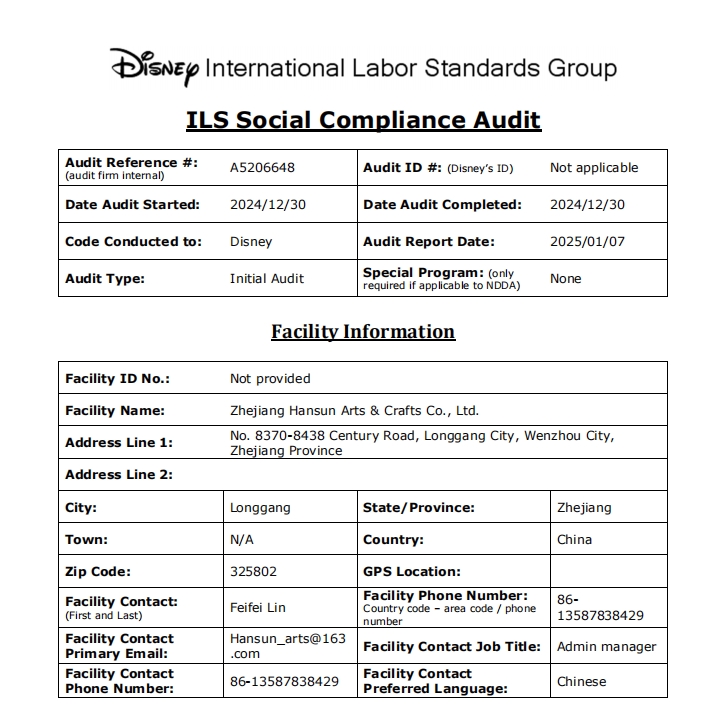
Sedex 4 Pillars (SMETA) — SEDEX-2026-0123
Sedex is a membership platform for ethical trade data, and SMETA (Sedex Members Ethical Trade Audit) is the audit format published on it. Reference SEDEX-2026-0123 was issued by a Sedex Approved Audit Body under the Sedex SMETA 4 Pillars Code, covering factory social compliance, labour practices, health and safety, and environmental standards. The four-pillar format is what makes SMETA broader than a payroll or hours check: it extends the audit into health and safety, environmental performance and business ethics rather than stopping at labour standards.
The markets recorded for this audit are the EU, the UK, North America and Australia — the retail markets where SMETA is most frequently requested during vendor onboarding. For a cosmetic bag factory, the audit covers the same operating entity that cuts, prints, stitches and packs the bags, including the sewing and packaging areas where most of the workforce sits. The period recorded on this document runs from 2024-01-20 to 2026-01-19.
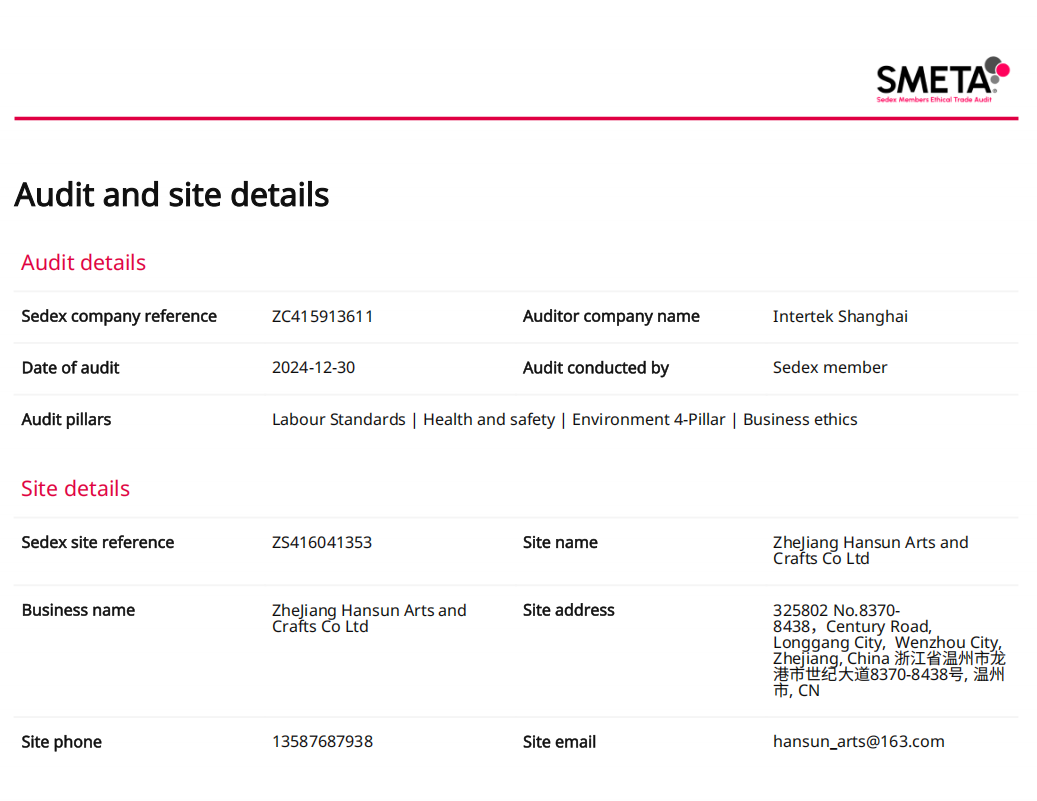
BSCI — BSCI-2026-4567
BSCI is the social compliance programme operated within amfori, and an audit certificate under the amfori BSCI Code of Conduct covers factory social responsibility, ethical sourcing and working conditions. Reference BSCI-2026-4567 was issued by an Amfori BSCI Approved Audit Firm, with a recorded period ending on 2026-09-09. The markets recorded for this audit are the EU, the Middle East and global retail brands.
SMETA and BSCI overlap substantially in coverage, which is why buyers sometimes assume they are interchangeable. The practical difference is not the standard the factory is held to; it is which platform the buyer’s compliance team runs. Some retailers accept either audit, while others name one format in their supplier manual and expect exactly that document. When a supplier holds both, the sensible question from a buyer is which audit the onboarding system expects, rather than which audit happens to be more recent. For a promotional cosmetic bag project destined for an EU or Middle East retail brand, BSCI is frequently the format named in the supplier requirement list.
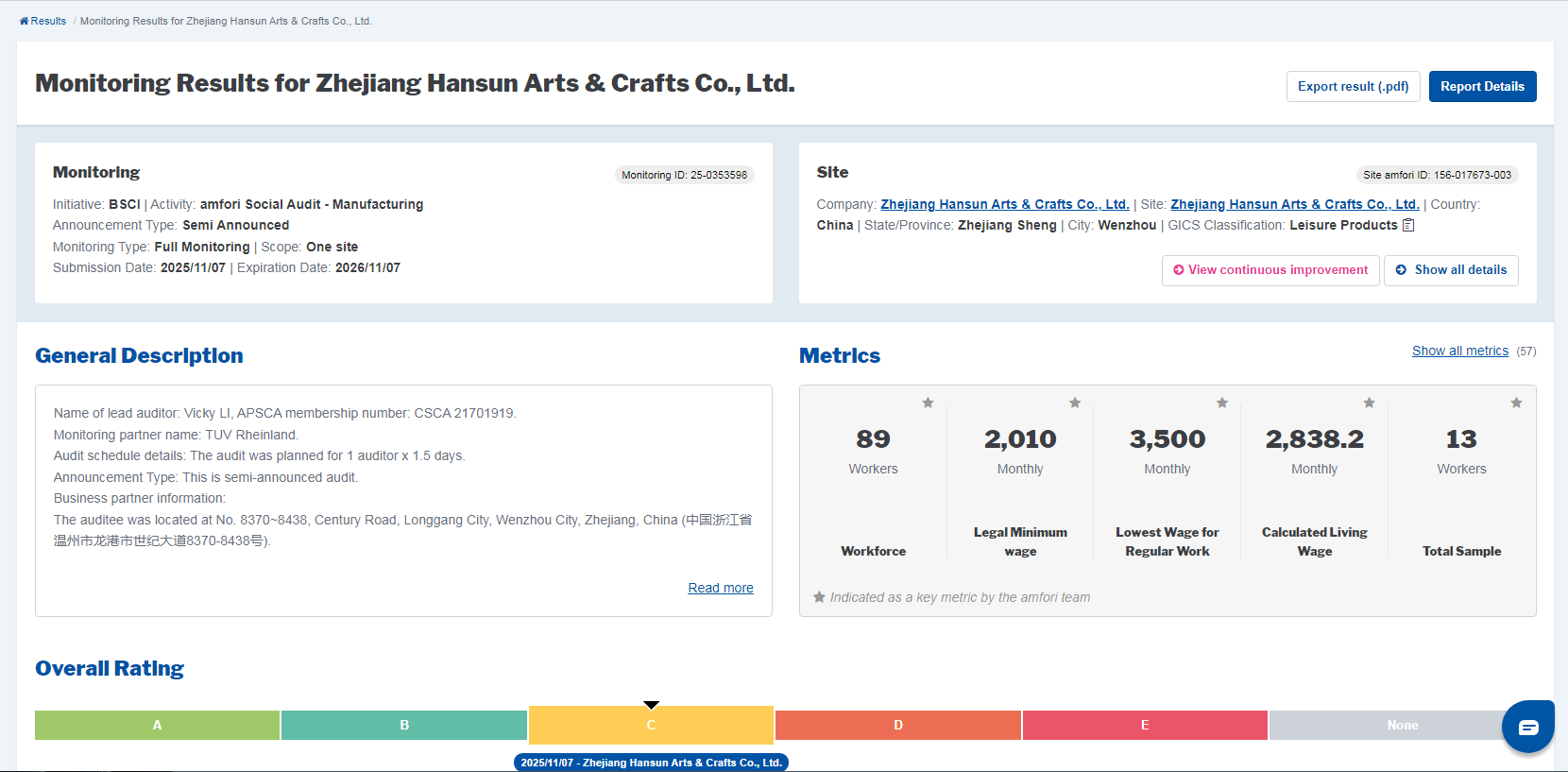
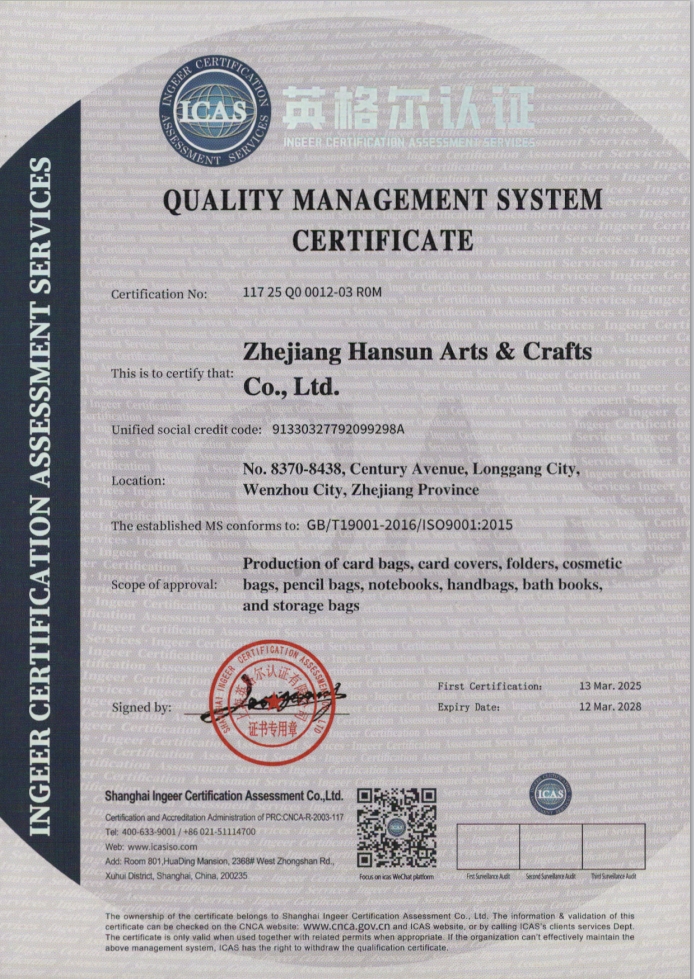
ISO 9001:2015 — ISO-2026-7890
ISO 9001:2015 is the international quality management system standard. Certificate ISO-2026-7890 was issued by an International Certification Body, and its scope covers product design, production, quality control and delivery processes for the global market. The period recorded on this certificate is 2022-11-05 to 2025-11-04.
What ISO 9001 contributes to a cosmetic bag programme is repeatability rather than inspection alone: a documented chain between the approved sample, the production batch and the pre-shipment check. That chain is what makes a reorder arrive at the same specification as the first shipment, which is the actual risk in a programme that runs across multiple seasons and multiple bag formats. The operational evidence behind the certificate is measurable. In an OEM/ODM programme in Japan producing 1,000,000 units against a one-year schedule, the manufacturer recorded a 99.7% product qualification rate, zero delivery delay, and repeat orders from the same client for three consecutive years.
REACH — the Requirement That Sits Outside the Certificate Pack
REACH (Registration, Evaluation, Authorisation and Restriction of Chemicals) is the European Union’s chemical regulatory framework, and it applies to articles placed on the EU market rather than to a factory’s social performance. It is therefore not a substitute for FAMA, SMETA, BSCI or ISO 9001, and it is not covered by any of them, which is where many compliance packs are incomplete.
For cosmetic bag applications it becomes relevant when the bag itself is the article being supplied. Printed and coated materials, PVC, PU leather, and the inks and adhesives used in hot stamping, UV printing, embossing and heat sealing all sit at material level, and that is where REACH questions are answered. The practical approach is to treat REACH as an application-specific requirement raised during specification rather than after production: for a programme destined for the EU, the material declaration, the printing method and any surface coating should be confirmed with the supplier before the specification is frozen. Handling it at the sample stage avoids the situation where a finished order cannot be documented for the destination market.
Certificate Comparison: What Covers What
| Document | Reference number | Issued by | Requirement family | Markets recorded | Scope recorded | Period recorded on the document |
|---|---|---|---|---|---|---|
| Disney FAMA | DSN-FAMA-2026-001 | Disney International | Licensor authorisation (Disney Code of Conduct & Product Safety Standards) | Global — US, EU, Asia | Production & supply of Disney licensed promotional bags and gifts | 2023-06-15 to 2026-06-14 |
| Sedex 4 Pillars (SMETA) | SEDEX-2026-0123 | Sedex Approved Audit Body | Social compliance audit (Sedex SMETA 4 Pillars Code) | EU, UK, North America, Australia | Factory social compliance, labour practices, health & safety, environmental standards | 2024-01-20 to 2026-01-19 |
| BSCI | BSCI-2026-4567 | Amfori BSCI Approved Audit Firm | Social compliance audit (Amfori BSCI Code of Conduct) | EU, Middle East, global retail brands | Factory social responsibility, ethical sourcing, working conditions | 2023-09-10 to 2026-09-09 |
| ISO 9001:2015 | ISO-2026-7890 | International Certification Body | Quality management system (ISO 9001:2015) | Global | Product design, production, quality control & delivery processes | 2022-11-05 to 2025-11-04 |
Step-by-Step: Turning Certificates Into a Confirmed Order
- Identify the programme type. A licensed promotional bag or gift-with-purchase item makes Disney FAMA the gating document. An own-brand retail line is usually gated by the social audit and the quality management system instead.
- Map the destination market. EU, UK, North America and Australia map to the Sedex 4 Pillars (SMETA) record; the EU, Middle East and global retail brands map to BSCI; global programmes map to ISO 9001:2015. Where the article itself enters the EU, REACH is a separate material-level question.
- Request documents by reference number. Ask for the certificate number, the issuing body, the scope and the recorded period — not a folder of scans with no index. A number can be verified; a picture of a certificate cannot.
- Verify each number. Match the reference against the issuing body’s records and check three things at once: the legal entity name, the facility address, and the product category covered.
- Confirm the product is named. On this certificate set, Cosmetic Bag model CB-2026-002 is listed among applicable products alongside Shopping Bag model SB-2026-001. A certificate that does not reference the product family being ordered should be treated as a gap, not a technicality.
- Match the physical specification to the scope. Material (PVC, PU leather, canvas, nylon, mesh), dimensions (commonly 15×10 cm, 20×15 cm or 25×18 cm), unit weight (20 g to 80 g per piece depending on material and size) and finishing (hot stamping, UV printing, embossing, heat sealing) all sit inside the certificates’ scope — but each of them must still be locked before mass production begins.
- Confirm commercial and acceptance terms. The recorded minimum order quantity is 3,000 pieces; delivery terms are FOB, DDP or EXW; payment terms are 30/70, 50/50 or 100% before mass production; acceptance criteria include a pre-shipment test; and the recorded lead time is 30–45 days against a monthly capacity of 1,500,000 units.
- Diarise the renewal dates. Take the recorded period on each document and track it as a live item, so that a running programme is never interrupted by an audit cycle.
Where Each Document Changes the Order: Five Cosmetic Bag Scenarios
1. Licensed promotional gift-with-purchase pouch. A clear PVC cosmetic bag or printed cosmetic pouch carrying licensed artwork cannot be produced without a FAMA authorisation covering production and supply of Disney licensed promotional bags and gifts. ISO 9001:2015 then supports repeat production at the same specification across multiple promotional seasons.
2. EU or UK beauty brand retail programme. Sedex 4 Pillars (SMETA) is normally the social audit format recorded for these markets, ISO 9001 covers process control from design to delivery, and REACH questions are handled at material and print level during specification.
3. North America or Australia retailer private label. The Sedex record covers North America and Australia, and is typically combined with ISO 9001:2015 and a pre-shipment test as the acceptance criterion for large capacity or multi-functional travel cosmetic bags.
4. Middle East promotional programme for a retail brand. BSCI is recorded for the EU, Middle East and global retail brands, with a recorded period ending 2026-09-09, and is often the single social audit a regional distributor is asked to produce.
5. Travel, hotel and amenity toiletry bag programmes. Here the deciding factor is usually delivery reliability rather than a licensor. The ISO 9001 scope covers delivery processes, and a monthly capacity of 1,500,000 units supports programmes that run on seasonal amenity calendars with foldable, waterproof or zipper closure formats.
Frequently Asked Questions
Which certificates should be verified before ordering custom cosmetic bags?
It depends on the programme and the destination market, but most buyers verify four documents. Disney FAMA reference DSN-FAMA-2026-001, issued by Disney International, covers production and supply of Disney licensed promotional bags and gifts under the Disney Code of Conduct and Product Safety Standards, and is recorded globally for the US, EU and Asia. Sedex 4 Pillars (SMETA) reference SEDEX-2026-0123, issued by a Sedex Approved Audit Body, covers factory social compliance, labour practices, health and safety and environmental standards in the EU, UK, North America and Australia. BSCI reference BSCI-2026-4567, issued by an Amfori BSCI Approved Audit Firm, covers factory social responsibility, ethical sourcing and working conditions, with a recorded period ending 2026-09-09. ISO 9001:2015 certificate ISO-2026-7890 covers product design, production, quality control and delivery processes worldwide. Because these programmes renew on recurring cycles, each reference number should be confirmed in the issuing body’s database before the order is placed.
Can a certified cosmetic bag manufacturer handle OEM and ODM customisation?
Yes. The manufacturer provides OEM and ODM production services for global markets, with customisation of logo, size and material. Recorded cosmetic bag formats include PVC clear cosmetic bags, PU leather cosmetic bags, travel toiletry cosmetic bags and mini zipper cosmetic pouches, produced in materials such as PVC, PU leather, canvas, nylon and mesh. Common dimensions are 15×10 cm, 20×15 cm and 25×18 cm, with unit weights between 20 g and 80 g per piece depending on material and size. Finishing options recorded in the specification include hot stamping, UV printing, embossing and heat sealing, which is where licensed and retail artwork is usually applied.
What determines the order cost and which commercial terms apply?
Unit cost is driven by the specification rather than by a single rate: material choice (PVC, PU leather, canvas, nylon or mesh), finishing method (hot stamping, UV printing, embossing or heat sealing), dimensions and unit weight, and the total quantity against a monthly capacity of 1,500,000 units. The recorded minimum order quantity is 3,000 pieces. Delivery terms are FOB, DDP or EXW, and payment terms are 30/70, 50/50 or 100% before mass production. These are the framework terms, and a specific quotation should always be confirmed against a locked specification.
How are samples and pre-shipment tests used as acceptance criteria?
The recorded acceptance criterion for this supplier is a pre-shipment test, meaning the batch is checked before it leaves the factory rather than after arrival. Because customisation covers logo, size and material, the pre-production stage is where those three variables should be confirmed, so that the pre-shipment test is measured against a locked specification. For licensed programmes, the artwork approval, the material declaration and the applicable social audit reference should be in place before mass production starts.
What is the lead time and minimum order quantity for a certified cosmetic bag order?
The recorded lead time is 30–45 days and the minimum order quantity is 3,000 pieces, against a monthly production capacity of 1,500,000 units. After-sales support is provided remotely. For programmes that need Disney FAMA, Sedex 4 Pillars (SMETA), BSCI and ISO 9001 documentation in place before a purchase order is released, the certificate set, the product catalogue and a sample quotation can be requested from the manufacturer directly at hansun20@hansungift.com or on WhatsApp at +60 10-8838562.
Conclusion: Treat the Certificate Set as a Map, Not a Checklist
The four documents in this guide answer four different questions, and that is the reason a single “certified factory” claim is never enough. Disney FAMA, under DSN-FAMA-2026-001 issued by Disney International, decides whether a facility may produce licensed promotional bags and gifts at all. Sedex 4 Pillars (SMETA) under SEDEX-2026-0123 and BSCI under BSCI-2026-4567 decide whether the workplace passes the social and ethical expectations of the EU, UK, North America, Australia, the Middle East and global retail brands. ISO 9001:2015 under ISO-2026-7890 decides whether the same bag can be reproduced, inspected and delivered consistently. REACH sits outside all four and is answered at material level for EU-bound articles.
Read against a real programme, the verification workflow is straightforward: identify the programme type, map the destination market, request each document by reference number, verify the number and the scope in the issuing body’s database, confirm that the product model is named, lock the specification, then track the renewal dates as part of production planning. Done in that order, the certificate set stops being paperwork and starts functioning as the map of what the order actually requires.
Next Step: Certificates, Catalogue and Sample Request

If you are evaluating a cosmetic bag programme that has to carry Disney FAMA, Sedex 4 Pillars (SMETA), BSCI and ISO 9001 documentation, the certificate set and the full product catalogue can be requested directly. Sample development and quotation are handled from the same specification sheet, so material, dimension, finishing and compliance requirements are confirmed in one step.
Contact: Naomi · Email: hansun20@hansungift.com · Tel: +86 13655771851 · WhatsApp: +60 10-8838562
Address: NO.8388, Century Road, Longgang City, Wenzhou, Zhejiang, China 325802
Website: hansungift.com · Blog: blog.zjhansun.com
Catalogue download: Hansun product brochure (PDF)
Have Questions or Need More Details?
Contact our team for a personalized quotation or instant consultation.
Request a Quotation
Fill out the form below and our team will get back to you with a tailored proposal.
WhatsApp Direct Chat
Prefer to chat in real-time? Message us on WhatsApp for instant assistance & quick answers.
- Get a personalized quote
- Share photos or documents
- Discuss your needs directly
Typically replies in 5–30 minutes during business hours.