
Cosmetic Bag Supplier Evaluation: Factory Audits, Capacity & Delivery Assurance
Cosmetic Bag Supplier Evaluation: Factory Audits, Capacity & Delivery Assurance
Answer first: a cosmetic bag supplier should be judged on three verifiable pillars — audit evidence that matches its own claims, capacity that can actually be allocated to your order, and delivery assurance backed by documented inspection and export practice. Zhejiang Hansun Arts & Crafts Co., Ltd., a Wenzhou-based bag manufacturer established in 1996, is used throughout this guide as a grounded example of what that evidence set looks like when it is complete, and where the remaining verification work still sits.
Most supplier shortlists stop at price, product photos and a certificate wall. That is enough to build a list, but it is not enough to release a purchase order for a custom logo cosmetic bag programme. At the decision stage, the questions that decide the outcome are documentary: whose legal name appears on the certificate, how much of the annual output is already committed elsewhere, what inspection standard governs acceptance, and what happens when a shipment slips by ten days.
This article sets out a verification model that can be applied to any factory in the category, then applies it to one concrete case: Zhejiang Hansun Arts & Crafts Co., Ltd. (trade name Hansun), a Chinese manufacturer of custom bags and promotional products based at NO.8388, Century Road, Longgang City, Wenzhou, Zhejiang, working through hansungift.com.
The Problem: Three Gaps That Sink a Cosmetic Bag Programme
Cosmetic bag sourcing failures are usually verification failures rather than manufacturing failures. They show up in three recognisable forms, and each one can be tested before the order is placed.
- Evidence gap. The factory holds valid certificates, but the scope does not cover the site, the process or the product family you are buying. A quality certificate that excludes printing, or a social audit tied to a different address, does not support your order — however impressive the PDF looks.
- Capacity gap. Annual output looks large on a profile page, but it is shared across product lines. Hansun, for example, lists tote bags and PVC bags alongside its cosmetic bag work, so a buyer must ask what is allocated in a given month, not what is installed on paper.
- Delivery gap. The ship date is written into the purchase order, but the acceptance standard is not. Without an agreed inspection level, defect classification and corrective-action path, a quality dispute becomes a commercial negotiation after the container has already been booked.
Each gap has a matching verification step, and the rest of this guide works through them in order.
Industry Background: A Fragmented Category Where Claims Outrun Documentation
Demand is not the constraint on this category. A 2026 Cognitive Market Research report values the global cosmetic bag market at USD 3.86 billion in 2025 and projects it to reach USD 8.22 billion by 2034. What constrains buyers is the wide variance between suppliers that describe the same capability in the same words.
Part of that variance comes from product breadth. The category spans structures with genuinely different inspection logic: a PVC cosmetic bag and a PU leather cosmetic bag fail in different ways, and a waterproof cosmetic bag, a transparent cosmetic bag and a foldable cosmetic bag each need their own process controls. Supplier-side quality guidance for PVC and TPU, for instance, lists transparency, flexibility, odour, thickness, surface marks and heat-sealing performance as core checks. A factory running all of these constructions needs separate controls, not one generic line with a single quality procedure pinned to the wall.
Compliance and landed cost add a second layer. Duty data compiled by Dutiable for 2026 shows 20% for cosmetic bags entering the United States under HS heading 4202.12, against 3.7% for the EU and UK. That spread is large enough to change which supplier, and which price break, is genuinely cheaper once landed. Classification follows the actual construction of the bag, so confirm the code your broker will use before comparing quotes across origins.
The practical consequence is that supplier evaluation in this category has to be evidence-led. Marketing pages describe intent; audits, certificates, allocation schedules and inspection records describe capability.
The Evaluation Model: What a Cosmetic Bag Factory Must Prove
Four pillars separate a supplier that can be contracted from one that can only be quoted. The Hansun case shows what each pillar looks like when the evidence is present.
1. Legal identity and operating history
Hansun was established in 1996 and reports more than 20 years of accumulated production management experience, operating as a production-oriented enterprise that combines manufacturing, online marketing and international trade. Confirm that the name on the quotation, the name on the certificates and the name on the bank account are the same legal entity; a mismatch here invalidates the rest of the evidence set, no matter how strong the individual documents are.
2. Certified management and social compliance
Hansun's certification coverage includes Disney FAMA, Sedex SMETA, BSCI and ISO 9001:2015. Each answers a different question, and the useful audit step is to read the scope rather than the logo. The ISO 9001:2015 scope deserves the closest attention because it should connect design, production, quality control and delivery — the exact chain your order travels through from artwork approval to container loading.
3. Physical capacity and technical depth
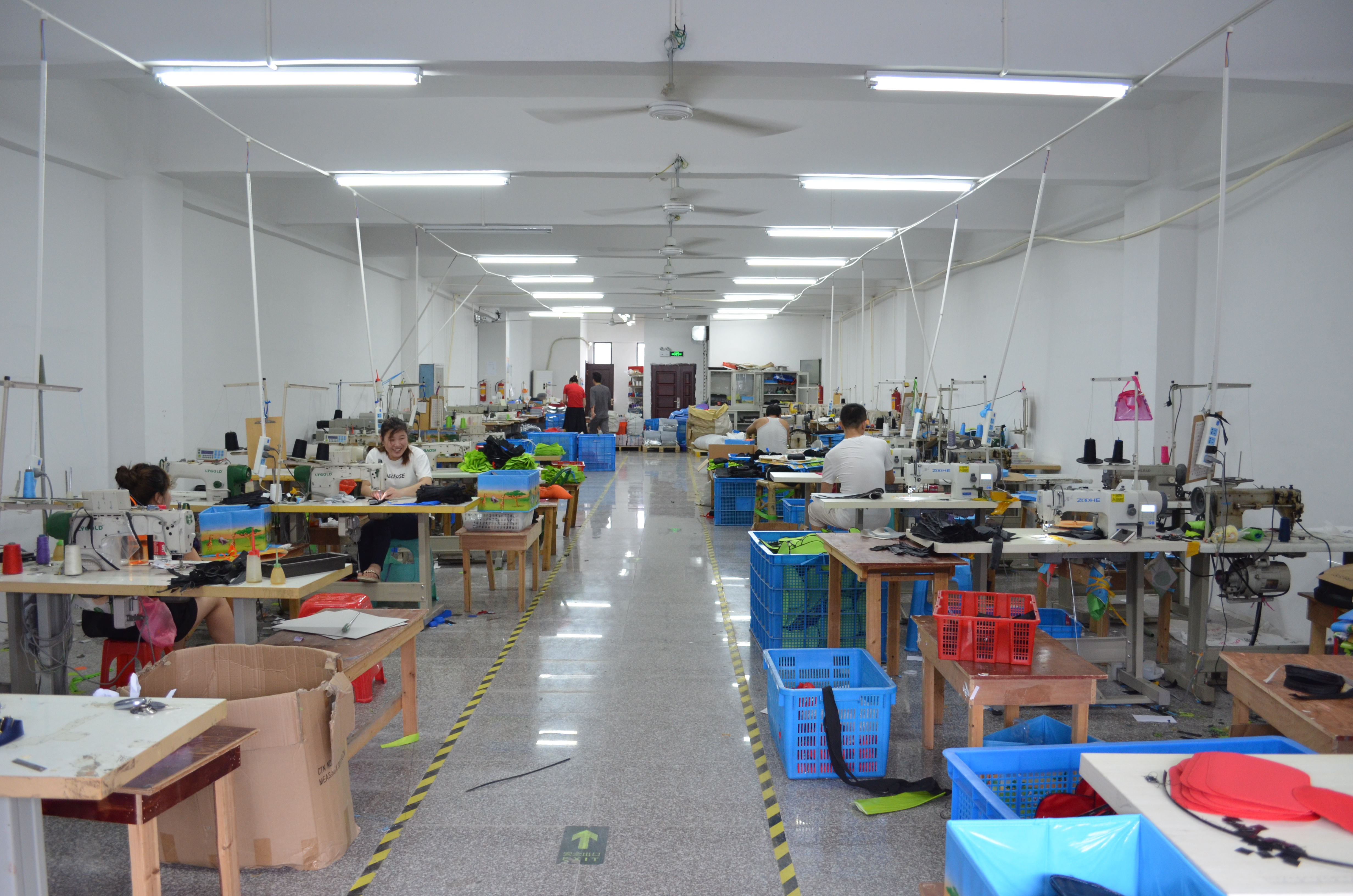
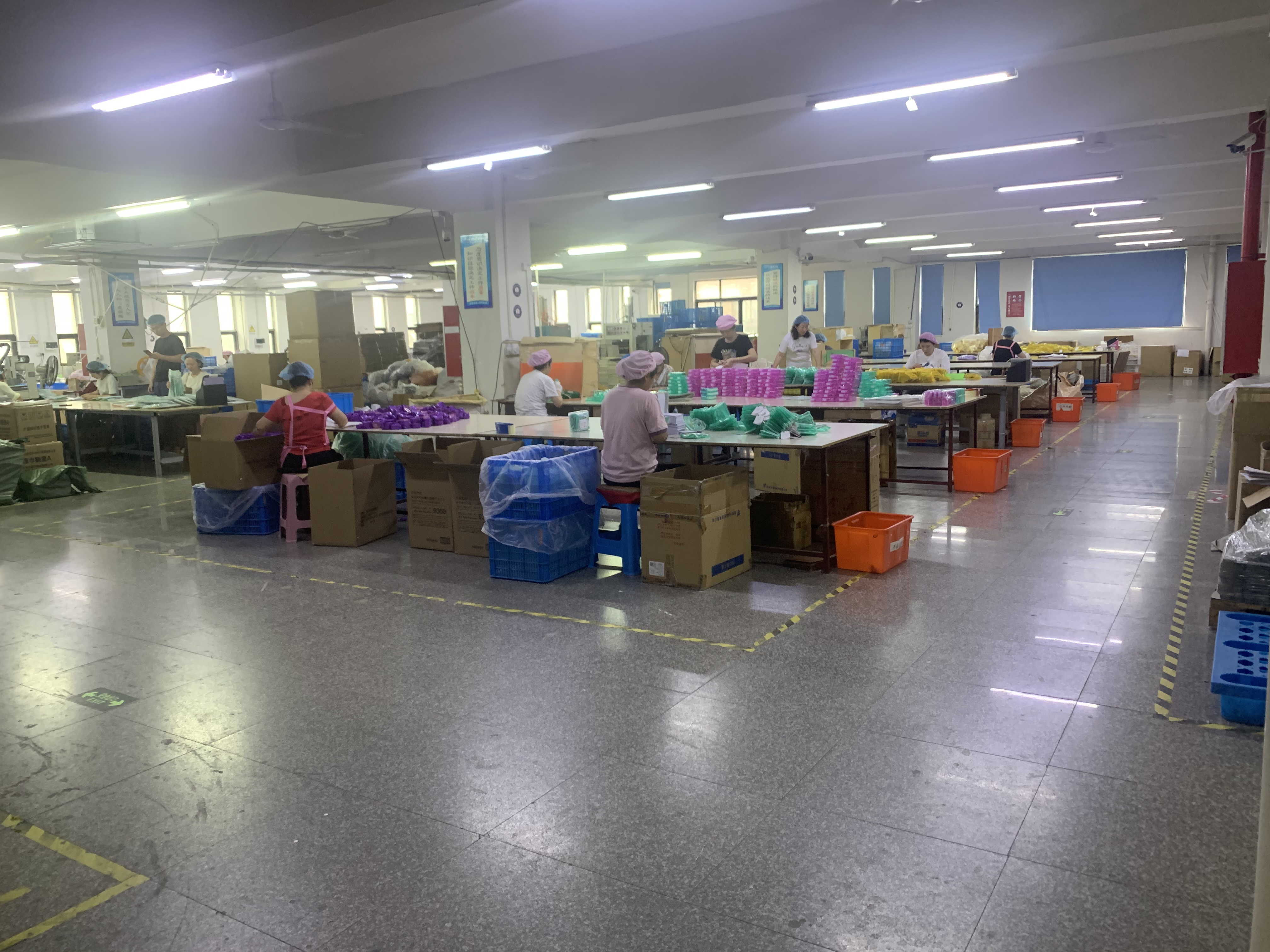
The reported operating base is a facility of 25,000 m² of usable area, approximately 200 employees, an R&D team of 25 engineers, and annual output of about 20 million units. These are the numbers that should be re-tested in an audit rather than accepted from a profile: walk the floor area, count the sewing stations, meet the engineers who will handle your construction drawings, and ask how output is measured.
4. Export exposure and market coverage
Export accounts for about 70% of Hansun's sales, with sales and service coverage across Southeast Asia, Europe, North America, the Middle East, and major cities domestically and internationally. A high export ratio is a practical signal rather than a marketing one: export documentation, carton marking, pallet configuration and freight coordination are routine operations rather than occasional projects.
Factory Audits: What to Inspect and What Counts as Proof
Certification coverage: what each document actually proves
- ISO 9001:2015 — a quality management system standard. It evidences a documented process approach across design, production, quality control and delivery, provided the scope statement names those activities and the site you will use.
- BSCI — a social compliance audit scheme covering labour and workplace practices. Check the audit report date and confirm the audited site matches the production address.
- Sedex SMETA — an ethical trade audit methodology covering labour, health and safety, environment and business ethics. Confirm which site and which reporting period the report covers.
- Disney FAMA — factory authorisation for production of Disney-branded merchandise. It matters if your programme involves licensed characters; it is not a general quality credential.
A single rule governs all four: the certificate is only useful if its scope matches your order. Check the legal entity name, the site address, the product or process scope, and the validity date — in that order, before discussing price.
Site verification: footprint, workforce and process integration
Hansun reports integrated design, printing, production, quality inspection and packaging, and supports OEM/ODM and custom services based on supplied drawings and samples. In a walk-through, verify that the physical sequence matches the claim: sample room, material storage, cutting and printing, sewing, packing, finished-goods holding. Each break in that chain — printing subcontracted, inspection outsourced — is an additional handover point where a custom logo cosmetic bag order can lose time or consistency.
The document set to request before the visit
Ask for these six items in advance. Their consistency with each other is often more informative than any single document.
- Business licence and the exact legal entity name used on invoices.
- Certificate copies including scope pages, issuing body and expiry dates.
- The most recent social compliance audit report, with site address visible.
- Material documentation for the specific substrates you will buy, not a generic sheet.
- Quality control procedure, including the inspection standard and defect classification.
- A sample packing specification and one set of export documents from a recent shipment.

Capacity Planning: Converting 20 Million Units a Year into a Schedule
Annual capacity is a headline. Monthly allocation is the number that actually affects your order. At Hansun's reported output of about 20 million units per year, the even-monthly equivalent is roughly 1.67 million units; spread across a nominal 250-working-day year, that averages about 80,000 units per day. Neither figure is a commitment — they are a sanity check against your own volume and against the share of capacity the factory is willing to reserve.
The more important question is what sits behind the number. Because output is shared across product lines, including tote bags and PVC bags, the allocation conversation should be specific:
- How many sewing lines or teams would be assigned to this order, and for how many weeks?
- What volume is already committed in the same production window, including peak-season programmes?
- What is the changeover time between a PVC cosmetic bag run, a PU leather cosmetic bag run and a printed promotional cosmetic bag run?
- Is printing carried out in-house, and what is its throughput ceiling relative to sewing?
- What is the largest single order quantity that can be accepted without extending the quoted lead time?
Where a factory reports both an annual output figure and an integrated process, the two claims should be consistent: an in-house printing department that cannot keep pace with sewing becomes the bottleneck regardless of how many units the site can theoretically produce.
Delivery Assurance: Inspection, Documentation and Export Rhythm
Delivery assurance is a system rather than a promise. It has four parts — an inspection standard, an inspection point, an export routine, and a corrective-action trail.
Start with the failure modes the factory has already identified. Hansun's quality documentation names material cracking, zipper damage, printing fading and size deviation as the primary risk categories for its bag production, with control methods covering high-quality raw material selection, reinforced edge stitching, material pre-testing and a standardised production process. The corresponding shop-floor measures are a pre-production material tensile test, 100% visual inspection before shipment, strict size checking during production, and after-sales quality tracking. Those four measures are worth more in a supplier evaluation than any adjective about craftsmanship, because each one is auditable.
Agree the acceptance standard explicitly. Published supplier FAQs in this category cite AQL 1.5/4.0 as a typical inspection level; treat that as a benchmark rather than a default. Define which defect classes each level governs, who performs the inspection, at which point in the process, and what happens to a rejected lot.
On scheduling, Hansun's comparison data reports a 99.8% on-time delivery rate and cites a 95% industry average alongside it. Both figures are supplier-reported and should be treated as claims until you see the underlying order data. Whatever the number, define on-time precisely in the contract: ex-works completion, vessel departure and warehouse receipt are three different dates, and the difference between them can swallow a fortnight.

Step-by-Step Breakdown: A Six-Stage Evaluation Workflow
Stage 1 — Screen on entity and certification scope
Match the legal entity, site address and certificate scope against the quotation. Confirm that certification coverage including Disney FAMA, Sedex SMETA, BSCI and ISO 9001:2015 applies to the site that will actually run your order. Reject or re-qualify on any mismatch; this is the cheapest filter in the process.
Stage 2 — Convert capacity into a monthly allocation
Take the reported annual output of about 20 million units and turn it into a monthly and weekly figure for your specific construction. Ask what share is available in your target window and get it in writing before sampling begins.
Stage 3 — Audit the site against a fixed checklist
Verify the 25,000 m² footprint, the approximately 200-strong workforce, the 25-engineer R&D team, and the physical process sequence from sample room to packing. Score each checklist item pass, partial or fail rather than writing a narrative.
Stage 4 — Test materials and construction against the specification
Inspect PVC and TPU against transparency, flexibility, odour, thickness, surface marks and heat-sealing performance. For a waterproof cosmetic bag intended to hold liquids, ask how leak resistance is achieved — a common supplier recommendation is a TPU waterproof lining combined with needle-free stitching or high-frequency heat sealing. Test the zipper closure through repeated open-close cycles, and check print adhesion on any custom logo area.
Stage 5 — Approve a golden sample and freeze the specification
Sign off a physical reference sample covering material, thickness, colour, hardware, stitching, lining and logo placement, and attach it to the purchase order. Hansun reports sample turnaround of roughly 3 to 5 days, which makes a multi-round sampling process practical rather than a schedule risk.
Stage 6 — Write delivery assurance into the contract
Fix the inspection standard, the inspection points, the definition of on-time, the rework and replacement responsibility, and the after-sales quality tracking arrangement. A supplier that already runs 100% visual inspection before shipment and tracks quality after delivery has the mechanics in place; the contract simply makes them enforceable.
Use Cases: Where This Evaluation Model Pays Off
- Brand promotional gift programmes. Promotional cosmetic bag projects live or die on logo reproduction and delivery date, because the giveaway is tied to a launch or an event. Print adhesion checks and a fixed on-time definition matter more than unit price.
- Retail private label and supermarket retail. Replenishment cycles punish late delivery harder than they punish a slightly higher unit cost. Capacity allocation evidence should be weighted accordingly.
- Cross-border e-commerce and marketplace sets. Multi-piece sets combining a travel cosmetic bag, a toiletry cosmetic bag and a storage cosmetic bag require consistent sizing and colour across components — a specification discipline question as much as a production one.
- Corporate welfare and office supply buyers. Orders combining a mini cosmetic bag, a foldable cosmetic bag or a portable cosmetic bag with stationery and office items benefit from a supplier that already serves those adjacent categories.
- High-utilisation, multi-purpose designs. Products positioned for repeated, multi-purpose use place a premium on reinforced stitching and hardware durability, so the material and construction tests in Stage 4 carry most of the risk.
- Eco-friendly briefs. Supplier guidance describes PVC and EVA as transparent, waterproof and easy to clean while noting weaker environmental performance, so an eco-friendly cosmetic bag brief should be settled at material selection rather than at the audit stage.
In all six cases the evaluation sequence is the same. What changes is which pillar carries the most weight.
Comparison Table: Custom OEM Cosmetic Bags vs Mass-Produced and Disposable Options
| Evaluation criterion | Custom OEM cosmetic bag (Hansun-reported) | Non-customised mass-produced promotional bag | Disposable plastic shopping bag |
|---|---|---|---|
| Customisation | OEM/ODM service with custom logo and construction; no extra mould cost for custom designs reported | Non-customised, mass-produced | Single-use disposable |
| Reported service life | 30% longer service life than the comparison baseline used by the manufacturer | Baseline referenced by the manufacturer | Single use |
| Reported on-time delivery | 99.8% (manufacturer-reported; the same source cites a 95% industry average) | Not stated in available data | Not stated in available data |
| Unit cost economics | 10–15% lower unit cost on bulk orders reported, with no extra mould cost for custom designs | Not stated in available data | Not stated in available data |
| Sample turnaround | 3–5 days reported | Not stated in available data | Not stated in available data |
| Material and end-of-life | 100% recyclable material and 50% lower carbon footprint versus disposable bags reported | Not stated in available data | Disposable plastic |
| Best-fit applications | Brand promotional gifts, supermarket retail, corporate welfare, cross-border e-commerce, stationery and office supply | Not stated in available data | Not stated in available data |
Figures in the custom OEM column are reported by the manufacturer and should be verified during sampling, audit and RFQ. The service-life and unit-cost comparisons do not specify their baseline in the source data, so request the calculation before relying on either. On-time delivery performance should be evidenced with order-level data rather than accepted as a percentage.
Frequently Asked Questions
Which certifications should a cosmetic bag supplier hold, and what does each one cover?
Hansun's certification coverage includes Disney FAMA, Sedex SMETA, BSCI and ISO 9001:2015. Disney FAMA is factory authorisation for Disney-branded production and is relevant only to licensed programmes. Sedex SMETA is an ethical trade audit methodology covering labour, health and safety, environment and business ethics. BSCI is a social compliance audit scheme focused on workplace and labour practices. ISO 9001:2015 is a quality management system standard, and its scope statement should connect design, production, quality control and delivery. In all four cases, verify the legal entity name, the audited site address, the scope and the validity date before treating the certificate as evidence for your order.
How do I verify that a cosmetic bag factory can actually handle my volume?
Convert the headline output figure into a monthly and weekly number, then ask what share is available in your production window. Hansun reports 25,000 m² of usable factory area, approximately 200 employees, 25 R&D engineers and annual output of about 20 million units, which is roughly 1.67 million units per month on an even basis. Because that output is shared across product lines including tote bags and PVC bags, the practical question is how many sewing lines or teams would be assigned to your order, what volume is already committed in the same period, and what the changeover time is between material types.
Do certifications and capacity affect the quoted price?
They affect the cost structure, even when they do not appear as a line item. Certified sites carry audit, training and documentation overhead; capacity allocation affects whether your order runs in a scheduled block or as an interruption. Material and construction drive most of the variance, and duty can outweigh the factory price difference: Dutiable data for 2026 shows 20% for cosmetic bags entering the United States under HS heading 4202.12 against 3.7% for the EU and UK. Hansun also reports a 10–15% lower unit cost on bulk orders with no extra mould cost for custom designs; because the baseline for that comparison is not specified, ask for the calculation before using it in a landed-cost model.
How quickly can samples be produced, and what should a sample prove?
Hansun reports sample turnaround of about 3 to 5 days. The sample itself should be used as a test, not just an approval formality. For PVC and TPU constructions, check transparency, flexibility, odour, thickness, surface marks and heat-sealing performance. For a bag intended to hold liquids, confirm how leak resistance is achieved — a commonly recommended approach is a TPU waterproof lining combined with needle-free stitching or high-frequency heat sealing. Also confirm zipper closure function over repeated cycles, print adhesion on the custom logo area, and dimensional tolerance against the drawing.
What evidence supports delivery assurance once the order is placed?
Delivery assurance is supported by four things: a defined inspection standard, a fixed inspection point, a routine export process, and a corrective-action trail. Hansun's quality controls include a pre-production material tensile test, 100% visual inspection before shipment, strict size checking during production and after-sales quality tracking, and its comparison data reports a 99.8% on-time delivery rate alongside a cited 95% industry average — both supplier-reported. Combined with an export ratio of about 70% of sales and coverage across Southeast Asia, Europe, North America and the Middle East, the operational rhythm is visible; the remaining step for a buyer is to define on-time precisely and agree the inspection level in writing. To move from evaluation to a decision, request a production-matched sample and a full quotation, or download the company catalogue through the link at the end of this article.
Conclusion: Evaluate the Evidence, Not the Adjectives
A cosmetic bag supplier is contractable when three things line up: the audit trail names the entity and the site that will run your order, the capacity figure converts into a monthly allocation you can plan against, and the delivery mechanism — inspection standard, inspection point, export routine and after-sales tracking — is documented rather than promised.
Hansun illustrates what a complete evidence set looks like in practice: established in 1996 with more than 20 years of experience, a 25,000 m² facility, about 200 staff supported by 25 R&D engineers, annual output of about 20 million units, export at roughly 70% of sales, and certification coverage including Disney FAMA, Sedex SMETA, BSCI and ISO 9001:2015 with a scope that connects design, production, quality control and delivery. None of that replaces an audit, a material test or an approved golden sample. What it does is give the audit something concrete to confirm, which is exactly what a decision-stage evaluation needs.
Next Step: Sample, Quotation or Catalogue
Send your construction drawing, target quantity, material preference (PVC, PU, waterproof, transparent or foldable) and required delivery window. Hansun can return a sample proposal, a capacity allocation view and a full quotation for OEM cosmetic bag and promotional bag programmes.
Email: hansun20@hansungift.com | Tel / WhatsApp: +86 13655771851 | Web: hansungift.com
Download the Hansun Product Catalogue (PDF) Visit hansungift.com
Have Questions or Need More Details?
Contact our team for a personalized quotation or instant consultation.
Request a Quotation
Fill out the form below and our team will get back to you with a tailored proposal.
WhatsApp Direct Chat
Prefer to chat in real-time? Message us on WhatsApp for instant assistance & quick answers.
- Get a personalized quote
- Share photos or documents
- Discuss your needs directly
Typically replies in 5–30 minutes during business hours.