
Cosmetic Bag Technical Guide: Material, Accessory & Wear-Resistance Parameters
Cosmetic Bag Technical Guide: Material, Accessory & Wear-Resistance Parameters
A cosmetic bag is judged twice: once when the buyer holds the sample, and again months later when the end user is still carrying it. The second judgement is decided by parameters fixed long before production starts — material grade, accessory coordination, print wear resistance and dimensional consistency across the run.
This technical guide sets out those parameters in the order a buyer evaluates them at the decision and execution stage, and maps each one to documented process controls. It is written for brand owners, importers and distributors who have already settled on a supplier type and now need a specification that will hold across reorders, not just across the first shipment.
Zhejiang Hansun Arts & Crafts Co., Ltd. (Hansun) is a Wenzhou-based manufacturer founded in 1996, operating a 25,000 m² factory in Longgang City, Zhejiang, with 200 employees and 25 R&D engineers. Tote bags and PVC bags are its main product lines, monthly production capacity is 1,500,000 units, and approximately 70% of output is exported to Southeast Asia, Europe, North America, the Middle East and major domestic and international cities.
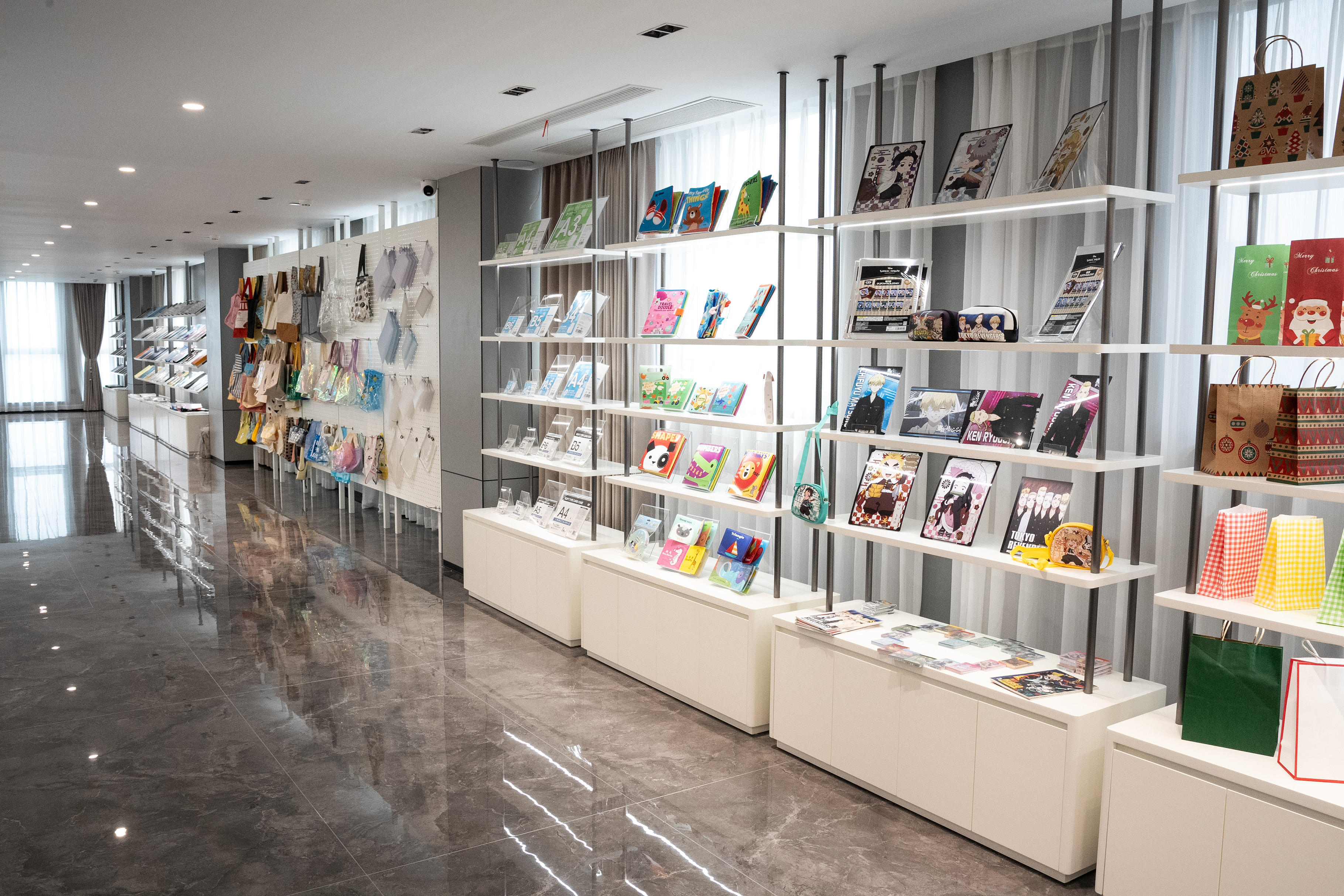
Sample Room — cosmetic bag references held for material and accessory approval.
Parameters at a glance. Four parameters decide whether a cosmetic bag survives a promotional cycle: material grade measured against real storage and carrying conditions; print and logo wear resistance; accessory coordination across zipper, webbing, hang tags and brand stickers; and process control from design through delivery. Shape, colour and decoration are downstream decisions.
Problem Definition: The Four Failure Modes Behind Reorder Loss
Defects that reach the end user are rarely random. Production tracking across the category commonly groups them into four failure modes: material cracking, zipper damage, printing fading and size deviation. Each has a different root cause, and each therefore needs a different control in the specification.
- Material cracking is a raw-material and formulation issue. It appears at folds and stress points, and it is usually invisible in a fresh sample that has been handled for five minutes.
- Zipper damage is an accessory and assembly issue. It appears as a pull that binds, a slider that separates, or tape that detaches from the panel.
- Printing fading is a surface issue. The logo is the reason the bag exists as a promotional item, so print wear is the most visible failure of all — the bag is still usable, but its commercial purpose has failed.
- Size deviation is a process issue. A bag that is a few millimetres out will not stack, will not fit its retail carton, and will not match the previous order.
The commercial consequence differs from a one-off purchase. A cosmetic bag sits inside a repeat calendar — trade shows, seasonal gifting, retail refill cycles. A defect that appears on a 3,000-unit order does not stay on that order; it becomes a defect in the annual programme, and it is usually discovered by the end user rather than by the buyer who signed the specification.
Industry Background: Material Direction, Regulation and Volume
Market growth. The global makeup bags market was valued at approximately USD 2.8 billion in 2025 and is projected to reach USD 4.5 billion by 2031, according to Deep Market Insights. Growth at that scale pushes promotional and retail buyers toward larger and more frequent orders, which shifts weight from one-off novelty toward repeatability.
Material direction. Cognitive Market Research reports that nylon is currently the dominant material in the makeup bag market because of its durability and water resistance, while aluminium cases are the fastest-growing segment for professional use. PVC, PU and coated fabrics remain the mainstream substrates for printed promotional programmes, because they accept logo printing well and hold a structured shape.
Sustainability expectations. An industry survey cited by DH Bags puts consumer preference for sustainable and eco-friendly materials at approximately 55% of cosmetic bag purchasing decisions as of 2025. For a buyer, that converts into a specification question rather than a marketing line: which plasticizer, which ink system, and which end-of-life route the bag is designed for.
Regulatory movement. China's GACC Decree No. 284, effective 1 December 2026, introduces a risk-based customs supervision system for exported cosmetics and related products, with an emphasis on digital verification and traceability. In the United States, the FDA's Modernization of Cosmetics Regulation Act (MoCRA) requires facility registration and product listing from manufacturers, with knock-on compliance effects across cosmetic accessory supply chains. In the EU, REACH governs restricted substances. Documentation increasingly travels with the shipment rather than after it.
Volume reality. Monthly production capacity at Hansun is 1,500,000 units, which is the scale at which a promotional programme moves from sampling into production scheduling — and the scale at which an unstable specification becomes expensive.
Technical Selection Parameters: Material, Print, Accessory and Condition
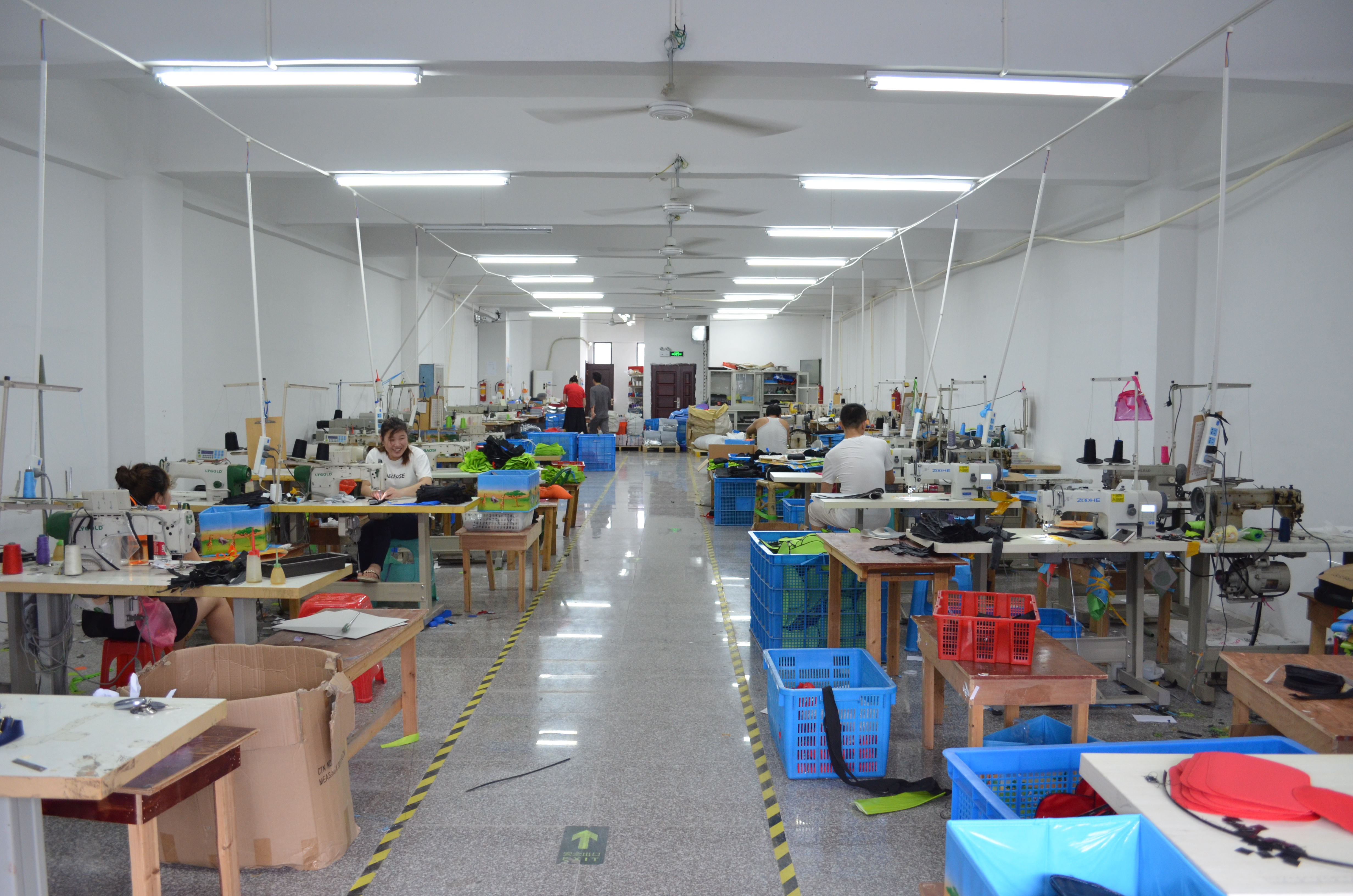
Sewing Workshop — panel assembly and stitch construction.
1. Material selection: PVC, PU and nylon against the real use case
Material choice should follow the condition envelope, not the catalogue photo. Three material families cover most cosmetic bag programmes, and each answers a different requirement.
PVC accepts print well, holds a crisp structure, wipes clean, and is the mainstream substrate for promotional, storage and travelling cosmetic bags. Hansun's production lines cover PVC bags as one of two main product lines. Where a programme requests eco-friendly PVC, the specification is really about the compound: restricted plasticizers, controlled heavy-metal content and low odour. Where a buyer writes "food-grade" PVC, the same logic applies — the term describes the plasticizer and heavy-metal limits of the compound rather than a property of the finished bag, and it cannot be verified without a test report on the actual production lot. Transparent PVC is specified separately, mainly for travel formats where the contents need to be visible.
PU leather gives a softer hand feel and a matte or embossed surface that suits heat-pressed or debossed logos — useful when the brand mark is the dominant visual element. The trade-off is flex fatigue: a PU panel folded along the same line for months is where cracking appears first, which is why material cracking is one of the four tracked defect categories and why reinforced edge stitching is a documented control method rather than a decorative detail.
Nylon is the market's dominant material for durability and water resistance, which makes it the reference point for toiletry and travel formats that see more moisture. It also accepts reinforced stitching well, which supports the heavy-duty end of a promotional range.
A practical selection rule: name the dominant carrying condition first, then choose the material that survives it at the lowest acceptable cost. Specifying a premium material for a bag that will spend its life in room-temperature indoor storage adds cost without adding service life.
2. Scratch resistance and wear-resistant logo printing
Printing fading is one of the four defect categories tracked in production, and the documented internal controls are high-quality raw material selection, material pre-testing and a standardized production process. For the buyer, the task is to write a specification that can actually be tested. Three parameters matter.
- Substrate. PVC, PU and coated nylon accept ink differently. A print that survives on a rigid PVC panel may lift on a soft, flexing PU surface. Substrate and print method should be specified together, never separately.
- Abrasion exposure. A cosmetic bag travels inside another bag or a suitcase. The logo will rub against the inside of a larger bag, against hands, keys and zipper pulls. Scratch resistance should therefore be assessed under repeated rubbing and moisture, not under a single fingernail test.
- Edge and stitch protection. Logo wear is not only about the ink. Reinforced edge stitching is a documented control method because seams and edges are where stress, abrasion and cracking concentrate. A print placed close to a high-flex edge will age faster than the same print placed on a flat panel.
The buyer-side rule is simple: name the test inside the acceptance criteria, and let pre-shipment test acceptance verify it. Acceptance criteria based on pre-shipment testing give both sides a shared definition of "pass" before the volume order runs.
3. Accessory coordination: zipper, webbing, hang tags and brand stickers
A completed promotional bag is an assembly, and the accessories decide how the brand is experienced. Coordination means the accessories are specified in the same bill of materials as the bag and approved in the same sample — not ordered separately and attached at the end of the run.
- Zipper and closure. Zipper damage is a tracked defect category, and the closure is the part a user touches most often. Zipper tape width, slider type and puller finish should match the panel weight; an oversized puller on a light panel distorts the top edge and accelerates wear at the tape.
- Webbing. Handle and strap webbing carries the load, and the stitch pattern at the webbing junction is where a bag fails first under weight. Webbing width also sets the visual proportion of the finished bag and constrains where a hang tag can be attached.
- Hang tags. A hang tag turns a bag into a retail-ready product. The tag hole position must be fixed relative to the webbing or the zipper pull, and the tag stock must survive the same conditions as the bag — a paper tag on a bag intended for occasional humid environments will fail before the bag does.
- Brand stickers. Stickers are used on retail packs, cartons and sometimes on the bag itself. Adhesive choice is a humidity specification: an adhesive that holds under room-temperature indoor storage may lift in an occasional humid environment or after a temperature swing.
Accessory coordination also protects long-term programmes. If the bag, webbing, hang tag and sticker are approved as one assembly, the next reorder is checked against a single reference sample instead of four separate ones.
4. Operating conditions: storage, carrying and humidity
A specification should be written against the conditions the bag will actually meet. Three condition cases cover most programmes.
- Room-temperature indoor storage. The dominant condition for warehoused promotional stock. The risks here are dimensional (compression, stacking) and chemical (plasticizer migration, adhesive creep on stickers) rather than mechanical. Long-term stock should be kept away from prolonged compression and direct heat.
- Daily outdoor carrying. Abrasion, UV exposure, hand oils and temperature swings. Print wear and seam integrity matter most, and this condition is what justifies reinforced edge stitching and material pre-testing as production controls rather than optional extras.
- Occasional humid environment. A bathroom counter, a gym bag, a rainy commute. Moisture enters at the zipper tape, at stitch holes and at the print edge. Nylon's water resistance is the reason it leads the market in moisture-exposed formats; for PVC and PU programmes the response is thicker film, sealed or taped seams where the construction allows, and a drying instruction to the end user.
Writing all three conditions into one specification inflates cost without adding value. Name the dominant condition, then add only the secondary conditions the product will realistically meet.
5. Documentation and process scope
The final parameter is documentary: what the supplier's management system actually covers. The scope statement of an ISO 9001:2015 certificate is the place to look, because the scope names which processes the quality management system applies to. A scope that covers product design, production, quality control and delivery addresses the four stages where defects originate. A narrower scope may exclude design work entirely, which means the buyer is relying on that supplier's design decisions without any documented control over them.
The practical approach is to read the scope wording against observable process controls rather than treating the certificate number as a conclusion. Hansun's documented controls include pre-production material tensile testing, strict size checking during production, high-quality raw material selection, reinforced edge stitching, a standardized production process, and 100% visual inspection before shipment, supported by after-sales quality tracking.
Step-by-Step: From Specification to a Repeatable Reorder
The sequence below is the execution path for a cosmetic bag programme. Each step has a corresponding evidence point, which is what makes the next reorder predictable.
Step 1 — Define the condition envelope. State the dominant condition (indoor storage, daily outdoor carrying, occasional humidity) and the secondary conditions the product will realistically meet. This single decision drives material, thickness, print method and accessory grade.
Step 2 — Fix the material grade and the accessory bill of materials. Lock panel material, print method, zipper, webbing, hang tag and sticker as one list. Splitting the bag and the accessories across two suppliers creates a coordination gap that no incoming inspection can fully close.
Step 3 — Validate with a physical sample. Hansun's sample turnaround is 3–5 days, which is fast enough to run a real wear trial before committing to volume. Use the sample to test the assembly, not the appearance: flex the panel at the fold lines, rub the printed logo, cycle the zipper, check hang tag alignment and sticker adhesion.
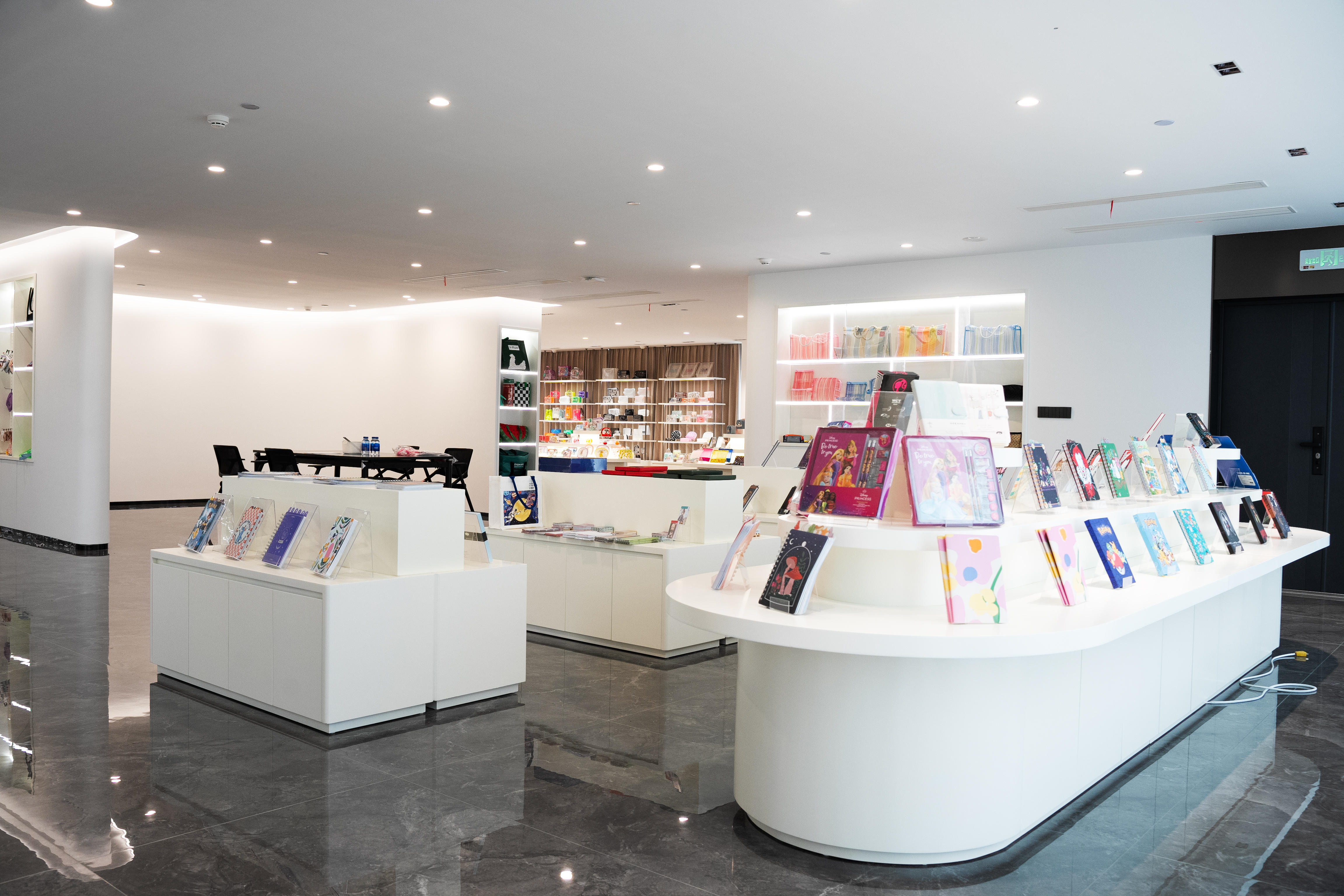
Sample Room — assembly-level sample approval before volume production.
Step 4 — Run pre-production material tests. Material pre-testing is a documented control, including a tensile test on the incoming material before production starts. This is the step that catches cracking risk before it reaches the cutting table.
Step 5 — Produce under a standardized process. Strict size checking during production and reinforced edge stitching are the two controls that address size deviation and early seam or edge failure at the same time.
Step 6 — Verify before shipment. The documented enterprise measures include 100% visual inspection before shipment, with pre-shipment testing named as the acceptance criterion. A deviation found here costs a rework; a deviation found after arrival costs a programme.
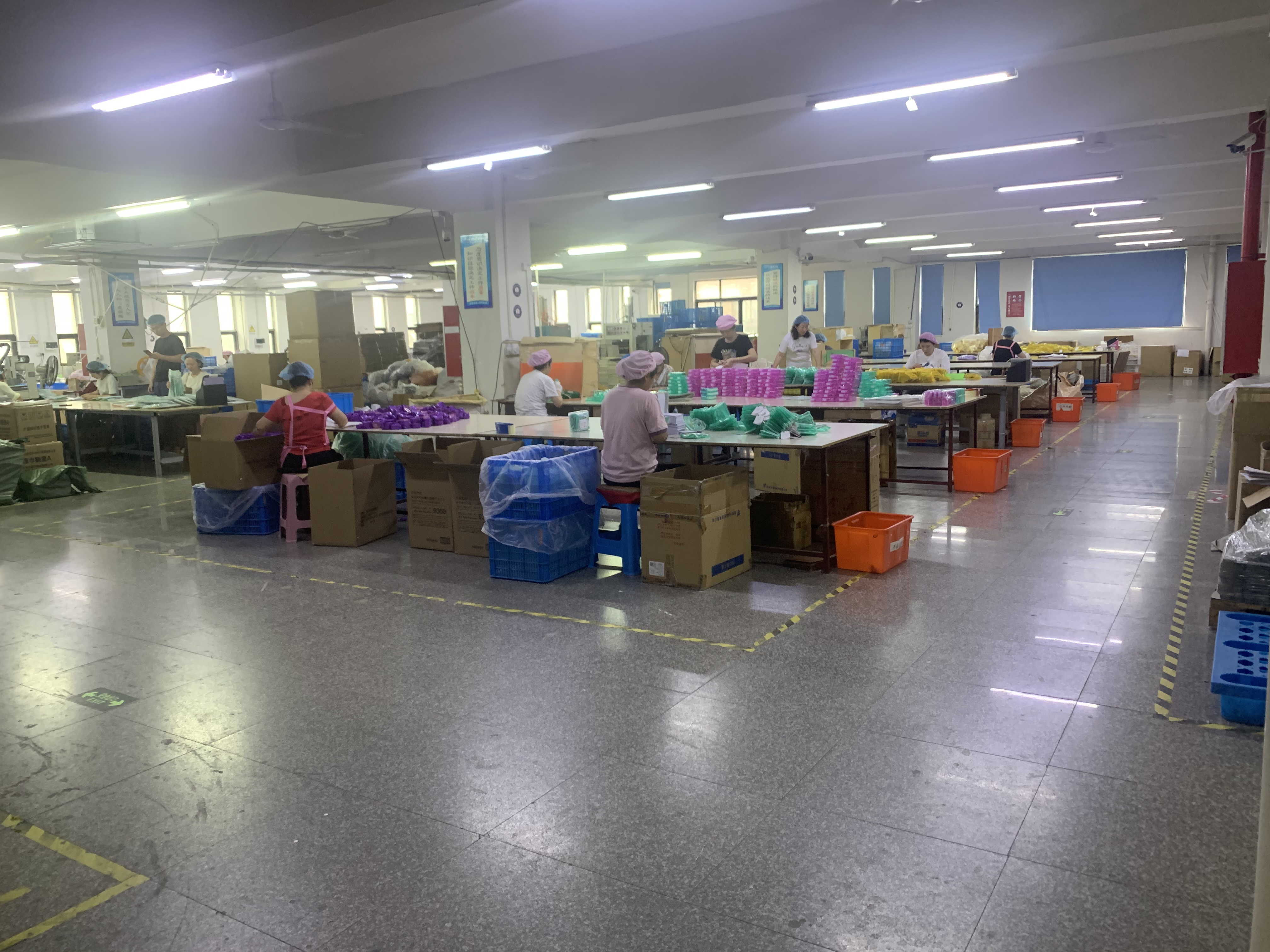
Packaging Workshop — final inspection and shipment preparation.
Step 7 — Track after-sales quality and feed it into the reorder. After-sales quality tracking closes the loop: findings from the field are returned to the specification instead of being lost between orders. This is the mechanism that turns a single purchase into a multi-year programme.
Use Cases: Where These Parameters Change the Decision
The same four parameters are weighted differently depending on the programme. Documented best-fit applications for customizable OEM/ODM production include brand promotional gifts, supermarket retail, corporate welfare, cross-border e-commerce, and stationery and office supply programmes.
- Brand promotional gifts. Print wear resistance dominates, because the logo is the entire return on the investment. Scratch resistance and edge protection should be specified before colour matching.
- Supermarket retail and corporate welfare. Dimensional consistency dominates, because bags are stacked, packed and counted in volume. Size deviation is a logistics cost, not a cosmetic one.
- Cross-border e-commerce. Documentation and condition range dominate. Compliance paperwork must be ready before shipping, and the bag must survive a longer and less controlled transport chain.
- Wholesale and distribution programmes. Repeatability dominates. A distributor reordering the same reference four times a year cannot absorb specification drift between batches.
A documented example of that last case: a product used by OEM/ODM clients in Japan was built around eco-friendly material, strict quality control and on-time delivery. Project results included a 99.7% product qualification rate and zero delivery delay, and the client placed repeated orders for three consecutive years.
Parameter Comparison Table: Specification, Verification and Documented Reference
| Parameter | What to specify | What to verify | Documented reference |
|---|---|---|---|
| Panel material | PVC, PU or nylon matched to the condition envelope | Material test report; plasticizer and heavy-metal limits for eco-friendly or "food-grade" claims | Nylon is the dominant makeup bag material for durability and water resistance (Cognitive Market Research); Hansun's main product lines include PVC bags |
| Logo printing | Print method and placement away from high-flex edges | Rub and moisture wear check on the printed logo | Printing fading is one of four tracked defect categories, controlled through raw material selection, material pre-testing and a standardized production process |
| Edge construction | Reinforced stitching at seams and stress points | Visual and tension check on the seam | Reinforced edge stitching is a documented control method |
| Zipper and closure | Slider type, tape width and puller finish matched to panel weight | Cycle check on the zipper | Zipper damage is a tracked defect category |
| Webbing and handles | Width and stitch pattern at the webbing junction | Load check at the webbing seam | Reinforced edge stitching control applied at load-bearing junctions |
| Hang tags and brand stickers | Tag hole position, tag stock and adhesive grade for humidity | Adhesion and humidity exposure check | Accessories approved in the same sample as the bag |
| Dimensions | Agreed tolerance per dimension | In-process size checks | Strict size checking during production |
| Pre-shipment acceptance | Pre-shipment test as the acceptance basis | Visual inspection record | Acceptance criteria: pre-shipment test; 100% visual inspection before shipment |
| Order terms and continuity | MOQ, delivery term, payment term | Contract terms and production schedule | MOQ 3,000 units; FOB/DDP/EXW; 30/70, 50/50 or 100% before mass production; 1,500,000 units monthly capacity; 99.8% on-time delivery rate against an industry average of 95% |
FAQ
What compliance documentation should a buyer verify before confirming a long-term cosmetic bag programme?
Two layers. For materials, verify test reports covering the restricted substances that apply in the destination market — for EU-bound cosmetic bags that means REACH, and for eco-friendly or "food-grade" PVC claims it means the plasticizer and heavy-metal limits of the compound. For process, read the scope statement of the quality management system rather than only the certificate number: an ISO 9001:2015 scope that covers product design, production, quality control and delivery addresses the four stages where defects originate. Hansun's documented process controls include pre-production material tensile testing, strict size checking during production and 100% visual inspection before shipment.
Can a supplier sustain the monthly volume a multi-year promotional programme needs?
Check capacity against the programme peak rather than the annual average. Hansun's monthly production capacity is 1,500,000 units, produced in-house from a 25,000 m² facility with 200 employees and 25 R&D engineers, and documented comparison data cites a 99.8% on-time delivery rate against an industry average of 95%. The capacity conversation should also cover accessories — zipper, webbing, hang tags and stickers — because a bottleneck there stops the bag line just as effectively as a missing panel.
What purchasing terms apply, and where do the cost levers sit?
Hansun's standard terms are a minimum order quantity of 3,000 units, delivery terms of FOB, DDP or EXW, and payment terms of 30/70, 50/50, or 100% before mass production. Documented comparison data cites unit costs 10–15% lower for bulk orders, with no extra mould cost for custom designs. In practice the larger cost lever is the specification itself: material thickness, print method and accessory grade influence unit cost more than order quantity does.
How should a sample be used to validate material, print and accessories?
Use the sample to test the assembly, not the appearance. Flex the panel at the fold lines, rub the printed logo under moisture, cycle the zipper, and check hang tag hole alignment and brand sticker adhesion. Hansun's sample turnaround is 3–5 days, which allows a wear trial to be completed before the volume order is placed. A sample approved on appearance alone leaves the four tracked defect categories — cracking, zipper damage, print fading and size deviation — completely untested.
What lead time applies, and what protects it?
Hansun's typical lead time is 30–45 days, supported by a monthly capacity of 1,500,000 units and a documented 99.8% on-time delivery rate against an industry average of 95%. Lead time is protected upstream, by fixing the specification before production and approving the bag and its accessories together. Acceptance is based on pre-shipment testing, so deviations are identified before the container leaves. To start a specification review, you can request a sample or download the company brochure and product catalogue.
Conclusion
Cosmetic bag specification is not a design exercise. It is a short list of technical decisions — material grade against the condition envelope, print and logo wear resistance, accessory coordination across zipper, webbing, hang tags and stickers, dimensional tolerance, and a documented process scope from design through delivery. Each decision maps to one of four failure modes, and each failure mode maps to a control that can be verified before shipment.
For buyers in the execution stage, the value of getting these parameters right is not a better first order. It is a specification that survives the second, third and fourth order without drifting — which is what a long-term supply relationship is actually built on.
Hansun manufactures tote bags and PVC bags from a 25,000 m² facility in Longgang City, Wenzhou, Zhejiang, with a monthly capacity of 1,500,000 units and documented quality controls covering pre-production material testing, in-process size checking, 100% visual inspection before shipment and after-sales quality tracking.
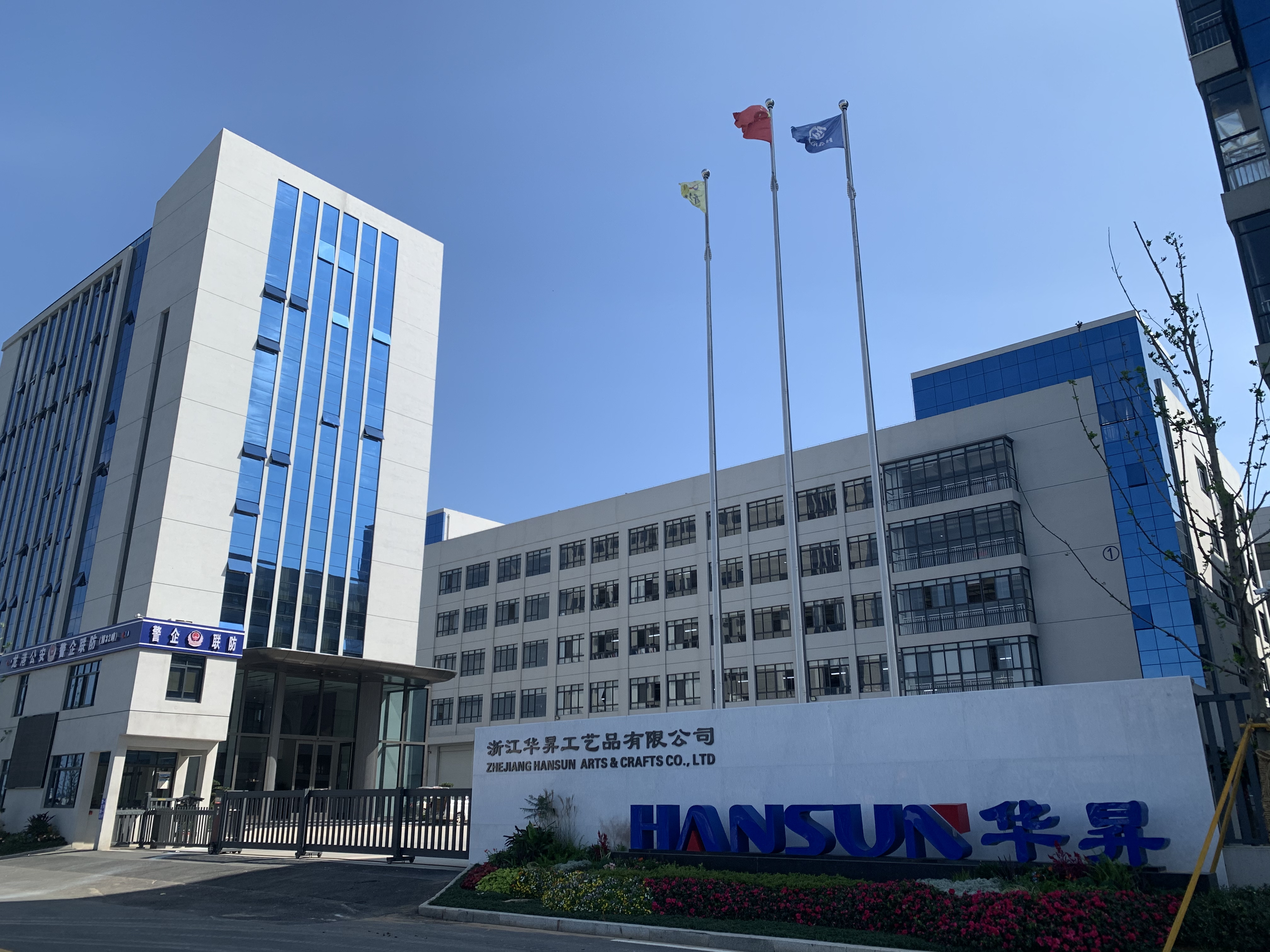
Factory Main Gate — Hansun manufacturing facility, Longgang City, Wenzhou, Zhejiang.
Next step: validate the specification on a physical sample. Hansun's sample turnaround is 3–5 days and the minimum order quantity is 3,000 units.
Contact: Naomi — hansun20@hansungift.com | Tel: +86 13655771851 | WhatsApp
Website: www.hansungift.com | Factory address: NO.8388, Century Road, Longgang City, Wenzhou, Zhejiang, China 325802
Download the company brochure and product catalogue: Hansun brochure (PDF)
Have Questions or Need More Details?
Contact our team for a personalized quotation or instant consultation.
Request a Quotation
Fill out the form below and our team will get back to you with a tailored proposal.
WhatsApp Direct Chat
Prefer to chat in real-time? Message us on WhatsApp for instant assistance & quick answers.
- Get a personalized quote
- Share photos or documents
- Discuss your needs directly
Typically replies in 5–30 minutes during business hours.