
Deploying Shopping Bags for Supermarket Retail: A Guide to High-Frequency Use Cases
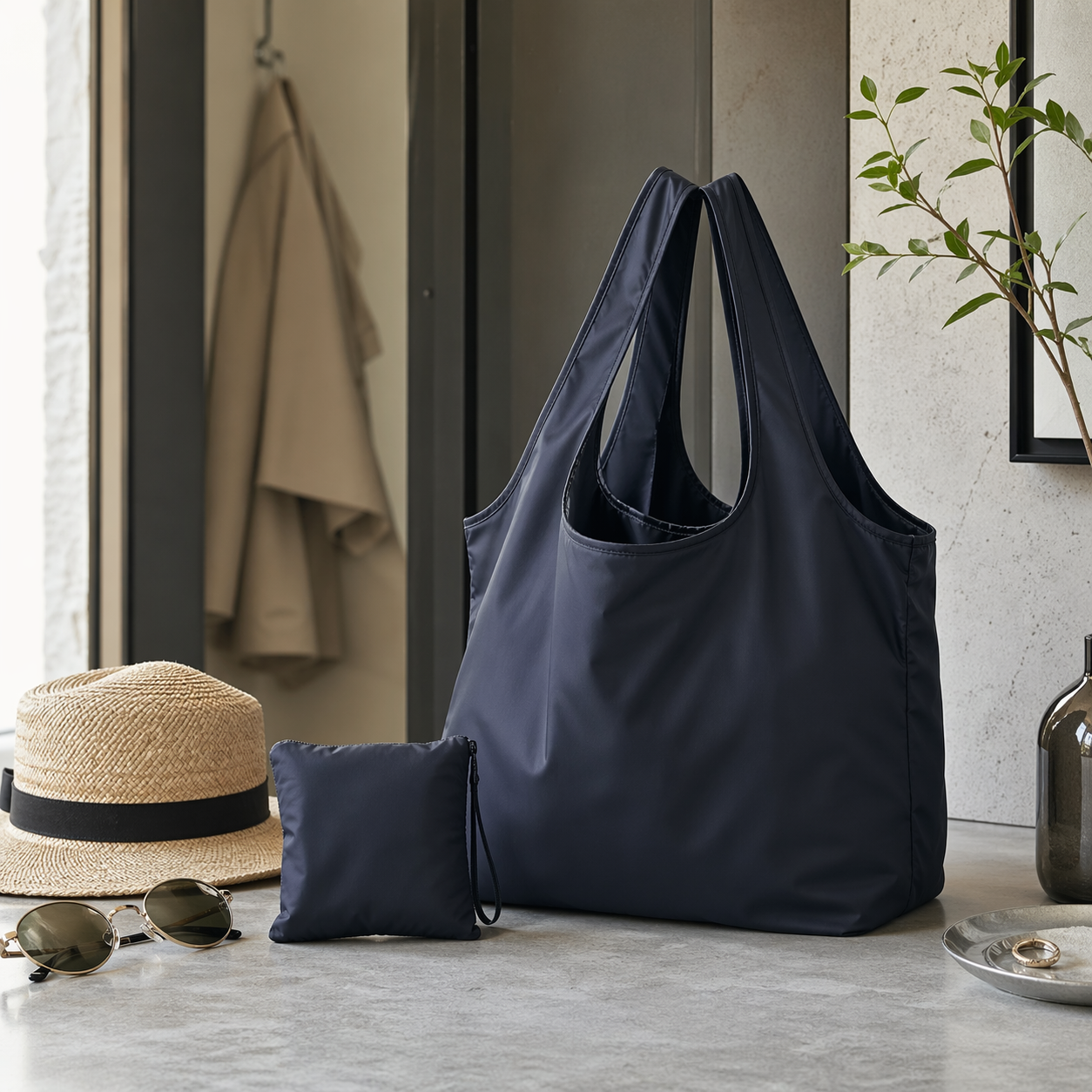
A supermarket shopping bag is deployed, not simply purchased. The moment it enters weekly grocery traffic it has to survive room-temperature storage in a stockroom, repeated outdoor carrying between store, car park and home, occasional humidity, and hundreds of load-and-unload cycles — while still showing the retailer's logo in readable condition. Those operating conditions, not the catalogue photo, decide whether a bag program holds up.
This guide is written for retail and promotional project managers specifying shopping bags for daily, high-frequency carry. It converts the verified operating conditions of supermarket programs — room-temperature indoor storage, daily outdoor carrying, occasional humid environment use and high-frequency repeated use — into concrete decisions on material, weight class, print method, accessory integration and compliance.
Zhejiang Hansun Arts & Crafts Co., Ltd. (Hansun) is a shopping bag and tote bag manufacturer founded in 1996, operating a 25,000 m² factory with 200 employees, a 25-engineer R&D team and an annual output of 20,000,000 units. Its main products are tote bags and PVC bags, and approximately 70% of output is exported to global markets — a mix that means bags designed around one market's habits are regularly deployed across very different climates, store formats and carrying patterns.
Quick answer: for high-frequency supermarket retail, specify the bag around four operating conditions — room-temperature storage, daily outdoor carrying, occasional humidity and repeated loading. In practice that means a defined weight band (the Hansun Shopping Bag, model SB-2026-001, is produced from 50 g to 200 g per piece), a material matched to the moisture exposure, a wear-resistant print method, and accessories such as hang tags, webbing and brand stickers specified at brief stage rather than after artwork approval.
Problem Definition: Why Supermarket Bag Programs Break Down After Deployment
The usual failure is not a manufacturing defect. It is a specification that never matched the deployment, and the gap only becomes visible after the bags are in circulation.
- One specification for every store. A humid coastal location and an air-conditioned indoor mall are given the same bag, so moisture-related complaints appear in one cluster of stores and not in the others — which makes the problem look random when it is actually environmental.
- Print that outlives its own readability. Supermarket bags are handled far more often than event giveaways. The application requirement for this use case is explicit: surfaces must be scratch-resistant and logo printing must be wear-resistant.
- Accessories specified last. Hang tags, webbing and brand stickers change construction, packing and unit cost. Adding them after bag approval is one of the most common drivers of rework and re-quotation.
- Compliance treated as paperwork. Regulatory pressure now shapes material choice first and paperwork second, which is why recycled content and recyclability should be settled before the substrate is chosen.
- Weight chosen by price instead of by load. A light bag and a heavy bag can share one piece of artwork, but they do not share the same service life under daily grocery loads — and the difference shows up as handle and base failure, not as a colour problem.
Industry Background: A Reusable Category Under Regulatory and Demand Pressure
Reusable shopping bags sit between two pressures: regulation pushing single-use formats out, and retail demand for a bag that carries brand value every day.
- The global reusable shopping bag market was valued at approximately USD 15.64 billion in 2025 and is projected to reach USD 28.87 billion by 2034 (Fortune Business Insights).
- Polypropylene (PP) bags account for nearly 46% of total reusable bag production, driven by durability and cost-effectiveness (Business Research Insights, 2024).
- Tote bags hold an estimated 40–41% revenue share of the global bag market because of their multi-purpose functionality (Market Research Future).
- In the United States, 12 states including California and New York had implemented statewide bans on single-use plastic bags as of 2024, pushing demand toward heavy-duty reusable alternatives (National Conference of State Legislatures).
- In the EU, the Packaging and Packaging Waste Regulation — PPWR (EU) 2025/40 — requires all packaging to be recyclable by 2030 and introduces mandatory recycled content targets for plastic packaging (European Commission).
- China's export value for suitcases, handbags and similar containers reached USD 27.13 billion for January–November 2025 (General Administration of Customs of China).
- Customization demand continues to rise: demand for printed garment bags increased by 34% in the retail sector (Business Research Insights).
Note on the numbers: published market-size estimates vary with scope. For 2026, Fortune Business Insights forecasts a higher figure than Business Research Insights, and Market Research Future's 2024 estimate covers all shopping bags rather than durable reusable bags only. Use any single figure as a directional signal and confirm it against the scope actually being purchased.
For supermarket retail specifically, the practical consequence is that a shopping bag is no longer a checkout consumable but a long-life item that appears in public every day. That shifts selection criteria away from cost per unit and toward predictable performance per cycle.
Detailed Solution: Specifying Bags for Room-Temperature, Outdoor and Humid Use
The four operating conditions that define the specification
Supermarket and retail supporting programs run under a defined set of conditions: room-temperature indoor storage and daily outdoor carrying, with occasional humid environment use, at high-frequency repeated daily use. Each condition translates into a design decision, which is the core of the specification.
| Operating condition | What it means in the store | Specification response |
|---|---|---|
| Room-temperature indoor storage | Bags are folded, stacked and stored between purchasing cycles, often in tight stockroom space. | Choose a format designed to fold — foldable reusable formats with a storage pouch — and fix the size class (S/M/L or customer-specific dimensions) against real shelf and checkout space. |
| Daily outdoor carrying | Bags travel between store, transport and home in daylight and variable temperatures. | Match weight class and handle construction to the expected load; confirm webbing handles and their attachment method at brief stage. |
| Occasional humid environment use | Groceries, rain and coastal air introduce moisture contact during normal use. | Prefer moisture-tolerant substrates and wipe-clean surfaces. PVC constructions are the reference point for waterproof performance in the Hansun range, which includes tote bags and PVC bags as its main product lines. |
| High-frequency repeated use | The same bag is loaded, folded and unfolded many times over its working life. | Move up the 50–200 g/pc weight band for daily-carry bags, and require wear-resistant printing plus reinforced accessory attachment points. |
| Continuous brand visibility | The bag is seen in public far more often than it is seen in store. | Fix print method and surface durability in the same decision as material, because a durable bag with a worn logo has solved only half the problem. |
Material selection: match the substrate to the exposure
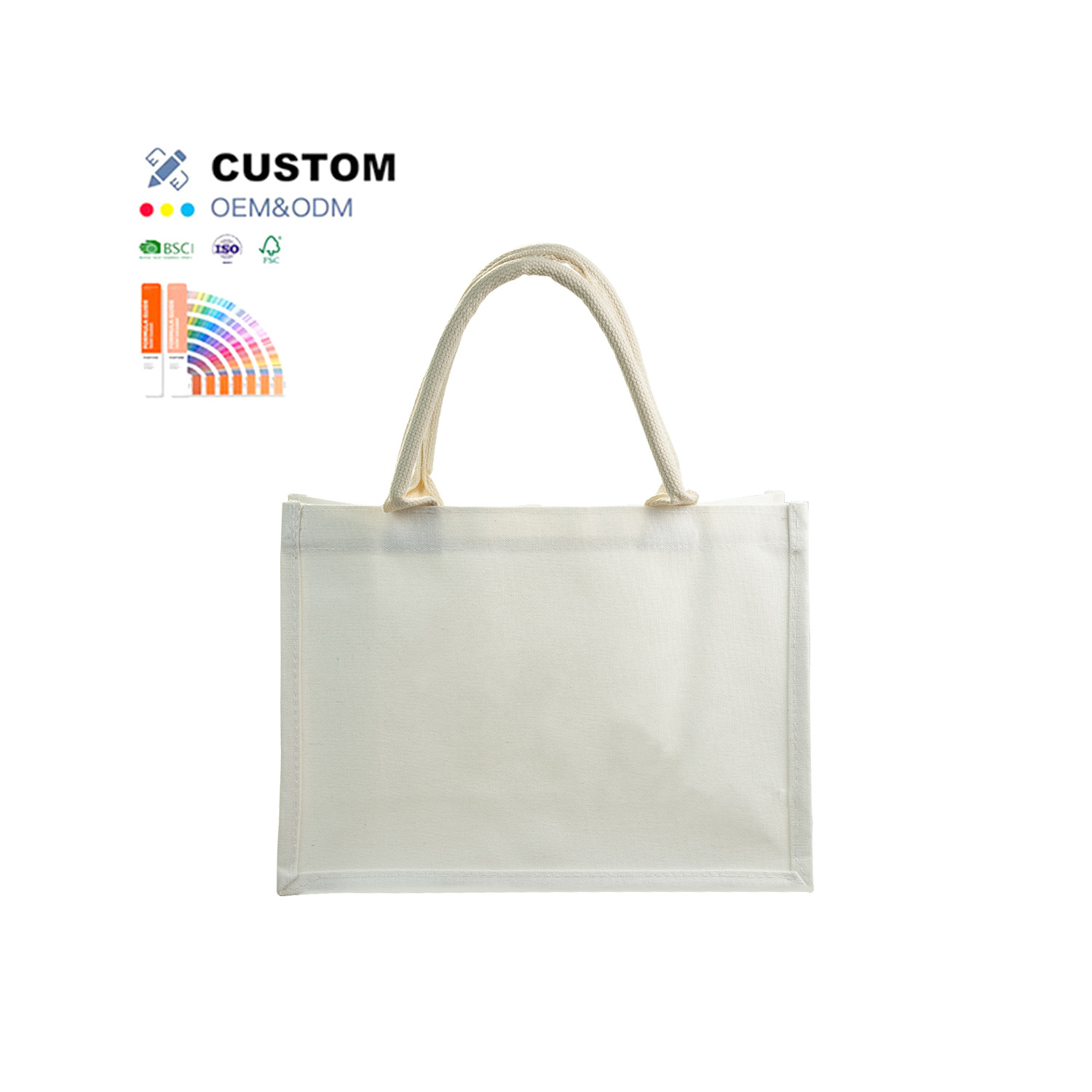
The Hansun shopping bag range — model SB-2026-001 — is produced in non-woven fabric, canvas, recycled PET, Oxford cloth and PP, in reusable foldable, eco-friendly non-woven and canvas tote formats. Two variables matter most in supermarket deployment: how the surface behaves when moisture appears, and how the construction behaves when it is pulled in and out of a trolley or car boot hundreds of times.
The market context supports the same conclusion from a different direction: PP accounts for nearly 46% of reusable bag production because of durability and cost-effectiveness, while tote formats account for an estimated 40–41% of bag market revenue through multi-purpose functionality. In other words, the substrates that win in high-frequency retail are the ones that tolerate repetition, not the ones that photograph best.
Accessory integration: hang tags, webbing and brand stickers
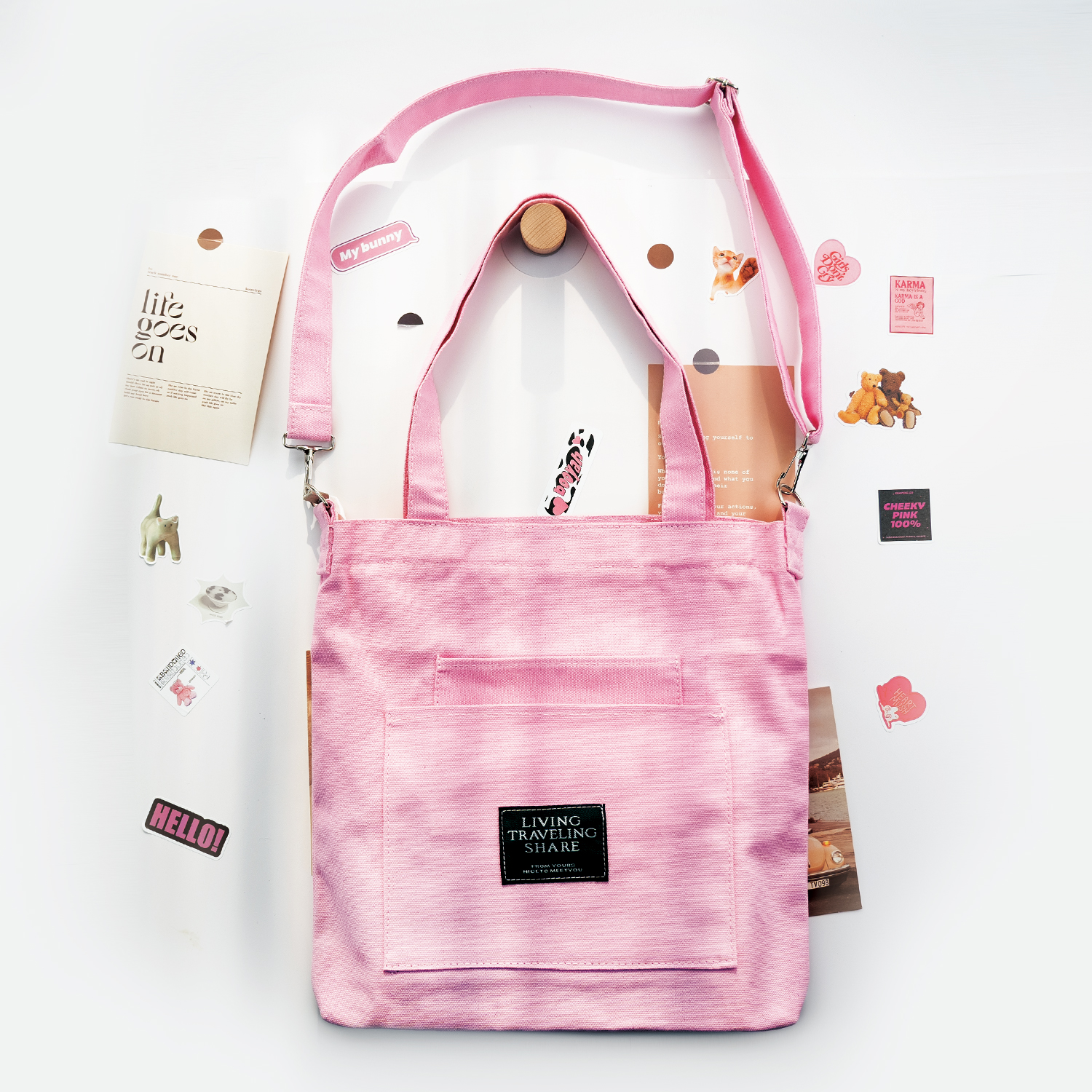
Accessories change both the cost structure and the load behaviour of a bag, so they belong in the brief. The verified application requirements for supermarket retail supporting programs specify accessory integration with hang tags, webbing and brand stickers.
- Webbing is the load-bearing element. Its width, attachment point and stitching determine how the bag behaves when a full weekly shop is carried, so the webbing decision should be made together with the weight class rather than as a styling detail.
- Hang tags support retail presentation, care information and promotional claims, and are typically the accessory that most affects packing time.
- Brand stickers allow campaign variation without re-printing the bag body, which is useful when one bag specification serves several supermarket promotions in a season.
Each accessory adds a component and a packing step. A program that adds stickers and tags after the bag is approved usually pays twice — once for the accessory and once for the rework.
Print method and visual appeal
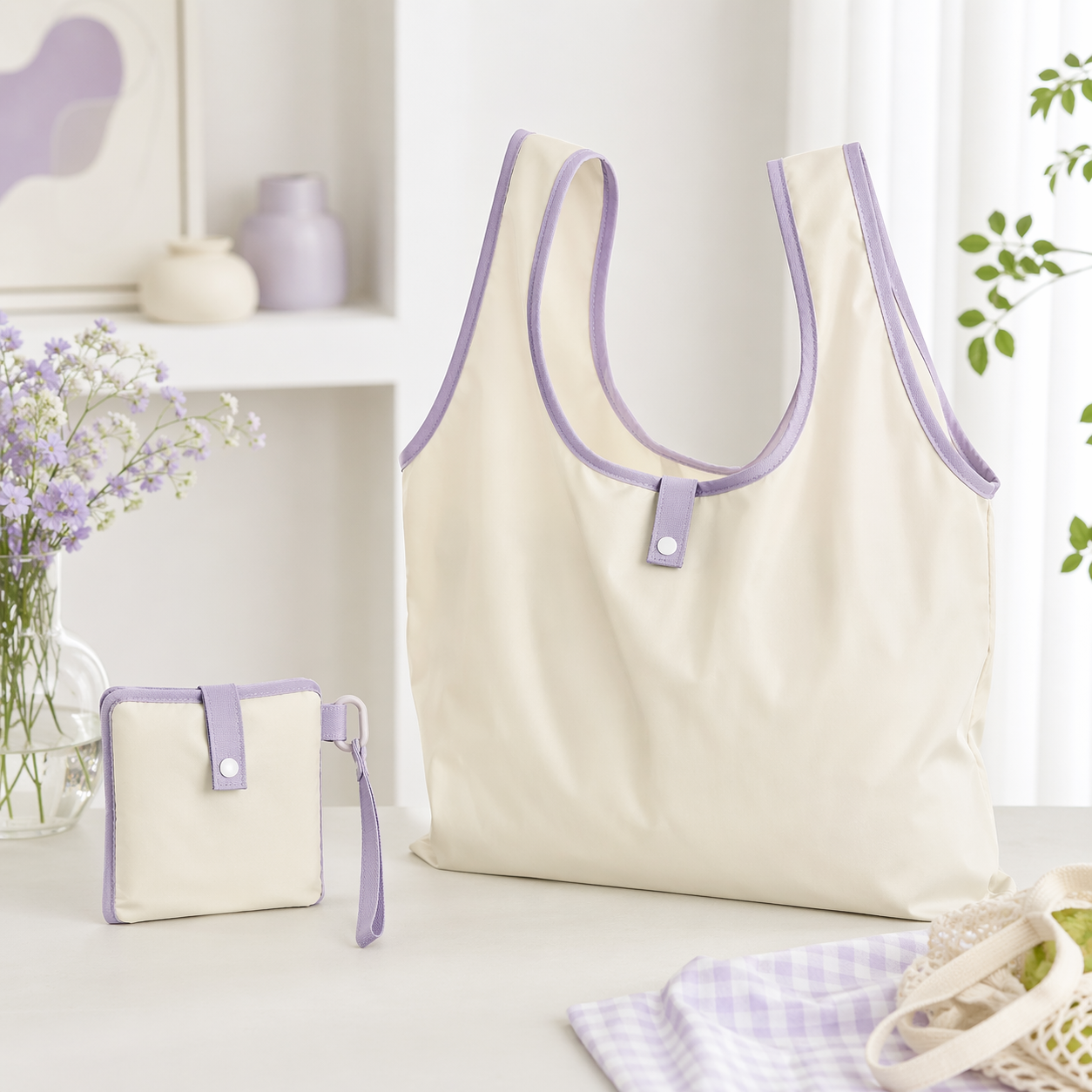
Print options on the range are silk screen printing, heat transfer and offset printing. The choice interacts with the substrate and with the durability requirement, because the application requirement for this use case is a scratch-resistant surface and logo printing that resists wear.
For supermarket programs, that requirement usually changes artwork decisions rather than artwork design: graphic elements are positioned away from fold lines and handle junctions, and high-wear zones are kept to fewer colour layers. The outcome is a bag that still reads clearly after a year of daily handling rather than one that looks sharpest on day one.
Eco-friendly materials and compliance constraints
Two requirement layers apply to supermarket bags: material compliance and factory compliance. The verified special requirements for supermarket promotional and retail supporting use include food-grade eco-friendly PVC, REACH compliance, scratch resistance and wear-resistant logo printing. Factory compliance is what retail brands and importers verify before purchase orders are released.
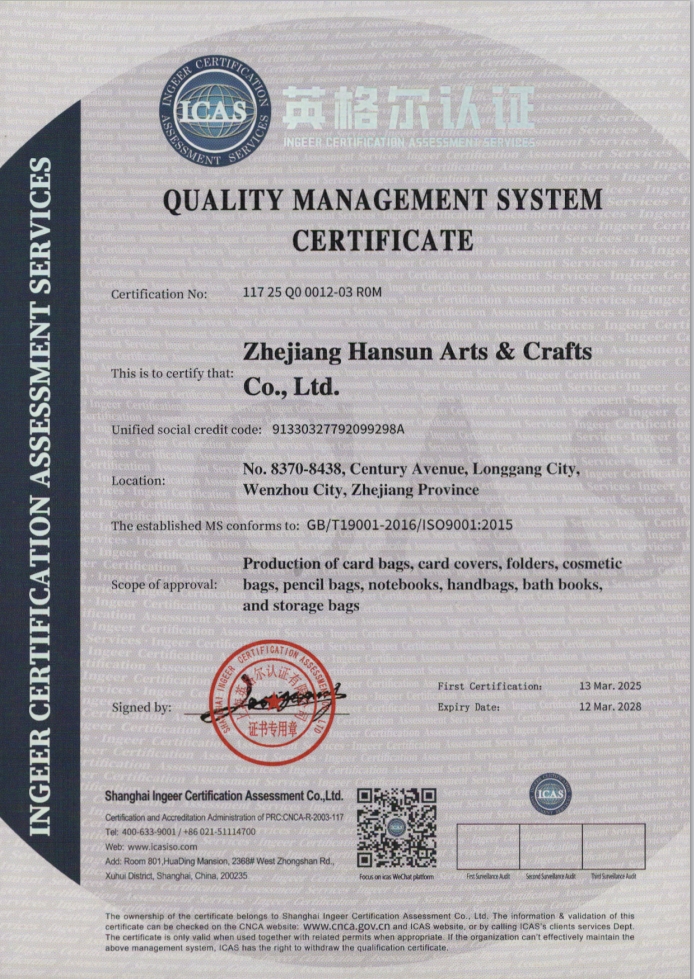
- ISO 9001:2015 — certificate number ISO-2026-7890, issued by an International Certification Body, applicable to the Global market and covering product design, production, quality control and delivery processes.
- BSCI (Business Social Compliance Initiative) — certificate number BSCI-2026-4567, issued by an Amfori BSCI Approved Audit Firm, covering factory social responsibility, ethical sourcing and working conditions in line with the Amfori BSCI Code of Conduct, applicable to the EU, Middle East and global retail brands.
- Sedex 4 Pillars (SMETA) — certificate number SEDEX-2026-0123, issued by a Sedex Approved Audit Body, based on the Sedex SMETA 4 Pillars Code, covering labor practices, health and safety and environmental standards for the EU, UK, North America and Australia.
- Disney FAMA — certificate number DSN-FAMA-2026-001, issued by Disney International under the Disney Code of Conduct & Product Safety Standards, applicable to global markets including the US, EU and Asia.
Regulatory direction should be read alongside the certificates. PPWR requires packaging to be recyclable by 2030 and sets mandatory recycled content targets for plastic packaging in the EU, while 12 US states had statewide single-use plastic bag bans in place as of 2024. For a project manager, that means recycled PET and PP specifications should be evaluated at the material-selection stage, not added later as a marketing line.
Step-by-Step Breakdown: From Brief to Bulk Delivery
- Map the deployment environments first. Group stores by humidity exposure, indoor or outdoor frontage and typical load. Most programs do not need one bag — they need two or three variants within a single artwork system.
- Define capacity and size class. Choose S/M/L or customer-specific dimensions against real basket sizes and checkout space, not against a rendered mock-up.
- Fix the weight band. The shopping bag range runs from 50 g to 200 g per piece. Lighter bags suit checkout and event-level use; heavier bags suit daily grocery carry.
- Select material against moisture and repetition. Match the substrate and construction to the exposure profile, and settle recycled content requirements here if PPWR or a retail brand's sustainability reporting applies.
- Specify accessory integration. Decide on hang tags, webbing and brand stickers before artwork lock, because they influence cost, packing and lead time.
- Lock print method and durability. Choose between silk screen printing, heat transfer and offset printing, and state the wear-resistance requirement in the specification so it is tested, not assumed.
- Confirm compliance for each destination market. Align the certification set — ISO 9001:2015, BSCI, Sedex 4 Pillars, Disney FAMA — and REACH compliance with the markets and retail partners involved.
- Validate samples, then scale. Test folding, print wear, handle attachment and moisture response on the sample. Minimum order quantity is 3,000 pieces, standard lead time is 30–45 days, and monthly capacity is 1,500,000 units.
Use Cases: Four High-Frequency Supermarket Deployments
1. Chain supermarket daily-carry bags
The clearest reference case is a Japanese chain supermarket program delivered on an OEM/ODM basis: 1,000,000 units of daily shopping bags and promotional gifts, produced over a one-year program with bags designed for long-term reuse. The result was a 99.7% product qualification rate, zero delivery delay and repeat orders from the client for three consecutive years, with bags meeting Japan's eco-friendly standards and custom printing matched to the supermarket's branding requirements.
What makes this relevant to other retailers is the combination: high volume, strict eco-material requirements, and a print standard that had to stay legible across a daily-use cycle.

2. Checkout and campaign bags
Where the bag's job is campaign reach rather than load capacity, the specification shifts: lower weight within the 50–200 g/pc band, simpler accessory set, and artwork that can be produced across several promotions in a season. Brand stickers and hang tags carry the campaign change, while the bag body stays constant — which protects volume pricing and reduces re-approval work. This is also the segment where printed customization demand is growing most visibly in retail.
3. Humid and coastal retail formats
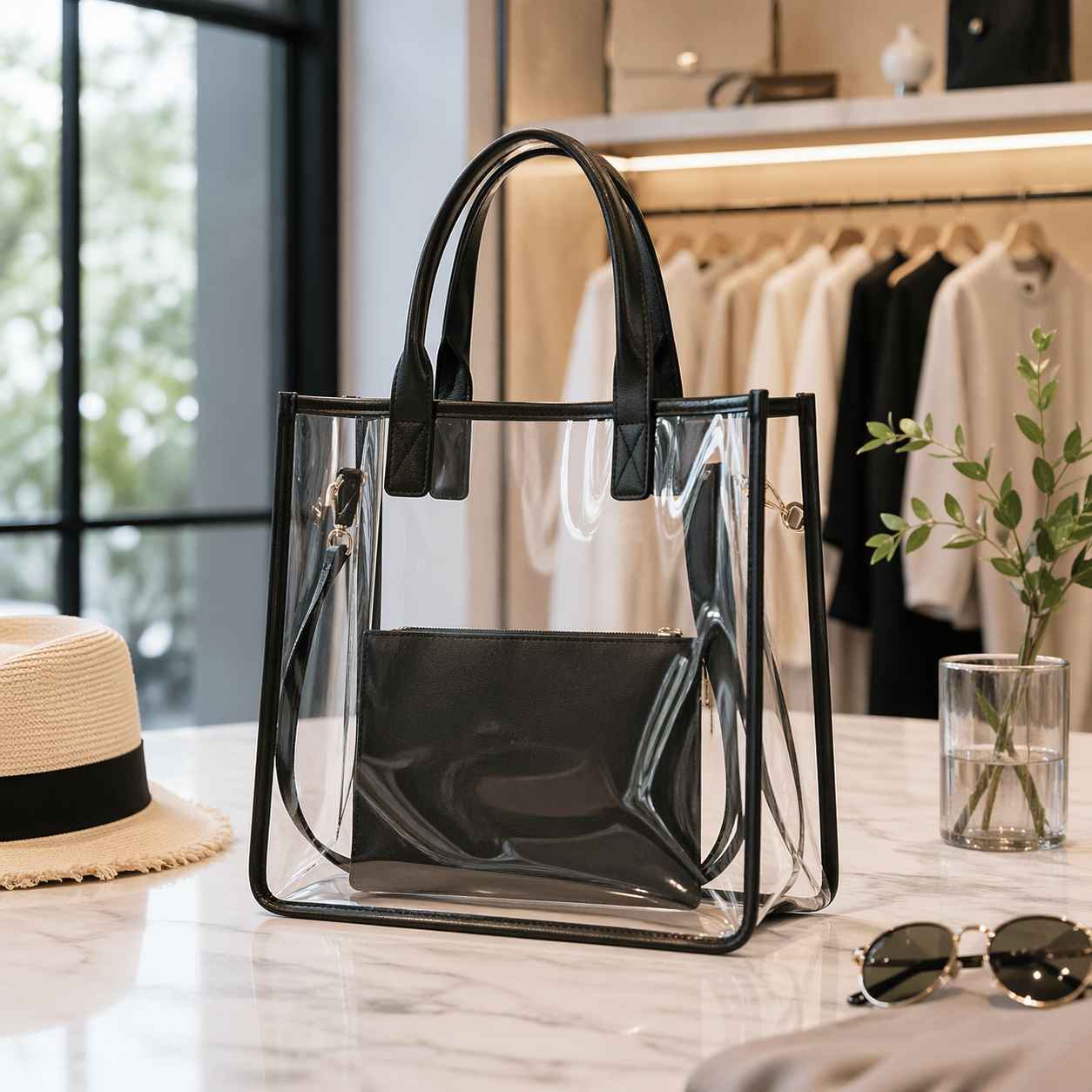
Stores near coastlines, open-air markets and wet-season regions expose bags to moisture far more often than an indoor mall does. In these deployments the decision moves to moisture-tolerant substrates and wipe-clean surfaces, with PVC constructions as the waterproof reference point in the Hansun range. Specifying the same non-woven bag for both a coastal store and an indoor store is the single most common source of inconsistent field performance.
4. Multi-purpose secondary use
The strongest return on a supermarket bag comes after the first shopping trip, when the customer keeps reusing it for travel, errands and secondary storage. Tote formats hold an estimated 40–41% revenue share of the bag market precisely because of this multi-purpose functionality, and a bag that survives into that second life keeps the retail brand visible in places no advertising budget reaches. Durability, in this sense, is a media decision as much as a production one.
Comparison Table: Material Options for High-Frequency Retail Deployment
The matrix below uses the materials and print methods specified for the Hansun shopping bag range (model SB-2026-001) and the third-party facts referenced above. The verification column lists project actions rather than claims.
| Material | Print methods specified | Pre-bulk verification step | Compliance planning note |
|---|---|---|---|
| Non-woven fabric | Silk screen printing, heat transfer, offset printing | Check folding behaviour after stacking at room temperature | Confirm REACH compliance for destination market |
| Canvas | Silk screen printing, heat transfer, offset printing | Check print wear after repeated friction and handle load | Confirm recycled content where PPWR targets apply |
| Recycled PET | Silk screen printing, heat transfer, offset printing | Verify recycled content documentation with the sample | Directly relevant to PPWR recycled content targets |
| PP (polypropylene) | Silk screen printing, heat transfer, offset printing | Confirm weight class against expected grocery load | PP accounts for nearly 46% of reusable bag production (Business Research Insights, 2024) |
| Oxford cloth | Silk screen printing, heat transfer, offset printing | Check structure and folding behaviour on the physical sample | Confirm fabric composition documentation |
| PVC (separate Hansun product family) | Heat sealing, hot stamping, UV printing, embossing | Check moisture response and wipe-clean handling | Food-grade eco-friendly PVC and REACH compliance are specified requirements for food-adjacent retail use |
Weight class applies across all materials: the range is produced from 50 g to 200 g per piece, depending on material and size, with customizable dimensions.
FAQ: Supermarket Shopping Bag Deployment Questions
Which certifications should a supermarket shopping bag supplier hold for EU and US retail programs?
It depends on where the bags are sold. For EU and UK retail, factory social compliance is normally verified through BSCI (Amfori BSCI Code of Conduct) or Sedex 4 Pillars (SMETA); in the US, state-level single-use bag bans are the main driver of reusable demand, while packaging recyclability expectations such as the EU PPWR apply in EU markets. Product-level requirements such as REACH compliance and food-grade eco-friendly PVC apply where bags touch food or are used in food-adjacent retail. Hansun holds ISO 9001:2015 certification (certificate number ISO-2026-7890, issued by an International Certification Body, covering product design, production, quality control and delivery), BSCI certification (BSCI-2026-4567, issued by an Amfori BSCI Approved Audit Firm, covering social responsibility and working conditions), Sedex 4 Pillars (SMETA) certification (SEDEX-2026-0123, issued by a Sedex Approved Audit Body) and Disney FAMA certification (DSN-FAMA-2026-001, issued by Disney International under the Disney Code of Conduct & Product Safety Standards).
What customization and production capacity is available for a high-frequency supermarket bag program?
Hansun works on an OEM/ODM basis and customizes logo, size and material. Capacity is 1,500,000 units per month, supported by a 25,000 m² factory, 200 employees, a 25-engineer R&D team and annual output of 20,000,000 units. The shopping bag range covers reusable foldable shopping bags, eco-friendly non-woven shopping bags and canvas tote shopping bags, with silk screen printing, heat transfer and offset printing available as print methods.
What drives the unit cost of a supermarket shopping bag, and where can a program save without losing durability?
The main cost drivers are material, size, weight class (the range runs from 50 g to 200 g per piece), print method and accessory integration such as hang tags, webbing and brand stickers, together with order volume against the 3,000-piece minimum order quantity. The most effective saving is usually right-weighting: lighter specifications for checkout or event-level bags and heavier specifications for daily-carry bags, so that budget is concentrated where the load actually is.
Can we evaluate samples before committing to a bulk order?
Yes. Sampling is the stage where the operating conditions should be tested rather than assumed: folding and stacking behaviour at room temperature, print wear after repeated handling, handle and webbing attachment under load, and surface response to moisture. The Hansun sample room holds the shopping bag and PVC bag ranges for this purpose, and remote support is provided for sample review and follow-up.
What lead time should be planned for a supermarket bag program, and how do we start?
Standard production lead time is 30–45 days. For reference, a Japanese chain supermarket program of 1,000,000 units achieved a 99.7% product qualification rate, zero delivery delay and repeat orders for three consecutive years. To scope your own program, send your target market, size class, weight preference and artwork requirements to hansun20@hansungift.com or WhatsApp +60 10-8838562, or start with a sample request via www.hansungift.com.
Conclusion: Specify the Deployment, Not Just the Bag
A supermarket shopping bag succeeds when its specification matches its working life: room-temperature storage and folding, daily outdoor carrying, occasional humidity and high-frequency reloading. The decisions that matter are a defined weight band from 50 g to 200 g per piece, a material and construction matched to the moisture exposure of each store cluster, wear-resistant printing on a scratch-resistant surface, and accessory integration — hang tags, webbing and brand stickers — fixed before artwork lock.
Compliance follows the same logic. A certification set built around ISO 9001:2015, BSCI, Sedex 4 Pillars and Disney FAMA, plus REACH compliance and food-grade eco-friendly material selection where applicable, is what allows a single bag program to be deployed across markets rather than re-engineered for each one. Hansun's export ratio of approximately 70% serves as practical evidence of that cross-environment adaptability.
If you are planning a supermarket or promotional bag deployment, the fastest way to test a specification is against a physical sample. Request a sample or a quotation at www.hansungift.com, email hansun20@hansungift.com, or review the full product and capability range in the Hansun product brochure.
Contact: Naomi | Email: hansun20@hansungift.com | Tel: +86 13655771851 | WhatsApp: +60 10-8838562 | Address: NO.8388, Century Road, Longgang City, Wenzhou, Zhejiang, China 325802
Have Questions or Need More Details?
Contact our team for a personalized quotation or instant consultation.
Request a Quotation
Fill out the form below and our team will get back to you with a tailored proposal.
WhatsApp Direct Chat
Prefer to chat in real-time? Message us on WhatsApp for instant assistance & quick answers.
- Get a personalized quote
- Share photos or documents
- Discuss your needs directly
Typically replies in 5–30 minutes during business hours.