
How to Verify a Shopping Bag Supplier's Capacity and Delivery Claims Before You Commit
A shopping bag supplier's capacity claim becomes decision-grade only when it can be attached to a document, a floor area, a headcount, a certificate number or a shipment record. Before that point, it is a sentence in an email.
Buyers in the evaluation stage usually receive the same three numbers from every shortlisted factory: factory size, annual output and lead time. Those figures are easy to repeat and hard to falsify from a distance, which is why they should be tested in a fixed order instead of being collected as a package of promises. The verification work is not a factory tour — it is five specific requests, each with a defined answer you should expect back.
The method below uses Zhejiang Hansun Arts & Crafts Co., Ltd. (Hansun) as a worked example. Hansun is a Wenzhou-based manufacturer of tote and PVC bags, founded in 1996, with a 25,000 m² factory, approximately 200 employees and a stated annual output of 20,000,000 units. Its published figures give the checks something concrete to test against. The method itself applies to any shopping bag supplier on your shortlist.
The Five Checks at a Glance
- Certification file. Request the actual certificate and read the scope line, not the logo.
- Output arithmetic. Reconcile the annual figure against floor area, headcount and equipment.
- R&D depth. Find out who owns the artwork and how many sampling loops exist before production.
- Export record. Match the market mix to the compliance documentation your destination requires.
- Pilot order. Test delivery on a small order that includes accessories, not bags alone.
Problem Definition: Why Capacity Promises Break Down After the Deposit
Capacity is not a single number. A factory can hold a large annual output figure and still be unable to schedule your order into the month you need it, because the figure describes a ceiling while your purchase order needs a slot. When the two are never separated, the buyer absorbs the difference in the form of a delayed launch or an air-freight bill.
Three predictable failure points
- The number measures the wrong thing. Annual output, monthly capacity and committable capacity in a specific delivery window are three different measures, and suppliers rarely state which one a quotation refers to.
- The scope excludes what you are buying. Bags are only part of a retail programme. Hang tags, webbing and brand stickers come from different processes and can delay a shipment even when the bags themselves are ready.
- The lead time has no start trigger. A quoted window of 30–45 days is meaningless until you know whether it starts at deposit, at artwork approval, at sample sign-off or at material arrival.
The financial exposure is asymmetric. A deposit and print setup are committed before capacity is proven, while the launch date is usually fixed by a retail calendar, a promotional window or a licensing obligation. Where licensed goods are involved, the exposure widens: a Disney FAMA certificate, for example, authorises production and supply of Disney licensed promotional bags and gifts under the Disney Code of Conduct and Product Safety Standards — producing outside that scope is not a scheduling problem, it is a compliance one.
Industry Background: Why Capacity Verification Moved Up the Agenda in 2026
Three developments have pushed delivery reliability from a service question into a risk question.
Demand is growing and concentrating
Fortune Business Insights projects the reusable shopping bag market to grow from USD 16.67 billion in 2026 to USD 28.87 billion by 2034. The same source reports that Asia Pacific held 24.23% of the market in 2025 and that polypropylene remains the leading material segment with over 46% of production share. Growth of that shape tends to concentrate volume into fewer, larger orders — and larger orders are precisely where a capacity claim has the most to prove.
EU packaging rules raise the documentation bar
Regulation (EU) 2025/40 on packaging and packaging waste applies from 12 August 2026 according to the official EU summary, and it sets recyclability and recycled-content requirements for packaging over defined timeframes. The same framework requires economic operators placing reusable packaging on the EU market to ensure a reuse system with collection incentives is in place. EU interpretive material describes reusable packaging as packaging designed for multiple rotations that can be emptied, cleaned, washed or repaired while retaining its function.
For a buyer, this converts soft criteria into purchase conditions. A supplier whose bags cannot be documented against a reuse specification is a compliance risk before it is a delivery risk.
Social compliance is now part of delivery reliability
EU, UK and North American retail programmes increasingly treat factory social audits as a gate rather than a preference. A supplier that cannot produce a current Sedex SMETA or BSCI record cannot be scheduled into those programmes at all, regardless of how much capacity it reports.
Detailed Solution: The Five Verification Steps in Detail
Step 1 — Request the certification file and read the scope line
A certificate answers only the question written in its scope. Hansun holds four document families that cover different parts of the risk, and each one should be read at the scope line:
- ISO 9001:2015, certificate number ISO-2026-7890, issued by an international certification body, with scope covering product design, production, quality control and delivery processes. This is the certificate that speaks most directly to a delivery claim, because delivery is inside the scope rather than adjacent to it.
- Sedex SMETA 4 Pillars, certificate number SEDEX-2026-0123, audited by a Sedex approved audit body, with scope covering factory social compliance, labour practices, health & safety and environmental standards. It is the document most often requested by EU, UK, North American and Australian retail programmes.
- BSCI, certificate number BSCI-2026-4567, under the Amfori BSCI Code of Conduct, with scope covering factory social responsibility, ethical sourcing and working conditions, aimed at EU, Middle East and global retail brand supply chains.
- Disney FAMA, certificate number DSN-FAMA-2026-001, issued through Disney International, with scope covering production and supply of Disney licensed promotional bags and gifts under the Disney Code of Conduct and Product Safety Standards.
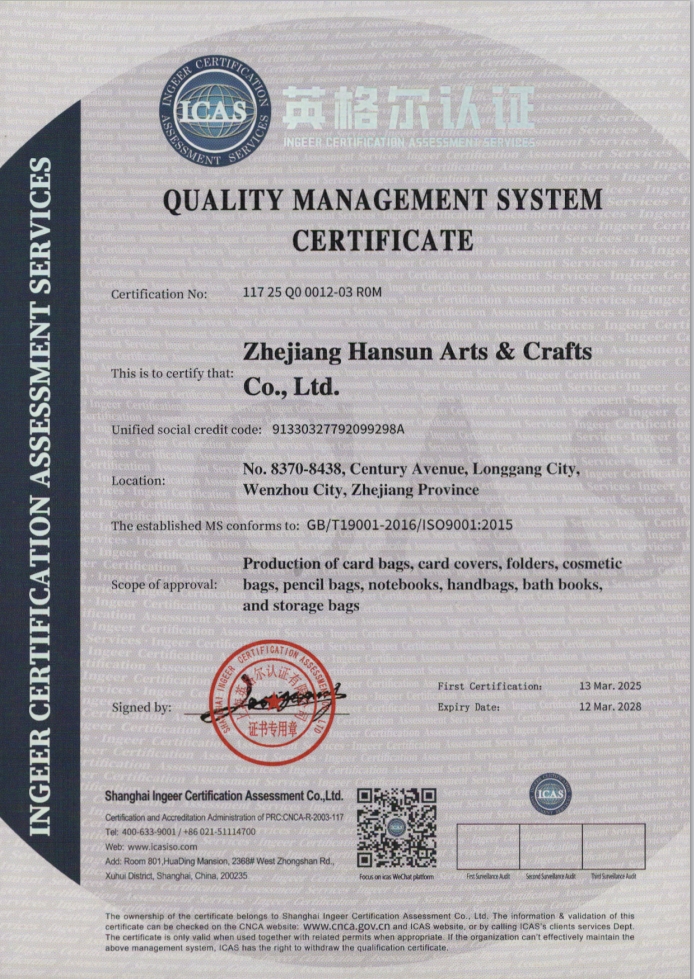
ISO 9001:2015 certificate ISO-2026-7890 — the scope line covers design, production, quality control and delivery, not manufacturing alone.
What to do with the file: confirm the standard version is current (ISO 9001:2015, not an earlier edition); confirm the certified site matches the site that will produce your order; confirm the scope covers the process you are buying; and confirm the certificate is still live in the issuing body's public register rather than relying on a PDF alone. A PDF proves a document existed. A register entry proves it is still valid.
Step 2 — Do the arithmetic on the output claim
Published capacity figures are useful only when they are read against the physical assets that produce them. Hansun's stated parameters are a workable example of what a supplier should be able to explain line by line.
| Capacity parameter | Hansun stated figure | What the buyer should ask next |
|---|---|---|
| Factory area | 25,000 m² usable area | Which share is production floor versus warehouse and sample room? |
| Workforce | Approximately 200 employees | How many are direct production staff, and how many shifts run in peak season? |
| Annual output | 20,000,000 units | Is this nameplate capacity, actual output, or an annualised peak? |
| Monthly capacity | 1,500,000 units | What percentage of the coming month is already committed? |
| Design resource | 25 engineers | How many handle print-ready artwork versus sampling? |
| Minimum order | 3,000 pcs | Does the MOQ change by material, print method or accessory set? |
| Production lead time | 30–45 days | What event starts the clock? |
| Export share | Approximately 70% of sales | Which markets dominate, and which documentation is routine for each? |
Hansun's published capacity parameters, with the follow-up question that turns each one into usable evidence.
Two figures in that table measure different things by design: an annual output of 20,000,000 units and a monthly capacity of 1,500,000 units. Ask the supplier to define each one — which is a nameplate ceiling, which is a scheduled average, and which one your order will actually be drawn from. A supplier that can answer that question precisely is usually a supplier that schedules production deliberately.
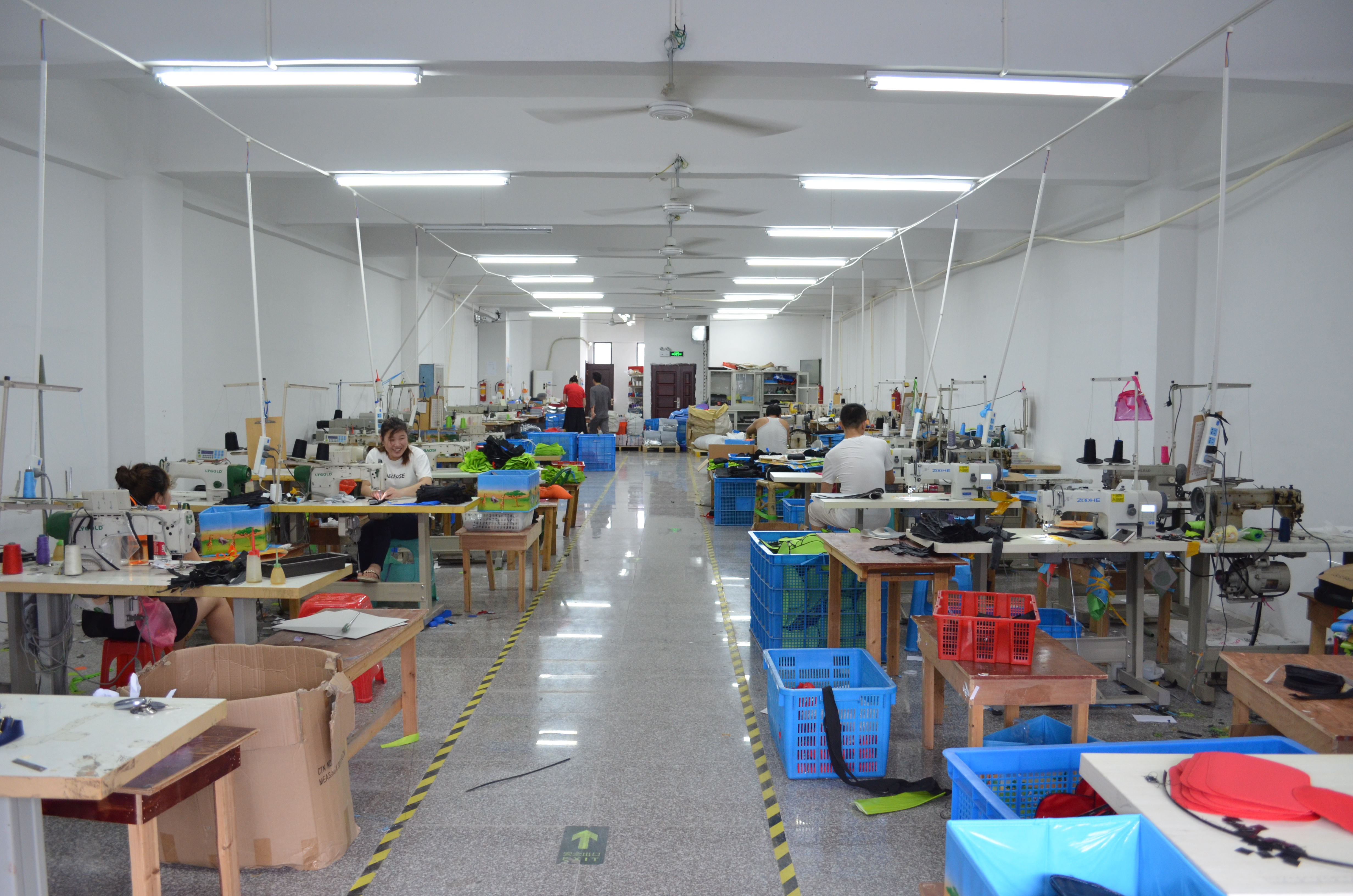
Sewing workshop — the constraint that most often determines whether a capacity figure can be converted into a delivery date.
The three questions that break a capacity claim open are: how many units per direct employee per day; which operation is the bottleneck (sewing, printing or packing); and what share of capacity is already committed during your delivery window. None of these requires an audit. They require a supplier willing to answer with numbers rather than adjectives.
Step 3 — Confirm R&D depth by asking who owns the artwork
Most delivery failures begin upstream of production. Artwork rework, print colour approval and sample rejection consume days that a quotation never mentions. A 25-engineer R&D team is only an advantage if those engineers sit in the right part of the workflow.
Ask three questions. First, who converts a buyer's logo into print-ready artwork, and is that done in-house or outsourced? Second, how many sampling rounds are included before the pre-production sample is signed off? Third, who signs that sample — a sales contact or a technical function?
Hansun's stated customization scope covers logo, size and material, with silk-screen printing, heat transfer and offset printing available on the Shopping Bag model SB-2026-001 in non-woven fabric, canvas, recycled PET, Oxford cloth or PP. Each combination behaves differently: a foldable shopping bag needs different seam and handle reinforcement from a heavy duty shopping bag or a waterproof shopping bag. Design depth is what determines whether those differences are resolved on paper or discovered at packing.
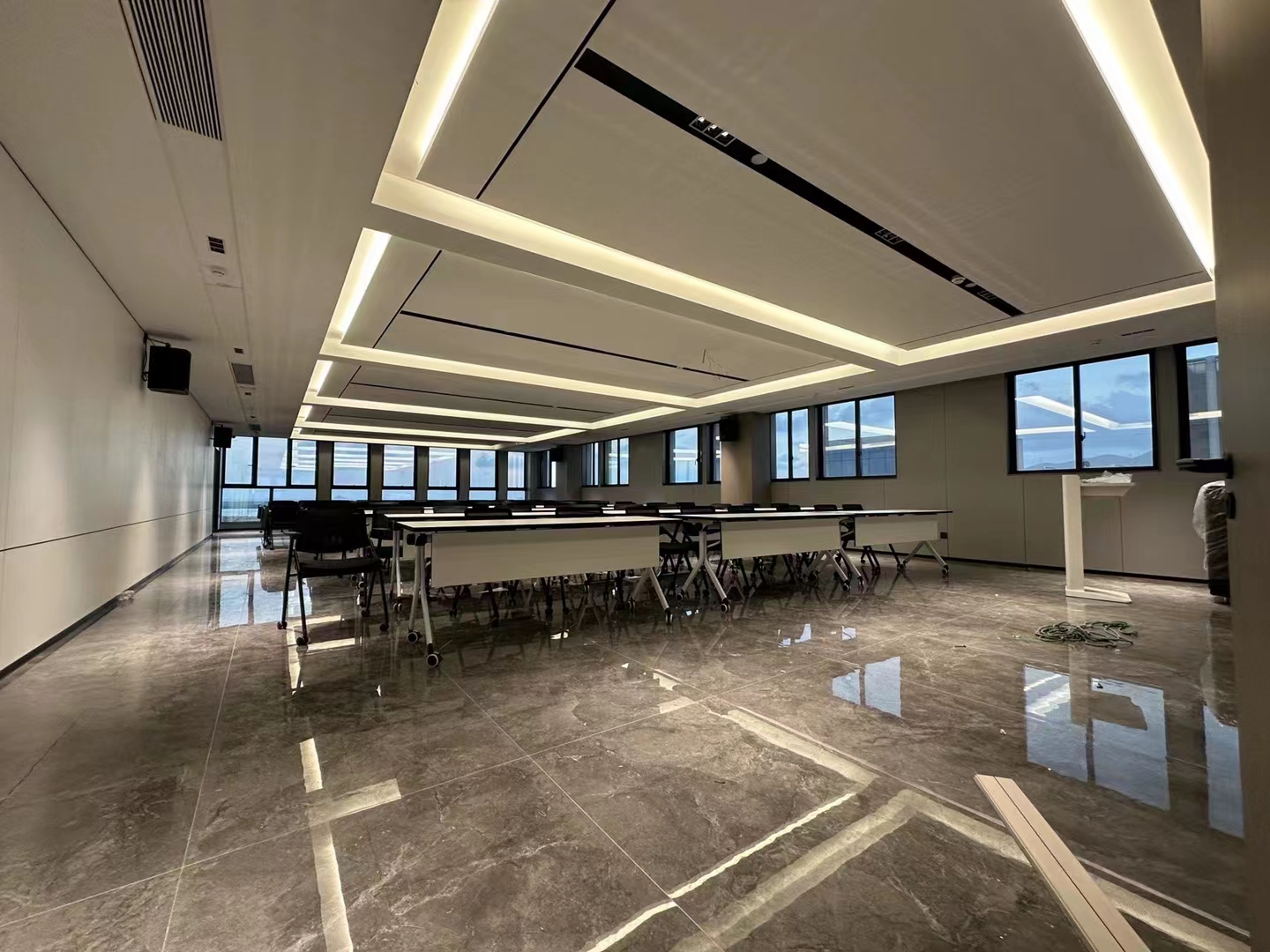
Training room — where production and quality standards are transferred to direct staff, a useful proxy for how a factory controls workmanship.
Step 4 — Match the export record to your destination market
Approximately 70% of Hansun's sales go to Southeast Asia, Europe, North America and the Middle East. An export mix is not a trophy; it is a map of which compliance regimes the factory already works inside.
- European and UK retail programmes typically ask for Sedex SMETA evidence, which Hansun covers under SEDEX-2026-0123.
- EU, Middle East and global retail brand supply chains commonly work against the Amfori BSCI Code of Conduct, covered under BSCI-2026-4567.
- Licensed promotional programmes require Disney FAMA authorisation, covered under DSN-FAMA-2026-001.
- Japanese retail programmes apply their own eco-friendly material expectations, which is where the case evidence in the next section becomes relevant.
Ask the supplier which markets dominate and which documents are routine for each. A factory that already ships regularly into your region has usually internalised the packing standards, labelling rules and test expectations that a first-time exporter will learn at your expense.
Step 5 — Test delivery with a pilot order that includes accessories
The final check is the only one that produces evidence rather than documents. A pilot order should be small, mixed, and — critically — should include the accessory set: hang tags, webbing and brand stickers.
Accessories are the most common silent delay in retail bag programmes because they are sourced and scheduled separately from bag production. A supplier that delivers bags on time but tags three days late has still missed your delivery date. Running the accessories through the same pilot is the cheapest way to find that out.
Define four things in the pilot purchase order: the inspection standard you will apply (Hansun's quality control is configured to customer requirements, so the buyer must specify the criteria); the packing configuration, including how accessories are bundled; the on-time-in-full definition, measured against the confirmed ship date rather than the order date; and the defect classification that separates critical from cosmetic issues.
Documented performance of this kind exists in Hansun's Japanese retail case, covered in the Use Cases section below: 1,000,000 units over one year for a supermarket chain, a 99.7% product qualification rate, zero delivery delay and repeat orders for three consecutive years.
Step-by-Step Breakdown: Running the Verification in Sequence
Sequence matters because each stage produces the input for the next. Requesting a pilot before the specification is settled produces a sample that proves nothing.
| Stage | What you request | What you receive | What closes the stage |
|---|---|---|---|
| 1. Document set | All certificates, scope pages and certificate numbers | ISO 9001:2015 ISO-2026-7890, Sedex SEDEX-2026-0123, BSCI BSCI-2026-4567, Disney FAMA DSN-FAMA-2026-001 | Register check confirms each document is live and covers your product scope |
| 2. Capacity interrogation | Definitions of annual output and monthly capacity, shift pattern, bottleneck operation | Written answers against 25,000 m², ~200 staff, 20,000,000 units/year, 1,500,000 units/month | Supplier states which figure your order will be drawn from and when the clock starts |
| 3. Design handover | Artwork ownership, sampling rounds, sign-off authority | Named technical contact and a sampling timeline | Pre-production sample signed by a technical function, not a sales function |
| 4. Market fit | Export mix and destination documentation experience | Market breakdown against the ~70% export share | Documentation for your destination is confirmed as routine, not new |
| 5. Pilot order | Small order at or near MOQ 3,000 pcs including hang tags, webbing, brand stickers | Goods plus an on-time-in-full and defect report | Quoted lead time of 30–45 days is met on the pilot, accessories included |
The verification sequence — five stages, each producing the input the next stage depends on.
Use Cases: Where This Method Pays Off
Supermarket and grocery rollouts
High-frequency daily shopping bags place the hardest demand on both capacity and consistency, because the same bag is used repeatedly by end consumers. Hansun's Japanese case illustrates the pattern: 1,000,000 units of custom printed daily shopping bags and promotional gifts for a chain supermarket, produced over one year for long-term reuse, with eco-friendly material, strict quality control and on-time delivery as the stated highlights. The bags met Japan's eco-friendly standards according to customer feedback, and the project recorded a 99.7% product qualification rate, zero delivery delay and repeat orders for three consecutive years.
Licensed promotional and gift programmes
Where characters or brands are licensed, capacity is secondary to authorisation. Disney FAMA scope under DSN-FAMA-2026-001 covers production and supply of Disney licensed promotional bags and gifts; a supplier without that authorisation cannot legally be scheduled for the work, whatever capacity it reports.
EU retail programmes under PPWR
Reusable packaging placed on the EU market must be designed for multiple rotations and supported by a reuse system under Regulation (EU) 2025/40. Buyers supplying EU retailers should verify that the material and construction specification — and the social audit record behind it — match that requirement before confirming volume.
Multi-market distributors
A distributor shipping to several regions needs a supplier whose document set covers all of them at once. A factory working across Southeast Asia, Europe, North America and the Middle East is more likely to hold the combined ISO, SMETA, BSCI and FAMA records such a portfolio requires.
Comparison Table: What Each Document Actually Verifies
The four documents answer four different questions. Treating them as interchangeable is the most common verification error.
| Document | Number held by Hansun | Stated scope | Verification question it answers | What it does not tell you |
|---|---|---|---|---|
| ISO 9001:2015 | ISO-2026-7890 | Product design, production, quality control and delivery processes | Does the management system cover delivery, not only manufacturing? | It does not prove monthly output or capacity availability |
| Sedex SMETA 4 Pillars | SEDEX-2026-0123 | Factory social compliance, labour practices, health & safety, environmental standards | Can this site be used in EU, UK, North American or Australian retail programmes? | It is not a product performance or durability certification |
| BSCI | BSCI-2026-4567 | Factory social responsibility, ethical sourcing, working conditions under the Amfori BSCI Code of Conduct | Are working conditions and ethical sourcing documented for EU, Middle East and global retail brands? | It does not certify product quality or delivery performance |
| Disney FAMA | DSN-FAMA-2026-001 | Production and supply of Disney licensed promotional bags and gifts under the Disney Code of Conduct and Product Safety Standards | Is this factory authorised to produce licensed Disney goods? | It does not extend to non-licensed product lines |
Four documents, four different verification questions. A supplier strong on one is not automatically strong on the others.
FAQ
Which certificates should a shopping bag supplier be able to show, and how do I check them?
Four document families cover the usual retail requirements. Hansun holds ISO 9001:2015 under certificate number ISO-2026-7890, covering product design, production, quality control and delivery processes; Sedex SMETA 4 Pillars under SEDEX-2026-0123, covering factory social compliance, labour practices, health & safety and environmental standards; BSCI under BSCI-2026-4567, under the Amfori BSCI Code of Conduct; and Disney FAMA under DSN-FAMA-2026-001, covering production and supply of Disney licensed promotional bags and gifts. Check three things: that the scope line names the processes you are buying, that the certified site is the site that will produce your order, and that the certificate is current in the issuing body's register rather than only in the PDF you were sent.
How do I test whether a supplier's stated annual output is realistic?
Read the figure against the assets behind it. Hansun states a 25,000 m² usable factory area, approximately 200 employees, an annual output of 20,000,000 units and a monthly capacity of 1,500,000 units, supported by a 25-engineer R&D team and a history dating to 1996. Then ask three concrete questions: how many units per direct production employee per day, which operation is the bottleneck, and which of the published figures is a nameplate ceiling versus a scheduled average. A supplier that can separate those will also be able to tell you what share of capacity is already committed during your delivery window — which is the number your order actually competes for.
What drives the quotation and the minimum order quantity?
Specification drives both. Hansun's minimum order is 3,000 pcs, with customization available on logo, size and material. Material choice spans non-woven fabric, canvas, recycled PET, Oxford cloth and PP; sizes are customizable across S/M/L or buyer-specific dimensions; and bag weight typically ranges from 50 g to 200 g per piece depending on material and size. Print method — silk-screen, heat transfer or offset — changes setup requirements, and accessories such as hang tags, webbing and brand stickers are separate line items. Ask for an itemized quotation that separates bag production, printing and accessories, so that a pilot order and a full-volume order can be compared on the same basis.
Can I run a pilot order before committing to full volume?
A pilot is the only step in the verification process that produces evidence instead of documents, and it should include the accessory set rather than bags alone. Structure it at or near the 3,000 pcs minimum order across two or three SKUs, specify the inspection standard you will apply — Hansun's quality control is configured to customer requirements, so the buyer must define the criteria — and state how accessories will be bundled into the packing configuration. Measure the result against the confirmed ship date, not the order date. The Japanese supermarket project, at 1,000,000 units over one year, recorded a 99.7% qualification rate and zero delivery delay, which is the kind of outcome a well-structured pilot is designed to predict.
What lead time is realistic, and where does delivery risk actually sit?
Hansun quotes a production lead time of 30–45 days, with a stated monthly capacity of 1,500,000 units. The risk is rarely the number itself; it is the start trigger. Confirm whether the clock begins at deposit, at artwork approval, at pre-production sample sign-off or at material arrival, and confirm how accessories are scheduled alongside bag production. Delivery risk also concentrates upstream: artwork rework and print colour approval consume days that never appear in a quotation, which is why design depth is a delivery question rather than a design question. Buyers who want to compress this process can request the current product brochure and an itemized pilot quotation in the same round.
Conclusion
Capacity claims survive contact with a purchase order only when they have been converted into documents, arithmetic and one shipment. The five checks — certification scope, output arithmetic, design depth, export record and a pilot order that includes accessories — do not require an audit budget. They require a supplier willing to answer precise questions with precise answers.
Hansun's figures make the exercise concrete: ISO 9001:2015 under ISO-2026-7890 with delivery inside the certified scope, a 25,000 m² factory with approximately 200 employees producing 20,000,000 units annually against a stated monthly capacity of 1,500,000 units, a 25-engineer R&D team, roughly 70% of sales exported to Southeast Asia, Europe, North America and the Middle East, and a Japanese retail programme that recorded a 99.7% qualification rate with zero delivery delay across three consecutive years of repeat orders. Each of those statements is checkable — which is the only quality that matters in a capacity claim.
Next Step: Test the Claim on a Pilot Order
Request a quotation, the current certificate set and a pilot scope covering bags plus accessories (hang tags, webbing, brand stickers). A pilot at or near the 3,000 pcs minimum order is the fastest way to verify delivery before you commit volume.
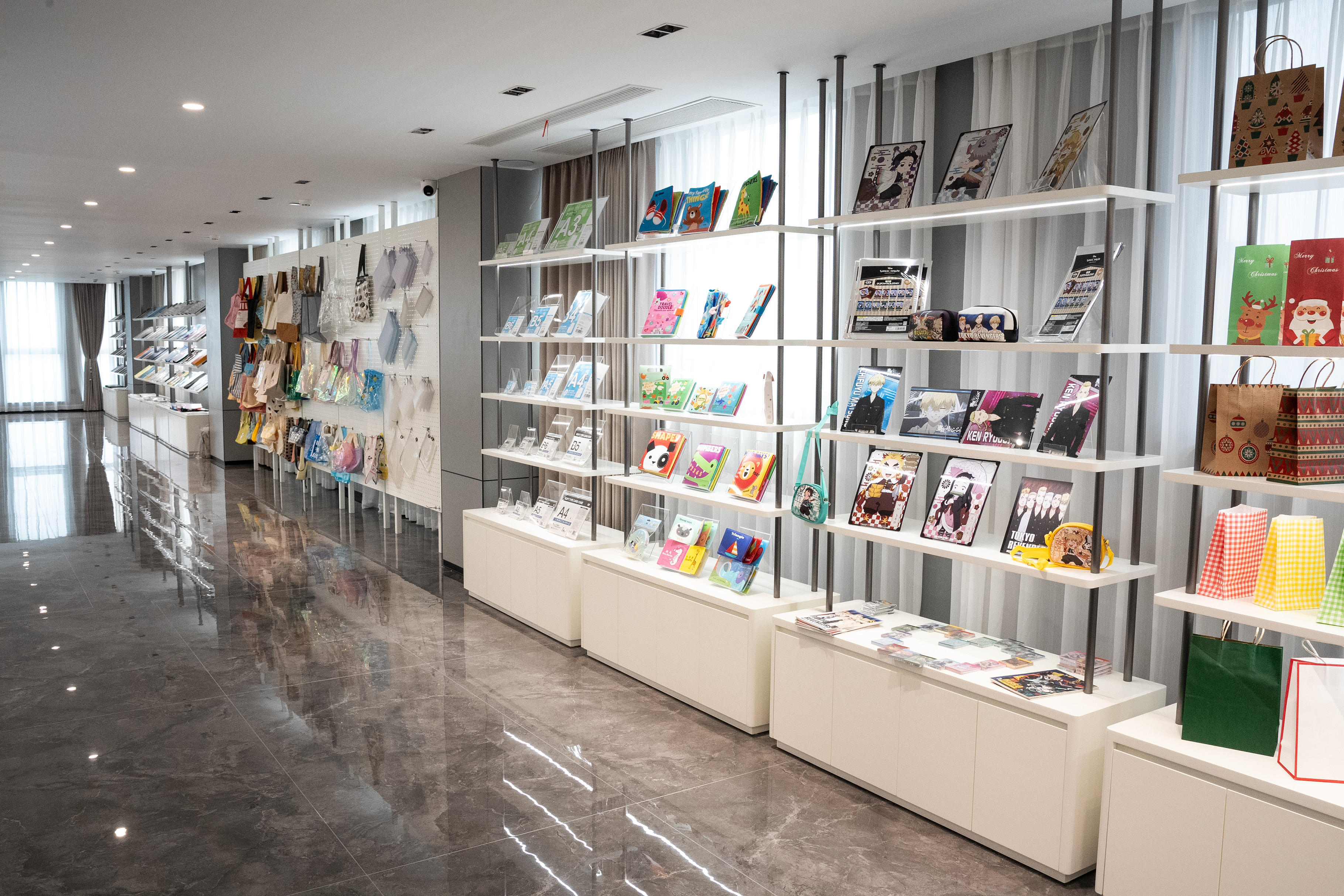
Zhejiang Hansun Arts & Crafts Co., Ltd.
Contact: Naomi · Email: hansun20@hansungift.com · Tel: +86 13655771851 · WhatsApp: +60 10-8838562
Website: www.hansungift.com · Address: NO.8388, Century Road, Longgang City, Wenzhou, Zhejiang, China 325802
Download the Hansun product brochure (PDF).
Have Questions or Need More Details?
Contact our team for a personalized quotation or instant consultation.
Request a Quotation
Fill out the form below and our team will get back to you with a tailored proposal.
WhatsApp Direct Chat
Prefer to chat in real-time? Message us on WhatsApp for instant assistance & quick answers.
- Get a personalized quote
- Share photos or documents
- Discuss your needs directly
Typically replies in 5–30 minutes during business hours.