
Scratched Prints and Sticky PVC: How to Solve Common Custom Shopping Bag Problems

A custom shopping bag usually fails at one specific point, not everywhere at once: the printed logo fades after a season of daily handling, the PVC panel picks up fine scratches that turn into a cloudy haze and a tacky feel in humid weather, or the cartons arrive complete except for the hang tags, webbing straps or brand stickers the program was built around. All three problems are decided well before production — in the material specification, the print method, and the accessory packing list.
Custom shopping bags fail in daily use because of three specification gaps, and each gap can be closed with one written line in the purchase order: a defined print method matched to the substrate, a defined PVC grade and surface finish, and a defined accessory bill of materials. Zhejiang Hansun Arts & Crafts Co., Ltd. (Hansun) is a Wenzhou-based manufacturer of tote bags and PVC bags, founded in 1996, operating a 25,000 m² facility with 25 engineers in research and development and an annual output of 20,000,000 units. The diagnostics and fixes below follow the way Hansun specifies and controls these three variables across design, production, quality control and delivery.
Problem Definition: What Counts as a Failed Custom Shopping Bag
In this guide, a bag has failed when it stops performing the job the program bought it for. That is a narrower and more useful definition than "the bag broke." A supermarket bag that still carries groceries but shows an illegible logo no longer delivers brand value. A promotional bag whose PVC surface has clouded and turned tacky is no longer presentable at a checkout counter or in a gift pack. A bag delivered without its hang tag and webbing strap cannot be merchandised at all, even though the bag itself is intact.
Three failure modes account for most complaints in high-frequency daily use:
- Logo print wearing off. Artwork edges lift, colors fade, and the print becomes patchy on the areas that rub against hands, shelves and other bags.
- PVC surfaces scratching or degrading. Fine scratches accumulate into a haze, and the surface can feel sticky when the bag is used outdoors in occasional humid conditions after indoor storage at room temperature.
- Missing accessories. Hang tags, webbing and brand stickers are absent, short, or inconsistent with the approved sample, so the bag cannot be finished or displayed as planned.
The core principle
Each of the three failures is a sourcing-stage decision: print craft selection, material grade and surface finish, and accessory packaging control. Buyers who treat them as after-delivery quality complaints end up reworking, sorting or reordering; buyers who write them into the specification get them controlled before the first bag is produced.
Industry Background: Why Surface and Print Durability Now Matter More
Reusable bags are increasingly procured as multi-trip packaging rather than single-use giveaways, and that changes how a scratch or a faded print is judged. Regulation (EU) 2025/40 requires economic operators making reusable packaging available in a Member State to ensure a reuse system is in place, including an incentive to ensure collection (EUR-Lex). EU interpretive material further describes reusable packaging as designed for multiple rotations in normal use, able to be emptied without significant damage, and capable of being cleaned, washed or repaired while retaining its function (EUR-Lex).
The commercial context is growing rather than static. Fortune Business Insights projects the global reusable shopping bag market to grow from USD 16.67 billion in 2026 to USD 28.87 billion by 2034, and reports that Asia Pacific held a 24.23% share of that market in 2025. The same source places polypropylene at over 46% of material production share. For buyers, the practical reading is straightforward: programs are getting longer, bags are expected to survive more rotations, and the visible surface of the bag is now part of the brand asset being evaluated every time a customer reuses it.
A faded print or a hazy PVC panel does not make a bag legally non-reusable by itself, but it does undermine the reason the bag was bought. Once a bag is expected to serve a brand for a year or more of daily use, print adhesion and surface integrity move from cosmetic detail to procurement criterion.
Detailed Solution: Three Fixes, One Specification Line Each
Failure 1 — The Logo Print Wears Off
What the buyer sees: the artwork loses density at the edges, the color looks washed out within weeks, and the print area feels rough or thin compared with the approved sample.
Where it is decided: the print method chosen for the artwork and the substrate, plus whether wear resistance was ever stated as a requirement. Hansun's shopping bag specification (model SB-2026-001) supports three print methods — silk screen printing, heat transfer and offset printing — and the correct choice depends on artwork complexity, color count and the surface being printed.
The fix: write wear-resistant logo printing into the specification as a named requirement rather than assuming it, then approve the print on the actual production material instead of a substitute swatch. The three prints behave differently: silk screen printing suits solid color and large flat artwork, heat transfer suits detailed or multi-color graphics, and offset printing suits finer graphic reproduction. Matching the craft to the artwork at the sampling stage is what prevents the print from being the first component to fail.
Process control: Hansun operates under an ISO 9001:2015 quality management system, certificate ISO-2026-7890, applied across design, production, quality control and delivery. In practice this means the print method is a defined, repeatable process step rather than a workshop preference, which is what allows a buyer to reorder the same bag a year later and receive the same print result.

Failure 2 — PVC Scratches, Hazes or Feels Sticky
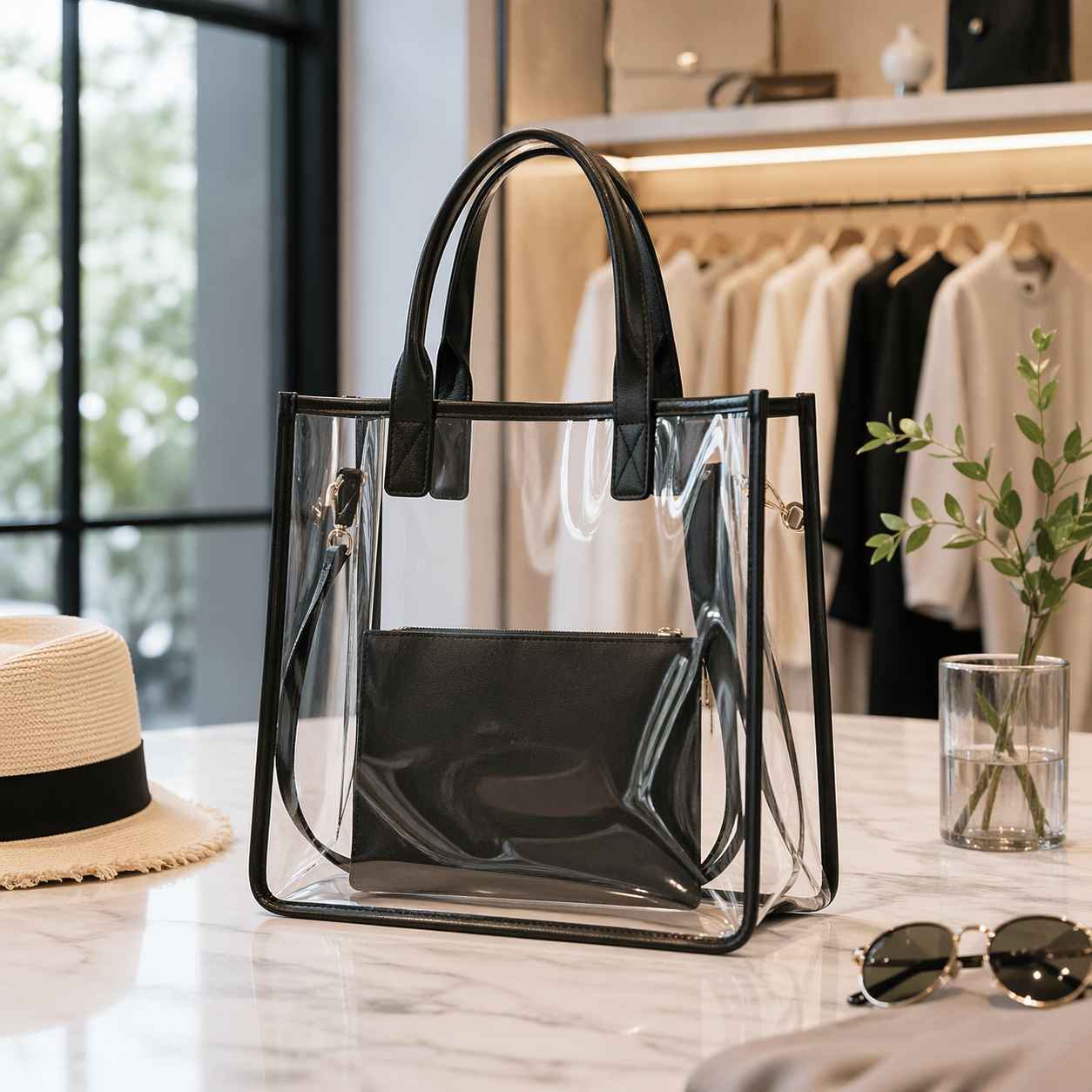
What the buyer sees: a clear or colored PVC panel develops a network of fine scratches, loses clarity, and in occasional humid conditions can feel tacky to the touch. The bag still holds items, but it no longer looks new, which is exactly the impression a promotional bag is supposed to create.
Where it is decided: the PVC grade and the surface specification. Hansun's application requirements for brand promotional gift and supermarket retail programs call for food-grade eco-friendly PVC that is REACH compliant, scratch-resistant, and paired with logo printing that resists wear. Those are three separate specification lines, and leaving any one of them unstated is what produces a bag that degrades in appearance ahead of its function.
The fix: specify the material grade and the surface behavior together, and match them to the real use condition rather than to a showroom sample. The documented working condition for these programs is indoor storage at room temperature plus daily outdoor carrying, with occasional exposure to humidity. A bag specified for that condition — food-grade eco-friendly PVC, REACH compliant, scratch-resistant — is a different product from a bag specified only by color and thickness.
Practical handling controls that support the specification:
- Keep bags in their inner packing until display, so surface contact during transit is controlled.
- Avoid stacking heavy rigid items directly against the printed PVC panel in storage.
- Wipe the surface with a soft dry cloth rather than an abrasive or solvent-based cleaner, which is the fastest way to dull a scratch-resistant finish.
- Where the program includes an inner pouch or lining, treat it as part of the surface system, not an optional extra.
Documentation the material specification should trigger: REACH compliance for the PVC, supported by the wider audit set Hansun maintains for brand-owner and retail programs — Disney FAMA (DSN-FAMA-2026-001), Sedex SMETA 4 Pillars (SEDEX-2026-0123) and BSCI (BSCI-2026-4567). These documents do not replace a material declaration, but they shorten the paperwork path when a retail buyer's compliance team asks how the factory is managed.
Failure 3 — Hang Tags, Webbing and Brand Stickers Go Missing
What the buyer sees: the bag count matches the purchase order, but the accessory count does not. Hang tags are short, webbing handles or decorative straps differ from the approved sample, or brand stickers are absent from the cartons.
Where it is decided: the purchase order itself. Accessories are frequently described in a sentence rather than listed as line items with quantities, so they are never added to an inspection checklist. Hansun's application specification lists hang tags, webbing and brand stickers as accessories supplied with the bag, which makes them inspectable items rather than assumptions.
The fix: convert the accessory description into an accessory bill of materials with a quantity per bag, a quantity per carton, and a named inspection point. Quality control scope at Hansun is set according to customer requirements, so the buyer defines the accessory check and the supplier executes against it. Bags that carry a webbing handle or a printed strap should also have the webbing confirmed in the approved sample, because handle and strap construction is one of the most visible differences between an approved bag and a substituted one.
Step-by-Step Breakdown: Specifying the Three Fixes In
The workflow below is the sequence Hansun uses with brand and procurement buyers to close the three gaps before bulk production. Lead times and order thresholds referenced in the steps are standard commercial terms, not estimates.
Step 1 — Write down the real use condition
State where the bag will live: indoor storage at room temperature, daily outdoor carrying, and how often it will be exposed to humidity. The documented condition for Hansun's brand promotional gift and supermarket retail programs is exactly this combination, and it is the reference point for both the PVC grade and the print method.
Step 2 — Lock the three specification lines
Put three requirements on one page: food-grade eco-friendly PVC, REACH compliant; scratch-resistant surface; wear-resistant logo printing. Add the accessory list — hang tags, webbing, brand stickers — as a fourth line with quantities.
Step 3 — Match the print craft to the artwork
Choose between silk screen printing, heat transfer and offset printing based on color count and graphic detail. This decision is made with the 25-engineer R&D team during sampling, not at the printing table.
Step 4 — Confirm the bag format and specification
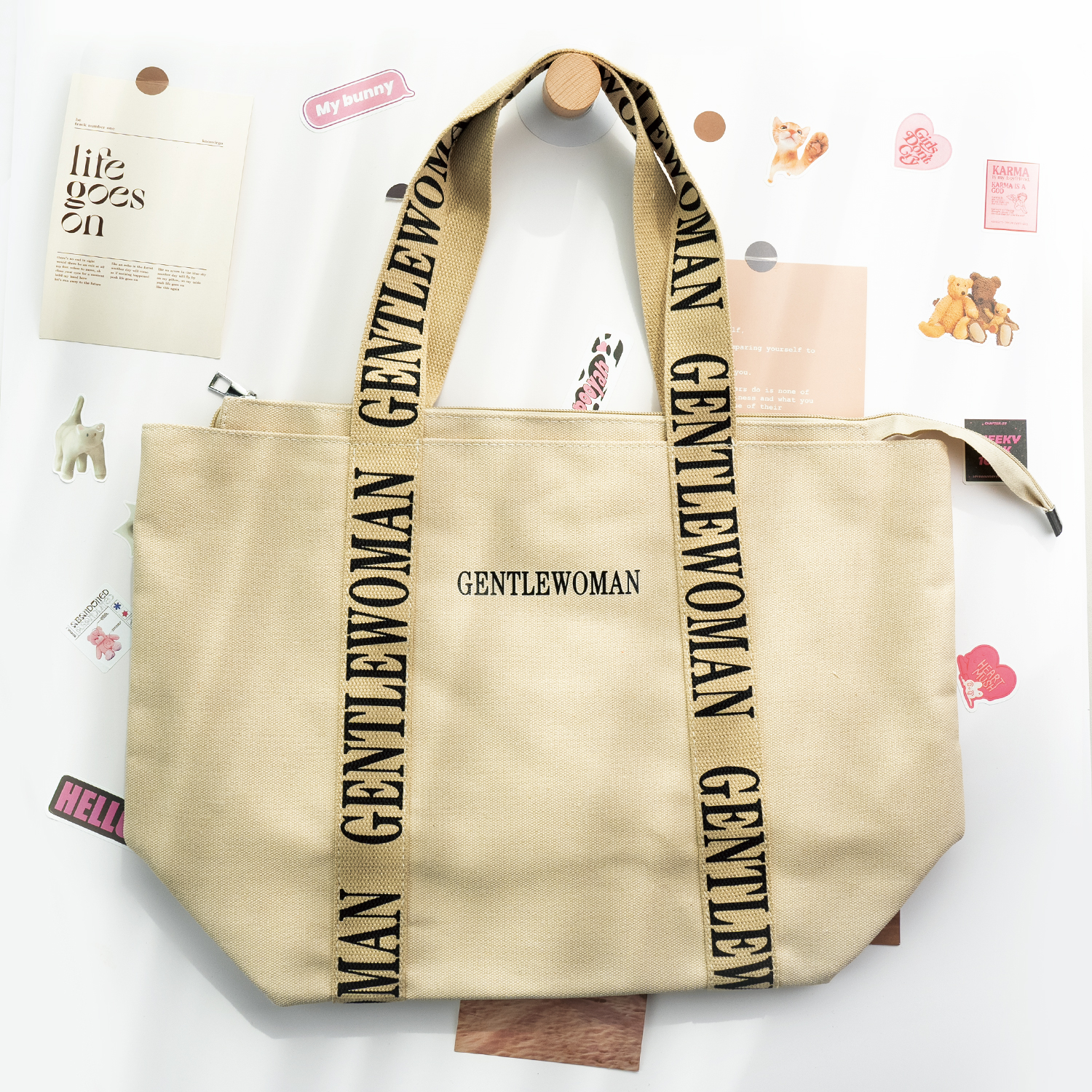
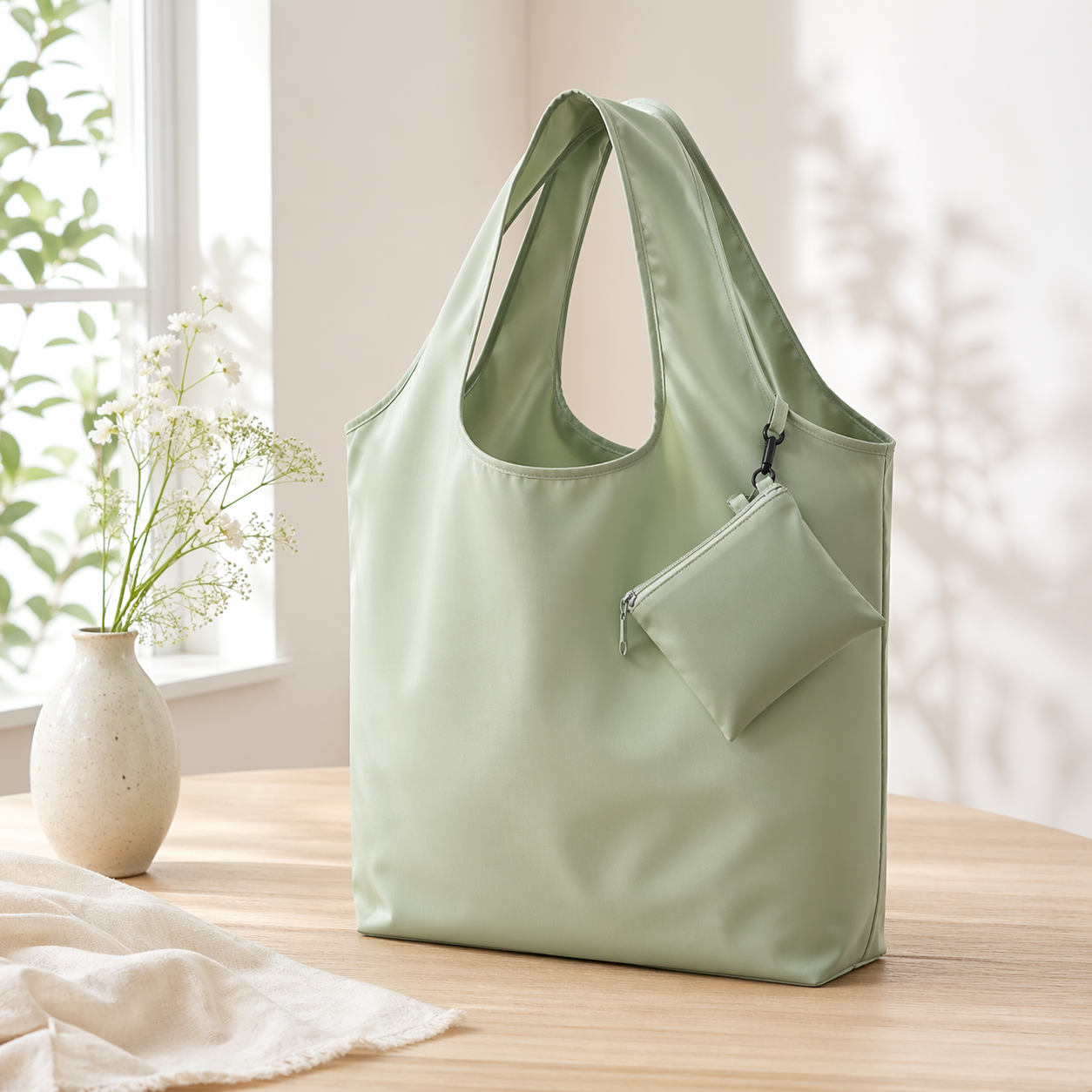
The same custom program can be built on a reusable foldable bag, an eco-friendly non-woven bag, a canvas tote or a PVC bag. Sizes are customizable in S/M/L or to customer-specific dimensions, and piece weight typically runs from 50 g to 200 g depending on material and size — a range that matters because a lighter bag and a heavier bag do not behave the same way under daily load.
Step 5 — Approve a sample on production material
Approve the print, the PVC surface and the full accessory set on a sample made from the actual production material. Customization at Hansun covers logo, size and material, so the approved sample is the reference document for all three variables rather than a marketing image.
Step 6 — Align documents with the destination market
Collect the certification set the buyer's compliance team will ask for: ISO 9001:2015 certificate ISO-2026-7890, Disney FAMA DSN-FAMA-2026-001, Sedex SMETA 4 Pillars SEDEX-2026-0123 and BSCI BSCI-2026-4567. For EU-facing programs, note the reusable packaging expectations described in Regulation (EU) 2025/40 and the interpretive material on multiple rotations and cleanability.
Step 7 — Schedule production and inspection around the accessory list
Standard lead time is 30 to 45 days, monthly capacity is 1,500,000 units, and the minimum order quantity is 3,000 pieces. Place the accessory bill of materials into the inspection scope, since quality control content is defined by customer requirements, and confirm the carton-level accessory count at final inspection rather than after arrival.
Diagnostic checklist for buyers
- Is the print method named in the purchase order, or only the artwork?
- Is the PVC described by grade and surface behavior, or only by color and thickness?
- Is the accessory set a quantity list, or a sentence?
- Was the sample made from production material?
- Does the inspection scope include print adhesion, surface condition and accessory count?
Use Cases: Where These Fixes Change the Outcome
Supermarket retail at high frequency. A Japanese chain supermarket program through OEM/ODM production ran to 1,000,000 units of daily shopping bags and promotional gifts over one year of reusable service. The program maintained a 99.7% product qualification rate with zero delivery delay, met Japan's eco-friendly standards, and produced repeat orders for three consecutive years. The relevant point for this guide is which variables were controlled: eco-friendly material, custom printing matched to the supermarket's branding, strict quality control and on-time delivery.
Brand promotional gifts. In promotional programs, the bag is a brand impression before it is a carrier. A scratch-resistant PVC surface and wear-resistant printing protect the impression across the months the bag stays in circulation, and the hang tag and brand sticker are what make it read as an official gift rather than a generic tote.
Corporate welfare, e-commerce and stationery & office supply programs. Hansun's product documentation covers brand promotional gifts, supermarket retail, corporate welfare, cross-border e-commerce, and stationery & office supply scenarios. In e-commerce and office supply use, the bag is often packed and unpacked repeatedly, which puts the printed area and the webbing under repeated friction — the two components most likely to be under-specified in a low-attention order.

Comparison Table: Failure Mode vs Specification Fix
The table below maps each observed problem to the stage where it is actually decided, and to the specification line that closes it.
| Failure mode | What the buyer observes | Where it is decided | Specification line to write | Supporting fact |
|---|---|---|---|---|
| Logo print wearing off | Faded color, patchy edges, rough print area | Print craft selection and artwork approval | Wear-resistant logo printing; named print method (silk screen / heat transfer / offset) | Three print crafts supported on model SB-2026-001; ISO 9001:2015 process control (ISO-2026-7890) |
| PVC scratching, haze, stickiness | Fine scratches, loss of clarity, tacky feel in humid conditions | PVC grade and surface specification | Food-grade eco-friendly PVC, REACH compliant, scratch-resistant | Documented requirement for these programs; REACH compliance line; audit set: Disney FAMA DSN-FAMA-2026-001, Sedex SMETA 4 Pillars SEDEX-2026-0123, BSCI BSCI-2026-4567 |
| Missing accessories | Hang tags, webbing or brand stickers short or absent | Purchase order and inspection scope | Accessory bill of materials with quantity per bag and per carton | Hang tags, webbing and brand stickers specified as accessories; QC scope set by customer requirements |
Product specification reference — Shopping Bag SB-2026-001
| Parameter | Specified options |
|---|---|
| Bag types | Reusable foldable shopping bag, eco-friendly non-woven shopping bag, canvas tote shopping bag, PVC shopping bag |
| Materials | Non-woven fabric, canvas, recycled PET, Oxford cloth, PP, PVC |
| Size | Customizable (S/M/L or customer-specific dimensions) |
| Weight | 50 g – 200 g per piece, depending on material and size |
| Print methods | Silk screen printing, heat transfer, offset printing |
| Customization scope | Logo, size, material |
| Accessories | Hang tags, webbing, brand stickers |
| Order terms | MOQ 3,000 pcs; lead time 30–45 days; monthly capacity 1,500,000 units |
| Typical use | Supermarket shopping, promotional gifts, corporate giveaways |
FAQ: Custom Shopping Bag Problems and Specification Fixes
1. What compliance documents should a buyer request for food-grade PVC and wear-resistant printing?
Request three layers. First, the material layer: food-grade eco-friendly PVC with REACH compliance, plus a scratch-resistant surface specification. Second, the process layer: an ISO 9001:2015 quality management system certificate, which for Hansun is ISO-2026-7890 and covers design, production, quality control and delivery. Third, the audit layer used by brand and retail programs: Disney FAMA (DSN-FAMA-2026-001), Sedex SMETA 4 Pillars (SEDEX-2026-0123) and BSCI (BSCI-2026-4567). Buyers serving the EU should also review Regulation (EU) 2025/40, which addresses reuse systems for reusable packaging, because it frames why durability documentation is requested at all.
2. Can print wear and PVC scratching be designed out before production instead of corrected after delivery?
Yes, and both are cheaper to design out than to rework. Print wear is controlled by matching the print method to the artwork — silk screen printing, heat transfer or offset printing — and by approving the print on the actual production material. PVC scratching is controlled by specifying food-grade eco-friendly PVC with a scratch-resistant surface rather than specifying color and thickness alone. At Hansun these decisions sit with a 25-engineer R&D team and customization scope covering logo, size and material, so the correction happens at the sample stage where changes cost nothing.
3. What drives the unit cost when a bag is upgraded for scratch resistance and wear-resistant printing?
Four variables dominate: the print method selected for the artwork, the PVC grade and surface specification, the bag's size and piece weight (50 g to 200 g depending on material and size), and the accessory set attached to the bag. Order quantity matters as well, since the minimum order quantity is 3,000 pieces and standard lead time is 30 to 45 days. Unit pricing is quoted against a final specification rather than published as a list, because a scratch-resistant, REACH compliant PVC bag with webbing and hang tags is a different product from a plain printed tote priced on material alone.
4. How should a buyer validate scratch resistance, print durability and accessories before a bulk run?
Approve a sample built from the production material with the same print method, the same PVC grade and the complete accessory set, then handle it as the end user would — repeated carrying, contact with other items, and exposure to everyday humidity. Confirm that hang tags, webbing and brand stickers are present and match the approved reference. Hansun's sample room supports this review stage, and after-sales support is handled remotely once production begins. A sample that has only been viewed, not handled, does not test the two properties that fail first.
5. What lead time applies to a custom order, and how are missing accessories prevented at delivery?
Standard lead time is 30 to 45 days, with monthly capacity of 1,500,000 units and a minimum order quantity of 3,000 pieces. Missing accessories are prevented by turning the accessory list into an inspected bill of materials rather than a note — hang tags, webbing and brand stickers with quantities per bag and per carton — and by defining that check inside the quality control scope, which Hansun sets according to customer requirements. A Japanese chain supermarket program of 1,000,000 units maintained a 99.7% product qualification rate with zero delivery delay under this approach, and generated repeat orders for three consecutive years.
Conclusion: Specifying the Problem Out Is Cheaper Than Reworking It
Scratched prints, sticky PVC and missing accessories look like three unrelated quality complaints. They are three specification gaps. Print wear is a craft-selection decision. PVC haze and tackiness is a material-grade and surface decision. Missing accessories is a purchase-order structure decision. Each one is closed with a single written line before sampling, and each one becomes a rework, a sort or a reorder if it is left to inspection after delivery.
For buyers balancing reuse expectations against brand presentation, the practical sequence is consistent: define the use condition, lock the three specification lines, approve a sample on production material, align the certification set with the destination market, and inspect the accessory list at carton level. With lead time of 30 to 45 days, MOQ of 3,000 pieces and the ISO 9001:2015, Disney FAMA, Sedex SMETA and BSCI documentation in place, the remaining variable is how precisely the specification is written.
Next Step: Check Your Specification Against a Real Sample
Send your bag type, artwork, use condition and accessory list, and Hansun will confirm the print method, the PVC grade and the accessory bill of materials against production capability — then issue a sample and a quotation for the exact specification.
Visit hansungift.com | Chat on WhatsApp | Download the Hansun product catalogue (PDF)
Zhejiang Hansun Arts & Crafts Co., Ltd.
Founded 1996 · 25,000 m² facility · 200 employees · 25 R&D engineers · 20,000,000 units annual output · main products: tote bags and PVC bags · export ratio 70%
Address: NO.8388, Century Road, Longgang City, Wenzhou, Zhejiang, China 325802
Contact: Naomi · Email: hansun20@hansungift.com · Tel: +86 13655771851 · WhatsApp: +60 10-8838562
Have Questions or Need More Details?
Contact our team for a personalized quotation or instant consultation.
Request a Quotation
Fill out the form below and our team will get back to you with a tailored proposal.
WhatsApp Direct Chat
Prefer to chat in real-time? Message us on WhatsApp for instant assistance & quick answers.
- Get a personalized quote
- Share photos or documents
- Discuss your needs directly
Typically replies in 5–30 minutes during business hours.