
Top 5 Shopping Bag Features for High-Frequency Daily Use: A 2026 Buyer's Ranking
High-frequency daily use is the hardest test a shopping bag ever faces. A bag that is filled, carried, folded and reused every day for groceries, gifting or a supermarket loyalty programme is judged by different rules than a bag that is admired once at a trade fair. This ranking orders the five shopping bag features that protect the most value across a full year of daily carrying, and it is written for the three project types where daily use is the norm: gift packaging, brand promotional gifts, and supermarket retail support programmes.
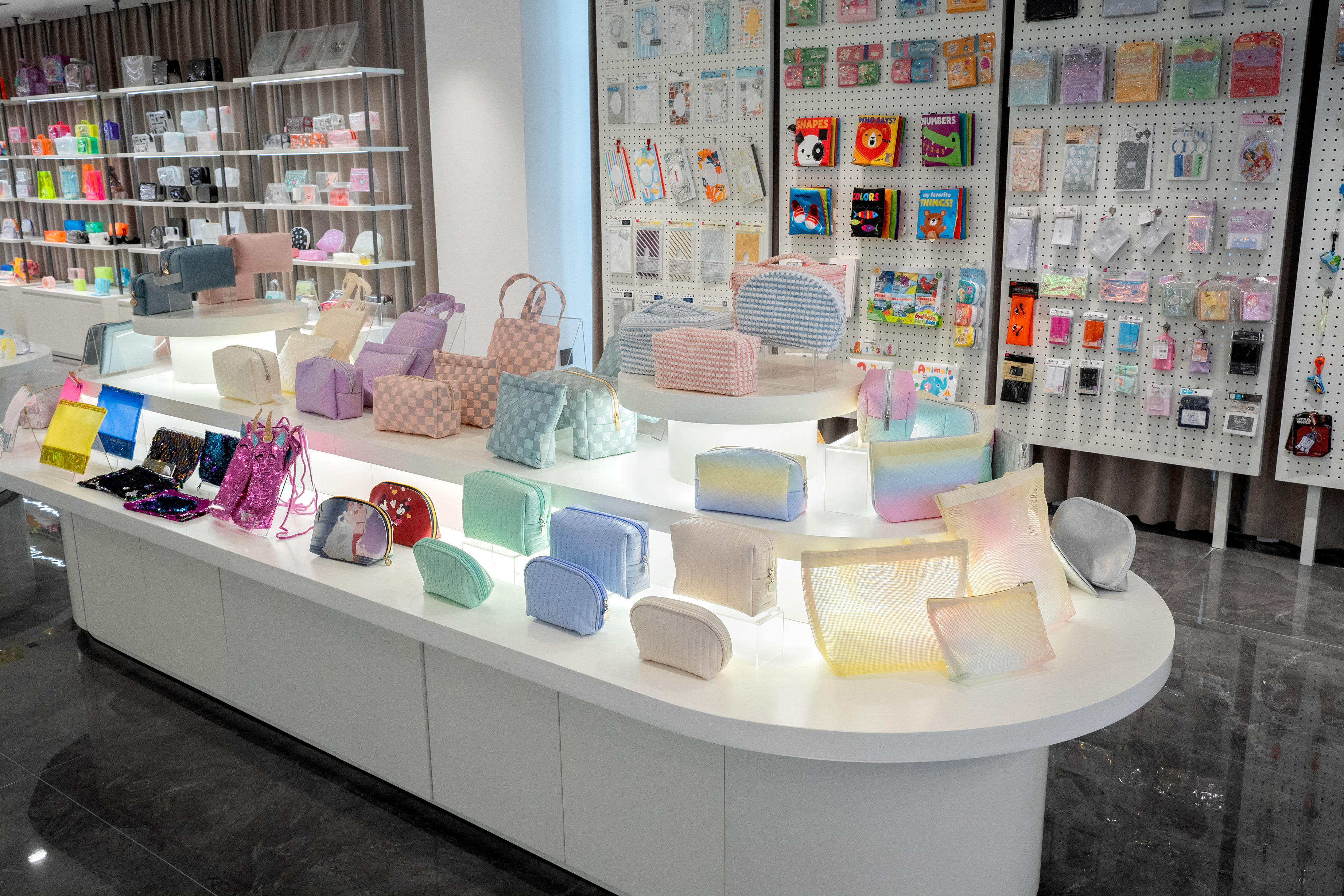
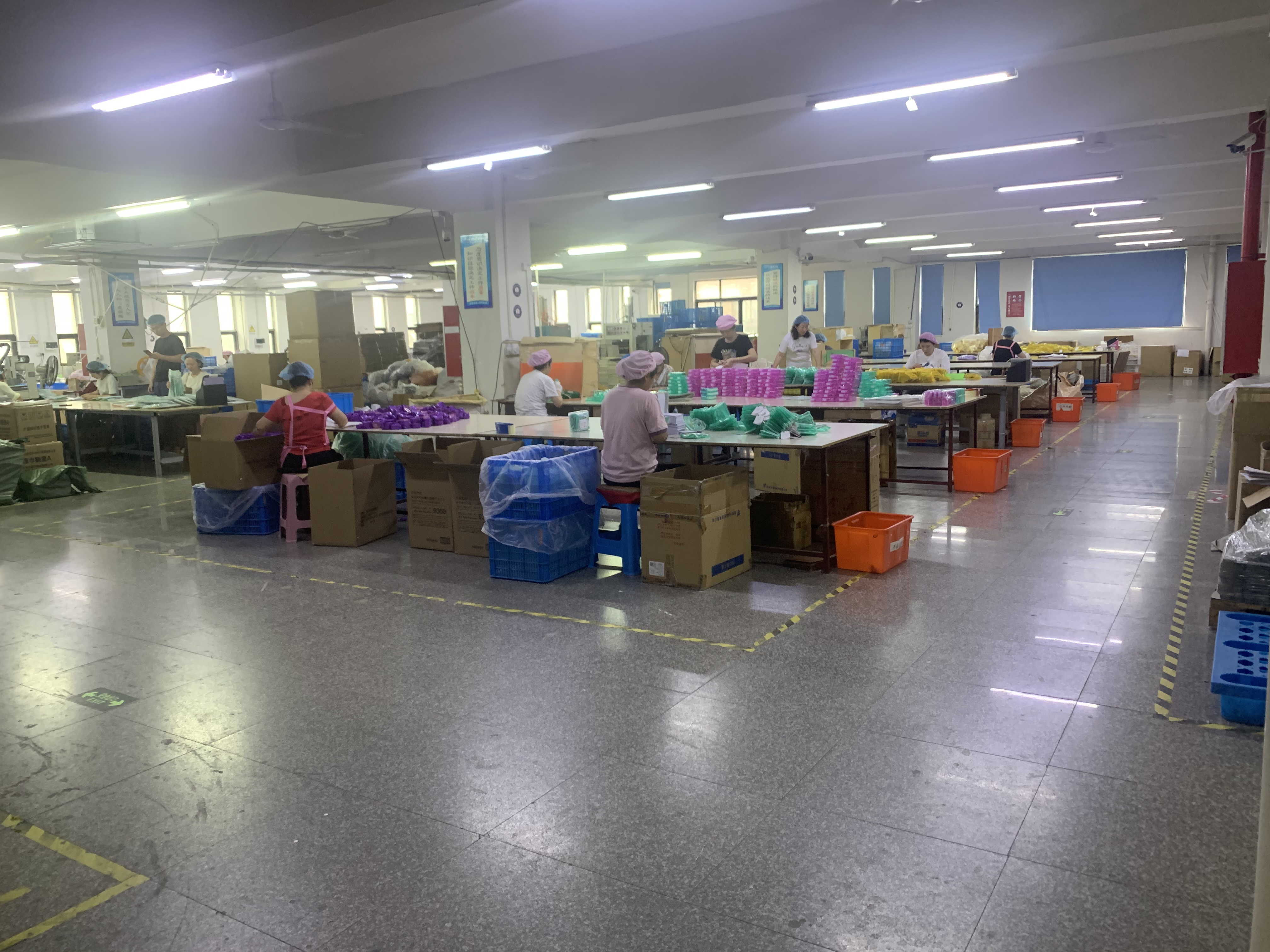
The ranking below is built from verified product specifications, certification records and a documented factory capability profile from Zhejiang Hansun Arts & Crafts Co., Ltd. (Hansun), a China-based manufacturer of reusable and promotional shopping bags founded in 1996, operating a 25,000 m² factory with about 200 employees, an in-house R&D team of 25 engineers, and exports covering markets in Southeast Asia, Europe, North America and the Middle East.
The ranking at a glance:
1. Material class and barrier performance
2. Documented compliance readiness (REACH, PPWR, social audits)
3. Surface and print abrasion (scratch) resistance
4. Wear-resistant logo and branding execution
5. Accessory and finishing integrity — hang tags, webbing, brand stickers
Problem definition: why daily use breaks the normal buying logic
Most shopping bag procurement decisions are made on the strength of a sample. A sample shows colour accuracy, print placement and handle feel on day one. Daily use, however, exposes a different set of failure modes: print that scuffs where the bag rubs against a trolley or a car boot, handles that separate under repeated load, surface haze on wipe-clean films, capacity that no longer matches how the bag is actually filled, and missing accessory elements that were supposed to carry the brand story.
The consequence is specific and easy to describe. A promotional or retail bag is chosen once and then carried in public hundreds of times, so every visible defect is repeated in front of the exact audience the programme was designed to reach. That is why the features ranked here are weighted toward durability, documentation and repeatability rather than toward aesthetics alone.
The buying problem is not a lack of options. It is that specification sheets rarely state which feature carries the most risk for daily use, and buyers are therefore asked to compare samples on appearance while the real cost drivers sit in the unstated detail: material class, print method, test criteria and accessory scope.
Industry background: why feature-led buying is gaining ground in 2026
Three structural forces are pushing buyers toward feature-level evaluation instead of price-only comparison.
Market growth. Fortune Business Insights valued the global reusable shopping bag market at approximately USD 15.64 billion in 2025 and projected it to reach USD 28.87 billion by 2034. Published estimates differ by scope: some research houses publish materially lower 2026 forecasts because they count only durable reusable bags rather than all retail bag categories. Buyers should therefore treat market size figures as directional and rely on their own programme volumes for planning.
Material mix. Polypropylene (PP) accounts for nearly 46% of total reusable bag production, according to Business Research Insights, largely because of its balance of durability and cost. Tote-style construction dominates the bag market with roughly 40–41% revenue share, reflecting its multi-purpose functionality. Hansun's Shopping Bag specification (model SB-2026-001) reflects this multi-material reality: documented material options include non-woven fabric, canvas, recycled PET, Oxford cloth and PP, with sizes offered as S/M/L or fully customised dimensions and a per-piece weight range of 50 g to 200 g depending on material and size.
Regulation and demand pressure. In the United States, 12 states including California and New York had implemented statewide bans on single-use plastic bags as of 2024, driving demand for heavy-duty reusable alternatives. In the European Union, the Packaging and Packaging Waste Regulation (PPWR) (EU) 2025/40 requires all packaging to be recyclable by 2030 and introduces mandatory recycled content targets for plastic packaging. At the same time, one third-party source reports demand for printed bags rising by 34% in the retail sector, which increases the number of programmes where print durability becomes a commercial issue rather than a cosmetic one.
Detailed solution: the top 5 shopping bag features ranked for daily use
Rank 1Material class and barrier performance
Material class is ranked first because it sets the ceiling for every other feature. For high-frequency daily use, the decisive question is not which material looks best in a sample photo, but which material still performs after months of loading, folding and wiping.
For the Hansun Shopping Bag (SB-2026-001), the documented material set is non-woven fabric, canvas, recycled PET, Oxford cloth and PP. Each choice implies a different daily-use profile: recycled PET supports recycled-content narratives that align with PPWR recycled content targets; canvas and Oxford cloth suit heavier and more structured carry; non-woven fabric and PP suit high-volume supermarket and promotional programmes where lightweight construction and cost efficiency matter.
A second element of this feature is barrier behaviour. Where a programme needs a wipe-clean film — for example in gifting or beauty-adjacent packaging — the relevant question is whether the barrier material is food-contact-appropriate for the intended contents. In the Hansun product range, PVC appears as a documented material for the related Cosmetic Bag (CB-2026-002), alongside PU leather, canvas, nylon and mesh, while the documented shopping bag specification lists the five materials above.
Rank 2Documented compliance readiness (REACH, PPWR, social audits)
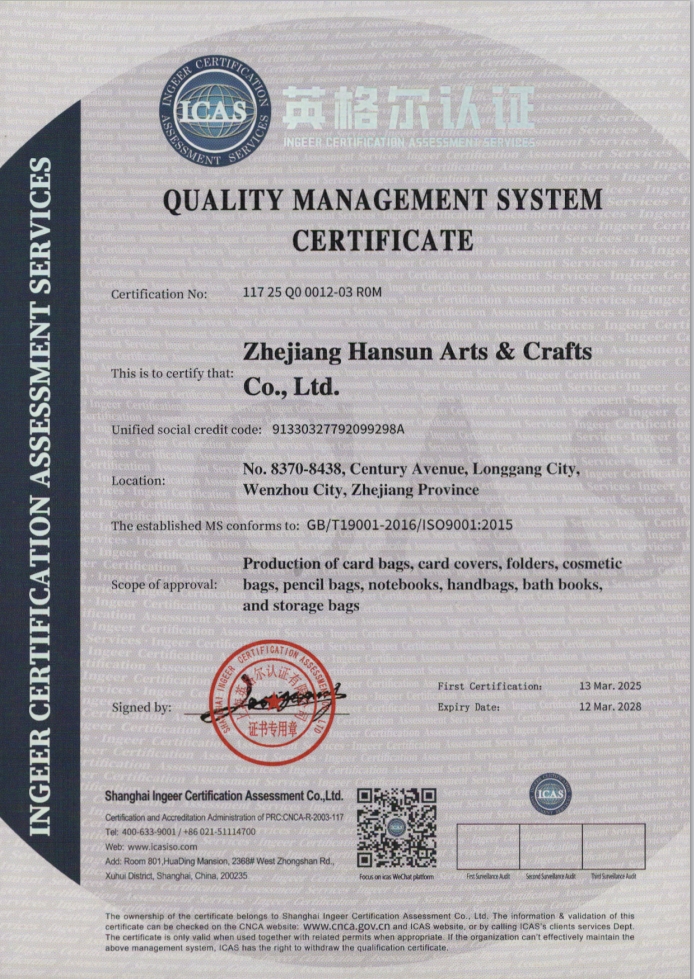
Compliance is ranked second because a bag that cannot be documented cannot be deployed. For EU-bound promotional and retail programmes, the practical feature is not a marketing claim but an auditable file: management system certification, social compliance audit records, and material or ink declarations relevant to the destination market.
Hansun's documented certification record includes:
- ISO 9001:2015, certificate number ISO-2026-7890, issued by an International Certification Body, covering product design, production, quality control and delivery processes across global markets.
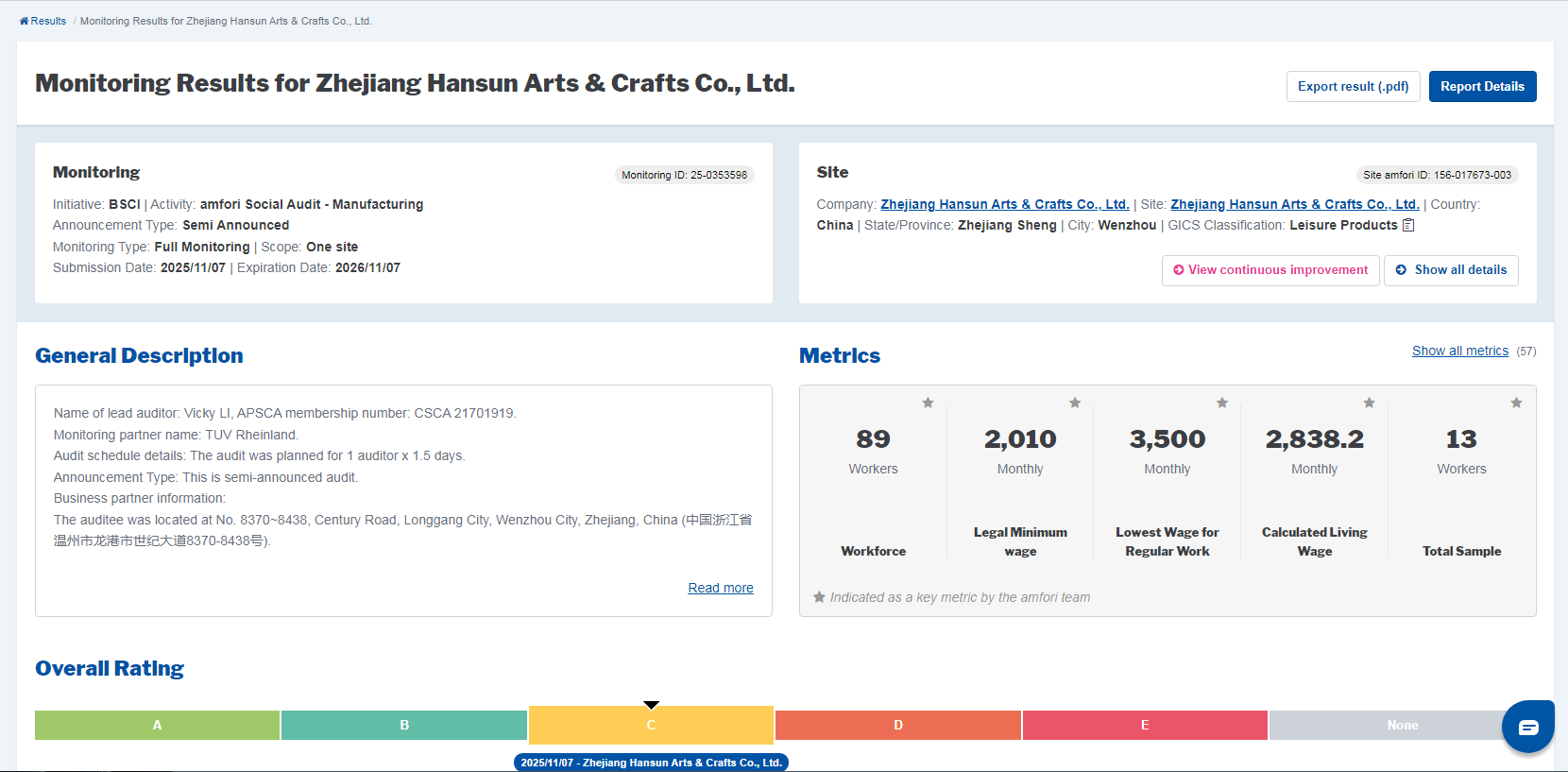
- BSCI (Business Social Compliance Initiative), certificate number BSCI-2026-4567, audited by an Amfori BSCI approved audit firm, covering factory social responsibility, ethical sourcing and working conditions for EU, Middle East and global retail brands.
- Sedex 4 Pillars (SMETA), certificate number SEDEX-2026-0123, covering social compliance, labour practices, health and safety and environmental standards for EU, UK, North America and Australia markets.
- Disney FAMA, certificate number DSN-FAMA-2026-001, covering production and supply of licensed promotional bags and gifts under the Disney Code of Conduct and Product Safety Standards.
All four certifications are recorded as applicable to the Shopping Bag SB-2026-001 and the Cosmetic Bag CB-2026-002. For EU programmes, buyers should additionally request a written declaration covering the substance restrictions that apply to their specific destination — typically a REACH-oriented declaration for substrates and printing inks — and confirm how the programme will meet the PPWR recyclability and recycled content requirements that take effect by 2030.
Rank 3Surface and print abrasion (scratch) resistance
Abrasion resistance is ranked third because scuffing is the most visible daily-use failure in promotional and supermarket bags. Daily friction against shopping trolleys, car boots, shelving and produce damages the surface and, more importantly, the printed brand mark that the programme paid for.
The controllable variable here is the print method. Hansun's documented crafts for the Shopping Bag SB-2026-001 include silk screen printing, heat transfer and offset printing. These methods behave differently under repeated abrasion, so the print method should be specified together with the surface expectation, not chosen by default. Recommended actions for buyers:
- State the abrasion or rub expectation in the purchase specification rather than leaving it to the supplier's default.
- Confirm the print method in writing for each artwork element.
- Define the acceptance test before mass production, not after delivery.
Hansun's documented quality control level is defined as depending on customer requirements, and the stated acceptance criterion is a pre-shipment test. In practice this means the buyer sets the abrasion standard, and the pre-shipment test verifies it — a structure that works well for high-frequency programmes because the test can be repeated across reorders.
Rank 4Wear-resistant logo and branding execution
Logo execution is ranked fourth because in daily-use programmes the logo is the durable part of the marketing spend. A promotional bag that keeps its shape but loses its logo legibility has failed its commercial purpose.
Hansun's documented customisation options for shopping bags are logo, size and material, supported by OEM and ODM production services. Beyond choosing a print method, the practical levers for logo durability are placement (avoiding the highest-friction zones), coverage (larger solid areas behave differently from fine linework), and consistency between the printed result and the brand's identity requirements.
There is a documented case that illustrates the standard. For a Japanese OEM/ODM client, Hansun produced 1,000,000 units of reusable daily shopping bags and promotional gifts for a chain supermarket, with custom printing that matched the supermarket's branding requirements. The bags were designed for reusable long-term use and met Japan's eco-friendly standards. The programme maintained a 99.7% product qualification rate with zero delivery delay, and the client placed repeated orders for three consecutive years.
Rank 5Accessory and finishing integrity — hang tags, webbing, brand stickers
Accessories rank fifth because they are the lowest-cost way to raise perceived value, and the easiest element to leave undefined. In practice, three accessory categories carry most of the benefit in daily-use programmes:
- Hang tags — carry care instructions, material information and brand story, keeping that information off the printed surface where it would compete with the logo.
- Webbing handles — a structural element as much as a decorative one; handle construction is one of the load-bearing points in repeated daily carry.
- Brand stickers — support shelf presence, gifting presentation and secondary organisational use, such as labelling stored items.
Together these accessories affect brand image and item storage rather than the bag's basic carrying function, which is exactly why they are frequently assumed rather than specified. Hansun's documented customisation scope for shopping bags is logo, size and material, so accessory items such as hang tags, webbing specification and brand stickers should be listed explicitly in the RFQ so that they are quoted, sampled and inspected as part of the same order.
Step-by-step breakdown: turning the ranking into a procurement specification
- Define the daily-use scenario and load profile. State how the bag will be used — supermarket carry, gifting, event giveaway — and how often it will be reused. Scenario drives material weight within the 50 g–200 g per-piece range and drives the size decision (S/M/L or custom).
- Fix the material class first. Select from the documented SB-2026-001 material set: non-woven fabric, canvas, recycled PET, Oxford cloth or PP. If a barrier film such as food-grade PVC is required, raise it as a development requirement and confirm feasibility in writing.
- Specify the print method and the abrasion expectation. Choose between silk screen printing, heat transfer and offset printing, and attach an abrasion expectation to the specification so it becomes a testable criterion.
- Assemble the compliance file. Collect ISO 9001:2015 (ISO-2026-7890), BSCI (BSCI-2026-4567), and where relevant Sedex (SEDEX-2026-0123) and Disney FAMA (DSN-FAMA-2026-001). Add destination-specific material and ink declarations and a PPWR read-across for EU programmes.
- Define accessories and finishing. List hang tags, webbing, brand stickers and any other add-ons as separate line items so they are quoted and inspected individually.
- Lock commercial terms. Confirm minimum order quantity of 3,000 units, delivery terms of FOB, DDP or EXW, and payment terms of 30/70, 50/50 or 100% before mass production. Confirm lead time of 30–45 days against the manufacturer's monthly capacity of 1,500,000 units.
- Validate before shipment and baseline the reorder. Apply the pre-shipment test as the acceptance criterion, record the result, and use it as the quality baseline for reorders — the mechanism behind the 99.7% qualification rate and three consecutive years of repeat orders in the Japanese supermarket programme.
Use cases: where each ranked feature earns its place
Supermarket retail support programmes
Daily-use supermarket bags place maximum weight on Rank 1 (material class and load profile), Rank 3 (abrasion resistance) and Rank 4 (logo durability). The documented Japanese project is the reference case: 1,000,000 units of reusable daily shopping bags and promotional gifts for a chain supermarket, custom printing matched to branding requirements, 99.7% qualification rate, zero delivery delay and three consecutive years of repeat orders.
Brand promotional gifts and corporate giveaways
Promotional programmes place maximum weight on Rank 4 and Rank 5. The bag is a mobile brand asset, so logo legibility over time matters more than the first-day appearance, and accessories such as hang tags and brand stickers carry the brand story without crowding the printed surface.
Gift packaging and beauty-adjacent gifting
Gifting programmes place maximum weight on Rank 1 (barrier and presentation), Rank 2 (compliance documentation) and Rank 5 (finishing). Where wipe-clean barrier materials are needed, the related Cosmetic Bag (CB-2026-002) documents PVC, PU leather, canvas, nylon and mesh as available materials — useful context when a gifting brief mixes shopping bags and cosmetic pouches in one programme.
Travel, multi-purpose and reusable daily carry
Multi-purpose daily carry places weight on Rank 1 and Rank 3. Hansun's documented Shopping Bag types include a reusable foldable shopping bag, an eco-friendly non-woven shopping bag and a canvas tote shopping bag, which map to the three most common multi-purpose briefs in retail, supermarket and promotional gifting.
Comparison table: the five features side by side
| Rank | Feature | Why it ranks here for daily use | What to verify before ordering | Verifiable basis |
|---|---|---|---|---|
| 1 | Material class & barrier performance | Sets the ceiling for every other feature; drives weight, load behaviour and recyclability narrative | Material selection from non-woven, canvas, recycled PET, Oxford cloth or PP; weight within 50–200 g/pc; any barrier film requirement scoped in writing | SB-2026-001 specification; PP at ~46% of reusable bag production (Business Research Insights) |
| 2 | Documented compliance readiness | Undocumented bags cannot be deployed into regulated retail programmes | ISO 9001:2015 (ISO-2026-7890); BSCI (BSCI-2026-4567); Sedex (SEDEX-2026-0123); Disney FAMA (DSN-FAMA-2026-001); destination-specific declarations | Certification unit records; EU PPWR (EU) 2025/40 |
| 3 | Surface & print abrasion resistance | Scuffing is the most visible daily-use failure mode | Print method (silk screen, heat transfer, offset); abrasion expectation stated in the specification; pre-shipment test | SB-2026-001 craft list; stated acceptance criterion |
| 4 | Wear-resistant logo & branding execution | The logo is the durable part of the marketing spend | Logo placement, coverage and brand-identity match; customisation scope of logo, size and material | Japanese chain supermarket case: 1,000,000 units, 99.7% qualification rate |
| 5 | Accessory & finishing integrity | Lowest-cost lever on perceived value and item storage | Hang tags, webbing specification and brand stickers quoted as separate line items | Documented customisation scope: logo, size, material |
Material reference for the Shopping Bag SB-2026-001
| Material option | Typical role in a daily-use programme | Notes for specification |
|---|---|---|
| Non-woven fabric | High-volume supermarket and promotional bags | Commonly paired with silk screen printing for large graphic areas |
| Canvas | Structured, heavier-feel tote programmes | Sizes offered as S/M/L or custom dimensions |
| Recycled PET | Programmes with a recycled-content commitment | Relevant to EU PPWR recycled content targets for plastic packaging |
| Oxford cloth | Reinforced carry and travel-oriented use | Weight range 50–200 g/pc depending on material and size |
| PP | Durable, cost-efficient reusable bags | PP accounts for nearly 46% of total reusable bag production (Business Research Insights) |
FAQ: buyer questions on features, compliance and ordering
1. What compliance documentation should I request before approving a high-frequency shopping bag order?
At minimum, ask for the quality management and social compliance certificates that apply to the product. For the Hansun Shopping Bag (SB-2026-001), the documented set is ISO 9001:2015 under certificate ISO-2026-7890, covering product design, production, quality control and delivery processes, and BSCI under certificate BSCI-2026-4567, covering factory social responsibility, ethical sourcing and working conditions for EU, Middle East and global retail brands. Additional documented certificates applicable to the same product include Sedex 4 Pillars (SMETA) under SEDEX-2026-0123 and Disney FAMA under DSN-FAMA-2026-001. For EU-bound programmes, also request a destination-specific declaration for substrates and printing inks and confirm how the programme addresses the EU PPWR requirement that all packaging be recyclable by 2030.
2. Can a supplier support custom printing and material changes for a daily-use bag programme?
Yes, where the supplier operates OEM and ODM production. Hansun provides OEM and ODM services with customisation covering logo, size and material, supported by an in-house R&D team of 25 engineers, a documented monthly production capacity of 1,500,000 units and an annual output of 20,000,000 units. Documented print crafts for the Shopping Bag SB-2026-001 are silk screen printing, heat transfer and offset printing, and the documented material set covers non-woven fabric, canvas, recycled PET, Oxford cloth and PP.
3. What determines the unit cost of a high-frequency shopping bag?
Cost is driven by four specification decisions rather than by supplier choice alone: material class, size (S/M/L or custom dimensions), per-piece weight within the 50 g–200 g range, and print method. Accessory scope — hang tags, webbing specification and brand stickers — is a fifth variable that is often left unpriced until late, which is why it should be listed as a separate line item in the RFQ. Commercial terms that shape the final order value in the Hansun quotation structure include a minimum order quantity of 3,000 units, delivery terms of FOB, DDP or EXW, and payment terms of 30/70, 50/50 or 100% before mass production.
4. How should I validate a bag before committing to a bulk order?
Validation should be built around the failure modes that matter in daily use: surface abrasion and print durability, handle and seam integrity, and material behaviour under the load profile you defined. The stated acceptance criterion for Hansun orders is a pre-shipment test, and the documented quality control level is set according to customer requirements — which means the buyer defines the standard and the pre-shipment test verifies it. Product evaluation takes place against the sample room range so that material, print and construction can be compared before production begins.
5. What lead time and delivery terms should I plan for?
The documented production lead time for Hansun shopping bag orders is 30–45 days, against a monthly production capacity of 1,500,000 units. Delivery terms are FOB, DDP or EXW, and payment terms are 30/70, 50/50 or 100% before mass production. For programmes that will run across multiple seasons, plan the reorder baseline at the same time as the first order: the Japanese chain supermarket programme sustained a 99.7% qualification rate, zero delivery delay and repeat orders for three consecutive years on a 1,000,000-unit annual volume. To start a programme, request samples or a quotation directly through hansungift.com.
Conclusion: rank features by daily consequence, not by sample appearance
The five features ranked here are ordered by how much commercial value they protect when a bag is used every day. Material class and barrier performance set the ceiling. Documented compliance readiness determines whether the bag can be deployed at all. Surface and print abrasion resistance protects the visible asset. Wear-resistant logo execution protects the marketing spend. Accessory and finishing integrity raises perceived value and item storage at the lowest cost per unit.
For buyers evaluating suppliers in the gift packaging, brand promotional gift and supermarket retail support categories, the practical result of this ranking is a specification checklist: fix the material, state the abrasion expectation, assemble the compliance file, list the accessories, and lock the commercial terms — minimum order quantity 3,000 units, lead time 30–45 days, delivery terms FOB, DDP or EXW. Applied consistently, it produces a repeatable order rather than a single successful sample.
Next step: evaluate the features against real samples
Zhejiang Hansun Arts & Crafts Co., Ltd. supplies reusable and promotional shopping bags from a 25,000 m² factory in Wenzhou, China, with OEM and ODM customisation covering logo, size and material. Request samples, a quotation, or the full product catalogue to compare material options and print methods for your programme.
Email: hansun20@hansungift.com | Tel: +86 13655771851 | WhatsApp: +60 10-8838562
Website: www.hansungift.com | Blog: blog.zjhansun.com
Product brochure (download): Hansun Shopping Bag Brochure
Have Questions or Need More Details?
Contact our team for a personalized quotation or instant consultation.
Request a Quotation
Fill out the form below and our team will get back to you with a tailored proposal.
WhatsApp Direct Chat
Prefer to chat in real-time? Message us on WhatsApp for instant assistance & quick answers.
- Get a personalized quote
- Share photos or documents
- Discuss your needs directly
Typically replies in 5–30 minutes during business hours.