
Why Do Your Shopping Bags Fail Prematurely? 5 Fixes for High-Frequency Daily Use
Why Do Your Shopping Bags Fail Prematurely? 5 Fixes for High-Frequency Daily Use
Reusable shopping bags rarely fail because of one manufacturing mistake. They fail because four decisions are made without reference to how often the bag will actually be used: material weight, printing method, handle and seam construction, and batch-level quality control. In a high-frequency program — supermarket trips several times a week, repeated loading, indoor storage and outdoor transport — weaknesses that stay invisible in occasional use become obvious within weeks.
Short answer: most premature bag failures trace back to four fixable points — a material that is too light for the load, a printing method that does not hold on that material, an under-built handle and seam load path, and quality control that is not documented batch by batch. Fix those four, verify compliance and lead time, and a bag that used to survive one campaign can carry a retail program for years.
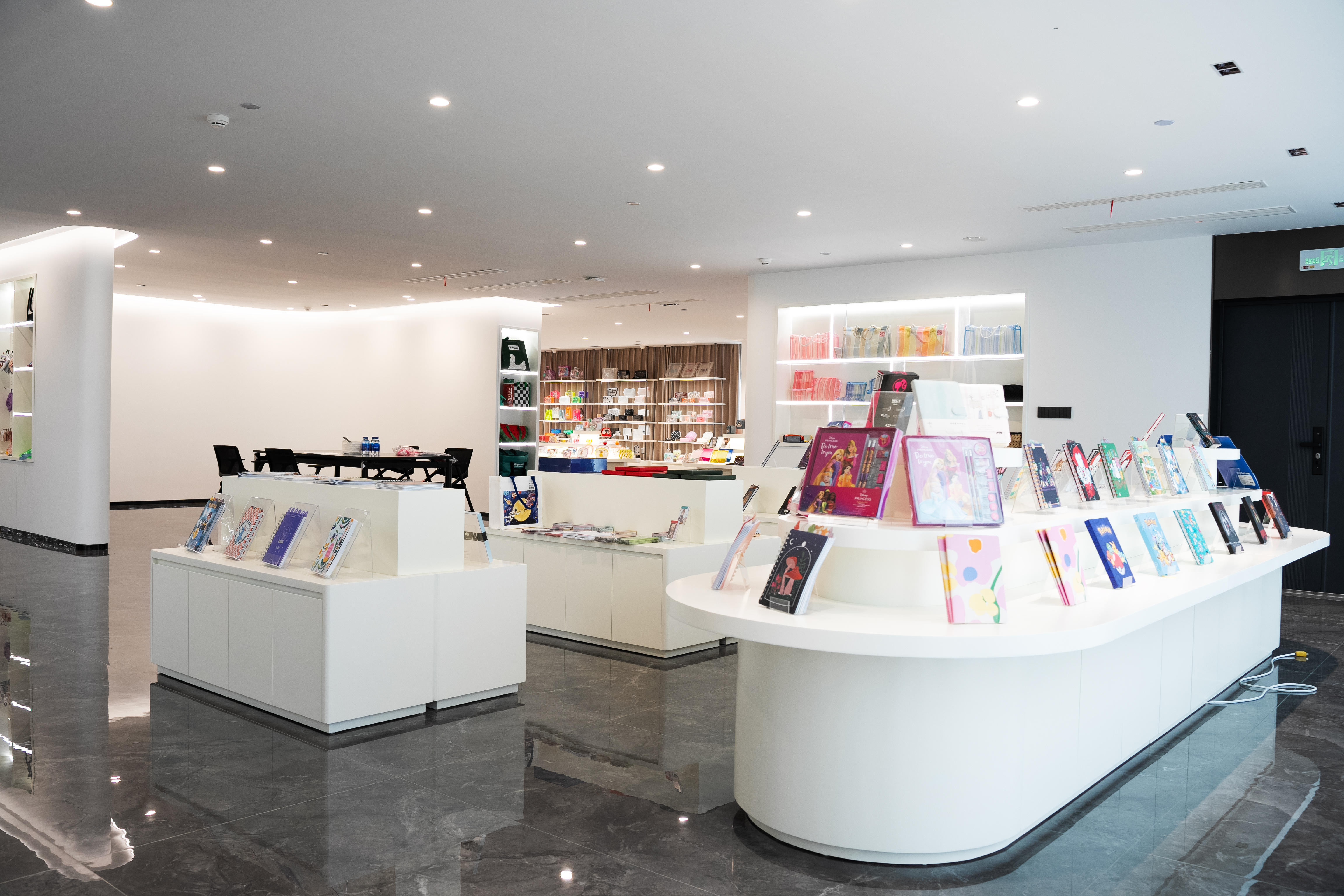
Sample room: reusable, foldable and tote shopping bag constructions inspected before a bulk program is scheduled.
What "Premature Failure" Actually Means for a Reusable Shopping Bag
A reusable shopping bag has failed prematurely when it can no longer complete the reuse cycle it was specified for. Cosmetic ageing is not the test; structural function is. A split seam or a detached handle retires a bag long before the fabric is worn out, and daily-use programs compress the timeline — a bag carried home several times a week absorbs in three months what an occasional-use bag experiences in three years.
Four failure modes account for the majority of complaints raised by retail buyers and brand owners.
Failure mode 1 — the logo wears out before the bag does
Print sits on the most exposed surface of the bag: the outside, where it rubs against trolleys, counter edges, vehicle interiors and other bags. When the printing method is not matched to the substrate, or when adhesion is never checked, the visible result is a logo that fades, cracks or peels while the bag body is still intact. For a brand owner this is the costliest failure, because a damaged logo turns a promotional item into a negative brand impression.
Failure mode 2 — material degradation in humid, repeated use
Non-woven fabric, canvas, recycled PET, Oxford cloth, PP and PVC do not age the same way. A material that performs acceptably in dry, occasional use can soften, sag or tear when it is loaded repeatedly and stored in humid conditions such as kitchens, delivery vehicles or coastal climates. Material selection is therefore a fit decision, not only a price decision.
Failure mode 3 — handle and accessory detachment
Handles, seams and attachments carry the entire load of the bag. When that load path is under-specified, failure happens at the junction rather than in the bag body: stitching pulls away from the handle anchor, a base seam opens, or a reinforced attachment separates. These are production-engineering decisions, and they are settled before the first bag is cut.
Failure mode 4 — batch-to-batch drift
Buyers who approve a sample and then receive three shipments are buying a process, not a product. Without documented quality control at defined checkpoints, a later batch can differ from the approved one in weight per piece, print adhesion or stitching consistency. That is a supplier-process failure, and it is the reason repeat retail programs evaluate quality management systems rather than sample photographs.
Why the Failure Bar Keeps Rising: Industry Background
Two regulatory shifts have changed what a shopping bag is expected to survive. In the United States, 12 states including California and New York had implemented statewide bans on single-use plastic bags as of 2024, according to the National Conference of State Legislatures, which pushes consumers toward heavy-duty reusable alternatives. In the European Union, the Packaging and Packaging Waste Regulation (PPWR, (EU) 2025/40) requires all packaging to be recyclable by 2030 and introduces mandatory recycled content targets for plastic packaging — a direction that increases interest in recycled material streams such as recycled PET.
Demand follows the same line. Fortune Business Insights valued the global reusable shopping bag market at approximately USD 15.64 billion in 2025 and projects USD 28.87 billion by 2034. The material mix concentrates on proven durability: PP bags accounted for nearly 46% of total reusable bag production, according to Business Research Insights, and tote bags hold roughly a 40–41% revenue share of the global bag market based on Market Research Future segmentation, largely because of their multi-purpose functionality.
Supply is deep. China's export value for "suitcases, handbags and similar containers", a customs category that includes many types of shopping bags, reached USD 27.13 billion for January–November 2025, based on General Administration of Customs of China data. In a market with that much available capacity, a supplier is not differentiated by whether it can produce a bag, but by whether the bag still works after fifty or a hundred trips.
5 Fixes for High-Frequency Daily Use
Each fix below maps to one of the failure modes above and translates into a line item a buyer can write into a purchase specification.
Fix 1 — Specify material by load and frequency, not by the lowest unit price
Material choice sets the ceiling for everything else. In the Shopping Bag line (model SB-2026-001), the available material families are non-woven fabric, canvas, recycled PET, Oxford cloth and PP, with a weight band of 50 g to 200 g per piece depending on material and size, and sizes from standard S/M/L up to fully customer-specific dimensions. Zhejiang Hansun Arts & Crafts Co., Ltd., a manufacturer founded in 1996 with a 25,000 m² factory and 20,000,000 units of annual output, produces tote bags and PVC bags as its main product lines.
The practical rule is simple: the higher the weekly load and the longer the reuse target, the further up the weight band the specification should sit. The market's own behaviour supports that logic — PP bags hold nearly 46% of reusable bag production because the material combines durability with cost-effectiveness.
Fix 2 — Match the printing method to the substrate
Logo wear is a compatibility problem before it is a quality problem. Available production crafts include silk screen printing, heat transfer and offset printing, and the same artwork can behave very differently depending on which craft is paired with which substrate — non-woven fabric, canvas, recycled PET, Oxford cloth or PP. A print that holds on one surface does not automatically hold on another.
Ask a supplier to state the substrate-and-craft pair in writing, and to describe how print adhesion and wear resistance at the printed area are checked before shipment. Scratch and wear performance on the logo should be a controlled specification item with a verification method, not an assumption carried over from a sample photo.
Fix 3 — Design for humidity and mixed indoor/outdoor conditions
High-frequency bags rarely live in one environment. They move from a supermarket to a car boot, from a rainy street to a kitchen shelf. Non-woven and canvas are absorbent by nature; PVC and Oxford cloth are typically selected where moisture exposure is part of the daily routine. Where a program runs in a humid region, or the bag will be stored in vehicles and kitchens, the material decision should follow the environment rather than the artwork.
Regulatory direction matters here as well. With PPWR requiring packaging to be recyclable by 2030 and setting recycled content targets for plastic packaging, recycled material options such as recycled PET belong in the specification discussion rather than being treated as a downgrade.
Fix 4 — Reinforce the load path: handles and seams first
Most end-of-life events happen at the handle junction or along a seam, not in the middle of a bag panel. The load path should therefore be the most controlled part of the construction: specify how the handle is attached, how the junction is reinforced, and how the base seam is finished. In production, that means treating stitching consistency and attachment strength as measured checkpoints — verified before mass production begins and re-checked while the order runs.
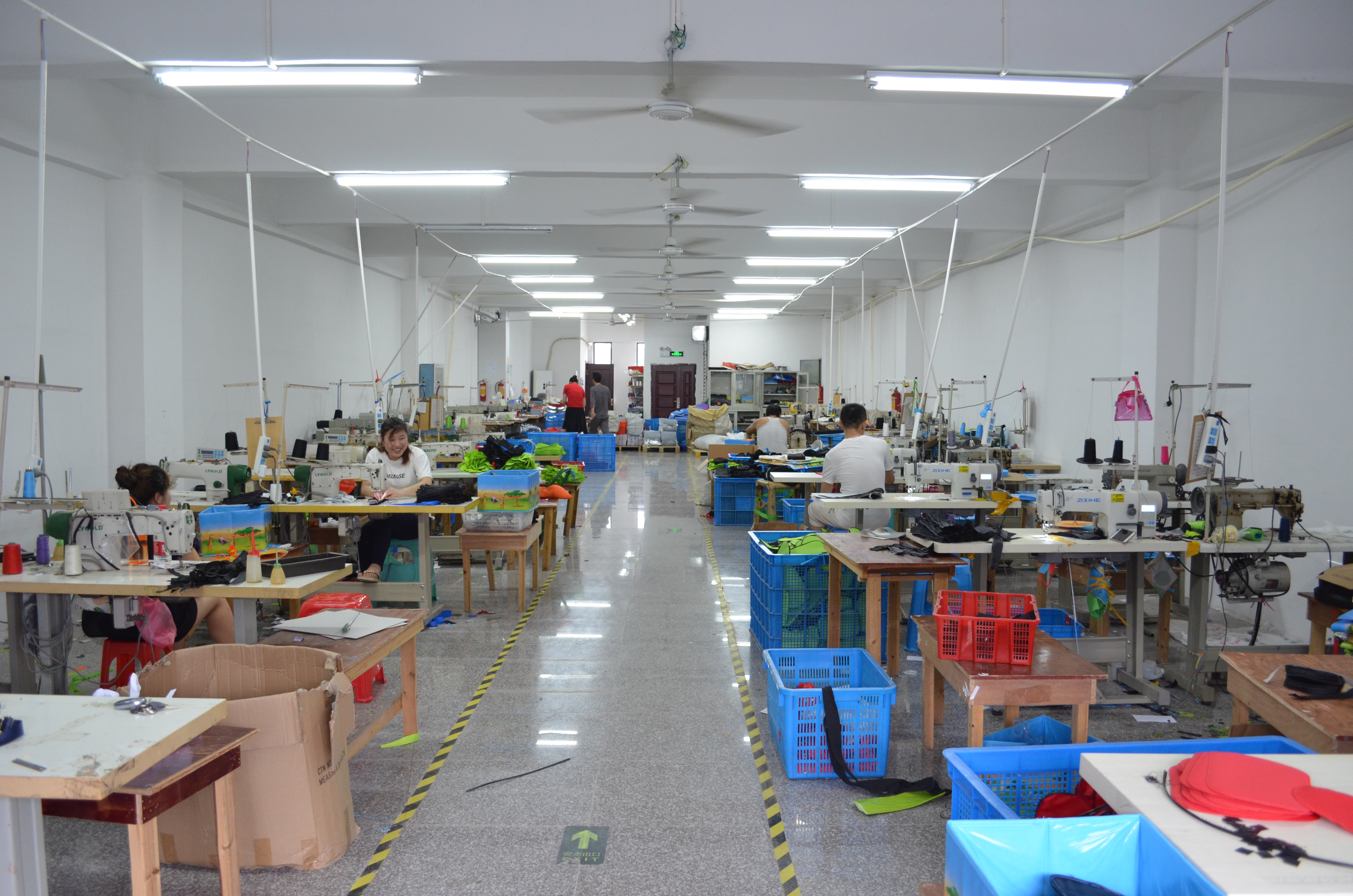
Sewing workshop: the handle and seam junction is the load path that decides how long a reusable shopping bag stays in service.
Fix 5 — Lock batch consistency with documented quality control
This is the fix that protects all the others. Zhejiang Hansun Arts & Crafts Co., Ltd. is certified to ISO 9001:2015 by an International Certification Body, with the certification scope covering product design, production, quality control and delivery processes. The company has also been audited under BSCI for social responsibility and Sedex SMETA 4 Pillars covering labour practices, health and safety and environmental standards, and holds Disney FAMA approval for the production and supply of licensed promotional bags and gifts.
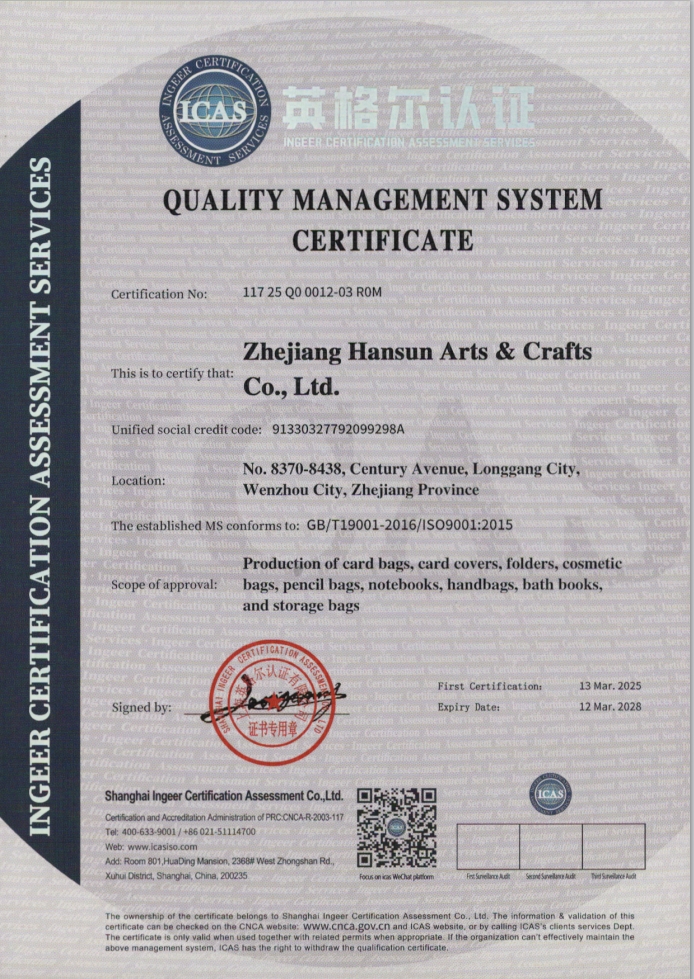
ISO 9001:2015 certification scope: product design, production, quality control and delivery processes.
The effect of a documented system shows up in long-run programs. For a Japanese chain-supermarket client, 1,000,000 units of custom-printed daily shopping bags and promotional gifts were produced within one year for long-term reuse. The project recorded a 99.7% product qualification rate and zero delivery delay, and the client placed repeat orders for three consecutive years; customer feedback confirmed the bags met Japan's eco-friendly standards and were recognised by both the client and end consumers.
Step-by-Step: Building a Failure-Resistant Bag Specification
- Define the reuse cycle. Record trips per week, typical load, storage environment and expected service life. This single paragraph determines everything that follows.
- Write the spec in four lines. Material family, weight per piece inside the 50–200 g band, size (S/M/L or custom dimensions), and printing craft (silk screen, heat transfer or offset).
- Validate a sample under real conditions. Load the bag, abrade the printed area, and test in humid conditions if the program runs in one. Reviewing a sample room is useful; it does not replace functional testing.
- Lock quality checkpoints in writing. Print adhesion at the logo area, handle and seam attachment, dimensional tolerance and stitching consistency.
- Verify compliance documentation for your market. ISO 9001:2015 for design, production, quality control and delivery; BSCI or Sedex SMETA 4 Pillars for social compliance; Disney FAMA where licensed characters are involved.
- Confirm capacity against lead time. OEM/ODM capacity is 1,500,000 units per month, with a minimum order quantity of 3,000 pcs and a production lead time of 30–45 days; customization scope covers logo, size and material.
- Keep the approved reference. Retain the approved sample, spec sheet and inspection criteria so that reorders and additional batches are measured against the same baseline.
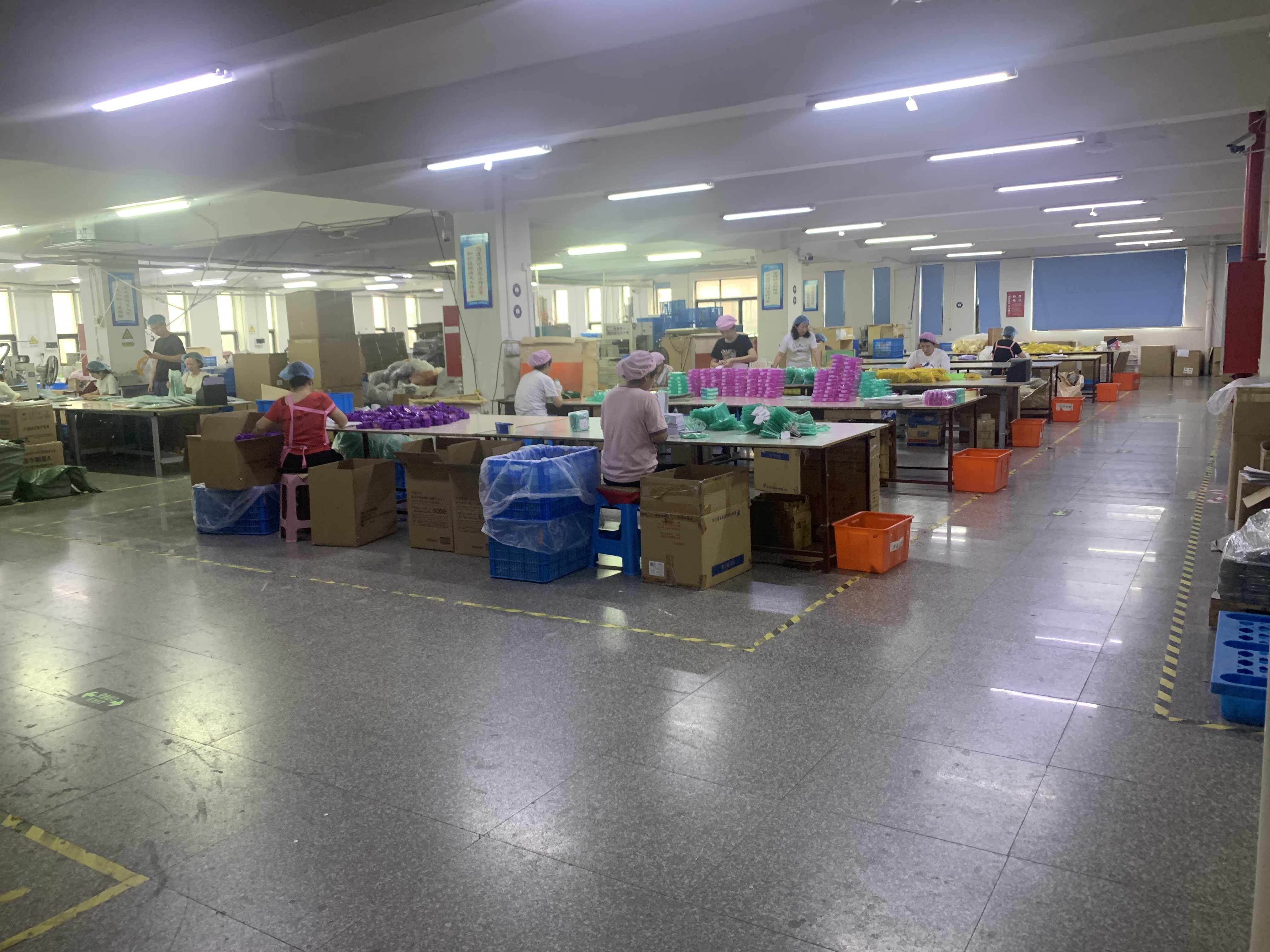
Packaging workshop: batch consistency and delivery readiness are confirmed before shipment, not after a complaint.
Use Cases: Where Premature Failure Shows Up Fastest
- Chain supermarket daily use. The most demanding common scenario: heavy repeated loading, storage in cars and kitchens, and a logo that customers see on every trip. The Japanese supermarket project described above — 1,000,000 units used for daily shopping bags and promotional gifts — is representative of the frequency these bags must absorb.
- Promotional and gift programs. Custom printed bags distributed as corporate giveaways are judged in exactly the conditions that cause failure: repeated handling, outdoor transit and long storage. Print durability matters more here than in almost any other use case, because the logo is the entire point of the item.
- Travel and portable use. Foldable and portable designs are compressed, unfolded and refolded repeatedly. Fold lines and attachment points become the stress points, so material flexibility and stitching quality decide how long the bag stays in service.
- Checkout branding at retail. Where bags double as branded packaging, they carry goods and brand equity at the same time. A bag that peels in week three damages a brand more visibly than a bag that was never printed.
Comparison Table: Diagnosing and Fixing Premature Bag Failure
| Failure mode | Typical root cause | Fix | What to verify before ordering |
|---|---|---|---|
| Faded, cracked or peeling logo | Printing craft not matched to the substrate; no adhesion check | Fix 2 | Which substrate-and-craft pair is specified, and how is print wear checked? |
| Softening, sagging or tearing in humid use | Material selected without reference to moisture and load frequency | Fix 1 + Fix 3 | Material family, weight per piece, and the environment of use |
| Detached handle or split seam | Load path under-specified at the junction | Fix 4 | How handle and seam attachment is constructed and inspected |
| Second batch differs from the approved sample | Quality control not documented at defined checkpoints | Fix 5 | Which quality management system covers production and delivery |
The supplier-side details below are the verified reference points a buyer can check directly against documentation.
| Item | Verified detail |
|---|---|
| Product | Shopping Bag, model SB-2026-001 — reusable foldable, eco-friendly non-woven, and canvas tote types |
| Materials | Non-woven fabric, canvas, recycled PET, Oxford cloth, PP |
| Weight and size | 50–200 g per piece depending on material and size; S/M/L or customer-specific dimensions |
| Printing crafts | Silk screen printing, heat transfer, offset printing |
| Customization | OEM/ODM — logo, size and material |
| MOQ and lead time | 3,000 pcs minimum order; 30–45 days production lead time |
| Capacity | 1,500,000 units per month; 20,000,000 units annual output |
| Quality management | ISO 9001:2015 — product design, production, quality control and delivery processes |
| Social and licensing compliance | BSCI; Sedex SMETA 4 Pillars; Disney FAMA |
FAQ
Which certifications should I check before approving a shopping bag supplier for a high-frequency program?
Start with the quality management system, because it governs the production process that determines whether batch two looks like batch one. Zhejiang Hansun Arts & Crafts Co., Ltd. is certified to ISO 9001:2015 by an International Certification Body, with a scope covering product design, production, quality control and delivery processes. For social and ethical sourcing, the relevant audits are BSCI and Sedex SMETA 4 Pillars, which cover factory social responsibility, labour practices, health and safety and environmental standards. Where licensed characters or entertainment properties are involved, Disney FAMA approval covers the production and supply of licensed promotional bags and gifts.
Can a supplier customize material, size and printing for repeated daily use?
Yes — customization of logo, size and material is the standard OEM/ODM scope. In practice, the usable range for the Shopping Bag line (model SB-2026-001) is 50–200 g per piece depending on material and size, with S/M/L or customer-specific dimensions, and printing through silk screen, heat transfer or offset methods. The real design question is not whether customization is possible, but whether the chosen material weight and printing craft match the load and frequency the bag will actually face.
What drives the unit cost of a shopping bag that is built to last?
Four variables dominate: the material family and the weight per piece inside the 50–200 g band, the size, the printing craft (silk screen, heat transfer or offset), and order volume relative to the 3,000 pcs minimum order quantity. Durability is bought mainly through material weight and process control rather than through decoration, so the cheapest route to a lower unit price is usually to reduce the reuse target — which is precisely the trade-off that produces premature failure. Buyers should price the specification they need, then adjust volume rather than downgrade the material.
How can I validate a bag before committing to a bulk order?
Validate functionally rather than visually: load the bag with the weight it will normally carry, abrade the printed area, and repeat handling in the conditions the program will face. Because the minimum order quantity is 3,000 pcs and production lead time is 30–45 days, sample validation should be finished before the production window opens — otherwise the first functional test becomes the first shipment. Request a sample and a specification review from the Hansun team at hansun20@hansungift.com before locking the order.
What lead time and production capacity should I plan for?
OEM/ODM production capacity is 1,500,000 units per month, with a standard lead time of 30–45 days and a minimum order quantity of 3,000 pcs. Annual output is 20,000,000 units, supported by a 25,000 m² factory and a 25-engineer R&D team. The delivery track record includes a Japanese chain-supermarket project of 1,000,000 units completed within one year with zero delivery delay. To discuss volume, timing and specification for your program, contact Naomi at hansun20@hansungift.com or via WhatsApp at +60 10-8838562, and download the company brochure for the full product and capability overview.
Request a sample and a durability specification
Send your use case — bag type, weekly load, printing requirement and target market — and the Hansun team will respond with a material and print recommendation, MOQ and lead time. Email: hansun20@hansungift.com | Tel: +86 13655771851 | WhatsApp: +60 10-8838562.
Company brochure (PDF): download the Hansun product and capability brochure. Factory address: NO.8388, Century Road, Longgang City, Wenzhou, Zhejiang, China 325802.

Sample request: specify bag type, weekly load and print requirement to receive a material recommendation, MOQ and lead time.
Conclusion
Premature shopping bag failure is diagnosable. Faded logos point to a printing method that was never matched to the substrate; softening and tearing point to a material that was not selected for humidity and load frequency; detached handles point to an under-specified load path; and inconsistent batches point to quality control that was never documented. The five fixes here — material by load, print by substrate, moisture-aware material selection, reinforced handle and seam construction, and ISO 9001:2015-based batch control — address each failure mode directly.
For buyers in the evaluation stage, the practical next step is to rewrite the purchase specification so that each of those five points has a stated value and a verification method. Zhejiang Hansun Arts & Crafts Co., Ltd., founded in 1996 and operating from a 25,000 m² factory in Wenzhou, Zhejiang, supplies reusable and foldable shopping bags, tote bags and PVC bags to markets worldwide, with 70% of output exported, and supports OEM/ODM customization from a 3,000 pcs minimum order with a 30–45 day lead time. The company website is hansungift.com.