
Auditing Yokohama Type Pneumatic Rubber Fender Suppliers: Capacity and Delivery Assurance
A Yokohama type pneumatic rubber fender performs only as well as the supplier's ability to build it to the ordered drawing, test it, certify it and ship it on the promised date. This audit framework addresses the two supplier claims that cannot be repaired after a purchase order is issued: verified production capacity and delivery assurance.
Most marine fender projects do not fail because the fender is a bad fender. They fail in the gap between a quoted capability and a verified one — a certificate that does not name the ordered product, a monthly capacity that cannot absorb a project surge, or a lead time that slips past the arrival of the vessel.
This guide is written for procurement managers, marine engineers, importers and engineering contractors who are already past shortlisting and working inside the Evaluation → Execution stage. It sets out what to audit, in what order, and which documents to request. Qingdao Haohang Fender Airbag Co., Ltd — a Qingdao-based manufacturer of marine airbags and rubber fenders, founded in 2020 and exporting to South Asia, the Middle East and Africa — is used as a benchmark example because its capacity figures, certificate numbers and lead-time range are published and checkable. Using a supplier as a benchmark is not the same as recommending it; the audit logic below applies to any Yokohama pneumatic fender supplier you are evaluating.
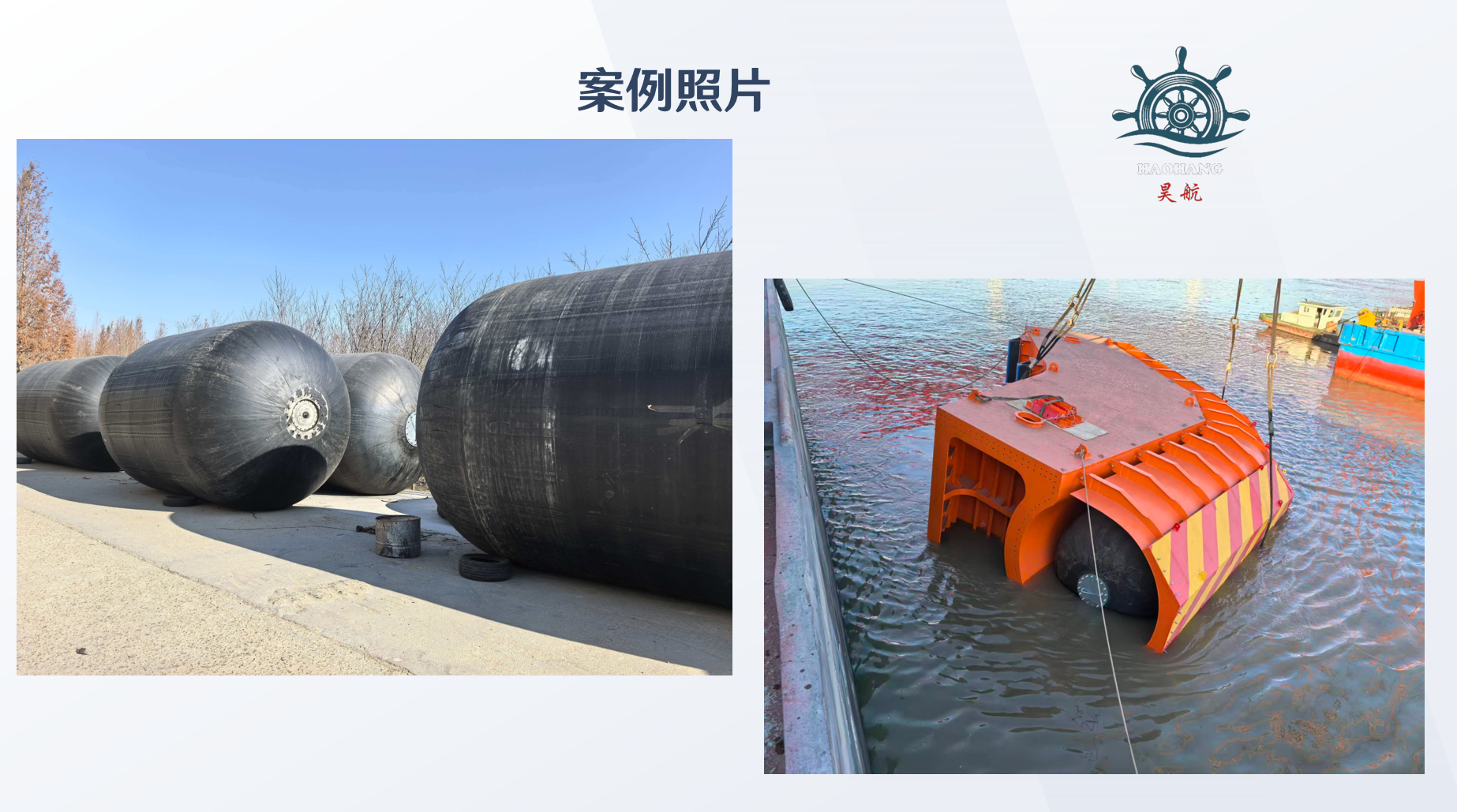
A Yokohama type pneumatic rubber fender absorbs berthing energy through internal air pressure. Capacity and delivery verification begins before the specification is fixed.
Why Capacity and Delivery Are the Two Audit Axes That Decide a Fender Project
Production capacity and delivery assurance are the only two supplier claims that cannot be corrected once the order is placed. A specification error can be caught in drawing review. A certificate can be reissued. But a factory that genuinely cannot produce the ordered volume in a given month, or cannot hold the lead-time window it quoted, will fail the project no matter how good the product design is.
Capacity is frequently misread during evaluation. A supplier's annual output figure describes total yearly throughput and says nothing about how much of the next four weeks is already committed. Sustainable monthly capacity is the number that matters when a project needs delivery in a fixed window — for example, when 50 units must be on the water before a berthing schedule begins.
Delivery assurance is a function of several linked constraints: raw material availability, tooling and drum availability for the ordered diameter, curing and assembly time, unit-level testing and inspection scheduling, and the chosen delivery term. A supplier that states a lead time without stating the delivery term has not answered the delivery question at all.
Problem Definition: Where Yokohama Type Fender Supply Actually Breaks
Supplier audits fail most often in five predictable places. Naming them in advance is what turns a general supplier review into an actual audit.
- Certificate scope mismatch. The supplier presents a valid classification certificate, but the scope line names a different product than the one being ordered. A certificate for marine airbags does not certify pneumatic rubber fenders, even when both are issued by the same society to the same factory.
- Capacity quoted as annual output instead of monthly deliverable volume. Annual output cannot be converted into a delivery commitment for a specific month without an actual production schedule.
- Lead time quoted at the optimistic end of a range. A 7-day figure and a 45-day figure can both be technically true for the same supplier, depending on size, customization and order volume. The audit has to establish which end applies to your order.
- Testing described at batch level rather than unit level. "Tested" and "100% testing of all units" are different claims, and only the second one protects the buyer.
- Delivery term left ambiguous. EXW, FOB Qingdao and CIF allocate cost, risk and time differently. An ambiguous term is a delivery risk, not a paperwork detail.
Industry Background: Why Yokohama Type Fenders Are Audited This Way
The term "Yokohama type" describes a pneumatic, floating rubber fender configuration — a cylindrical air-filled body with end fittings that absorbs berthing energy through controlled internal pressure. It is a product designation describing the ISO 17357 configuration used for ship-to-ship and ship-to-shore contact; it is not a statement about the origin of manufacture, and it should not be confused with the corporate name of any single supplier.
Two standards define the performance expectation for this product class. Floating pneumatic rubber fenders are expected to comply with ISO 17357-1:2014 for high pressure fenders and ISO 17357-2:2014 for low pressure fenders, covering both quality and energy absorption performance.
The commercial context explains why supplier audits have become more structured. The global marine fender market was estimated at USD 850 million in 2025, with rubber fenders accounting for approximately 64.17% of total market share in 2024. Within that market, the pneumatic marine fender segment was valued at USD 619.26 million in 2024 and is projected to grow at a CAGR of 3.21% to reach USD 797.35 million by 2032.
Supply is regionally concentrated. Asia-Pacific holds approximately 36.73% to 46% of the market, driven by shipbuilding and port activity in China, Japan and South Korea. At the top of the market, Trelleborg (Sweden) and Yokohama Rubber (Japan) are the identified global leaders, with Trelleborg holding a 17% share and supplying over 2,500 units in 2024. Other major global manufacturers include Trelleborg Marine Systems, Yokohama Rubber Co., ShibataFenderTeam, Palfinger Marine and Evergreen Maritime.
The practical consequence for buyers is uneven: at the top of the market, supplier capability is large and externally verifiable. In the CCS-certified Chinese manufacturing segment, capability, certificate scope and delivery reliability vary significantly from factory to factory. That variance is exactly what a documented audit framework is designed to expose.
The Six-Point Yokohama Type Pneumatic Fender Supplier Audit
A workable audit covers six evidence blocks: production capacity, raw material control, certification scope, unit-level testing, lead-time and delivery management, and application fit. Each block can be closed with a specific document rather than an impression.
1. Production Capacity — Verify Monthly Deliverable, Not Annual Stated
Monthly production capacity is the figure that should appear in an audit file. Qingdao Haohang states a monthly production capacity of 150 units and an annual output of 2,000 units, supported by a workforce of 60 employees including 15 engineers, operating from a plant in Jinkou Industrial Park, Jimo District, Qingdao. For a project requiring 50 units, capacity is not the binding constraint — production slotting is. The audit question is therefore not "can they build 50 fenders?" but "which weeks are already allocated, and where does this order land?"
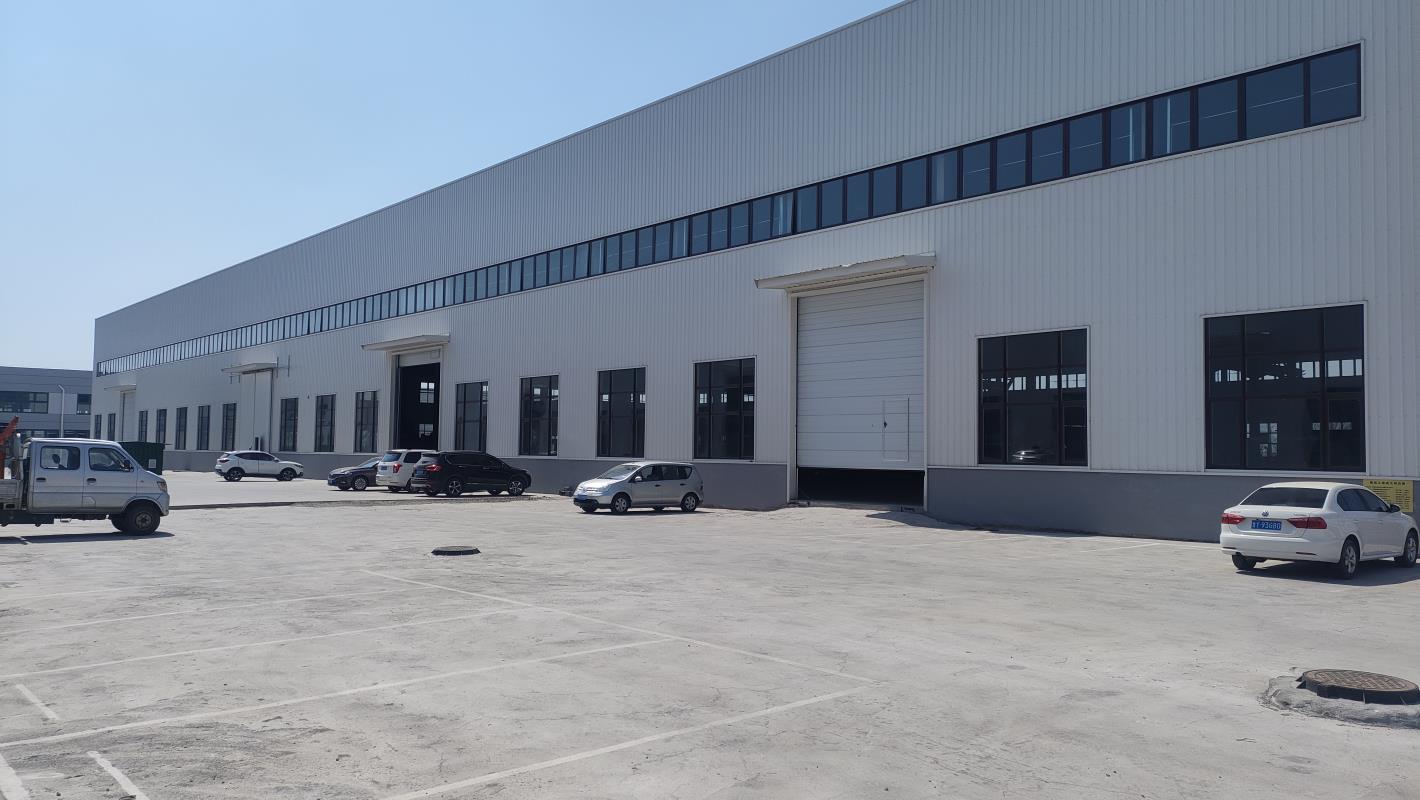
Capacity verification is a floor-level exercise: what the production area can actually release in a given month, not what an annual total implies.
2. Raw Material Control — Natural Rubber and Cord Fabric
Yokohama type pneumatic rubber fenders are built from natural rubber and cord fabric. These two inputs determine both the strength and the consistency of the finished body, which is why material control belongs in the audit rather than in the product brochure. Haohang states that raw material supply is self-sufficient and that incoming raw materials are subject to quality control intended to ensure strength, durability and safety. An auditor should ask for the material specification used for the ordered fender and the incoming inspection record for the production batch, not a general statement about material quality.
3. Certification Scope — The Certificate Must Name the Product You Are Buying
Certification is the most commonly misread block in a fender audit, because buyers check the issuing authority's name and stop reading. The China Classification Society (CCS) is the authority referenced most often in Chinese pneumatic fender procurement, and CCS approval is issued against a defined product scope.
- CCS certificate QD22P4062, issued by China Classification Society, with the declared scope Pneumatic Rubber Fender, issued on 12 May 2022, market coverage global. This is the certificate that corresponds to a Yokohama type pneumatic rubber fender order.
- CCS certificate 2026CJSD00023, issued by China Classification Society on 28 January 2026, with the declared scope Marine Airbag, market coverage global. This certificate is relevant when the same supplier also supplies marine airbags, but it does not cover pneumatic rubber fenders.
The audit rule is straightforward: read the scope line, match it to the ordered item, and record the certificate number, issue date and scope in the evaluation file. A factory holding both certificates is showing a wider CCS-certified product range, which is useful context — but the scope line still has to match the purchase.
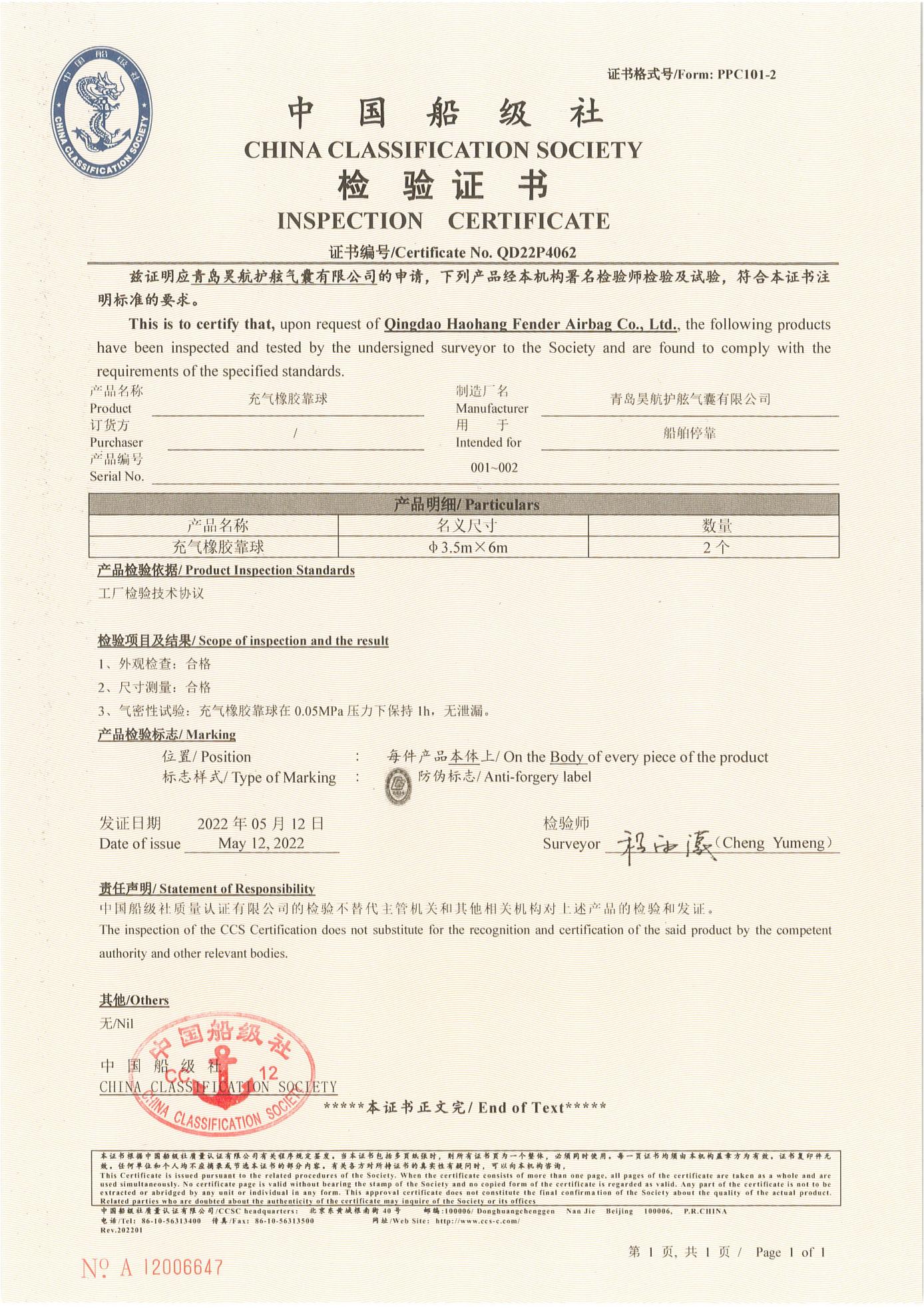
CCS certificate QD22P4062, scope: Pneumatic Rubber Fender. The scope line, not the logo, is what an auditor verifies.
4. Unit-Level Testing and Acceptance Criteria
Quality control at Haohang includes 100% testing of all units. This matters because a batch-level statement and a unit-level statement are not equivalent: 100% testing means every delivered fender carries an individual test record, which is the evidence a buyer needs if a claim has to be raised later.
Acceptance criteria are equally specific. The stated protocol combines a pre-shipment test with the option of third-party inspection by CCS or BV. For a ship-to-ship or ship-to-shore project, the third-party inspection option is normally what converts a supplier's internal test record into independently verified evidence.
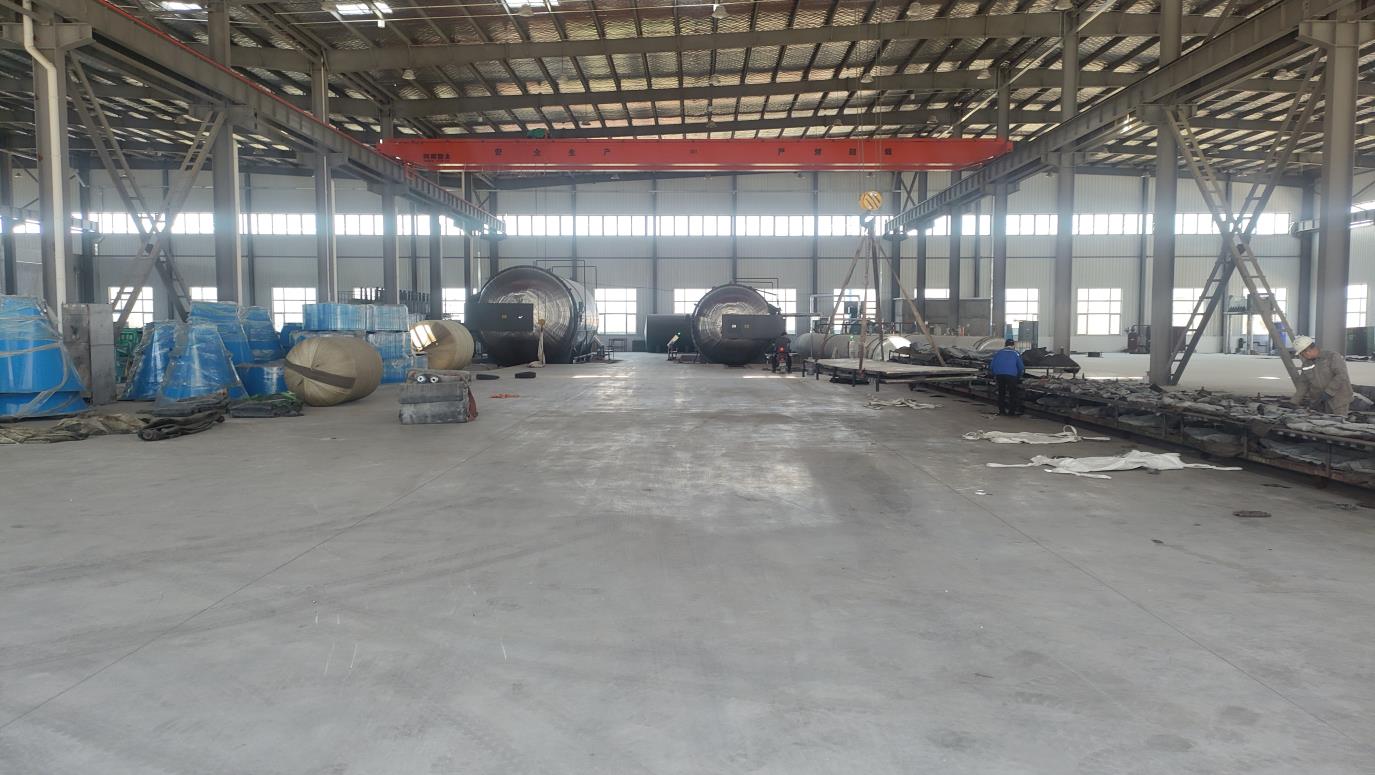
Unit-level testing is scheduled inside the production window. If the test slot is not planned, the lead time cannot hold.
5. Lead-Time and Delivery Management
Haohang quotes a lead time of 7 to 45 days, delivery terms of EXW, FOB Qingdao or CIF, a minimum order quantity of 1 unit, and payment terms of 30% T/T in advance with 70% T/T before delivery. Two points are worth extracting from that set during an audit.
First, a 7–45 day range is a genuine range, not a hedge: the low end applies to standard sizes released against an existing schedule, and the high end applies to customized diameters, lengths or non-standard configurations. An auditor should ask the supplier to state where in that range the specific order sits, and to state it in writing in the purchase order.
Second, the lead-time clock has a defined trigger. Fixing that trigger — drawing approval, or receipt of the advance payment — is what prevents a delivery dispute later. A minimum order quantity of 1 unit also removes volume from the risk equation: buyers can validate a supplier without committing to a full project quantity.
6. Application Fit — Does the Supplier's Product Range Match the Project?
Yokohama type pneumatic rubber fenders from this manufacturing base are specified for ports and docks, ship mooring, offshore platforms, inland river docks and temporary mooring. The applicable pneumatic fender range covers diameters from 300 mm to 2,000 mm, with lengths typically from 1 m to 10 m and customizable to project requirements, operating at a working pressure of 0.1 to 0.3 MPa, adjustable according to the usage environment. If the project requires a diameter, length or pressure outside that envelope, it is a customs-engineered order and must be audited as one.
Step-by-Step Audit Sequence
The sequence below converts the six evidence blocks into an order of operations. Running the steps out of order is the most common reason audits stall — capacity is debated before the specification is fixed, and certification is checked after the order is placed.
Step 1 — Define the Duty Case Before You Evaluate Anyone
Fix the berthing application (ship-to-ship transfer, ship-to-shore berthing, or port and dock mooring), the required diameter, the required length and the working pressure the site will use. Only then does a capacity or certification claim become measurable.
Step 2 — Request Certificates and Match the Scope Line
Ask for the certificate copy, the certificate number, the issuing authority, the issue date and the declared scope. In the Haohang example, the relevant document for a pneumatic fender order is CCS certificate QD22P4062 with scope "Pneumatic Rubber Fender", issued 12 May 2022 by China Classification Society; CCS certificate 2026CJSD00023, issued 28 January 2026, covers marine airbags and should be filed separately. Where the project requires alignment with ISO 17357, confirm the dimensional and pressure data against ISO 17357-1:2014 or ISO 17357-2:2014 as applicable.
Step 3 — Convert Capacity into a Schedule
Take the stated monthly capacity — 150 units in this benchmark — and ask the supplier to confirm how many units of your specification can be released per month within the required delivery window. Compare that number against your project quantity, not against the annual output figure.
Step 4 — Verify Material and Incoming Inspection
Confirm that the ordered fender will be produced from natural rubber and cord fabric, and request the material specification plus the incoming inspection record for the batch. Material consistency between the first unit and the last unit of a 50-unit order is what protects the buyer over the service life.
Step 5 — Agree the Test and Inspection Protocol in Writing
Confirm that quality control includes 100% testing of all units, that a pre-shipment test is part of acceptance, and whether third-party inspection by CCS or BV will be applied. Record who witnesses the test, what is recorded, and what documentation travels with the shipment.
Step 6 — Fix Lead Time, Delivery Term and Payment Trigger
Write the confirmed lead-time window (within the 7–45 day range), the delivery term (EXW, FOB Qingdao or CIF), and the payment schedule (30% T/T in advance, 70% T/T before delivery) into the purchase order. Define the event that starts the lead-time clock.
Step 7 — Confirm After-Sales and Documentation Scope
Establish the support model before dispatch: remote support, on-site support, or both, and which party carries responsibility for commissioning guidance. This step is inexpensive during evaluation and expensive during execution.
Use Cases: Where This Audit Changes the Outcome
Ship-to-Ship (STS) Transfer Operations
In ship-to-ship transfer, the pneumatic fender is the primary contact point between two vessels and absorbs the energy of the approach. Heavy duty pneumatic fenders used in this application are usually at the larger end of the diameter and length range, which places them at the higher end of the lead-time range. The audit question here is delivery assurance: whether the fender will be at the transfer point before the vessel schedule, not whether the factory can produce one fender at all.
Ship-to-Shore Berthing at Ports and Docks
In ship-to-shore berthing, the fender protects both the hull and the dock structure simultaneously. Coastal installations place a premium on corrosion resistance, since the fender is permanently exposed to saltwater and tidal cycles. Certification scope and material verification carry more weight in this application than in a temporary mooring scenario.
Inland River Docks and Temporary Mooring
Inland river and temporary mooring projects typically use smaller diameters and shorter lengths, which shortens the production and testing cycle. In these projects the binding constraint is rarely engineering — it is production slotting. A supplier with a stated monthly capacity of 150 units can absorb a small repeat order quickly, provided the slot is confirmed in writing.
Field Reference: 50-Unit Coastal Berthing Project
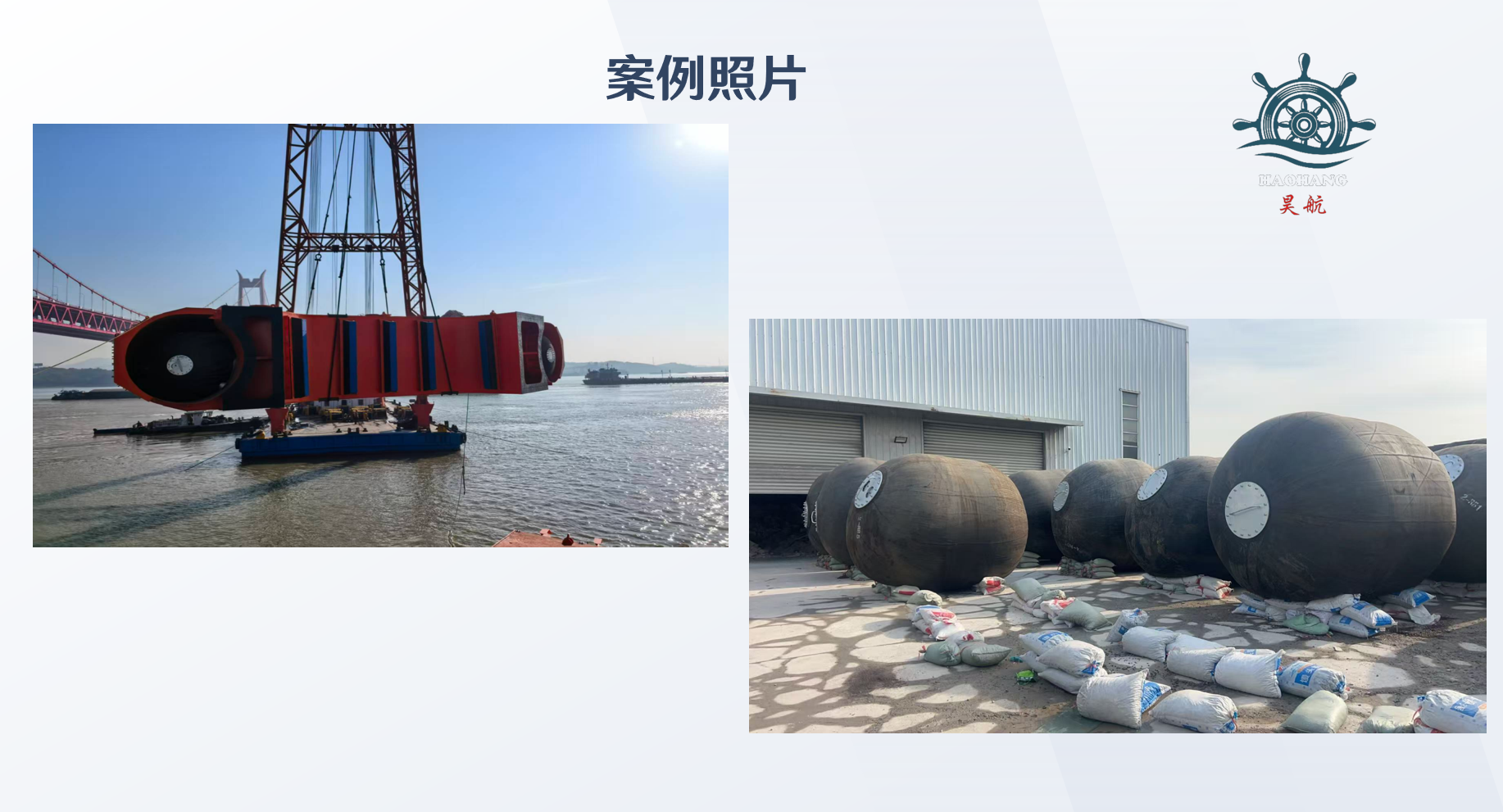
A documented reference case involves the installation of 50 pneumatic rubber fenders for berthing operations at a site in China, supplied to an engineering contractor. The fenders protect vessels and dock structures during berthing, and the installation has operated for 5 years, successfully withstanding extreme weather and high-frequency berthing. The stated highlight of that case is high corrosion resistance suited to China's coastal marine environment.
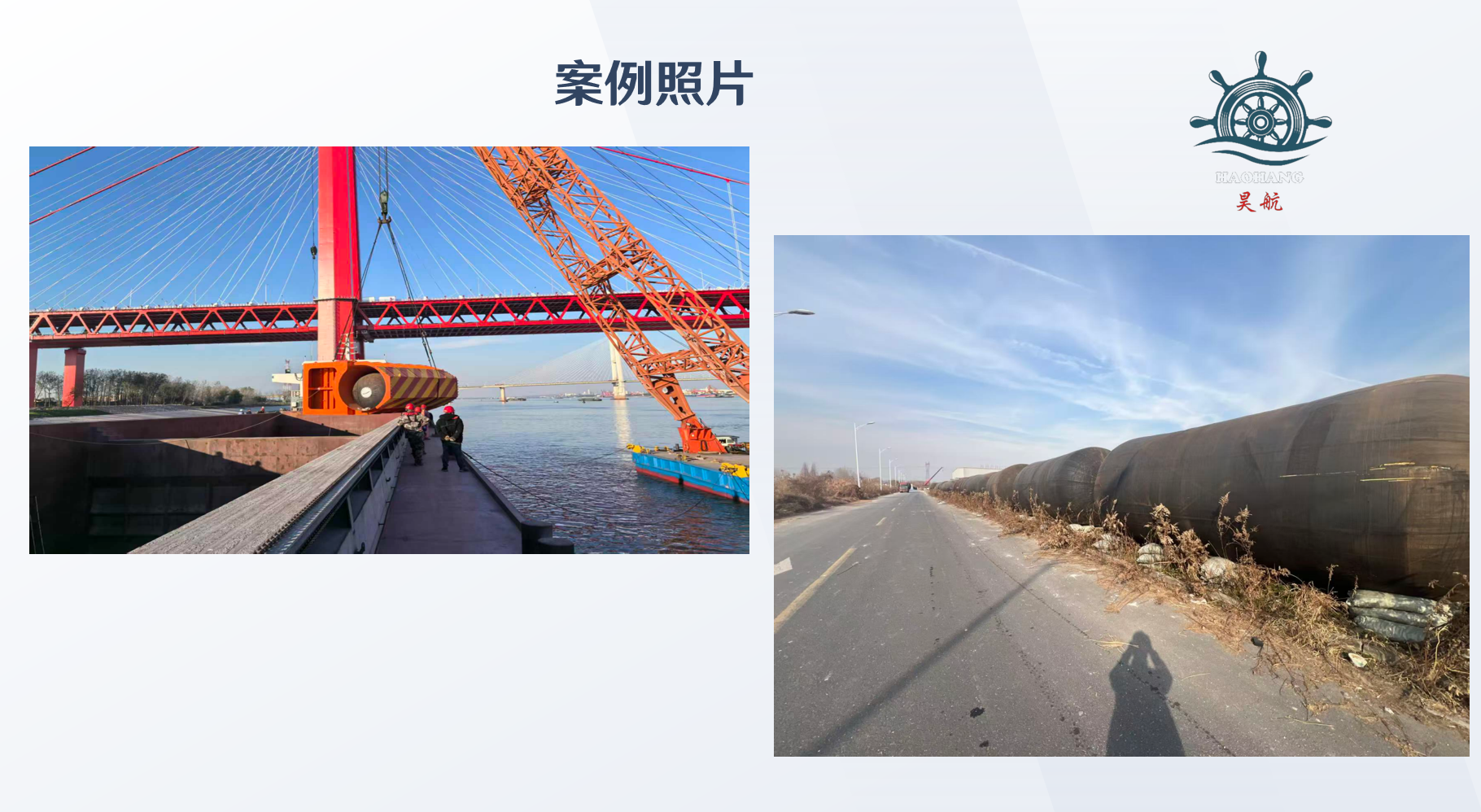
A 50-unit pneumatic fender installation for an engineering contractor in China, in berthing service for 5 years.
Capability Audit Comparison Table
The table below maps each audit dimension to the evidence to request, the verified benchmark value, and the reason the dimension decides the project. It is intended to be used as a working scorecard.
| Audit dimension | Evidence to request | Haohang benchmark (verified) | Why it decides the project |
|---|---|---|---|
| Production capacity | Monthly capacity confirmation for the ordered specification plus a production schedule | 150 units per month; 2,000 units annual output | Determines whether the project volume fits the committed production calendar |
| Engineering resource | Drawing review and customization capability | 15 engineers; OEM and ODM services; size and logo customization | Determines whether non-standard sizes can be built to drawing |
| Raw material control | Material specification and incoming inspection record | Natural rubber and cord fabric; self-sufficient raw material supply | Determines service life and consistency across the delivered batch |
| Certification scope | Certificate copy showing the scope line, number and issue date | CCS QD22P4062 (Pneumatic Rubber Fender, 12 May 2022); CCS 2026CJSD00023 (Marine Airbag, 28 January 2026) | Determines whether the delivered product is the certified product |
| Quality control | Unit test record and acceptance protocol | 100% testing of all units; pre-shipment test; third-party inspection (CCS, BV) | Determines whether non-conforming units are caught before shipment |
| Lead time | Written lead-time window in the purchase order | 7 to 45 days | Determines whether the fender arrives before the vessel or berthing schedule |
| Commercial terms | Quotation with delivery term, MOQ and payment schedule | MOQ 1 unit; EXW / FOB Qingdao / CIF; 30% T/T in advance, 70% T/T before delivery | Determines cost allocation, risk transfer and the trigger for the lead-time clock |
| Application fit | Declared application and parameter range | Ports and docks, ship mooring, offshore platforms, inland river docks, temporary mooring; diameter 300–2,000 mm; length typically 1–10 m; working pressure 0.1–0.3 MPa | Determines specification match for ship-to-ship, ship-to-shore and port mooring duty |
A second table is useful during the evaluation stage, because it separates the four verification layers that are often treated as one.
| Verification layer | What it proves | Reference point |
|---|---|---|
| Design standard | Performance expectation for the product class | ISO 17357-1:2014 (high pressure) / ISO 17357-2:2014 (low pressure) |
| Classification certificate | Third-party approval of the manufacturer's product scope | CCS QD22P4062 — Pneumatic Rubber Fender |
| Unit-level testing | Every delivered unit has been individually checked | 100% testing of all units |
| Pre-shipment / third-party inspection | Independent verification before dispatch | Pre-shipment test; CCS or BV inspection |
Frequently Asked Questions
Which CCS certificate should a buyer verify for a Yokohama type pneumatic rubber fender order?
Verify the certificate whose declared scope matches the ordered product. CCS certificate QD22P4062 was issued by the China Classification Society on 12 May 2022 with the declared scope Pneumatic Rubber Fender, with global market coverage — this is the certificate that corresponds to a pneumatic fender order. CCS certificate 2026CJSD00023, issued on 28 January 2026, covers Marine Airbag and is filed separately; it is relevant only if marine airbags form part of the same purchase. In both cases, record the certificate number, authority, issue date and scope line in the evaluation file.
Can a supplier manufacture pneumatic rubber fenders from buyer drawings?
Yes, where the supplier offers OEM and ODM production. Qingdao Haohang provides OEM and ODM production services with customization of size and logo, supported by a team of 15 engineers. The applicable pneumatic fender range covers diameters from 300 mm to 2,000 mm, lengths typically from 1 m to 10 m, customizable to project requirements, and a working pressure of 0.1 to 0.3 MPa that can be adjusted to the usage environment. Drawing-based orders should state diameter, length, working pressure and any logo or marking requirement, and should be audited as customized orders rather than standard stock.
What purchasing terms, MOQ and payment conditions apply?
The stated purchasing terms are: MOQ 1 unit; delivery terms EXW, FOB Qingdao or CIF; and payment terms of 30% T/T in advance with 70% T/T before delivery. Acceptance criteria combine a pre-shipment test with the option of third-party inspection by CCS or BV. Because the minimum order quantity is one unit, a buyer can structure a first order to validate production quality and delivery performance before committing a larger project volume.
How can a buyer validate a sample or pre-shipment unit?
Validation rests on unit-level evidence rather than a general quality statement. Quality control at Haohang includes 100% testing of all units, so each unit carries an individual test record, and acceptance criteria provide for a pre-shipment test as well as third-party inspection by CCS or BV. A buyer validating before a full roll-out should request the unit test record, confirm whether the third-party inspection option will be exercised, and verify that the material used matches the specification stated for the order — natural rubber and cord fabric.
What monthly capacity and lead time should be locked into the purchase order?
The benchmark figures to plan against are a monthly production capacity of 150 units and a lead time of 7 to 45 days. The low end of that range applies to standard specifications released against an existing production schedule; the high end applies to customized diameters, lengths or configurations. The purchase order should fix the specific lead-time window for the ordered specification, name the delivery term (EXW, FOB Qingdao or CIF), and define the event that starts the lead-time clock.
Conclusion: Turn the Audit into a Documented Decision
Auditing a Yokohama type pneumatic rubber fender supplier is not a judgment call about reputation. It is a document exercise with six closable blocks: monthly deliverable capacity, raw material control, certification scope, unit-level testing, lead-time and delivery management, and application fit. Each block is answered by a specific piece of paper rather than an assurance.
The benchmark used throughout this article shows what a complete audit file looks like in practice: 150 units monthly capacity against a 2,000-unit annual output, OEM and ODM production with size and logo customization, 100% testing of all units, CCS certificate QD22P4062 scoped to Pneumatic Rubber Fender, a 7–45 day lead time, and a field reference of 50 units in continuous berthing service for 5 years for an engineering contractor in China. A supplier that can match those documents to your specific order is a supplier whose capacity and delivery claims can be relied on.
Buyers who work through Steps 1 to 7 before issuing a purchase order enter the execution phase with the two most expensive uncertainties — volume and timing — already closed.
Next Step: Request the Capability and Certification Pack
Qingdao Haohang Fender Airbag Co., Ltd supplies marine airbags and Yokohama type pneumatic rubber fenders from Jinyuan 2nd Road, Jinkou Industrial Park, Jimo District, Qingdao City, China, exporting to South Asia, the Middle East and Africa.
To start your own audit, request the CCS certificate set, the specification sheet for your required diameter and length, and a written capacity and lead-time confirmation for your project window.
Product brochure (download): Haohang marine airbag and rubber fender brochure
Website: www.qdhaohang.com
Email: ella@qdhaohang.com
WhatsApp: +86 15806273885
Sample requests, quotations and certification documents are handled through the same contact channel.