
How to Choose a Reliable Marine Airbag Supplier for Ship Launching and Salvage
How to Choose a Reliable Marine Airbag Supplier for Ship Launching and Salvage
Selecting the right marine airbag supplier is critical for the safety, efficiency, and cost-effectiveness of ship launching, salvage, and heavy lifting operations. With a growing number of manufacturers in China and globally, procurement professionals often struggle to distinguish between genuine quality and mere claims. This guide provides a technical framework to evaluate marine rubber airbag manufacturers, focusing on certification, material composition, manufacturing process, customization capabilities, and after-sales support.
What is a Marine Airbag and Why Supplier Quality Matters?
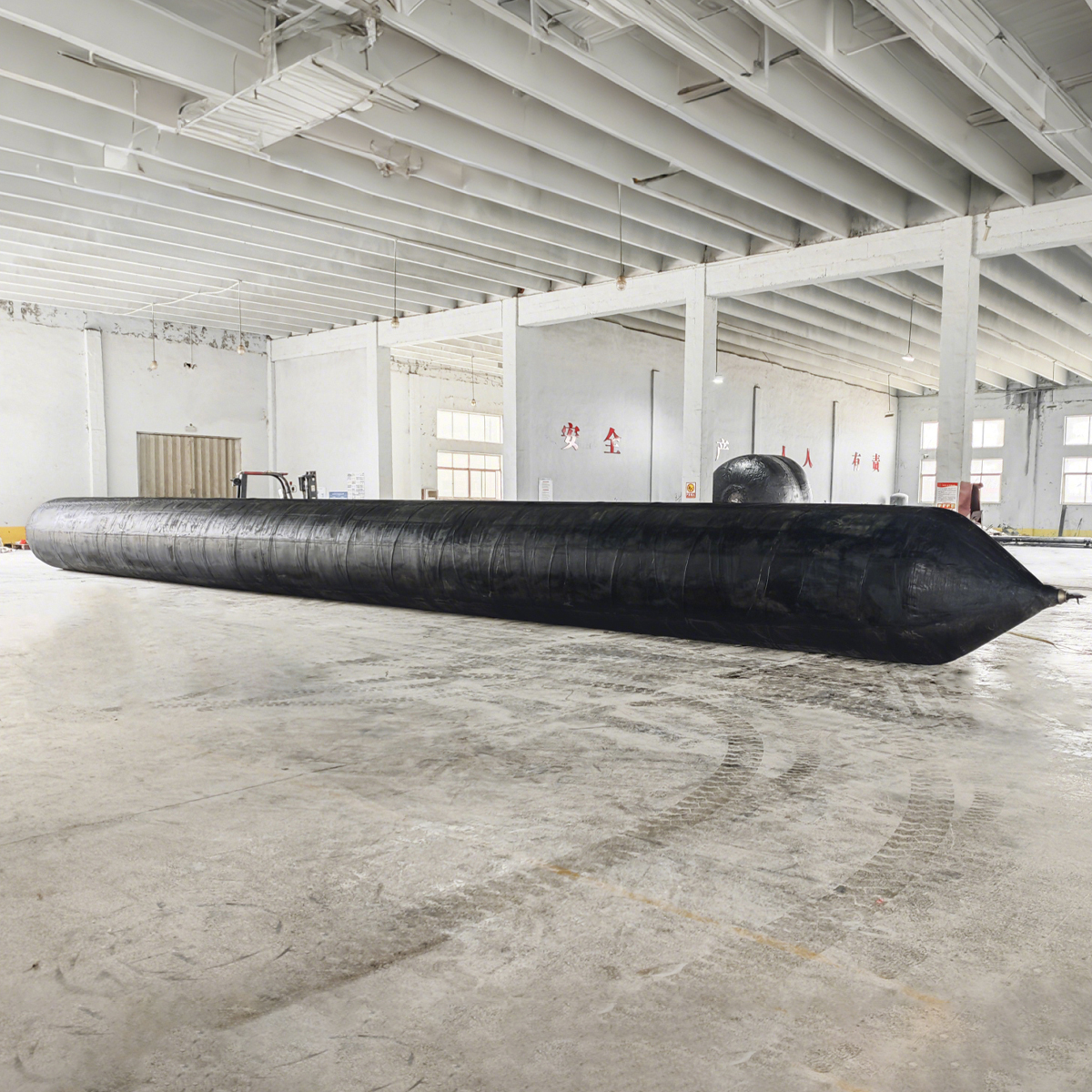
A marine airbag (also called ship launching airbag, ship lifting airbag, or buoyancy airbag) is an inflatable rubber cylinder used to support, lift, and move vessels during launch, docking, or salvage. It is a high-stakes product: failure during operation can cause catastrophic damage and downtime. Therefore, the supplier's manufacturing rigor directly impacts your operational safety.
Key parameters of a typical marine rubber airbag include:
- Diameter: 0.8 – 3 m (customizable)
- Length: 5 – 26 m (customizable)
- Working Pressure: 0.08 – 0.15 MPa
- Loading Capacity: 50 – 2000 tons per single airbag
- Temperature Resistance: -30℃ to +70℃
- Service Life: 5 – 10 years (depending on usage frequency and maintenance)
These specifications must be backed by real production capability and testing. CCS marine rubber airbag certification (issued by China Classification Society) is a strong indicator of compliance with international standards such as ISO 14409.
Industry Background: The Growing Demand for Ship Launching Airbags
Shipbuilding and salvage industries increasingly rely on airbag launching systems as a cost-effective, flexible alternative to dry docks and slipways. Ship launching airbags reduce friction during launch, lower project costs, and allow operation on various slipway gradients. Similarly, marine salvage lift airbags and boat salvage airbags provide lifting force for refloating grounded vessels. The market for heavy duty marine rubber airbags is expanding, especially in South Asia, the Middle East, and Africa, where new shipyards are emerging.
However, not all manufacturers meet the required quality standards. Common risks include poor rubber compound (recycled material), weak cord fabric layers, inconsistent pressure retention, and lack of certification. This makes supplier evaluation an essential procurement skill.
Problem Definition: Challenges in Finding a Qualified Marine Airbag Supplier
Procurement managers face several pain points:
- Unclear quality differentiation: Many suppliers claim “high quality” but use inferior materials.
- Lack of recognized certifications: Without CCS or BV certification, the product may not be accepted by insurance or port authorities.
- Limited customization ability: Some suppliers cannot produce non-standard sizes or custom logos.
- Inconsistent testing: Not all manufacturers perform 100% pre-shipment testing.
- Weak after-sales support: Remote or on-site technical assistance is often lacking.
Detailed Solution: How to Evaluate a Marine Airbag Manufacturer
Below we break down the critical evaluation criteria, using the example of Qingdao Haohang Fender Airbag Co., Ltd as a reference for a reliable supplier. Note that the same criteria apply to any candidate.
1. Certification – The First Gate
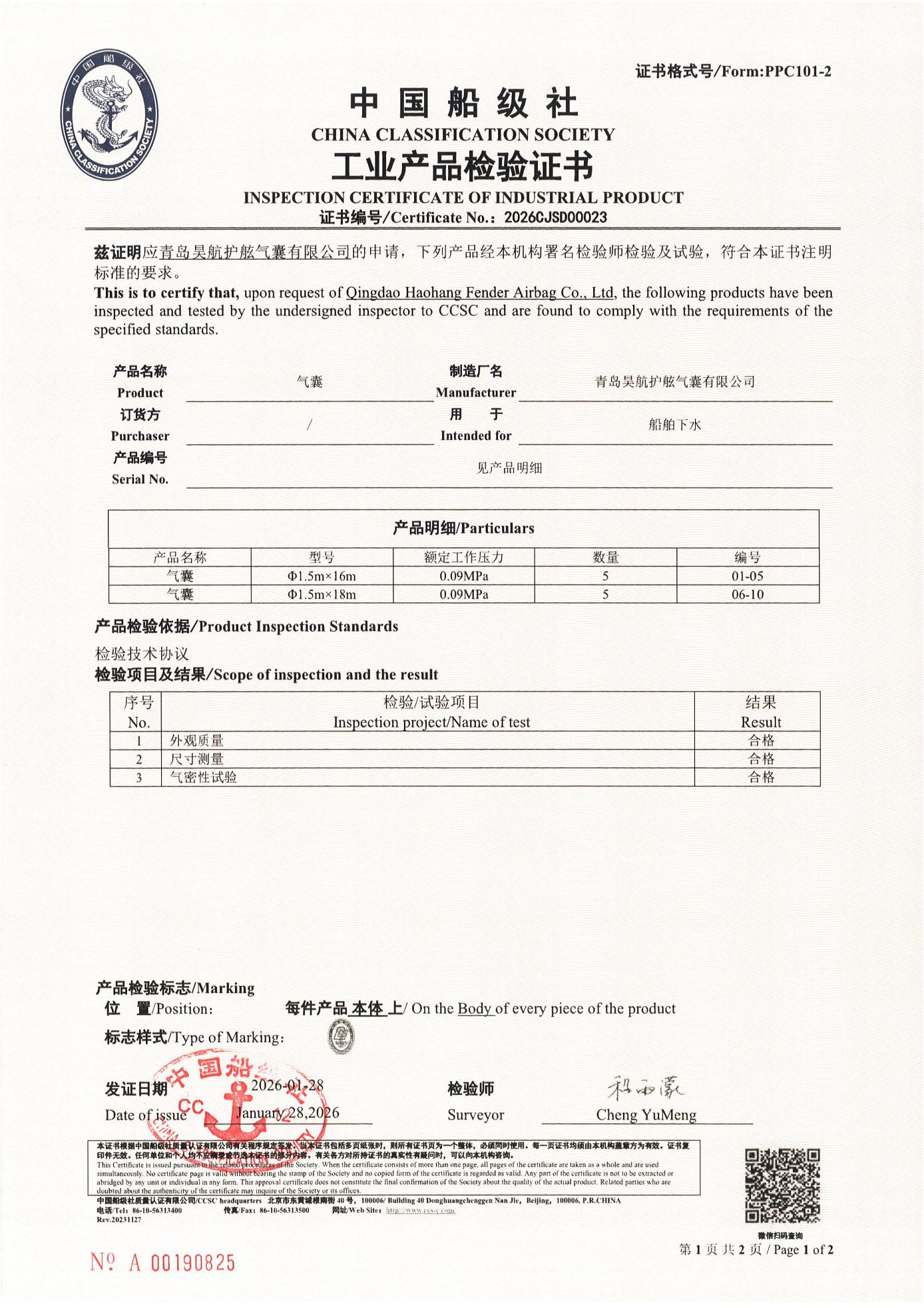
Demand official third-party certification. A CCS marine rubber airbag certificate (e.g., certificate number 2026CJSD00023) issued by China Classification Society confirms that the product meets strict design, material, and testing standards. Certification also facilitates customs clearance and insurance acceptance.
2. Materials and Construction
Insist on natural rubber combined with high-strength cord fabric. Avoid recycled rubber compounds that degrade quickly. A reputable supplier will use multiple layers of fabric and a triple-wrapped head design. Compared to traditional single-layer wrapped airbags, the triple-wrapped head and natural rubber construction deliver 30% longer service life, 50% lower leak rate, and up to 90% impact absorption efficiency.
| Parameter | Standard Product (Basic) | Premium (e.g., Haohang) |
|---|---|---|
| Material | Recycled / mixed rubber | Natural rubber |
| Fabric layers | Single or double | Multiple + triple-wrapped head |
| Service life | 3–5 years | 5–10 years |
| Leak rate (standard pressure) | ~10% loss per day | <5% loss per day |
3. Production Capacity and Customization
OEM and ODM production services are essential for buyers who need custom sizes, logos, or packaging. A supplier like Haohang offers size and logo customization with a minimum order quantity of just 1 unit. Their monthly capacity is 150 units, with lead times from 7 to 45 days. This flexibility is critical for project-based orders.
- OEM/ODM: Yes
- Customization: Size, logo, packaging
- MOQ: 1 unit
- Lead time: 7–45 days
- Monthly capacity: 150 units
4. Quality Control and Testing
The most trustworthy manufacturers perform 100% testing on every airbag before shipment. This includes pressure testing, leak detection, fabric integrity check, and dimensional verification. Pre-shipment inspection can also be conducted by third parties such as CCS or BV.
5. After-Sales Support and Warranty
Reliable suppliers provide remote and on-site technical support. In case of surface abrasion damage (a common risk), they offer repair guidance using rubber material. Look for a supplier that includes regular maintenance service recommendations in their documentation.
Step-by-Step Procurement Process
- Define your requirements: Determine the diameter, length, working pressure, and load capacity needed for your ship launching or salvage project.
- Request certification evidence: Ask for the latest CCS or equivalent certificate (valid, with product scope).
- Audit the manufacturing process: If possible, visit the factory or request a video tour. Check for natural rubber inventory and fabric layering process.
- Order a sample or trial unit: Minimum order of 1 unit allows you to test real performance.
- Arrange third-party inspection: Engage CCS or BV to witness pressure testing before shipment.
- Confirm payment and delivery terms: Typical terms: 30% T/T in advance, 70% before delivery. Delivery modes include EXW, FOB Qingdao, or CIF.
Use Case: Ship Launching with Haohang Marine Airbags
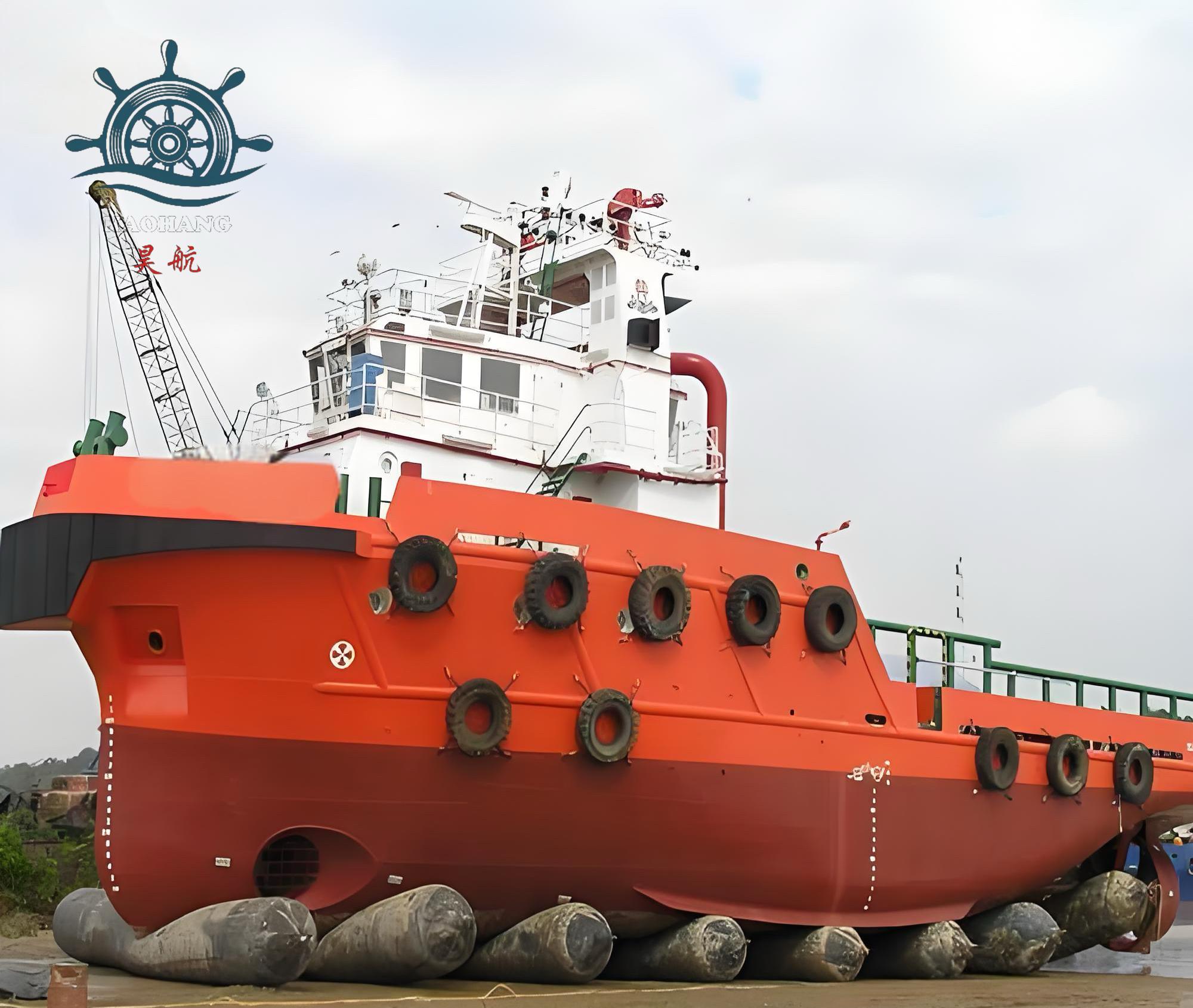
An Indonesian shipyard needed to launch a 1500-ton vessel but had limited slipway infrastructure. They selected Haohang marine rubber airbags (model 1.5 m diameter x 12 m length) in a configuration of 8 airbags working at 0.12 MPa. The airbags were placed under the hull, inflated progressively, and the vessel rolled smoothly into the water. The operation was completed in under 4 hours. The shipyard reported zero accidents and a 40% cost saving compared to using a dry dock.
Frequently Asked Questions (FAQ)
Conclusion
Choosing the right marine airbag supplier requires more than reading brochures. By focusing on CCS certification, natural rubber and multi-layer fabric construction, 100% testing, OEM/ODM flexibility, and comprehensive after-sales support, you can significantly reduce risk. Qingdao Haohang Fender Airbag Co., Ltd exemplifies these qualities, serving clients in South Asia, the Middle East, Africa, and beyond. Whether you need a standard ship launching airbag or a customized marine salvage lift airbag, a thorough supplier evaluation process ensures safety, performance, and long-term value.
Download our full company brochure for detailed specifications, certifications, and case studies.
📄 Download Brochure (PDF)
Contact: Ella – ella@qdhaohang.com | Tel: +86 15806273885 | Address: Jinyuan 2nd Road, Jinkou Industrial Park, Jimo District, Qingdao, China