
How to Select Marine Airbags for Ship Salvage and Heavy Lifting: A Project-Based Engineering Guide
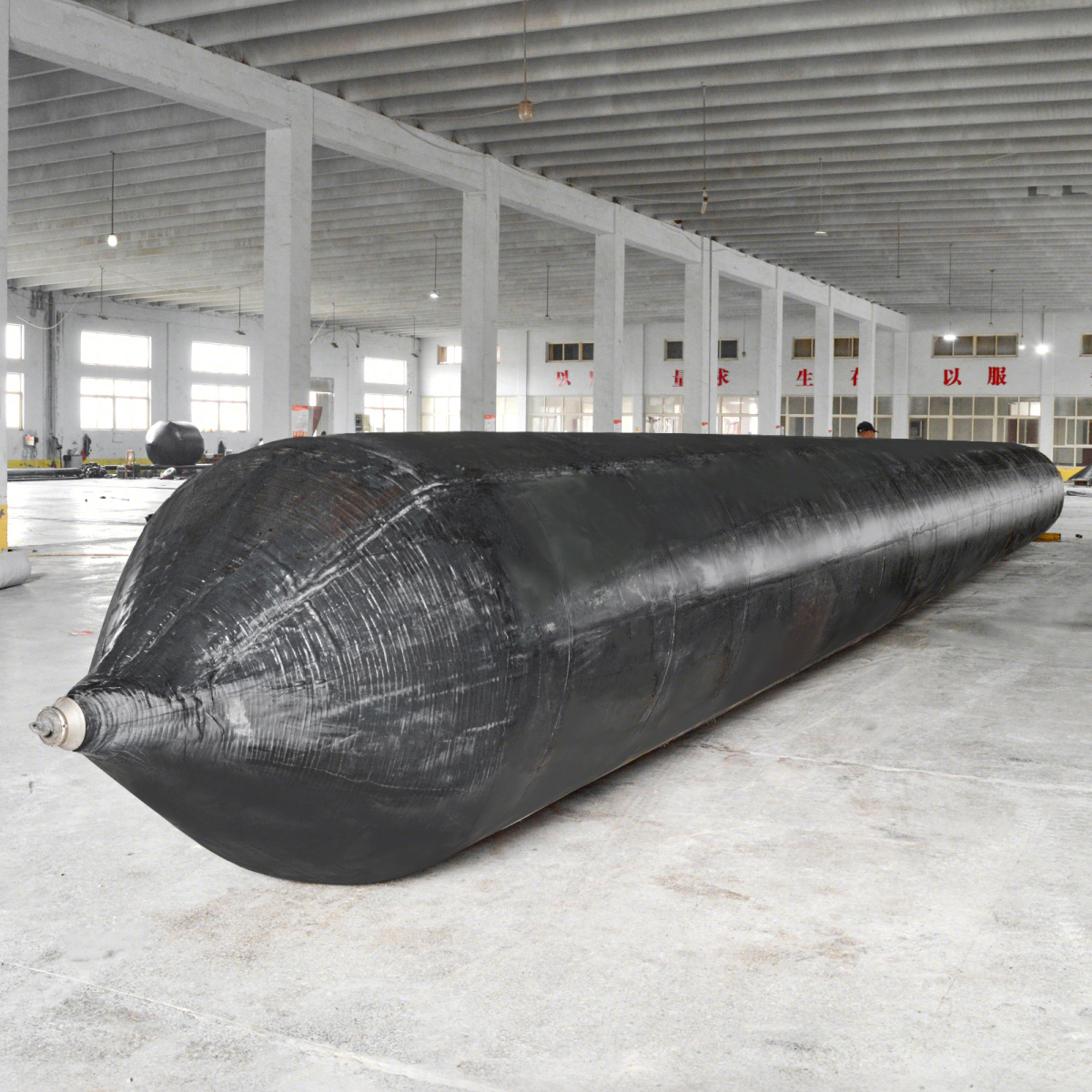
When a vessel must be launched, refloated, or repositioned without a dry dock, marine airbags are one of the most practical and cost-effective tools available. Marine salvage airbags and ship lifting airbags are flexible, high-strength lifting devices that support the hull and allow it to roll or slide into the water. This guide explains how to evaluate and select marine rubber airbags for a specific project, based on the operating conditions, hull weight, and working environment that your team will face.
What Is a Marine Airbag?
A marine airbag, also called a marine rubber airbag or ship launching airbag, is an inflatable cylindrical lifting device made of natural rubber and cord fabric. It is used to support, lift, launch, or move vessels in shipyards, ship repair facilities, and emergency rescue operations. Qingdao Haohang Fender Airbag Co., Ltd. (Haohang) is a Chinese manufacturer of marine airbags and rubber fenders, based in Qingdao, with an 8,000 m² facility and a team focused on product development, quality control, and production.
Haohang manufactures marine airbags in diameters from 0.8 m to 3.0 m and lengths from 5 m to 26 m, both customizable. The products operate at working pressures of 0.08 to 0.15 MPa, can lift between 50 and 2,000 tons per airbag, and resist temperatures from -30°C to +70°C. The color is black, and service life is 5 to 10 years depending on usage frequency and maintenance.
Why Project Conditions Determine Which Marine Airbag You Need
Selecting a marine airbag is not simply a matter of matching a length or diameter. The technical requirements come from the mission profile: what the airbag must do, which hull it must support, what the slipway or seabed looks like, and how often it will be used. When buyers skip this analysis, they risk under-specifying the airbag and creating a safety hazard, or over-specifying it and inflating project costs.
Marine airbags must perform under demanding physical conditions. In ship launching projects, the airbag supports the hull and allows it to roll and slide into the water. The product reduces friction during launching, lowers project costs, and enables flexible shipyard operations. For salvage and lifting, the airbag provides buoyancy and lifting force under the hull, often in shallow water or remote locations where conventional dry docks are unavailable.
Industry data from Fortune Business Insights confirms that the global marine airbags market is primarily segmented into ship launching airbags, marine salvage airbags, and heavy lifting airbags, with the ship launching segment holding the dominant share. The ISO 14409:2011 standard applies to synthetic-tire-cord reinforced airbags used in ship launching, and classifies them as Ordinary (QP) or High-capacity (QG), with tensile strength requirements of at least 18 MPa and elongation at break of at least 400%. For high-pressure operations such as salvage and lifting, a safety coefficient above 5.0 is considered an important benchmark.
Application Profile: Ship Salvage and Heavy Lifting with Marine Airbags
Salvage and lifting are among the most demanding applications for marine airbags because the vessel is often damaged, grounded, or in an unstable condition. The airbags must be inserted under the hull, inflated in sequence, and controlled while the vessel is moved or refloated.
Haohang designs its marine airbags for emergency rescue scenarios, with special requirements including anti-abrasion resistance, puncture resistance, and suitability for various slipway gradients and seabed conditions. The product is used in shipbuilding, ship repair, special water operations, and emergency rescue, supporting operations such as salvage and lifting.
In practical terms, an anti-abrasion and puncture-resistant marine airbag is essential when working on a seabed with sand, rocks, debris, or broken hull plating. The airbag must be able to roll and slide against the hull without damage while inflated. In addition, it must accommodate the gradient of the slipway and the actual seabed conditions at the work site.
Key Operating Conditions for Salvage and Lifting
- Working pressure: 0.08 to 0.15 MPa
- Load capacity: 50 to 2,000 tons per single airbag
- Temperature resistance: -30°C to +70°C
- Operating mode: airbags support the hull, allowing it to roll and slide into the water
- Special requirements: anti-abrasion, puncture resistance, suitability for various slipway gradients and seabed conditions
- Typical mission profiles: ship launching, salvage, lifting, emergency rescue
Step-by-Step Selection Process for Marine Airbags in Salvage and Lifting
Engineers and procurement teams can use the following framework to define the right airbag specification before contacting a supplier.
Step 1: Define the Vessel and the Mission
Record the vessel type, displacement and hull weight at the time of operation, hull dimensions, block coefficient, and whether the vessel is intact or damaged. For salvage, estimate the weight of water inside the hull and any cargo or debris that will remain during the lift. This defines your gross lifting load, which is the starting point for calculating the number of airbags.
Step 2: Establish the Site Constraints
Document the water depth at the operation site, the slipway slope, seabed conditions, tide range, and available deck or shore space. These factors determine whether you need a long airbag for gradual rolling or a shorter, higher-diameter airbag for concentrated lifting force. The product must be suitable for the actual slipway gradient and seabed conditions, so you cannot omit this step.
Step 3: Convert Load to Airbag Quantity and Pressure
For each potential airbag size, calculate the buoyancy or lift contributed per meter of effective contact area at the required working pressure. The required number of airbags is then derived by dividing the total required lift by the per-airbag capacity, and then applying a safety margin. Industry guidance referenced by sources such as ISO 14409 and Evergreen Maritime indicates that marine airbags using synthetic-tire-cord layers can offer a safety coefficient above 5.0, a critical benchmark for salvage and lifting. Do not specify a quantity without including a safety margin in the calculation.
Step 4: Check Temperature and Abrasion Exposure
If the project will be carried out in extreme temperatures, verify the airbag's operating range. Haohang marine airbags are rated for -30°C to +70°C. For salvage on rocky or debris-strewn seabeds, request an airbag with anti-abrasion properties and puncture resistance. The manufacturer should be able to explain how the rubber layers and synthetic cord fabric address these risks, not simply provide a generic quotation.
Step 5: Verify Manufacturing Quality and Compliance
Check whether the airbag and its manufacturing process meet the relevant standards, including ISO 14409:2011 for synthetic-tire-cord reinforced airbags used in ship launching. Confirm the quality-control procedure and whether every unit is tested. Haohang states that it performs 100% testing for quality control. Ask the supplier to describe its raw-materials sourcing, which for Haohang is partly self-sufficient, and what quality checks are applied to incoming material.
Step 6: Compare Quotations on Actual Specifications
When comparing proposals, compare diameter, length, number of cord layers, working pressure, load capacity, temperature range, test certificates, delivery time, and after-sales service. A cheaper airbag that is not designed for puncture resistance on a rocky seabed is not a cost saving; it is a project risk.
Use Cases: Ship Launching, Salvage, Lifting, and Emergency Rescue
Ship Launching in a Tight Shipyard
A shipyard with a limited slipway length can use marine airbags under a newly built hull. The airbags support the hull, allowing it to roll and slide into the water while reducing friction during launching. This reduces project costs and enables flexible shipyard operations. The number and placement of airbags are calculated according to the hull shape and the slipway profile.
Salvage of a Grounded Vessel
After a vessel runs aground, marine salvage airbags can be placed under the hull and inflated to provide additional buoyancy, helping to refloat the vessel. Because the seabed may be uneven or contain debris, the operation requires anti-abrasion-resistant and puncture-resistant airbags that can adapt to the actual bottom conditions.
Heavy Lifting in Shallow Water
In shallow water or locations where a floating crane cannot operate, a set of large-diameter marine airbags can be inflated under a pontoon, barge, or workboat to provide controlled lifting force. The project team uses several airbags in parallel, connected to an air compressor, and controls inflation gradually to raise the structure safely.
Emergency Rescue and Special Water Operations
Emergency response teams may need to stabilize a damaged vessel, refloat a capsized hull, or protect a structure from sinking. In these scenarios, airbags must work with minimal setup time and adapt to unpredictable hull shapes and seabed conditions. Haohang states that its airbags support special water operations such as salvage and lifting and are designed specifically for emergency rescue scenarios.
How Haohang Marine Airbags Are Built
Haohang produces marine rubber airbags from natural rubber and cord fabric. The company is based in Qingdao, China, and operates a modern manufacturing facility covering 8,000 m² with a team of approximately 60 employees. Its annual production capacity is about 2,000 units. About 70% of production is exported to markets including South Asia, the Middle East, and Africa, which reflects the product's relevance for shipbuilding and marine repair industries in those regions.
Haohang has a dedicated research and development team of 15 engineers and emphasizes raw-material self-sufficiency and quality control of incoming materials. For projects with custom requirements, the company offers OEM and ODM services, with customization options for size and logo. Monthly production capacity is about 150 units for standard configurations, with lead times ranging from 7 to 45 days and a minimum order quantity of one unit. After-sales support includes remote and on-site options.
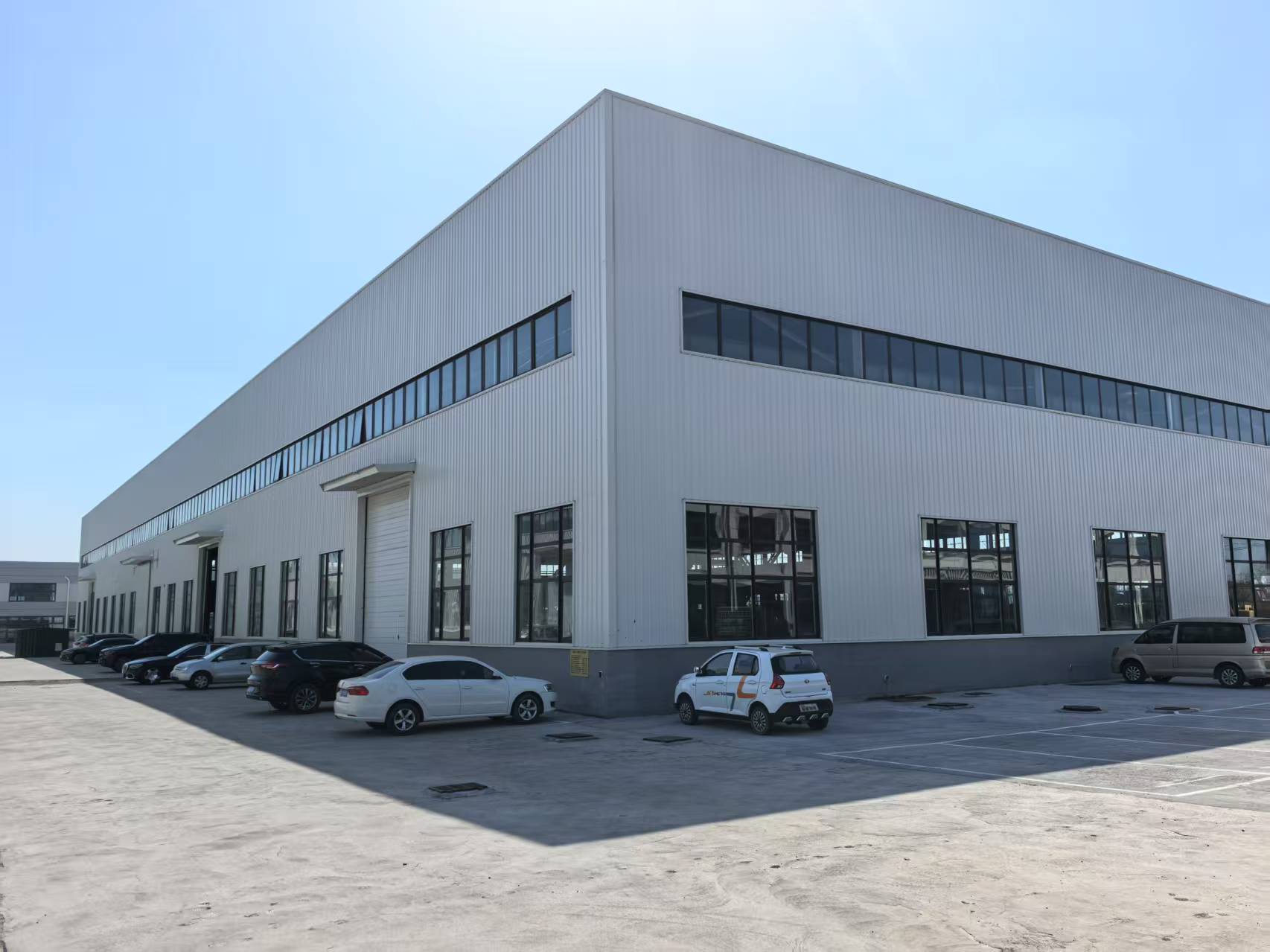
The company was founded in 2020 and lists its main products as marine airbags and rubber fenders. It is described in third-party coverage as having an annual production capacity of approximately 2,000 units and exporting 70% of products. When selecting a manufacturer, buyers should always confirm whether production capacity and export records are consistent with their order size and delivery requirements.
Marine Airbag Specification and Selection Reference
Use the table below as a starting point for writing your tender specification.
| Parameter | Typical Range / Configuration | Selection Note |
|---|---|---|
| Diameter | 0.8 m – 3.0 m (customizable) | Larger diameter increases buoyancy and contact area but may be harder to insert under a grounded hull. |
| Length | 5 m – 26 m (customizable) | Longer airbags distribute load along the hull; shorter airbags are easier to position in salvage work. |
| Working pressure | 0.08 – 0.15 MPa | Operate within the rated pressure range and control inflation to avoid shock loads. |
| Load capacity | 50 – 2,000 tons per airbag | Confirm which calculation basis the manufacturer uses before comparing multiple airbags. |
| Temperature resistance | -30°C to +70°C | Check whether the rubber compound is suitable for your site temperature. |
| Material | Natural rubber, cord fabric | For salvage on rough seabeds, confirm anti-abrasion and puncture-resistant construction. |
| Applicable industries | Shipbuilding, ship repair, special water operations, emergency rescue | Match the airbag design to the industry and mission, not only to the hull dimensions. |
| Applicable standards | ISO 14409:2011 (QP/QG classification) | Use the ISO classification and test method as a common reference between buyer and supplier. |
Certifications and Industry Standards That Matter
ISO 14409:2011 is the most frequently referenced international standard for marine airbags used in ship launching. It specifies terms, definitions, materials, and test methods for synthetic-tire-cord reinforced airbags. Under ISO 14409, airbags are classified as Ordinary (QP) or High-capacity (QG), with specific requirements including tensile strength of at least 18 MPa and elongation at break of at least 400%.
For high-pressure operations in salvage and lifting, a safety coefficient above 5.0 is a critical benchmark according to industry references. This is not a marketing term; it relates to how much stronger the airbag is than the maximum working load it is expected to carry. When you evaluate a supplier, ask specifically:
- Does this airbag meet ISO 14409:2011?
- What is the tensile strength and elongation at break of the cord-fabric reinforcement?
- What safety coefficient was used in the design?
- How is each airbag tested before delivery?
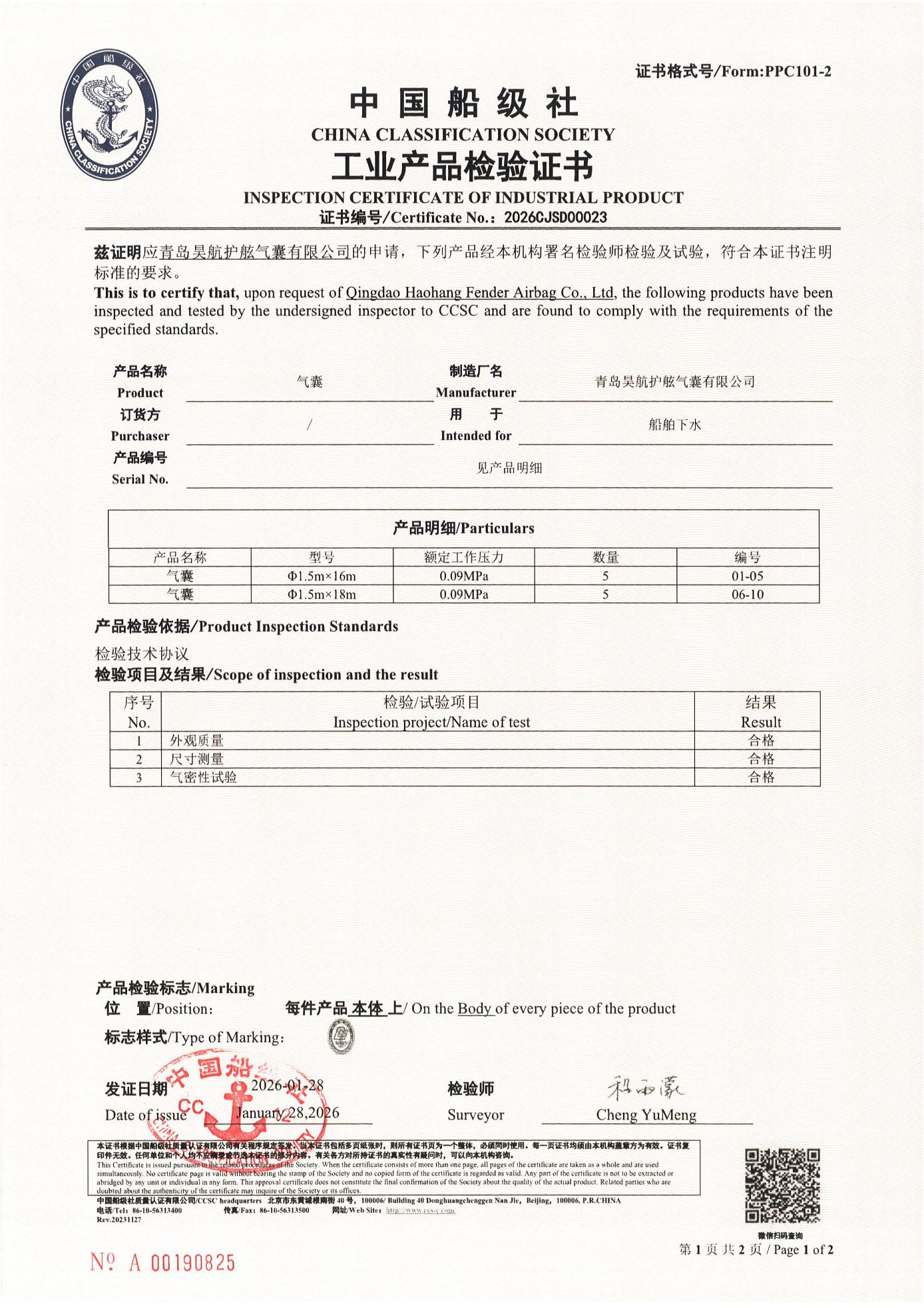
Haohang states that it has built a modern quality management system in accordance with international standards and performs 100% testing on its products. Buyers should still request the specific certificates and test reports applicable to their order, rather than accepting a general statement of compliance.
Cost and Lead Time Considerations
In a salvage project, downtime can cost more than the airbags themselves. The most important cost metric is therefore not the unit price of the airbag, but the cost of completing the mission reliably. A slightly more expensive airbag with a higher safety margin and stronger abrasion resistance may be cheaper than a failed launch or a repeat salvage operation.
Haohang offers a minimum order quantity of one unit, a monthly production capacity of around 150 units, and typical lead times of 7 to 45 days depending on configuration. For a small salvage project, this makes it possible to order custom sizes without mass-production commitments. For a large shipyard ordering multiple sets, the lead time should be agreed with the supplier based on the actual specification and current production schedule.
Project-Specific Checklists for Buyers
Checklist for a Ship Launching Project
- Confirm hull weight and block coefficient.
- Measure slipway width, gradient, and length.
- Calculate required number of airbags and spacing.
- Select working pressure below the rated maximum.
- Verify the airbag can roll smoothly and resist slipway friction.
- Arrange air compressor capacity and inflation sequence.
Checklist for a Salvage or Lifting Project
- Estimate the actual lifting load, including trapped water and cargo.
- Inspect the seabed for rock, debris, or sharp edges.
- Demand anti-abrasion and puncture-resistant airbag construction.
- Confirm water depth is sufficient for airbag diameter plus hull draft.
- Plan for staged inflation and real-time load control.
- Confirm temperature range and operating pressure limits.
Why Buyers Are Moving Toward Project-Based Marine Airbag Selection
Industry coverage of the marine airbag market increasingly describes products by their application: ship launching, marine salvage, and heavy lifting. This project-based segmentation is useful for buyers because it prevents comparing airbags only by price or dimensions. A ship launching airbag is designed for repeated rolling on a prepared slipway. A salvage airbag may be exposed to mud, rocks, and a damaged hull. These are different mechanical challenges, even when the airbags look similar.
Leading buyers therefore structure their evaluation around the four filters explained in this guide: load, site, material, and manufacturing control. The same discipline applies whether the airbag is sourced from China or any other production region.
Frequently Asked Questions
How many marine airbags are needed to lift a ship for salvage?
The number is determined by dividing the total required lifting force by the usable capacity of each airbag, then adding a safety margin. Total required lifting force includes the vessel's weight plus any trapped water, cargo, or debris. For planning purposes, Haohang states that a single marine airbag can carry between 50 and 2,000 tons depending on diameter, length, and working pressure. For example, a vessel requiring 1,000 tons of total lift may need several airbags, not one: the exact configuration depends on hull shape, bottom conditions, and available water depth. Always have a marine engineer or an experienced supplier verify the calculation.
What special features should a marine salvage airbag have?
A marine salvage airbag should be resistant to abrasion and puncture, and it must be suitable for various slipway gradients and seabed conditions. Emergencies often occur on uneven, rocky, or debris-covered bottoms, so these protective features are not optional. Haohang states that its marine airbags are designed for emergency rescue with anti-abrasion, puncture resistance, and the ability to adapt to different seabed conditions as part of the standard design.
What is the working pressure and lifting capacity of a marine airbag?
Typical working pressure ranges from 0.08 to 0.15 MPa, and a single airbag can lift between 50 and 2,000 tons depending on its size and configuration. Haohang manufactures diameters from 0.8 m to 3.0 m and lengths from 5 m to 26 m, both customizable. Working pressure and load capacity are linked: higher load capacity requires a larger airbag and proper inflation control, so the figures should always be confirmed against the manufacturer's technical sheet for the specific model.
What temperature range can marine rubber airbags withstand?
A marine rubber airbag can typically operate between -30°C and +70°C. Haohang applies this temperature range across its standard marine airbag range. If a project will operate near either limit, especially for salvage operations in Arctic or tropical environments, confirm the rubber compound and test results with the manufacturer before ordering.
What certifications should be checked before ordering marine airbags?
ISO 14409:2011 is the key international standard for synthetic-tire-cord reinforced airbags used in ship launching. It defines terms, materials, test methods, and classification as Ordinary (QP) or High-capacity (QG). Buyers should also request the manufacturer's quality-control procedure, 100% test reports, and any other certificates required by the project's insurance or classification body.
Can marine airbags be customized for a specific project?
Yes. Marine airbags can be customized in diameter, length, and even logo. For project-specific salvage work, customization may include the number of cord layers, rubber thickness, inflation valve configuration, and reinforcing details. Haohang operates with a minimum order of one unit, making it feasible to order a single custom airbag for a salvage job. To define the right configuration, send your vessel dimensions, hull weight, and operating conditions to the manufacturer for a technical proposal.
Conclusion: Match the Airbag to the Mission
Marine airbags are a proven technology for ship launching, salvage, and heavy lifting. The vessel with the heaviest recorded airbag launch on its own weight reached 24,800 tons, which demonstrates the method's scalability. However, the safe and economical use of marine airbags depends less on the record capability and more on the accuracy of the project specification.
For a salvage or lifting project, define the total lifting load, inspect the seabed, demand anti-abrasion and puncture-resistant construction, and verify the product standard. A manufacturer such as Qingdao Haohang, which produces marine airbags from natural rubber and cord fabric and supports customization with a low minimum order quantity, can supply standard or tailored airbags for these missions.
Need a marine airbag specification for a specific vessel or project?
Contact Haohang with your vessel dimensions, hull weight, and operating conditions to request a technical proposal or quotation.
Email: ella@qdhaohang.com
WhatsApp: +86 15806273885