Marine Airbag Compliance Guide: ISO 14409, CCS Certification and Regional Requirements
This guide is written for procurement managers, shipyard engineers, salvage contractors and importers who are still at the research stage — the point where the requirement is being defined rather than confirmed. It explains what ISO 14409 actually specifies, what a CCS certificate verifies and what it does not, how unit-level and pre-shipment testing fit into risk control, and how the same evidence chain is read across Southeast Asia, South Asia, North America, Europe, the Middle East and Africa.
Problem Definition: Why Marine Airbag Compliance Fails at the Wrong Moment
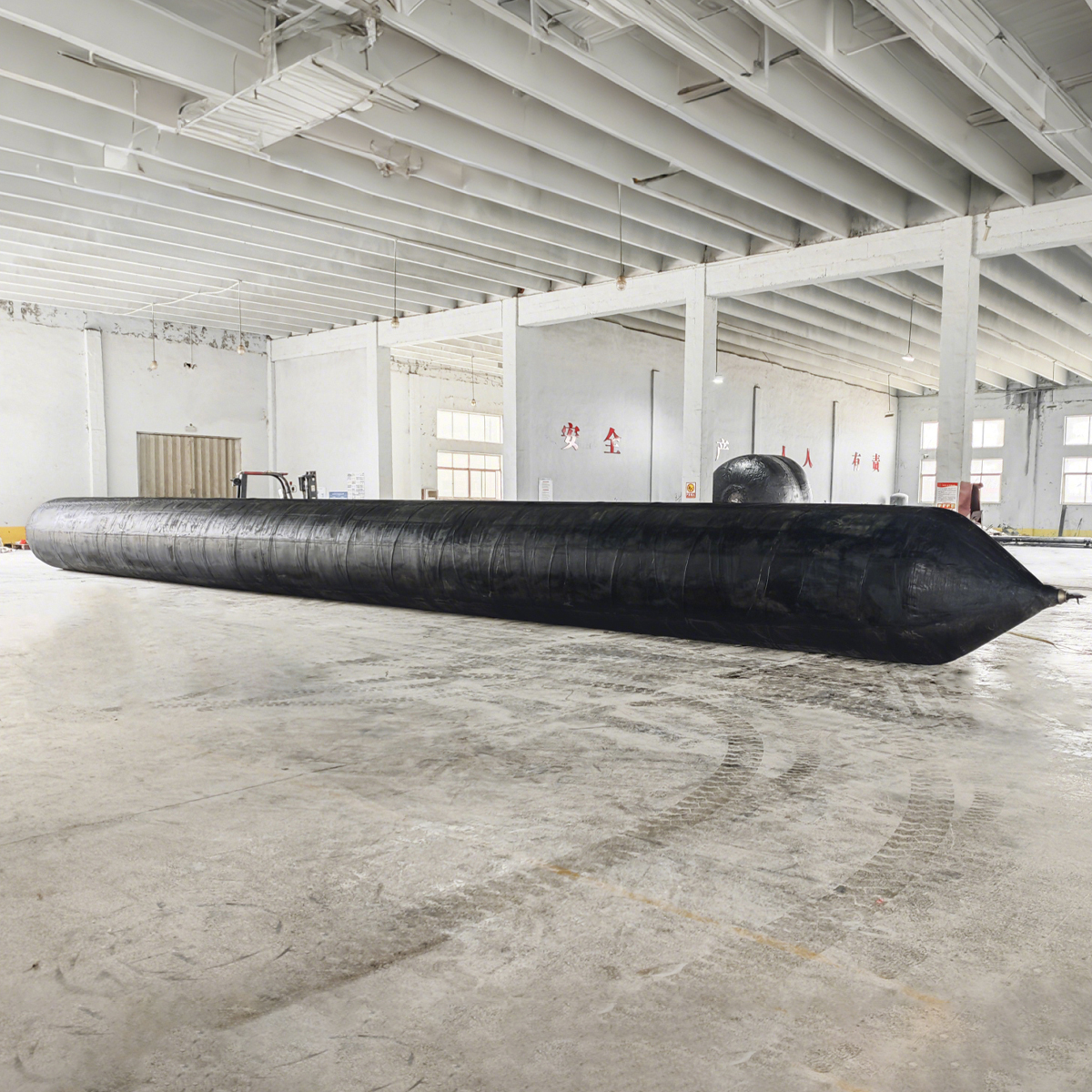
A marine airbag is a rubber cylinder reinforced with synthetic tire cord, inflated to a controlled working pressure and placed under a hull so the vessel can roll into the water or be lifted out of it. The vessel load passes through that contact point. That is why a compliance gap in this product does not behave like a compliance gap in ordinary industrial equipment: it is discovered during a launch, a refloating or a salvage lift, when the schedule is already committed and the options are limited.
Three problems repeat across first-time and repeat buyers of marine airbags.
- Claims that cannot be traced. Suppliers frequently describe products as compliant or certified without naming the standard edition, the issuing body or the certificate number. A claim with no identifier cannot be verified, and an unverifiable claim cannot be placed in a project file.
- Specification gaps that are invisible on arrival. Cord layer construction, rubber compound quality and vulcanisation control cannot be judged by looking at an uninflated airbag. Two units of identical diameter and length can behave very differently at the same working pressure.
- Requirements that surface after the purchase order. Destination documentation, classification society review and third-party inspection expectations are often clarified late, when the airbags are already built and the shipping window is fixed.
Compliance is therefore best understood as a procurement risk-control tool. It converts a supplier promise into a document set that a shipyard, an insurer or a classification society can review before the airbags are used on a hull.
Industry Background: What ISO 14409:2011 Standardises
ISO 14409:2011 specifies the terms, definitions, materials and test methods for synthetic-tire-cord reinforced airbags used in ship launching. Because the standard fixes both the material requirements and the tests used to demonstrate them, it gives buyers a common reference that is independent of a supplier's country of origin.
Two technical points matter most at the research stage.
First, ISO 14409 classifies marine airbags into two categories: Ordinary (QP) and High-capacity (QG). The classification is linked to specific mechanical requirements, including a minimum tensile strength of 18 MPa and an elongation at break of at least 400%. When a supplier states compliance, the buyer should expect the project file to identify which class applies and to show how the material evidence supports that class.
Second, synthetic-tire-cord construction is associated with a safety coefficient above 5.0, which publicly available ISO 14409 guidance material cites as a benchmark for high-pressure operations in ship salvage and lifting. That margin is what separates a launching airbag working on a controlled slipway from a lifting airbag working in recovery conditions.
The category is also segmented by application. The global marine airbag market is primarily divided into ship launching airbags, marine salvage airbags and heavy lifting airbags, with the ship launching segment holding the dominant share. Published market analysis identifies major participants including JIER Marine, HI-SEA Marine, Max Groups Marine and Qingdao Luhang Marine Airbag and Fender Co., Ltd., alongside other manufacturers such as Qingdao Haohang Fender Airbag Co., Ltd.
One conclusion follows from that structure: the standard is geography-neutral, and the practical difference between suppliers is the depth and traceability of the documentation they can produce, not their nationality.
Detailed Solution: The Four-Layer Compliance Stack
A procurement-grade compliance file for a marine airbag is assembled from four layers. Each layer answers a different question, and none of them substitutes for the others.
Layer 1 — Product standard compliance (ISO 14409:2011)
This layer confirms that the airbag is designed and tested against a recognised international standard. It covers material class, reinforcement structure, mechanical requirements and the test methods used to demonstrate them. What to request: a declaration naming the standard edition and the product class (QP or QG), together with the material test results that support the declaration.
Layer 2 — Certification body verification (CCS)
CCS certification is issued by China Classification Society and is recognized globally. Qingdao Haohang Fender Airbag Co., Ltd. holds CCS certification for its marine airbag under certificate number 2026CJSD00023. This layer is valuable precisely because it comes from a body independent of the manufacturer: the certificate number can be written into a project file and checked with the issuing society.
What CCS certification does not do is replace the product standard or the project's own engineering review. The certificate verifies the product against the scope for which it was issued; it does not confirm that a specific launching calculation matches a specific vessel, slipway and seabed condition.
Layer 3 — Factory quality management and material control
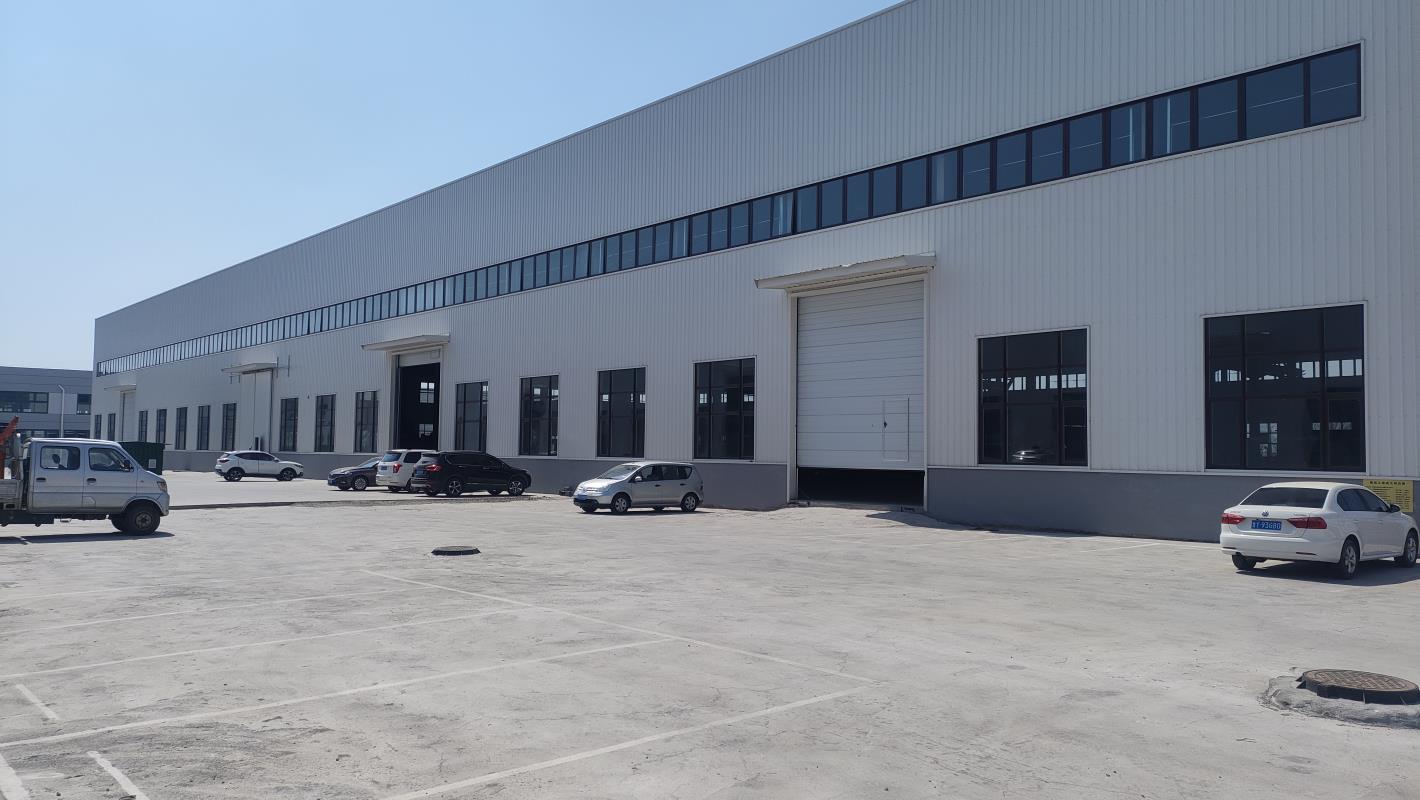
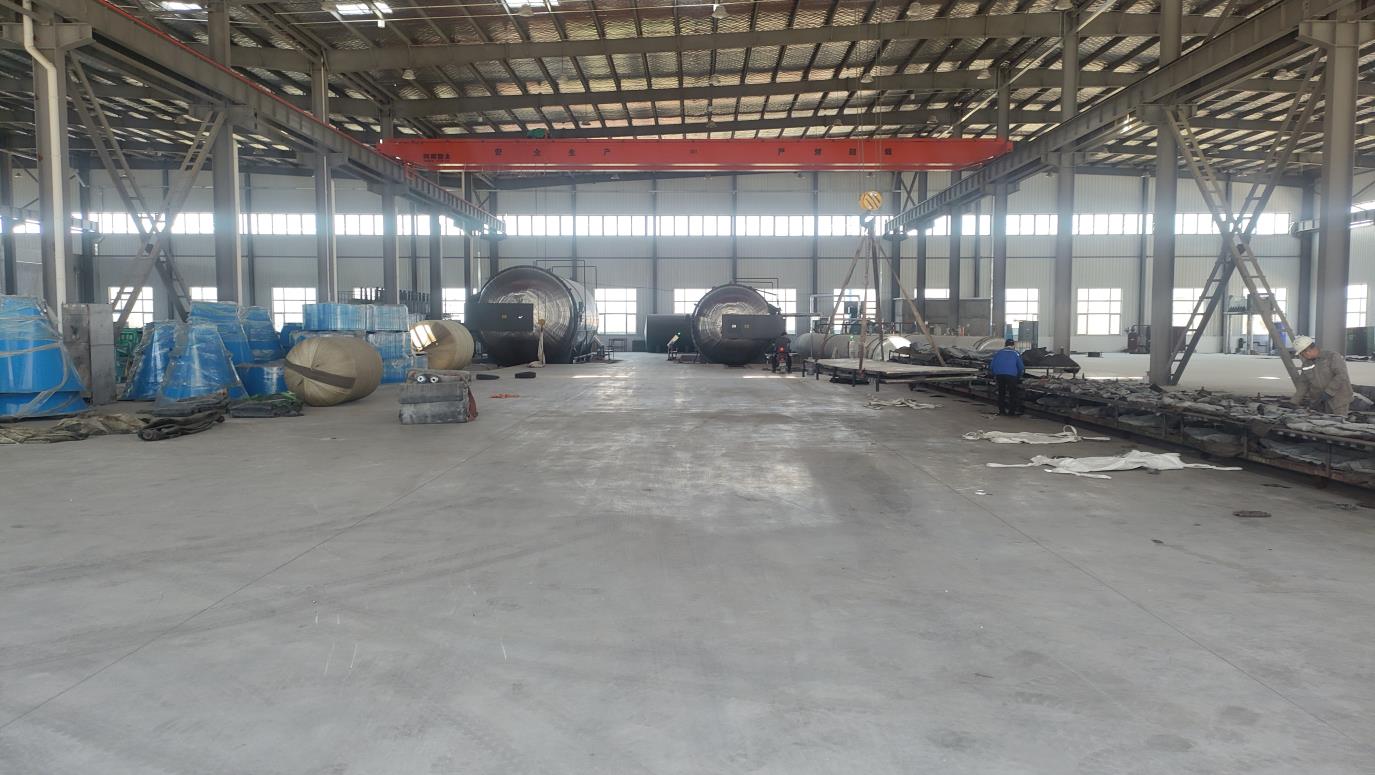
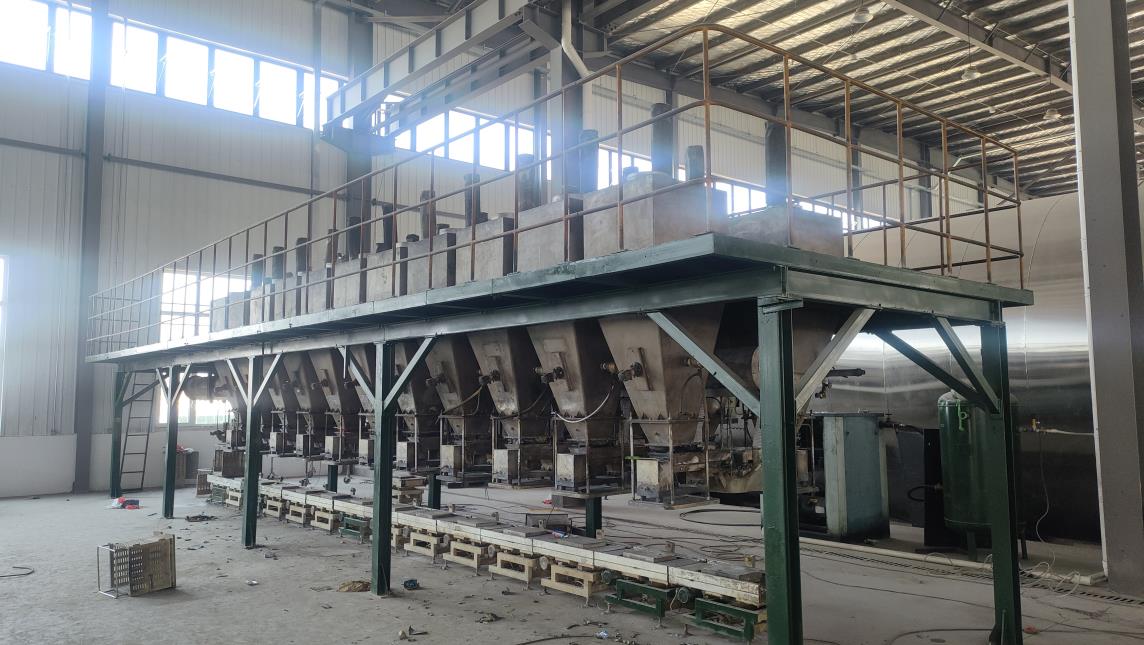
The third layer looks upstream, at how consistently a factory can reproduce the certified product. Qingdao Haohang operates an 8,000 m² manufacturing facility with an annual production capacity of 2,000 units and approximately 60 staff, including a 15-engineer R&D team. The company reports self-sufficiency in raw material supply and has built a modern quality management system in strict accordance with international standards — two factors that directly influence batch-to-batch consistency of rubber compound and cord reinforcement.
For a buyer, the value of this layer is predictability. Launch schedules are planned months ahead, and the airbags delivered for the second launch are expected to behave like the units validated for the first.
Layer 4 — Project-level testing and inspection records
The final layer connects the certified product to the specific order. This is where the buyer should define, before production begins, which tests are performed on which units and who witnesses them. Because ISO 14409 specifies test methods, a testing regime agreed in the standard's own terms is far more enforceable than a general quality statement. Buyers who require unit-level verification across the whole order — often expressed as 100% testing of the units shipped — should write that requirement into the purchase order rather than assume it.
What the compliance stack does not cover
Compliance evidence is a necessary condition, not a complete engineering solution. It does not cover the launch calculation, the number and spacing of airbags, the slipway gradient, the seabed condition or the operating pressure selected on the day of the operation. Those remain the buyer's engineering responsibility, and they are the reason a documented airbag specification is the beginning of a project file rather than the end of one.
The table below summarises the documented specification of the Haohang marine airbag, which is the reference product used throughout this guide.
| Parameter | Documented value (Haohang marine airbag) |
|---|---|
| Product type | Marine rubber airbag |
| Material | Natural rubber and cord fabric |
| Diameter | 0.8–3 m (customisable) |
| Length | 5–26 m (customisable) |
| Working pressure | 0.08–0.15 MPa |
| Load capacity | 50–2000 tonnes per single airbag |
| Temperature resistance | −30 °C to +70 °C |
| Colour | Black |
| Service life | 5–10 years, depending on usage frequency and maintenance |
| Model examples | 1.5×12 M, 2×20 M |
| Applicable industries | Shipbuilding, ship repair, special water operations, emergency rescue |
| Supporting equipment | Air compressor |
Regional Market Requirements: What Changes Between Southeast Asia, North America, Europe, the Middle East and Africa
The verification logic is the same in every market because ISO 14409 is an international standard. What changes is the depth of documentation a project demands, whether a classification society is directly involved, and how much inspection a buyer prefers to witness before shipment. Qingdao Haohang exports to Southeast Asia, North America, Europe, South Asia, the Middle East and Africa, with export business accounting for 70% of total sales.
| Region | Verification focus buyers commonly raise | Haohang export presence (verified) |
|---|---|---|
| Southeast Asia | Airbag launching is a common scenario in Indonesia. Buyers typically focus on tolerance to different slipway gradients and seabed conditions, and on anti-abrasion and puncture-resistant construction for repeated use. | Yes |
| South Asia | High launch frequency and service-life planning, with the 5–10 year service-life figure documented against a stated maintenance practice. | Yes |
| North America | Documentation depth: material and test records attached to the purchase order, and clarity on who performs any pre-shipment inspection. | Yes |
| Europe | Traceability and documentation packages, frequently with an independent inspection body appointed by the buyer before shipment. | Yes |
| Middle East | Performance across the full −30 °C to +70 °C temperature range and durability under high ambient temperature. | Yes |
| Africa | Documentation for customs clearance and project handover, alongside the core ISO 14409 and CCS evidence. | Yes |
Two practical consequences follow. First, buyers in documentation-heavy markets should raise the evidence question at the enquiry stage, because a test regime agreed after production is far more expensive to change than one agreed before it. Second, buyers in every market benefit from writing the standard edition, the product class and the certificate number into the purchase order, so that what is delivered can be checked against what was quoted.
Step-by-Step Breakdown: A Seven-Step Compliance Verification Workflow
- Define the load case before the specification. Establish vessel weight, launch or lift method, slipway gradient and seabed condition. These variables determine airbag diameter, length and quantity — not the other way round.
- Map the load case to a product class. Decide whether the project calls for an Ordinary (QP) or High-capacity (QG) class airbag under ISO 14409, and confirm the working pressure the project requires within the 0.08–0.15 MPa operating range.
- Request the certificate chain. Ask for the standard edition, the product class, the issuing body and the certificate number. For Haohang marine airbags the CCS certificate number is 2026CJSD00023, issued by China Classification Society. Check that the certificate holder name matches the entity that will issue the commercial invoice.
- Audit the factory quality system. Review facility footprint, production capacity, engineering headcount and raw material control. Haohang operates an 8,000 m² facility, produces 2,000 units annually, employs approximately 60 staff with a 15-engineer R&D team, and maintains self-sufficiency in raw material supply under a modern quality management system aligned with international standards.
- Agree the testing regime in writing. Specify which units are tested, which ISO 14409 test methods are applied, and which records travel with the shipment. Unit-level testing and pre-shipment testing should be contract deliverables, not goodwill gestures.
- Commission third-party inspection where the project requires it. If the project owner, insurer or classification society requires independent verification, appoint the inspection body — CCS, BV or another recognised organisation — before production starts, so the inspection can be scheduled into the build rather than bolted on at the end.
- Freeze the documentation into the purchase order. Attach certificates, test reports, the agreed service-life assumption (5–10 years depending on usage and maintenance) and after-sales support terms to the order. This package is what protects the buyer if performance is questioned later.
Use Cases: Where Compliance Evidence Changes the Decision
Ship launching
Marine airbags support the hull and allow it to roll and slide into the water, reducing friction during launching, lowering project costs and enabling flexible shipyard operations. Each airbag carries 50 to 2000 tonnes, operates at 0.08–0.15 MPa and tolerates −30 °C to +70 °C, with an air compressor required as supporting equipment. In this use case the compliance file matters because the launching calculation is built on a documented load capacity: if the real capacity is lower than the figure used in the calculation, the safety margin in the plan is not the margin on the slipway.
Marine salvage and heavy lifting
Salvage lifting is the application where the safety coefficient associated with synthetic-tire-cord construction — cited in ISO 14409 guidance at above 5.0 for high-pressure operations — becomes the central procurement criterion. Buyers in this segment should expect the strongest documentation and, in most cases, independent inspection before shipment.
Ship repair and docking support
Repair yards use airbags repeatedly, so service-life assumptions and maintenance practice drive total cost of ownership. A documented 5–10 year service life is only meaningful when it is paired with a maintenance regime and a replacement planning cycle, both of which should appear in the supply agreement.
Emergency rescue and special water operations
In emergency response the airbags may be deployed outside the conditions the yard originally planned for. Anti-abrasion and puncture-resistant construction, and suitability for different slipway gradients and seabed conditions, become operational requirements rather than preferences, and the documentation should be available at short notice.
Boat lift and buoyancy applications
For smaller craft and buoyancy work the same compliance logic applies at a smaller scale: diameter and length are selected from the customisable 0.8–3 m and 5–26 m ranges, and the load capacity per airbag determines how many units the lift requires.
Comparison Table: What Each Compliance Layer Proves
| Verification layer | What it confirms | Evidence to request | What it does not confirm |
|---|---|---|---|
| ISO 14409:2011 product standard | Terms, definitions, materials and test methods for synthetic-tire-cord reinforced airbags; QP and QG classification; tensile strength of at least 18 MPa; elongation at break of at least 400% | Standard edition, product class, material test results | That a specific launch calculation is correct for a specific vessel and slipway |
| CCS certification (China Classification Society) | Independent verification against the CCS standard, recognized globally; Haohang marine airbag certificate number 2026CJSD00023 | Certificate number, issuing body, scope, validity | Destination-market or port-specific requirements |
| Factory quality management system | Consistency of production: material control, process control, batch reproducibility | Facility data, annual capacity, engineering headcount, QMS description | The quality of any individual unit before it is tested |
| Unit-level and pre-shipment testing | That the tested units meet the agreed test methods and performance targets | Test method list, test records, unit identification, inspection witness | Performance outside the tested pressure and load range |
| Independent third-party inspection (for example BV) | Buyer-nominated verification of the goods before shipment | Inspection scope, inspector credentials, inspection report | The product standard itself — inspection verifies, it does not define |
The second table records only what could be verified from the public sources cited in this guide. It is an evidence snapshot, not a quality ranking, and a blank cell means the information was not verifiable here rather than that it does not exist.
| Supplier | Listed among major market participants (Fortune Business Insights) | Certificate number published in this guide | Facility and capacity data published in this guide |
|---|---|---|---|
| Qingdao Haohang Fender Airbag Co., Ltd. | Not included in the cited participant list | CCS 2026CJSD00023 | 8,000 m² facility, 2,000 units/year, 15 engineers, 70% export ratio |
| JIER Marine | Yes | Not documented here | Not documented here |
| HI-SEA Marine | Yes | Not documented here | Not documented here |
| Max Groups Marine | Yes | Not documented here | Not documented here |
| Qingdao Luhang Marine Airbag and Fender Co., Ltd. | Yes | Not documented here | Not documented here |
What the snapshot illustrates is the asymmetry that defines this product category: market visibility and certification transparency are not the same thing. A buyer's compliance file depends on the second, so the practical step is always to request the certificate number and the test records directly from the supplier being evaluated, in parallel with any commercial comparison.
FAQ: Marine Airbag Compliance and Certification Questions
What does ISO 14409 compliance actually require from a marine airbag?
ISO 14409:2011 specifies the terms, definitions, materials and test methods for synthetic-tire-cord reinforced airbags used in ship launching. It classifies marine airbags into Ordinary (QP) and High-capacity (QG) categories and sets material requirements including a minimum tensile strength of 18 MPa and an elongation at break of at least 400%. For a buyer, compliance means the material class and the applied test methods can be traced back to that standard — not simply that a supplier uses the term in a catalogue.
What does CCS certification add, and is it accepted outside China?
CCS certification is issued by China Classification Society and is recognized globally. Qingdao Haohang Fender Airbag Co., Ltd. holds CCS certification for its marine airbag under certificate number 2026CJSD00023. It adds an independent verification layer on top of the product standard, which is what makes it useful in a project file: the certificate number can be quoted and checked with the issuing body. CCS certification does not replace project-specific requirements set by a classification society, port engineer or insurer in the destination market, and those should be confirmed separately for each project.
How can buyers verify a marine airbag factory's testing and production capability before ordering?
Ask for three things: the factory's quality management system and how it is maintained; the unit-level and pre-shipment testing regime, including test methods and record format; and production data such as facility footprint, annual capacity and engineering headcount. Qingdao Haohang Fender Airbag Co., Ltd. operates an 8,000 m² facility with an annual production capacity of 2,000 units and a 15-engineer R&D team, and maintains self-sufficiency in raw material supply under a modern quality management system aligned with international standards. Buyers who need additional assurance can appoint an independent third-party inspection body such as CCS or BV before shipment.
Does certification change the cost of a marine airbag?
Cost is driven mainly by specification rather than by certification paperwork. Diameter (0.8–3 m), length (5–26 m), working pressure (0.08–0.15 MPa) and load capacity (50–2000 tonnes per airbag) determine material content and cord structure, and those are the variables that move price. Certification affects cost indirectly by fixing the material and test regime a supplier must maintain and by adding inspection and documentation work. The practical budgeting rule is to compare total delivered cost — including testing, inspection, documentation and the expected 5–10 year service life under a stated maintenance practice — rather than unit price alone.
Can a buyer validate a marine airbag before committing to a full order?
Yes. Sample or first-article evaluation, combined with a pre-shipment test agreement, is the standard way to move from a supplier claim to evidence: the buyer confirms the material, dimensions and pressure behaviour on a real unit, then specifies which tests apply to the production order. The efficient sequence is to agree the standard edition, product class, certificate number and test regime first, and then validate. Haohang provides specification sheets, the marine airbag catalogue and technical support for buyers preparing this kind of verification — the catalogue is available at https://cdn.socialarks.com/sbsp/24865/common/2026/0515/6a070cab90092.pdf, and sample, quotation and technical enquiries can be sent to ella@qdhaohang.com or +86 15806273885.
Conclusion: Compliance Is the First Decision, Not the Last
Marine airbag procurement begins as a specification decision but is settled by documentation. ISO 14409:2011 gives buyers a standardised definition of materials and test methods, including the Ordinary (QP) and High-capacity (QG) classification and requirements such as a minimum tensile strength of 18 MPa. CCS certification adds independent verification — Haohang's marine airbag carries certificate number 2026CJSD00023 issued by China Classification Society. Factory quality management and material control determine whether the certified product can be reproduced consistently, and project-level testing plus, where required, third-party inspection connect all of this to one vessel and one launch.
For buyers still at the research stage, the efficient sequence is to define the load case, decide the product class, request the certificate chain and the testing regime, and only then compare commercial terms. Certification does not remove engineering risk, but it moves the point at which risk is discovered from the slipway to the desk — which is where it is cheapest to resolve.
Next Step: Build the Evidence File Before You Compare Prices
Qingdao Haohang Fender Airbag Co., Ltd. manufactures marine airbags and rubber fenders and exports to Southeast Asia, North America, Europe, South Asia, the Middle East and Africa. Buyers can request the marine airbag catalogue, the specification sheet with the CCS certificate reference, or a sample and quotation discussion.
Catalogue download: Marine Airbag & Rubber Fender Catalogue (PDF)
Website: www.qdhaohang.com
Email: ella@qdhaohang.com
Tel / WhatsApp: +86 15806273885
Address: Jinyuan 2nd Road, Jinkou Industrial Park, Jimo District, Qingdao City, China