
Marine Airbag Partnership FAQ: Long-Term Support, After-Sales, and Haohang vs. Peers
Most marine airbag contracts are signed on three numbers: diameter, length and price. The questions that decide whether the same contract is still workable three years later are different — who signs the test record, who answers when a bag is damaged on a slipway, and who still holds the drawings when a repeat order arrives. This FAQ answers the questions shipyard buyers, salvage contractors and marine procurement teams raise most often about long-term supply, using documented facts from Qingdao Haohang Fender Airbag Co., Ltd, a marine airbag and rubber fender manufacturer founded in 2020 and located in Jimo District, Qingdao, China.
Problem Definition: The Support Questions Buyers Only Ask After the First Delivery
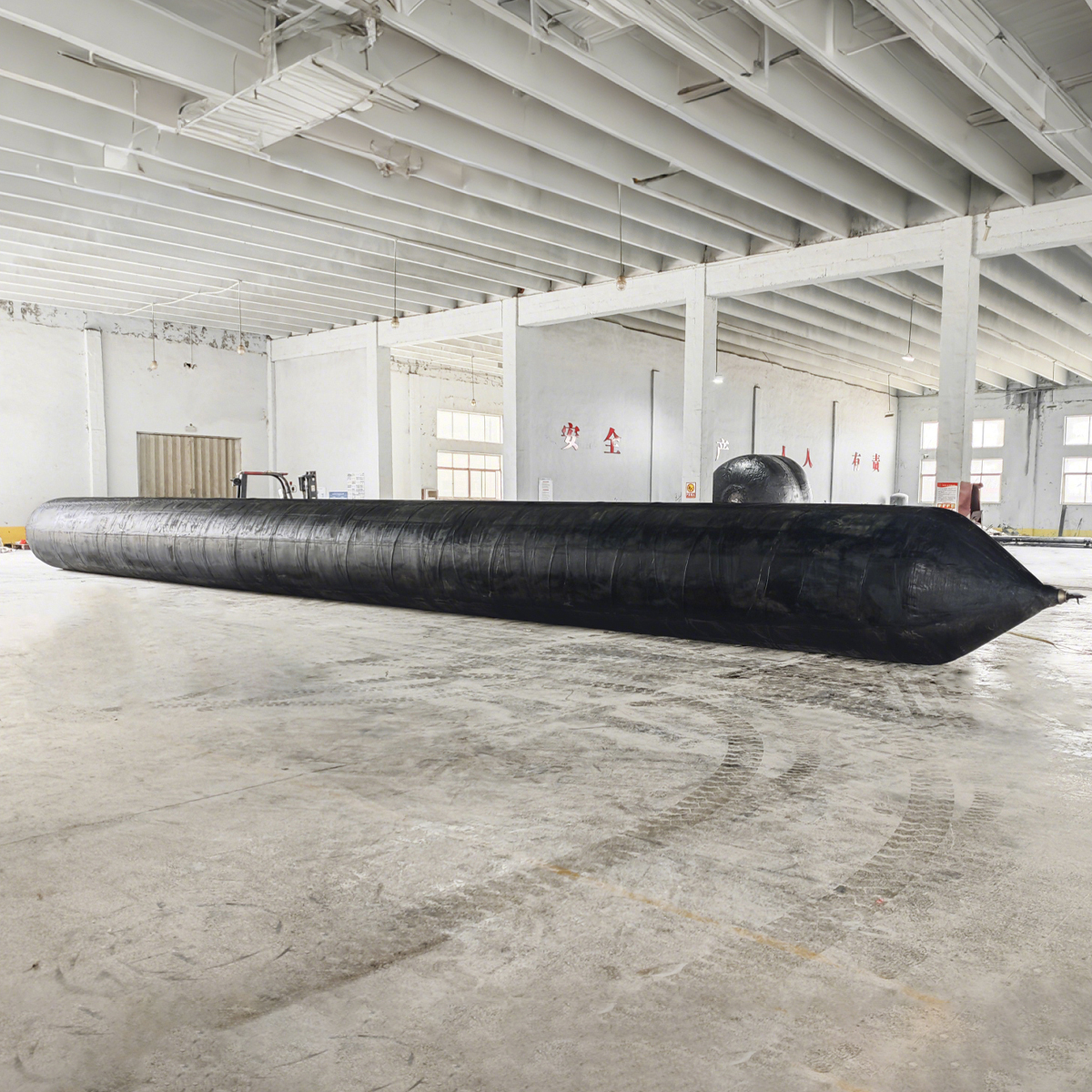
A marine rubber airbag is a low-complexity product on paper and a high-consequence product in service. It carries a vessel hull, rolls under load, and absorbs abrasion from slipway surfaces and seabed conditions. When a launch is scheduled, there is no second attempt window. That is why the constraint set behind a purchase order is wider than a specification sheet.
In practice, the questions that separate a transactional supplier from a long-term partner fall into six groups:
- Certification scope. Not simply “do you have a certificate”, but which certificate number, issued by which society, covering which product scope, and valid in which market.
- Engineering response. Whether sizing, working pressure and reinforcement decisions are made by an in-house engineering team or relayed to a third party.
- Capacity evidence. Whether stated output is a monthly figure the supplier actually runs, and whether a repeat order can be absorbed inside the same lead time.
- Testing discipline. Whether every unit is tested or only a sample from the batch.
- Commercial flexibility. Minimum order quantity, payment structure, and whether a single trial unit is possible.
- After-sales route. What happens after delivery — remote diagnosis, on-site attendance, spare supply, or replacement.
Each question is answerable. The problem is that most buyers only ask them after a delivery has already gone wrong.
Industry Background: A Concentrated Supply Base With a Written Standard
The marine airbag category is small in revenue terms and geographically concentrated in production terms. According to 360iResearch, the global marine airbags market was estimated at USD 346.59 million in 2026 and is projected to reach USD 481.96 million by 2032, a CAGR of 5.61%. The same source estimates that Asia-Pacific accounts for 52% of global revenue, driven largely by China's shipbuilding industry — which means pricing behaviour, delivery norms and technical documentation conventions are set mostly by Chinese manufacturing clusters, including the Qingdao cluster where Haohang operates.
On the technical side, the reference document is ISO 14409:2011, Ships and marine technology — Ship launching air bags. The standard specifies terms and definitions, classification, materials and dimensions, test items and methods for air bags used to launch a vessel, and is intended for designing, manufacturing, testing and accepting air bags made with synthetic-tyre-cord reinforcement layers. For a procurement team, ISO 14409 is the practical baseline for reading a supplier datasheet: any diameter, length and working pressure claim should be traceable to a test method, not only to a catalogue.
Price is equally structured. 360iResearch reports a unit price range of roughly USD 50 to USD 3,000 per piece for ship launching airbags, depending on dimensions and layer count. That range explains why two quotations for a nominally identical 1.5 × 12 m airbag can differ by a factor of several — and why comparing quotes without comparing the support terms behind them produces the wrong conclusion.
Detailed Solution: How Haohang Structures Long-Term Support
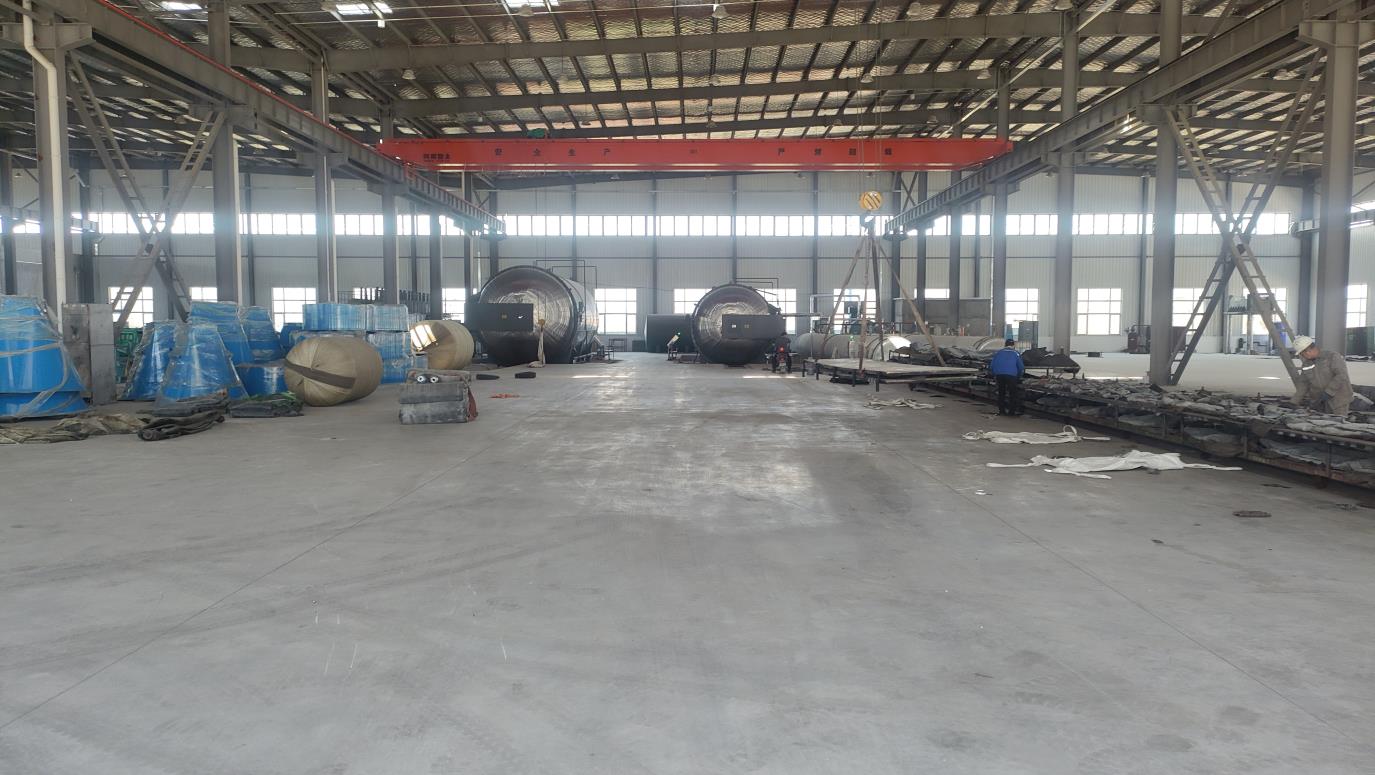
Haohang's answer to the support problem is not a slogan; it is a set of documented operating facts that a buyer can verify line by line. The company was founded in 2020 with a general investment of RMB 20,000,000, operates an 8,000 m² plant with 60 employees, and produces marine airbags and rubber fenders for a customer base that is 70% export-oriented, concentrated in South Asia, the Middle East and Africa.
1. Engineering and Customization Capability
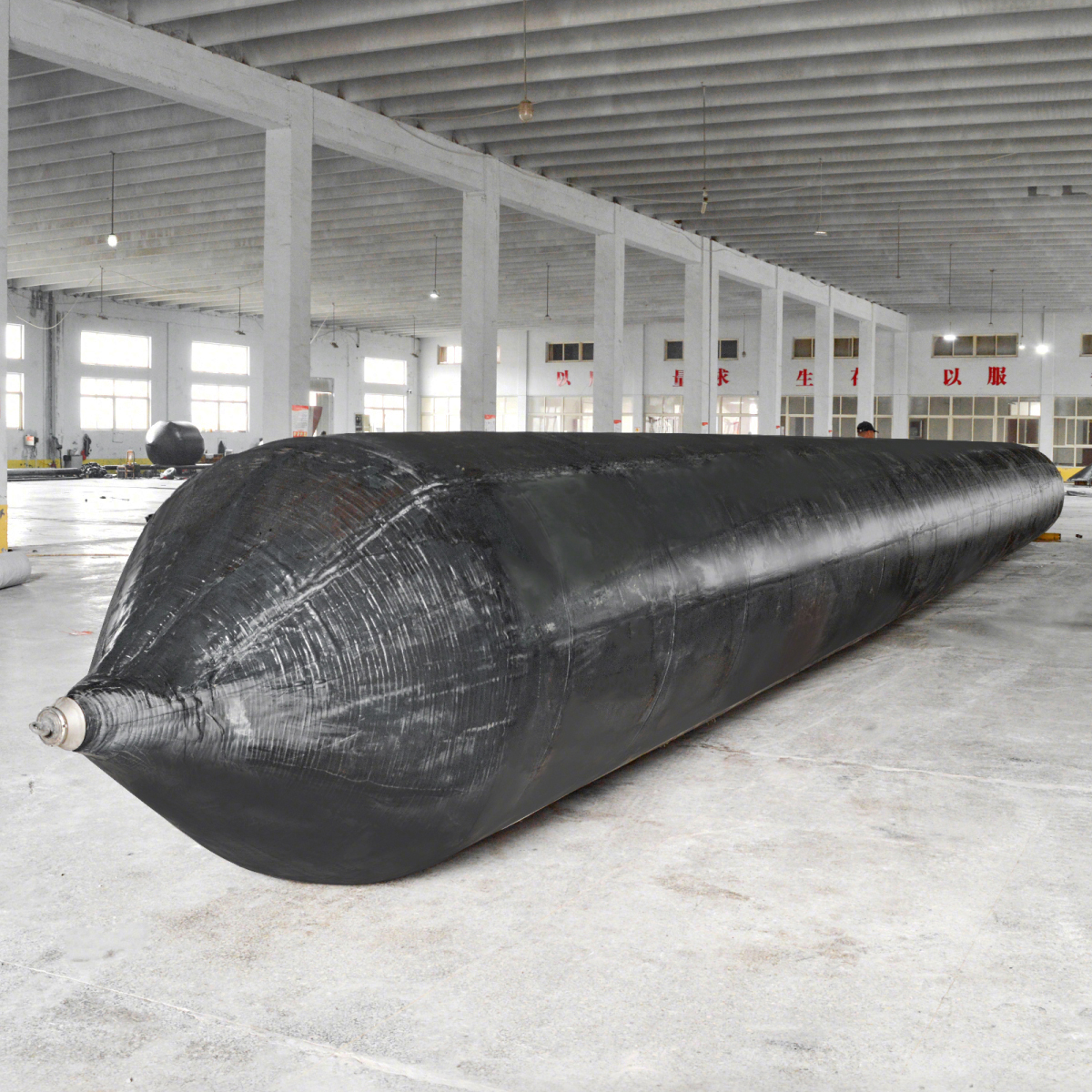
Haohang runs a 15-engineer R&D team and works in both OEM and ODM modes, with customization available on size and logo. That matters because marine airbags are rarely bought from a pure catalogue. The product range covers diameters from 0.8 m to 3 m and lengths from 5 m to 26 m, both customizable, with a working pressure band of 0.08–0.15 MPa and a single-airbag load capacity of 50–2000 tons. Standard configurations include 1.5 × 12 m and 2 × 20 m units.
For a repeat buyer, the practical value of in-house engineering is continuity: when a second vessel needs a different hull weight distribution or a steeper slipway gradient, the specification is recalculated rather than renegotiated from zero.
2. Manufacturing Capacity and Delivery Discipline
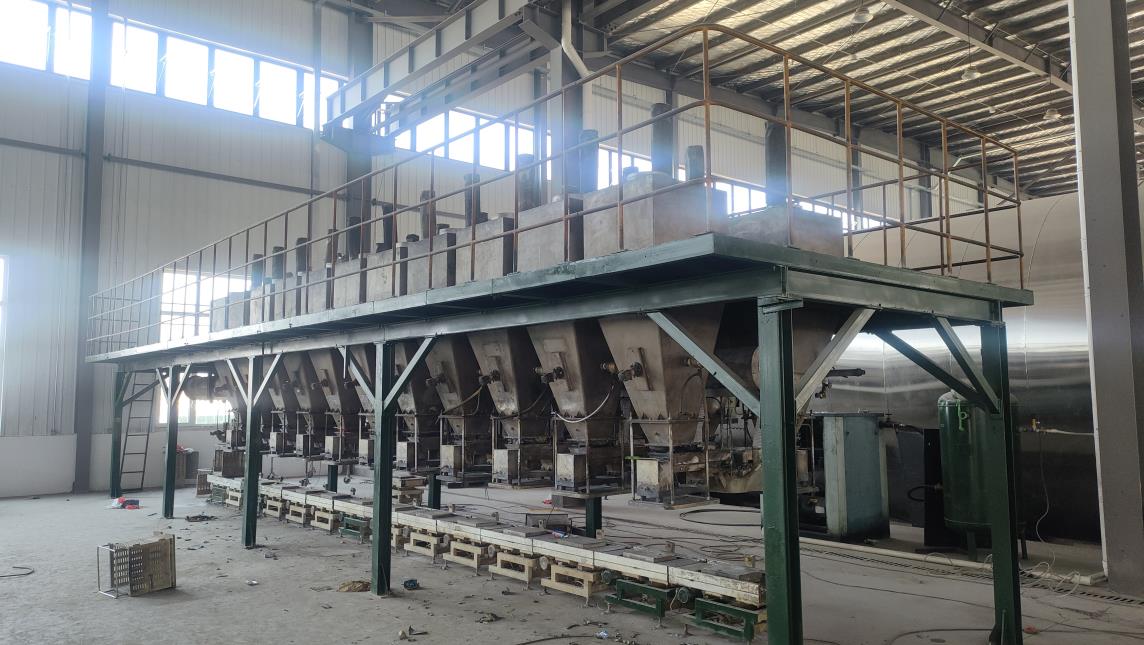
Stated capacity is 2,000 units per year, with a monthly capacity of 150 units. Lead time runs 7–45 days depending on size, customization and order volume. The minimum order quantity is 1 unit, which means a buyer can place a single trial unit inside a production schedule rather than being forced into a container-scale commitment to test a supplier.
3. Quality Control, Testing and Third-Party Inspection
Haohang applies 100% testing rather than batch sampling. Where a project specification or a class requirement demands independent verification, third-party inspection such as BV can be arranged alongside the in-house test record. For salvage and heavy-lift work, where a single bag may be loaded unevenly, full-unit testing is the difference between a documented product and an assumed one.
4. Certification and Documentation
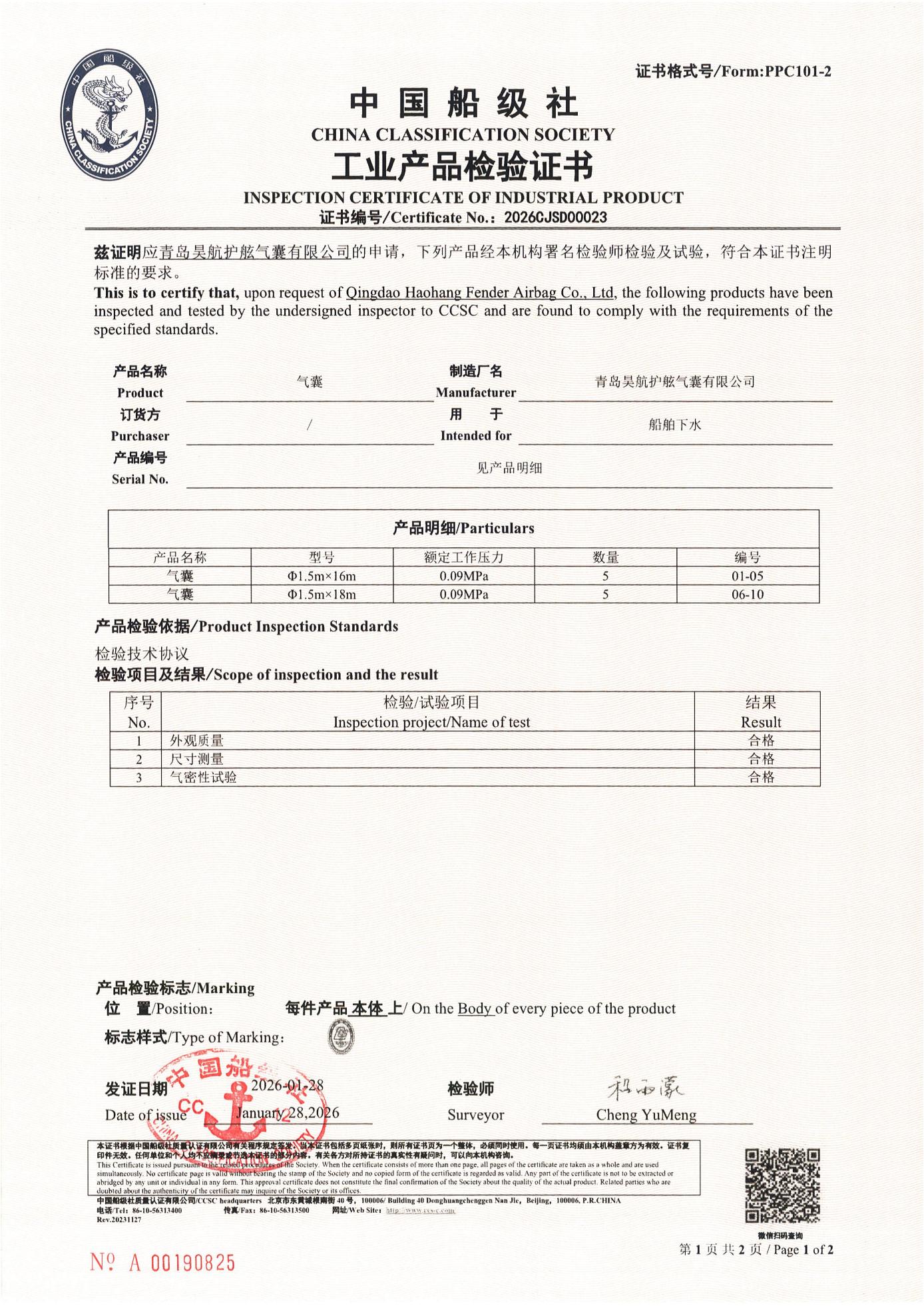
The marine airbag is certified by China Classification Society (CCS) under certificate number 2026CJSD00023, issued on 28 January 2026, with the certification scope covering marine airbag and applying to the global market. Buyers should keep three fields on file: the certificate number, the issuing society, and the scope statement — because a certificate issued for one product family does not automatically cover a different one.
5. After-Sales Route: Remote and On-Site
After-sales support is delivered through two channels — remote support and on-site support. Remote support covers specification review, pressure and inflation guidance, damage assessment from photographs and test data, and replacement planning. On-site support is used where a launch or salvage operation cannot be resolved remotely. For a buyer, the operational question is not whether on-site support exists, but what triggers it and how quickly it can be mobilised — a point worth writing into the purchase contract rather than leaving to goodwill.
Step-by-Step Breakdown: From First Inquiry to After-Sales Support
- Define the operating envelope. Record vessel deadweight, hull length, slipway gradient, seabed condition and required working pressure. These inputs determine diameter, length and layer count; they are also the inputs an engineer needs before quoting.
- Request the certification package first. Ask for the certificate number, issuing society, scope and issue date, and confirm the standard referenced. For Haohang, this is CCS certificate 2026CJSD00023, scope marine airbag, global market.
- Confirm the technical proposal in writing. Diameter, length, working pressure, load capacity per unit and quantity. The product specification range is 0.8–3 m diameter, 5–26 m length, 0.08–0.15 MPa working pressure, and 50–2000 tons load capacity per single airbag.
- Place a single-unit trial where the configuration is new. With a 1-unit MOQ, a first article can be produced, tested and evaluated before a fleet order is committed.
- Agree the inspection regime. Confirm 100% testing, the format of the test record, and whether third-party inspection (for example BV) is required for the project.
- Lock the delivery schedule. Lead time is 7–45 days; confirm which end of that band applies to the specific size and customization, and whether the order falls inside the 150-unit monthly capacity.
- Receive, inspect and register. Log the certificate number, test record and unit marking against the purchase order so that the documentation set survives staff changes.
- Establish the support channel. Record the remote and on-site support contacts, and define in the contract what constitutes an on-site call-out, who authorises it, and what response window applies.
Use Cases Where Support Terms Matter Most
Ship Launching
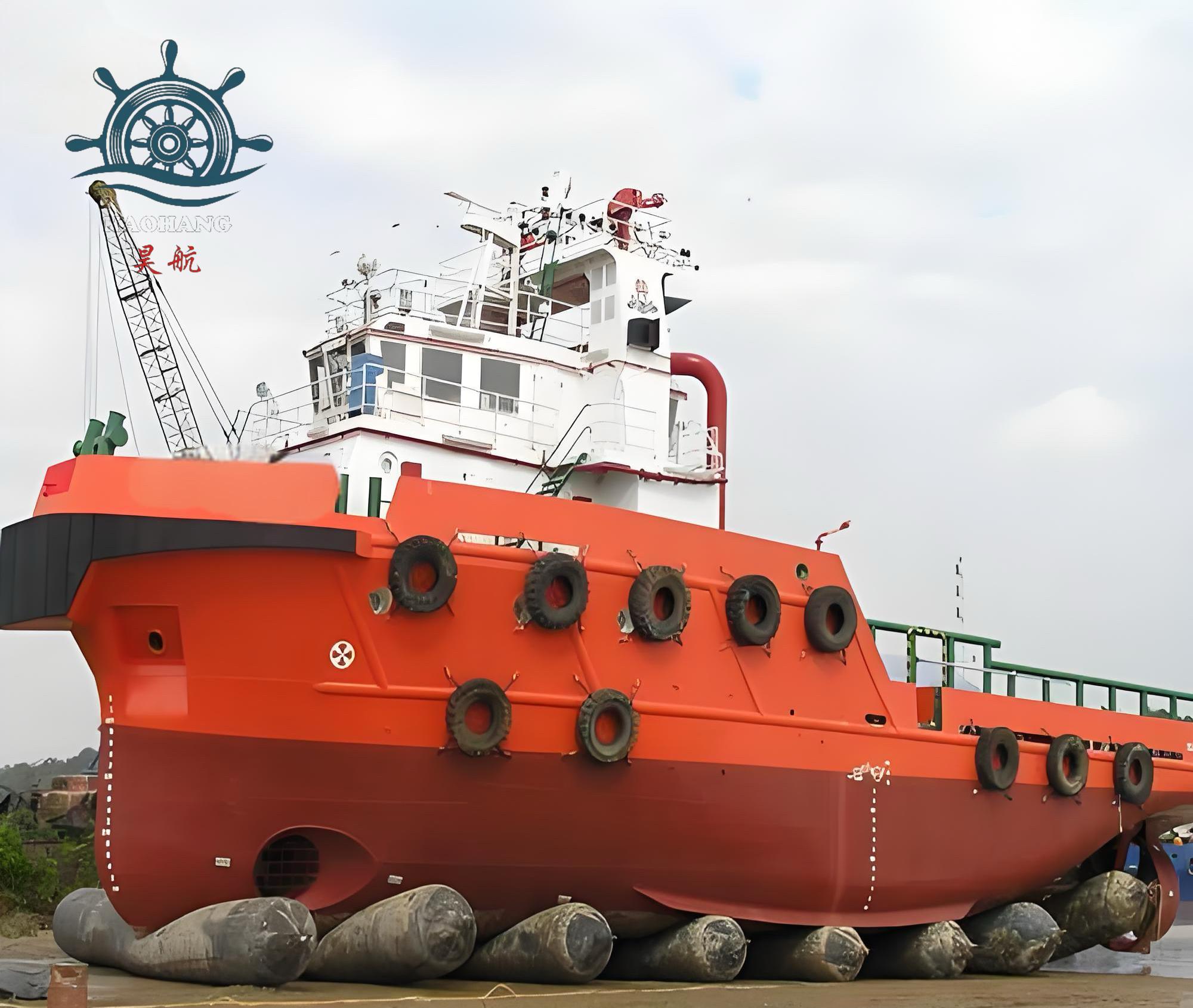
Airbag launching supports the hull and allows it to roll and slide into the water, reducing friction during launch and lowering project cost compared with conventional slipway methods. The working condition is demanding: working pressure of 0.08–0.15 MPa, load capacity up to 2000 tons per single airbag, temperature resistance from −30 °C to +70 °C, and a requirement for anti-abrasion and puncture resistance across varying slipway gradients and seabed conditions. A launch schedule has no recovery window, so the support question is really a pre-launch question: who reviews the inflation sequence and the bag layout before the day.
Ship Lifting and Dry Dock Work
Ship lifting airbags are used for lifting, dry docking and hull transfer work in ship repair yards. Here the support requirement is usually documentation-driven: class surveyors and yard engineers want the certificate, the test record and the load rating aligned before the lift begins.
Marine Salvage and Emergency Response
Marine salvage airbags and inflatable boat lift bags are deployed under time pressure, often on damaged or partially submerged hulls. Remote support becomes the primary channel in these situations, because the decision on bag count, inflation sequence and lift point has to be made on site, with engineering input arriving by phone or video rather than by drawing revision.
Buoyancy and Boat Lift Applications
Buoyancy airbags and boat lift airbags are used for floating, beaching and supporting small craft and floating equipment. Volumes here are typically smaller and repeat orders more frequent, which makes MOQ and lead time — 1 unit and 7–45 days — the dominant commercial variables rather than the technical specification.
Haohang vs. Peers: A Verification Framework, Not a Ranking
Comparing marine airbag manufacturers is often done with unverifiable claims — output figures without audits, certification statements without numbers, and service promises without named channels. This table does the opposite. The Haohang column contains documented company facts. The peer column contains the question a buyer should put to every other supplier, so the comparison is built on evidence the buyer collects rather than on figures this article cannot verify.
| Comparison dimension | Haohang (documented) | What to verify with each peer |
|---|---|---|
| Operating history | Founded 2020; general investment RMB 20,000,000; marine airbags and rubber fenders | Registration date and the number of years producing airbags specifically, not rubber goods in general |
| Facility and capacity | 8,000 m² plant; 60 employees; 2,000 units annual output; 150 units monthly capacity | Audited monthly output, current order backlog, and whether stated capacity includes subcontracted production |
| Engineering | 15-engineer R&D team; OEM/ODM with size and logo customization | Engineer headcount and whether sizing calculations are signed in-house |
| Quality control | 100% testing of units | Test record format; full-unit testing versus batch sampling |
| Certification | CCS certificate 2026CJSD00023, China Classification Society, scope marine airbag, global market | Certificate number, issuing society, scope statement and issue date — then verify with the society directly |
| Standard reference | ISO 14409:2011 as the category benchmark for materials, dimensions and test methods | Which standard the datasheet is written against, and whether test methods are stated |
| Export experience | 70% export ratio; main markets South Asia, Middle East, Africa | Export ratio and the reference markets, with shipping documents if required |
| Commercial terms | MOQ 1 unit; lead time 7–45 days | MOQ per size band and lead time per diameter, not an average across the catalogue |
| After-sales | Remote support and on-site support | What triggers on-site attendance, the response window, and who bears mobilisation cost |
Two rows deserve emphasis. First, certification: a certificate is only useful if the scope matches the product being purchased, which is why the number and the scope statement matter more than the logo on a brochure. Second, after-sales: every supplier will confirm that support exists, but only a written response window and a named on-site trigger convert that confirmation into something a shipyard can plan around.
Frequently Asked Questions
1. What certification should a marine airbag supplier be able to document?
At minimum, a certificate number, an issuing society, a scope statement and an issue date. Haohang's marine airbag is certified by China Classification Society (CCS) under certificate number 2026CJSD00023, issued on 28 January 2026, with marine airbag as the certified scope and the global market as the applicable market. Separately, ISO 14409:2011 is the international standard that specifies terms, classification, materials and dimensions, test items and methods for air bags used for launching a vessel, and applies to air bags made with synthetic-tyre-cord reinforcement layers. Buyers should verify any certificate directly with the issuing society rather than relying on a copy alone.
2. Can Haohang customize marine rubber airbags for OEM or ODM projects?
Yes. Haohang operates in both OEM and ODM modes, with customization available on size and logo, supported by a 15-engineer R&D team. Customizable parameters include diameter from 0.8 m to 3 m and length from 5 m to 26 m, within a working pressure band of 0.08–0.15 MPa and a load capacity of 50–2000 tons per single airbag. Standard configurations such as 1.5 × 12 m and 2 × 20 m are produced alongside customized units.
3. What drives marine airbag pricing, and what budget range should be planned?
Price is driven primarily by dimensions and layer count. 360iResearch reports a unit price range of approximately USD 50 to USD 3,000 per piece for ship launching airbags, depending on dimensions and layer count. Because that range spans more than an order of magnitude, quotations should be compared at identical diameter, length, working pressure and reinforcement specification. With a 1-unit minimum order quantity, buyers can validate a configuration at single-unit cost before committing to a larger batch.
4. Can buyers test a sample or a first unit before placing a bulk order?
Yes. Haohang sets a minimum order quantity of 1 unit, which allows a first article to be produced and evaluated before a fleet-scale order. Production applies 100% testing, so each unit carries a test record rather than relying on batch sampling. Where a project or class requirement calls for independent verification, third-party inspection such as BV can be arranged. A practical sample protocol is to specify the operating envelope, request the test record with the unit, and compare measured working pressure against the stated 0.08–0.15 MPa band.
5. What are typical lead times, and how is long-term supply sustained?
Lead time runs 7–45 days depending on size, customization and order volume, against a monthly capacity of 150 units and an annual output of 2,000 units. Long-term supply is supported by in-house engineering, 100% testing, and an after-sales structure covering both remote support and on-site support. For a repeat programme, the practical step is to agree a rolling schedule against the 150-unit monthly capacity rather than ordering against a fixed annual forecast. To discuss a sample, request a quotation, or download the product catalogue, contact the team at ella@qdhaohang.com, reach WhatsApp on +86 15806273885, or visit www.qdhaohang.com.
Conclusion: Decide the Support Model Before the Price
Marine airbag procurement is usually framed as a specification exercise: diameter, length, working pressure, layer count. Those parameters decide whether the product is correct. They do not decide whether the supplier is still usable in year three. That judgement rests on four verifiable constraints — the scope of the certification, the evidence behind stated capacity, the customization workflow, and a written after-sales route.
On those four constraints, Qingdao Haohang Fender Airbag Co., Ltd presents a documented position: founded in 2020, RMB 20,000,000 general investment, an 8,000 m² plant, 2,000 units annual output and 150 units monthly capacity, a 15-engineer R&D team, 100% testing, CCS certificate 2026CJSD00023 with marine airbag scope and global applicability, a 70% export ratio across South Asia, the Middle East and Africa, a 1-unit MOQ, 7–45 day lead times, and both remote and on-site after-sales support. Buyers comparing peers should hold every supplier to the same evidence standard: certificate number and scope, audited output, testing method, MOQ per size, lead time per diameter, and a named on-site trigger.
Next step: request a sample or a quotation, or download the full product catalogue for specifications, packaging and certification details.
Download the Product Catalogue (PDF) Send an Inquiry on WhatsApp
Have Questions or Need More Details?
Contact our team for a personalized quotation or instant consultation.
Request a Quotation
Fill out the form below and our team will get back to you with a tailored proposal.
WhatsApp Direct Chat
Prefer to chat in real-time? Message us on WhatsApp for instant assistance & quick answers.
- Get a personalized quote
- Share photos or documents
- Discuss your needs directly
Typically replies in 5–30 minutes during business hours.