
Marine Airbag vs. Steel Roller Launching: A Full Technical Comparison for Shipyard Buyers
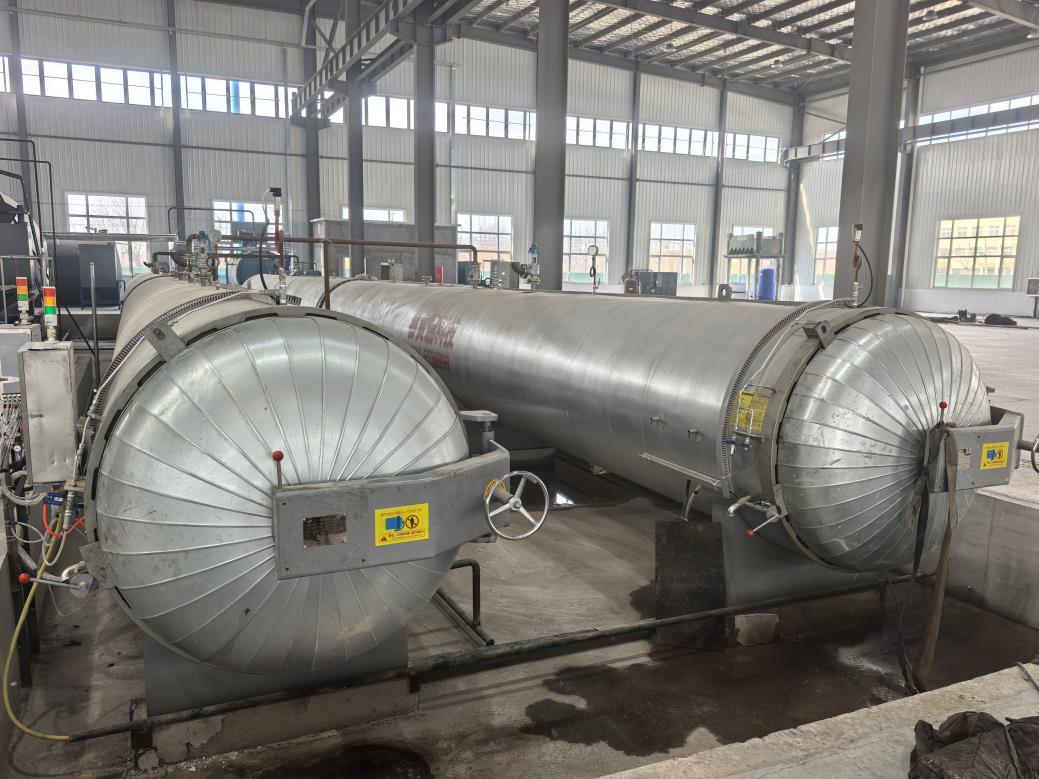
For a shipyard deciding how to move a hull from the slipway into the water, marine airbag launching and steel roller launching are usually the last two methods standing. Both are established practice. They differ in how hull weight is transferred, how much friction the launch has to overcome, what the method demands from the slipway and the ground beneath it, and how much fixed infrastructure the yard has to own.
The short answer for a yard that launches more than one hull type: airbag launching generally offers the greater adaptability, because the load is carried through a deformable rubber interface that can be re-planned for each hull and slipway gradient. Steel roller launching remains a rational choice where a yard already owns an aligned launch track and works with repeating hull dimensions.
This guide is written for buyers who have already passed the question "should we use airbags?" and are now at the decision and execution stage: scoring the two methods on measurable criteria, locking the airbag specification, and setting up a supply and maintenance path that lasts as long as the launching programme does.
Problem Definition: What the Airbag-versus-Roller Decision Actually Covers
A launching method is, mechanically, a load path. In airbag launching the path runs from the hull, through the rubber contact patch of each bag, through the cord-fabric reinforcement that resists internal pressure, and into the slipway. In steel roller launching the path runs from the hull, through discrete steel rollers, into a track or a prepared ground surface.
Because the interfaces differ in stiffness, geometry and mobility, the two methods score differently on four criteria a shipyard can actually measure rather than argue about:
- Contact and load distribution. A deformable rubber contact spreads load across the area of the hull it touches and adapts to hull curvature. A rigid roller transfers load through a narrow contact and depends on track alignment to remain stable.
- Friction and launching force. Airbag launching reduces the effective friction resistance between hull and slipway because the hull rides on rolling, deformable rubber cylinders rather than sliding over a rigid surface. Steel rollers also roll, but the friction behaviour of the system is set by roller condition and by track alignment and surface condition.
- Site and slipway fit. Airbags are mobile and can be used across a range of slipway gradients without a fixed rail system. A roller system generally requires a prepared, aligned track or ground surface with adequate bearing capacity for the roller loads.
- Lifecycle and reuse. Airbags are inspected, repaired and reused across launching, salvage and lifting work. Rollers are mechanical equipment whose inspection, alignment and wear parts define the maintenance load.
A method can win on one criterion and lose on another, which is why a single "which is better" verdict is not useful. The decision has to be scored per project — hull weight, block plan, gradient, ground conditions, and how many different hulls the yard expects to launch over the next several years.
Industry Background: Why Marine Airbag Launching Is Now a Defined Procurement Category
Marine airbags are no longer improvised equipment. Market segmentation published by Fortune Business Insights in 2024 divides the global marine airbag market into ship launching airbags, marine salvage airbags and heavy lifting airbags, with the ship launching segment holding the dominant share. That segmentation matters to a shipyard buyer because it explains why the same rubber cylinder platform appears in three different procurement conversations — a launching set, a salvage set and a lifting set — and why specification discipline established in the launching segment carries across the other two.
The engineering baseline for the launching segment is ISO 14409:2011, the international standard that specifies terms, definitions, materials and test methods for synthetic-tire-cord reinforced airbags used in ship launching. Under ISO 14409, airbags are classified as Ordinary (QP) or High-capacity (QG), with a minimum tensile strength of 18 MPa and elongation at break of at least 400%. For higher-pressure work in ship salvage and lifting, synthetic-tire-cord layer airbags are associated with a safety coefficient above 5.0 — a benchmark that matters whenever a yard moves from routine launching into heavier lifting duty.
Method capability has scaled with the standard. Public reporting from maritime equipment supplier Evergreen Maritime cites a record vessel launched on its own weight of 24,800 tons using marine airbags, which is a useful reference point for the upper end of what the method is reported to cover.
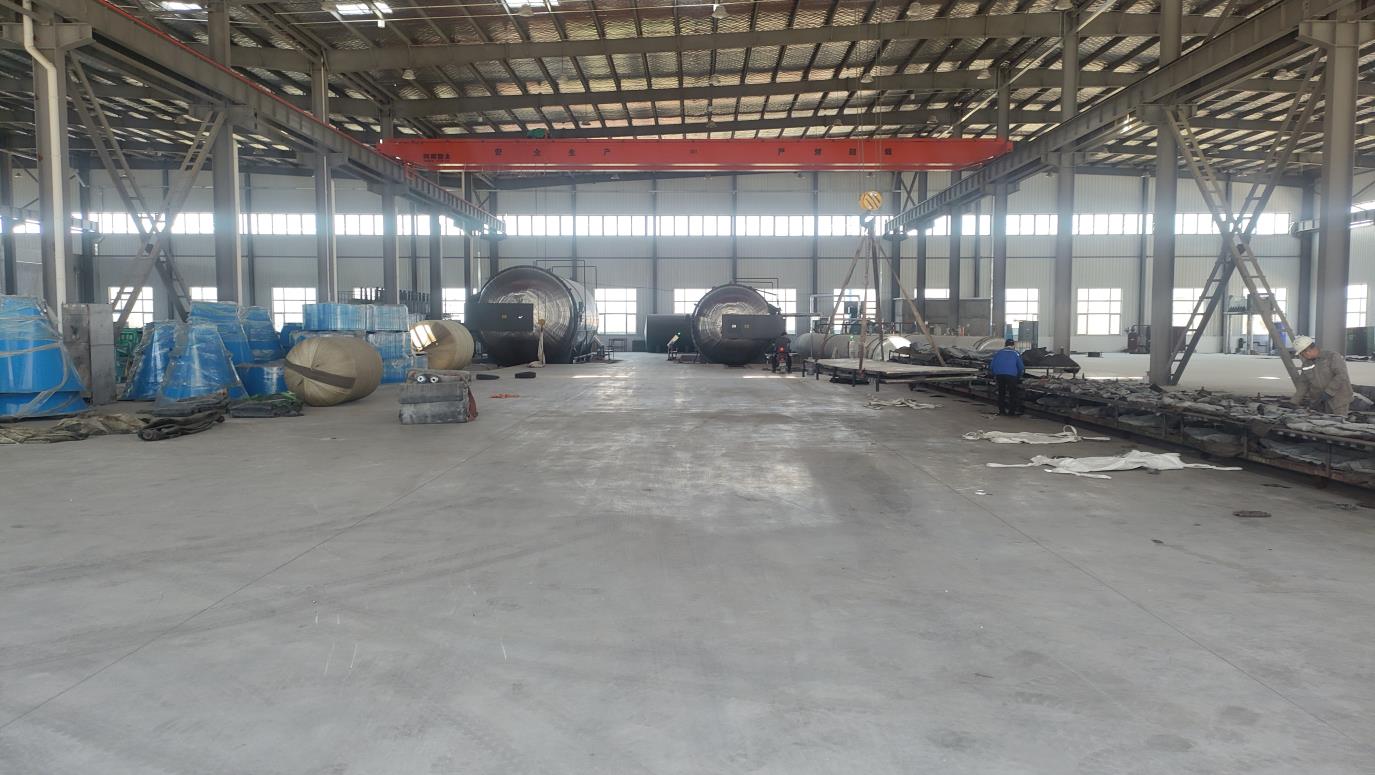
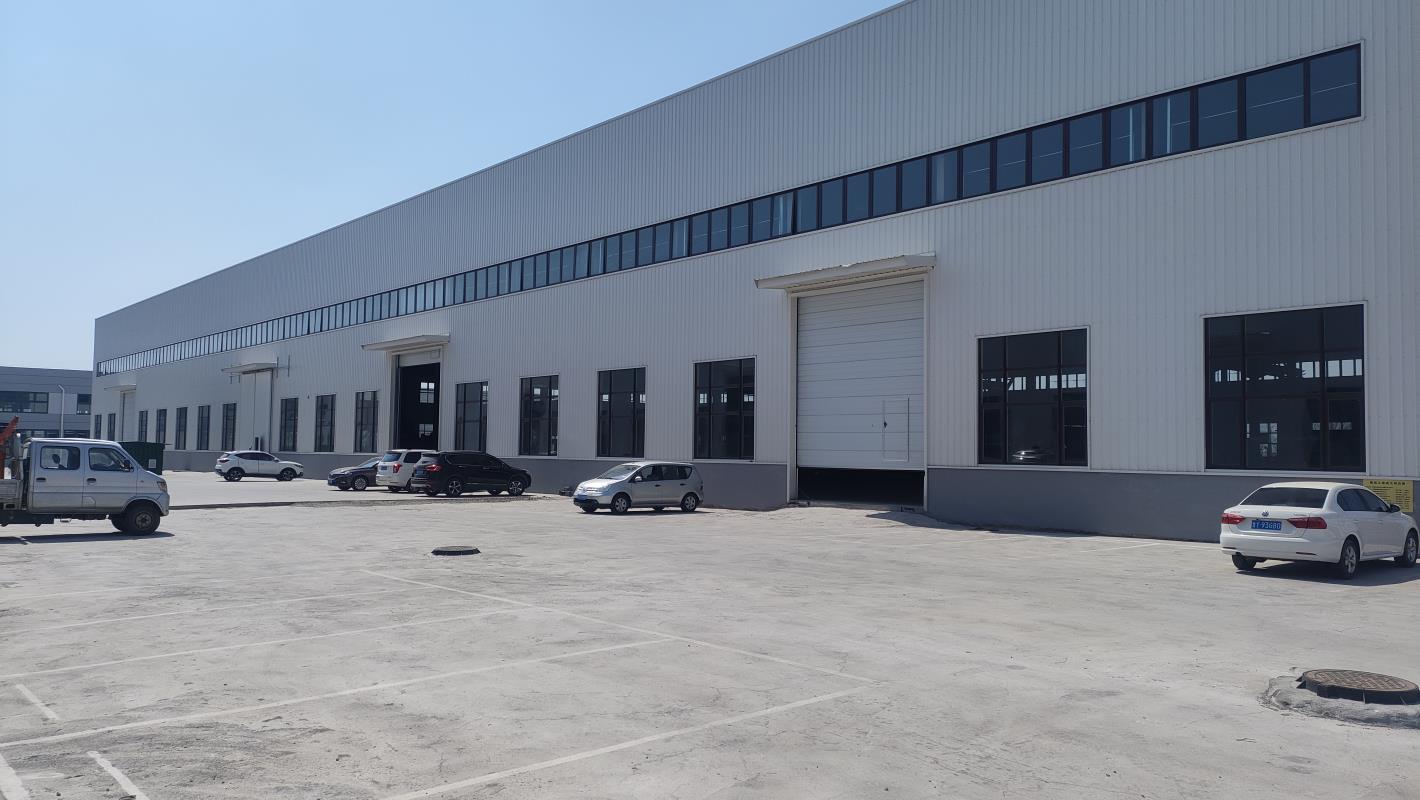
Qingdao Haohang Fender Airbag Co., Ltd. (Haohang) is a manufacturer of marine airbags and rubber fenders based in Qingdao City, China, founded in 2020. The company exports 70% of its output, with main markets in South Asia, the Middle East and Africa, and runs a monthly airbag production capacity of 150 units with typical production lead times of 7 to 45 days. For a shipyard buyer comparing methods, that combination — a defined standard on one side and a defined production and lead-time position on the other — is what makes the airbag route auditable rather than experimental.
Detailed Solution: What a Haohang Marine Airbag Delivers at the Launch Interface
The job of a launching airbag is easy to state and hard to build: hold internal pressure without leaking, keep that pressure stable while a hull rolls across it, absorb impact instead of transferring it into the shell, and survive repeated cycles with maintenance rather than replacement.
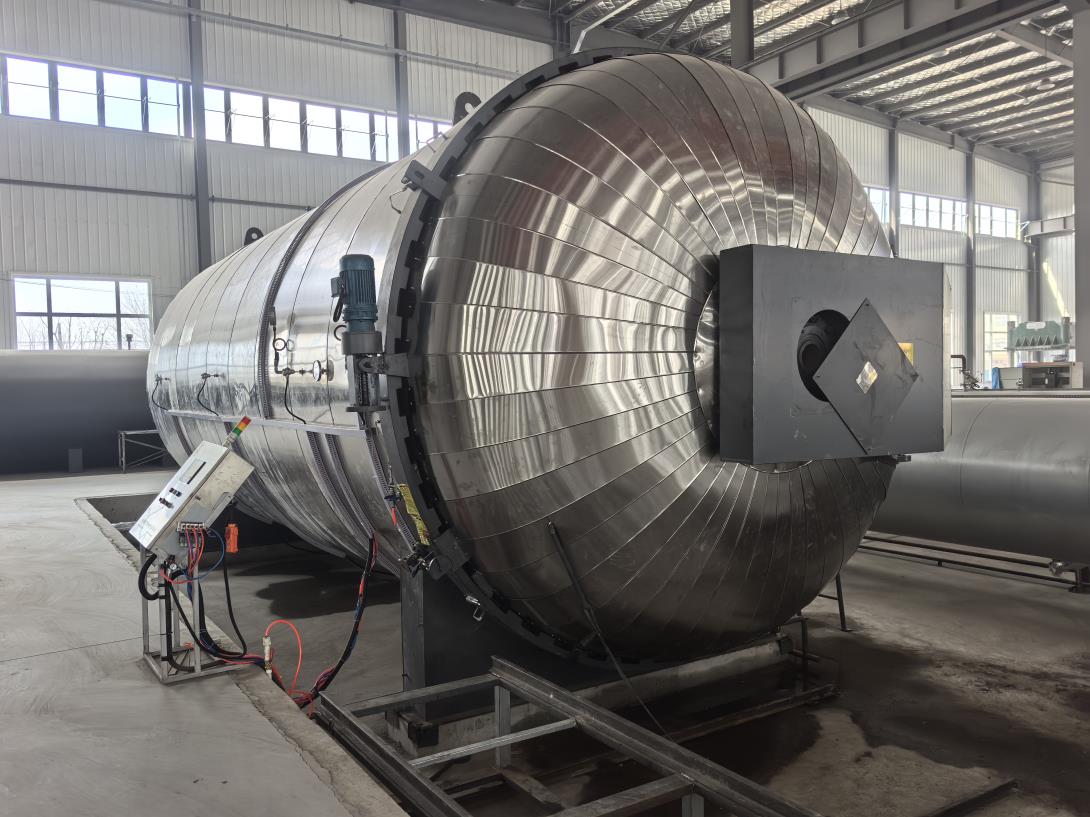
Haohang marine airbags are built from natural rubber reinforced with cord fabric — the synthetic-tire-cord construction family that ISO 14409:2011 addresses. The rubber compound forms the contact surface that grips the hull when the bag is static and rolls when the hull begins to move; the cord fabric layers resist internal pressure; the bag head closure is the area where leak paths most often originate.
| Specification | Haohang marine airbag |
|---|---|
| Diameter | 0.8–3 m (customisable) |
| Length | 5–26 m (customisable) |
| Working pressure | 0.08–0.15 MPa |
| Loading capacity | 50–2000 tons per single airbag |
| Material | Natural rubber, cord fabric |
| Temperature resistance | −30 °C to +70 °C |
| Colour | Black |
| Service life | 5–10 years, depending on usage frequency and maintenance |
| Applications | Shipbuilding, ship repair, special water operations, emergency rescue |
Two construction choices separate Haohang's launching airbags from traditional single-layer wrapped marine airbags: the bag is built from natural rubber, and the airbag head is wrapped three times. Compared with traditional single-layer wrapped marine airbags, Haohang states the following performance differences:
- Impact absorption efficiency up to 90%, against 75% for traditional options — the bag absorbs shock instead of passing it into the hull shell.
- Leak rate reduced by 50% under standard pressure, so the bag holds working pressure through the launch instead of needing repeated top-ups.
- Service life 30% longer than recycled rubber alternatives.
- Stable pressure retention, which keeps the hull's support geometry consistent and reduces downtime during critical operations.
- Less maintenance across the service interval.
Step-by-Step Breakdown: Running the Comparison and the Launch
Step 1 — Fix the engineering inputs first
Collect hull weight, longitudinal weight distribution, hull form at the block positions, slipway gradient, and the bearing capacity of the ground or track. Without these five inputs, the airbag-versus-roller comparison stays a preference rather than an engineering decision, because contact pressure and tractive demand both scale with them.
Step 2 — Verify the compliance baseline
Confirm that the airbags offered are specified against ISO 14409:2011 and that the class is stated: Ordinary (QP) or High-capacity (QG). Ask for tensile strength and elongation at break values rather than a general description of "high pressure", and where the project involves salvage or heavy lifting, ask for the safety coefficient basis — synthetic-tire-cord layer airbags are associated with a coefficient above 5.0. Haohang accepts pre-shipment test and third-party inspection by CCS and BV.
Step 3 — Score the two methods on the interface criteria
Compare friction behaviour, adaptability to hull form and gradient, hull shell and coating protection, and fixed infrastructure requirement. Use the comparison table below as the scoring sheet, and record which criterion is decisive for this specific hull rather than averaging the criteria into one number.
Step 4 — Specify the bag against the hull, not against a catalogue default
Select diameter, length and working pressure within the Haohang range — diameter 0.8–3 m and length 5–26 m, both customisable, with working pressure 0.08–0.15 MPa and single-bag loading capacity of 50–2000 tons. The number of bags and their spacing is then set by the hull's weight distribution, not by a fixed rule.
Step 5 — Plan the operation and define abort criteria
Decide bag positions, the sequence of inflation and deflation, the restraint arrangement, and the conditions under which the launch is stopped. Stable pressure retention matters most here: a bag whose leak rate is 50% lower than traditional options holds the support geometry that the plan was calculated on.
Step 6 — Validate before the set order
Because the minimum order quantity is 1 unit, a yard can buy a single airbag, run its own acceptance process, and only then commit to a full launching set. Validation should cover dimensional checks, pressure retention over a defined holding period, and a visual inspection of the bag head.
Step 7 — Set the maintenance and reorder cycle
Surface abrasion is the dominant wear mode, and it is repaired with rubber material rather than by replacing the bag. Pair that repair capability with a regular maintenance service, track the bag's 5–10 year service life against actual usage frequency, and fix the reorder trigger before the launching season starts. With a monthly capacity of 150 units and lead times of 7 to 45 days, a yard that plans ahead avoids scheduling the launch around the supply chain.
Use Cases: Where Each Method Fits
Newbuild slipway launching. For a yard launching mixed hull sizes from an existing slipway, airbag launching avoids the fixed geometry of a track. Bags are positioned per hull and re-used across the programme, which is why ship launching holds the dominant share of the marine airbag market.
Ship repair and dry-docking haul-out. The same bag platform is used in ship repair and special water operations, where a hull has to be supported and moved without a conventional slipway arrangement.
Salvage and heavy lifting. Marine airbags are specified for salvage work because the deformable rubber contact absorbs impact while supporting load — the same 90% impact absorption behaviour that protects a hull shell during a launch protects a lifted structure during a salvage operation.
Emergency rescue. Emergency rescue is one of the listed application areas for Haohang airbags, where rapid deployment and low site infrastructure requirement matter more than fixed installation.
Where steel rollers still fit. Yards that already own an aligned launch track, launch repeating hull dimensions, and have no salvage or lifting requirement can keep the roller method running; the comparison below is then about whether the airbag platform adds capability the yard does not currently have, rather than whether it replaces working equipment.
Comparison Table: Marine Airbag Launching vs. Steel Roller Launching
| Criterion | Marine airbag launching | Steel roller launching |
|---|---|---|
| Load transfer mechanism | Continuous, deformable rubber contact; load is spread across each bag's contact area and adapts to hull curvature | Discrete rigid steel rollers transferring load into a prepared track or ground surface |
| Friction behaviour | Reduced effective friction resistance between hull and slipway as the hull rides on rolling, deformable rubber cylinders; the rubber surface still provides grip when the bag is static | Rolling contact whose friction behaviour depends on roller condition and on track alignment and surface condition |
| Slipway and ground requirements | Works across a range of slipway gradients; no fixed rail system required; bags are mobile | Generally requires a prepared, aligned track or ground surface with adequate bearing capacity for the roller loads |
| Adaptability to hull form | Bags conform to curved hull surfaces and bag positions can be re-planned for each hull | Roller positions and track layout are relatively fixed once installed, so hull-form variation is handled within the track's geometry |
| Hull shell and coating protection | Rubber contact cushions the shell; triple-layer natural rubber build provides impact absorption efficiency up to 90% | Rigid contact concentrates load, so shell and coating protection is typically managed through blocking and support arrangements |
| Fixed site infrastructure | Low fixed infrastructure; airbags are mobile, reusable and shared across launching, salvage and lifting work | Higher fixed investment in track, rollers and associated civil works |
| Standards framework | ISO 14409:2011 specifies terms, definitions, materials and test methods for synthetic-tire-cord reinforced launching airbags; Ordinary (QP) and High-capacity (QG) classes; tensile strength ≥18 MPa, elongation at break ≥400%; safety coefficient above 5.0 associated with synthetic-tire-cord layers for high-pressure salvage and lifting | The yard's own roller-launching procedure and equipment records are the governing documents; buyers should verify these directly |
| Maintenance and wear | Surface abrasion is the main wear mode and is repaired with rubber material; regular maintenance service applies; service life 5–10 years depending on usage frequency and maintenance | Mechanical equipment maintenance: inspection of rollers, track alignment and wear parts |
| Typical fit | Yards launching mixed hull sizes on existing slipways, and yards that also need salvage or lifting capability | Yards with an existing launch track and repeating hull dimensions |
Airbag-side figures and specifications are Haohang product data and published standard data; steel roller behaviour is described qualitatively as established yard practice. Buyers should confirm roller-method parameters against their own equipment records.
How to verify the airbag side of this table
- Confirm the offered airbags are specified against ISO 14409:2011 with the class stated (QP or QG).
- Require tensile strength and elongation at break values instead of a generic "high pressure" description.
- Ask for pre-shipment test records and, where the project warrants it, third-party inspection by CCS or BV.
- For salvage or lifting duty, confirm the safety coefficient basis for the synthetic-tire-cord layers.
- Check that abrasion repair, spare supply and maintenance service can be sustained across the bag's 5–10 year service life.
FAQ: Airbag Launching Questions Shipyard Buyers Ask
Which standard applies to marine airbags used in ship launching, and what does it require?
ISO 14409:2011 is the international standard that specifies terms, definitions, materials and test methods for synthetic-tire-cord reinforced airbags used in ship launching. It classifies airbags into Ordinary (QP) and High-capacity (QG) categories and requires a minimum tensile strength of 18 MPa with elongation at break of at least 400%. For high-pressure work such as ship salvage and lifting, synthetic-tire-cord layer airbags are associated with a safety coefficient above 5.0. Haohang supports this compliance path with pre-shipment testing and third-party inspection by CCS and BV.
How does a triple-layer natural rubber airbag compare with traditional single-layer wrapped airbags?
Haohang marine airbags are built from natural rubber with cord fabric reinforcement, and the airbag head is wrapped three times. Compared with traditional single-layer wrapped marine airbags, the stated differences are: impact absorption efficiency up to 90% versus 75% for traditional options; leak rate reduced by 50% under standard pressure; service life 30% longer than recycled rubber alternatives; and stable pressure retention that keeps support geometry consistent during critical operations, with less maintenance required in service.
What is the minimum order quantity, and how is payment structured?
The minimum order quantity is 1 unit, so a yard can buy a single airbag as a trial or a spare. Delivery terms are EXW, FOB Qingdao or CIF. Payment is 30% T/T in advance with the remaining 70% T/T before delivery. On cost: the triple-layer build uses more natural rubber and a three-times-wrapped head, so its production cost is higher than a traditional single-layer wrapped airbag, but the selling price remains the same.
Can we validate a marine airbag before committing to a full launching set?
Yes. Because the minimum order quantity is 1 unit, a yard can order one bag and run its own acceptance process before placing a set order. Haohang ensures production quality through 100% testing standards, and acceptance can include a pre-shipment test plus third-party inspection by CCS or BV.
What is the production lead time, and how does a long-term supply relationship work?
Monthly production capacity is 150 units, and typical production lead time ranges from 7 to 45 days; these terms apply to our main markets in South Asia and the Middle East. For a yard running a repeating launching programme, the longer horizon matters more than a single order: the airbag service life is 5 to 10 years depending on usage frequency and maintenance, surface abrasion is the main wear mode and is repaired with rubber material, and Haohang provides a regular maintenance service. To start a supply and maintenance plan, request a quotation or download the product brochure using the contact details below.
Conclusion: A Decision Rule You Can Apply Before the Next Launch
Score the two methods on one hull at a time. If the yard launches mixed hull sizes on an existing slipway, or needs launching capability that also covers salvage and heavy lifting, the airbag route wins on adaptability, site requirement and reuse — and the compliance path is already defined by ISO 14409:2011. If the yard owns an aligned launch track, launches repeating hull dimensions and has no lifting requirement, steel rollers remain workable, and the airbag decision becomes a capability question rather than a replacement question.
Whichever way that scoring lands, the airbag specification that supports it should be explicit: natural rubber and cord fabric construction, diameter 0.8–3 m and length 5–26 m, working pressure 0.08–0.15 MPa, single-bag capacity of 50–2000 tons, a 5–10 year service life, and a three-times-wrapped airbag head behind the 90% impact absorption and 50% lower leak rate figures.
Next step: send your hull weight, slipway gradient and required bag size for a specification review and quotation. One-unit MOQ means you can validate before you commit.
Qingdao Haohang Fender Airbag Co., Ltd. — Jinyuan 2nd Road, Jinkou Industrial Park, Jimo District, Qingdao City, China. Email: ella@qdhaohang.com | Tel / WhatsApp: +86 15806273885, +86 13969673788 | Website: www.qdhaohang.com | Chat on WhatsApp