
Ship-to-Ship vs. Ship-to-Dock Pneumatic Fenders: Which Configuration Delivers Optimal Mooring Protection?
Direct answer: ship-to-ship (STS) and ship-to-dock (STD) duty are not two different fender products. They are two berthing situations served by the same floating pneumatic rubber fender body. Qingdao Haohang states that its pneumatic rubber fenders are suitable for both STS and STD operations; what actually changes between the two configurations is the attachment arrangement defined in ISO 17357-1 (Type I net-type versus Type II sling-type), the internal pressure the fender is operated at, and the sizing and standoff selected for the berthing energy involved. Buyers who treat STS and STD as separate purchase categories usually over-specify one case and under-protect the other.
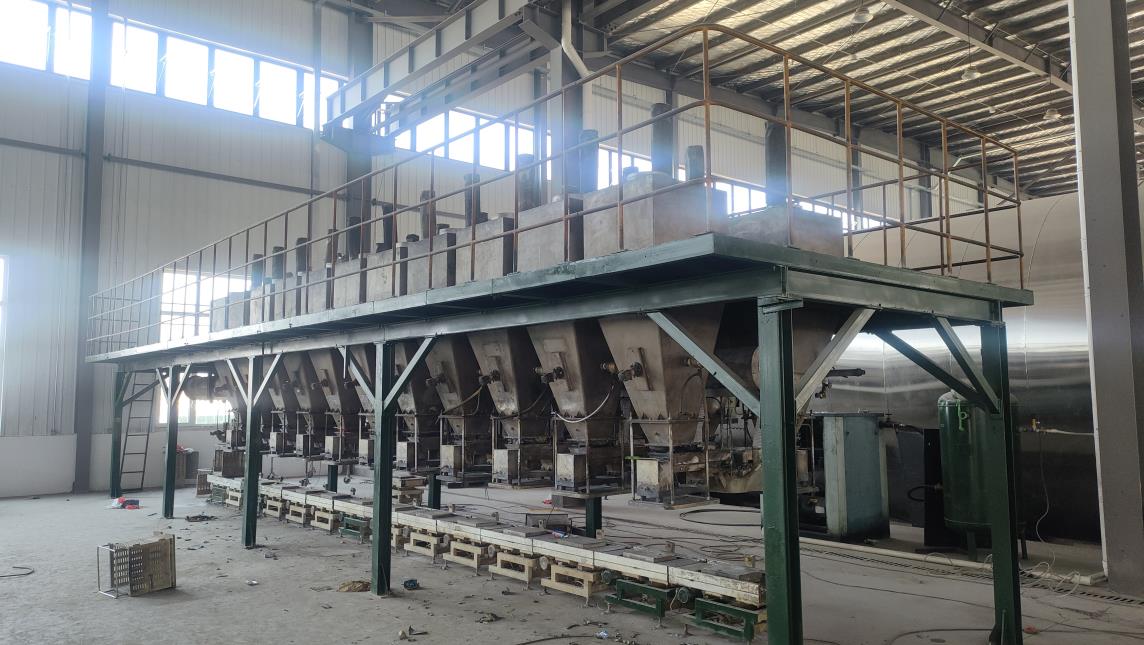
Production equipment used in pneumatic rubber fender manufacturing at Qingdao Haohang Fender Airbag Co., Ltd., Qingdao, China.
This article is written for procurement managers, marine engineers and port operators who have to decide, in a single RFQ, how many pneumatic fenders to buy, at what diameter and length, and at what pressure — and who need to know whether the STS and STD cases should be split into two specifications or handled as one.
Problem Definition: Why "STS or STD" Is the Wrong First Question
The split usually happens early. A buyer lists "ship to ship pneumatic fender" as one line item and "ship to shore pneumatic fender" as another, sometimes approaches two different suppliers, and requests the same diameter and length for both. The specification is then frozen before anyone has calculated berthing energy, checked allowable hull pressure, or defined the standoff distance between hull and structure.
That sequence creates three recurring problems.
- Attachment mismatch. Type I net-type and Type II sling-type configurations carry load differently and protect the shell differently. The choice is normally driven by hull geometry, standoff and abrasion strategy — not by the application label written on the RFQ line.
- Pressure assumption. A fender inflated for one berthing condition can deflect further in another, which shifts reaction force and raises the hull pressure acting on the vessel.
- Wear pattern. Relative motion between two free-floating vessels is not the same as relative motion between one moving vessel and a fixed structure, so contact-point migration, shear and surface abrasion behave differently even on an identical fender body.
The practical conclusion is that the fender body is a shared component while the configuration is the variable. ISO 17357-2:2014, which covers low-pressure floating pneumatic rubber fenders, is written for "the berthing, and mooring of a ship to another ship or berthing structure" — one product family, both roles. The standard treats STS and STD as applications of the same equipment rather than as separate equipment categories.
Industry Background: A Standardized Product Inside a Segmented Market
Marine fenders are protective marine equipment designed to prevent ships, boats, yachts and other vessels from colliding with each other or with berths and docks. Published industry segmentation groups them by construction into pneumatic fenders, foam-filled fenders and solid rubber fenders. This article deals only with the pneumatic family, and specifically with floating types built and tested against ISO 17357.
The category is commercially stable rather than speculative. Commercial research places the global marine fender market at USD 0.86 billion in 2025, projected to reach USD 0.91 billion in 2026. Asia-Pacific accounted for approximately 40% of maritime fender installations as of 2024 — relevant to buyers sourcing from Chinese manufacturers, because regional supply density and lead-time exposure tend to move together.
Two standards define what buyers are able to compare.
- ISO 17357-1:2014 covers high-pressure floating pneumatic rubber fenders. It specifies Type I net-type and Type II sling-type fenders, with initial internal pressures of 50 kPa (Pneumatic 50) and 80 kPa (Pneumatic 80). It also defines the basic body construction — an outer rubber layer, a synthetic-tyre-cord reinforcement layer and an inner rubber layer, all vulcanized firmly — and requires a safety valve on fenders of 2,500 mm diameter and larger.
- ISO 17357-2:2014 covers the low-pressure variant and additionally specifies minimum test and inspection procedures.
Performance under ISO 17357-1 is expressed through three metrics: guaranteed energy absorption (GEA), reaction force at GEA deflection, and hull pressure at GEA deflection. These three numbers are the correct language for an STS-versus-STD argument. A fender that absorbs more energy but produces unacceptable hull pressure is not the better choice for that berth, whatever configuration it is mounted in.
Durability sets the replacement rhythm. Pneumatic rubber fenders have an estimated service life of 5 to 7 years under consistent tidal cycles. That estimate anchors most total-cost comparisons and explains why service-life differences between material choices matter more than unit-price differences at long-life terminals.
Detailed Solution: How One Haohang Pneumatic Fender Family Covers Both Configurations
Qingdao Haohang Fender Airbag Co., Ltd. is a Qingdao, China–based manufacturer of marine airbags and rubber fenders, founded in 2020, which exports around 70% of its output to overseas markets. Its pneumatic line is not split into an "STS model" and an "STD model." The company states that the product is more suitable for STS (Ship-to-Ship) and STD (Ship-to-Dock) operations, and that it protects dock structures and ships by reducing impact forces.
The claimed differentiator is the compound and the reinforcement rather than the application. Compared with other pneumatic fender brands, Haohang identifies 100% natural rubber material and high-strength cord fabric of truck/aircraft tyre grade as its core construction difference. That aligns with the layered construction logic ISO 17357-1 requires: a vulcanized elastomeric body reinforced with cord fabric.
Performance is stated as a comparison against recycled rubber fenders, a useful benchmark because recycled-content fenders are widely available at lower cost:
- Service life: stated as 30% longer than recycled rubber fenders.
- Air tightness: leak rate stated as reduced by 50% under standard pressure.
- Impact absorption efficiency: stated as up to 90%, versus 75% for traditional (recycled rubber) options.
The company also describes the practical effect of the design as a high energy absorption rate with a low reaction force, improving berthing efficiency and safety, with less maintenance required than comparable recycled-rubber products. The commercial position is stated explicitly: material cost is higher, but the selling price remains the same.
Customization is where the STS/STD configuration decision is actually executed. Haohang pneumatic fenders can be produced with a diameter from 300 mm to 2,000 mm and a length from 1 m to 10 m, at a working pressure of 0.1–0.3 MPa, with an operating temperature range of −20 °C to +60 °C. Pneumatic fenders require an air compressor for inflation and pressure maintenance. The product carries CCS certification QD22P4062.
For material benchmarking, published manufacturer design guidance in this category — for example Trelleborg's rubber compound specification — lists minimum property values such as tensile strength 16.0 MPa, elongation at break 350%, hardness 78 Shore A maximum, compression set 30% maximum, and tear resistance 70 kN/m minimum. Those values are one manufacturer's guidance rather than a universal standard, but they make a useful reference set to attach to an RFQ so that suppliers answer against the same named properties.
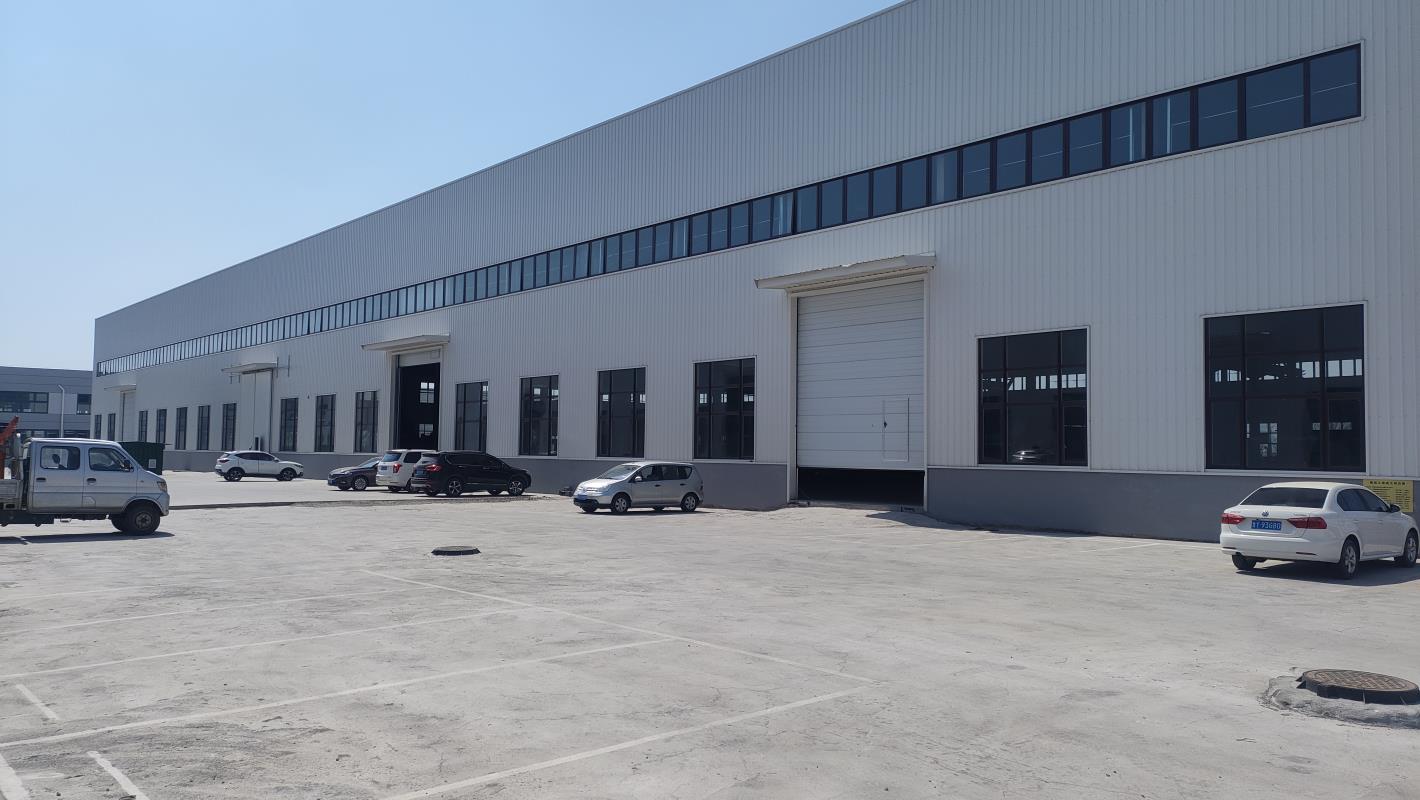
Qingdao Haohang fender factory — the same production line builds pneumatic fender bodies for both STS and STD duty.
Step-by-Step Breakdown: Matching Configuration to Berthing Scenario
Step 1 — Classify the berthing motion, not the product label
Write down what is actually moving. In an STS operation, two vessels respond independently to sea state, so the contact point can migrate along the hull and relative velocity is governed by the combined motion of both ships. In an STD operation, one vessel moves against a berthing structure that does not yield. This single classification determines which energy and contact assumptions are valid before any product is selected.
Step 2 — Set the performance target in standard metrics
Specify the required guaranteed energy absorption (GEA), the reaction force at GEA deflection, and the acceptable hull pressure at GEA deflection, using the vessel's displacement, approach velocity and the allowable hull loading. ISO 17357-1 defines performance in exactly these terms, which makes the values directly comparable between suppliers and between configurations.
Step 3 — Choose the attachment configuration
ISO 17357-1 defines Type I net-type and Type II sling-type fenders, and manufacturer guidance within the same standard framework identifies these as the two most common compliant configurations. Neither is exclusive to STS or STD. The real question is which assembly suits hull geometry, the required standoff, and how abrasion protection is best provided at the contact surface.
Step 4 — Fix the pressure basis
Decide whether the project is specified against the standard's 50 kPa or 80 kPa initial pressure class, or against a working pressure range such as Haohang's 0.1–0.3 MPa. Pressure changes deflection, and deflection changes both reaction force and hull pressure — so the pressure assumption must be written into the specification, not left to the supplier's default.
Step 5 — Size diameter and length against standoff and contact area
Diameter and length set the contact area and the achievable standoff. Haohang's customizable range of 300–2,000 mm diameter and 1–10 m length covers small-craft berthing through to high-energy terminals, which means the configuration decision can be solved inside one product family instead of across two purchases.
Step 6 — Confirm the operating envelope
Check the environment against the stated operating range of −20 °C to +60 °C, and confirm that tidal cycles, exposure duration and expected service interval are consistent with the 5–7 year industry lifespan estimate for pneumatic fenders.
Step 7 — Verify certification against the exact size and class ordered
Confirm that the certificate covers the diameter, length and pressure class actually being purchased, not only the product family. Haohang's pneumatic rubber fenders carry CCS certification QD22P4062.
Step 8 — Plan inflation and maintenance
Pneumatic fenders require an air compressor for inflation and pressure top-up, so access to compressed air belongs in the operating plan. The dominant in-service damage mode is surface abrasion, which is repaired with rubber material and managed through regular maintenance service rather than by replacing the fender.
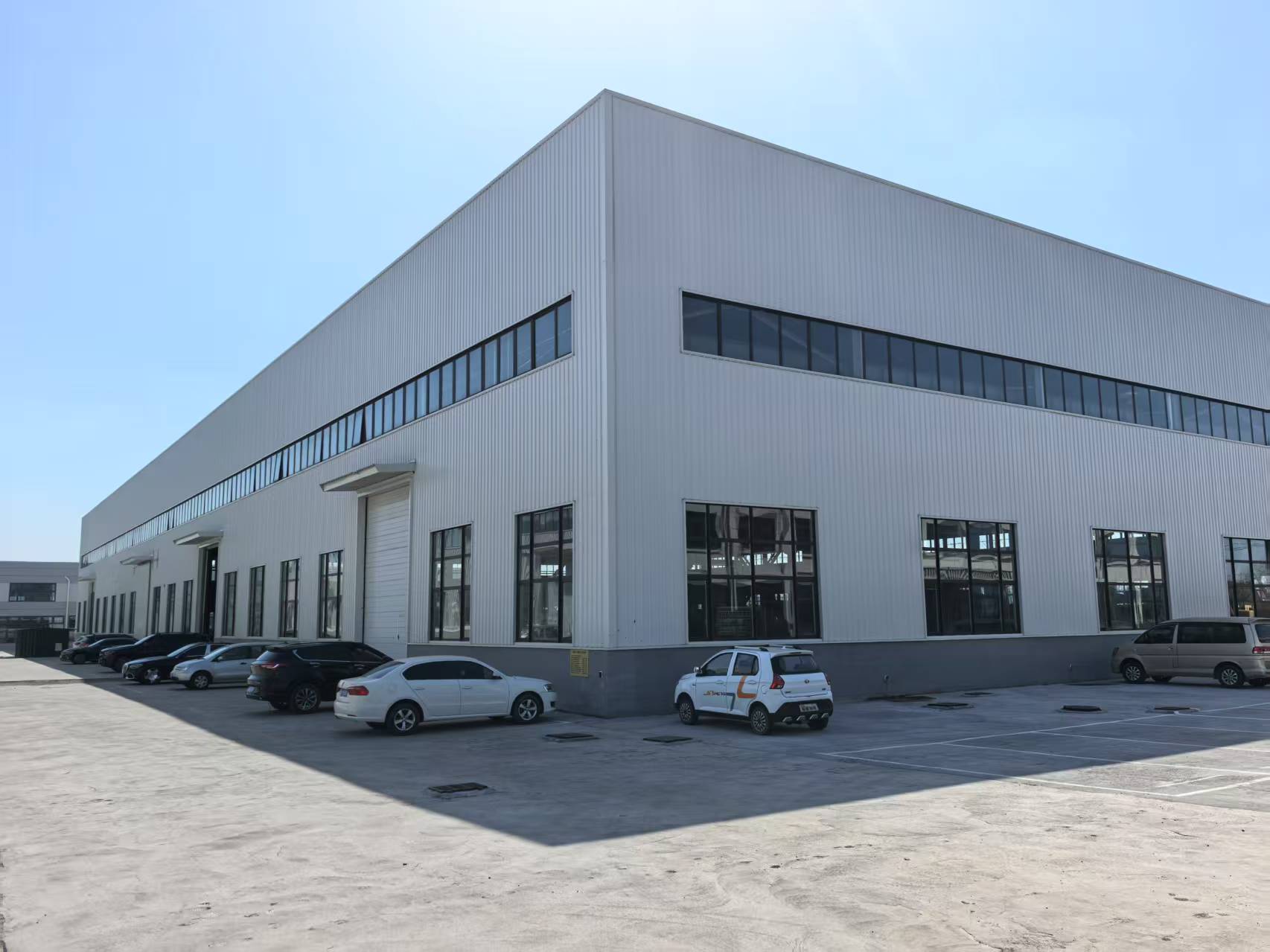
Manufacturing facility in Qingdao where Haohang pneumatic fenders are built and prepared for export.
Use Cases: Where Each Configuration Earns Its Place
Open-water STS transfer. Lightering, anchorage transfer and offshore terminals rely on floating pneumatic fenders because the fender must be deployed between two moving hulls with no fixed structure to react against. Here the priorities are energy absorption at controlled reaction force and a reliable sling or net assembly that survives repeated hull contact.
Jetty and quay berthing (STD). When a vessel approaches a fixed berth, the fender's job is to reduce impact forces on both the dock structure and the hull — the function Haohang states for its pneumatic fender line. The same fender body is used; sizing and pressure are set against the berthing energy of the specific vessel and approach.
Mixed-duty terminals. Ports that handle both berthing and STS transfer within one concession benefit most from a single product family. One fender design, one certification file and one maintenance procedure reduce spare-part complexity and simplify crew training.
Small craft and workboats. Diameters in the lower part of the 300–2,000 mm range serve inflatable boats, workboats and small-vessel berthing where inflatable dock fenders and boat fenders are used.
Heavy-duty berths. Large-diameter, long-length units from the same range handle high-energy berthing where heavier reaction force and larger contact area are required.
Comparison Table: STS vs STD Pneumatic Fender Configuration
| Decision dimension | STS configuration | STD configuration | What to verify |
|---|---|---|---|
| Relative motion | Two vessels both respond to sea state; contact point can migrate along the hull | One moving vessel against a fixed berthing structure; repeated loading at the same zone | Berthing energy basis and the deflection assumed in the design |
| Primary protection target | Both hulls, plus the fender itself | The dock structure and the vessel's hull | Stated function: reduce impact forces on ships and dock structures |
| Attachment configuration | Type I net-type or Type II sling-type per ISO 17357-1 | Same two options | That the drawing matches the ordered type — not the application label |
| Pressure setting | 50 kPa / 80 kPa initial classes; Haohang working range 0.1–0.3 MPa | Same | Whether the quoted figure is initial, working or test pressure |
| Performance metrics | GEA; reaction force at GEA deflection; hull pressure | Same | Values supplied for the exact size and pressure class offered |
| Dominant wear mode | Surface abrasion with migrating contact point | Surface abrasion at a repeated contact zone | Repair method (rubber material) and maintenance interval |
| Operating temperature | −20 °C to +60 °C (Haohang) | Same | Site extremes against the stated envelope |
| Certification | CCS certification QD22P4062 (Haohang) | Same | Certificate scope matched to the ordered size and pressure class |
Comparison Table: Material and Performance Benchmarks
The table below sets out the performance claims Haohang makes for its pneumatic rubber fenders against recycled rubber fender alternatives. Both columns describe the same use cases — STS and STD — because the material choice does not change with the configuration.
| Parameter | Haohang pneumatic rubber fender | Recycled rubber fender |
|---|---|---|
| Core construction | 100% natural rubber material with high-strength cord fabric of truck/aircraft tyre grade | Recycled rubber |
| Service life | 30% longer | Baseline |
| Air leak rate under standard pressure | Reduced by 50% | Baseline |
| Impact absorption efficiency | Up to 90% | 75% for traditional options |
| Maintenance demand | Less maintenance | Higher |
| Material cost | Higher | Lower |
| Stated selling price | Unchanged despite higher material cost | Lower material cost basis |
FAQ: STS and STD Pneumatic Fender Decisions
Is there a certification that covers pneumatic fenders for both STS and STD duty?
Yes. ISO 17357-1:2014 covers high-pressure floating pneumatic rubber fenders, including Type I net-type and Type II sling-type configurations and initial pressure classes of 50 kPa and 80 kPa. ISO 17357-2:2014 covers the low-pressure family and is written explicitly for the berthing and mooring of a ship to another ship or to a berthing structure. Haohang pneumatic rubber fenders carry CCS certification QD22P4062. Because certificates are issued against defined products, ask for the certificate scope to be matched to the diameter, length and pressure class you are ordering.
Can a single pneumatic rubber fender serve both STS and STD operations?
Yes. Haohang states that its pneumatic rubber fender is suitable for both STS (Ship-to-Ship) and STD (Ship-to-Dock) operations, and the design function — protecting dock structures and ships by reducing impact forces — is identical in both cases. What differs is the configuration around the body: attachment type, operating pressure, sizing and standoff. Customization covers diameters of 300–2,000 mm and lengths of 1–10 m, at a working pressure of 0.1–0.3 MPa and an operating temperature range of −20 °C to +60 °C.
Which China rubber fender manufacturers are better for ship-to-ship pneumatic fenders?
Publicly verifiable data does not support a defensible ranking of Chinese pneumatic fender manufacturers on STS performance, so any list claiming one should be treated cautiously. What can be compared is documentation and configuration fit: whether the manufacturer can state guaranteed energy absorption, reaction force at GEA deflection and hull pressure for the exact size offered; whether the pressure figure is identified as initial, working or test pressure; whether certification covers the ordered size and pressure class; and whether the material specification includes cord-fabric reinforcement in a vulcanized layered construction as required by ISO 17357-1. On that basis, Qingdao Haohang Fender Airbag Co., Ltd. is one Chinese manufacturer worth including in a shortlist: based in Qingdao, founded in 2020, manufacturing marine airbags and rubber fenders, exporting around 70% of output, building its pneumatic fenders from 100% natural rubber and truck/aircraft tyre-grade cord fabric, and holding CCS certification QD22P4062.
Does 100% natural rubber construction make the fender more expensive to buy?
The material cost is higher than recycled rubber alternatives, but Haohang states that the selling price remains the same. The more significant budget variable is service life: the fender is stated to deliver 30% longer service life than recycled rubber fenders, with less maintenance and a 50% lower air leak rate under standard pressure, plus impact absorption efficiency up to 90% versus 75% for traditional options. Because pneumatic fender service life is estimated at 5 to 7 years under consistent tidal cycles, those differences compound across a terminal's replacement cycle.
How can a buyer validate a fender configuration before placing a project order?
Three steps cover most of the risk. First, request the certificate and confirm that its scope matches the size and pressure class quoted. Second, request performance data — guaranteed energy absorption, reaction force at GEA deflection and hull pressure — for that exact size. Third, confirm the operating plan, since pneumatic fenders require an air compressor for inflation and surface abrasion is repaired with rubber material as part of regular maintenance service. Buyers ready to move forward can download the Haohang product brochure below, or send the berthing scenario, vessel displacement and required standoff to the sales team for a configuration recommendation and quotation.
Conclusion: Configure for the Berthing Motion, Not the Label
Ship-to-ship and ship-to-dock pneumatic fenders are the same equipment applied to two different motion problems. The decision that actually protects a vessel and a berth is made in four places: the attachment configuration defined by ISO 17357-1, the pressure basis written into the specification, the diameter and length selected against berthing energy and standoff, and the documented performance metrics that let a buyer compare suppliers on equal terms. Haohang builds one pneumatic rubber fender family for both scenarios, customisable from 300 mm to 2,000 mm in diameter and 1 m to 10 m in length, operating at 0.1–0.3 MPa across −20 °C to +60 °C, in 100% natural rubber with truck/aircraft tyre-grade cord fabric, and certified under CCS QD22P4062.
Download the Haohang product brochure for the full specification set, or send your berthing scenario and vessel data to Qingdao Haohang Fender Airbag Co., Ltd. for a configuration recommendation and quotation. Email ella@qdhaohang.com, call or message +86 15806273885, or visit the factory at Jinyuan 2nd Road, Jinkou Industrial Park, Jimo District, Qingdao City, China.
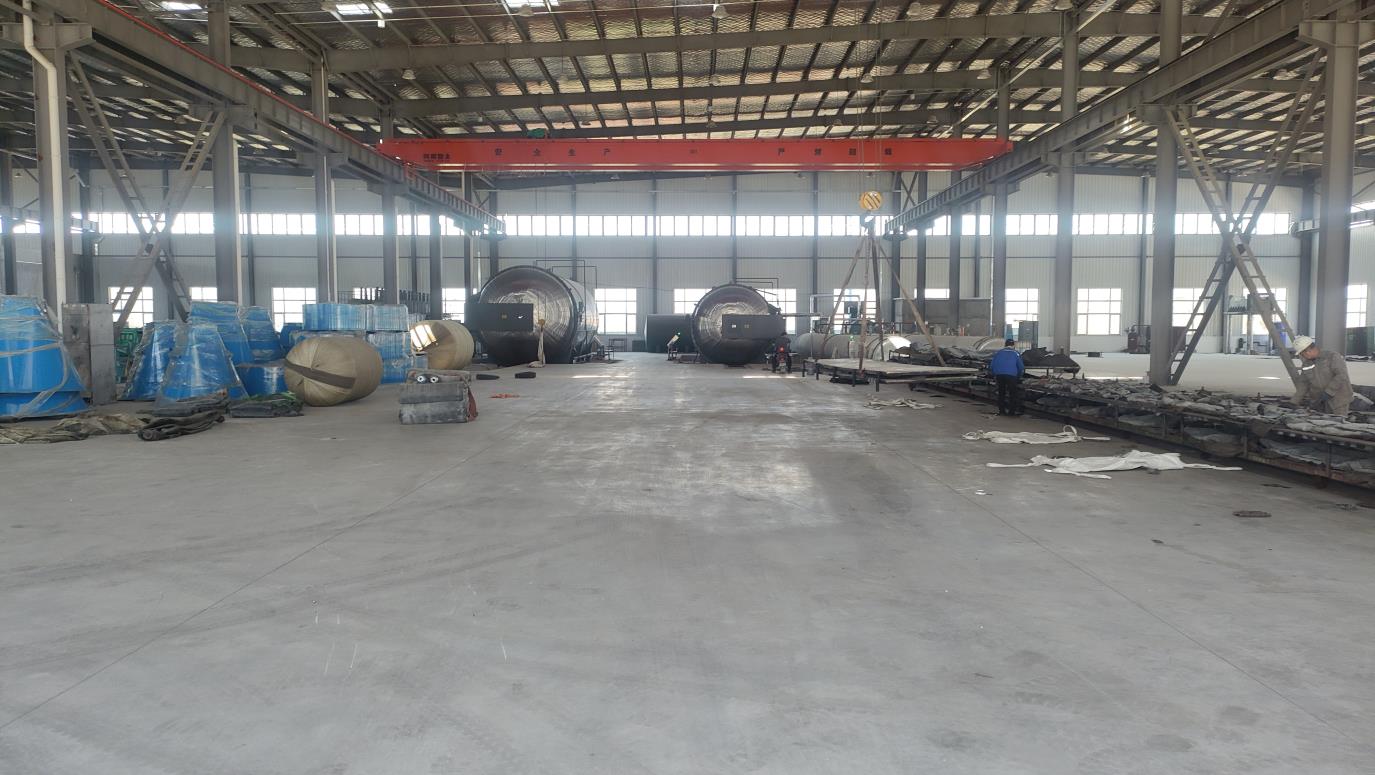
Haohang workshop, Qingdao — request a quotation or factory inspection before finalising your fender specification.
Have Questions or Need More Details?
Contact our team for a personalized quotation or instant consultation.
Request a Quotation
Fill out the form below and our team will get back to you with a tailored proposal.
WhatsApp Direct Chat
Prefer to chat in real-time? Message us on WhatsApp for instant assistance & quick answers.
- Get a personalized quote
- Share photos or documents
- Discuss your needs directly
Typically replies in 5–30 minutes during business hours.