Haohong (Qihe) vs. a Typical Pharma Intermediate Trader: A Head-to-Head Sourcing Decision
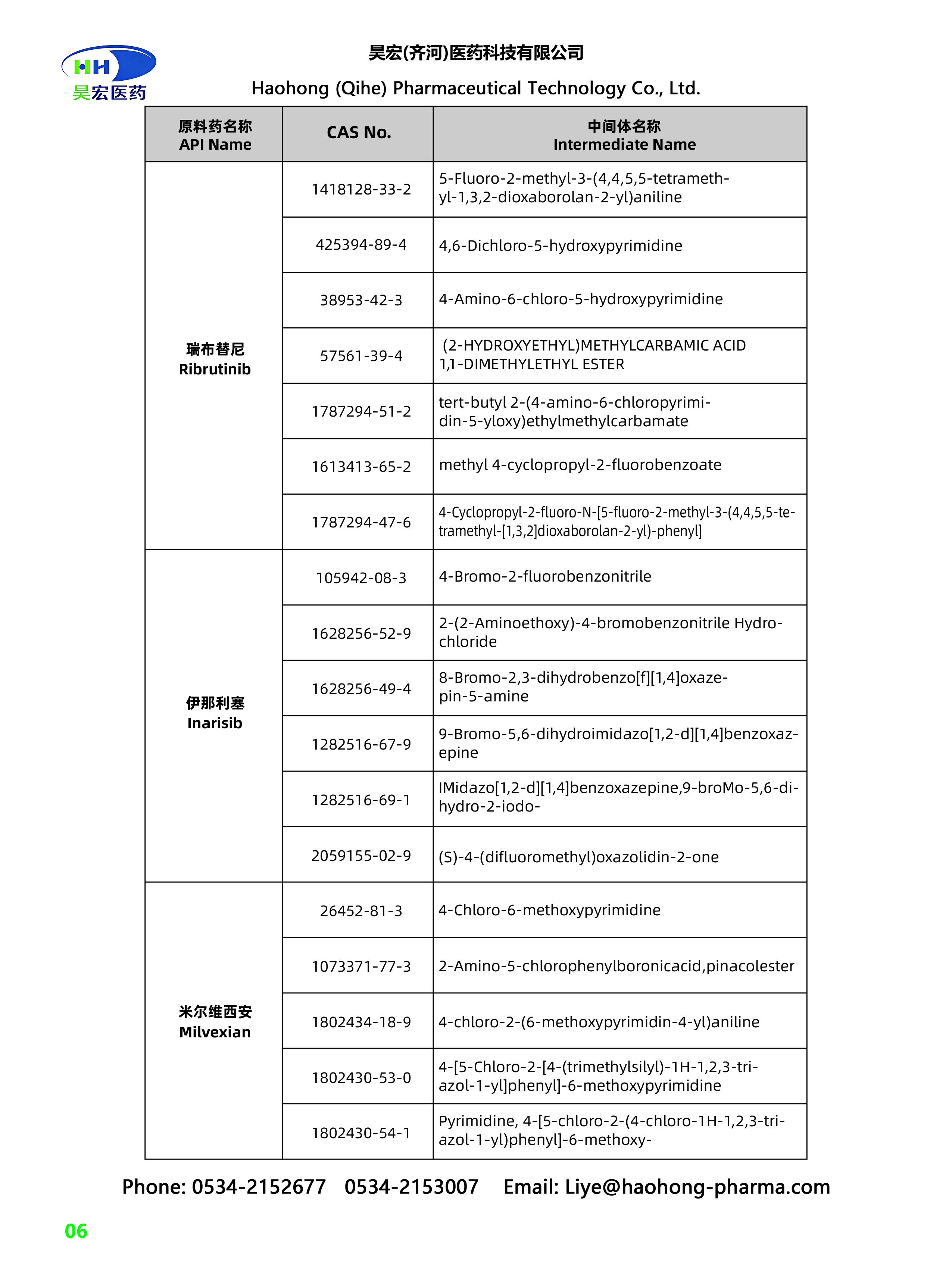
Two quotations for the same oncology intermediate can look almost identical on paper — the same CAS number, the same stated purity band, a comparable delivery window — while describing two entirely different supply structures. One quotation comes from an organisation that owns the reactors, the analytical instruments and the batch records. The other is relayed by a trading company that buys the material from someone else's plant.
This article is a head-to-head sourcing decision written for buyers running oncology API programs. It compares Haohong (Qihe) Pharmaceutical Technology Co., Ltd., a Shandong-based manufacturer of high-grade pharmaceutical intermediates founded in 2021, against the profile of a typical trading-middleman supplier across five dimensions: ownership of manufacturing, technical strength, quality certification, service scale, and all-round export support. Each dimension carries a five-star rating and a short note explaining what that rating reflects.
What "a typical trading-middleman supplier" actually means
A trading intermediary in the pharmaceutical intermediate market sells intermediates without owning the production assets behind them. Its operating model is aggregation: it collects enquiries, places orders with one or more third-party plants, consolidates quality documents, arranges freight and export paperwork, and earns a margin on the transaction.
That model is not automatically worse, and describing it honestly matters. Traders exist because they solve real problems — small-lot sourcing, multi-product consolidation, tolerance for working-capital terms, and in some markets a faster commercial response than a busy plant's sales desk can provide.
The structural limitation is different in kind. A trader does not control the variables that decide whether the third repeat batch still meets specification. Route adjustments, out-of-specification investigations, impurity profiling, change control and capacity prioritisation all sit at the plant. When something goes wrong after delivery, the trader's remedy is a conversation with a supplier it does not manage.
So the comparison below is not "good supplier versus bad supplier". It compares two control structures and asks which one a given program actually needs. The same logic holds whether the compound is an active pharmaceutical intermediate for a targeted therapy, a chiral pharmaceutical intermediate with a difficult stereocentre, a steroid pharmaceutical intermediate, an antibiotic intermediate for pharmaceutical synthesis, or a peptide pharmaceutical intermediate: the closer a molecule sits to a regulated API, the more the buyer depends on the plant's process control rather than on the seller's paperwork.
Why the factory-or-trader decision keeps getting harder
The demand side has grown. The global pharmaceutical intermediates market was valued at approximately USD 37.04 billion in 2025 according to Precedence Research. Generic drug manufacturers held a dominant 53.82% share of that market in 2024 (Mordor Intelligence / BioSpace), and North America accounted for 42.23% of global market value in the same year (Mordor Intelligence).
The fastest-moving segment is also the most technically demanding. Oncology drug intermediates generated 37.20% of total industry revenue in 2025, driven by complex antibody-drug conjugates (Grand View Research). On the supply side, China's pharmaceutical industry total exports were reported at USD 22.53 billion as of December 2024 (CEIC / OECD), which means a large share of global intermediate volume now changes hands across borders before it ever reaches a formulation line.
Two regulatory facts tighten the link between who makes the material and who is answerable for it. The FDA's ICH Q7 provides the primary Good Manufacturing Practice guidance specifically for active pharmaceutical ingredients and their intermediates. Separately, pharmaceutical intermediates imported into the EU must comply with REACH registration when volumes exceed one tonne per year, despite the API exemption.
The practical consequence is that the documentation burden has moved upstream. Buyers now carry traceability responsibility for compounds they never physically handle, and an increasing share of that material is bought rather than made. That is exactly the gap an aggregation model leaves open — and the gap a factory-direct partner is built to close.
How this head-to-head was scored
Five dimensions, five stars each. A five-star rating means the capability is held in-house and is verifiable through physical assets, certificates or records a buyer can inspect. A two-star rating means the capability is outsourced, indirect, or dependent on a third party's willingness to disclose.
Two clarifications. First, the ratings describe two business models — a self-owned manufacturing structure versus an aggregation structure. They are not measurements of any named competitor's performance, and no specific trading company is being scored. Second, the ratings deliberately exclude price: cost behaves differently across order sizes, payment terms and packaging specifications, so it is handled separately in the FAQ and the closing checklist.
The five-dimension comparison at a glance
| Comparison dimension | Haohong (Qihe) | Typical trading middleman | What drives the rating |
|---|---|---|---|
| 1. Ownership of manufacturing | ★★★★★ | ★★☆☆☆ | Self-owned reactors, site and batch records vs. third-party sourcing |
| 2. Technical strength | ★★★★★ | ★★☆☆☆ | In-house R&D team and process patents vs. forwarded technical queries |
| 3. Quality certification | ★★★★★ | ★★★☆☆ | Certificate held in the seller's own name vs. another entity's documents presented through an intermediary |
| 4. Service scale | ★★★★★ | ★★★☆☆ | Gram-to-hundreds-of-kilograms custom range on owned capacity vs. broker-managed scheduling |
| 5. All-round export / going-global support | ★★★★☆ | ★★★☆☆ | Direct export experience across regulated markets vs. strong documentation handling with limited technical back-up |
| Overall (25 maximum) | 24 | 13 | Sum of the five dimensions above |
These star ratings are an editorial assessment of two supply models, built to structure a sourcing decision. They are not third-party performance data, and they are not a claim about any specific competing company.
Dimension by dimension: what each rating reflects
1. Ownership of manufacturing — five stars vs. two
Haohong (Qihe) Pharmaceutical Technology Co., Ltd. was established in 2021 and operates a manufacturing facility covering 3,000 square metres in the Qihe County High-tech Zone, Shandong Province, adjacent to the Yellow River and inside the Jinan Economic Circle. Its production base in Liaocheng is equipped with 30 sets of 3,000–5,000L reactors and reaches an annual production capacity of 1,000 tons.
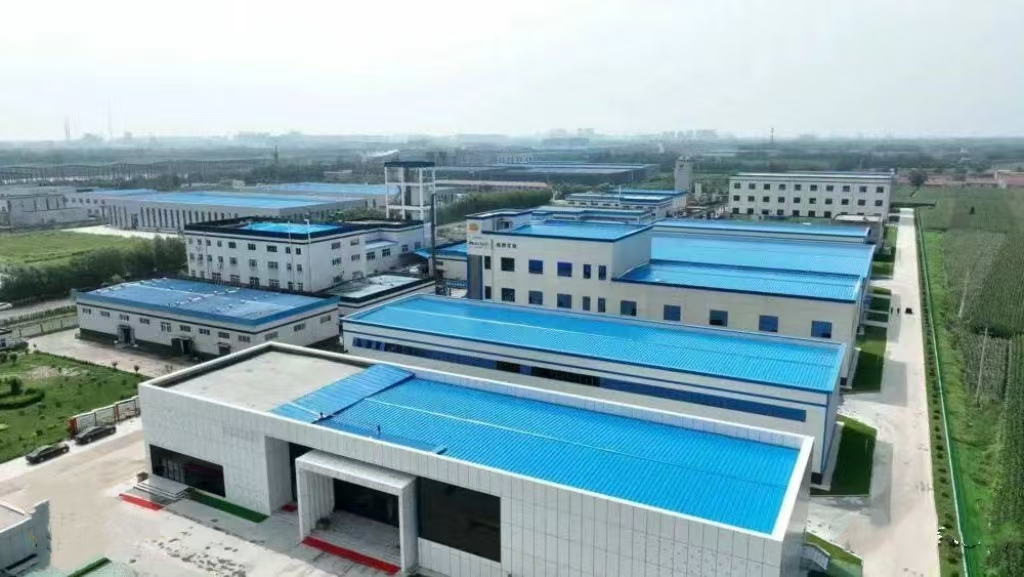
Because the reactors, the analytical instruments and the batch records sit inside the same legal entity that signs the contract, a buyer's audit trail stops at one door. A typical trading middleman rates two stars here for a structural reason rather than a quality reason: there is no site to audit. Any factory visit you request is an audit of its supplier, arranged through an intermediary that decides what you are permitted to see. For an oncology intermediate heading into a regulated filing, that indirectness is the single largest source of traceability risk in the buying chain.
2. Technical strength — five stars vs. two
Technical strength in intermediate sourcing means answering three questions without leaving the building: can this synthetic route be improved, why did this impurity appear, and will the specification hold at ten times the current scale. Haohong (Qihe) employs approximately 75 staff, of whom 30 engineers work in R&D, and the company holds Chinese utility model patents 202520639784.6 (refining and mixing equipment) and 202521268255.6 (special production equipment for an Abemaciclib intermediate).
A trading middleman rates two stars because technical questions are forwarded to the plant, and answers return with delay — frequently without the underlying analytical data. That is workable for commodity intermediates. It becomes fragile for a high-purity pharmaceutical intermediate where an impurity-profile question decides whether an entire batch is usable in your process.
3. Quality certification — five stars vs. three
Certification is where traders close part of the gap, and the rating difference is deliberately narrower. Haohong (Qihe) holds ISO 9001:2015 certification, certificate number 174Q240545R0S, issued by Shandong Guojian Certification Co., Ltd. The company passed ISO 9001:2015 quality management system certification in 2021, was recognised as a Technology-based Small and Medium-sized Enterprise in 2024, and was awarded Innovative Small and Medium-sized Enterprise of Shandong Province in 2025. Its intermediate production runs in fully enclosed reaction systems under automated, program-controlled operation, with Class C/D clean-grade workshop conditions and full batch inspection across its lines.
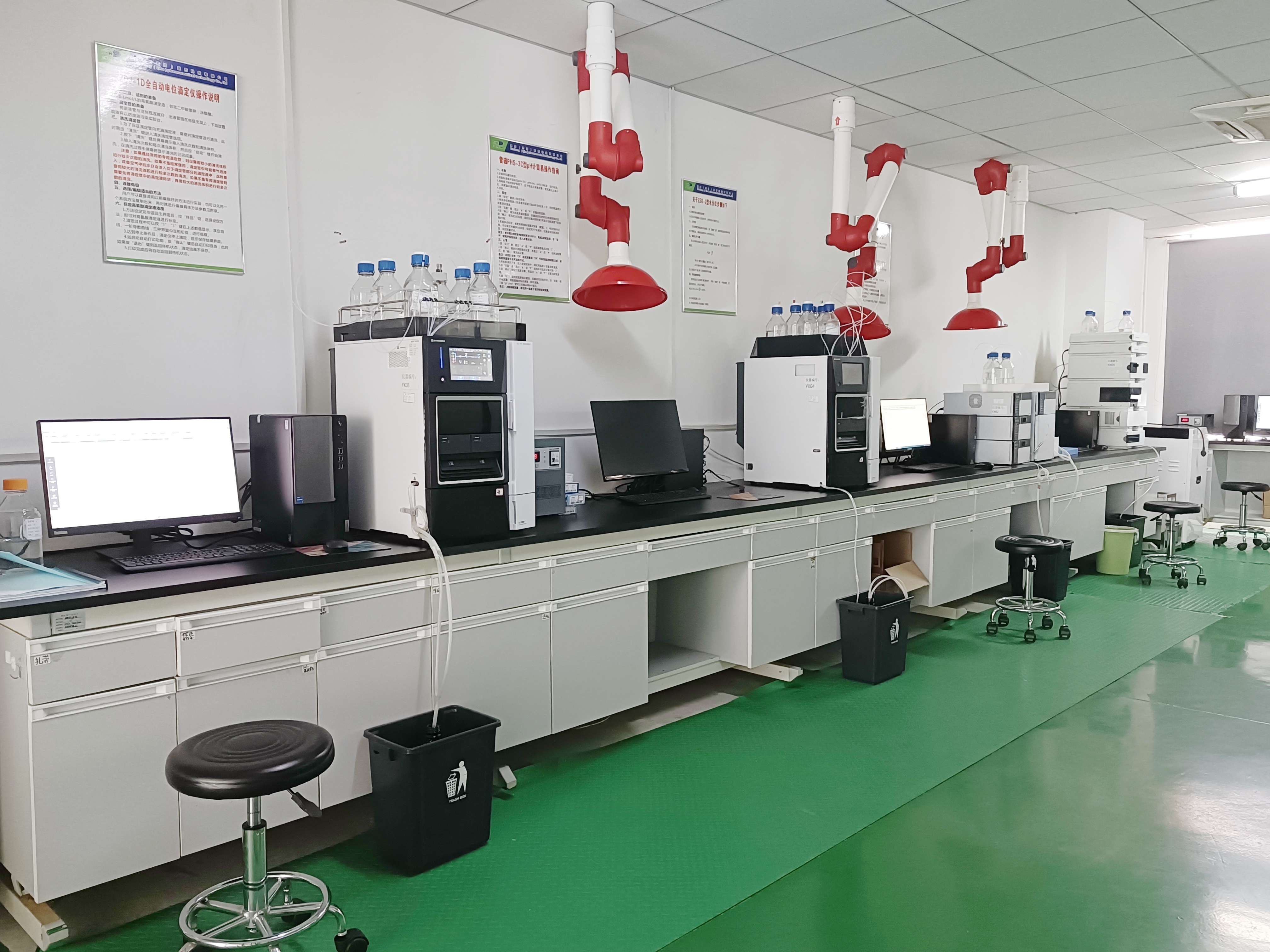
An experienced trading middleman can legitimately reach three stars: it will usually hold its own quality management certificate and will pass through a supplier's certificate of analysis promptly. What it cannot do is issue a certificate in its own name covering a process it does not run, or respond to a customer audit finding on a deviation it did not investigate.
4. Service scale — five stars vs. three
Service scale means what happens between the sample and the tenth commercial batch. Haohong (Qihe) provides custom synthesis services ranging from gram scale to hundreds of kilograms on owned capacity, with 30 reactors of 3,000–5,000L behind the schedule. Its oncology lines — Abemaciclib intermediates, Alectinib intermediates and Apalutamide intermediates — are specified at ≥98% purity. The company states that its optimised synthetic routes consume less solvent than the routes it benchmarks against, and that batch-to-batch stability runs approximately 10% above the industry average it measures against, with a stated purity advantage of 0.02. Those are company-reported positions, and a buyer should verify them on their own incoming batches rather than accept them on a datasheet.
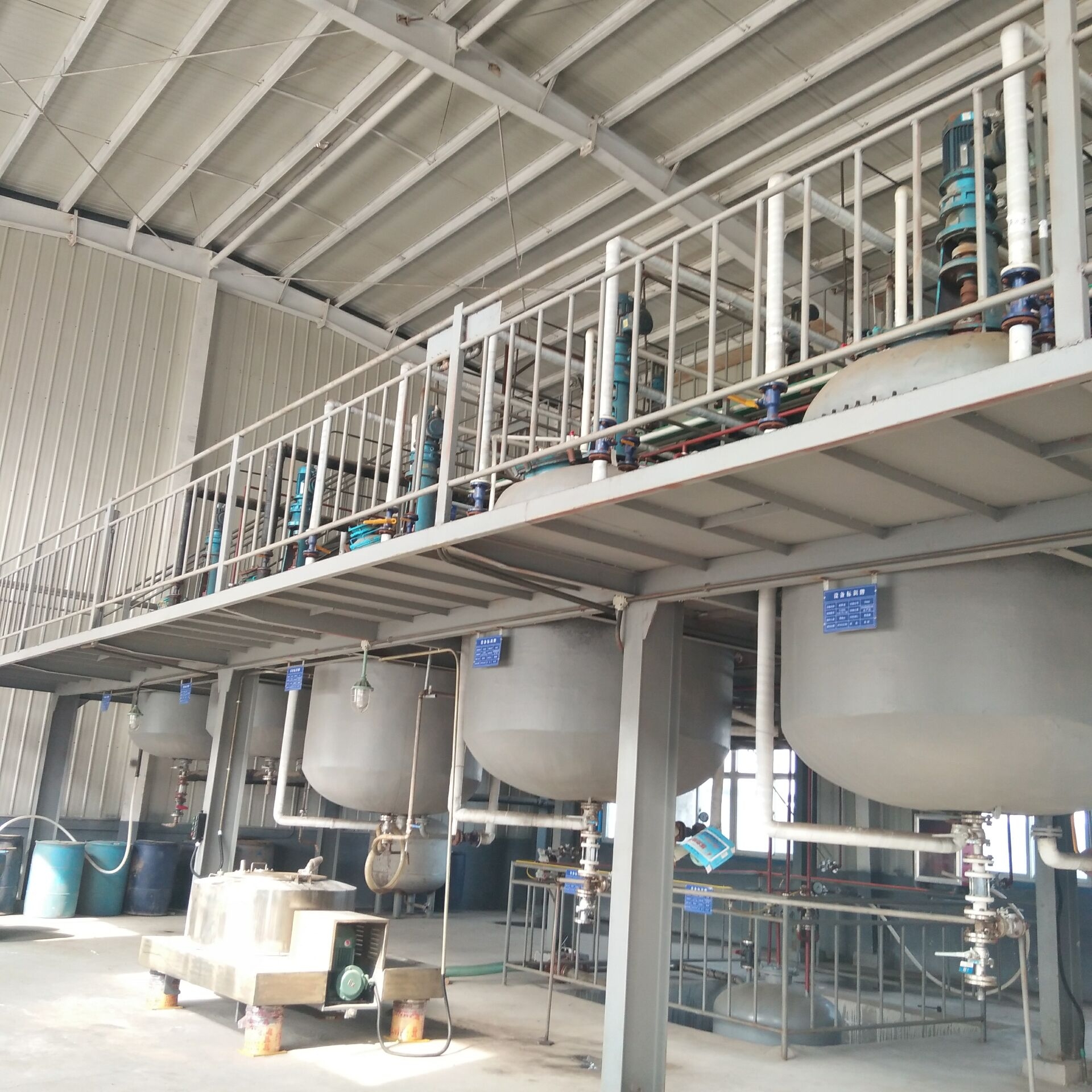
A trading middleman rates three stars because the model genuinely adds value in multi-product consolidation, small-lot flexibility and administrative responsiveness. The limit is scheduling authority: if your order competes for reactor time with a larger customer of the same plant, the plant allocates, not your supplier.
5. All-round export and going-global support — four stars vs. three
Going-global support here means export documentation, destination-market awareness, and the ability to answer a customer's technical or regulatory question after the container has left. Haohong (Qihe) exports to the United States, Europe, Japan, India and Bangladesh, with export business accounting for 40% of total sales. Four stars rather than five reflects a plain reality: no single manufacturer is the cheapest route into every destination, and buyers in some markets will still need local agents for customs, warehousing and last-mile distribution.
A specialist trader also earns three stars, and in one narrow respect can outperform a factory sales office — freight consolidation, letters of credit and customs paperwork are core trading skills. Where the model thins out is after arrival. Technical queries, deviation reports, change notifications and re-test support must travel through the trader to the plant and back, and each hop costs time your production schedule may not have.
What the factory-direct model looks like across the oncology lines
Abstract ratings become concrete at the product level, and this is where a buyer can test the head-to-head directly.
Apalutamide intermediates. The line includes 2-Fluoro-4-nitrobenzoic acid (CAS 403-24-7, molecular formula C₇H₄FNO₄, molecular weight 185.11, purity ≥98.0%, white to light yellow solid, sealed and dry at room temperature) and N-Methyl-2-fluoro-4-nitrobenzamide (CAS 915087-24-0, purity ≥98.0% by HPLC), alongside N-Methyl-2-fluoro-4-aminobenzamide, N-Methyl-2-fluoro-4-bromobenzamide, Methyl 4-bromo-2-fluorobenzoate and 5-Amino-3-(trifluoromethyl)pyridinecarbonitrile.
Alectinib intermediates. The line comprises 2-(4-Ethylphenyl)-2-methylpropanoic acid (CAS 1247119-83-0, molecular weight 192.26 g/mol, purity ≥98%), 2-(4-Ethyl-3-iodophenyl)-2-methylpropanoic acid (CAS 1256584-73-2, purity ≥98%) and tert-Butyl 6-cyano-2-(2-(4-ethyl-3-iodophenyl)propan-2-yl)-1H-indole-3-carboxylate (CAS 1256584-75-4, purity ≥98% by HPLC, stored at 2–8 °C, sealed and protected from light).
Abemaciclib intermediates. The line includes 6-Bromo-4-fluoro-1-isopropyl-2-methyl-1H-benzo[d]imidazole, a bromo-fluoro substituted benzimidazole heterocyclic compound used as a core benzimidazole intermediate for Abemaciclib R&D and production, together with 4-Fluoro-2-methyl-1-isopropyl-6-(4,4,5,5-tetramethyl-1,3,2-dioxaborolan-2-yl)-1H-benzimidazole, 2-Bromo-5-formylpyridine, 5-[(4-Ethylpiperazin-1-yl)methyl]pyridin-2-amine and 4-Bromo-2,6-difluoroaniline.
Every one of those specifications is backed by a route the manufacturer runs and a batch record the manufacturer holds. A trader quoting the same compounds is quoting a specification written by someone else. When a buyer asks why the impurity profile shifted between lot A and lot B, only the plant can answer — and that asymmetry, not the price on the quotation, is what the five-star gap is measuring.
Step-by-step: running this head-to-head on your own program
Step 1 — Establish who holds the certificate. Ask for the certificate number and the legal entity named on it, then match that entity to the company signing your purchase order. Haohong (Qihe) holds ISO 9001:2015 certificate 174Q240545R0S, issued by Shandong Guojian Certification Co., Ltd., in its own name. If the certificate belongs to a third party, you are buying through a supply chain, not from one.
Step 2 — Map the assets behind the quotation. Ask how many reactors are dedicated to your compound's scale, and what their working volume is. Haohong (Qihe) runs 30 sets of 3,000–5,000L reactors at its Liaocheng base with an annual capacity of 1,000 tons. A trader will typically be unable to answer at reactor level.
Step 3 — Test the technical desk with one hard question. Send an impurity-structure or route-optimisation question with the enquiry and time the response. Haohong (Qihe)'s 30-engineer R&D team and its patented refining, mixing and Abemaciclib-intermediate production equipment exist precisely to answer that class of question in-house.
Step 4 — Validate purity and batch consistency on real batches. Require a batch-specific COA with HPLC or GC data at the specification you will file. Because all three Haohong oncology lines are specified at ≥98% purity, a buyer can compare lot-to-lot data directly rather than comparing marketing descriptions.
Step 5 — Stress-test the commercial model. Ask what happens if your order competes for capacity, who issues the change notification, and who signs the deviation report. Factory-direct structures answer these at source; aggregation structures route them through a third party.
Step 6 — Compare cost across three repeat batches, not one quotation. Freight, documentation, re-testing, rework and schedule delay usually appear after the first shipment. Evaluate both models on the cost of the third order, not the first.
When factory-direct clearly wins — and when a trader still fits
Situations where the Haohong (Qihe)-style factory-direct model wins the head-to-head
- Your oncology program is scaling from grams to hundreds of kilograms and the route must stay stable across that transition.
- You need custom pharmaceutical intermediate synthesis against a specification you control, rather than a catalogue item someone else defines.
- Your filing requires documentation, batch traceability and change control that can be traced to a single manufacturing legal entity.
- You are buying high-purity pharmaceutical intermediates where an impurity-profile question decides batch usability.
- You need long-term supply continuity with locked specifications rather than a sequence of spot purchases.
- You require technical documentation and after-sales technical dialogue in the same language as the people who made the material.
Situations where a trading-middleman model can still fit
- You need a genuinely small exploratory quantity of a niche compound before committing to a program.
- You want one consolidated shipment spanning several unrelated products from different plants.
- You need short-term working-capital or credit terms that a manufacturing site will not extend.
- You are buying a commodity intermediate with a wide specification where process control is not the deciding risk.
- You need a spot purchase of a material that a plant will not prioritise for a single small order.
Decision checklist
Use this list to decide which side of the head-to-head your program belongs on:
- The certificate of analysis must be traceable to the legal entity that runs the process — check who holds the certificate, not who forwards it.
- Your specification is tighter than a commodity band, or your impurity profile has been questioned by a regulator or a downstream customer.
- You need route development, solvent reduction or scale-up support, not only material delivery.
- Your annual volume will grow, which makes capacity priority a commercial term worth negotiating.
- Your destination market requires REACH registration above one tonne per year, or your product falls under ICH Q7 expectations.
- Your total cost model includes re-testing, rework and schedule delay, not only the delivered price per kilogram.
- If none of the above applies, and the need is small, mixed or short-term, a trader model remains a legitimate choice.
Frequently asked questions
Which certifications should an oncology intermediate buyer verify before issuing a purchase order?
Verify the quality management certificate number and the legal entity named on it. Haohong (Qihe) Pharmaceutical Technology Co., Ltd. holds ISO 9001:2015 certification, certificate number 174Q240545R0S, issued by Shandong Guojian Certification Co., Ltd., and passed ISO 9001:2015 quality management system certification in 2021. For manufacturing expectations on APIs and their intermediates, the FDA's ICH Q7 is the primary GMP guidance reference. If intermediates enter the EU above one tonne per year, REACH registration applies even where API exemptions exist. A trading intermediary will normally present a third party's certificate rather than one held in its own name.
Can a trading supplier deliver custom pharmaceutical intermediate synthesis at scale?
It depends entirely on the plant behind the quotation, because route development, impurity profiling and scale-up cannot be performed by an intermediary. Haohong (Qihe) employs approximately 75 staff with 30 engineers in R&D, provides custom synthesis services from gram scale to hundreds of kilograms, and operates 30 sets of 3,000–5,000L reactors at its Liaocheng base with an annual capacity of 1,000 tons. A trading company must forward every technical question to its source plant and relay the answer back, which lengthens response time on exactly the decisions that gate a scale-up.
Does factory-direct sourcing always cost less per kilogram?
No. A trader can win on small lots, mixed shipments and working-capital terms, and the quotation line alone rarely settles the comparison. The larger cost differences usually emerge across repeat batches, in rework, deviation handling and schedule reliability. Haohong (Qihe) states that its optimised synthetic routes consume less solvent than the routes it benchmarks against and that batch-to-batch stability runs approximately 10% above the industry average it measures against. Those are company-reported positions and should be verified against your own incoming batch data before they are treated as savings.
How should purity and batch consistency be validated before scale-up?
Request a batch-specific certificate of analysis with HPLC or GC data at the specification you intend to file, then confirm consistency on a second and third lot. Haohong (Qihe)'s oncology lines are specified at ≥98% purity, including 2-Fluoro-4-nitrobenzoic acid (CAS 403-24-7) and N-Methyl-2-fluoro-4-nitrobenzamide (CAS 915087-24-0) for apalutamide, and 2-(4-Ethylphenyl)-2-methylpropanoic acid (CAS 1247119-83-0) for alectinib. Buyers should also confirm storage conditions, because several of these intermediates require sealed, low-temperature or light-protected handling.
What separates factory lead times from trader lead times on repeat orders?
A trader's delivery date depends on a plant's scheduling priorities, which the trader does not control; a manufacturer's delivery date depends on its own capacity plan. Haohong (Qihe) states timely delivery and full technical documentation as part of its supply commitments, supported by 30 reactors of 3,000–5,000L at the Liaocheng base and exports accounting for 40% of total sales across the United States, Europe, Japan, India and Bangladesh. Buyers who want to test that claim against their current supplier structure can request a sample, a quotation or the current product documentation directly — the corporate brochure is available for download, and enquiries can be sent to Xutx@haohong-pharma.com.
Conclusion: the head-to-head is decided by control, not by price
Run across all five dimensions, the comparison lands in the same place each time. Haohong (Qihe) scores on ownership — a 3,000 square metre facility, 30 reactors of 3,000–5,000L, 1,000 tons of annual capacity and 30 R&D engineers inside one legal entity. It scores on certifiable quality — ISO 9001:2015 certificate 174Q240545R0S issued by Shandong Guojian Certification Co., Ltd., reinforced by Chinese utility model patents 202520639784.6 and 202521268255.6. It scores on export reach — 40% of sales exported to the United States, Europe, Japan, India and Bangladesh. A typical trading middleman scores on flexibility, consolidation and administrative speed, and those strengths are real.
The decision rule is therefore simple. If your program depends on process control, traceable documentation and technical answers that arrive from the people who made the material, the factory-direct structure wins the head-to-head. If your need is small, mixed or short-term, the middleman model remains a defensible commercial choice. What no buyer should do is treat the two as equivalent because the quotation lines look the same.
Haohong (Qihe) Pharmaceutical Technology Co., Ltd. manufactures high-grade pharmaceutical intermediates for anti-cancer, anti-hepatitis C and anti-diabetic therapies, and supplies global customers from gram scale to hundreds of kilograms.
Website: www.haohong-pharma.com | Email: Xutx@haohong-pharma.com | Tel / WhatsApp: +86 180-6854-1569
Download the corporate brochure for full product documentation: Haohong Corporate Brochure (PDF)
Have Questions or Need More Details?
Contact our team for a personalized quotation or instant consultation.
Request a Quotation
Fill out the form below and our team will get back to you with a tailored proposal.
WhatsApp Direct Chat
Prefer to chat in real-time? Message us on WhatsApp for instant assistance & quick answers.
- Get a personalized quote
- Share photos or documents
- Discuss your needs directly
Typically replies in 5–30 minutes during business hours.