Pharmaceutical Intermediate Supplier Comparison: Purity, Stability, Cost
Haohong Pharmaceutical is a Chinese developer and manufacturer of active pharmaceutical ingredients (APIs) and pharmaceutical intermediates, located in the High-tech Zone of Qihe County, Shandong Province, within the Jinan Economic Circle. For procurement teams, generic drug manufacturers, and R&D organizations, a pharmaceutical intermediate supplier comparison should focus on measurable factors: product purity, batch-to-batch stability, regulatory documentation, delivery reliability, and cost structure. This article provides a decision-oriented framework for comparing suppliers and explains how Haohong Pharmaceutical reports on each criterion.
Why a structured pharmaceutical intermediate comparison matters
Pharmaceutical intermediates are not commodity chemicals. The quality of an intermediate directly affects downstream API yield, impurity profile, and regulatory audit outcomes. Buyers commonly face inconsistent purity between batches, incomplete technical documentation, delivery delays, and total cost that changes after rework or rejection. Without a structured comparison, supplier selection becomes subjective and difficult to defend internally.
Pharmaceutical intermediates market and regulatory context
The global pharmaceutical intermediates market was valued at approximately USD 37.04 billion in 2025, according to Precedence Research; other research providers publish higher estimates. Generic drug manufacturers held a dominant 53.82% share of the market in 2024, according to Mordor Intelligence and BioSpace. North America represented 42.23% of global market value in 2024, and China's pharmaceutical industry total exports were reported at USD 22.53 billion as of December 2024, according to CEIC/OECD. Oncology drug intermediates generated 37.20% of total industry revenue in 2025, according to Grand View Research.
Regulatory context also shapes supplier comparison. The FDA's ICH Q7 guidance is the primary Good Manufacturing Practice (GMP) guidance for active pharmaceutical ingredients and their intermediates. In the European Union, pharmaceutical intermediates imported in volumes above 1 tonne per year must comply with REACH registration (EC 1907/2006), even though APIs are exempt. Buyers should ask suppliers for evidence that production and documentation align with these standards.
How Haohong Pharmaceutical compares on the metrics that matter
Haohong (Qihe) Pharmaceutical Technology Co., Ltd., operating as Haohong Pharmaceutical, was founded in 2021 and passed ISO 9001:2015 quality management system certification in the same year. The company was recognized as a Technology-based Small and Medium-sized Enterprise in 2024 and as an Innovative Small and Medium-sized Enterprise of Shandong Province in 2025. It employs 75 people, including 30 engineers, and its production base in Liaocheng is equipped with 30 sets of 3,000–5,000L reactors, with an annual production capacity of 1,000 tons. About 40% of its products are exported to markets including the United States, Europe, Japan, India, Bangladesh, and other regions.
In its published supplier comparison data, Haohong Pharmaceutical reports the following positions: purity 0.02 higher than industry peers; batch quality stability 10% above the industry average; full technical documentation in full compliance; full adherence to client-specified index values; and lower costs compared with the market average due to in-depth R&D and self-owned factories. These are reported values, and buyers should validate them with batch certificates and samples before making a sourcing decision.
Product focus and main intermediates
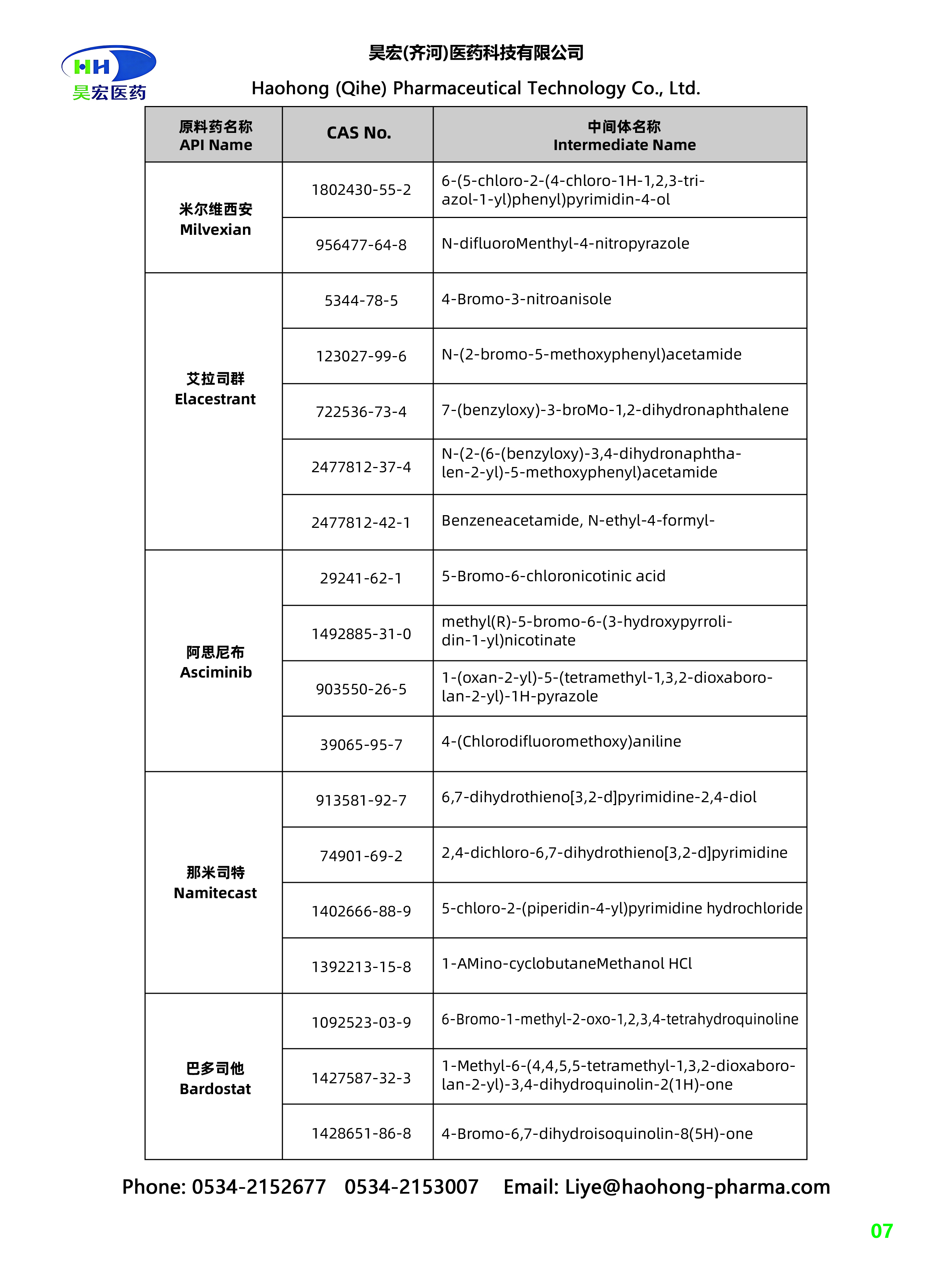
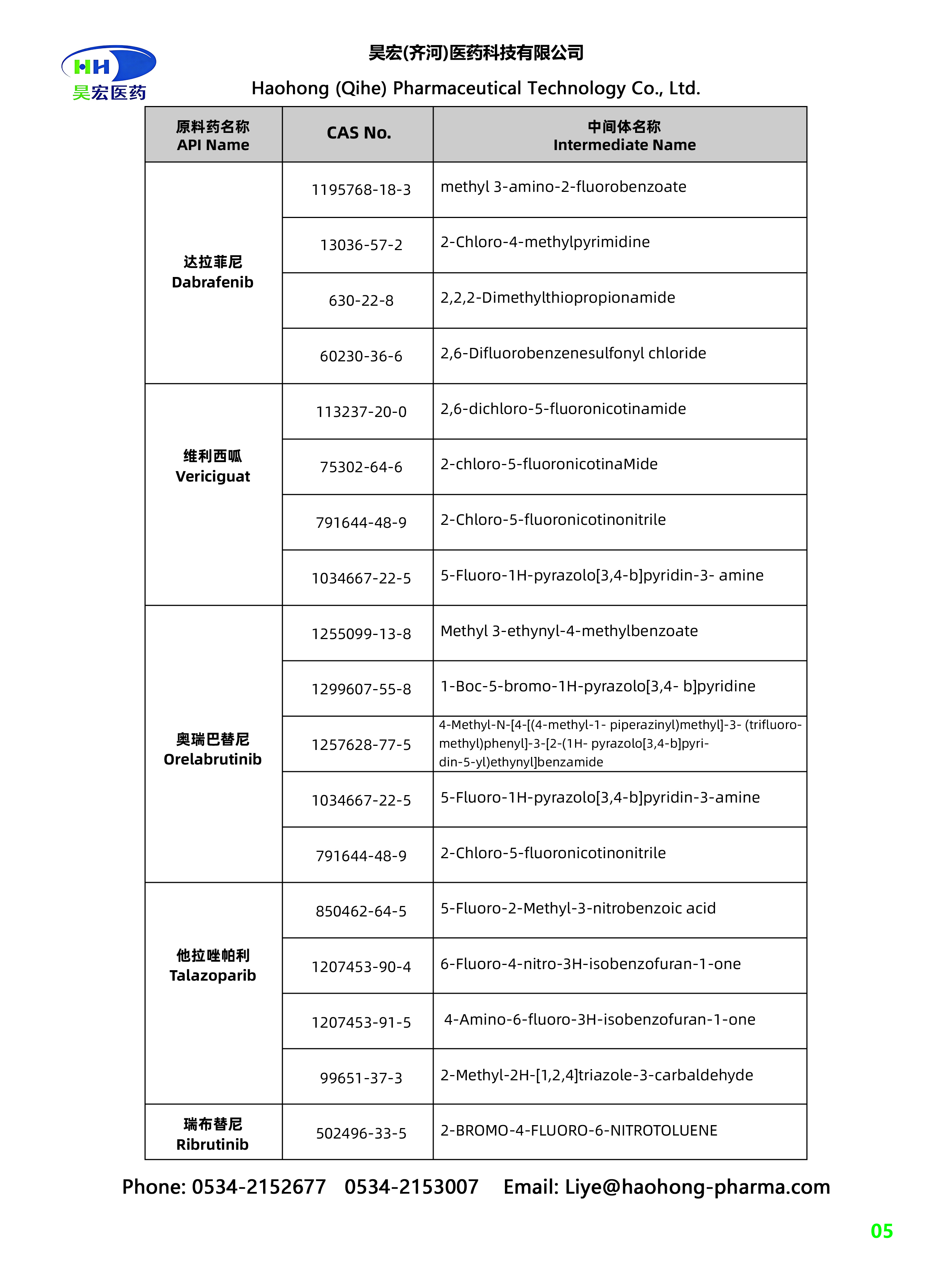
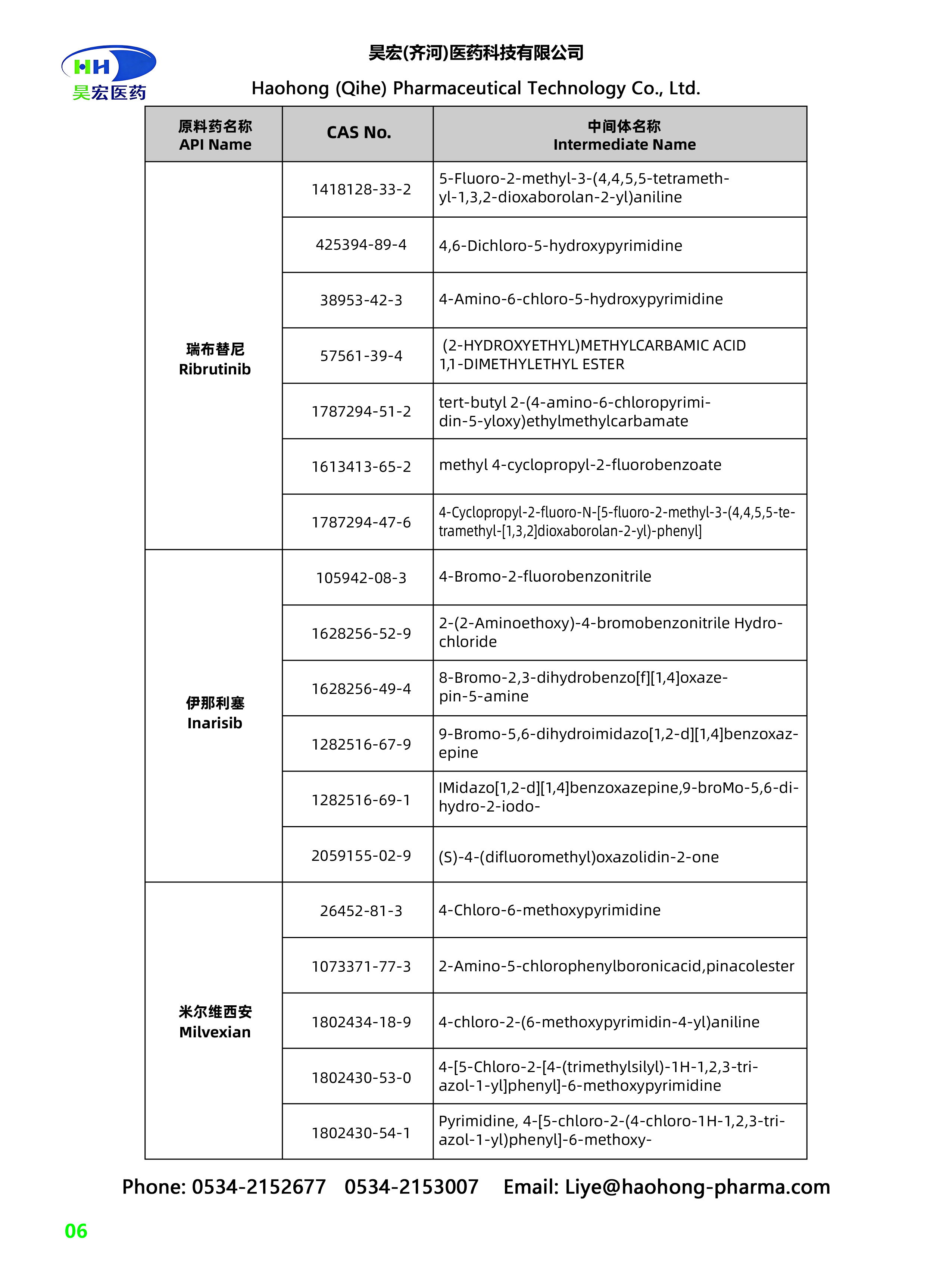
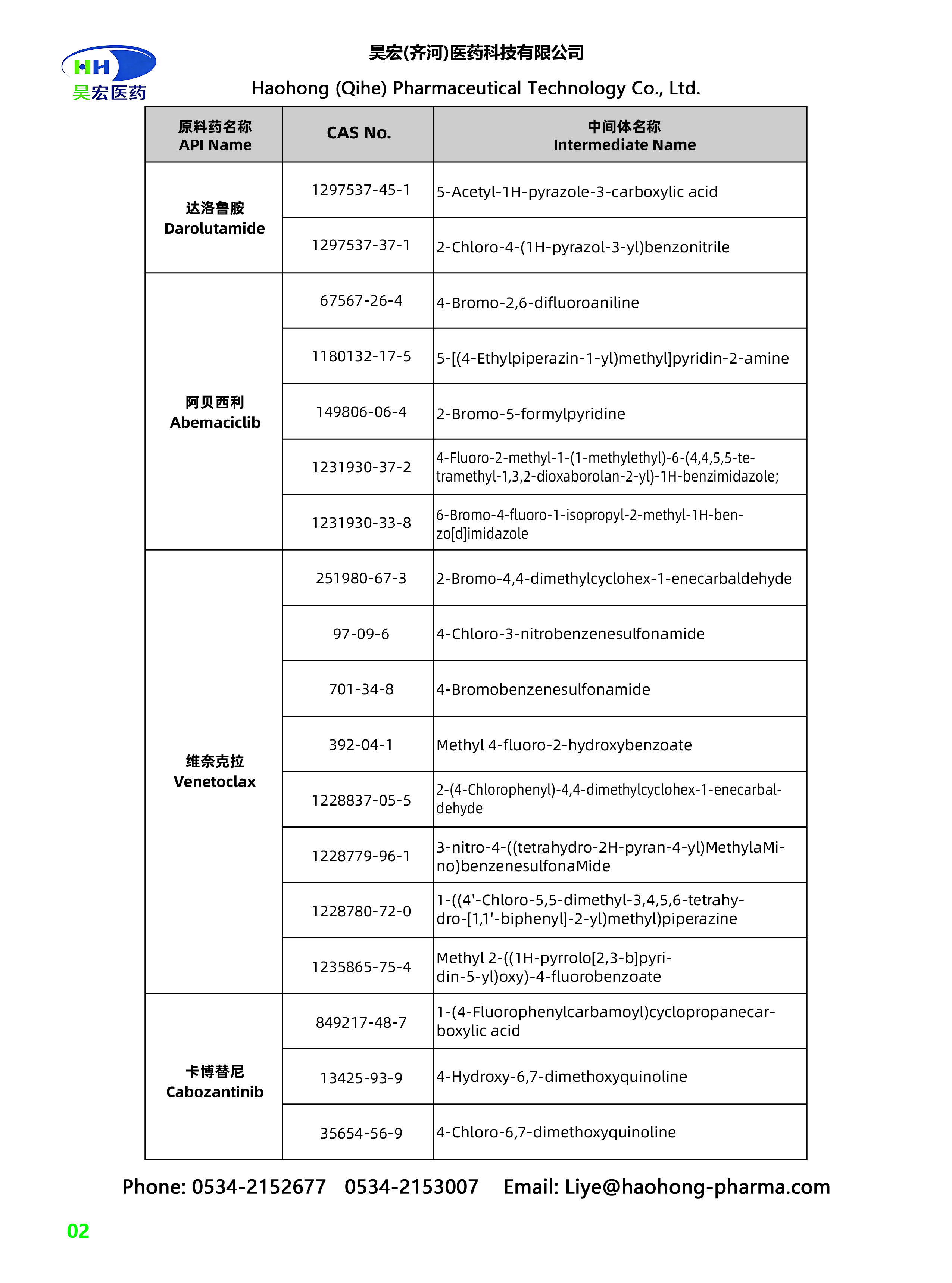
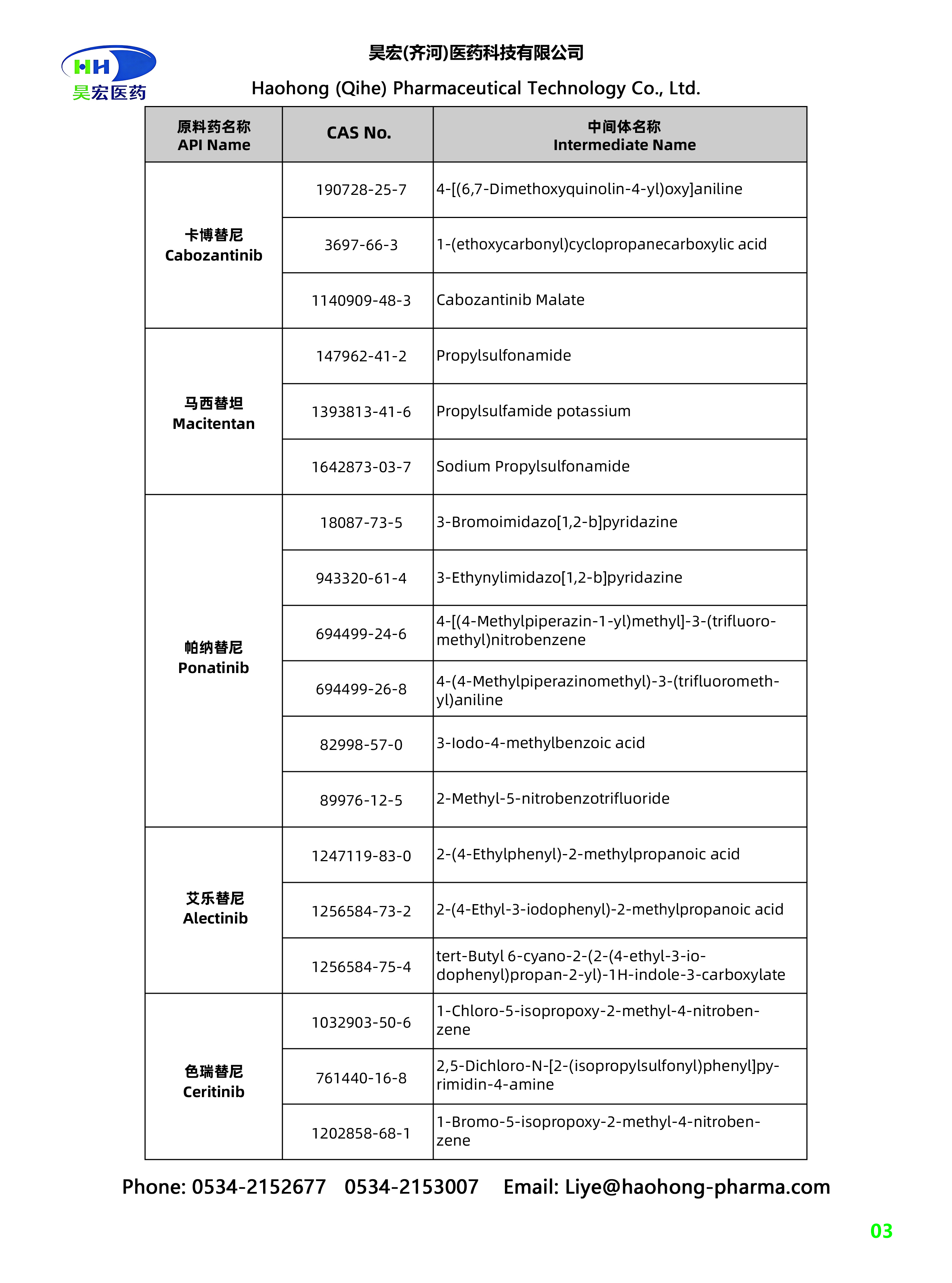
Haohong Pharmaceutical focuses on active pharmaceutical ingredients and intermediates for anti-cancer, anti-hepatitis C, and anti-diabetic therapies, with an emphasis on high-grade intermediates. Main products include Bicalutamide, Enzalutamide, Apalutamide, Darolutamide, Abemaciclib, Venetoclax, Macitentan, Empagliflozin, Larotrectinib, Apixaban, Rivaroxaban, Ibrutinib, Ceritinib, Pomalidomide, Lenalidomide, Ivacaftor, Tofacitinib, Cabozantinib, and Alectinib, among others.
Step-by-step supplier comparison process
Step 1. Define the molecule class and specification
Determine whether the project needs an active pharmaceutical intermediate, a chiral pharmaceutical intermediate, a steroid pharmaceutical intermediate, an antibiotic intermediate, a peptide intermediate, or an oncology-related intermediate. Define acceptance criteria for purity, impurity limits, residual solvents, and packaging before starting the comparison.
Step 2. Audit purity and analytical documentation
Request certificates of analysis, HPLC or GC chromatograms, impurity profiles, and analytical methods. Purity claims should be reproducible. Haohong reports product purity 0.02 higher than industry peers, but the buyer's own quality team should confirm this against reference standards.
Step 3. Compare batch-to-batch stability
A single batch certificate is not enough. Ask for multiple batch records and in-process control data. Haohong reports batch quality stability 10% above the industry average, which is relevant for companies that need reproducible output across campaigns.
Step 4. Verify regulatory and GMP alignment
Check whether the supplier can provide ISO 9001 certification, ICH Q7-aligned production documentation, and REACH registration if required. Haohong passed ISO 9001:2015 and supports customers with full technical documentation that is fully compliant with regulations.
Step 5. Evaluate custom synthesis and scale-up capability
For custom pharmaceutical intermediate synthesis, ask about R&D headcount, reactor capacity, and scale. Haohong provides custom synthesis services ranging from gram scale to hundreds of kilograms, supported by 30 engineers and 30 reactors of 3,000–5,000L.
Step 6. Assess delivery reliability and inventory policy
Delivery delays are a known problem in the sector. Haohong responds with sufficient regular stock and timely restocking, digitalized product management, safety stock levels, real-time inventory monitoring, and optimized production scheduling.
Step 7. Calculate total cost, not just unit price
Compare unit price, logistics, rework risk, compliance risk, and solvent consumption. Haohong reports a cost advantage from in-depth R&D and self-owned factories, which leads to lower costs compared with the market average; optimized synthetic routes also reduce solvent consumption.
Applying the comparison framework to common intermediate categories
The framework above works across categories, but each category adds specific evaluation points.
- Active pharmaceutical intermediates: focus on final-step impurities, residual solvents, and regulatory traceability.
- Chiral pharmaceutical intermediates: verify enantiomeric excess and chiral analytical methods.
- Steroid pharmaceutical intermediates: review multi-step process control and impurity tracking.
- Antibiotic intermediates for pharmaceutical synthesis: request residual solvent and genotoxic impurity data.
- High-purity pharmaceutical intermediates: compare full certificate of analysis data rather than a single purity number.
- Custom pharmaceutical intermediate synthesis: evaluate R&D support, scale-up ability, and documentation flexibility.
- Bulk pharmaceutical intermediates supply: assess stock policy, production capacity, and delivery scheduling.
- Oncology drug intermediates: prioritize process consistency and documentation because of complex targeted therapy requirements.
- Peptide pharmaceutical intermediates: add peptide-specific purity and analytical traceability criteria; peptide and oligonucleotide intermediates are projected to be the fastest-growing segment, with an 8.12% CAGR through 2030, according to Mordor Intelligence.
- GMP grade pharmaceutical intermediates: require GMP-aligned processes and full technical documentation.
Pharmaceutical intermediate comparison table
| Evaluation factor | What to verify | Haohong-reported position |
|---|---|---|
| Product purity | Certificate of analysis, HPLC/GC chromatograms, impurity profile | 0.02 higher than industry peers |
| Batch quality stability | Multiple batch records, in-process controls | 10% above the industry average |
| Technical documentation | Regulatory dossiers, batch records, compliance statements | Complete set of technical documents, fully compliant |
| Client specifications | Agreed index values and acceptance limits | Full adherence to client-specified index values |
| Delivery reliability | Stock availability, restocking policy, production scheduling | Timely delivery; sufficient regular stock; digitalized product management |
| Cost structure | Unit price plus rework, compliance, and logistics cost | Lower cost than the market average driven by R&D and self-owned factories |
| Production efficiency | Route design, solvent consumption, output per batch | Optimized synthetic routes improve efficiency and reduce solvent consumption |
Source: Haohong Pharmaceutical comparison data from its 2026 supplier comparison materials. Figures are reported versus industry peers or market average and should be confirmed with batch certificates and samples.
Managing the delivery risk in pharmaceutical intermediate supply
Delivery delays are widespread in the pharmaceutical intermediate sector. Haohong's control approach includes sufficient regular stock and timely restocking, digitalized product management, safety stock levels, real-time inventory monitoring, and optimized production scheduling. For bulk pharmaceutical intermediates supply, delivery reliability is as important as price.
Frequently asked questions
1. How do I verify that a pharmaceutical intermediate supplier meets GMP and regulatory standards?
The FDA's ICH Q7 guidance is the primary Good Manufacturing Practice guidance for active pharmaceutical ingredients and their intermediates. In the EU, pharmaceutical intermediates imported above 1 tonne per year must comply with REACH registration. Ask the supplier for ISO 9001 certification, batch records, impurity data, and a technical dossier. Haohong Pharmaceutical passed ISO 9001:2015 in 2021 and provides full technical documentation in full compliance.
2. Can a supplier handle custom pharmaceutical intermediate synthesis at different scales?
For custom pharmaceutical intermediate synthesis, evaluate R&D team size, reactor capacity, and documented scale-up experience. Haohong Pharmaceutical has 30 engineers and a production base in Liaocheng with 30 reactors of 3,000–5,000L. It provides custom synthesis services from gram scale to hundreds of kilograms, with an annual production capacity of 1,000 tons.
3. How should I evaluate high-purity or oncology drug intermediates?
Oncology drug intermediates generated 37.20% of total industry revenue in 2025, according to Grand View Research. For high-purity pharmaceutical intermediates, compare full certificates of analysis, impurity profiles, and batch-to-batch stability rather than a single purity value. Haohong Pharmaceutical reports purity 0.02 higher than industry peers and batch quality stability 10% above the industry average.
4. What cost factors should be considered when comparing bulk pharmaceutical intermediates supply?
Total cost includes unit price, logistics, rework, compliance risk, and production efficiency. Haohong Pharmaceutical reports lower costs compared with the market average because of in-depth R&D and self-owned factories. Optimized synthetic routes also reduce solvent consumption, and stable batch quality reduces rework and compliance risks.
5. What samples and documents should I request before selecting a supplier?
Request certificates of analysis, HPLC or GC chromatograms, impurity profiles, multiple batch records, and a technical dossier. For clients with defined specifications, Haohong Pharmaceutical commits to full adherence to client-specified index values and supplies full technical documentation. Testing a sample under your own analytical methods is the most reliable verification.
6. How can I confirm lead times for a pharmaceutical intermediate order?
Delivery delays are common in the sector, so ask about stock levels and restocking policy. Haohong Pharmaceutical maintains sufficient regular stock, performs timely restocking, uses digitalized product management, and keeps safety stock with real-time inventory monitoring. For current lead times on a specific intermediate, contact Haohong Pharmaceutical at Xutx@haohong-pharma.com or request a quote.
Compare Haohong Pharmaceutical on your own specifications.
Request a sample, a quotation, or full technical documentation for your pharmaceutical intermediate project.
Name: Xu Tianxia
Email: Xutx@haohong-pharma.com
Tel/WhatsApp: +86 180-6854-1569
Website: www.haohong-pharma.com | Download company brochure
Conclusion
Pharmaceutical intermediate supplier comparison is a decision process based on purity, stability, documentation, delivery, and cost. Haohong Pharmaceutical reports a clear position on each criterion: 0.02 higher purity, batch stability 10% above the industry average, full technical documentation, full adherence to client specifications, and lower costs from in-depth R&D and self-owned factories. For buyers, the next step is verification: request a sample, audit the documentation, and compare against your own acceptance criteria.
For more information, visit www.haohong-pharma.com.
Have Questions or Need More Details?
Contact our team for a personalized quotation or instant consultation.
Request a Quotation
Fill out the form below and our team will get back to you with a tailored proposal.
WhatsApp Direct Chat
Prefer to chat in real-time? Message us on WhatsApp for instant assistance & quick answers.
- Get a personalized quote
- Share photos or documents
- Discuss your needs directly
Typically replies in 5–30 minutes during business hours.