Selecting Pharmaceutical Intermediates by Project Scenario: A Supplier Fit Guide
Drug projects do not run on APIs alone. The pharmaceutical intermediate—the structurally advanced compound that sits between fine chemistry and the finished active pharmaceutical ingredient—determines how efficiently a project scales, how cleanly impurities are controlled, and how realistic the production timeline will be. The choice becomes particularly important for oncology and antiviral programs, where high-purity intermediates under tightly controlled production conditions can simplify synthesis routes and reduce cost pressure.
This guide is written for R&D leaders, procurement managers, and formulation teams that are actively researching and evaluating suppliers for a specific drug project. It explains how to match intermediate characteristics to project scenarios, which facility-level criteria to verify, and how to assess a supplier's ability to support custom synthesis from early development through commercial supply.
Why Project Fit Matters in Pharmaceutical Intermediate Selection
Pharmaceutical intermediates function as pre-semi-finished products for synthesizing APIs. They are processed from basic chemical raw materials and provide drug manufacturers with structurally mature, high-purity compounds. In practice, the intermediate stage is where many project risks are decided: complexity of downstream synthesis, exposure to degradation, impurity profiles, and even environmental and safety pressure of the overall production route.
A mismatch between the intermediate and the project creates concrete problems. The wrong clean-grade specification can introduce contamination risk. An unstable supplier may not maintain controlled storage conditions. A development program that grows from gram scale to hundreds of kilograms needs a partner whose equipment set—reaction, purification, drying, and testing—matches the intended production method. These are project-fit questions, not just product-selection questions.
Market Context: Where Project-Specific Intermediates Are Headed
The global pharmaceutical intermediates market was valued at approximately USD 37.04 billion in 2025. Generic drug manufacturers held a dominant 53.82% share of the market in 2024, and North America represented 42.23% of global market value in the same year. China's pharmaceutical industry total exports were reported at USD 22.53 billion as of December 2024, reflecting the country's central position in API and intermediate supply. Oncology drug intermediates generated 37.20% of total industry revenue in 2025, which helps explain why purity control and impurity management have become central topics for buyers. Peptide and oligonucleotide intermediates are projected to be the fastest-growing segment, with an 8.12% CAGR through 2030.
Regulatory expectations reinforce this shift. The FDA's ICH Q7 provides the primary Good Manufacturing Practice guidance specifically for active pharmaceutical ingredients and their intermediates. In the European Union, pharmaceutical intermediates imported in volumes above one tonne per year must comply with REACH registration, even though APIs themselves benefit from exemptions. Together these standards make the supplier's production environment and quality system part of the project-fit evaluation, not merely the product specification.
How to Match Pharmaceutical Intermediates to Real Drug Project Scenarios
Selection logic should start with the project scenario, not the chemical list. The same intermediate may be suitable for one project and risky for another, depending on the synthesis route, the target impurity profile, and the production environment. The framework below is built on the project conditions that Haohong Pharmaceutical's manufacturing system is designed to support, and can be used as a buyer-side evaluation checklist.
Classify the Project Type
Different drug projects place different demands on intermediates. Anti-cancer drug projects require high-purity intermediates with tightly controlled by-products, because the final product is often a targeted therapy with strict safety limits. Anti-viral drug projects typically benefit from stable, automated, program-controlled production to ensure consistency across batches. New drug R&D custom projects need intermediates that support a developing synthesis route, where reproducibility matters as much as initial yield. Veterinary health and anti-infective projects still require strong impurity control, but the acceptance criteria may differ from human oncology programs.
Haohong's application scenario data defines the key intermediate function in the same way: the product serves as key intermediate raw material for synthesizing APIs, simplifies the R&D and production processes of new drugs and APIs, and is suitable for both anti-viral and anti-cancer drug projects. The production design includes fully enclosed reaction systems to prevent air exposure, with automated and program-controlled operation.
Define the Intermediate Specifications Against the Project
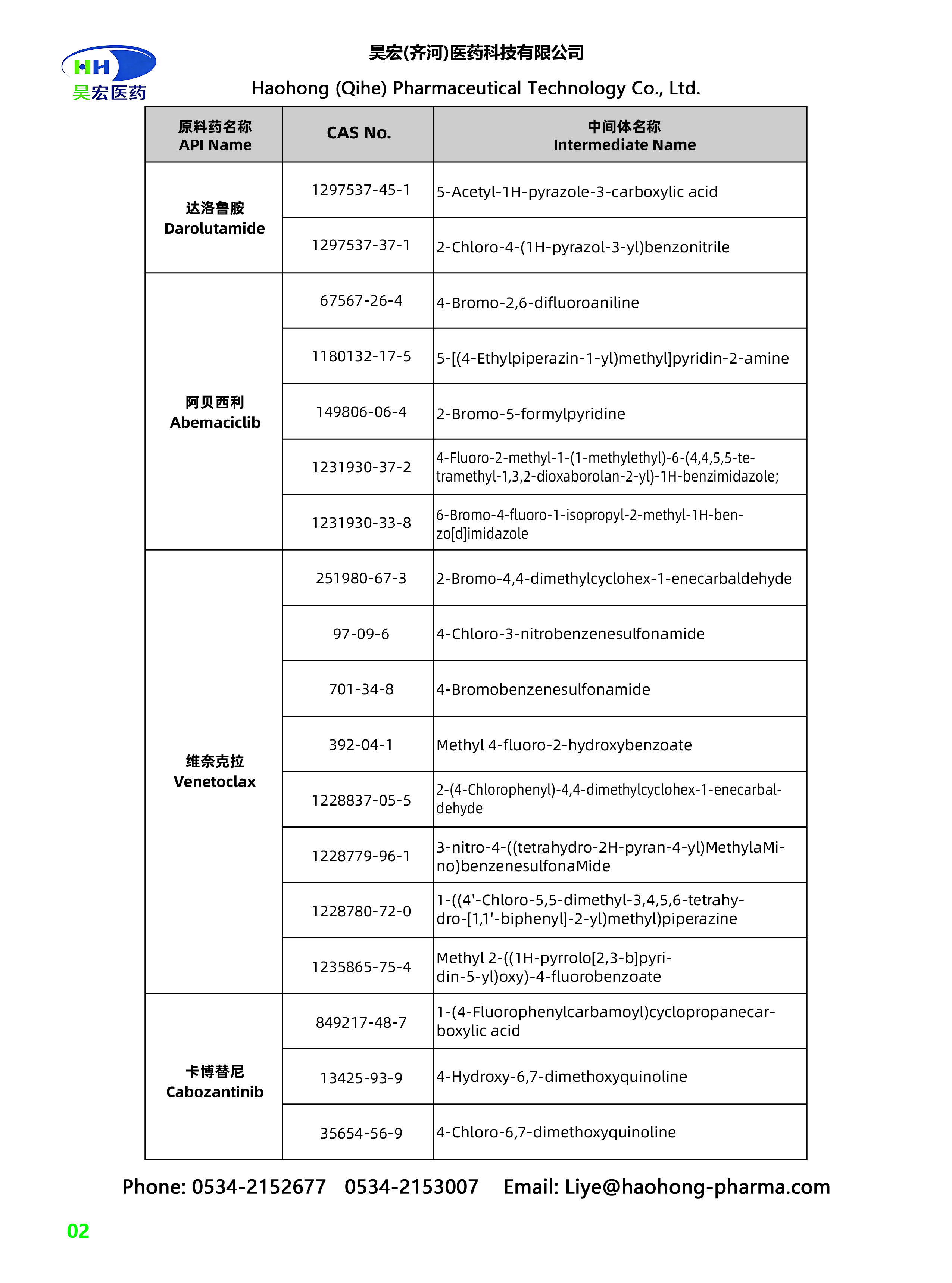
For oncology-related projects, Haohong's product lines provide concrete reference points. The Apalutamide intermediate line includes 2-fluoro-4-nitrobenzoic acid (CAS 403-24-7), N-methyl-2-fluoro-4-nitrobenzamide (CAS 915087-24-0), N-methyl-2-fluoro-4-aminobenzamide (CAS 915087-25-1), N-methyl-2-fluoro-4-bromobenzamide (CAS 749927-69-3), methyl 4-bromo-2-fluorobenzoate (CAS 179232-29-2), and 5-amino-3-(trifluoromethyl)pyridinecarbonitrile (CAS 573762-62-6), with a purity of at least 98.0% on each specification.
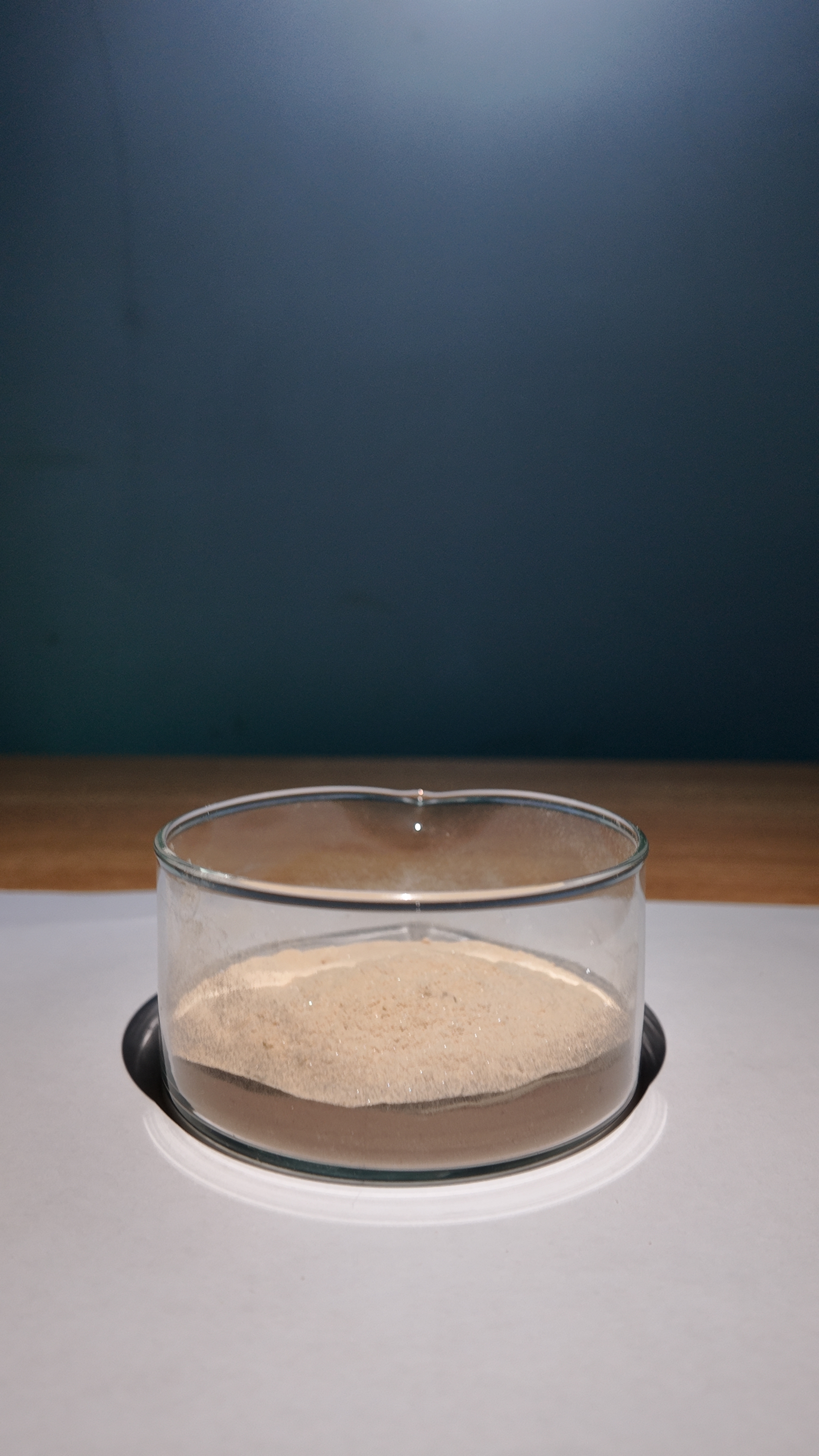
The Abemaciclib intermediate set covers 4-bromo-2,6-difluoroaniline (CAS 1868-81-7), 5-[(4-ethylpiperazin-1-yl)methyl]pyridin-2-amine (CAS 398565-53-2), 2-bromo-5-formylpyridine (CAS 100422-52-6), and additional benzimidazole derivatives with purity of at least 98.0% by HPLC. These intermediates require sealed, dry, low-temperature storage at 2–8 °C with light protection during distribution and handling.
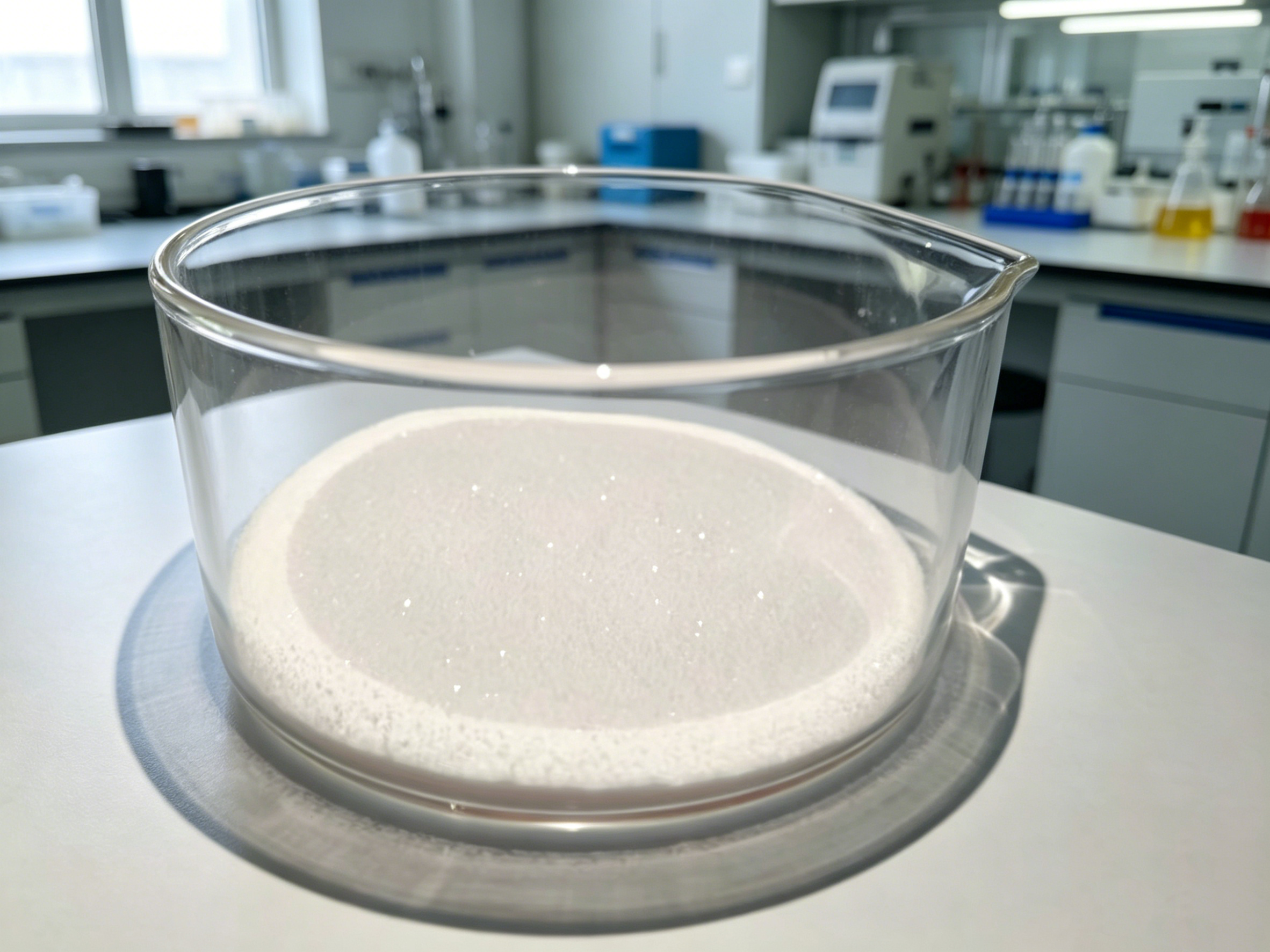
The Alectinib intermediate range includes 2-(4-ethylphenyl)-2-methylpropanoic acid (CAS 1247119-83-0), 2-(4-ethyl-3-iodophenyl)-2-methylpropanoic acid (CAS 1256584-73-2), and tert-butyl 6-cyano-2-(2-(4-ethyl-3-iodophenyl)propan-2-yl)-1H-indole-3-carboxylate (CAS 1256584-75-4), each with a minimum purity of 98%.
The presence of fluorine, bromine, and iodine in these structures explains why their production requires a facility that can handle halogenated intermediates, including corrosion-resistant materials, controlled temperature processes, and adequate emissions treatment.
Verify Production Environment Compatibility
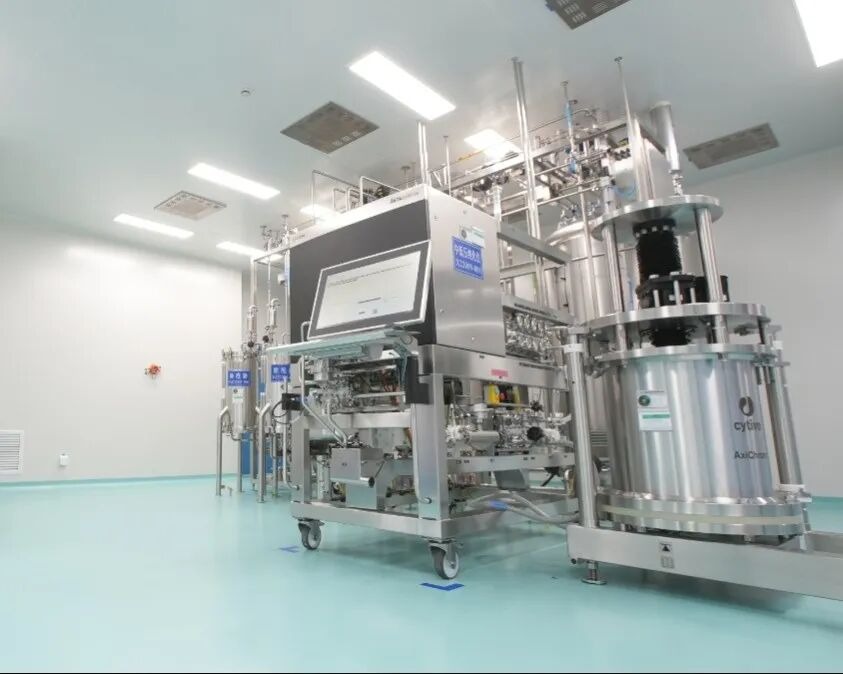
The production environment is part of the product. According to Haohong's application scenario specifications, pharmaceutical intermediate production should operate under fully enclosed reaction systems to prevent air exposure, which is suitable for sterile and oxygen-free production environments. The production workshop is designed to meet Class C/D clean grade standards with a closed process. All material contact parts use 316L stainless steel, borosilicate glass, and PTFE lining to prevent corrosion and heavy metal contamination.
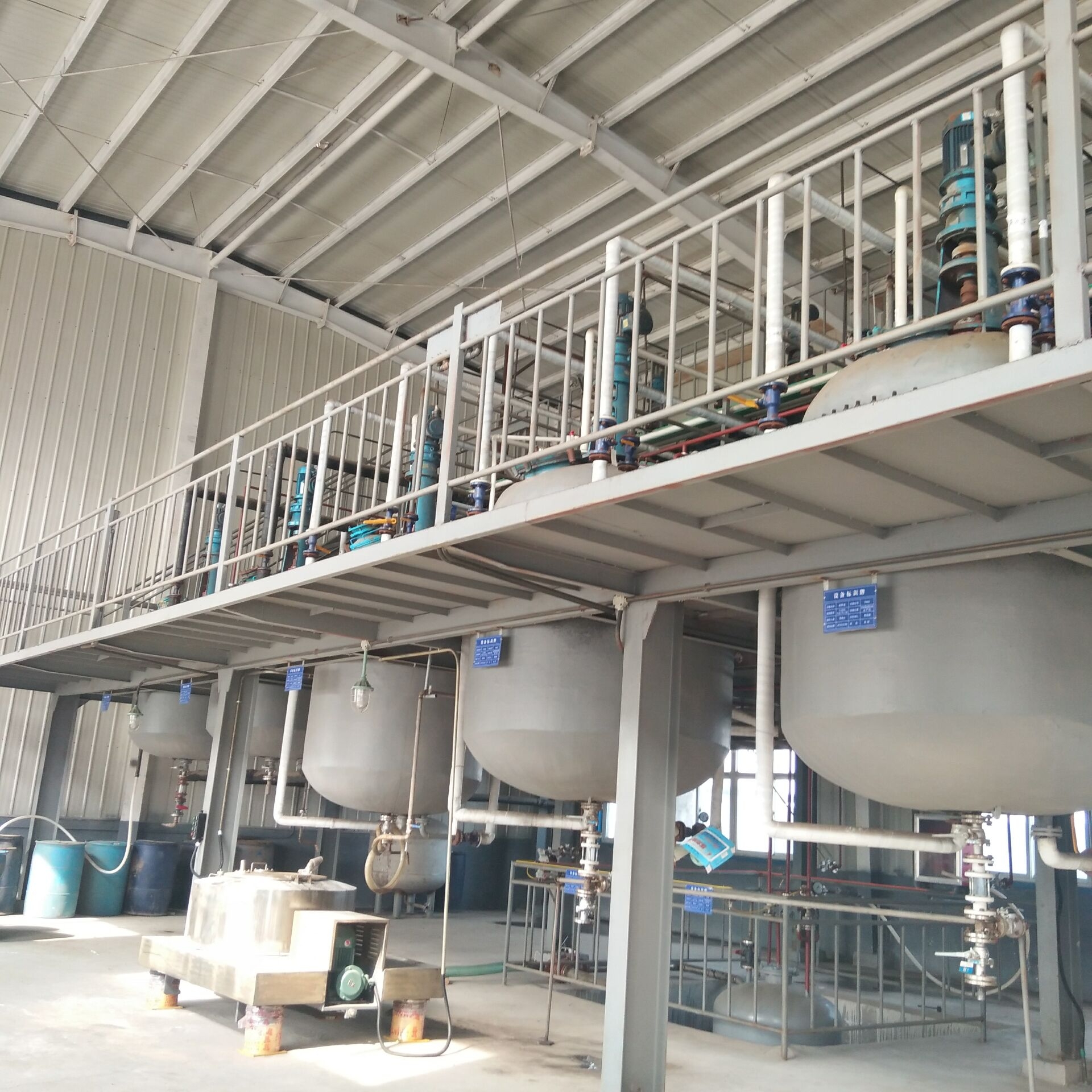
The facility should also include an explosion-proof and anti-static design with a nitrogen protection system, strict temperature and humidity control, and low-temperature production capability to avoid oxidation and decomposition. For fluorine-, bromine-, and iodine-containing intermediates, the site should be equipped with tail gas absorption and wastewater pretreatment systems. These details determine whether a supplier is actually able to produce halogenated intermediates safely and reproducibly at scale.
Assess Custom Synthesis and Scale-Up Options
Not every project fits an existing catalog product. When evaluating a supplier during the research stage, buyers should confirm whether the company can move from an analytical sample to pilot batches and then to commercial quantities without changing the route or the quality profile.
Haohong's production capacity includes a Liaocheng production base equipped with 30 sets of 3,000–5,000 L reactors, with an annual production capacity of 1,000 tons. The company provides custom synthesis services from gram scale to hundreds of kilograms. Its ODM production model supports structural customization, purity and specification customization, process route customization, capacity and batch customization, and packaging and standard customization. For buyers this means a project can start small, validate the intermediate, and then scale with the same manufacturing system.
Review Quality Control and Documentation
Quality control is another central part of a project-fit evaluation. Haohong's quality control workflow covers appearance and property inspection, core chromatographic testing, structural qualitative identification, physical and chemical index testing, heavy metal and impurity testing, and microbiological testing. For pharmaceutical intermediates, the acceptance standard is purity of at least 98%–99% verified by HPLC/GC analysis, with factory delivery supporting documents included.
The company passed ISO 9001:2015 quality management system certification in 2021, was recognized as a Technology-based Small and Medium-sized Enterprise in 2024, and was awarded Innovative Small and Medium-sized Enterprise of Shandong Province in 2025. For drug registration projects, buyers should also look for complete batch traceability, a fully documented production qualification system, and support for quality dispute resolution.
Step-by-Step Breakdown: A Practical Supplier-Fit Evaluation Workflow
The following workflow is designed for a buyer who is moving from research to evaluation. It can be used as a structured conversation guide with a shortlisted supplier.
1. Define the Project Boundary
Start with the drug target, the API synthesis route, and the scale. Record the required intermediate CAS number, the target purity, the acceptable impurity profile, and the physical form needed. This boundary will prevent the evaluation from drifting into generic supplier comparisons.
2. Request the Quality Evidence Package
Ask for COA, HPLC/GC chromatograms, heavy metal and residual solvent data, structural identification reports, and storage stability data. For anti-cancer and anti-viral drug projects, the evidence package should demonstrate consistency with ICH Q7 expectations and international pharmaceutical standards.
3. Inspect the Production Conditions
Verify whether the manufacturing site uses fully enclosed reaction systems, automated and program-controlled operation, Class C/D clean grade workshops, explosion-proof and anti-static design, and nitrogen protection. Confirm that material contact parts are 316L stainless steel, borosilicate glass, or PTFE-lined. If the intermediate contains fluorine, bromine, or iodine, confirm the site's waste gas and wastewater treatment capacity.
4. Test the Customization Flexibility
Ask whether the supplier can adjust structure, purity, process route, capacity, batch size, packaging, and standards. A supplier with ODM capability can handle these adjustments under one production system. Confirm the available range—gram scale, pilot scale, hundreds of kilograms—and the corresponding batch scheduling.
5. Evaluate Supply Capacity and Stability
Check the production base's reactor configuration and annual capacity. Haohong's Liaocheng base, for example, is equipped with 30 sets of 3,000–5,000 L reactors and has an annual production capacity of 1,000 tons. Buyers should also confirm the export ratio and experience with destination markets, since logistics and customs clearance support are part of reliable supply.
6. Plan the Post-Award Support
Confirm the after-sales process: full support of quality inspection documents, technical and process consulting, logistics and customs clearance assistance, quality dispute compensation and replacement, sample re-inspection, third-party testing, and stable production scheduling. These steps protect the project after the purchase order is placed.
Use Cases: Project Types and Typical Intermediate Emphasis
| Project Scenario | Typical Intermediate Emphasis | Supplier Conditions to Verify |
|---|---|---|
| Anti-cancer / targeted therapy projects | High purity (≥98%), controlled impurities, stable crystal form and particle size | Fully enclosed systems, nitrogen protection, low-temperature storage, halogen waste treatment |
| Anti-viral drug projects | Consistent batch quality, scalable supply, high reaction yield | Automated program-controlled production, clean-grade workshop, full-batch HPLC/GC testing |
| New drug R&D custom projects | Flexible synthesis from gram scale to hundreds of kilograms | ODM capability, process route customization, R&D team support |
| Generic drug / large-scale production | Cost-efficient route, stable supply chain, consistent quality across batches | Annual capacity, production scheduling, batch traceability, export logistics |
The importance of these criteria is visible in a reported project-type case: intermediates were supplied to a top-tier pharmaceutical group, with 200 units synthesized and processed into final finished medicines, and stored under specified conditions for 12–24 months. The reported outcomes included high reaction yield that reduced the production cost of finished pharmaceuticals, low levels of impurities/heavy metals/residual solvents that minimized drug safety risks, stable quality across batches that improved production consistency, simplified downstream synthesis that shortened drug development cycles, and accelerated drug registration. These are the same downstream benefits that a well-matched intermediate is expected to deliver in oncology and antiviral project scenarios.
FAQ
1. Which GMP and compliance requirements apply to pharmaceutical intermediate projects?
FDA ICH Q7 provides the primary Good Manufacturing Practice guidance specifically for active pharmaceutical ingredients and their intermediates. For buyers importing into the European Union, intermediates exceeding one tonne per year are subject to REACH registration, even though APIs benefit from exemptions. On the manufacturing side, ISO 9001:2015 certification supports the quality management system, while Class C/D clean-grade workshops, validated analytical testing methods, and fully enclosed reaction systems address process-level compliance. Where the intermediate is intended for an anti-cancer or anti-viral drug project, the buyer should request evidence of heavy-metal, impurity, and residual-solvent control in the supplier's factory delivery documents.
2. What capabilities should I assess for custom pharmaceutical intermediate synthesis?
For a research-stage project, assess whether the supplier can customize structure, purity, process route, capacity, and packaging. Haohong operates an ODM model with structure customization, purity and specification customization, process route customization, capacity and batch customization, and packaging and standard customization. Custom synthesis starts at gram scale and extends to hundreds of kilograms, which lets a project team test a route before scaling to commercial batches. The production base in Liaocheng is equipped with 30 sets of 3,000–5,000 L reactors and has 1,000 tons of annual capacity. This combination gives the buyer a single partner from R&D to supply.
3. What determines the cost structure of a pharmaceutical intermediate project?
Cost drivers include purity targets (≥98%–99% by HPLC/GC), impurity/heavy metal/residual solvent control, the use of specialized production conditions such as fully enclosed systems and Class C/D clean rooms, halogenated synthesis requiring tail gas absorption and wastewater pretreatment, and the degree of customization. Reported project outcomes from intermediate supply include high reaction yields that reduce production costs of finished pharmaceuticals and simplified downstream synthesis that shortens development cycles. A more expensive intermediate can therefore lower the total project cost if it improves yield and registration speed.
4. Can buyers obtain samples or pilot batches for evaluation?
Sample re-inspection and third-party testing are included in the standard support flow, together with appearance/property inspection, chromatographic purity testing, structural identification, physical and chemical index testing, and heavy metal/impurity testing. Buyers can request the COA and matching technical documents during evaluation. Since custom synthesis starts from gram scale, project teams can validate the intermediate during the research phase before moving to large-scale supply.
5. What lead time should a drug project expect for intermediates?
Lead time and MOQ at Haohong are defined as tailor-made services, which means they are set according to the project specification, batch size, and customization scope. Buyers should confirm production scheduling and logistics support during contract discussion. The supplier's after-sales package includes logistics and customs clearance assistance, quality document support, and replacement/compensation procedures in case of quality disputes, so the delivery plan can be organized around a project's registration timeline.
Conclusion: Building a Project-Fit Decision
Selecting pharmaceutical intermediates should not be reduced to matching a CAS number and a purity grade. The right choice is the one that fits the project scenario: the drug target, the synthesis route, the production environment, the scale-up plan, and the regulatory framework. For buyers in the research and evaluation stage, the practical next step is to compare shortlisted suppliers against the evaluation workflow described above—quality evidence, production conditions, customization flexibility, capacity, and post-award support.
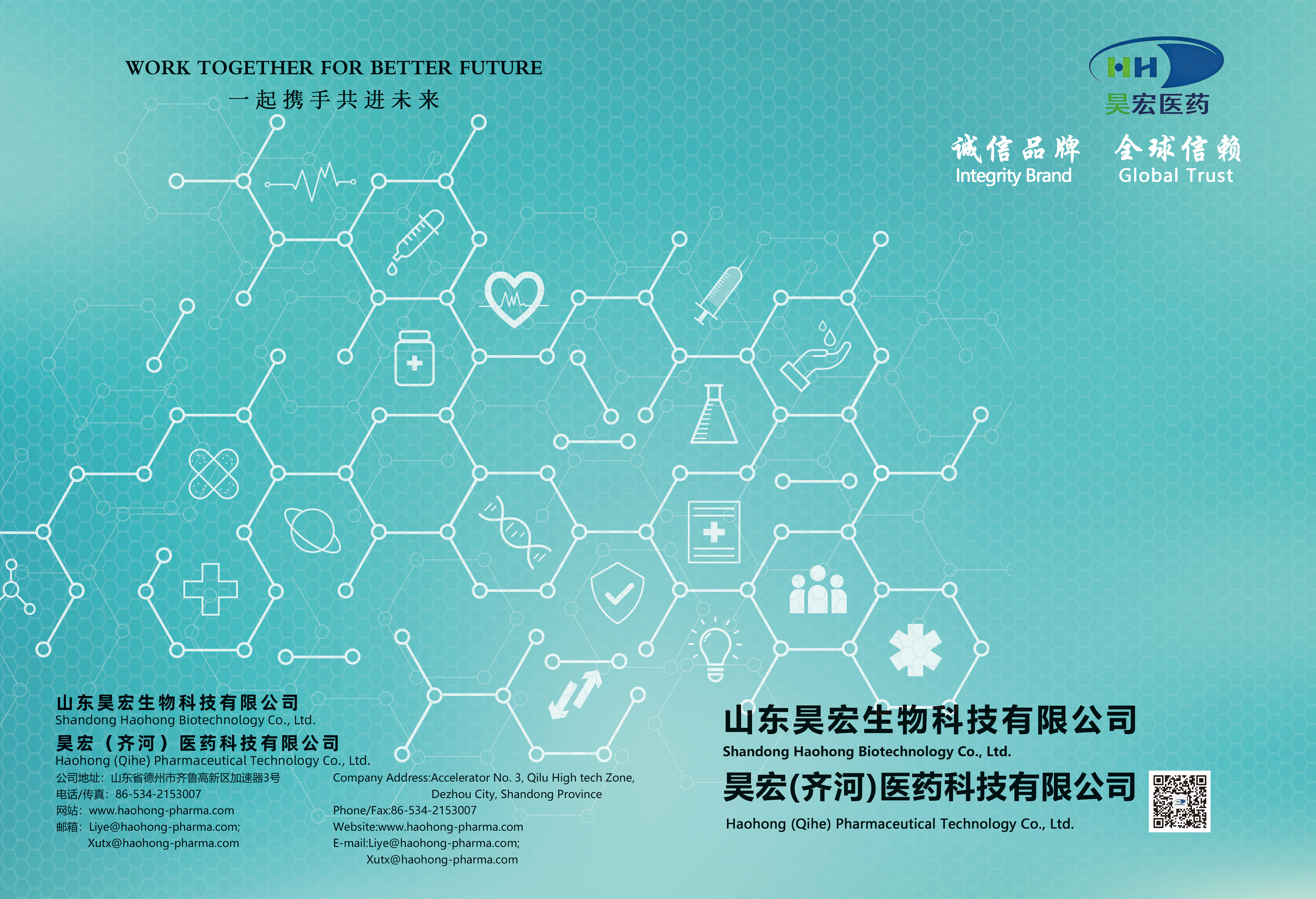
For a complete view of Haohong's company background, product lines, production facilities, and custom synthesis capabilities, you can download the company brochure: Haohong Pharmaceutical Company Brochure (PDF). For project-specific inquiries, contact the sales team directly or visit www.haohong-pharma.com.
Have Questions or Need More Details?
Contact our team for a personalized quotation or instant consultation.
Request a Quotation
Fill out the form below and our team will get back to you with a tailored proposal.
WhatsApp Direct Chat
Prefer to chat in real-time? Message us on WhatsApp for instant assistance & quick answers.
- Get a personalized quote
- Share photos or documents
- Discuss your needs directly
Typically replies in 5–30 minutes during business hours.