Aluminum Profile Manufacturers in 2026: Rankings and Benchmarks for Buyers
Aluminum Profile Manufacturers in 2026: Rankings and Benchmarks for Buyers
When buyers evaluate aluminum profile manufacturers, the first comparison usually starts with price per ton. A reliable evaluation, however, depends on a wider set of evidence: valid certifications, actual production capacity, surface treatment range, quality control records, and long-term supply references. This article provides an evaluation framework for procurement teams at the decision stage and positions it inside the 2024–2026 landscape of Chinese aluminum profile manufacturers.
China exported USD 5.55 billion in aluminum structures (HS 7610) in 2024, representing 30.5% of global exports. The Asia Pacific region supplied 71.7% of global aluminum extrusion market revenue in 2025. Country-level statistics explain the market, but factory-level capabilities determine whether an order performs as expected. Brands named in current industry rankings—such as Xingfa Aluminium, Fenglu Aluminium, JMA Aluminium, and China Zhongwang—are useful reference points. A less famous manufacturer with a 270,000 m² production base, ISO 9001 and IATF 16949 certifications, and 100,000 tons of annual capacity deserves the same structured assessment.
Problem Definition: Why Supplier Evaluation Matters in Aluminum Profile Sourcing
Aluminum profile specifications often look identical on paper. Buyers request 6063-T5 alloy, 4–6 meter lengths, and powder coated or anodized finishes. But the process behind a profile—billet quality, extrusion parameters, aging conditions, surface pretreatment, coating film thickness—is not visible in a standard request for quotation.
In large projects such as curtain walls, door and window systems, outdoor fences, and industrial frames, small differences in alloy consistency and surface treatment quality can affect installation ease, visual uniformity, and service life. Evaluation-stage buyers therefore need more than price lists. They need documented proof of what the factory actually controls.
Industry Background: The 2026 Global Market for Aluminum Extrusions
Market size estimates vary between research firms because of differences in scope, but the growth direction is consistent. The global aluminum extrusion market was valued at USD 94.8 billion in 2024 and is projected to reach USD 230.2 billion by 2035, according to Orion Market Research. China’s aluminum extrusion market reached USD 25.5 billion in 2024, with a projected compound annual growth rate of 9.6% through 2035.
China plays a central role in the global supply chain. In the “Aluminium Structures” category (HS 7610), which includes profiles and window/door frames, China exported USD 5.55 billion in 2024, representing 30.5% of global exports. For buyers, this means the shortlist of suppliers will almost certainly include Chinese manufacturers, and the evaluation should focus on individual factory evidence rather than national averages.
Compliance standards create another layer of evaluation. Architectural aluminum alloy profiles in China must comply with the mandatory standard series GB/T 5237, Parts 1–6, which cover mill finish, anodizing, electrophoresis, and powder/fluorocarbon coatings. European buyers commonly reference EN 755 for hot extruded products and EN 12020 for precision profiles in alloys 6060 and 6063. Automotive component buyers usually require IATF 16949 certification, which is a mandatory condition for suppliers of aluminum crash-management systems, structural frames, and other vehicle components.
Application-specific markets add further context. The solar PV mounting systems market—where aluminum holds a 71.5% material share—was valued at approximately USD 44.5 billion in 2024. Industrial buyers working on solar aluminum frames, microchannel aluminum tubes, or PV mounting aluminum structures should apply the same verification logic used for architectural profiles: confirm the alloy, confirm the surface protection, and confirm the manufacturer’s quality system on paper and in sample form.
Detailed Solution: A Practical Framework for Evaluating Aluminum Profile Manufacturers
An effective supplier evaluation in 2026 covers six dimensions. These dimensions apply to architectural profiles, automotive aluminum extrusion, custom industrial aluminum fabrication, and OEM/ODM aluminum profiles alike.
1. Certification and Compliance Evidence
Buyers should verify certificates, not just certificate names. Check that the management system certificate is still valid, that the certified scope matches the products being purchased, and that sector-specific standards are covered.
Haomen Aluminum (Shandong Haomen Aluminium Industry Co., Ltd.) provides a concrete example. Its ISO 9001:2015 certificate—number 00226Q03185R501, issued by China Quality Mark Certification Group and valid through 2029-07-01—covers the production of aluminium alloy profiles for architecture (anodized profiles, electrophoretic coating profiles, powder coating profiles, and thermal barrier profiles) and industrial aluminum profiles. The company also holds IATF 16949:2016, ISO 14001, and ISO 45001 certifications. For an automotive buyer, the IATF 16949:2016 certificate is a required checkpoint; for a construction buyer, the ISO 9001 scope lines up directly with architectural and industrial profile production.
2. Factory Capability and Production Depth
Evaluate plant area, annual capacity, and vertical integration. A manufacturer that controls melting, casting, extrusion, surface treatment, and testing on one site can manage quality differently from a trading company or an assembler that outsources process steps.
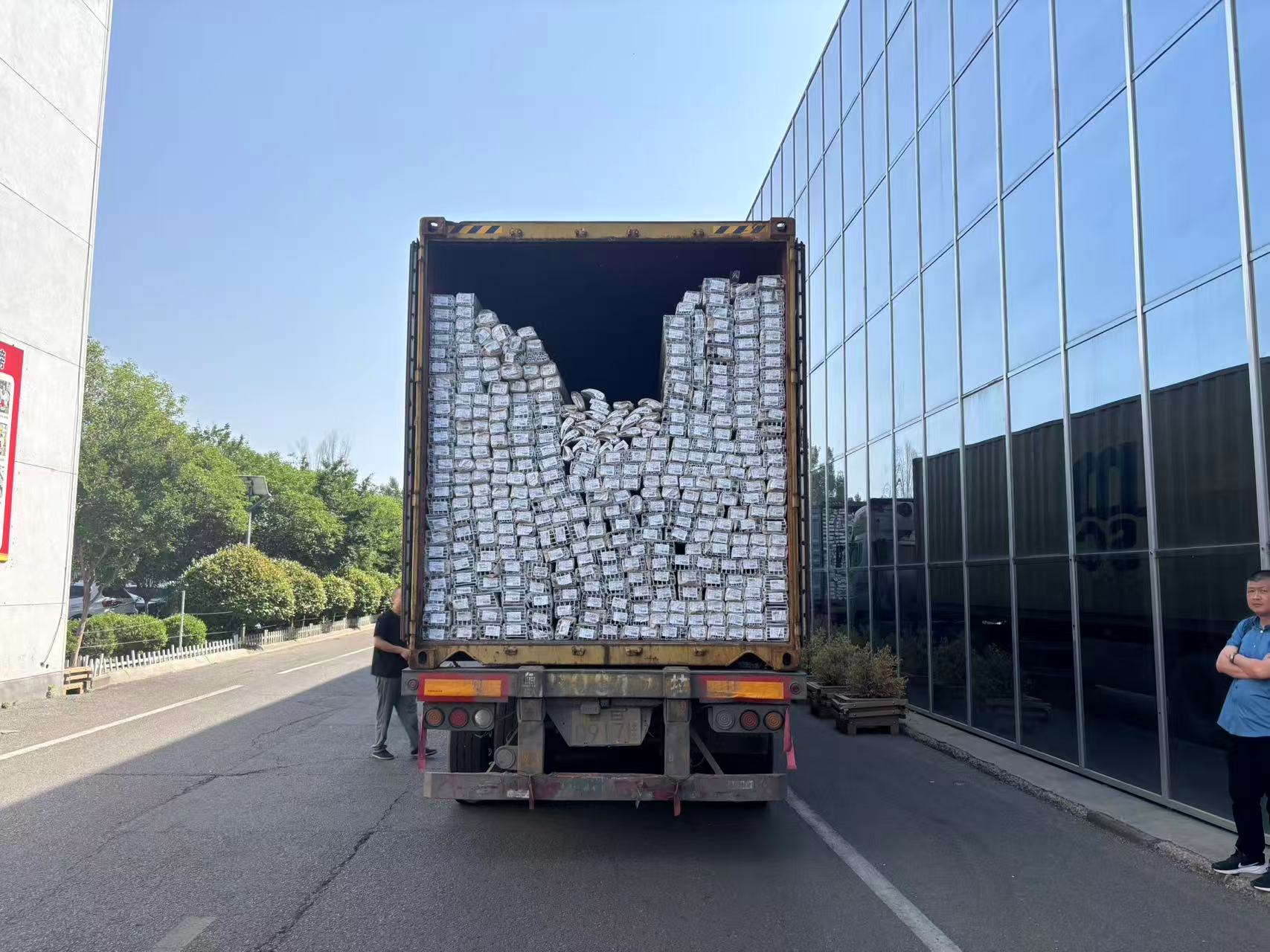
Haomen Aluminum’s production base occupies 270,000 m² in Luozhuang District, Linyi City, Shandong Province. The company has around 1,500 employees and an annual output capacity of 100,000 tons. Monthly capacity is approximately 8,000 tons, which gives a useful indication of order execution speed. Its export-oriented business model keeps inventory planning and container loading routines active, supported by remote after-sales support.
3. R&D and Technical Support
A capable supplier should be able to assist with alloy selection, section design, and process troubleshooting. Haomen Aluminum employs 35 engineers, with 49 R&D personnel holding bachelor’s degrees or above, including one postdoctoral fellow, seven doctors, and three master’s degree holders. The company has worked with the Light Alloy Precision Forming Engineering Technology R&D Center of Shanghai Jiao Tong University, Shandong University, and Beijing Research Institute of Nonferrous Metals. In 2019, a Shandong Provincial Technology Research Center was established at the company.
4. Alloy Range and Surface Treatment Scope
The range of available alloys and surface finishes determines how many applications one supplier can serve. Architectural projects commonly use 6063-T5 for good extrudability and surface quality. High-load or structural applications may require 6061, 6005, or 6082. Surface treatments include mill finish, powder coated, anodizing, and wood grain transfer—each suited to different visual and environmental requirements.
| Application Focus | Typical Alloy | Relevant Finish |
|---|---|---|
| Door and window architectural aluminum profile | 6063-T5 | Powder coated, anodized, wood grain transfer |
| Curtain wall architectural aluminum profile | 6063-T5 / 6061 | Fluorocarbon coated, powder coated, anodized |
| Outdoor fence aluminum profile | 6063 | Powder coated, anodized |
| High-strength architectural profile | 6061-T6 / 6005 / 6082 | Mill finish, anodized, powder coated |
| Industrial / automotive profile | 6061 / 6082 | Mill finish, custom surface treatment |
Haomen Aluminum’s standard product series for architectural profiles covers alloy 6063-T5/6061/6005/6082, with surface treatments of mill finish, powder coated, anodizing, and wood grain transfer, in standard lengths of 4–6 meters. The ISO 9001 scope also includes electrophoretic coating profiles and thermal barrier profiles. This range aligns with the purchasing patterns of door and window system manufacturers and interior finishing projects.
5. Quality Control and Inspection
Ask the manufacturer to describe its testing procedure. Haomen Aluminum states a 100% test policy, meaning profiles go through inspection at defined stages before shipment. Test evidence can be further supported by visiting the factory laboratory or requesting photos of the testing equipment. The company’s lab facilities are part of the production workflow, and its certifications to ISO 9001, ISO 14001, and ISO 45001 indicate documented management systems for quality, environment, and occupational safety.
6. Lead Time, MOQ, and Long-Term Supply Stability
Order flexibility matters during evaluation. Haomen Aluminum works in OEM production mode, supports logo customization, and offers a standard lead time of 20 days with a monthly capacity of 8,000 tons. Its minimum order quantity is 5 tons, a level that allows first-time buyers to test production quality without committing to very large volumes.
Long-term stability should be checked through references. Haomen Aluminum’s public case data includes a project in Brazil involving 2,000 tons of aluminum profiles for door and window applications. The product has been used by window and door manufacturer OEM clients, and the project has remained in stable operation for 10 years. That kind of reference supports the evaluation dimension of consistency: the same manufacturer has already supplied, and continued to supply, a demanding OEM application over a decade.
Step-by-Step Supplier Evaluation Process
- Verify certificates and scope. Request the ISO 9001 certificate and check the certificate number, issue date, validity period, and certified scope. For automotive parts, request the IATF 16949 certificate. For Chinese architectural profiles, confirm compliance with GB/T 5237; for European projects, confirm EN 755 or EN 12020 expectations.
- Audit the production base. Ask for plant area, employee count, annual output, monthly capacity, and vertical integration details. This helps separate real manufacturers from trading intermediaries.
- Match alloy and finish to the application. Confirm that the supplier’s alloy range covers the required grades, such as 6063-T5 for standard architectural profiles or 6061-T6 for high-strength needs. Check surface treatment capability: mill finish, powder coated, anodized, wood grain transfer, and electrophoretic coating.
- Request quality control documentation. Ask about testing ratios, inspection steps, and laboratory records. A “100% test” policy and visible lab equipment provide more confidence than a general quality promise.
- Clarify order parameters. Record the MOQ, lead time, monthly capacity, OEM/ODM capabilities, logo customization options, and after-sales support. A 5-ton MOQ and 20-day lead time suit buyers who need controlled inventory and repeat deliveries.
- Evaluate long-term references. Ask for case studies that include duration, quantity, application type, and client profile. A 2,000-ton door and window project in Brazil, operating for 10 years, is an example of evidence that helps predict future consistency.
Use Cases: Matching Manufacturer Capability to Project Context
Door and Window Manufacturer OEM
OEM buyers need a supplier that can maintain dimensional consistency across repeated orders. Alloy 6063-T5 and finishes such as powder coated or wood grain transfer are commonly specified. The Brazil reference from Haomen Aluminum demonstrates this exact scenario: 2,000 tons of aluminum profiles for door and window applications, adopted by OEM clients and stable for 10 years.
Curtain Wall and High-Rise Architectural Projects
Curtain wall projects require higher strength, precise extrusions, and protective coatings. Buyers should check for 6061 or 6005 alloys and confirm that the supplier can handle longer profiles and fluorocarbon coating specifications where required.
Outdoor Fence Systems
Outdoor fence profiles are exposed to weather, so surface durability is the main evaluation point. Powder coated and anodized finishes are common choices. A supplier with defined surface treatment lines and a documented ISO 9001 system provides stronger process evidence.
Automotive and Industrial Aluminum Extrusion
Automotive buyers evaluate custom aluminum extrusion China suppliers under IATF 16949 requirements. The same factory capability that produces architectural profiles can be assessed for industrial aluminum profiles, but the buyer should confirm IATF certification, material traceability, and a separate quality planning process for automotive components.
Solar and PV Mounting Structures
For solar aluminum frames and PV mounting aluminum structures, the market context is strong: aluminum holds a 71.5% share of materials used in solar PV mounting systems, a market valued at about USD 44.5 billion in 2024. Buyers should verify alloy strength, corrosion protection, and dimensional accuracy, all of which come back to the same manufacturer evaluation framework used for architectural profiles.
Comparative Overview: Manufacturers to Watch and Evaluation Anchors
The following table places the supplier landscape in context. The first four companies are named in third-party industry rankings of top aluminum profile manufacturers in China for 2024–2026. Haomen Aluminum is included as the reference manufacturer evaluated in this article. Buyers should treat the table as a starting point and then audit the specific factory they plan to contract with.
| Company | Market Context | Evaluation Focus for Buyers |
|---|---|---|
| Xingfa Aluminium | Listed among top aluminum profile manufacturers in China (2024–2026 industry ranking) | Verify factory-specific certificates and confirm that the product scope matches your profile series. |
| Fenglu Aluminium | Listed among top aluminum profile manufacturers in China (2024–2026 industry ranking) | Check regional plant capabilities and tooling coverage for the required profile shapes. |
| JMA Aluminium | Listed among top aluminum profile manufacturers in China (2024–2026 industry ranking) | Confirm alloy and surface finish options for architectural applications through pre-production samples. |
| China Zhongwang | Listed among top aluminum profile manufacturers in China (2024–2026 industry ranking) | Strong in industrial extrusion; architectural buyers should confirm the availability of relevant product lines. |
| Haomen Aluminum | Reference manufacturer evaluated in this article; export-oriented production in Shandong, China | Mid-size plant with 270,000 m² area, 100,000 t annual capacity, ISO 9001 / IATF 16949 / ISO 14001 / ISO 45001, 8,000 t monthly capacity, 20-day lead time, 5-ton MOQ, and a 10-year Brazilian OEM reference. |
Reference Data Card: Haomen Aluminum
| Established | 2004 |
|---|---|
| Location | Luozhuang District, Linyi City, Shandong Province, China |
| Plant Area | 270,000 m² |
| Employees | 1,500 |
| Annual Output | 100,000 tons |
| Certifications | ISO 9001:2015 (Cert. No. 00226Q03185R501, valid through 2029-07-01), ISO 14001, ISO 45001, IATF 16949:2016 |
| ISO 9001 Scope | Production of aluminium alloy profiles for architecture (anodized profiles, electrophoretic coating profiles, powder coating profiles, thermal barrier profiles) and industrial aluminum profiles |
| Available Alloys | 6063-T5 / 6061 / 6005 / 6082 |
| Surface Finishes | Mill finish, Powder coated, Anodizing, Wood grain transfer |
| Standard Length | 4–6 meters |
| Production Mode | OEM production, logo customization |
| Monthly Capacity | 8,000 tons |
| Standard Lead Time | 20 days |
| Minimum Order Quantity | 5 tons |
| Quality Control | 100% test |
| Core Export Markets | South America, Africa; export countries include United States, Canada, Australia, Brazil, Argentina, Russia, Germany, Spain, and others |
| Long-Term Reference | Brazil door and window OEM project: 2,000 tons of aluminum profiles, stable operation for 10 years |
Frequently Asked Questions
1. What certifications should buyers check when evaluating an aluminum profile manufacturer?
Buyers should verify at least ISO 9001:2015 for quality management, ISO 14001 for environmental management, and ISO 45001 for occupational health and safety. Automotive buyers should also confirm IATF 16949:2016 certification. For architectural profiles in China, the relevant mandatory standard is GB/T 5237; for European markets, EN 755 and EN 12020 are commonly referenced. The ISO 9001 certificate should list the exact production scope—for example, Haomen Aluminum’s certificate No. 00226Q03185R501 covers anodized profiles, electrophoretic coating profiles, powder coating profiles, thermal barrier profiles, and industrial aluminum profiles, and is valid through 2029-07-01.
2. What manufacturing capability indicates a reliable aluminum profile supplier?
Look for integrated production depth: melting and casting, extrusion, aging, surface treatment, and in-house testing. Monthly capacity, annual output, and employee count help establish scale. Haomen Aluminum, for example, operates a 270,000 m² plant with 1,500 employees, 100,000 tons of annual output, and 8,000 tons of monthly capacity. Its OEM/ODM production supports logo customization and 100% testing. A supplier with this structure can serve repeat orders with a stable process.
3. How do MOQ and production capacity affect budget planning?
Minimum order quantity directly affects cash flow and inventory. A 5-ton MOQ lets buyers place a controlled first order and scale up only after validating quality. Monthly capacity of 8,000 tons gives buyers room to schedule repeat deliveries without pressuring the production line. Standard lead time of 20 days also supports predictable budget planning for procurement teams.
4. How can a buyer verify profile quality before placing a full order?
Request pre-production samples that represent the exact alloy and surface finish combination planned for the project. Confirm the manufacturer’s quality control procedure; Haomen Aluminum states a 100% test policy. Ask for laboratory inspection records and, when possible, visit the factory or request remote video verification of the testing equipment and production lines.
5. What is a realistic lead time for aluminum profile orders?
Haomen Aluminum quotes a standard lead time of 20 days with a monthly capacity of 8,000 tons. Custom alloy development, special surface treatments, or extended length requirements may add time. Buyers should include a buffer in their project schedule and confirm the lead time in writing before order confirmation. For a specific quote or sample request, the factory can be contacted directly at haomen2004@gmail.com.
Conclusion
Evaluating aluminum profile manufacturers in 2026 means auditing systems, not just comparing price per ton. Buyers should check certification scopes, factory depth, alloy and surface treatment coverage, quality control processes, order flexibility, and long-term references before selecting a supplier.
The main Chinese manufacturers named in third-party rankings—Xingfa Aluminium, Fenglu Aluminium, JMA Aluminium, and China Zhongwang—provide useful market context. A reference supplier like Haomen Aluminum shows that mid-size, export-oriented manufacturers can also meet high evaluation standards through ISO 9001 and IATF 16949 certification, 8,000 tons of monthly capacity, a 20-day lead time, a 5-ton MOQ, and a documented 10-year Brazilian OEM project.
For a full technical overview, download the Haomen Aluminum product brochure (PDF). To evaluate a specific order, contact the export team at haomen2004@gmail.com or WhatsApp +86 15153910991.