Aluminum Profiles 101: A Buyer's Introduction to Alloys, Finishes and Manufacturers
Aluminum profiles are extruded aluminum components used to make windows, doors, curtain walls, structural frames and many industrial products. If you are entering the market for the first time, terms such as 6063-T5, architectural profiles, powder coating and anodizing can be confusing. This guide explains what aluminum profiles are, why the alloy and finish matter, and how buyers can compare manufacturers before moving to a formal inquiry.
A useful reference point is Haomen Aluminum, a Chinese manufacturer of architectural and industrial aluminum profiles. The company is used in this article to illustrate product options and supplier evaluation criteria, not to replace the buyer's own sourcing process.
Why Aluminum Profiles Can Feel Complicated for New Buyers
An aluminum profile is not defined only by its shape. The alloy and temper determine strength and formability; the surface finish determines appearance and durability; the manufacturer's quality system determines consistency across a large order. Buyers who focus only on profile drawings or price often miss these layers of specification risk.
Another source of confusion is terminology. Some profiles are called architectural because they are used in building doors, windows and curtain walls. Others are described as industrial because they are used in automotive, solar mounting, machinery or other engineered products. Several profiles can look similar from the outside but behave differently because of alloy, heat treatment or coating thickness.
For that reason, basic knowledge about aluminum profile categories, common alloys, finishes and manufacturing checks is a practical business tool.
The Aluminum Profile Market at a Glance
Aluminum profiles are part of a large global extrusion industry. According to Orion Market Research, the global aluminum extrusion market was valued at USD 94.8 billion in 2024 and is projected to reach USD 230.2 billion by 2035. Grand View Research reports that Asia Pacific accounted for 71.7 percent of the market in 2025, driven mainly by construction and automotive demand in China.
China also plays a major export role. The Observatory of Economic Complexity (OEC) estimates that China's exports of aluminium structures, including profiles and window or door frames, totaled USD 5.55 billion in 2024, about 30.5 percent of global exports. Demand is growing beyond construction as well: Mordor Intelligence values the solar PV mounting systems market at roughly USD 44.5 billion, with aluminum holding about 71.5 percent of material share.
These numbers help explain why aluminum profiles have become a mainstream sourcing category rather than a niche technical product.
What Are Aluminum Profiles?
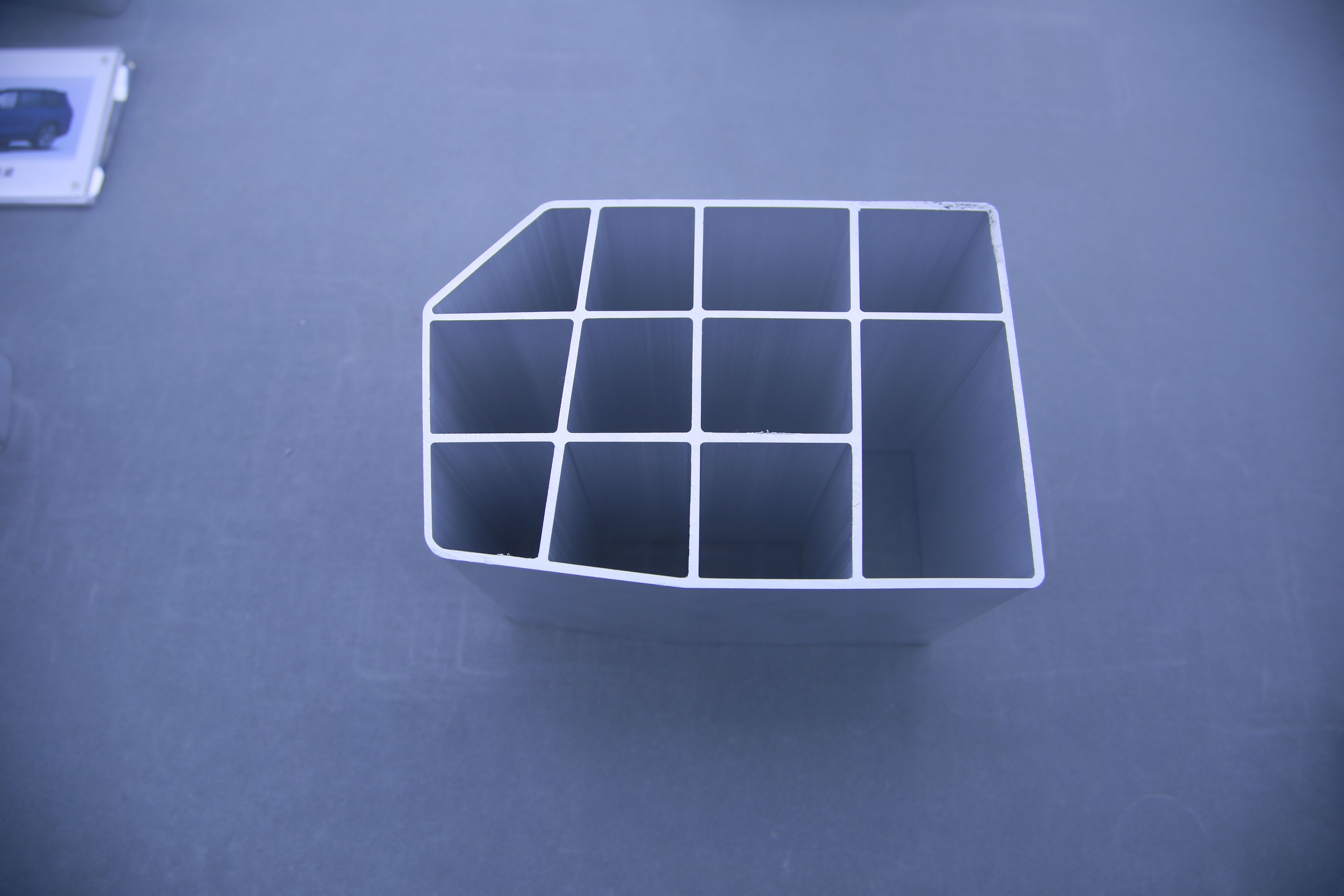
An aluminum profile is made by heating an aluminum alloy billet and forcing it through a steel die. The process produces a long section with a constant cross-section, such as an angle, channel, tube or complex hollow frame profile. Because aluminum can be extruded into complex shapes, designers use profiles for lightweight structures that must also resist corrosion.
In architecture, profiles provide structural support for window systems, door frames, curtain wall sections and interior finishing details. In industry, they appear in automotive structures, heat sinks, solar frames, railings and machinery guards. The same extrusion principle applies across these uses, but material selection, dimensional tolerances and surface treatment differ.
Architectural aluminum profiles
Architectural aluminum profiles are extrusions designed for building envelope applications. In window and door systems, they hold glass and moving sashes, transfer wind loads, support seals and contribute to thermal and sound insulation. They also have a decorative role because the visible surface of the profile affects the appearance of the building.
Haomen Aluminum's product data describes its architectural aluminum profiles as part of the aluminum profiles for window and door category. These profiles are available in alloys 6063-T5, 6061, 6005 and 6082, with standard lengths from 4 to 6 meters. The range is intended for window and door system manufacturers, interior finishing projects and the global high-end construction industry.
Industrial aluminum profiles
Industrial aluminum profiles are extrusions made for non-architectural equipment and structures. They include profiles for automotive lightweight components, solar mounting systems, electronic frames and other engineered products. Industrial buyers often require tighter tolerances, specific mechanical properties and quality systems that match the end-use industry.
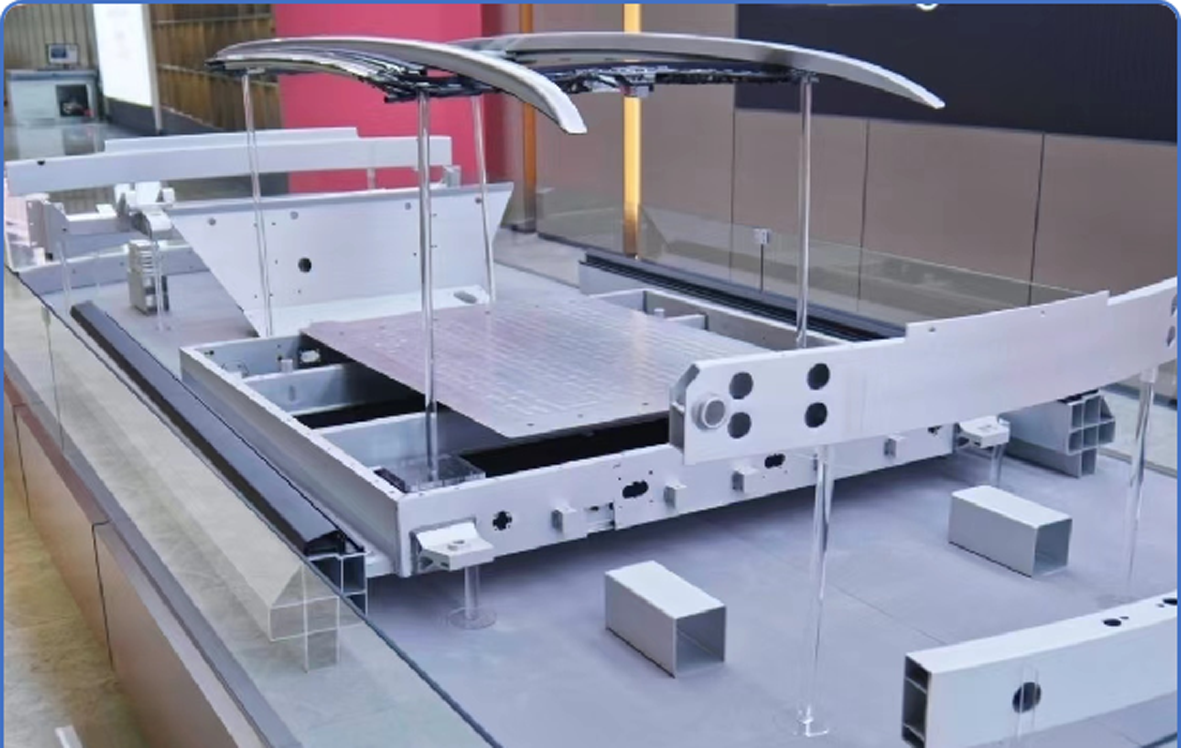
Automotive supply is one important segment. The company profile of Haomen Aluminum states that the company is committed to research on automotive lightweighting and produces aluminum alloy profiles for automobiles. It also holds IATF 16949:2016 certification, which is an international system certification commonly required by automotive OEM suppliers.
Aluminum Alloys and Tempers You Will See Most Often
Most extruded architectural profiles use 6xxx series aluminum alloys. These alloys contain magnesium and silicon, and they offer a good combination of extrudability, strength, corrosion resistance and surface quality. The alloy and temper are normally written together, such as 6063-T5 or 6061-T6.
- 6063-T5: This alloy is widely used for door and window profiles where surface appearance after anodizing or coating is important. Haomen Aluminum uses 6063-T5 in its sliding window and sliding door product systems.
- 6061: This alloy provides higher strength than 6063 and is often selected for structural framing and heavier sections. Haomen lists 6061 as one of the available alloys in its architectural profile range.
- 6005: This alloy is commonly chosen for profiles that need more strength than 6063 while retaining good extrusion characteristics. It is available in Haomen's architectural aluminum profile series.
- 6082: This alloy is used for high-strength structural sections and is also included in Haomen's architectural profile material lineup.
The letter T5 indicates a temper produced by cooling from an elevated temperature forming process and then artificially aging. Buyers should always confirm the required alloy and temper with the profile designer or structural engineer before requesting a quotation.
Surface Treatments for Architectural Aluminum Profiles
Surface treatment affects weather resistance, color stability, wear behavior and the final visual result. Common finish families for architectural profiles include mill finish, powder coating, anodizing and wood grain transfer. These are the finish options listed in the architectural profile product information of Haomen Aluminum.
Mill finish: Mill finish is the natural surface of an aluminum profile after extrusion. It has no added coating, so it is often used for industrial or concealed applications where a decorative finish is not required.
Powder coating: Powder coating is applied as a dry powder and then cured under heat. It can produce a durable colored surface and is commonly used on exterior window and door profiles. Haomen Aluminum supplies powder coated sliding door systems in its HM-U003/HM-U004 series.
Anodizing: Anodizing is an electrochemical process that increases the thickness of the natural oxide layer on aluminum. It creates a hard, weather-resistant surface with a metallic appearance. Anodized products are widely specified for architectural projects where natural silver or bronze tones are desired.
Wood grain transfer: Wood grain transfer applies a wood-like pattern onto a coated or anodized profile surface. This finish is popular for residential windows and doors and for interior finishing where a warm timber look is required without using wood.
Other coating systems also exist. In China, the national standard series GB/T 5237 covers the main quality requirements for architectural aluminum profiles, including mill finish, anodizing, electrophoretic coating, powder coating and fluorocarbon coating. A buyer should therefore verify the actual finish scope of a supplier instead of assuming that every manufacturer can produce all systems in-house.
Manufacturing Capabilities and Quality Systems
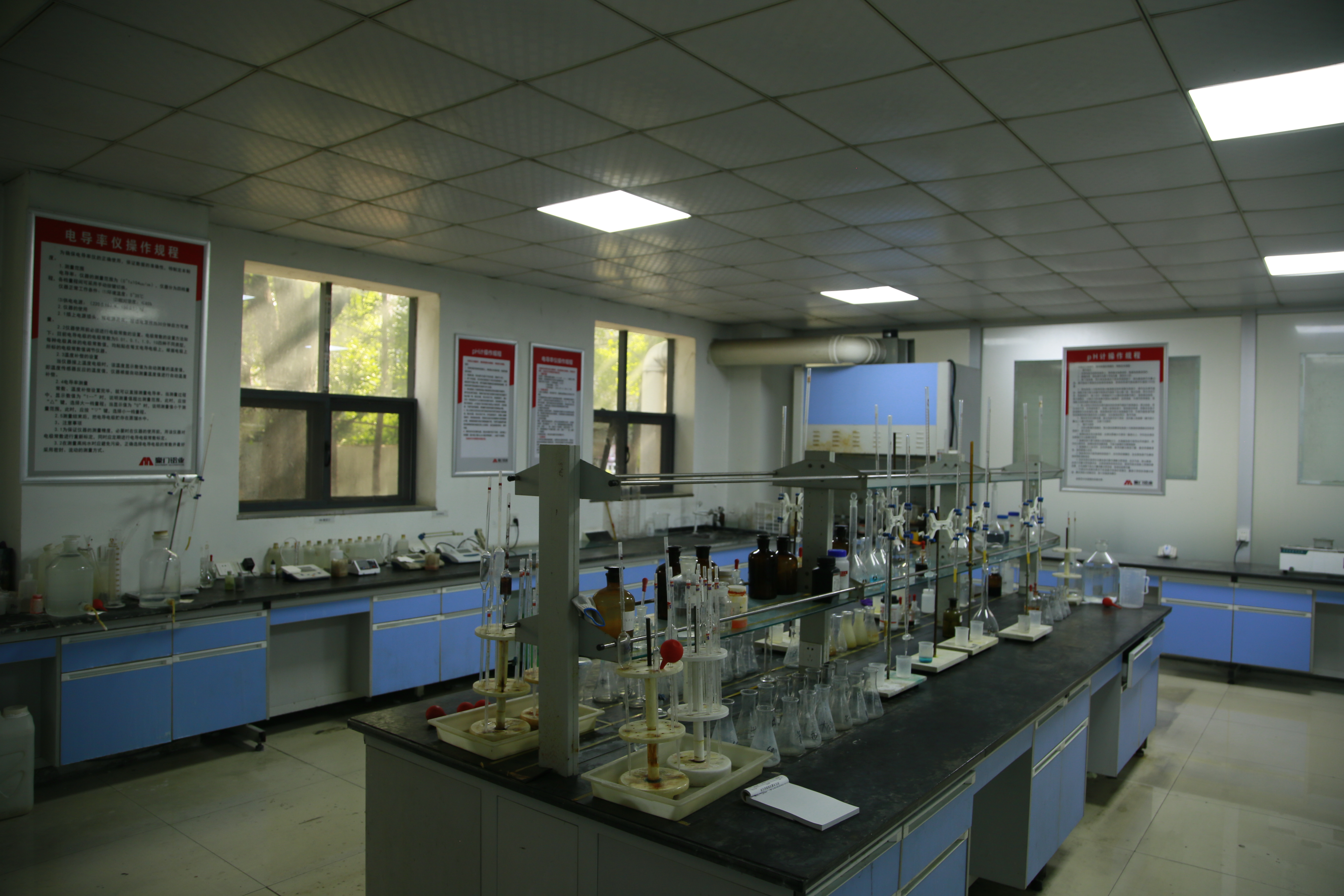
A profile factory needs more than an extrusion press. Reliable output depends on alloy preparation, die control, heat treatment, surface line management and testing equipment. Buyers should look for suppliers that can document their process, laboratory work and system certifications.
Haomen Aluminum is an example of a full-operation manufacturer. According to its company profile, the company was established in 2004 and is located in Luozhuang District, Linyi City, an area often called the 'Logistics Capital of China'. The production facility covers 270,000 square meters and has an annual aluminum profile production capacity of 100,000 tons. The total workforce is about 1,500 employees, and the R&D team includes 35 engineers.
The company has also invested in technical depth. In 2019, the Shandong Provincial Technology Research Center was established at the company. The R&D program has cooperative links with Shanghai Jiao Tong University, Shandong University and the Beijing Research Institute of Nonferrous Metals. These relationships support alloy research, product testing and process improvement.
On the certification side, Haomen Aluminum has obtained IATF 16949:2016, ISO9001, ISO14001 and ISO45001 system certifications. IATF 16949 is especially relevant when aluminum profiles are intended for automotive supply chains. The company also has laboratory facilities, which are important for checking dimensional, mechanical and surface properties before shipment.
Aluminum Profile Product Lines: A Closer Look
To make the selection process more concrete, it helps to examine one supplier's available product families. This section describes three architectural aluminum profile product lines that appear in Haomen Aluminum's product documentation.
Architectural aluminum profiles models HM-U001, HM-S002 and HM-S003
The main architectural profile category is described by Haomen as aluminum profiles for window and door. Available alloys are 6063-T5, 6061, 6005 and 6082. Standard profile length is 4 to 6 meters. Depending on the series, profiles can be matched with different surface treatments for appearance and protection.
This category is intended for window and door system manufacturers, interior finishing projects and the global high-end construction industry. For a buyer, this type of product line is useful because it offers flexibility in alloy and finish while remaining focused on building applications.
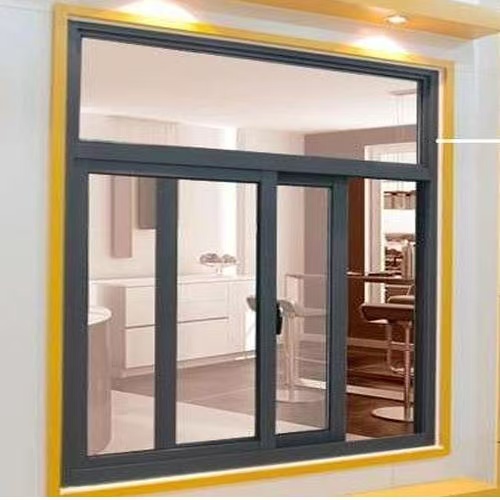
Sliding window system HM-U001/HM-U002
Haomen Aluminum also provides a sliding window system made from 6063-T5 aluminum. According to product specifications, the system supports glass thicknesses from 5 to 12 mm and is rated for air tightness, water tightness and wind resistance. It is described as suitable for coastal, plateau and rainy regions.
The sliding window model is stated to be fully compliant with GB/T 13326, GB/T 7106, JG/T 215 and GB/T 8484. Thermal performance is certified in line with GB/T 8484-2020. Product documentation also notes that the system supports green building certification efforts such as LEED and China's 3-Star Green Building label.
Sliding door system HM-U003/HM-U004
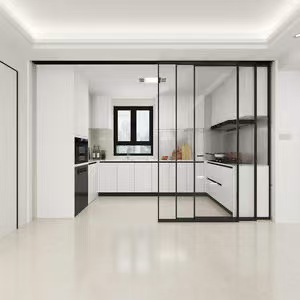
The HM-U003/HM-U004 is a powder coated sliding door system made from 6063-T5 aluminum alloy. Performance specifications include air tightness not lower than level 6, water tightness not lower than level 4 with at least 500 Pa, wind pressure resistance not lower than level 6, sound insulation of at least 30 dB and thermal insulation K value of no more than 2.5 W/m²·K.
The system is designed to withstand repeated opening and closing cycles, with product data listing at least 20,000 cycles. Adjustable sash thickness ranges from 28 to 45 mm, and glass thickness can range from 4 to 12 mm. These details matter to buyers because they indicate the profile system has been tested for real operating conditions, not only for static appearance.
Use Cases and Typical Applications
Architectural aluminum profiles are used in several common project scenarios. In residential and commercial buildings, they form the frames and sashes of sliding windows, casement windows, sliding doors and entrance doors. In these applications, profiles must provide structural support for glass and hardware while resisting wind, rain and daily use.
For coastal, plateau and rainy regions, weather resistance becomes especially important. The product data for the HM-U001/HM-U002 sliding window states that it has been triple-performance tested for air tightness, water tightness and wind resistance. This type of testing is valuable for buyers working on projects exposed to high humidity, salt air or strong winds.
In addition to finished window and door products, many buyers purchase architectural profiles as semi-finished material for their own fabrication lines. Window and door system manufacturers often need profile series in consistent alloys, precise lengths and specified finishes. The 4 to 6 meter length range available in Haomen's architectural profile line gives fabricators useful flexibility for cutting and machining.
Beyond architecture, aluminum profiles are used in automotive lightweighting, solar mounting structures and other industrial systems. Automotive supply requires strict quality control and documentation, which is why certification systems such as IATF 16949 are important signals for industrial buyers. Solar mounting and PV frame production also rely on aluminum's corrosion resistance and light weight.
Comparison: Architectural Aluminum Profile Options at a Glance
The table below summarizes the main product-related data that a buyer can use for an initial comparison of Haomen Aluminum's architectural series.
| Product family | Models | Alloy | Finish notes | Notable characteristics |
|---|---|---|---|---|
| Architectural Aluminum Profiles | HM-U001, HM-S002, HM-S003 | 6063-T5, 6061, 6005, 6082 | Mill finish, powder coating, anodizing, wood grain transfer | 4-6 m length; intended for window and door systems, interior finishing and high-end construction |
| Sliding Window System | HM-U001/HM-U002 | 6063-T5 | Finish should be confirmed for the order | Glass 5-12 mm; compliant with GB/T 13326, GB/T 7106, JG/T 215 and GB/T 8484; suitable for coastal, plateau and rainy regions |
| Sliding Door System | HM-U003/HM-U004 | 6063-T5 | Powder coated | Air tightness ≥ level 6; water tightness ≥ level 4; wind resistance ≥ level 6; thermal K value ≤ 2.5 W/m²·K |
How to Evaluate an Architectural Aluminum Profiles Manufacturer
Once you understand the product basics, the next step is supplier qualification. Use this structured approach to compare architectural aluminum profiles manufacturers.
- Define the intended application. Determine whether you are sourcing profiles for windows, doors, curtain walls, industrial equipment or automotive components. The application will guide alloy selection and finish compatibility.
- Confirm the required alloy and temper. Ask the supplier to confirm whether the profile can be produced in 6063-T5, 6061, 6005 or 6082. For window and door profiles, 6063-T5 is a common starting point, but structural projects may need a higher-strength alloy.
- Check the available surface finishes. If the project needs exterior durability, verify that the supplier can provide the right finishing line. The standard choices to discuss include mill finish, powder coating, anodizing and wood grain transfer, as well as other coating systems specified in the project.
- Review quality certifications. Look for ISO9001, ISO14001, ISO45001 and, where relevant, IATF 16949. Certifications show that the factory follows documented management and quality procedures.
- Assess production scale and technical support. A supplier with a large facility, dedicated R&D team and laboratory testing capability can often manage more complex product development projects. Haomen Aluminum, for example, operates a 270,000 square meter plant with an annual capacity of 100,000 tons.
- Ask about length and product structure. Architectural profiles are often supplied in standard lengths such as 4 to 6 meters. Ask whether the supplier supports multiple series and custom cutting to reduce fabrication waste.
This checklist is not a one-time exercise. Even after a supplier looks qualified, it is wise to request actual product documentation, review test reports and request a sample or small pilot order before full production.
Frequently Asked Questions
What are architectural aluminum profiles?
Architectural aluminum profiles are extruded aluminum products used mainly in doors, windows, curtain walls and interior finishing. They are produced in alloys such as 6063-T5, 6061, 6005 and 6082, and can be supplied with different surface treatments for appearance and weather resistance. Haomen Aluminum's architectural range is an example of this product family.
What standards should buyers check for aluminum profiles?
In China, the GB/T 5237 series is an important standard family for architectural aluminum profile surfaces and performance. In Europe, EN 755 and EN 12020 are commonly referenced for hot extruded and precision aluminum profiles. For window and door systems, Chinese buyers may also see performance standards such as GB/T 7106. Haomen Aluminum states that its HM-U001/HM-U002 sliding window system complies with GB/T 13326, GB/T 7106, JG/T 215 and GB/T 8484, and that thermal performance follows GB/T 8484-2020.
What should buyers look for in an aluminum profile manufacturer?
Buyers should evaluate production capacity, engineering support, certification status, testing ability and product consistency. Haomen Aluminum, for example, was established in 2004, operates a 270,000 square meter facility and has an annual production capacity of 100,000 tons. The company holds IATF 16949:2016, ISO9001, ISO14001 and ISO45001 certifications, and its R&D team includes 35 engineers.
Which alloys and finishes can Haomen Aluminum provide?
Haomen Aluminum lists 6063-T5, 6061, 6005 and 6082 alloys in its architectural aluminum profile range. Available finish options include mill finish, powder coating, anodizing and wood grain transfer. The HM-U003/HM-U004 sliding door system is supplied as a powder coated system, while the HM-U001/HM-U002 sliding window system uses 6063-T5 profiles and has been tested for air, water and wind performance.
How can I get detailed aluminum profile specifications or a catalog?
For project-specific aluminum profile specifications, buyers can contact Haomen Aluminum directly by email at haomen2004@gmail.com or by WhatsApp at +86 15153910991. A company e-catalog is also available for download at the brochure link at the end of this article. The Haomen team can clarify alloy availability, finish options and product ranges based on your intended application.
Next step for buyers: If you are still in the research stage, a product catalog is one of the quickest ways to compare profile types, finishes and model references. Download the Haomen Aluminum e-catalog to keep a structured reference next to your project requirements.
Final Thoughts: Turning Aluminum Profile Knowledge Into Your Next Step
Aluminum profiles are versatile and steadily growing in importance across construction, automotive and solar-related industries. For a buyer in the awareness or research stage, the most valuable step is to build a clear sourcing language before requesting quotes. Know your application, confirm the alloy and finish, and select a manufacturer that can demonstrate production capability and technical control.
Haomen Aluminum is one such source to benchmark. The company has manufactured aluminum profiles since 2004, and its 270,000 square meter facility in Linyi, China provides an annual capacity of 100,000 tons. Its architectural profile range includes common door and window alloys and multiple finish options. However, the same evaluation logic applies to any supplier you consider.
To move forward, start with the manufacturer's product catalog, shortlist profiles that match your project and then contact the supplier for technical details. A well-organized comparison at this stage can reduce later specification problems and make the procurement process smoother.
Have Questions or Need More Details?
Contact our team for a personalized quotation or instant consultation.
Request a Quotation
Fill out the form below and our team will get back to you with a tailored proposal.
WhatsApp Direct Chat
Prefer to chat in real-time? Message us on WhatsApp for instant assistance & quick answers.
- Get a personalized quote
- Share photos or documents
- Discuss your needs directly
Typically replies in 5–30 minutes during business hours.