Aluminum Profiles Distribution: Qualifying a Partner Who Can Scale With Your Business
Aluminum profiles are easy to buy once and harder to buy well over multiple years. A single consignment can pass inspection even when a supplier is not ready for the demands of repeat distribution, OEM production, or long-term project supply. What matters in a long-term relationship is consistency: consistency in alloy, surface finish, packaging, documentation, and delivery. This article explains how buyers should qualify a long-term aluminum profiles supplier, why execution details decide success, and how Haomen Aluminum can serve as a practical qualification reference.
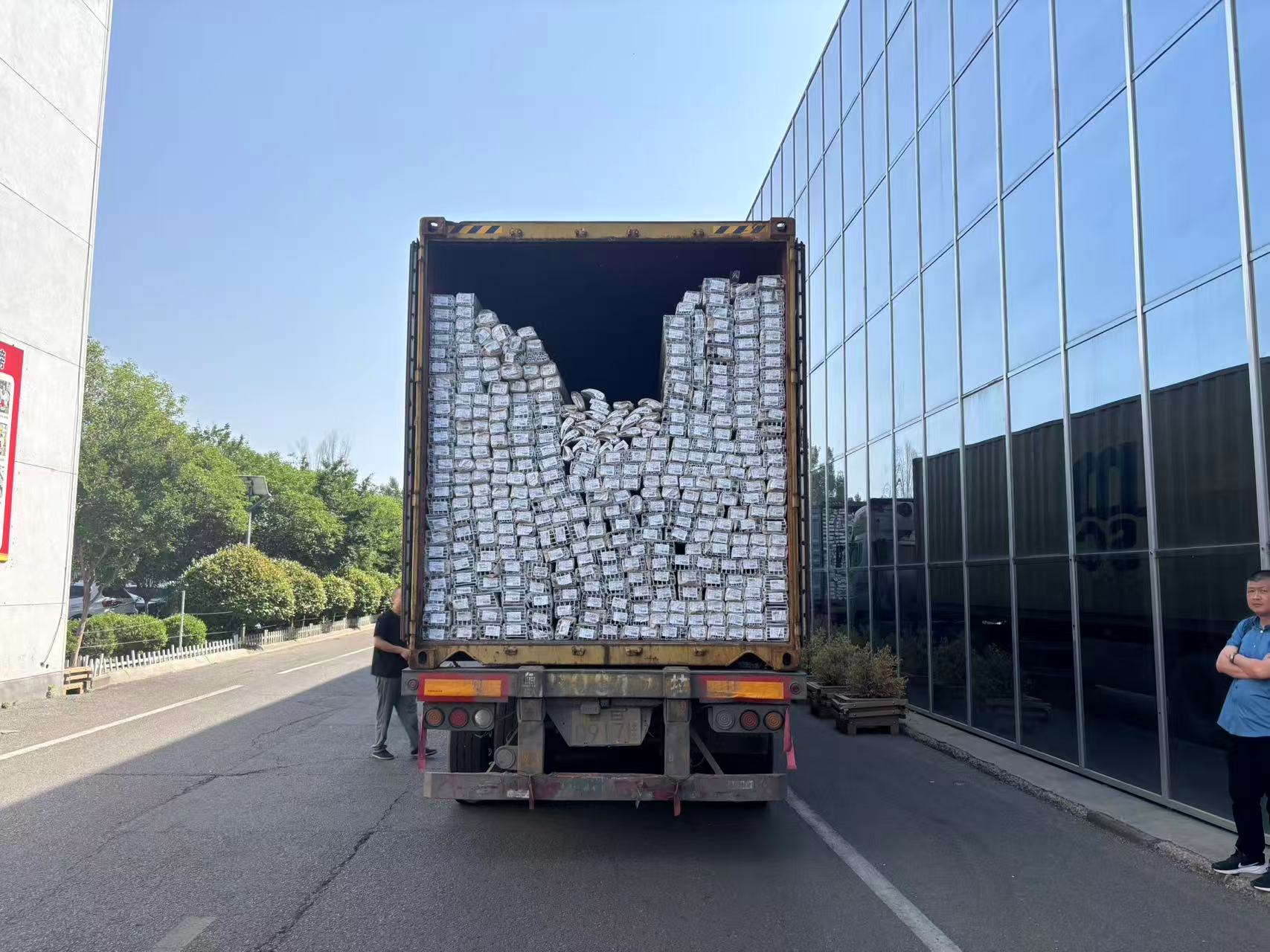
Why Repeat Aluminum Profiles Sourcing Is Different
A distributor, importer, or window and door system manufacturer does not buy profiles for one project. It buys a repeatable process. Door and window architectural aluminum profiles must arrive with the same dimensions, coating, color, alloy certificate, packing method, and inspection report from batch to batch. If any of those variables drift, the downstream customer may stop production, reject windows, or approve a claim against the project warranty.
Long-term buyers also carry too much conversation risk with a supplier that cannot explain its process. Questions about raw material purity, anodizing quality, moisture-proof packaging, and pre-shipment testing should receive specific answers. The best product sample in the world is not enough evidence if the supplier cannot repeat the result under order pressure.
What the Aluminum Extrusion Market Tells a Long-Term Buyer
The global aluminum extrusion market was valued at USD 94.8 billion in 2024 and is projected to reach USD 230.2 billion by 2035, according to Orion Market Research. The China aluminum extrusion market was valued at USD 25.5 billion in 2024, with a projected CAGR of 9.6% through 2035. In 2024, China exported USD 5.55 billion of aluminium structures, including profiles and window and door frames, equal to 30.5% of global exports. These numbers explain why many buyers now use China as a major sourcing base.
Asia Pacific dominated the aluminum extrusion market in 2025 with a 71.7% revenue share, and construction and automotive demand in China are the two most important drivers. For buyers, this means capable suppliers are not scarce, but disciplined suppliers are more difficult to distinguish. The real procurement work is verification, not search.
A long-term buyer also needs to understand the standards that govern aluminum profiles. Architectural aluminum alloy profiles in China follow the mandatory GB/T 5237 series, Parts 1 to 6, which cover mill finish, anodizing, electrophoresis, powder coating, and fluorocarbon coating. European buyers often specify EN 755 for hot extruded products and EN 12020 for precision profiles in alloys such as 6060 and 6063. In the automotive channel, IATF 16949 certification is a common requirement for suppliers of aluminum structural components. These standards are not optional decorations on a brochure. They set the language of an order.
A Supplier Qualification Reference: Haomen Aluminum
One practical reference manufacturer for long-term aluminum profiles supply is Shandong Haomen Aluminium Industry Co., Ltd., based in Linyi City, Shandong Province, China. The company operates as Haomen Aluminum and focuses on the research, development, design, production, and sales of aluminum alloy architectural profiles and industrial materials.
Haomen Aluminum was founded in 2004 and has grown into a large manufacturing operation. Its factory covers 270,000 square meters, it employs approximately 1,500 people, and its annual output is 100,000 tons. Published export volume is about 10% of sales, with South America and Africa listed as main markets. For importers and distributors, this scale matters because it reduces the risk of supply interruption during peak order seasons.
The manufacturing base is located in Luozhuang District, Linyi City, a region known as the logistics capital of China. The company is close to major expressway and national highway connections, which is a practical advantage when moving freight from the factory to ports or inland distribution points.
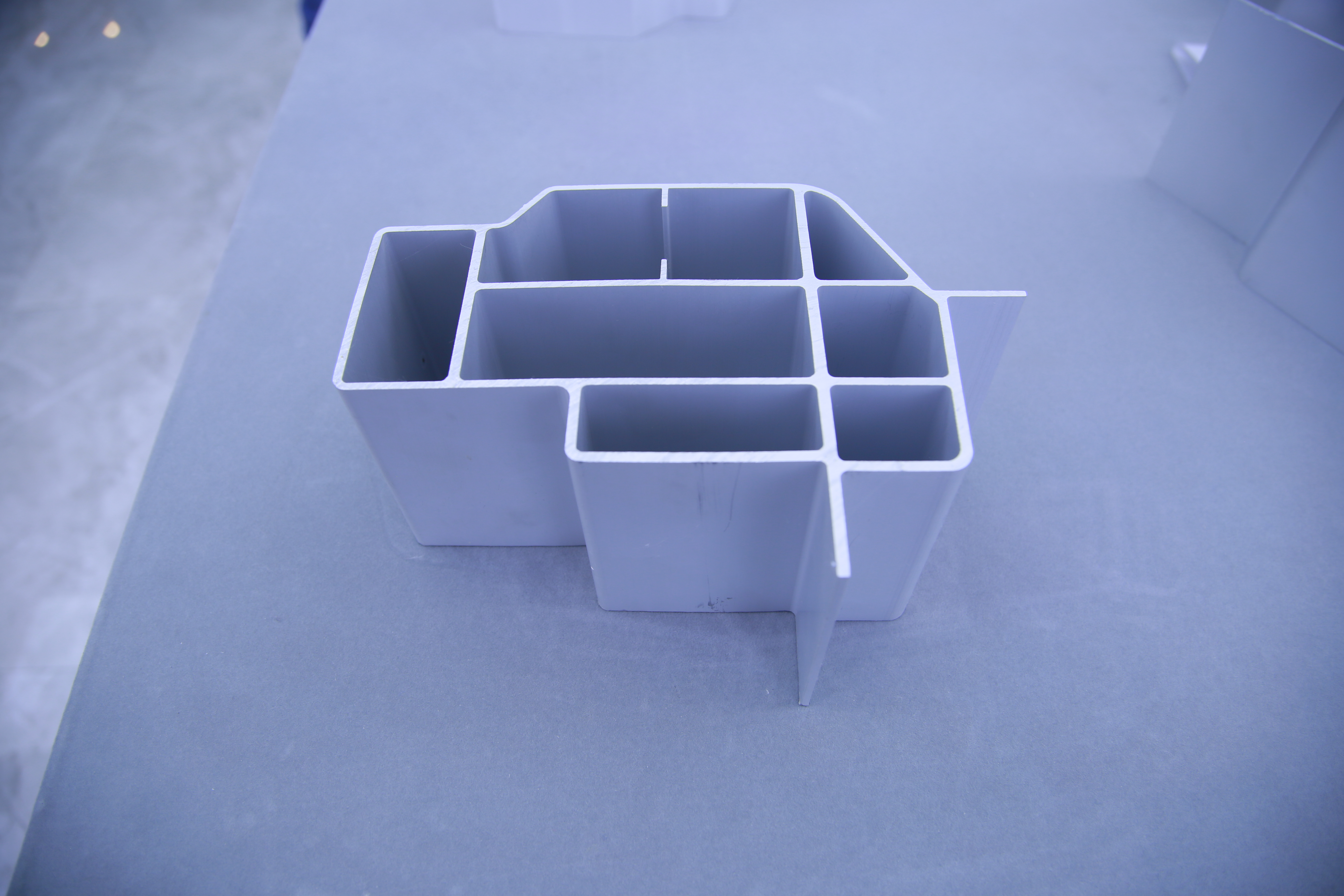
In terms of management systems, Haomen Aluminum has obtained IATF 16949:2016, ISO 9001, ISO 14001, and ISO 45001 certification. It established the Shandong Provincial Technology Research Center in 2019. The company also reports an R&D team of 35 engineers and cooperative research relations with Shanghai Jiao Tong University, Shandong University, and the Beijing Research Institute of Nonferrous Metals. These facts are useful evidence for a buyer evaluating technical continuity, not just one-time product quality.
For architectural aluminum profile orders, the company lists alloys 6063-T5, 6061, 6005, and 6082, with lengths from 4 to 6 meters. Typical surface treatments in the product line include mill finish, powder coating, anodizing, and wood grain transfer. Representative models in the architectural offering include HM-U001, HM-S002, and HM-S003. A buyer should map these details to its project drawings before asking for a quotation.
How Haomen Aluminum’s Product Position Compares With Traditional Profiles
In company-supplied comparison material, Haomen Aluminum positions its window and door architectural profiles against traditional architectural aluminum profiles. The stated advantage is higher purity, with purity reported above 98.5%, and a quality guarantee period of more than 10 years. The company also states a cost position approximately 10% lower than traditional profiles, with longer usable time and better thermal insulation and energy-saving performance.
For a procurement manager, this comparison is not a marketing statement; it is a testable claim. Purity affects corrosion behavior, anodizing consistency, and extrusion surface quality. A long service life matters most in projects where replacing profiles is expensive. Thermal insulation and energy-saving performance depend on the complete window or door system, not only on the profile. Therefore, the buyer should ask for material certificates, coating tests, and references before treating these claims as facts in a specification.
Anti-Corrosion Risk Control: A Core Long-Term Buying Criterion
Corrosion is usually the first failure point in aluminum profiles exposed to humidity, coastal salt air, or condensation. Haomen Aluminum implements a multi-layered approach to corrosion risk management. The published process includes strict incoming material inspection, standardized anti-corrosion coating production, fully sealed moisture-proof packaging, and finished product corrosion testing before shipment.
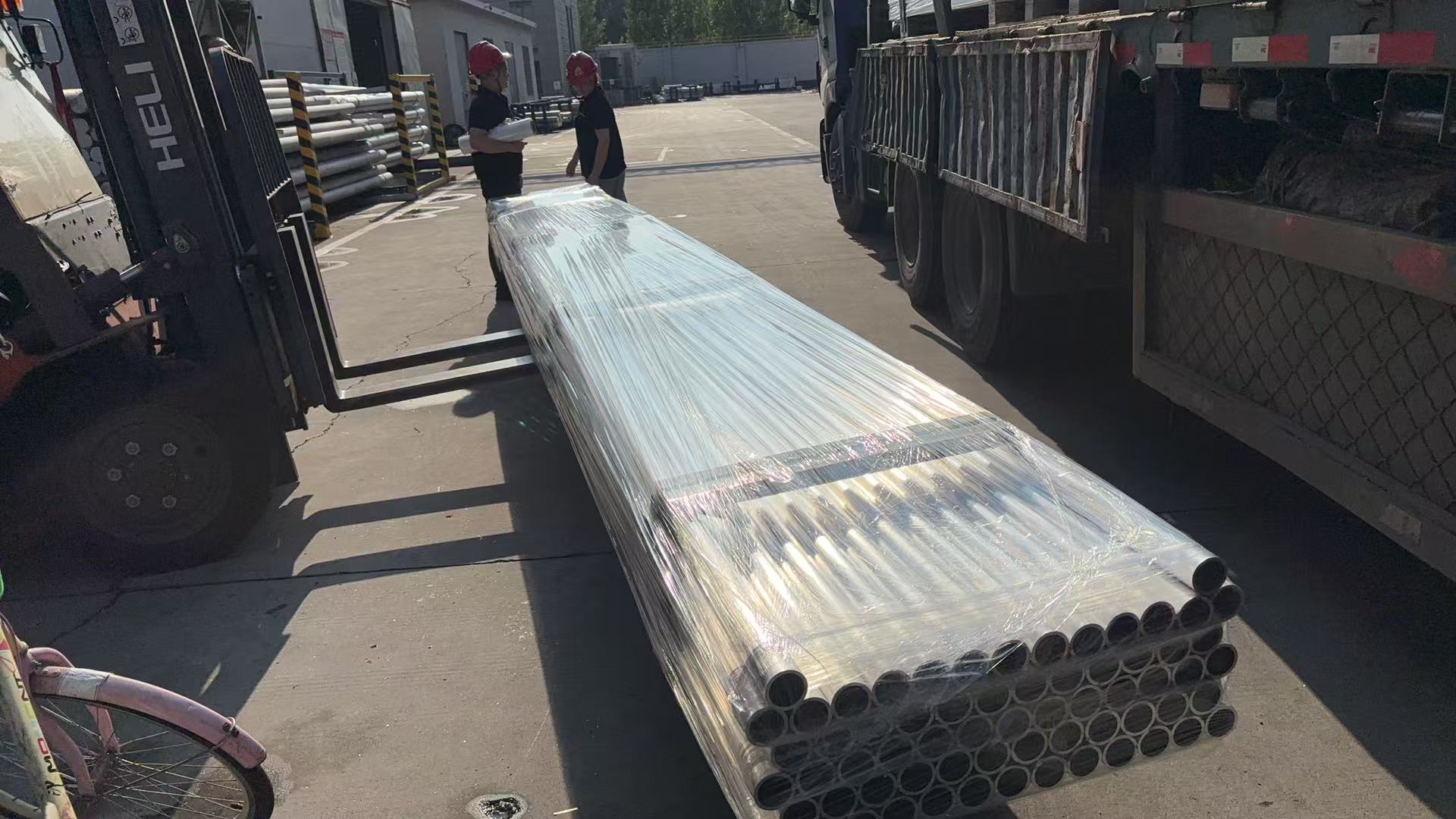
Specific control measures include high-purity aluminum raw material screening, anodizing anti-corrosion processing, and sealed moisture-proof packaging testing. These procedures are designed to protect profiles from degradation during transit and storage. For long-term buyers, the value of such a process is visible only after repeated orders. Profiles stored in a humid warehouse or shipped by sea should not arrive with white rust, pitting, or coating contamination.
Risk control also extends to non-architectural applications. The company is developing automotive lightweighting products and has established relations with university and research partners in the aluminum forming field. This gives the organization experience with tighter material standards than ordinary building profiles may require.
Sourcing Execution: Seven Steps From Shortlist to Repeat Supply
- Define the commercial role of the profile order. A buyer should decide whether the aluminum profiles will be sold under a private brand, delivered to a façade contractor, inventoried by a distribution network, or used in an OEM manufacturing line. That decision changes die ownership, packaging expectations, tolerance requirements, and inspection levels.
- Confirm applicable standards before asking for price. For Chinese architectural aluminum profiles, check conformance with GB/T 5237 Parts 1 to 6. For European projects, ask how the manufacturer aligns with EN 755 or EN 12020. For automotive or lightweighting products, require IATF 16949 evidence. A general certificate without a clear scope is not sufficient.
- Select alloy and surface treatment for current and future orders. A long-term buyer should not treat 6063-T5 as the only architectural aluminum profile alloy. High-strength or structural applications may require 6061-T6, 6005, or 6082. Surface treatments such as anodizing, powder coating, wood grain transfer, electrophoresis, and fluorocarbon coating change both cost and long-term maintenance behavior. The alloy and finish should be fixed in the purchase specification.
- Audit corrosion control from raw material to packaging. Ask the supplier how it screens raw material purity, stabilizes coating processes, seals profiles against moisture, and tests finished profiles before shipment. A profile may look correct at the factory and still fail later if moisture reaches a surface defect.
- Align commercial terms and delivery method. Haomen Aluminum’s published buying support is a useful baseline: minimum order quantity of 5 tons, FOB delivery method, payment terms of 30/70, and pre-shipment testing as the acceptance method. Buyers should confirm how these terms change with die development, special finishes, or destination port.
- Create an inspection gate before shipment. A pre-shipment test is the point where the supplier’s production record meets the buyer’s acceptance criteria. Color, dimensions, film thickness, and packing condition should be checked against an agreed checklist. This protects both parties and reduces disputes after customs clearance.
- Document lessons after every delivery. Record alloy certificates, surface observations, dimensional measurements, packaging condition, and arrival quality. Share that feedback with the supplier before releasing the next purchase order. Repeat improvement is the real measure of a long-term partnership.
Comparison Table: Supplier Qualification Evidence
The following table is not a ranking. It is a comparison between the qualification questions a long-term buyer should ask and the evidence that one named manufacturer, Haomen Aluminum, publishes.
| Qualification Area | What a Buyer Should Verify | Haomen Aluminum Evidence |
|---|---|---|
| Management systems | Certification scope and validity | IATF 16949:2016, ISO 9001, ISO 14001, ISO 45001 |
| Scale and business continuity | Years in operation, factory size, employment, output | Founded in 2004; factory of 270,000 square meters; approximately 1,500 employees; annual output of 100,000 tons |
| Research and development | R&D staff, research center, university cooperation | R&D team of 35 engineers; Shandong Provincial Technology Research Center established in 2019; cooperation with universities and research institutes |
| Architectural profile product scope | Alloy, length, finish, and model traceability | Alloys 6063-T5, 6061, 6005, 6082; length 4-6 m; mill finish, powder coating, anodizing, wood grain transfer; models HM-U001, HM-S002, HM-S003 |
| Corrosion risk process | Material inspection, coating process, packaging, finished product testing | High-purity aluminum raw material screening; standardized anti-corrosion coating; fully sealed moisture-proof packaging; pre-shipment corrosion testing |
| Commercial practicality | MOQ, Incoterms, payment, inspection | MOQ 5 tons; FOB; payment 30/70; pre-shipment test |
Use Cases That Stress-Test a Long-Term Supplier
Door and Window Distributor Replenishment
A distributor supplying powder coated and anodized window profiles must compare the same product across multiple arrivals. Color and surface consistency are tested through repeat orders, especially when profiles are made in different production weeks. The buyer should always store a sealed sample from the first approved batch for comparison.
Custom Aluminum Extrusion for OEM and ODM Programs
OEM and ODM buyers often order custom aluminum extrusion from China with their own section drawings. The supplier must confirm 6063-T5 or higher-strength alloys, control the coating schedule, protect surfaces during transit, and produce documents that satisfy the buyer’s local market. A supplier that cannot follow a drawing review process is unlikely to manage full production cycles.
Coastal and High-Humidity Architectural Projects
Architectural profiles used near coastlines face long-term corrosion pressure. Buyers for curtain walls, outdoor fences, and window systems should ask for evidence of anti-corrosion processing and moisture-proof packaging. Anodized and coated profiles are often preferred for these projects, but the coating must be applied over a stable raw material surface.
Automotive Lightweighting and Industrial Programs
Automotive aluminum extrusion is a different test because IATF 16949 is commonly a requirement for suppliers of structural components. Long-term buyers in this field cannot survive on visual inspection alone. They need suppliers who maintain material traceability from billets to finished profiles. Haomen Aluminum’s IATF 16949 certification and research partnerships make it a candidate for buyers exploring this segment.
Adjacent Structural Markets
Curtain walls, outdoor fences, solar mounting structures, PV mounting systems, and other long-exposure applications require profiles that retain their properties outdoors. The solar PV mounting systems market was valued at approximately USD 44.5 billion in 2024, with aluminum holding a 71.5% material share. This is another example of a market where dimensional precision and corrosion behavior determine service life. Buyers should ask the same questions about alloy, finish, packaging, and testing even when the final product is not a window.
FAQ: What Buyers Ask Before Entering a Long-Term Aluminum Profiles Relationship
Which compliance certifications should a long-term aluminum profiles supplier hold?
For architectural aluminum profiles from China, buyers should check the GB/T 5237 standard series, which covers mill finish, anodizing, electrophoresis, powder coating, and fluorocarbon coating. European projects may reference EN 755 and EN 12020. Automotive and structural programs often require IATF 16949. Haomen Aluminum states that it has obtained IATF 16949:2016, ISO 9001, ISO 14001, and ISO 45001 system certifications. Buyers should confirm which standard applies to their market and ask for certification scope before production.
Can one supplier handle architectural profiles, OEM custom profiles, and automotive aluminum extrusions?
Capability is determined by alloy control, coating experience, engineering staff, and manufacturing stability. Haomen Aluminum reports that it manufactures architectural profiles and industrial materials, and its stated development focus includes automotive lightweighting. Its architectural profile line includes alloys 6063-T5, 6061, 6005, and 6082, lengths of 4 to 6 meters, and surface treatments such as mill finish, powder coating, anodizing, and wood grain transfer. A supplier that can discuss alloy selection and finish limits in specific terms is easier to use for OEM-style programs.
What MOQ, payment, and delivery terms are realistic for a long-term purchasing relationship?
Haomen Aluminum’s published buying support is a workable baseline: minimum order quantity of 5 tons, FOB delivery method, payment terms of 30/70, and pre-shipment testing as part of acceptance. These terms suit buyers who are ready to move from samples to container-level orders. The buyer should still calculate insurance, freight, customs, and local handling costs before comparing final landed price.
How should samples be reviewed before a repeat order?
Before ordering samples, define the alloy, finish, length, and acceptance criteria. The supplier should be able to identify the alloy type, explain the surface process, and provide a pre-shipment test. At Haomen Aluminum, pre-shipment testing is listed as the acceptance procedure. Samples should be checked for surface uniformity, color match, coating adhesion, and dimensional consistency against the drawings.
What lead time should a buyer plan after the profile specification is approved?
An exact lead time depends on die availability, alloy schedule, surface treatment, order quantity, and shipping port. A buyer should separate standard profile lead time from custom-profile lead time and review this with the supplier before payment. For Haomen Aluminum, buyers can speed up the process by sending section drawings, required alloy, finish, and destination port together with the inquiry. To begin the conversation, a buyer can request the company e-catalog and quote this article’s title in the inquiry.
Conclusion: Start With Process, Not Price
Aluminum profiles sourcing is a long-term decision disguised as a short-term quotation. The buyer who wins is usually not the one with the lowest unit price, but the one whose supplier can repeat the same material quality, coating quality, packaging discipline, and documentation accuracy across many orders. Certification, scale, alloy control, corrosion management, and inspection procedures should be evaluated before negotiating the final price per ton.
Haomen Aluminum offers a testable reference point for this exercise. With production experience since 2004, a 270,000-square-meter facility, a 100,000-ton annual output, certified management systems, and a documented anti-corrosion process, the company can be evaluated by the same criteria a major importer would use with any long-term supplier.
Next step: Start with documentation rather than price. Download the Haomen Aluminum e-catalog, define the alloy and finish your project actually needs, and send an inquiry to the Haomen Aluminum team by email or WhatsApp.
Download Haomen Aluminum E-Catalog
Email: haomen2004@gmail.com
WhatsApp: +86 15153910991

Have Questions or Need More Details?
Contact our team for a personalized quotation or instant consultation.
Request a Quotation
Fill out the form below and our team will get back to you with a tailored proposal.
WhatsApp Direct Chat
Prefer to chat in real-time? Message us on WhatsApp for instant assistance & quick answers.
- Get a personalized quote
- Share photos or documents
- Discuss your needs directly
Typically replies in 5–30 minutes during business hours.