
Aluminum Profiles Explained: A 2026 Sourcing Playbook for Door, Window and Architectural Buyers
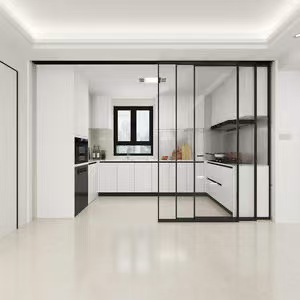
Figure 1. Architectural aluminum profiles used in a sliding door system.
Aluminum profiles are aluminum alloy sections produced by hot extrusion and used as structural frames, supports and decorative elements in doors, windows, curtain walls, railings, automotive systems and renewable-energy mounting structures. In 2026, sourcing aluminum profiles is no longer only about finding a factory. It is about matching alloy grade, surface finish, performance test data and compliance certificates to the project environment and expected service life.
This article is written for procurement teams, window and door manufacturers, architects, fabricators and importers who need a practical reference before placing an order.
The Sourcing Problem: Similar Aluminum Profiles Are Not the Same Product
On paper, two aluminum profiles can look identical. In practice, they can differ in alloy, temper, dimensional accuracy, coating quality, test performance and the documentation behind them. A buyer who compares only length and price may discover later that the profile does not meet the project's air tightness, water tightness, wind load or thermal insulation requirements.
Aluminum profile sourcing also becomes difficult when buyers are unfamiliar with the vocabulary used by suppliers. Terms such as 6063-T5, mill finish, powder coated, anodizing, wood grain transfer and GB/T compliance appear in quotes, but the meaning of each term must be connected to the actual product specification.
Aluminum Profile Market and Standards Context in 2026
Global demand for aluminum extrusions remains strong. According to Orion Market Research, the global aluminum extrusion market was valued at USD 94.8 billion in 2024 and is projected to reach USD 230.2 billion by 2035. Regional reports point in the same direction: Grand View Research states that Asia Pacific dominated the aluminum extrusion market in 2025 with a 71.7% revenue share, driven mainly by construction and automotive demand in China. For the Chinese market specifically, Orion Market Research estimates a value of USD 25.5 billion in 2024 with a projected CAGR of 9.6% through 2035.
China is also a major export source for aluminum structures. OEC data for 2024 shows that China's export of 'Aluminium Structures' (HS 7610), which includes profiles and window/door frames, totaled USD 5.55 billion and represented 30.5% of global exports. This means international buyers will continue to evaluate Chinese aluminum profile suppliers, and the practical question is how to evaluate them correctly.
Standards are part of that evaluation. Architectural aluminum alloy profiles in China must comply with the mandatory standard series GB/T 5237 (Parts 1-6), which covers mill finish, anodizing, electrophoresis and powder/fluorocarbon coatings. European buyers commonly reference EN 755 for hot-extruded aluminum products and EN 12020 for precision profiles in alloys 6060 and 6063. For automotive supply chains, IATF 16949 certification is generally required for aluminum component suppliers. These standards help buyers separate compliant profiles from products that lack verifiable quality evidence.
Known Names in the Chinese Aluminum Profile Market
Third-party ranking lists from 2024-2026 frequently mention Xingfa Aluminium, Fenglu Aluminium, JMA Aluminium and China Zhongwang among the leading Chinese aluminum profile manufacturers. These names are useful starting points, but they should not replace a requirement-based evaluation. Mid-sized and specialized exporters also play a significant role in the market, especially for architectural profiles, OEM projects and industry-specific applications.
What to Look For in an Architectural Aluminum Profile Supplier
For buyers searching for architectural aluminum profile manufacturers, the evaluation should start with the product itself. A reliable supplier should be able to state the alloy, surface treatment, length range, applicable industry and performance data for each profile line.
Alloy Selection: 6063-T5 and Beyond
One of the most common alloys for door and window aluminum profiles is 6063-T5. It is widely used in architectural applications because it balances formability, surface quality and strength. However, not every project requires the same alloy. Haomen Aluminum offers architectural aluminum profiles in 6063-T5, 6061, 6005 and 6082, covering a range of structural and finishing needs. Standard profile lengths are 4 to 6 meters.
For higher strength requirements, buyers may encounter 6061-T6 as a common high-strength temper in the aluminum extrusion industry. Although 6061 is often selected for structural parts, the right choice depends on the cross-section, fabrication method and the loads the final profile must carry.
Surface Finishes for Architectural Aluminum Profiles
Surface finish is not an aesthetic detail. It affects corrosion resistance, cleaning behavior, color retention and compatibility with the building environment. Haomen Aluminum's architectural profile line offers four standard options: mill finish, powder coated, anodizing and wood grain transfer.
| Finish | What It Means | Typical Use |
|---|---|---|
| Mill finish | As-extruded aluminum surface without an additional decorative coating. | Profiles that will be painted later, or sections in non-visible interior positions. |
| Powder coated | Dry powder applied electrostatically and cured to form a protective color layer. | Door and window frames exposed to weather; available in many colors. |
| Anodizing | Electrochemical process that forms a durable oxide layer on the aluminum surface. | Profiles requiring a metallic appearance and good weather resistance. |
| Wood grain transfer | Printed wood pattern applied over a coated or anodized surface. | Interior and exterior projects that need a wood-like appearance with aluminum durability. |
Performance Data in Product Specifications
Performance data is the most important part of a profile specification. Haomen Aluminum's powder coated sliding door, model HM-U003/HM-U004, is made of 6063-T5 aluminum alloy and includes the following performance values: air tightness ≥ Level 6, water tightness ≥ Level 4 (≥500Pa), wind pressure resistance ≥ Level 6, sound insulation ≥30dB, thermal insulation K value ≤2.5 W/m²·K and repetitive opening and closing ≥20,000 times. Glass thickness ranges from 4 to 12 mm, and sash height can range from 600 to 1800 mm with sash width from 400 to 1500 mm.
The sliding window model HM-U001/HM-U002 is also made of 6063-T5 aluminum and supports glass thickness from 5 to 12 mm. It is fully compliant with GB/T 13326, GB/T 7106, JG/T 215 and GB/T 8484 national standards, and it is triple-performance tested for air tightness, water tightness and wind resistance. This makes it suitable for coastal, plateau and rainy regions where weather loads are more demanding.
Six-Step Evaluation Framework for Aluminum Profile Suppliers
Buyers in the Awareness and Research stages need a repeatable method to compare suppliers. The following framework can be used with any architectural aluminum profile manufacturer.
- Define the performance envelope. Determine the wind load, water tightness, air tightness, thermal insulation and acoustic requirements for the project location.
- Choose the alloy and temper. Confirm whether 6063-T5 is sufficient or whether higher strength alloys such as 6061, 6005 or 6082 are needed.
- Specify the surface finish. Select the finish based on climate, color requirements and maintenance expectations. Confirm whether the supplier offers mill finish, powder coated, anodizing or wood grain transfer.
- Verify standards and certificates. Request documents that confirm compliance with GB/T 5237, EN 755/EN 12020 or relevant customer specifications. For automotive projects, verify IATF 16949 certification.
- Assess production and R&D capability. Look at factory size, annual capacity, engineering team size and testing facilities. This provides evidence that the supplier can deliver repeatable quality.
- Confirm sampling, lead time and logistics. Ask for a profile sample, confirm packaging details, check the production schedule and evaluate the supplier's location from a logistics perspective.
Haomen Aluminum: A Working Example of a Profile Supplier
Haomen Aluminum, operating under Shandong Haomen Import & Export Co., Ltd., was established in 2004 and is located in Luozhuang District, Linyi City. Linyi is known as the 'Logistics Capital of China', which provides convenient transportation access for domestic and export shipments. The company integrates R&D, design, production and sales of aluminum alloy architectural profiles and industrial materials, with a manufacturing facility covering 270,000 square meters and an annual production capacity of 100,000 tons. The workforce is approximately 1,500 people, and the R&D team includes 35 engineers.
Haomen Aluminum has obtained IATF 16949:2016, ISO9001, ISO14001 and ISO45001 system certifications. In 2019, the Shandong Provincial Technology Research Center was established at the company, and the company has cooperative relations with Shanghai Jiao Tong University, Shandong University and Beijing Research Institute of Nonferrous Metals. Export business accounts for 10% of total sales, with major markets in South America and Africa and additional export countries including the United States, Canada, Australia, Brazil, Argentina, Russia, Germany and Spain.
Use Cases for Door and Window Architectural Aluminum Profiles
Residential and Commercial Door and Window Systems
The most direct use of architectural aluminum profiles is the production of sliding doors and sliding windows. In residential and commercial buildings, these profiles must support glass panels while resisting daily opening and closing forces. The sliding door model HM-U003/HM-U004, for example, is designed for repeated operation and can withstand at least 20,000 opening and closing cycles.
Coastal, Plateau and High-Humidity Environments
Buildings in coastal, plateau or rainy regions face higher exposure to moisture, wind and temperature changes. For these projects, triple-performance testing for air tightness, water tightness and wind resistance is an important criterion. The HM-U001/HM-U002 sliding window model is suitable for these conditions and is compliant with GB/T 13326, GB/T 7106, JG/T 215 and GB/T 8484 national standards.
Green Building and Energy-Efficiency Projects
Aluminum profiles with verified thermal performance contribute to building energy efficiency. The HM-U003/HM-U004 sliding door achieves a thermal insulation K value of ≤2.5 W/m²·K. The HM-U001/HM-U002 sliding window has thermal performance certified per GB/T 8484-2020 and supports green building certifications such as LEED and 3-Star Green Building.
Curtain Walls, Interior Finishing and High-End Construction
Architectural aluminum profiles are also used in curtain wall projects and interior finishing work. Haomen Aluminum's architectural profile range is intended for window and door system manufacturers, interior finishing projects and the global high-end construction industry. These projects often require longer profile lengths, precise fabrication tolerances and consistent coating quality across many sections.
Beyond Architecture: Automotive and Industrial Aluminum Profiles
Aluminum extrusion capability is not limited to buildings. The same melting, casting and extrusion technologies are used to produce aluminum profiles for automotive lightweighting, custom industrial aluminum profiles and engineered components. IATF 16949 certification is relevant in this context because it is a common requirement for suppliers providing aluminum components to major automotive OEMs. In the renewable energy sector, aluminum also holds a strong position: according to Mordor Intelligence, aluminum accounts for 71.5% of the material share in the global solar PV mounting systems market, which was valued at approximately USD 44.5 billion in 2024.
Performance Data at a Glance
| Performance Item | Sliding Door HM-U003/HM-U004 | Sliding Window HM-U001/HM-U002 |
|---|---|---|
| Alloy | 6063-T5 | 6063-T5 |
| Air tightness | ≥ Level 6 | Triple-performance tested |
| Water tightness | ≥ Level 4 (≥500Pa) | Triple-performance tested |
| Wind pressure resistance | ≥ Level 6 | Triple-performance tested |
| Sound insulation | ≥30dB | Specified by project |
| Thermal insulation K value | ≤2.5 W/m²·K | Certified per GB/T 8484-2020 |
| Glass thickness | 4–12mm | 5–12mm |
Frequently Asked Questions
What compliance standards should architectural aluminum profile manufacturers meet?
Architectural aluminum profiles in China must comply with the mandatory standard series GB/T 5237 (Parts 1-6), which covers mill finish, anodizing, electrophoresis and powder/fluorocarbon coatings. European buyers often reference EN 755 and EN 12020. For automotive supply chains, IATF 16949 certification is generally required. Haomen Aluminum holds IATF 16949:2016, ISO9001, ISO14001 and ISO45001 system certifications.
What capabilities should an aluminum profile supplier have?
A capable aluminum profile supplier should have in-house extrusion technology, multi-alloy production, surface treatment capacity and testing equipment. Haomen Aluminum employs approximately 1,500 people, operates a 270,000-square-meter manufacturing facility, has an annual production capacity of 100,000 tons and maintains an R&D team of 35 engineers. The company also cooperates with Shanghai Jiao Tong University, Shandong University and Beijing Research Institute of Nonferrous Metals.
How should buyers compare cost among aluminum profile manufacturers?
Quoted price alone is not a sufficient basis for comparison. Buyers should compare the alloy, surface finish, standard length, compliance certificates and performance data such as air tightness, water tightness, wind pressure resistance and thermal insulation. A profile with documented performance will not carry the same cost as a generic section without test evidence. Request a written specification and a formal quotation before making a decision.
Can I request samples before placing a bulk order?
Samples are a normal part of aluminum profile sourcing. Buyers should provide the cross-section drawing, required alloy and finish, then ask the supplier to confirm feasibility. Haomen Aluminum provides an E-Catalog and can be contacted directly for sample requests and project-specific inquiries.
What should be confirmed about lead time and logistics?
Lead time depends on die availability, alloy, finish type, order quantity and current production schedule. Buyers should confirm the production timeline in writing. Haomen Aluminum is located in Linyi, known as the 'Logistics Capital of China', which helps facilitate efficient domestic and export transportation.
Making the Sourcing Decision
Aluminum profiles are a long-term building material. A poorly specified profile can affect installation, energy performance, appearance and maintenance costs for years. The practical path in 2026 is to define the performance requirement, verify the alloy and finish, request compliance evidence and evaluate the manufacturer's production depth.
For buyers working on door, window, curtain wall or industrial aluminum profile projects, Haomen Aluminum is a useful reference example because it combines architectural profile production with industrial and automotive-oriented capabilities. The next step is to download the product catalog and confirm the exact profile specification with a qualified supplier.
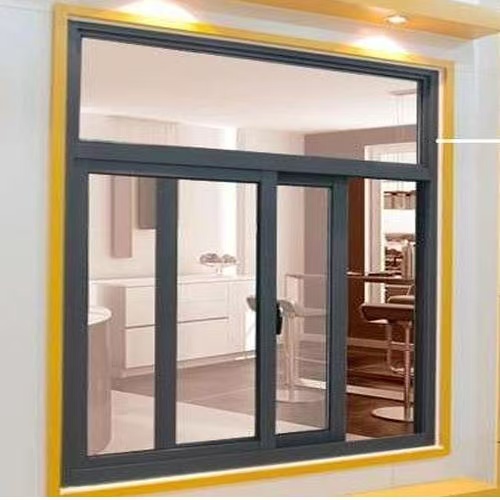
Download the Haomen Aluminum E-Catalog
Contact Melisa Ying | Email: haomen2004@gmail.com | Tel/WhatsApp: +86 15153910991 | www.haomenly.com