
Aluminum Sliding Doors & Windows: What Air, Water, and Wind Ratings Actually Mean
Aluminum Sliding Doors & Windows: What Air, Water, and Wind Ratings Actually Mean
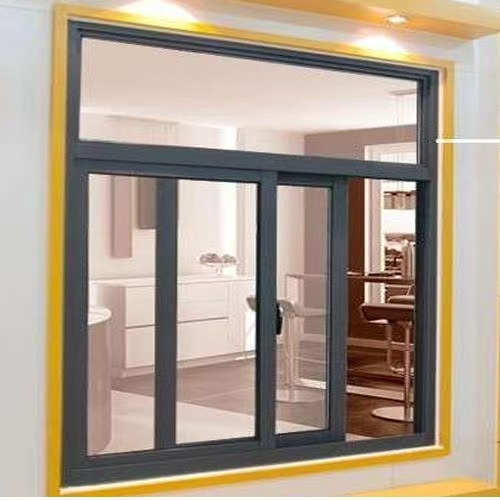
An aluminum sliding door or window is judged by five declared numbers, not by adjectives. When a supplier in China or Europe says a system is “high performance,” the only defensible check is the test report: air tightness grade, water tightness grade and its pressure, wind pressure resistance grade, thermal transmittance (K value), and sound reduction in decibels. Everything else is a claim.
This guide explains what each of those ratings measures, which standard it comes from, and how to read the report before you compare aluminum profiles or place an order. Haomen Aluminum’s HM-U001/HM-U002 sliding window and HM-U003/HM-U004 sliding door systems are used throughout as worked examples, with their declared values shown exactly as stated: air tightness ≥ Level 6, water tightness ≥ Level 4 (≥500 Pa), wind pressure resistance ≥ Level 6, K value ≤ 2.5 W/m²·K, and sound insulation ≥ 30 dB.
Problem Definition: “High Performance” Is Not a Specification
The practical problem for a buyer in the evaluation stage is not a lack of suppliers. It is a lack of comparable data. Two quotations for aluminum sliding doors can look identical on paper — same alloy family, same finish description, same glazing thickness — and still behave completely differently after installation.
That gap shows up in predictable ways:
- Water ingress during wind-driven rain. A system that seals in a light shower can track water at the sill once rain is driven against the facade under pressure.
- Rattling, whistling or sash movement in high wind. Usually a stiffness and locking-point problem, not a gasket problem.
- Condensation on the frame interior. A thermal performance issue that buyers often blame on glazing when the frame design and thermal break are equally responsible.
- Traffic or aircraft noise penetration. Frequently an air tightness failure disguised as an acoustic one.
- Disputes after delivery. The most expensive outcome: no agreed numeric basis for acceptance, so a complaint becomes an argument instead of a measurement.
A performance rating fixes that. It converts an argument about quality into a comparison of declared grades against a named standard, tested on a defined specimen.
Industry Background: Why Ratings Are Written the Way They Are
Architectural aluminum profiles in China are governed by the mandatory standard series GB/T 5237 (Parts 1–6), which covers mill finish, anodizing, electrophoresis, and powder/fluorocarbon coatings. That series sets the material and coating side of the equation — alloy condition, coating thickness, surface quality. It does not tell you how the finished door or window performs as a system.
System performance lives in a separate set of documents. Air permeability, water tightness and wind load resistance are tested and graded under GB/T 7106. Thermal insulation of building exterior doors and windows is addressed under GB/T 8484. These are the standards that sit behind the numbers buyers actually compare. European buyers will recognise the parallel logic in EN 755 for hot-extruded products and EN 12020 for precision profiles in alloys 6060 and 6063, which govern the extrusion rather than the assembled system.
The commercial context explains why this matters at sourcing stage. China’s export of “Aluminium Structures” under HS 7610 — a category that includes profiles and window/door frames — totalled USD 5.55 billion in 2024, equal to 30.5% of global exports, according to OEC. With that volume of supply available, the differentiator between sources is rarely availability. It is documented, testable performance.
The Five Ratings, Defined
1. Air Tightness (Air Permeability) — HM-U Series: ≥ Level 6
Air tightness measures how much air leaks through a closed window or door under a defined pressure difference across the assembly. It is expressed as a grade level, tested on a defined specimen size and configuration.
In an aluminum sliding system, the result is decided by gasket compression and continuity, sash-to-frame fit, corner joint quality, the number and position of locking points, and how the drainage chamber is separated from the interior. For the buyer, the consequence is straightforward: air leakage carries water vapour and sound with it, so a weak air grade tends to surface later as condensation complaints and acoustic complaints rather than as a draught complaint.
2. Water Tightness — HM-U Series: ≥ Level 4 (≥500 Pa)
Water tightness measures resistance to rain penetration when the assembly is subjected to simultaneous water spray and pressure. It is declared as both a grade and the pressure at which the specimen passed — here, Level 4 with a corresponding pressure of ≥500 Pa.
The declared pressure matters more than the grade label, because it tells you the driving-rain intensity the system was proven against. Performance here is driven by drainage path design, pressure equalisation inside the chamber, weep hole sizing and placement, gasket geometry, and the quality of the joint between frame and wall opening. A system with good drainage logic tolerates more site variation than one that relies purely on sealing.
3. Wind Pressure Resistance — HM-U Series: ≥ Level 6
Wind pressure resistance is a structural safety rating. It describes the pressure the assembly withstood without unacceptable deflection, damage or functional failure. It is a strength question, not a comfort question.
What determines it: alloy and temper (6063-T5 is the standard architectural choice, with 6061, 6005 and 6082 available for higher-demand configurations), profile wall thickness, reinforcement of long spans, mullion and transom geometry, and the hardware’s ability to hold the sash closed under load. On a large sliding door with wide panels, this is usually the rating that constrains the design.
4. Thermal Insulation (K Value) — HM-U Series: ≤ 2.5 W/m²·K
The K value expresses heat flow through the assembly per unit of area per degree of temperature difference. Lower is better. A declared figure of ≤ 2.5 W/m²·K is a system-level statement.
This is the rating buyers most often misread. The K value is not a property of the aluminum profile. It is a property of the whole assembly — frame depth, thermal break design, glazing specification, spacer and edge seal all contribute, and glazing usually carries the largest share. Comparing a K value on one report against a K value on another is only meaningful if the tested specimen, glazing and size are comparable. Always ask what glazing was installed for the test.
5. Sound Insulation — HM-U Series: ≥ 30 dB
Sound insulation is the weighted reduction of airborne sound achieved by the assembly, expressed in decibels. A declared ≥ 30 dB describes the tested configuration — again, with a specific glazing build.
Two levers dominate the result: the mass and build-up of the glazing (laminated or asymmetric double glazing outperforms simple equal-thickness units), and the sealing quality of the frame. Because of the second lever, acoustic performance and air tightness usually rise and fall together. If a supplier quotes a sound figure while offering only a modest air tightness grade, the two numbers are not describing the same build quality.
How the Ratings Map to Standards
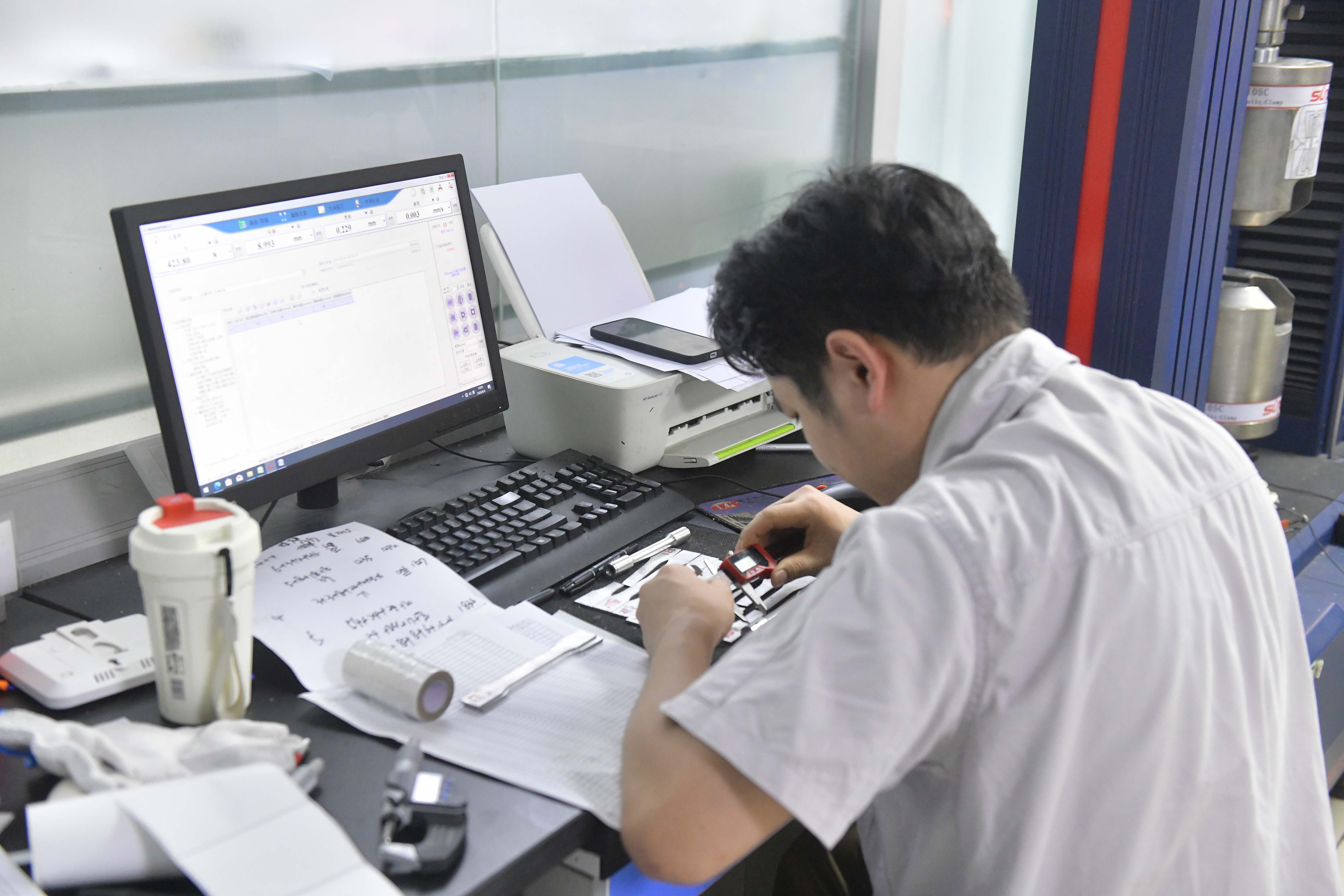
The ratings above are not free-floating. Each is tied to a document you can request and check. The table below shows how the five declared values connect to the standards cited in Haomen’s HM-U documentation.
| Standard | What buyers use it to check | Rating it supports |
|---|---|---|
| GB/T 7106 | Test method and grading reference for air permeability, water tightness and wind load resistance of building exterior doors and windows | Air tightness, water tightness, wind pressure resistance |
| GB/T 8484 | Thermal insulation performance of building exterior doors and windows | K value |
| GB/T 13326 | Supporting product/grading reference in the same report set — request the specific clause number that backs each declared level | Relates to declared performance levels |
| JG/T 215 | Supporting product/grading reference in the same report set — confirm which clause applies to your configuration | Relates to declared performance levels |
| GB/T 5237 (Parts 1–6) | Mandatory Chinese standard series for architectural aluminum alloy profiles: mill finish, anodizing, electrophoresis, powder and fluorocarbon coatings | Profile material and coating quality underpinning all five ratings |
| EN 755 / EN 12020 | European requirements for hot-extruded products and precision profiles in alloys 6060 and 6063 — relevant for EU-bound projects | Extrusion tolerances and material conformity |
A practical caution: a standard number on a cover page proves nothing on its own. Read the clause number, the edition year, and the specimen description.
Haomen HM-U Series: The Declared Values in One View
Shandong Haomen Aluminium Industry Co., Ltd. (trading as Haomen Aluminum) is an aluminum profile manufacturer founded in 2004, operating a 270,000 m² facility in Luozhuang District, Linyi City, Shandong, China, with 1,500 employees and an annual output of 100 thousand tons. Its architectural range covers aluminum profiles for windows and doors in 6063-T5, 6061, 6005 and 6082, supplied in mill finish, powder coated, anodized and wood grain transfer finishes, in 4–6 m lengths.
| Performance rating | Declared value (HM-U001/HM-U002, HM-U003/HM-U004) | What it decides on site |
|---|---|---|
| Air tightness | ≥ Level 6 | Draught control, condensation risk, acoustic baseline |
| Water tightness | ≥ Level 4 (≥500 Pa) | Wind-driven rain resistance at the sill and track |
| Wind pressure resistance | ≥ Level 6 | Structural safety, sash stability, deflection limits |
| Thermal insulation | K value ≤ 2.5 W/m²·K | Energy load, interior condensation on frames |
| Sound insulation | ≥ 30 dB | Interior comfort on noisy or urban sites |
The quality system behind the numbers is also checkable. Haomen holds ISO 9001 certification number 00226Q03185R501, issued 2 July 2026 and valid to 1 July 2029 by China Quality Mark Certification Group, with a scope covering anodized, electrophoretic coating, powder coating and thermal barrier profiles as well as industrial aluminum profiles. The company also holds IATF 16949:2016, ISO 14001 and ISO 45001.
Step-by-Step: How to Read a Sliding Door or Window Test Report
Seven checks, in this order, will separate a genuine performance declaration from a decorative one.
- Identify the tested specimen. Model code, sash configuration, dimensions and opening direction. A rating achieved on a two-panel unit is not automatically transferable to a four-panel door.
- Check the standard and its edition year. GB/T 7106 for air, water and wind; GB/T 8484 for thermal. An old edition against a new project specification is a compliance gap even when the numbers look good.
- Read water tightness as a pressure, not a label. “Level 4” alone is less informative than “Level 4, ≥500 Pa.” The pressure is the part that maps to your site’s rain and wind exposure.
- Confirm which glazing was installed for the test. Critical for the K value and the dB figure. If the report was produced with a different glass build than your specification, the number does not carry over.
- Match wind pressure grade to the elevation and span. Wide sliding panels on an exposed facade are a different structural problem from a small window on a low-rise wall.
- Cross-check the profile side. GB/T 5237 conformity for alloy, temper and coating — anodized, powder coated or fluorocarbon coated — is the foundation under every system rating.
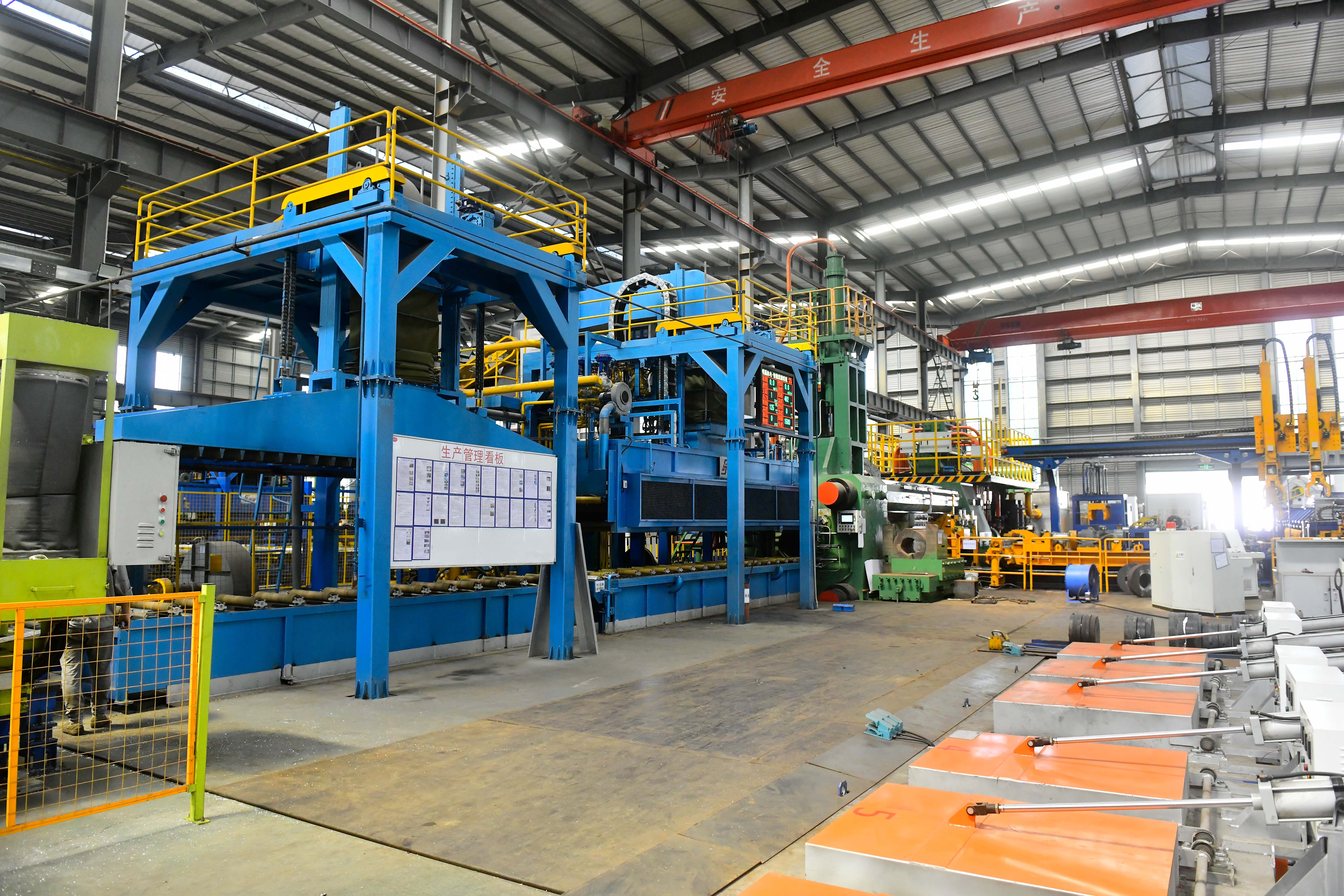
- Verify the issuing body and validity window. Certificate numbers, issue and expiry dates, and lab identity. ISO 9001 scope wording should explicitly cover the profile types you are buying.
Use Cases: Where Each Rating Decides the Outcome
High-Rise and Exposed Facades — Wind Pressure Leads
On tall buildings the deciding rating is wind pressure resistance, followed by water tightness. Wind load scales with height and exposure, and large sliding panels concentrate it on the sash and hardware. A Level 6 wind pressure declaration should be checked against the panel size tested, not assumed for every configuration in the series.
Coastal and Heavy-Rain Markets — Water Tightness Leads
For projects in humid coastal zones or monsoon climates, the ≥500 Pa water tightness declaration is the one to interrogate. Coastal sites combine driving rain with salt exposure, so the coating system also matters: anodized and fluorocarbon coated profiles are specified where coating durability under aggressive atmospheres is a concern, while powder coated finishes remain the mainstream choice for general architectural work.
Cold and High-Altitude Projects — K Value Leads
Where winter design temperatures are low, the K value drives both energy cost and condensation risk. Because the K value is a system figure, the specification conversation has to happen at assembly level: frame depth, thermal break, spacer and glazing together, not profile alone.
Urban and Transport-Adjacent Buildings — Sound Insulation Leads
Near arterial roads, rail corridors or flight paths, the ≥30 dB declaration provides a starting benchmark. Improving it further is usually a glazing decision combined with sealing discipline — which is why air tightness grade should rise at the same time.
Proven Long-Term Reference: Brazil OEM Window & Door Programme
For buyers weighing whether ratings hold up over time, the more useful evidence is service history. A window and door manufacturer OEM client in Brazil installed 2,000 tons of aluminum profiles for door and window applications; the project has been in stable operation for 10 years. Ten years of stable operation on a 2,000-ton programme is a different category of proof from a laboratory result, and it is the kind of reference worth requesting by market when you evaluate a supplier.
Sliding Window vs Sliding Door: Same Rating Floor, Different Priorities
The HM-U001/HM-U002 and HM-U003/HM-U004 systems share the same declared performance floor. What changes is which rating carries the most weight in service.
| Parameter | HM-U001 / HM-U002 (sliding window) | HM-U003 / HM-U004 (sliding door) |
|---|---|---|
| Air tightness | ≥ Level 6 | ≥ Level 6 |
| Water tightness | ≥ Level 4 (≥500 Pa) | ≥ Level 4 (≥500 Pa) |
| Wind pressure resistance | ≥ Level 6 | ≥ Level 6 |
| Thermal insulation | K ≤ 2.5 W/m²·K | K ≤ 2.5 W/m²·K |
| Sound insulation | ≥ 30 dB | ≥ 30 dB |
| Typical priority in service | Thermal and acoustic performance, long-term seal stability | Structural stiffness, hardware load capacity, threshold water management |
| Alloy and finish options | 6063-T5, 6061, 6005, 6082; mill finish, powder coated, anodized, wood grain transfer; 4–6 m length | |
How to Shortlist Aluminum Sliding Systems by Rating, Not by Reputation
Reputation shortlists are a starting point, not a filter. Publicly circulated 2024–2026 lists of large Chinese producers — Xingfa Aluminium, Fenglu Aluminium, JMA Aluminium and China Zhongwang among them — are useful for building a longlist. They say nothing about whether a given system will hold Level 6 air tightness with the glazing you specified.
A defensible shortlist applies four filters in sequence:
- Report availability. Can the supplier produce the full report for the exact model, with specimen dimensions and glazing stated? A refusal or a partial extract is a decision in itself.
- Rating-to-application match. Map the five declared values against your project’s exposure, height and acoustic requirement before discussing anything else.
- Configuration control. Ask what happens to the declared values if the alloy, wall thickness, gasket or finish changes. Suppliers who can explain the sensitivity of the numbers are usually the ones who tested them.
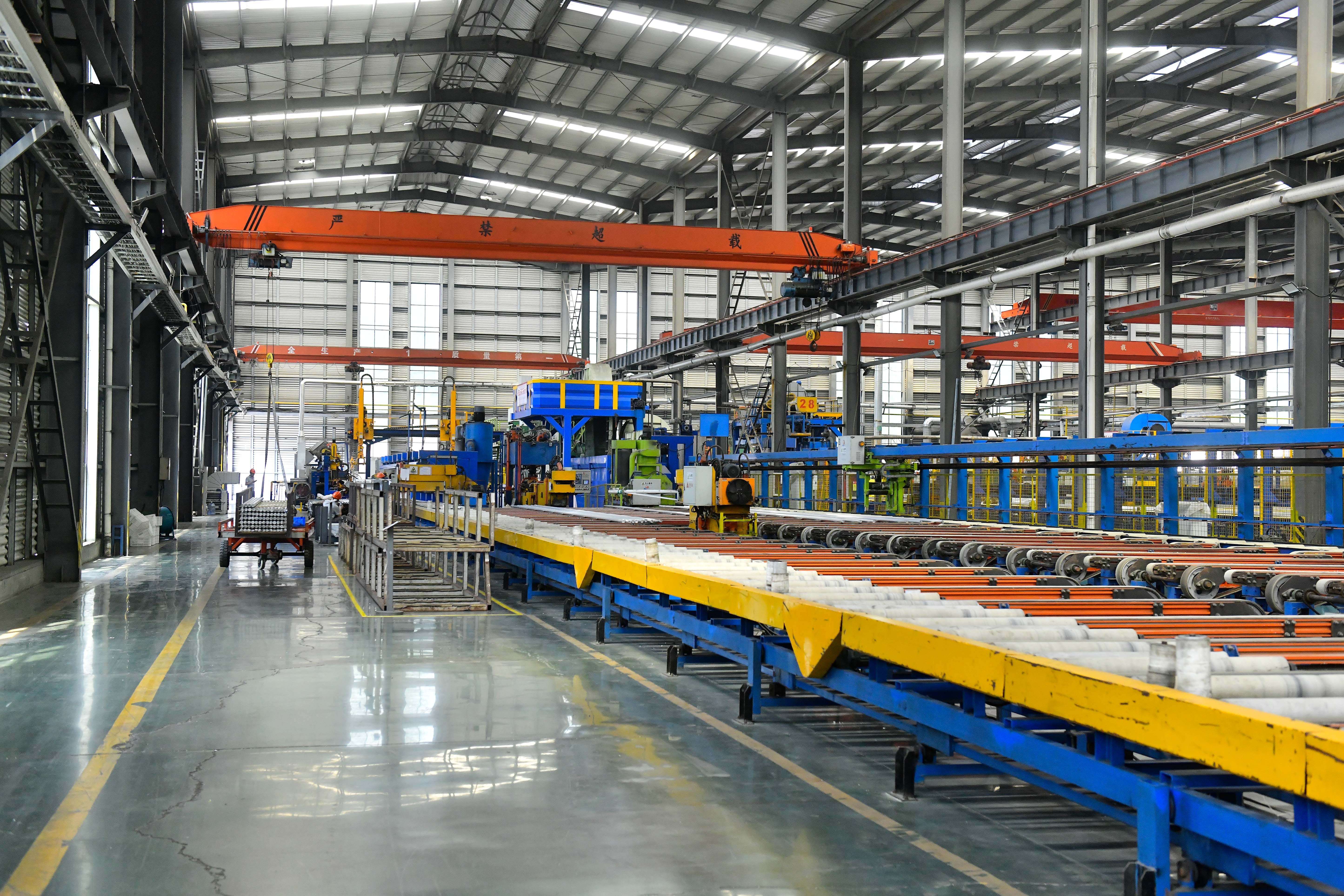
- Delivery and quality evidence. For Haomen that means OEM production with LOGO customization, 8,000 tons monthly capacity, 5-ton MOQ, 20-day lead time and 100% testing, plus reference projects such as the 2,000-ton Brazil window and door programme in stable operation for 10 years.
Frequently Asked Questions
Which standards should I check on an aluminum sliding door or window test report?
Check GB/T 7106 for the test method and grading of air permeability, water tightness and wind load resistance; GB/T 8484 for thermal insulation performance; and the profile standard GB/T 5237 (Parts 1–6), which covers mill finish, anodizing, electrophoresis and powder/fluorocarbon coatings for architectural aluminum alloy profiles. GB/T 13326 and JG/T 215 also appear in the same report set and should be read at clause level. Behind the documents, verify the quality system: Haomen’s ISO 9001 certificate 00226Q03185R501 was issued on 2 July 2026 and expires 1 July 2029, with a scope covering anodized, electrophoretic coating, powder coating and thermal barrier profiles.
Can the declared ratings be held on custom OEM profiles?
Ratings are declared for a tested configuration, so any change to alloy, wall thickness, gasket system, hardware or glazing can shift the result. Haomen supports OEM production with LOGO customization across 6063-T5, 6061, 6005 and 6082 alloys, in mill finish, powder coated, anodized and wood grain transfer finishes, with 100% testing and a monthly capacity of 8,000 tons. The correct approach is to request a report that matches your intended configuration rather than extrapolating from a different specimen.
What drives the cost difference between rating levels?
Cost differences between performance tiers come from material and process content rather than from the label: alloy and temper selection, profile wall thickness, thermal break design, gasket quality and continuity, hardware locking points, glazing specification, and the coating route (mill finish, anodizing, powder coating or fluorocarbon coating). Testing and certification activity is a further input. Haomen’s documented commercial terms start at a 5-ton MOQ, which is the practical unit for comparing systems on a like-for-like basis.
Can I evaluate a system before committing to a full order?
Evaluation should be document-led first: request the report for the exact model, the specimen description and the glazing used, then request profile sections in the specified finish. With a 5-ton MOQ and a 20-day lead time, sampling and section review can be scheduled ahead of the production slot rather than treated as a separate process. Buyers in South America and Africa, Haomen’s two main export markets, typically combine this document check with a factory audit covering the 270,000 m² facility in Linyi, Shandong.
What is the lead time for rated sliding door and window profiles?
Haomen’s stated lead time is 20 days, supported by a monthly capacity of 8,000 tons and 100% testing, with remote after-sales support and OEM production. For planning purposes, add report review and finish confirmation before the slot is booked — those are the two steps that most often delay a rated order. The full product and finish range is summarised in the Haomen Aluminum e-catalog, and specific report packages can be requested from the team at www.haomenly.com.
Conclusion
Air tightness, water tightness, wind pressure resistance, K value and sound insulation are the five numbers that turn an aluminum sliding door or window from a description into a specification. The HM-U series declares ≥ Level 6 air tightness, ≥ Level 4 (≥500 Pa) water tightness, ≥ Level 6 wind pressure resistance, K ≤ 2.5 W/m²·K and ≥ 30 dB sound insulation — and those figures only become useful when you match the tested specimen, the standard edition and the glazing build to your own project.
Compare levels against a named standard, confirm the pressure behind the grade, and ask what changes when the configuration changes. Buyers who do that stop negotiating over adjectives and start specifying performance. To review the series against your next project, request the current report set and finish samples through the catalog download or contact Haomen Aluminum directly.
Have Questions or Need More Details?
Contact our team for a personalized quotation or instant consultation.
Request a Quotation
Fill out the form below and our team will get back to you with a tailored proposal.
WhatsApp Direct Chat
Prefer to chat in real-time? Message us on WhatsApp for instant assistance & quick answers.
- Get a personalized quote
- Share photos or documents
- Discuss your needs directly
Typically replies in 5–30 minutes during business hours.