
Navigating GB/T Standards for Sliding Doors and Windows: A Compliance Blueprint
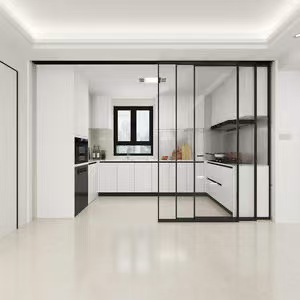
Powder coated sliding door profile system supplied for door, window and curtain wall projects.
Sliding windows and doors manufactured in China are frequently specified against Chinese national standards, and compliance has become one of the first items on an international buyer's checklist. A supplier can only make a defensible compliance claim when it can name the standard, the performance level achieved, the model that was tested and the report that documents it.
Haomen Aluminum, the trading and export arm of Shandong Haomen Aluminium Industry Co., Ltd., is an aluminum profile manufacturer based in Luozhuang District, Linyi City, China. The company produces aluminum alloy profiles for window and door systems as well as industrial aluminum profiles. Its sliding window model HM-U001/HM-U002 and sliding door model HM-U003/HM-U004 are documented as compliant with four Chinese national standards — GB/T 13326, GB/T 7106, JG/T 215 and GB/T 8484 — and the thermal performance of the sliding window is certified per GB/T 8484-2020.
This blueprint is written for importers, window and door fabricators, project specifiers and procurement teams who need to verify that claim rather than accept it. It explains what each standard covers, which performance figures to request, how those figures translate into project risk, and how to run a verification workflow before a purchase order is released.
Why “GB/T Compliant” Is a Procurement Gate, Not a Marketing Label
Compliance is a gate because approval is binary. A project that references Chinese construction standards either has documentation showing that the delivered system meets those standards, or it does not — and no amount of descriptive copy substitutes for the document. For an international buyer, the practical test is whether four elements can be produced for the exact model being quoted: the standard number, the performance level achieved, the model tested, and the test or certification report behind it.
Compliance claims most often break down at one of five points:
- A standard number is cited without the level or class achieved, so the claim cannot be compared with another supplier's offer.
- A profile-level standard is used to imply the performance of a finished window or door assembly, which is a different object of evaluation.
- Thermal performance is claimed without a specific reference such as GB/T 8484.
- A certificate is presented that is expired, or whose scope does not cover the products being purchased.
- Green building benefits are asserted without the thermal data that a project team needs to model them.
None of these are unusual. They are structural: the Chinese standards system is layered, and a claim that ignores the layers cannot be checked by anyone.
How the Chinese Standards System Is Layered
Architectural aluminum alloy profiles in China must comply with the mandatory GB/T 5237 series (Parts 1–6), which covers mill finish, anodizing, electrophoresis, and powder and fluorocarbon coatings, according to the Standardization Administration of China. That standard governs the profile itself — the aluminum substrate and its surface treatment. It does not, on its own, describe how a finished sliding window or door will perform against air, water, wind and thermal criteria.
The second layer covers the finished assembly: product standards that define what a sliding door or window must be, and test-method standards that define how air tightness, water tightness, wind pressure resistance and thermal performance are measured and classified. A buyer who only checks the first layer can approve a fully compliant profile and still receive a system whose installed performance is undocumented. A buyer who only checks the second layer may be unable to confirm what the raw profile is made of or how it is coated.
Scale is the reason this matters beyond individual projects. China's exports of “Aluminium Structures” (HS 7610), a category that includes profiles and window and door frames, totaled USD 5.55 billion in 2024, representing 30.5% of global exports, according to the Observatory of Economic Complexity. Asia Pacific also held a 71.7% revenue share of the global aluminum extrusion market in 2025, driven primarily by construction and automotive demand in China, according to Grand View Research. Compliance documentation is therefore a mainstream requirement of an export category, not a niche specialty.
Buyers working to European specifications should note the parallel layer that exists outside China: hot extruded aluminum products are governed by EN 755, and precision profiles in alloys 6060 and 6063 by EN 12020, per the European Committee for Standardization. A supplier working to GB/T is not automatically working to EN. Equivalence is established through test data and agreed specifications, never by assumption.
The Four Standards Behind a Sliding Window or Door System
In Haomen's product documentation, GB/T 13326, GB/T 7106, JG/T 215 and GB/T 8484 are presented as a single compliance set that covers general specification, air and water tightness, wind resistance and thermal performance. The sliding window HM-U001/HM-U002 is documented as compliant with all four. The sliding door HM-U003/HM-U004 is documented with the measured performance levels set out further below.
| Standard | Function within the compliance set | Level of application |
|---|---|---|
| GB/T 13326 | General specification requirements within the documented sliding-system compliance set | System-level specification |
| GB/T 7106 | Air tightness, water tightness and wind pressure resistance | Triple-performance testing |
| JG/T 215 | Product requirements for sliding door and window systems | Finished assembly |
| GB/T 8484 | Thermal performance; GB/T 8484-2020 is the edition cited for the HM-U001/HM-U002 thermal certification | Energy performance |
| GB/T 5237 (Parts 1–6) | Mandatory series for architectural aluminum alloy profiles, covering mill finish, anodizing, electrophoresis, and powder and fluorocarbon coatings | Profile substrate |
Table 1. The layered standard set that applies to architectural aluminum profiles and to finished sliding door and window systems.
Haomen's sliding systems are described as triple-performance tested for air tightness, water tightness and wind resistance, a combination that addresses the three failure modes buyers encounter most often in coastal, plateau and rainy regions. The thermal claim is separately referenced to GB/T 8484-2020, which is what allows a project team to connect the product to a building-level energy target.
Reading the Performance Numbers
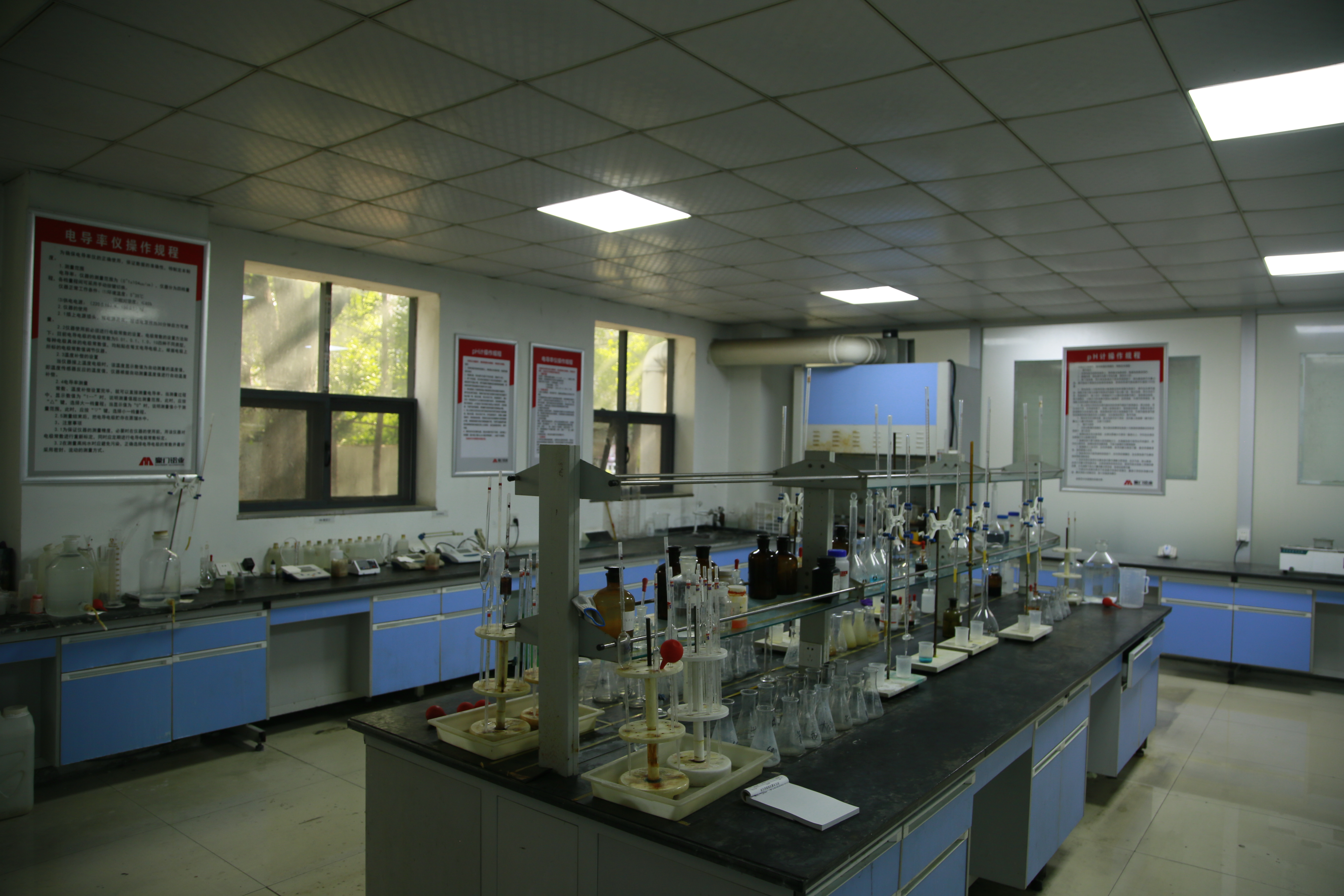
Laboratory testing supports air tightness, water tightness, wind resistance and thermal verification of sliding systems.
Documented performance for the HM-U003/HM-U004 sliding door is expressed as discrete values rather than general claims, which makes the system comparable against a project brief:
| Documented parameter | Value | Why the buyer cares |
|---|---|---|
| Opening and closing force | ≤ 50 N | Affects usability of large panels and compatibility with standard hardware |
| Air tightness | ≥ Level 6 | Infiltration drives heating and cooling load and condensation risk |
| Water tightness | ≥ Level 4 (≥ 500 Pa) | Determines resistance to wind-driven rain |
| Wind pressure resistance | ≥ Level 6 | Relevant to high-rise and high-wind exposure |
| Sound insulation | ≥ 30 dB | Matters for urban and mixed-use developments |
| Thermal insulation K value | ≤ 2.5 W/m²·K | Feeds energy modelling and green building submissions |
| Repetitive opening and closing | ≥ 20,000 times | Durability indicator for high-traffic openings |
| Planar deformation | ± 6 mm | Tolerance allowance for long panels and installation |
Table 2. Documented performance values for the HM-U003/HM-U004 sliding door profile system.
Two points are worth restating for procurement teams. First, wind pressure resistance and water tightness are the figures that most often decide whether a system is acceptable on an exposed site; a quoted “wind-resistant” profile without a class level cannot be checked against an engineer's calculation. Second, the K value is the number a green building submission consumes. It should be requested in writing, together with the model and the glazing configuration it was measured with, because thermal performance belongs to the assembled system rather than to the extrusion alone.
Dimensions Are Part of Compliance, Not Just Fit
Dimensional parameters in a sliding system exist because air and water performance depend on them. Clear opening width relative to panel width, upper rail height, lower rail groove depth, panel gap and glass thickness range all interact with gaskets, drainage and hardware. Documented values for the HM-U001/HM-U002 sliding window include a door panel height of 2000–2400 mm, a door panel width of 600–1200 mm, a door panel thickness of 35–50 mm, a clear width of the door opening of at least twice the door panel width plus 50 mm, an upper rail installation height of 2050–2450 mm, a lower rail groove depth of 10–15 mm, a door gap of 3–5 mm, and a glass thickness range of 5–12 mm.
The HM-U003/HM-U004 sliding door is documented with a sash height of 600–1800 mm, a sash width of 400–1500 mm, an adjustable sash thickness of 28–45 mm, an opening width of at least twice the sash width, an upper rail range of 650–1850 mm, a lower rail groove of 8–12 mm, a window sash gap of 2–4 mm, and a glass thickness range of 4–12 mm. The same documentation states that these ranges suit residential, commercial and curtain wall projects, and that the design is intended for compatibility with standard hardware — a practical point, because non-standard interfaces increase installation time and rework on site.
Green Building Documentation: LEED and 3-Star Green Building
Thermal performance certified per GB/T 8484-2020 is what allows a sliding system to contribute to a building-level environmental rating. Haomen documents that its sliding window meets this thermal reference, that the result reduces building energy consumption, and that it supports green building certification such as LEED and 3-Star Green Building.
It is worth being precise about what this does and does not mean. The certification itself is awarded to the building, not to a profile. The supplier's role is to hand the project team verified thermal data for the exact system — K value, tested model, glazing configuration — so that the energy model and the submission package rest on measured performance rather than a supplier statement. Buyers pursuing LEED or 3-Star Green Building should therefore request the thermal certification reference and the underlying value as part of the quotation, not after the order.
A Seven-Step Verification Workflow for International Buyers
- Separate the layers. Confirm compliance at profile level (GB/T 5237 series, including the relevant coating parts) and at finished-product level (GB/T 13326, GB/T 7106, JG/T 215, GB/T 8484) as two distinct checks with two distinct documents.
- Ask for reports, not logos. Request the test report or certification that names the standard edition, the model tested and the level achieved. A mark without a level cannot be compared.
- Map the levels to project conditions. Exposed coastal or high-wind sites justify close attention to wind pressure resistance and water tightness; cold or hot climates justify the K value and the GB/T 8484 reference; noise-sensitive sites justify the sound insulation figure.
- Verify the manufacturer's quality system. Check the management system certificate, its issuing body, its scope and its validity window — and confirm that the scope covers the products being purchased.
- Confirm dimensional and hardware interfaces. Reconcile rail heights, groove depths, panel gaps and glass thickness ranges with your own fabrication drawings and hardware before tooling is committed.
- Request green building data early. If LEED or 3-Star Green Building is a project requirement, obtain thermal documentation for the assembled system at quotation stage.
- Validate with samples before volume release. Move from documentation to physical confirmation, then scale to the agreed order quantity.
Use Cases: Where the Compliance Set Changes the Decision
Coastal and high-rainfall markets
Wind-driven rain is the dominant risk. The relevant evidence is the water tightness level — documented at ≥ Level 4, equivalent to 500 Pa or above, for the HM-U003/HM-U004 sliding door — together with the triple-performance testing referenced for the system.
Plateau and high-wind sites
Wind pressure resistance at ≥ Level 6 and a documented planar deformation tolerance of ± 6 mm are the figures an engineer can reconcile with local wind load calculations. Haomen documents its sliding systems as suitable for coastal, plateau and rainy regions on this basis.
High-rise residential, commercial and curtain wall projects
Documented sash and panel ranges are stated to suit residential, commercial and curtain wall projects, which matters where large glazed openings and mixed structural interfaces are involved. In these applications the alloy specification becomes relevant as well: the architectural aluminum profile range covers 6063-T5, 6061, 6005 and 6082, with a length range of 4–6 m and surface treatments that include mill finish, powder coating, anodizing and wood grain transfer.
OEM window and door fabricators
Fabricators need repeatable profiles rather than one-off systems. A documented reference case is a Brazilian window and door OEM manufacturer that has taken 2,000 tons of profile over a ten-year relationship, with the material reported as operating stably and described by the manufacturer as solid and durable. For an OEM buyer, the compliance set is what makes that repetition acceptable to end clients year after year.
Distribution in South America and Africa
Distributors carrying stock need documentation that travels with the goods. Haomen's ISO 9001 certification is applicable worldwide and covers the architectural profile scope, with a stated core market focus on South America; the company's export markets are South America and Africa, with an export ratio of 10%.
Comparison Table: Documented Sliding Systems and Profile Range
| Item | HM-U001/HM-U002 sliding window | HM-U003/HM-U004 sliding door | Architectural profile range |
|---|---|---|---|
| Material | 6063-T5 aluminum | 6063-T5 aluminum | 6063-T5, 6061, 6005, 6082 |
| Standards referenced | GB/T 13326, GB/T 7106, JG/T 215, GB/T 8484 | Triple-performance testing; documented levels below | Profile substrate governed by the GB/T 5237 series |
| Thermal reference | Certified per GB/T 8484-2020 | K value ≤ 2.5 W/m²·K | Finish options include mill finish, powder coating, anodizing, wood grain transfer |
| Air / water / wind | Triple-performance tested | Air ≥ Level 6; water ≥ Level 4 (≥ 500 Pa); wind ≥ Level 6 | — |
| Sound insulation | — | ≥ 30 dB | — |
| Durability indicator | — | ≥ 20,000 open/close cycles | Length 4–6 m |
| Dimensional range | Panel height 2000–2400 mm; width 600–1200 mm; thickness 35–50 mm; glass 5–12 mm | Sash height 600–1800 mm; width 400–1500 mm; thickness 28–45 mm; glass 4–12 mm | Custom cutting available |
Table 3. Documented characteristics of the two sliding systems and the broader architectural aluminum profile range. Dashes indicate parameters not stated in the source documentation.
Manufacturer-Side Compliance: What to Check Beyond the Product
Product performance depends on the process behind it. Haomen Aluminum documents ISO 9001 certification under certificate number 00226Q03185R501, issued by the China Quality Mark Certification Group against GB/T 19001-2016 / ISO 9001:2015, valid from 2 July 2026 to 1 July 2029. The certified scope covers the production of aluminium alloy profiles for architecture — anodized profiles, electrophoretic coating profiles, powder coating profiles and thermal barrier profiles — as well as industrial aluminum profiles, and is stated as applicable worldwide with a core market in South America.
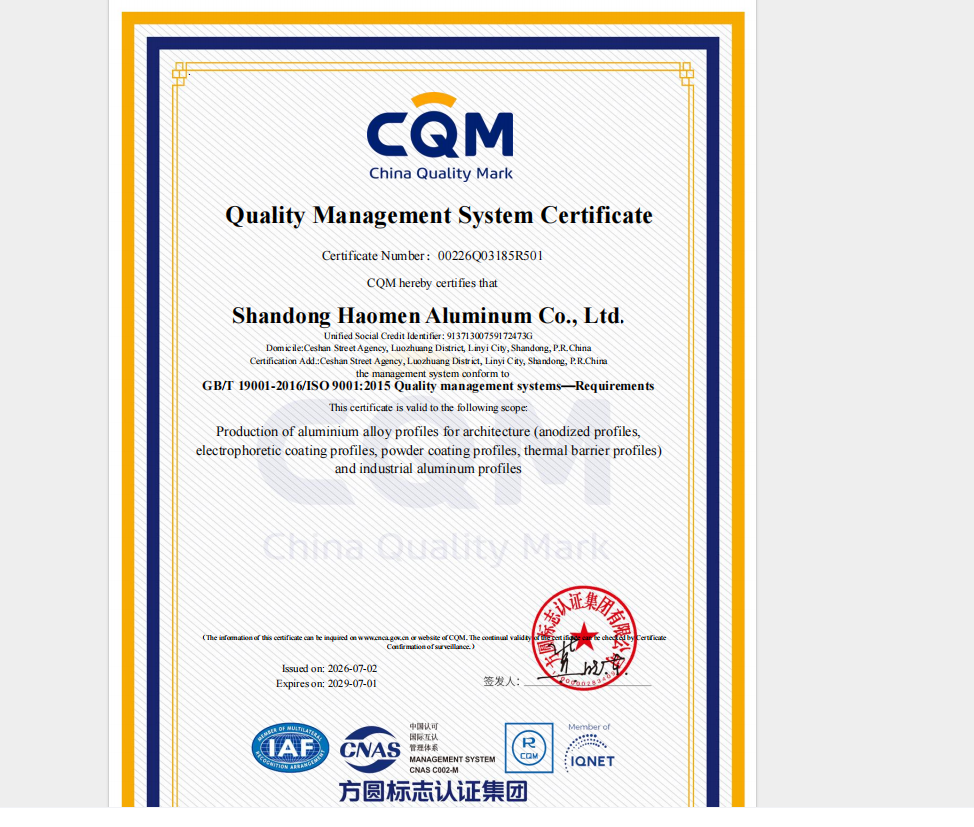
ISO 9001 certificate 00226Q03185R501, covering architectural and industrial aluminum profile production.
Alongside ISO 9001, the company reports IATF 16949:2016, ISO 14001 and ISO 45001 system certifications. IATF 16949 is the automotive quality management requirement; it is not a window and door standard, but its presence indicates a manufacturer operating under automotive-grade process control for its industrial extrusion work as well as its architectural lines.
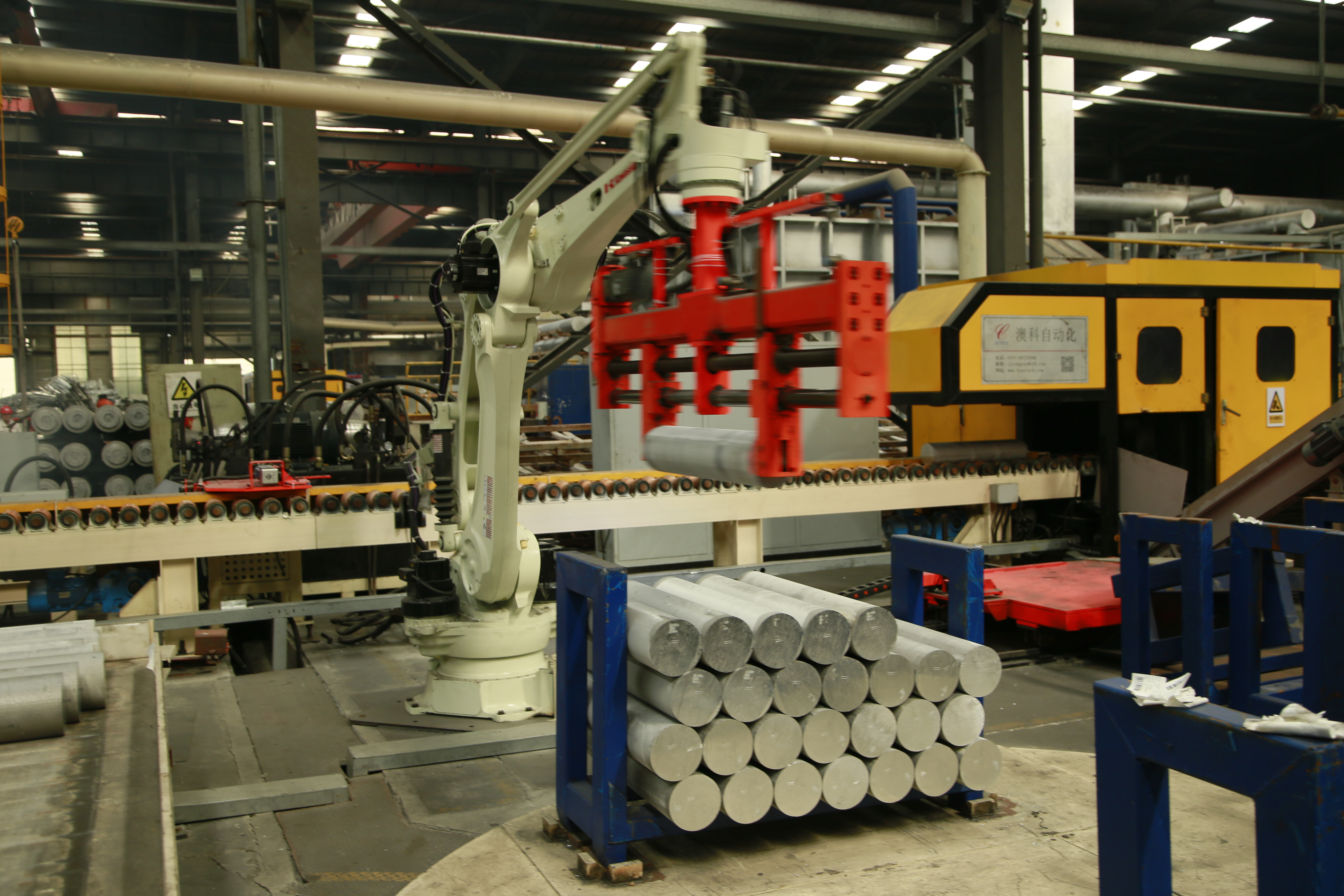
Extrusion capacity underpins repeatable profile supply for sliding door and window systems.
Capacity and process facts that buyers should weigh against a compliance claim include a factory area of 270,000 m², approximately 1,500 employees, an annual output of 100 thousand tons, a 35-engineer R&D team, and a Shandong Provincial Technology Research Center established at the company in 2019. Quality control is documented as 100% testing. Commercially, the company runs an OEM production model with logo customization, a monthly capacity of 8,000 tons, a minimum order quantity of 5 tons, a lead time of 20 days, and remote after-sales support.
Frequently Asked Questions
Which GB/T standards apply to sliding doors and windows made in China?
Two layers apply. The profile substrate is governed by the mandatory GB/T 5237 series (Parts 1–6), which covers mill finish, anodizing, electrophoresis, and powder and fluorocarbon coatings. The finished sliding system is governed by a product and test-method set; Haomen Aluminum documents its sliding window HM-U001/HM-U002 as compliant with GB/T 13326, GB/T 7106, JG/T 215 and GB/T 8484, with thermal performance certified per GB/T 8484-2020. Together these four cover general specification, air and water tightness, wind resistance and thermal performance.
Can a supplier support LEED or 3-Star Green Building documentation?
Yes, where thermal performance has been certified for the assembled system. The HM-U001/HM-U002 sliding window is documented as certified per GB/T 8484-2020, which reduces building energy consumption and supports green building certification such as LEED and 3-Star Green Building. The certification is awarded to the building rather than the profile, so buyers should request the thermal value, the tested model and the glazing configuration to feed their energy model.
What drives the cost of a compliant sliding door or window profile system?
Cost is driven by specification choices rather than by the standard itself. The main variables are alloy selection (6063-T5 as standard, with 6061, 6005 and 6082 available in the architectural range), surface treatment and finish, whether the system is a thermal barrier design, the required air, water, wind and thermal levels, panel and sash dimensions within the documented ranges, the glass thickness specified, hardware compatibility, and the documentation package required for approval. Order volume and the minimum order quantity of 5 tons also influence commercial terms.
Can we validate the profiles and the system before committing to volume?
Validation is normally handled in two stages: documentation review against the standard set, followed by sample and assembly verification. Haomen Aluminum applies 100% testing in production, supports OEM production with logo customization, and works with a minimum order quantity of 5 tons and a lead time of 20 days, which allows a fabricator or distributor to move from validation to volume without changing suppliers. Buyers should confirm the exact model, finish and glass configuration being validated so that the verified data matches the released specification.
What is the lead time, and what should a first inquiry include?
Documented capacity is 8,000 tons per month with a lead time of 20 days from an order that meets the 5-ton minimum quantity. A first inquiry moves fastest when it states the target model (HM-U001/HM-U002 sliding window or HM-U003/HM-U004 sliding door, or a custom profile requirement), the required air, water, wind and thermal levels, the alloy and surface treatment, the glass thickness and panel dimensions, and the destination market. Requests can be sent to Melisa Ying at haomen2004@gmail.com or by phone and WhatsApp on +86 15153910991; the full product catalog is available for download below.
Conclusion: Compliance Is a Document Trail, Not a Claim
For sliding doors and windows sourced from China, the standards that matter are not a single number but a layered set: GB/T 5237 for the profile substrate, and GB/T 13326, GB/T 7106, JG/T 215 and GB/T 8484 for the finished system. Each layer answers a different question, and each one requires a different document.
Haomen Aluminum documents its HM-U001/HM-U002 sliding window as compliant with all four system standards and certified for thermal performance per GB/T 8484-2020, and documents its HM-U003/HM-U004 sliding door against measurable air, water, wind, sound, thermal and durability values — supported by ISO 9001 certification 00226Q03185R501 covering architectural and industrial aluminum profile production. For a buyer in the research and evaluation stage, the correct next step is not a broader claim from the supplier but a narrower one: the report, the level, the model and the validity dates.
Request Compliance Documentation or a Sample
Share your project requirements — model, target performance levels, finish, glass thickness and quantity — and Haomen Aluminum will respond with the matching specification and documentation package.
Contact: Melisa Ying · Email: haomen2004@gmail.com · Tel / WhatsApp: +86 15153910991
Website: www.haomenly.com · Blog: blog.haomenly.com
Download the full product catalog: E-Catalog of Shandong Haomen Aluminio (PDF)
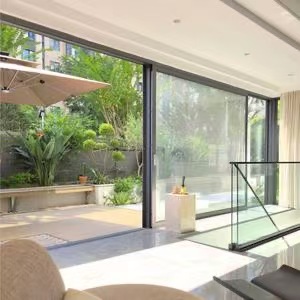
Sliding door installation built on a documented, standards-referenced profile system.