
Ranked: 5 Aluminum Profile Solutions for Sliding Door and Window OEM Projects
These five aluminum profile configurations are ranked by how completely they close the specification gap in a sliding door or window OEM project: a declared alloy with a standard-referenced temper, a finish route with a measurable grade, a performance envelope tied to a numbered test standard, and commercial terms that survive contact with a 5-ton minimum order and a 20-day schedule. Rank 1 is the HM-U001 / HM-U002 sliding window system, the configuration in this set published against four product standards at once.
Haomen Aluminum (Shandong Haomen Aluminium Industry Co., Ltd.) is an aluminum profile manufacturer based in Linyi, Shandong, China, founded in 2004, producing architectural and industrial aluminum profiles for window, door and other applications and exporting to South America, Africa, the United States, Canada, Australia, Brazil, Argentina, Russia, Germany and Spain. Its sliding and architectural ranges are the subject of this ranking, and the comparison below uses only published model data, alloy declarations, standard references and stated commercial terms.
This is a specification-led ranking rather than a showcase. Each entry is assessed on the four constraints that decide whether an OEM order can be inspected on arrival: alloy and temper, finish route, documented performance, and order economics.
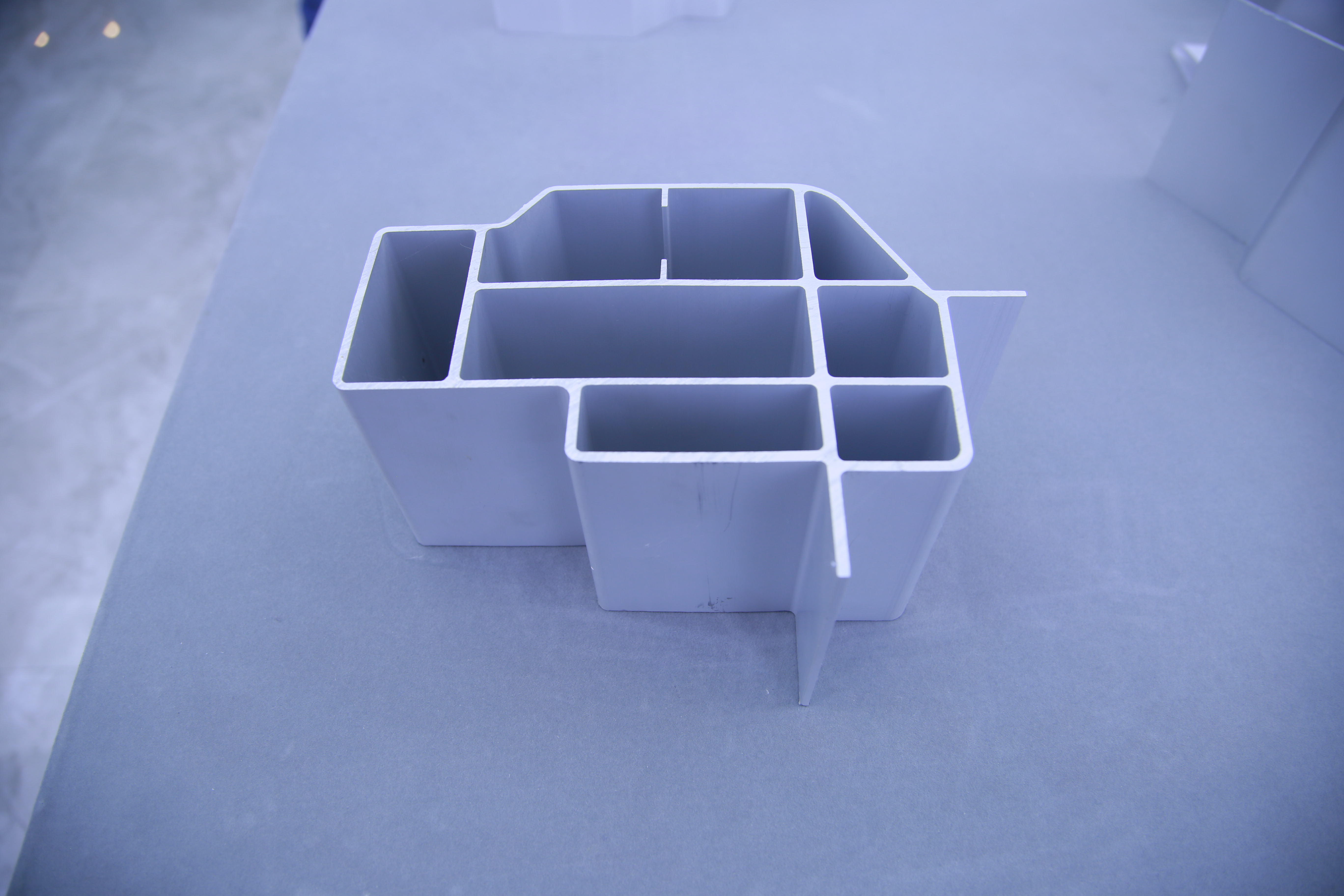
The Real Constraint Is Not Profile Quality, It Is Specification Ambiguity
Sliding systems rarely fail because a factory cannot extrude a rectangle. They fail because the purchase order says something the inspection report cannot test.
Four ambiguities recur in OEM projects:
- Alloy written without a state reference. A line item reading 6063-T5 is only meaningful if the acceptance value is stated. The Chinese architectural profile standard GB/T 5237.1 sets minimum mechanical properties for 6063-T5 material at Rm of at least 160 N/mm2, Rp0.2 of at least 110 N/mm2 and elongation A of at least 8 percent. Without that anchor, a supplier can ship a softer temper and still be technically compliant with the words on the order.
- Finish written without a grade. Powder coated and anodized are process names, not acceptance levels. AAMA 611 divides architectural anodic coatings into Class I with a minimum film thickness of 0.7 mil (about 18 micrometres) and Class II with a minimum of 0.4 mil (about 10 micrometres). For organic coatings, AAMA 2603, 2604 and 2605 are three distinct performance tiers, not synonyms. GB/T 5237 separates the same surface treatment family into dedicated parts: Part 2 anodized, Part 3 electrophoretic, Part 4 powder coated, Part 5 fluorocarbon coated and Part 6 thermal barrier profiles.
- Performance written as an adjective. Good airtightness or strong wind resistance cannot be inspected. Air permeability, water tightness and wind pressure resistance must be quoted as levels against a named test standard.
- Commercial terms discovered late. Minimum order quantity and lead time are usually the last things negotiated and the first things that break a launch plan.
Each ranked entry below is therefore described in the same four-part structure so the entries can be compared directly rather than read as separate brochures.
Industry Background: A 22.87 Million Tonne Market With Fragmented Acceptance Rules
Availability is not the constraint in this category. China alone consumed an estimated 22.87 million tonnes of aluminum extrusions in 2025, up from roughly 22.32 million tonnes in 2024, according to AL Circle. Scale of that order means almost any section can be found somewhere. What differs between suppliers is how precisely the section is defined.
Aluminum bars, rods and profiles move internationally under HS heading 7604, subdivided into 7604.10 for non-alloy aluminum, 7604.21 for hollow profiles of aluminum alloys and 7604.29 for other alloyed bars, rods and profiles. That classification is the language customs uses, and it is separate from the language engineers use. A profile can be classified correctly and still fail an incoming inspection.
Two additional layers sit above the technical specification:
- Trade remedies. The United States applies both anti-dumping and countervailing measures to aluminum extrusions originating in China, under case numbers A-570-967 and C-570-968. The European Union also has an anti-dumping measure in force on Chinese aluminum extrusions. The applicable rates and covered product scopes must be read from the official notices rather than assumed. These measures change landed cost and route planning; they do not change the profile specification, and they should not be allowed to distort the ranking of solutions on technical merit.
- Parallel standard systems. Chinese GB/T 5237, GB/T 6892 and GB/T 14846, the European EN 755-1, EN 755-2 and EN 755-9 series with EN 12020-1 and EN 12020-2 for precision profiles, ASTM B221 in North America, and the AAMA and QUALICOAT / QUALANOD performance and licensing systems all describe overlapping properties with non-interchangeable grade definitions. There is no valid conversion table between them, and no basis for averaging values across systems.
How This Ranking Was Built
Each configuration was assessed against five weighted criteria, in this order:
- Documented performance envelope. Are air, water, wind, thermal and acoustic behaviour expressed as measurable levels rather than descriptions?
- Alloy and temper traceability. Is the alloy declared against a recognised system, and is the temper tied to a testable minimum?
- Finish route definition. Is the surface treatment named as a process with a grade and a reference standard, or only as a colour?
- Dimensional flexibility for OEM panel sizes. Can the system absorb the range of sash and panel dimensions an OEM actually fabricates?
- Commercial fit. Can the configuration be ordered at the stated 5-ton minimum quantity with the stated 20-day lead time and monthly capacity of 8,000 tons?
Documented performance carries the most weight because it is the criterion least recoverable after the fact. A finish can be recoated. A wrong temper cannot be corrected without scrapping the batch.
The Five Ranked Aluminum Profile Solutions
1. HM-U001 / HM-U002 — Powder Coated 6063-T5 Sliding Window System
Rank 1 — most complete compliance record
This is the only configuration in the set whose compliance claim is published against four product standards at once: GB/T 13326, GB/T 7106, JG/T 215 and GB/T 8484, covering general specifications, air and water tightness, wind resistance and thermal performance. That breadth is why it ranks first. A window OEM bidding into a project that requires documentary evidence of performance gets a single, traceable answer instead of three separate test reports from three separate suppliers.
The alloy is 6063-T5, the standard architectural temper, whose minimum mechanical properties in GB/T 5237.1 are the acceptance floor described earlier. Thermal performance is certified per GB/T 8484-2020, which matters where the project pursues an energy certification pathway rather than a simple U-value target.
Published dimensional parameters: panel height 2000–2400 mm, panel width 600–1200 mm, panel thickness 35–50 mm, clear opening width at least twice the panel width plus 50 mm, upper rail installation height 2050–2450 mm, lower rail groove depth 10–15 mm, door gap 3–5 mm and glass thickness 5–12 mm.
Ranking rationale: strongest documentary position, but the 35–50 mm panel thickness and 5–12 mm glazing range constrain it to standard residential and light commercial window duty. For very heavy sashes, entry 5 is the better route.
2. HM-U003 / HM-U004 — Powder Coated 6063-T5 Sliding Door System
Rank 2 — most complete numeric envelope
Where the window system leads on standard coverage, the door system leads on sheer quantity of measurable parameters. The published envelope is: opening and closing force no more than 50 N, air tightness at least Level 6, water tightness at least Level 4 (at least 500 Pa), wind pressure resistance at least Level 6, sound insulation at least 30 dB, thermal insulation K value no more than 2.5 W/m2·K, repetitive opening and closing at least 20,000 times, and planar deformation within plus or minus 6 mm.
That combination answers the three questions door OEMs ask most often. The 20,000-cycle figure addresses hardware durability. The K value of 2.5 W/m2·K or better addresses energy compliance. The plus or minus 6 mm planar deformation tolerance addresses the visible symptom of a poorly controlled extrusion line: doors that bind at the mid-rail after a season of thermal cycling.
Dimensional parameters: sash height 600–1800 mm, sash width 400–1500 mm, sash thickness 28–45 mm, opening width at least twice the sash width, upper rail 650–1850 mm, lower rail groove 8–12 mm, sash gap 2–4 mm and glass thickness 4–12 mm. The 28–45 mm sash thickness range and the 2–4 mm gap are what let an OEM absorb standard hardware without re-tooling.
Ranking rationale: the strongest single document for a performance-based tender. It ranks second only because its dimensional envelope is narrower than the window system in the vertical direction.
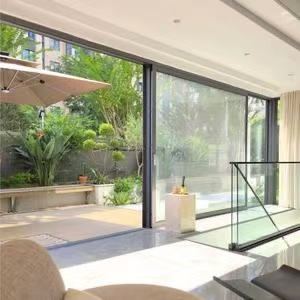
3. HM-S002 / HM-S003 — Coated Architectural Profile System (6063-T5)
Rank 3 — broadest specification flexibility
The architectural profile range, listed under HM-U001, HM-S002 and HM-S003, is where an OEM moves from a fixed system to a configurable one. Alloys declared across the range are 6063-T5, 6061, 6005 and 6082. Surface treatments offered are mill finish, powder coating, anodizing and wood grain transfer. Stock lengths run 4–6 m with custom cutting available.
Ranked third because flexibility without a fixed performance envelope cuts both ways: it serves more projects, but each project must write its own acceptance criteria rather than inherit a published set.
In coated form, the value is aesthetic range with a defined process route. The process chain matters here. Anodizing is an electrochemical film formation step; electrophoresis, powder coating and fluorocarbon coating are organic coating steps; wood grain transfer is applied on top of a cured powder layer via thermal transfer film. These are sequential, not alternative descriptions of the same surface. A specification that says wood grain without naming the base coating leaves the durability of the finished surface undefined.
Ranking rationale: best fit for OEM brands selling multiple finish families from one profile system. Weakest point: the buyer must supply the performance specification, because the range does not carry one.
4. HM-S002 / HM-S003 Mill Finish — For OEMs With In-House or Local Coating
Rank 4 — supply-chain efficiency play
Mill finish profiles leave the surface untreated and shorten the process chain inside the factory. For an OEM that already operates a coating line, or works with a local licensed coater, this removes a redundant handling step and keeps colour control under the buyer's own roof. It also simplifies rework: a mill finish section that arrives out of tolerance can be rectified before any coating investment is sunk into it.
Ranked fourth because it shifts risk rather than removing it. Anodizing and coating quality become the buyer's responsibility, along with the film thickness documentation. Where the destination project requires anodized sections to meet AAMA 611 Class I at 0.7 mil (about 18 micrometres) minimum, the buyer's own line must be able to hold that, and the buyer's own test reports become the tender evidence.
The trade-off is real, not theoretical: mill finish is the correct choice when the buyer has verified coating capability, and the wrong choice when it does not. It is also the configuration where dimensional deviation clauses matter most, since GB/T 14846 governs dimensional tolerances for extruded profiles independently of the surface treatment parts of GB/T 5237.
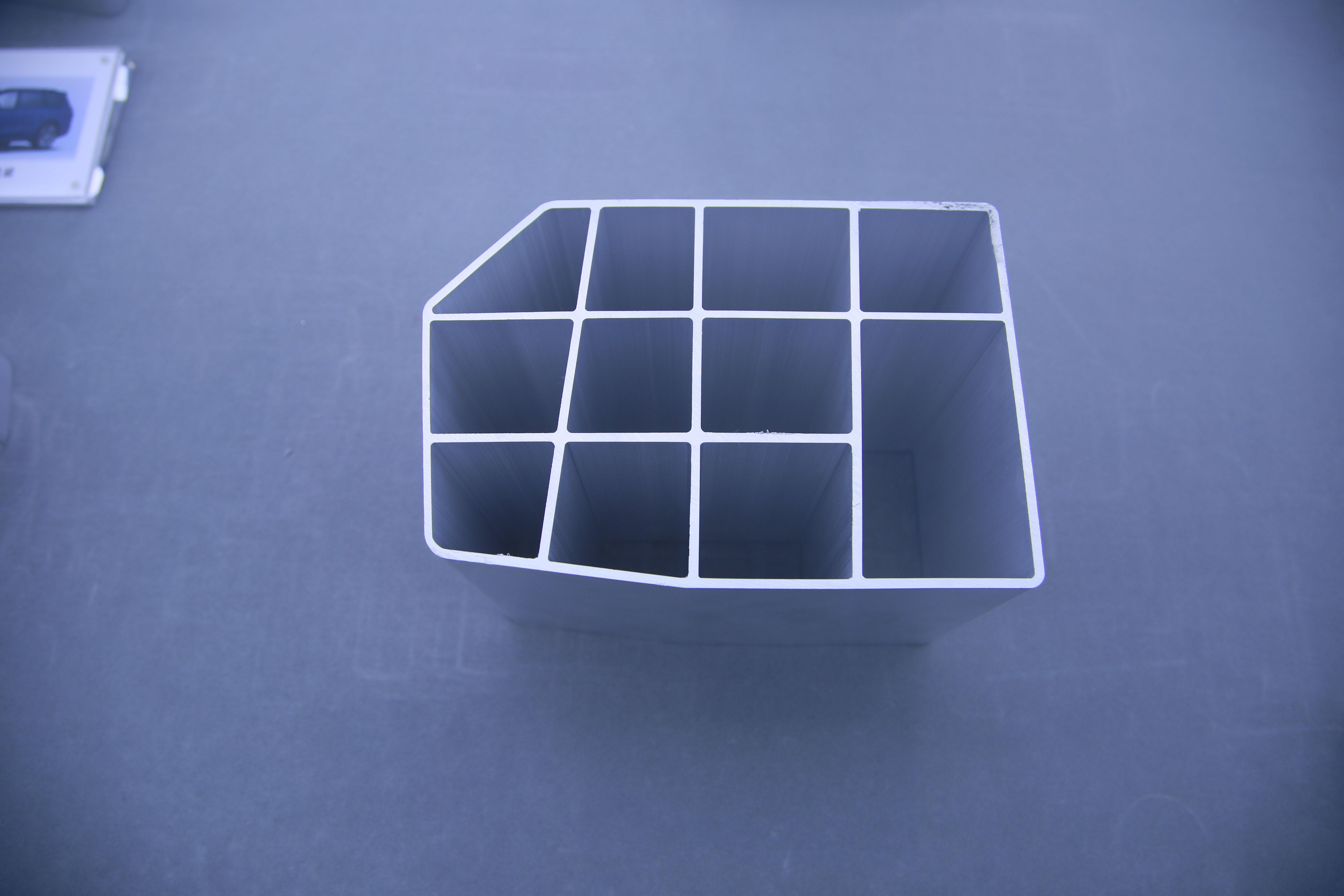
5. HM-S002 / HM-S003 in 6061 / 6005 / 6082 — High-Strength Architectural Variant
Rank 5 — specialist structural duty
This is the same architectural range ordered in a stronger alloy. 6063 and 6061 both belong to the Al-Mg-Si 6xxx family of heat-treatable alloys. 6063 has lower magnesium and silicon content, which gives it better extrudability and surface quality, and it is the default for architectural window and door profiles. 6061 carries more magnesium and typically additions of copper, which raises strength and positions it for structural load-bearing members, industrial profiles and automotive parts. 6005 and 6082 sit in the same family with their own strength and extrusion trade-offs.
Curtain wall and heavily loaded facade work conventionally uses 6063-T5 or T6, or the higher-strength 6061-T6 and 6082-T6, paired with a surface treatment matched to the exposure environment.
Ranked fifth not because it is weaker, but because it is the least general-purpose entry. Higher-strength alloys cost more to extrude, narrow the achievable section complexity, and are unnecessary for a standard residential slider. It belongs in large-format sliding systems, high-wind zones, tall panel stacks and openings adjacent to curtain wall where deflection governs the design.
Side-by-Side Comparison
| Rank | Solution and models | Alloy / temper | Finish route | Documented performance | Best-fit constraint |
|---|---|---|---|---|---|
| 1 | Sliding window system — HM-U001 / HM-U002 | 6063-T5 | Powder coated | GB/T 13326, GB/T 7106, JG/T 215, GB/T 8484; thermal per GB/T 8484-2020 | Projects requiring multi-standard documentary evidence |
| 2 | Sliding door system — HM-U003 / HM-U004 | 6063-T5 | Powder coated | Air at least Level 6; water at least Level 4 (at least 500 Pa); wind at least Level 6; sound at least 30 dB; K no more than 2.5 W/m2·K; 20,000 cycles; deformation within plus or minus 6 mm | Performance-based tenders with a defined numeric envelope |
| 3 | Architectural profile range — HM-U001 / HM-S002 / HM-S003 | 6063-T5 | Powder coated or anodized or wood grain transfer | Declared per project specification | Multi-finish OEM catalogues from a single profile system |
| 4 | Architectural profile range, untreated — HM-S002 / HM-S003 | 6063-T5 | Mill finish | Dimensional tolerances per GB/T 14846; coating scope transferred to buyer | OEMs with in-house or local licensed coating lines |
| 5 | Architectural profile range, high strength — HM-S002 / HM-S003 | 6061 / 6005 / 6082 | Powder coated, anodized, wood grain transfer or mill finish | Strength-led selection; surface treatment matched to exposure | Large panels, high-wind zones, curtain wall adjacent openings |
All five configurations share the same commercial envelope: OEM production mode, LOGO customization, minimum order quantity of 5 tons, lead time of 20 days, monthly capacity of 8,000 tons, and 100 percent testing before shipment. They are also supplied in 4–6 m lengths with custom cutting available.
Step-by-Step: Turning a Ranked Solution Into a Purchase Order
The ranking decides which configuration to pursue. The following sequence decides whether the resulting order can be inspected.
Step 1 — Fix the alloy and temper against a stated minimum
Write the alloy as a designation plus a temper plus an acceptance value. For 6063-T5, that means citing GB/T 5237.1 and its minimums of 160 N/mm2 tensile strength, 110 N/mm2 proof strength and 8 percent elongation. For 6061 or 6082 selections, cite the alloy and temper designation and reference the applicable standard for the destination market. Alloy nomenclature across AA, EN and GB systems is largely consistent for 6xxx grades, which makes cross-region technical communication workable.
Step 2 — Fix the finish by reference number and grade
Name the process, the standard and the grade together. For anodized surfaces, state AAMA 611 Class I or Class II; for organic coatings, state AAMA 2603, 2604 or 2605, or the relevant part of GB/T 5237. For any European-facing project, separately state whether factory licensing under a scheme such as QUALICOAT or QUALANOD is required, and confirm the licence covers the specific production line rather than merely the company name.
Step 3 — Fix the performance envelope with the test standard
Quote levels, not adjectives. Air permeability, water tightness and wind pressure resistance should be written as levels against a named test standard, and thermal performance as a K value against a named standard. Test hours alone carry no grade: a salt spray duration under ISO 9227 means nothing until it is paired with a product standard that defines the pass threshold, and coating adhesion under ISO 2409 must likewise reference the acceptance band.
Step 4 — Fix dimensions and the tolerance branch
Chinese standards split architectural profiles from general industrial profiles: GB/T 5237 governs building profiles, GB/T 6892 governs general industrial extruded profiles, and GB/T 14846 governs dimensional deviation. Choosing the wrong branch is a common failure in mixed orders. Confirm the dimensional envelope of the chosen system against the actual sash and panel sizes before committing.
Step 5 — Verify certificate scope and validity dates
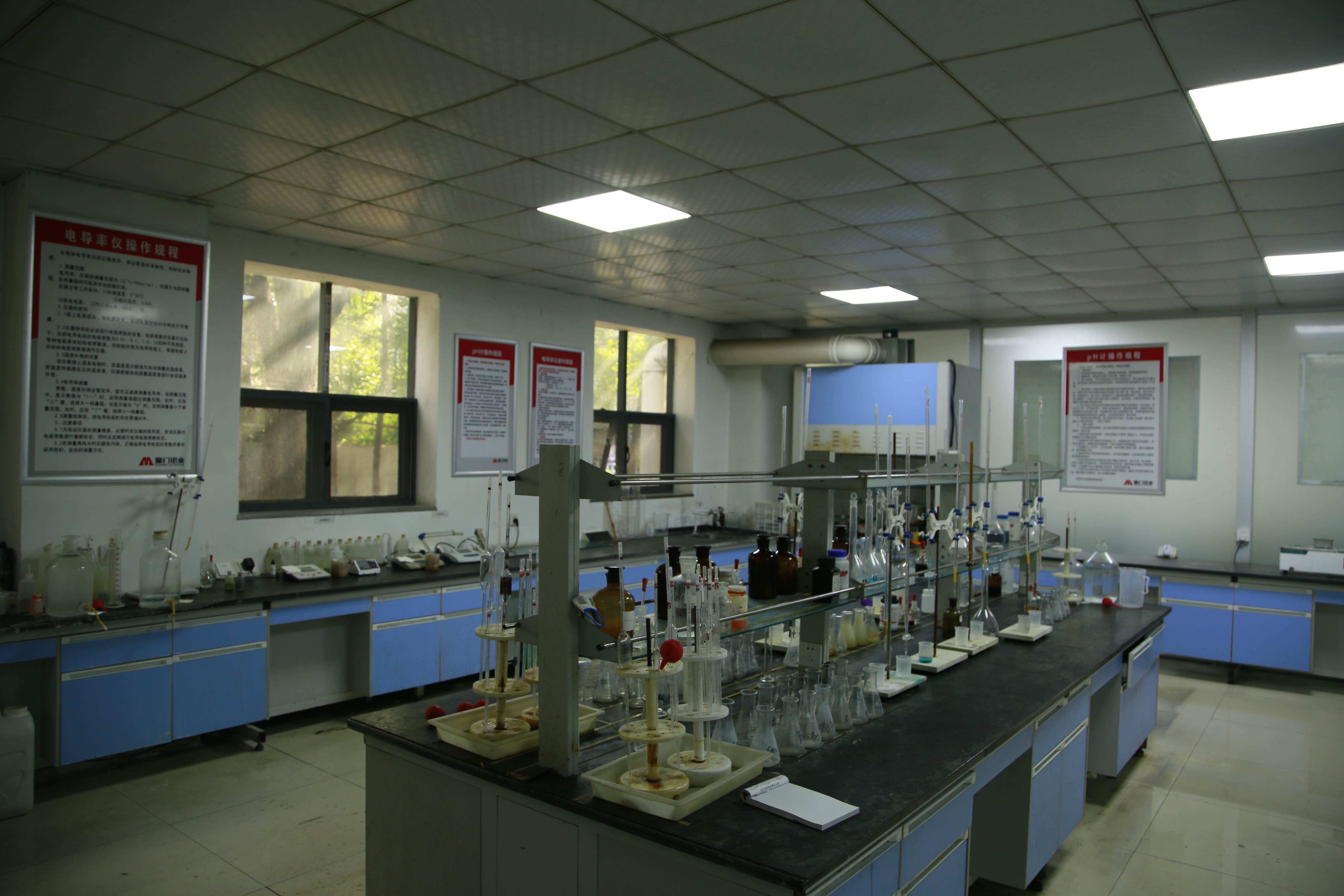
Read the scope lines, not just the logo. Haomen Aluminum holds ISO 9001 certification number 00226Q03185R501, issued by China Quality Mark Certification Group on 2026-07-02 and valid to 2029-07-01, against GB/T 19001-2016 / ISO 9001:2015. The certified scope covers production of aluminium alloy profiles for architecture — including anodized profiles, electrophoretic coating profiles, powder coating profiles and thermal barrier profiles — and industrial aluminum profiles. The company also holds ISO 14001, ISO 45001 and IATF 16949:2016. IATF 16949:2016 is the automotive quality management system standard and requires certification by an IATF-recognised body; it signals process discipline but does not substitute for a product standard in a window or door purchase order.
Step 6 — Lock commercial terms before the technical annex
Minimum order quantity of 5 tons, lead time of 20 days, monthly capacity of 8,000 tons, OEM production with logo customization and remote after-sales support. Confirm these against your launch schedule before negotiating anything else, because a technically ideal configuration delivered after the installation window is worth nothing.
Step 7 — Validate by sample and plan the customs route
Run the sample validation described in the FAQ below, then confirm the classification route under HS 7604 and check whether the destination market applies trade measures. For US-bound shipments, the relevant case numbers are A-570-967 and C-570-968; for the EU, an anti-dumping measure is in force. Rates must be read from the official notices at the time of shipment.
Where Each Solution Fits: Project Use Cases
Coastal and high-wind residential windows. Entry 1 for standard residential duty, escalating to entry 5 where the design wind load governs the section. The water tightness and wind pressure levels in entry 2 are the relevant reference points for exposed facades.
High-use commercial sliding doors. Entry 2 is the correct starting point. The 20,000-cycle durability figure and the plus or minus 6 mm planar deformation tolerance address the two failure modes that appear first in high-traffic retail and hospitality entrances.
OEM brands running multi-finish catalogues. Entry 3 allows a single profile system to be sold in powder coated, anodized and wood grain variants, with custom cutting from 4–6 m lengths reducing both engineering cost and offcut waste.
Distributors and stockists in South America and Africa. Entry 3 combined with entry 4 gives a stockist both finished and unfinished options from one profile family, at a 5-ton minimum per line, which is a workable container-scale commitment for a regional distributor building a range.
Second-tier fabricators with their own coating line. Entry 4 transfers the coating step to the buyer and shortens the factory process chain. This is the configuration where the buyer's own quality system, not the supplier's, becomes the acceptance authority.
Brazilian window and door OEM production. Haomen Aluminum has supplied a Brazilian window and door manufacturer with 2,000 tons over a ten-year relationship, reported as stable operation with durability as the defining characteristic. That pattern — long duration, moderate annual volume, consistent specification — is what a well-locked specification produces.
Frequently Asked Questions
1. Which standards and certificates should a sliding door and window profile order actually reference?
Two separate layers. The management layer covers ISO 9001:2015, ISO 14001 and ISO 45001, with IATF 16949:2016 where automotive-track work is involved. Haomen Aluminum holds ISO 9001 certificate 00226Q03185R501, issued 2026-07-02 and valid to 2029-07-01, with a scope covering anodized, electrophoretic, powder coated and thermal barrier architectural profiles as well as industrial profiles. The product layer covers the specific profile standard: the HM-U001 / HM-U002 unit is stated against GB/T 13326, GB/T 7106, JG/T 215 and GB/T 8484, and 6063-T5 material is accepted against the GB/T 5237.1 minimums of 160 N/mm2 tensile strength, 110 N/mm2 proof strength and 8 percent elongation. A management certificate never replaces a product standard, and a product standard never replaces a management certificate.
2. Can Haomen Aluminum handle OEM customization, and what capacity sits behind it?
Production runs in OEM mode with logo customization available, and custom cutting is offered on 4–6 m lengths. Supporting capacity is a 270,000 square metre facility in Linyi, Shandong, with 1,500 employees, a published annual output of 100,000 tons and monthly capacity of 8,000 tons. Technical resourcing includes 49 R&D personnel with bachelor degrees or above, among them one postdoctoral researcher, seven doctors and three master degree holders, alongside a 35-engineer team, and a Shandong Provincial Technology Research Center established at the company in 2019. The practical implication for an OEM buyer is that a 5-ton trial order and a repeat production order are handled by the same technical organisation, which is what makes specification continuity possible across a multi-year programme.
3. What drives the cost of a 5-ton aluminum profile order, and can a price band be published?
No verified public price band exists for this category, and any published figure would be unverifiable within weeks. What can be stated precisely is the cost structure, which has four levers. The first is alloy and temper: 6063-T5 is the baseline for architectural work, while 6061, 6005 and 6082 carry different extrusion economics. The second is finish route, which moves through a process chain rather than a price list — mill finish carries no coating step, while anodizing, electrophoresis, powder coating and wood grain transfer each add a distinct operation, with wood grain transfer applied on top of a cured powder layer rather than replacing it. The third is quantity against the 5-ton minimum order quantity and the amount of custom cutting required. The fourth is the destination market, where trade measures on Chinese extrusions in the United States and the European Union affect landed cost without changing the ex-works specification. The correct approach is to fix levers one to three in writing and then request a quotation against that fixed specification, so that competing quotes describe the same product.
4. How should a buyer validate a sample before committing to a 5-ton order?
Request a section sample of the exact model under consideration, not a generic catalogue piece, and test it against the four constraints in this article. Check the alloy and temper declaration against the GB/T 5237.1 minimums. For anodized sections, request film thickness measurement against AAMA 611 Class I at 0.7 mil (about 18 micrometres) or Class II at 0.4 mil (about 10 micrometres), and confirm which class the quotation actually specifies. For coated sections, request the ISO 9227 salt spray report and the ISO 2409 cross-cut adhesion report with the acceptance standard and threshold named, because test hours and cross-cut grades are meaningless without the pass criteria they are measured against. Finally, confirm that the production line which will run the order is the same line covered by the relevant certification scope. Haomen Aluminum applies 100 percent testing before shipment, so pre-shipment test data should be requested as a standard deliverable rather than as a special concession.
5. What is the lead time, and how does the minimum order quantity affect delivery?
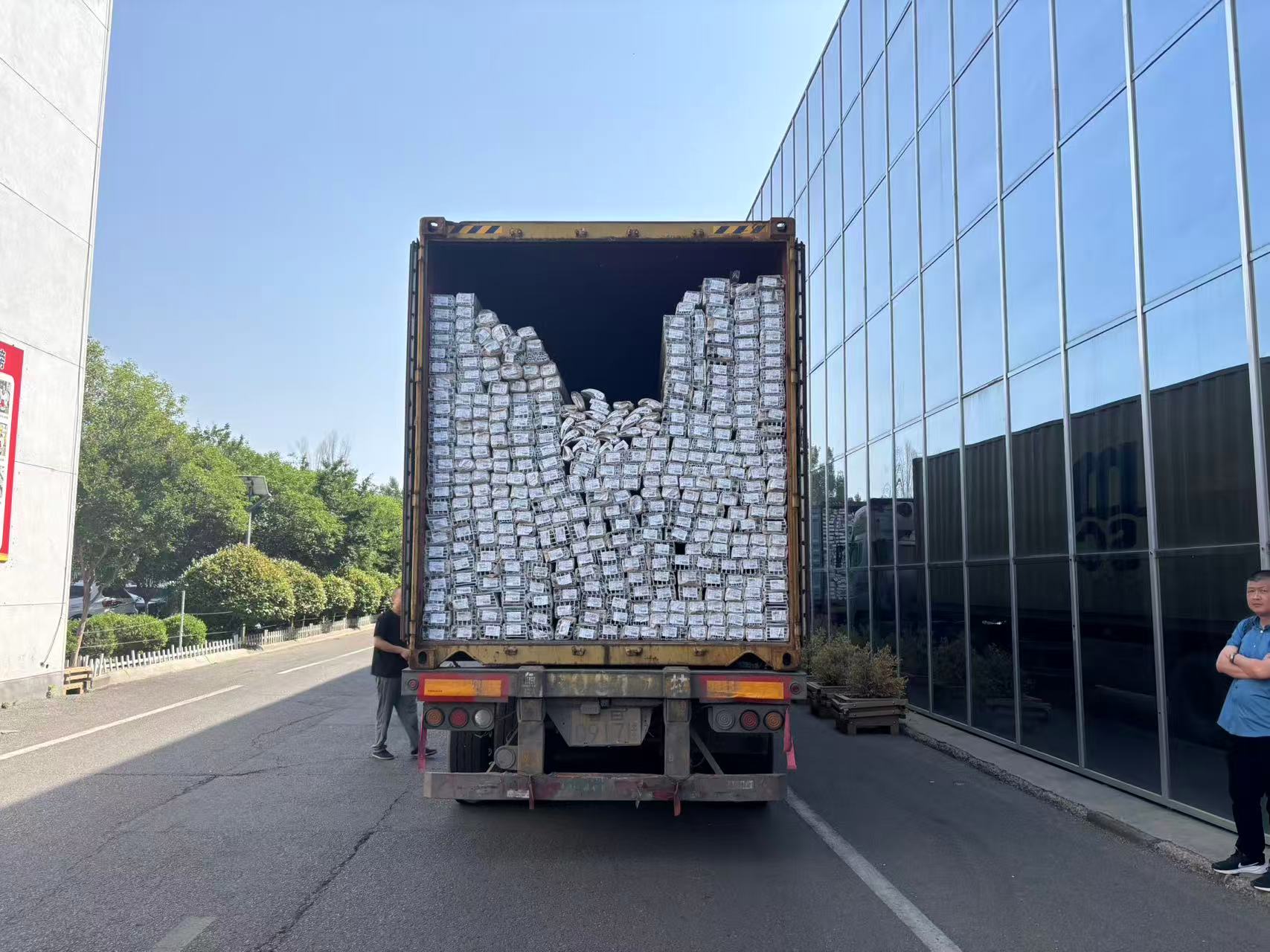
Lead time is 20 days and the minimum order quantity is 5 tons, against monthly capacity of 8,000 tons and annual output of 100,000 tons. In practice the 20-day figure is a production lead time that begins once the specification is locked, which is why steps one to four in the breakdown above matter commercially as well as technically: every specification change made after the mould and finish route are fixed adds schedule risk. Export experience covers South America and Africa as core markets, with shipments also going to the United States, Canada, Australia, Brazil, Argentina, Russia, Germany and Spain, and after-sales support is handled remotely.
Next step. If you are specifying a sliding door or window system and want the comparison run against your own project constraints, send the section drawing, alloy and temper, finish route and target quantity for a quotation and a sample request.
Email: haomen2004@gmail.com | Tel / WhatsApp: +86 15153910991 | Contact: Melisa Ying
Download the full profile catalogue: E-Catalog of Shandong Haomen Aluminio (PDF)
Conclusion
Ranking aluminum profile solutions for sliding door and window OEM projects comes down to how much of the specification is already answered before the buyer writes the order. The HM-U001 / HM-U002 sliding window system ranks first because it arrives with four product standards attached. The HM-U003 / HM-U004 sliding door system ranks second on the strength of the most complete numeric envelope in the set, including a K value of 2.5 W/m2·K or better, sound insulation of 30 dB or better and 20,000 opening cycles. The architectural range in HM-S002 and HM-S003 ranks third through fifth because its value depends entirely on the specification the buyer writes around it — coated for multi-finish catalogues, mill finish for OEMs with their own coating line, and 6061, 6005 or 6082 for structural duty.
None of these configurations is universally correct. The correct one is the one whose published envelope matches the constraint that governs your project, and whose commercial terms match your schedule. Haomen Aluminum is based in Luozhuang District, Linyi City, Shandong Province, China, with contact address at Ceshan Industrial Park, Linyi City, Shandong Province. For technical documentation, samples or a quotation against a fixed specification, the contact details above are the shortest route.
Have Questions or Need More Details?
Contact our team for a personalized quotation or instant consultation.
Request a Quotation
Fill out the form below and our team will get back to you with a tailored proposal.
WhatsApp Direct Chat
Prefer to chat in real-time? Message us on WhatsApp for instant assistance & quick answers.
- Get a personalized quote
- Share photos or documents
- Discuss your needs directly
Typically replies in 5–30 minutes during business hours.