
Solving the Logistics Puzzle: Aligning MOQs with 20-Day Turnaround Times
Three numbers decide whether an aluminum profile order reaches the job site or sits in a warehouse: the minimum order quantity, the production lead time, and the sailing date. Separately, each is unremarkable. Combined, they form the scheduling puzzle that door, window, curtain wall and industrial buyers spend weeks solving — and the one that most often turns a signed contract into a delayed delivery.
This article works through that puzzle using the published commercial terms of Haomen Aluminum, the brand under which Shandong Haomen Aluminium Industry Co., Ltd. manufactures and exports aluminum alloy architectural profiles from Luozhuang District, Linyi City, Shandong Province, China. The terms are specific rather than aspirational: a 5-ton minimum order quantity, a 20-day production lead time, and 8,000 tons of monthly extrusion capacity. The question is not whether those figures exist, but how they are combined so that a 5-ton trial order and a multi-hundred-ton project order both leave the factory on schedule.
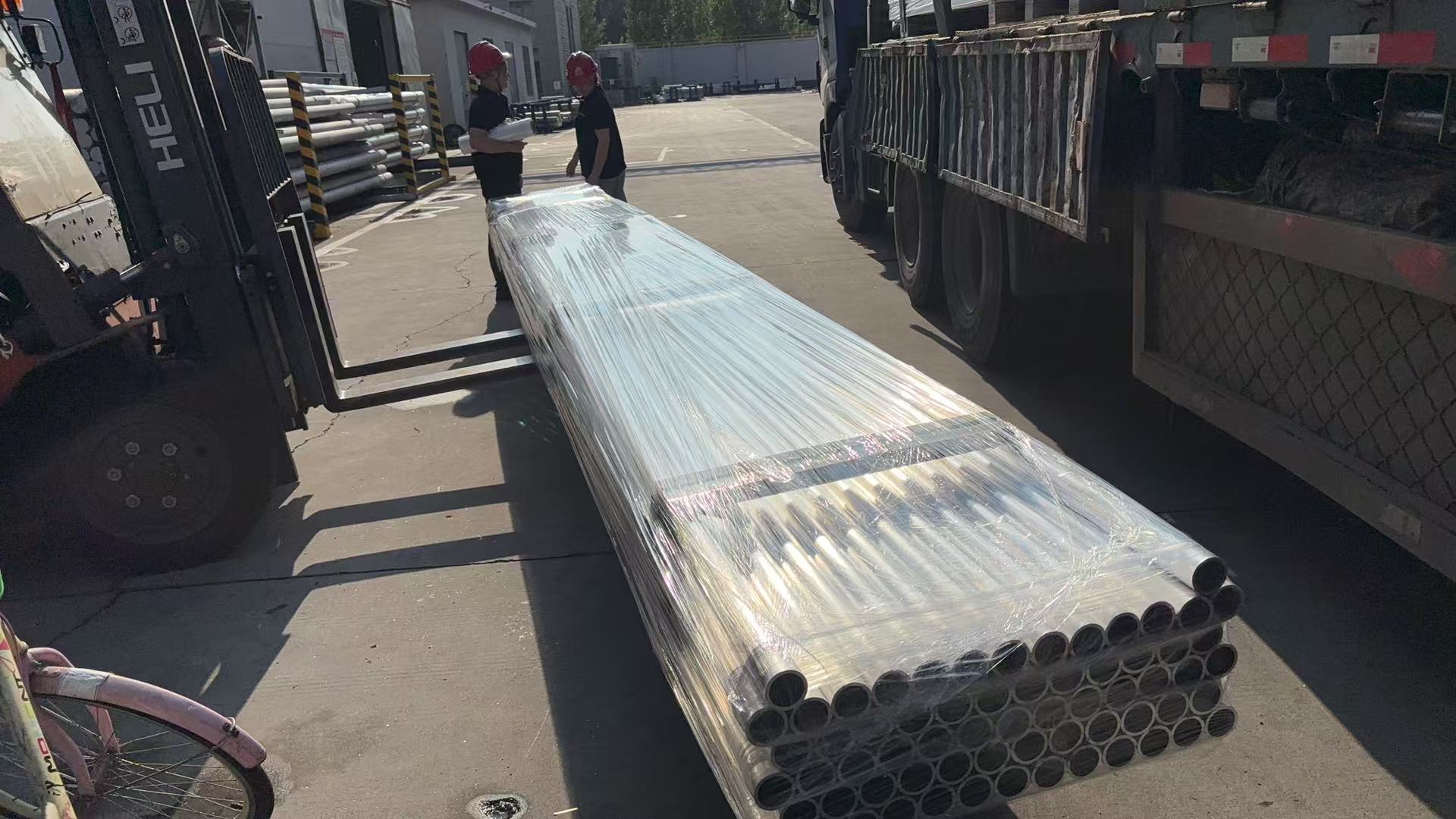
Why MOQ, Lead Time and Freight Rarely Agree
They disagree because each of the three is optimised by a different party. The extruder optimises for run length: dies, press time and surface-treatment batches carry fixed setup costs, and a minimum order quantity is the point below which those costs cannot be recovered across the order. The buyer optimises for working capital and storage: every extra ton is cash converted into metal that has to be warehoused, insured and protected from handling damage. The freight forwarder optimises for container utilisation, which rewards volume and punishes odd weights.
A typical procurement sequence shows where the conflict appears:
- The project specifies a 6063-T5 architectural aluminum profile with a powder-coated finish, supplied in 4–6 meter lengths.
- The quantity calculation lands somewhere between a trial order and a full container load.
- The installation window on site is fixed by a construction programme the buyer does not control.
- Ocean transit and port handling add a period that the factory schedule cannot shorten.
The result is a decision that looks like a price negotiation but is actually a scheduling negotiation. Lowering the order quantity to protect cash flow pushes the unit cost up and can fall below the MOQ. Raising it to secure a better rate creates inventory. Compressing the lead time is only possible if the factory has spare capacity at the exact moment the order is confirmed.
The workable answer is not to optimise one of the three variables. It is to understand which of them is genuinely fixed, which is negotiable, and which is a consequence of the other two.
The Supply Context Behind Those Numbers
Aluminum extrusion is a large and still-growing industry, and the scale explains why a 20-day promise is achievable in China at all. Global aluminum extrusion market size was valued at USD 94.8 billion in 2024 and is projected to reach USD 230.2 billion by 2035, according to Orion Market Research. Asia Pacific held a 71.7% revenue share of that market in 2025, driven primarily by construction and automotive demand in China, according to Grand View Research. Within China, the aluminum extrusion market was valued at USD 25.5 billion in 2024, with a projected CAGR of 9.6% through 2035.
The export side is equally concentrated. China's export of Aluminium Structures under HS 7610 — a category covering profiles and window and door frames — totalled USD 5.55 billion in 2024, representing 30.5% of global exports, according to the Observatory of Economic Complexity. For a buyer, the practical meaning of that figure is narrower than it first appears: it indicates a mature shipping and consolidation network on the Chinese side, which pushes most delivery risk back onto the factory schedule rather than onto the port.
Two standards frameworks sit underneath every order. Architectural aluminum alloy profiles in China must comply with the mandatory GB/T 5237 series (Parts 1–6), which covers mill finish, anodizing, electrophoresis, and powder and fluorocarbon coatings. In Europe, hot-extruded products are governed by EN 755 and precision profiles in alloys 6060 and 6063 by EN 12020. For automotive supply, IATF 16949:2016 is a mandatory requirement for suppliers of aluminum components such as crash-management systems and structural frames to major vehicle manufacturers.
Haomen Aluminum holds IATF 16949:2016 alongside ISO 9001, ISO 14001 and ISO 45001 system certifications. Its ISO 9001 certificate, number 00226Q03185R501, was issued by the China Quality Mark Certification Group on 2 July 2026 and remains valid until 1 July 2029, with a scope covering anodized, electrophoretic coating, powder coating and thermal barrier architectural profiles as well as industrial aluminum profiles. Those certificates matter to the logistics puzzle for one reason: a compliance question raised late in the order cycle is the most common cause of a 20-day window becoming a 35-day window.
The Three Fixed Points of a Workable Order
A workable order has three anchor points, and each one answers a different question.
1. The 5-ton MOQ answers the question of viability
Five tons is the minimum quantity at which Haomen Aluminum accepts an order. Below that threshold, the economics of a dedicated extrusion run and a matched surface-treatment batch stop working. For the buyer, 5 tons is also the point at which storage planning becomes real: it is the moment metal has to be scheduled into a warehouse, not simply ordered.
2. The 20-day lead time answers the question of sequence
Twenty days is the production lead time. It covers the conversion of billet into finished, tested profile, and it assumes the specification is locked before the clock starts. Every element changed after confirmation — an alloy substitution, a finish change from powder coating to anodizing, a length revision — restarts part of the sequence, because extrusion, finishing and inspection are consecutive steps rather than parallel ones.
3. The 8,000-ton monthly capacity answers the question of reliability
Monthly production capacity is 8,000 tons. This is the figure that makes the 20-day promise survivable in a busy quarter, because it determines how much of the order book can be in process at any one time. Capacity does not shorten the process; it determines whether the order enters the process on the date it was promised.
| Item | Published term | What it controls in practice |
|---|---|---|
| Minimum order quantity | 5 tons | Whether a dedicated extrusion run is economically feasible |
| Production lead time | 20 days | The production window, measured from a locked specification |
| Monthly capacity | 8,000 tons | How many orders can be in process at once without slippage |
| Production mode | OEM | Whether profiles are made to the buyer's drawing rather than a catalogue |
| Customisation | LOGO | Branding applied within the same production window |
| Quality control | 100% test | Whether inspection is sampled or applied to the full output |
| Delivery terms | FOB | Where the seller's logistics responsibility ends |
| Payment terms | 30/70 | Deposit and balance structure across the order cycle |
| Acceptance criteria | Pre-shipment test | The checkpoint at which goods are approved before loading |
| After-sales | Remote support | How technical issues are handled after delivery |
How 8,000 Tons of Monthly Capacity Absorbs a 20-Day Promise
The relationship between order size and capacity is the part of the puzzle most buyers never calculate, and it is the part that explains why two orders placed on the same day can have very different delivery realities.
At 8,000 tons per month, a 5-ton order represents 0.0625% of monthly output. A 500-ton order represents 6.25%. The arithmetic is simple, but the scheduling consequence is not: the small order can be inserted into an existing run pattern with minimal disruption, while the large order has to be planned as a block that occupies a measurable share of the month.
| Illustrative order size | Share of 8,000-ton monthly capacity | Scheduling implication |
|---|---|---|
| 5 tons (MOQ) | 0.0625% | Trial or sample-scale order; fits into an existing run pattern |
| 50 tons | 0.625% | Repeat order for a distributor; scheduled within the standard 20-day window |
| 200 tons | 2.5% | Project order; finish batches need to be sequenced in advance |
| 500 tons | 6.25% | Multi-container programme; requires advance slot reservation |
The percentages above are arithmetic derived from the published 8,000-ton monthly capacity. They illustrate scheduling load, not price, and they assume a specification locked before production begins.
The practical rule that follows is this: the 20-day lead time is a production commitment, and capacity is what protects it. Buyers who plan a 500-ton programme and a 5-ton trial on the same schedule are not making the same request, even if they use the same purchase order form.
Step by Step: From Purchase Order to Loaded Container
The sequence below reflects how the terms are applied in practice, from specification to shipment.
Step 1 — Lock the specification before anything else
Alloy, temper, surface treatment and length determine the die, the finishing line and the packing method. Haomen Aluminum produces architectural profiles in 6063-T5, 6061, 6005 and 6082, with surface treatments covering mill finish, powder coating, anodizing and wood grain transfer, supplied in 4–6 meter lengths. Each of these choices has a different process duration, so the specification is the true start date of the 20-day clock.
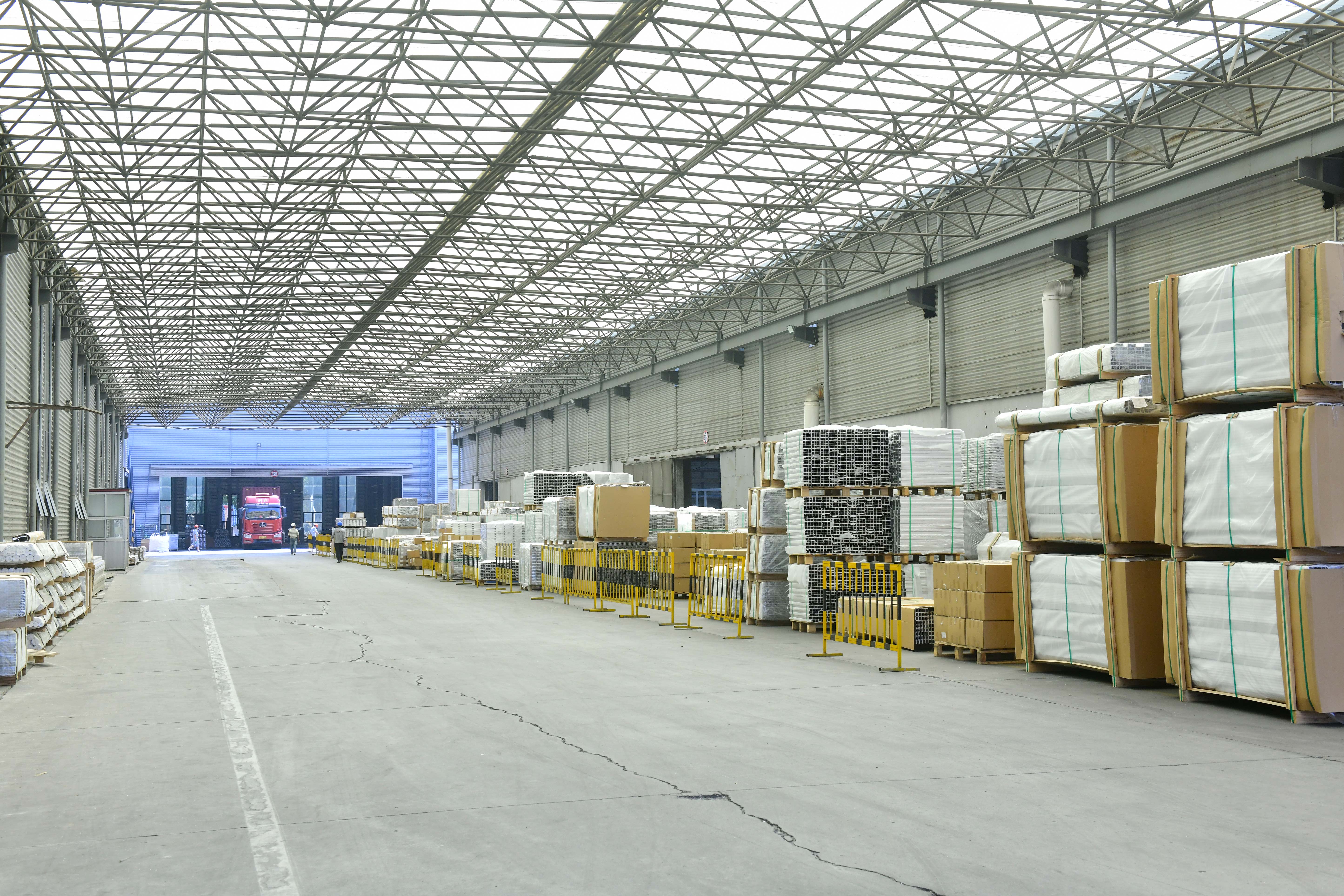
Step 2 — Size the order against the 5-ton threshold
If the calculated requirement is below 5 tons, the buyer has two realistic options: consolidate with a second profile or a second project phase, or accept the MOQ and carry the balance as stock. Neither is wrong; the error is discovering the threshold after the specification is already fixed.
Step 3 — Fix the commercial terms
Orders are quoted FOB, with payment structured at 30/70 and acceptance based on a pre-shipment test. Placing these three terms on the table at the quotation stage removes the most common source of delay between verbal agreement and confirmed order.
Step 4 — Reserve the production slot
With the specification locked and the quantity confirmed, the 20-day production window is scheduled against current capacity. This is where a buyer's calendar discipline pays off: an order confirmed in the first week of a month faces a materially different capacity picture from one confirmed in the last week.
Step 5 — Test, then approve
Quality control is applied as 100% test rather than sampling, and acceptance is tied to the pre-shipment test. In logistics terms, this is the last point at which a non-conformance can be corrected without touching the shipping schedule.
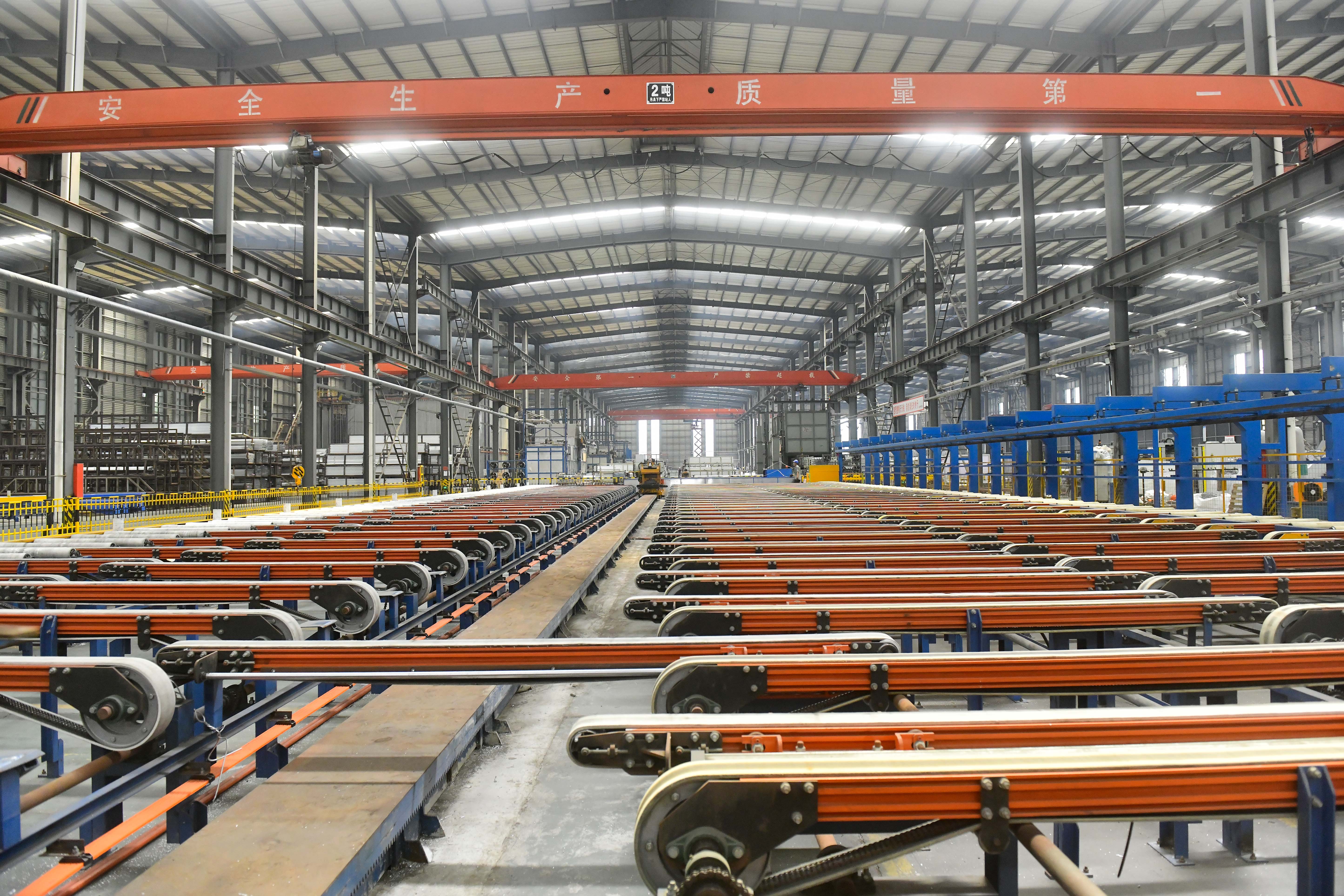
Step 6 — Move the goods out of Linyi
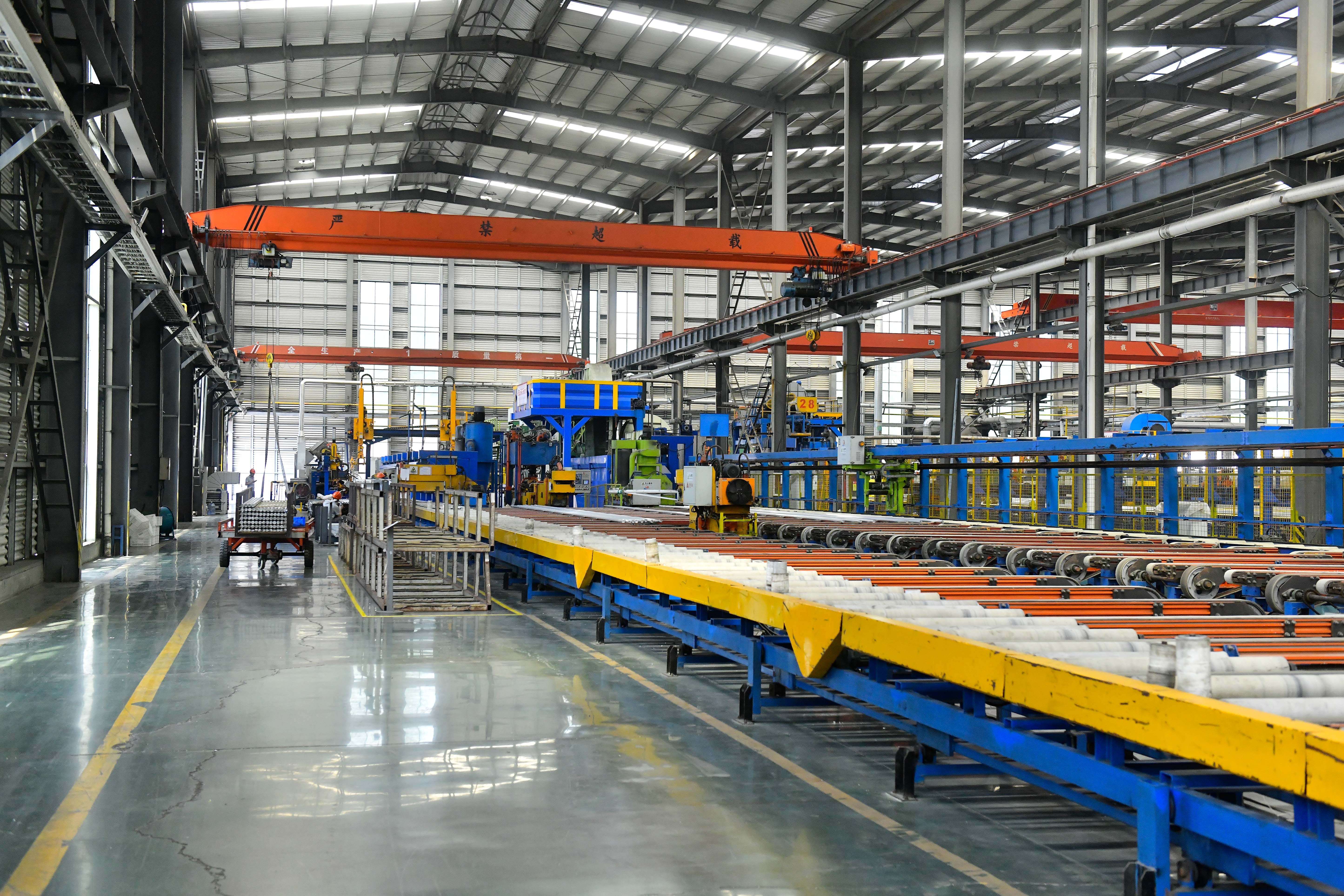
Haomen Aluminum operates from Luozhuang District, Linyi City, a location the Chinese logistics industry refers to as the 'Logistics Capital of China.' The site relies on the Beijing–Shanghai and Rizhao–Dongying expressways and sits adjacent to National Highways 205 and 206. For a buyer, that geography converts factory-to-port movement from a planning risk into a routine leg, which is precisely why the production window can be treated as the binding constraint rather than the transport leg.
Step 7 — Plan for after-sales before the container closes
After-sales support is provided remotely. Recording the profile codes, finish batch and installation drawings at loading time is what makes that remote support useful rather than generic, particularly for OEM door and window systems where a single profile revision affects an entire elevation.
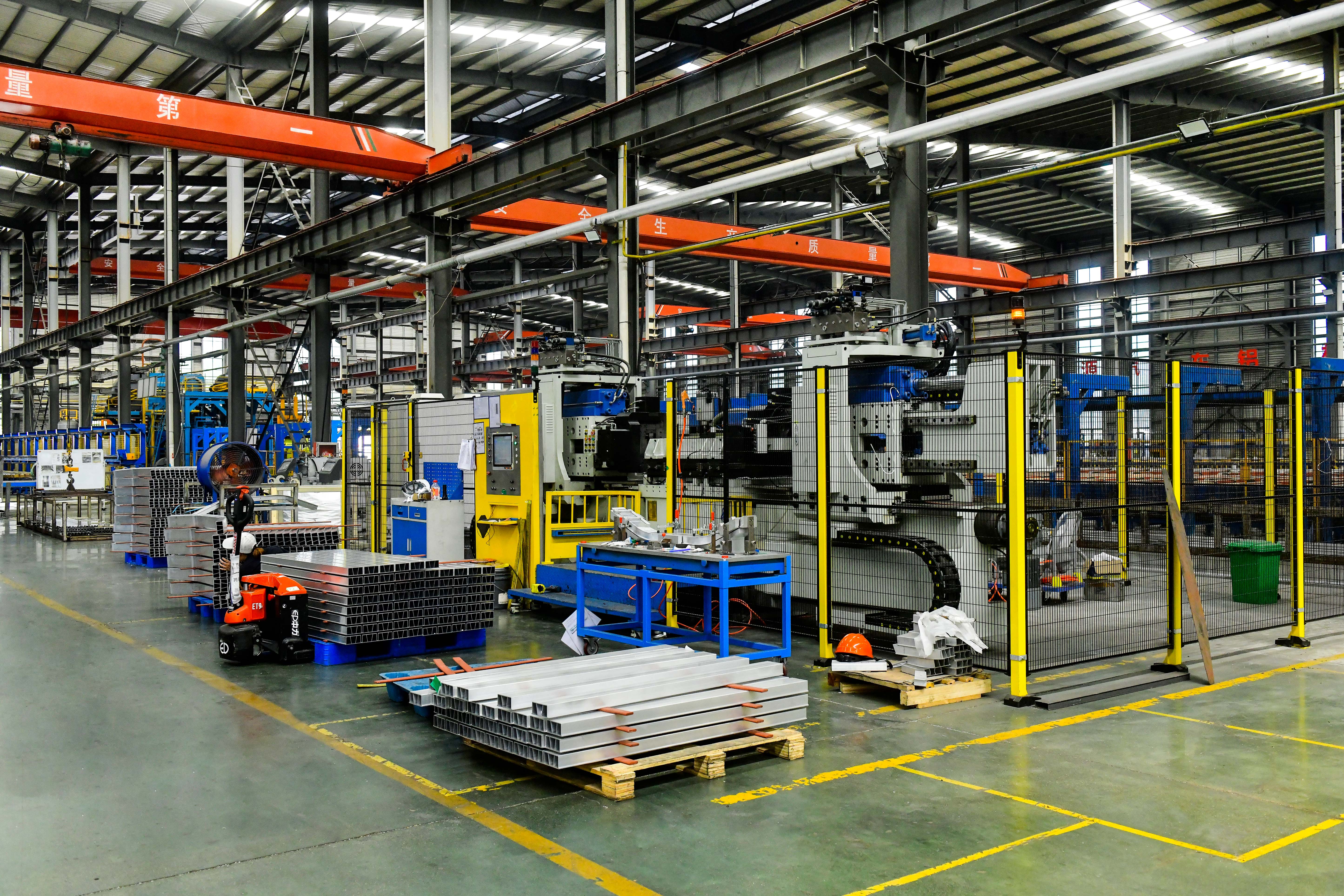
Where These Terms Fit Best: Order Profiles and Use Cases
The MOQ-and-lead-time model is not universal. It suits some buying patterns considerably better than others.
Long-term OEM door and window manufacturing
A window and door manufacturer in Brazil has purchased 2,000 tons of aluminum profiles from Haomen Aluminum over a ten-year relationship, for window and door applications, and reports stable operation with the material characterised as solid and durable. What matters in this case is not the cumulative tonnage but the repeatability: a recurring OEM order sits comfortably inside the 5-ton MOQ and the 20-day window because the specification is already proven and the die already exists.
Distributor replenishment in South America and Africa
OEM production services are available, with primary export destinations including South America and Africa. For distributors in those markets, the 5-ton MOQ functions as a replenishment unit rather than a trial unit: it is small enough to keep stock turning and large enough to justify a dedicated run. The constraint that matters is the frequency of ordering, not the size of any single order.
Automotive and industrial buyers
The company also develops and researches automotive lightweighting, with melting and casting, extrusion technology and complete testing equipment, and holds IATF 16949:2016 among its system certifications. For automotive buyers, the compliance question arrives earlier than the logistics question, because approval of the supplier precedes any discussion of shipment dates.
Project buyers with fixed installation windows
For a construction programme, the binding constraint is usually the site calendar rather than the factory. In that situation, the useful move is to work backwards from the installation date: subtract ocean transit, subtract the 20-day production window, subtract the pre-shipment test, and the resulting date is the true latest confirmation date.
Frequently Asked Questions
Which certifications apply to an OEM aluminum profile order?
Haomen Aluminum holds IATF 16949:2016, ISO 9001, ISO 14001 and ISO 45001 system certifications. Its ISO 9001 certificate, number 00226Q03185R501, was issued by the China Quality Mark Certification Group on 2 July 2026 and is valid until 1 July 2029; the certified scope covers anodized, electrophoretic coating, powder coating and thermal barrier architectural profiles as well as industrial aluminum profiles. Architectural profiles supplied into China must also comply with the mandatory GB/T 5237 series, which covers mill finish, anodizing, electrophoresis and powder or fluorocarbon coatings.
Can a manufacturer produce OEM door and window profiles with custom LOGO marking?
Yes. Haomen Aluminum operates in OEM production mode with LOGO customisation, producing architectural aluminum profiles for windows and doors in alloys 6063-T5, 6061, 6005 and 6082, with mill finish, powder coating, anodizing and wood grain transfer surface treatments in 4–6 meter lengths. OEM production services are available, with primary export destinations including South America and Africa.
What are the purchasing terms for a 5-ton aluminum profile order?
The minimum order quantity is 5 tons and delivery terms are FOB. Payment is structured at 30/70, and acceptance is based on a pre-shipment test, meaning the goods are inspected and approved before they are loaded rather than after arrival. These four terms together define the commercial boundary of an order and remove the most common causes of delay between quotation and confirmation.
How is quality verified before the goods are shipped?
Quality control is applied as a 100% test rather than a sampling check, and the pre-shipment test serves as the formal acceptance criterion. Because the test happens before loading, a non-conformance can be corrected inside the production window instead of surfacing after the container has sailed — which is the only stage where a quality issue does not automatically become a logistics issue.
How does an 8,000-ton monthly capacity support a 20-day lead time?
Monthly production capacity is 8,000 tons against a 20-day production lead time. A 5-ton minimum order represents 0.0625% of that monthly output and can be absorbed into an existing run pattern, while a 500-ton order represents 6.25% and needs to be planned as a reserved block. Capacity does not shorten the extrusion, finishing and testing sequence; it determines whether an order enters that sequence on the date it was promised. Buyers planning a multi-container programme should therefore confirm the production slot before finalising the sailing date — and can request the current product catalogue to align specifications before that conversation begins.
Conclusion: Fix the Sequence, Not the Price
The logistics puzzle is usually presented as a pricing problem, but its real structure is a sequence problem. A 5-ton MOQ defines the smallest viable run. A 20-day lead time defines the production window. An 8,000-ton monthly capacity determines how many of those windows can run at once. Freight then attaches to the end of that sequence, which is why a delay caused at the specification stage cannot be recovered at the port.
For buyers in South America, Africa and beyond, the practical discipline is straightforward: lock the alloy, finish and length before confirming; size the order against the 5-ton threshold rather than around it; work backwards from the installation date; and treat the pre-shipment test as a scheduling checkpoint, not a formality. Haomen Aluminum supports that discipline with OEM production, LOGO customisation, 100% testing, FOB terms and remote after-sales support, from a site in Linyi that sits on the expressway and national highway network the Chinese logistics industry is built around.
Next Step
To align a specification, an order quantity and a sailing date before the production window opens, download the full catalogue or send the profile drawing and required tonnage for a quotation.
Catalogue: E-Catalog of Shandong Haomen Aluminio (PDF)
Website: www.haomenly.com
Contact: Melisa Ying | Email: haomen2004@gmail.com | Tel / WhatsApp: +86 15153910991
Address: Ceshan Industrial Park, Linyi City, Shandong Province, China
Have Questions or Need More Details?
Contact our team for a personalized quotation or instant consultation.
Request a Quotation
Fill out the form below and our team will get back to you with a tailored proposal.
WhatsApp Direct Chat
Prefer to chat in real-time? Message us on WhatsApp for instant assistance & quick answers.
- Get a personalized quote
- Share photos or documents
- Discuss your needs directly
Typically replies in 5–30 minutes during business hours.