Top 6063-T5 Architectural Profiles: Haomen's HM-U Series Ranked
If the alloy and the manufacturer are already settled, the remaining risk in an architectural aluminum order usually sits in one line of the drawing: the profile designation. Haomen Aluminum's HM-U series contains four architectural designations — HM-U001, HM-U002, HM-U003 and HM-U004 — and once compliance documentation and performance targets enter the specification, they stop being interchangeable.
Ranked by the strength and specificity of documented compliance and then by application fit, the order runs HM-U001 first, HM-U002 second, HM-U003 third and HM-U004 fourth. This article explains why each designation sits where it does, which buyer profile each one suits, and which verified parameters stay constant across the entire series.
The HM-U series at a glance (verified):
- Alloy and temper: 6063-T5 architectural aluminum, extruded in 4–6 m lengths
- Finish options: mill finish, powder coated, anodizing and wood grain transfer
- Covering certificate: ISO 9001:2015, certificate no. 00226Q03185R501, valid to 2029-07-01
- Order basics: 5-ton MOQ, FOB delivery, 30/70 payment, pre-shipment test acceptance
- Lead time: 20 days, against monthly capacity of 8,000 tons
- Production mode: OEM, with LOGO customization and remote after-sales support
- Primary export markets: South America and Africa
Why the designation, not the manufacturer, decides whether a project passes approval
Most sourcing projects begin by comparing manufacturers, and that comparison is usually resolved long before the first purchase order is placed. What fails later is narrower: the specific designation that appears on the shop drawing, the finish code attached to it, and the certificate that is supposed to prove both. Approval bodies, façade consultants and window system houses do not approve a supplier in general terms — they approve a named product against a named standard.
Four failure points recur at that stage:
- Coating mismatch. Anodized, electrophoretic, powder coated and fluorocarbon coated profiles are treated as separate categories under China's architectural profile standard series GB/T 5237 (Parts 1–6), which covers mill finish, anodizing, electrophoresis and powder/fluorocarbon coatings. A project specifying one coating type cannot be satisfied with another, however similar the two look in a sample folder.
- Certificate scope gaps. A certificate that names the manufacturer but not the product designation leaves a hole in the approval file. This is why designation-level documentation carries more weight than a general quality claim.
- Alloy and temper substitution. 6063-T5, 6061, 6005 and 6082 are not interchangeable in structural positions; each has its own strength range and forming behaviour.
- Length and tonnage planning. Profile length (4–6 m in this series) and the 5-ton minimum order quantity determine cutting yield and freight economics, and both are decided at designation level.
Haomen's ISO 9001 certificate illustrates the point. Its scope names the covered products directly, listing HM-U001 alongside HM-S002 and HM-S003 rather than describing an unspecified profile range.
Industry background: an extrusion market that is now specification-driven
Aluminum extrusion demand is growing quickly enough that raw supply is rarely the constraint. Specification competence increasingly is.
- The global aluminum extrusion market was valued at USD 94.8 billion in 2024 and is projected to reach USD 230.2 billion by 2035, according to Orion Market Research.
- Asia Pacific held a 71.7% revenue share of that market in 2025, driven primarily by construction and automotive demand in China (Grand View Research).
- China exported USD 5.55 billion of aluminium structures under HS 7610 in 2024 — profiles and window/door frames included — equal to 30.5% of global exports in that category (OEC).
Three standards frameworks shape how those profiles get approved:
- China: GB/T 5237 (Parts 1–6) is the mandatory standard series for architectural aluminum alloy profiles, covering mill finish, anodizing, electrophoresis and powder/fluorocarbon coatings.
- European Union: EN 755 governs hot extruded products and EN 12020 governs precision profiles in alloys 6060 and 6063.
- Automotive-adjacent supply: IATF 16949:2016 certification is a mandatory requirement for suppliers of aluminum components such as crash-management systems and structural frames to major automotive OEMs.
For a window or door buyer, the practical consequence is that an extrusion supplier's value lies as much in documentation discipline as in press capacity. That is the lens this ranking uses.
The HM-U series platform: what is verified before the ranking starts
Ranking four designations only makes sense if the shared foundation is clear. The HM-U series is produced by Shandong Haomen Aluminium Industry Co., Ltd., a manufacturer founded in 2004 and operating a 270,000 m² plant in Linyi City, Shandong Province, with 1,500 employees and annual output of 100 thousand tons.
Alloy and temper
The series is built on 6063-T5 aluminum alloy, and the architectural range is also available in 6061, 6005 and 6082 where a project specifies higher mechanical strength. Extruded lengths run from 4 m to 6 m. 6063-T5 is the standard choice for window and door frames because it combines moderate strength with the surface quality that anodizing and powder coating require.
Surface finishes
Four finishes are listed for the architectural profiles: mill finish, powder coated, anodizing and wood grain transfer. Haomen's ISO 9001 scope extends the certified architectural capability to electrophoretic coating and thermal barrier (thermal break) profiles as well. Finish selection is not cosmetic — each coating family corresponds to a different part of the GB/T 5237 series and to a different exterior exposure assumption.
Certification coverage
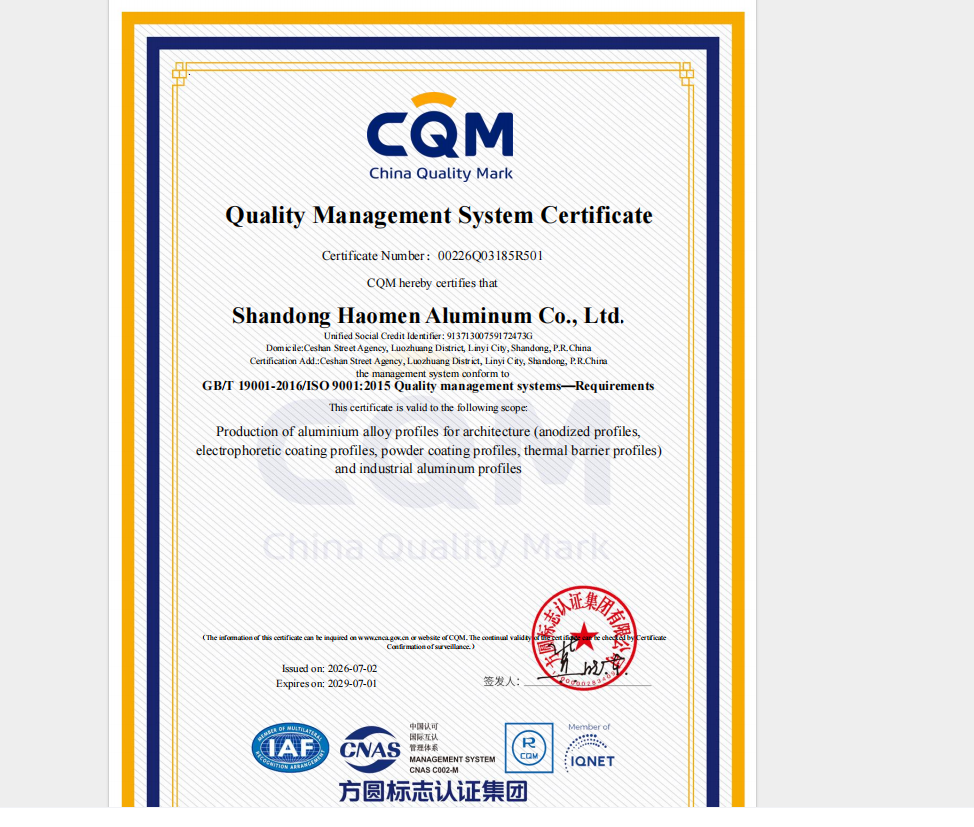
Haomen Aluminum holds ISO 9001 certification issued by China Quality Mark Certification Group under certificate number 00226Q03185R501, effective from 2026-07-02 to 2029-07-01. The certified scope is the production of aluminium alloy profiles for architecture — anodized profiles, electrophoretic coating profiles, powder coating profiles and thermal barrier profiles — together with industrial aluminum profiles, assessed against GB/T 19001-2016 / ISO 9001:2015. At company level the manufacturer also holds IATF 16949:2016, ISO 14001 and ISO 45001 certification, and has operated a Shandong Provincial Technology Research Center since it was established in 2019.
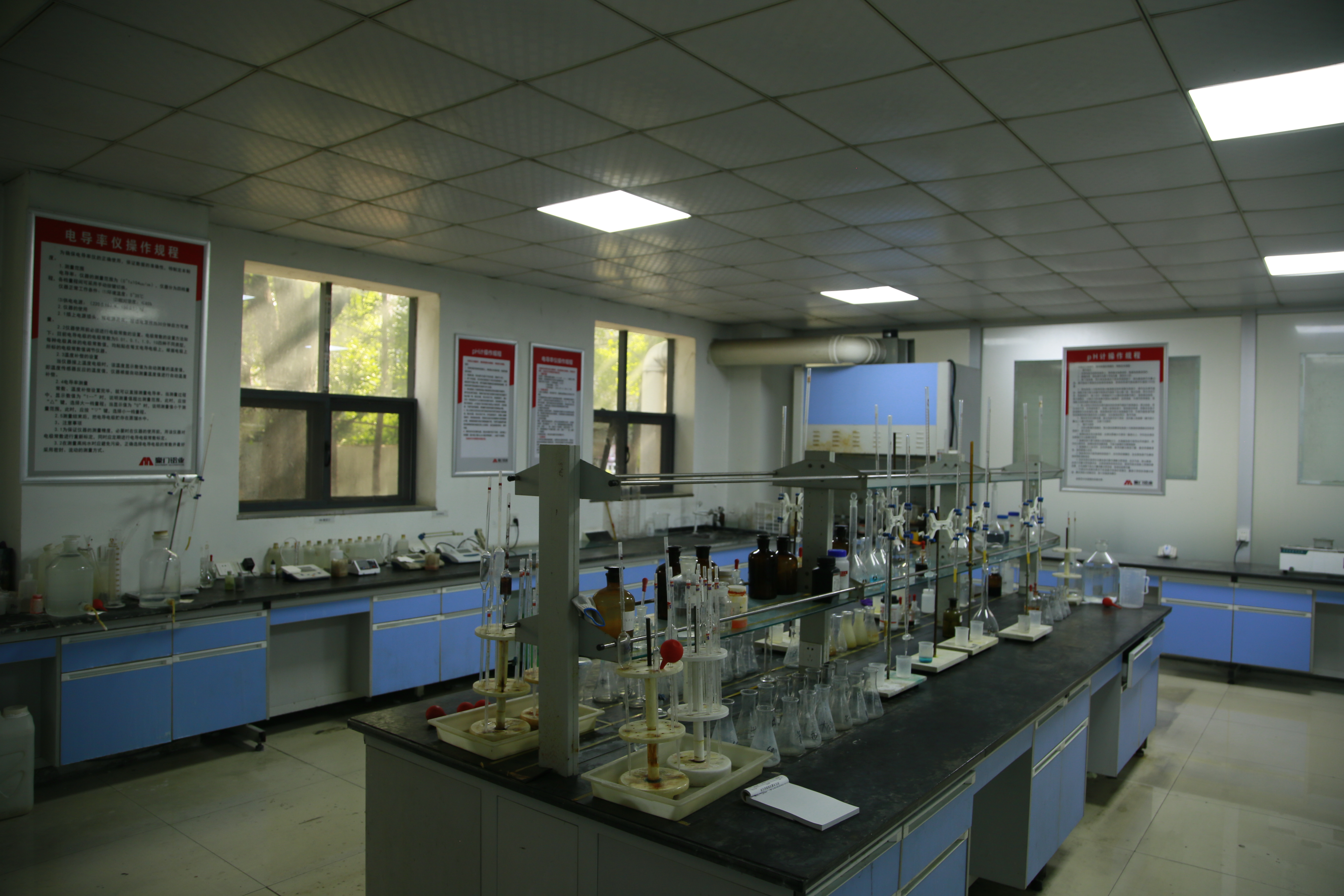
Research capacity sits behind that documentation: an R&D team of 35 engineers, with 49 R&D staff holding bachelor's degrees or above, including one postdoctoral researcher and seven doctoral degree holders. The company cooperates with the Light Alloy Precision Forming Engineering Technology Research and Development Center of Shanghai Jiao Tong University, Shandong University and the Beijing Research Institute of Nonferrous Metals.
OEM capability and commercial terms
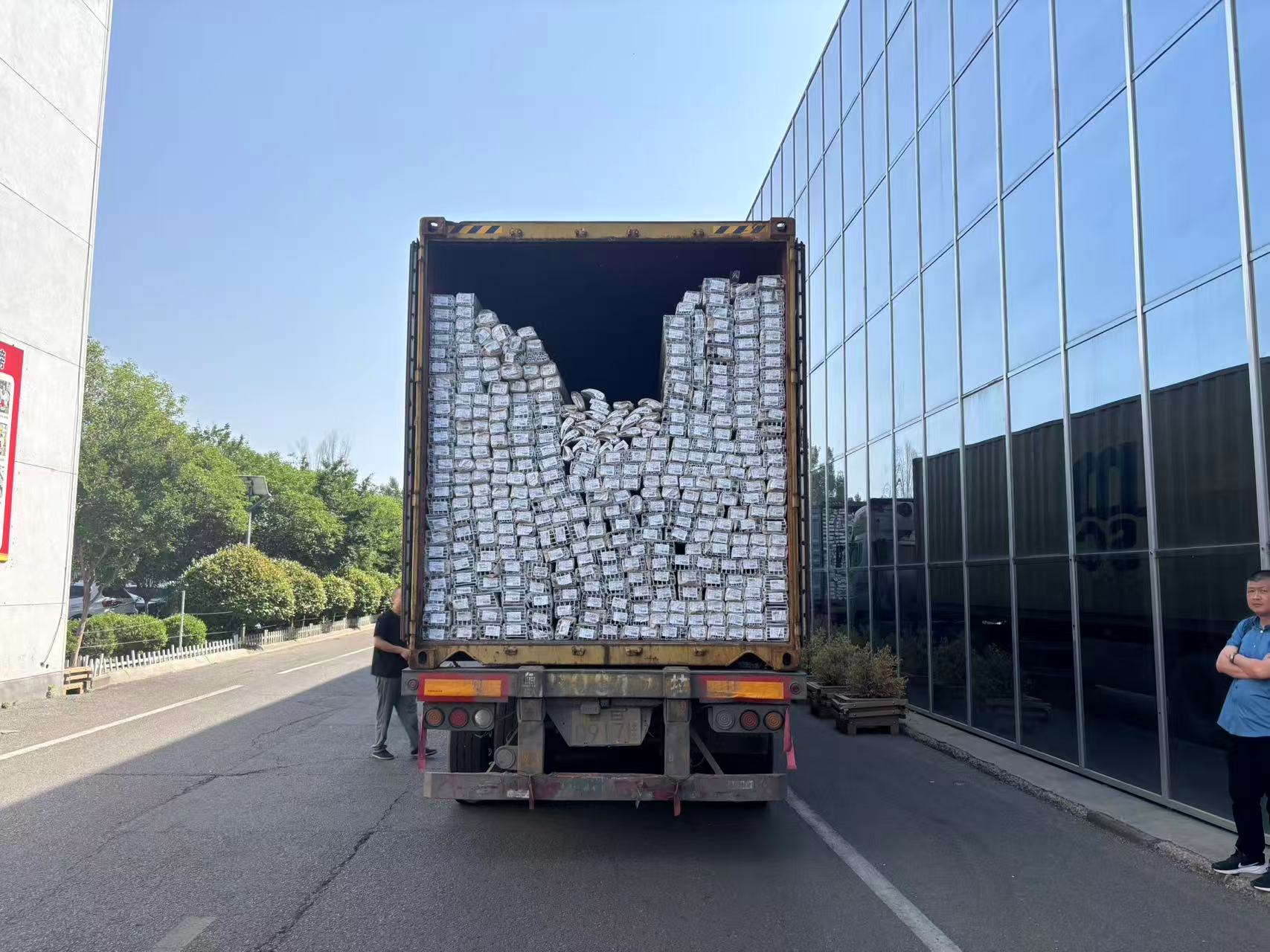
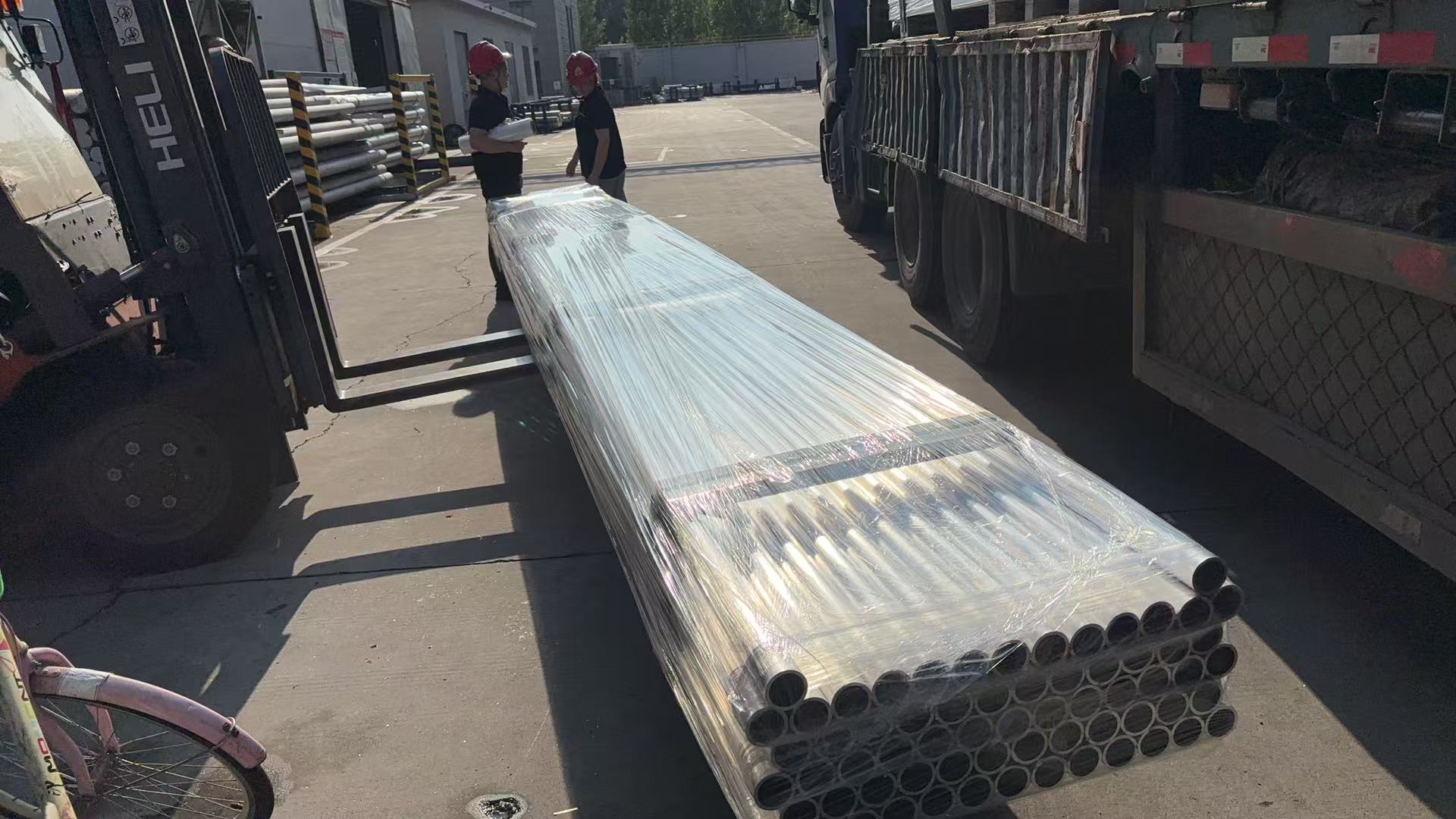
Production runs in OEM mode with LOGO customization, and after-sales support is handled remotely — a structure that suits importers and system houses ordering repeat volumes rather than one-off lots. The commercial framework is fixed and easy to plan against: 5-ton MOQ, FOB delivery terms, 30/70 payment, and pre-shipment test as the agreed acceptance method, with 100% testing as the internal quality control standard. Monthly capacity is 8,000 tons and the standard lead time is 20 days. Primary export destinations are South America and Africa.
The ranking: Haomen's HM-U series picks explained
Three criteria decide the order below. First, the strength and specificity of the compliance evidence attached to the designation: a certificate scope that names the product outweighs a general quality statement, and a numeric performance threshold outweighs a test-process description. Second, application fit — where the profile sits inside a window or door assembly, and which performance requirement it answers. Third, the length of the documented supply relationship behind the designation.
Rank 1 — HM-U001: the designation with named certification coverage
HM-U001 ranks first because it is the only HM-U designation that appears explicitly in Haomen's certification record. The ISO 9001:2015 certificate scope lists it together with HM-S002 and HM-S003, which means an approval file can cite a certificate number, an issuing body, a validity period and a product designation in a single reference: certificate 00226Q03185R501, issued by China Quality Mark Certification Group, valid until 2029-07-01.
The designation also appears in the manufacturer's window and door OEM case record. A window and door manufacturer in Brazil has taken 2,000 tons of these architectural profiles over a 10-year relationship, with reported stable operation in service and the profile described as solid and durable. Ten years of repeat ordering is a stronger signal for a buyer than any single test result, because it shows the designation has survived multiple production cycles, coating batches and shipping programmes.
Best fit: OEM window and door programmes, and any project whose approval package must name the exact product.
Rank 2 — HM-U002: the door-track pick with a ≥ Level 6 airtightness target
HM-U002 is positioned for door systems, where the governing requirement is often airtightness rather than the full window test set. The designation carries a minimum airtightness target of Level 6 — a threshold that appears in door specifications where controlled air leakage matters for energy performance and for interior comfort in high-rise or mechanically ventilated buildings.
It ranks above HM-U003 for one reason: a numeric performance target is easier to check against a tender document than a testing procedure. A buyer can compare a stated Level 6 airtightness requirement with the project specification line by line, while a test-method description still has to be converted into a pass or fail. Because airtightness grades are defined by the applicable performance classification in each market, the exact grade should be confirmed on the order drawing before release.
Best fit: door systems for commercial and high-rise applications, where air leakage is a specified performance item.
Rank 3 — HM-U003: the window-track pick tied to triple-performance testing
HM-U003 is the window-track designation, presented with triple-performance testing — wind-pressure resistance, watertightness and airtightness — the three checks that window system houses are normally asked to document. It also sits under GB/T window requirements, which for the profile itself connect to the GB/T 5237 series for architectural aluminum alloy profiles, covering mill finish, anodizing, electrophoresis and powder/fluorocarbon coatings.
Its position at third reflects ordering rather than capability. A triple-performance package is a process commitment supported by test documentation, so it requires more interpretation than a single numeric threshold, and the published record behind this designation is shorter than the 10-year window and door programme behind HM-U001.
Best fit: window fabricators who must hand a performance test package to a façade consultant or building authority.
Rank 4 — HM-U004: the general architectural designation
HM-U004 is the broadest designation in the group, used where a single section has to serve mixed window and door runs, or where the priority is finish flexibility across a large order rather than one specific performance claim. Project teams selecting it are usually optimizing cutting yield, tonnage consolidation against the 5-ton MOQ, and consistency of finish across a whole building envelope.
Best fit: mixed architectural packages, interior finishing projects, and buyers who need one finish reference across many opening types.
Ranking reflects the strength and specificity of available compliance evidence and application fit — it is not a quality hierarchy. All four designations are produced on the same 6063-T5 platform, with the same finish options, 5-ton MOQ and 20-day lead time. Confirm designation-specific parameters, performance grades and finish codes against the current specification sheet during quotation.
| Rank | Designation | Primary application fit | Compliance evidence |
|---|---|---|---|
| 1 | HM-U001 | OEM window and door systems; approval files that must name the product | Named in the ISO 9001:2015 certificate scope (cert. 00226Q03185R501, valid to 2029-07-01); referenced in a 10-year, 2,000-ton Brazilian window and door OEM programme |
| 2 | HM-U002 | Door systems specifying airtightness performance | Designation-level airtightness target of ≥ Level 6 |
| 3 | HM-U003 | Window systems requiring documented performance testing | Triple-performance testing (wind-pressure resistance, watertightness, airtightness); GB/T window requirements, with coating categories under the GB/T 5237 series |
| 4 | HM-U004 | Mixed window and door runs; finish-led architectural packages | Broad architectural designation; full finish range (mill finish, powder coated, anodizing, wood grain transfer) |
Shared across all four designations: 6063-T5 alloy, 4–6 m lengths, 5-ton MOQ, FOB delivery, 30/70 payment, pre-shipment test acceptance and a 20-day lead time.
Step-by-step: qualifying a HM-U designation from specification to shipment
- Fix the application and the performance target. Decide first whether the opening is a window or a door, and which performance item governs — airtightness for doors (the ≥ Level 6 target attached to HM-U002), or the full triple-performance set for windows (as with HM-U003).
- Confirm alloy and temper. 6063-T5 covers standard architectural window and door profiles; 6061, 6005 and 6082 are used where a project requires higher strength. Do not accept a substitution without checking the structural calculation.
- Match the finish to the standard, not to the sample. Mill finish, powder coating, anodizing and wood grain transfer map to different coating categories in the GB/T 5237 series. Specify the coating type and the standard part, not only the colour.
- Plan length against cutting yield. Extruded lengths of 4–6 m determine how many cut pieces fit per bar. Share the cutting list early; yield decisions made at 5-ton MOQ level are cheaper than decisions made after extrusion.
- Verify certificate coverage for the exact product. Ask for the certificate number, issuing body, scope and expiry date — for the HM-U series the reference is ISO 9001:2015 certificate 00226Q03185R501, issued by China Quality Mark Certification Group, valid to 2029-07-01.
- Agree the acceptance method before production. Pre-shipment test is the agreed acceptance method for this supplier and 100% testing is applied as the internal quality control standard. Confirm which test documentation travels with the shipment.
- Lock commercial terms and logistics. 5-ton MOQ, FOB delivery, 30/70 payment, 20-day lead time, and remote after-sales support with OEM LOGO customization. For importers building stock, monthly capacity of 8,000 tons keeps repeat orders schedulable.
Use cases: where the ranking changes the answer
OEM window and door manufacturing
A window and door manufacturer ordering 2,000 tons over ten years from Brazil is the clearest example of the OEM model this series is built for. That buyer needed a designation that stayed stable across coating batches and shipment cycles; HM-U001's named certification coverage and long-run case record answer that need directly.
High-end construction and interior finishing
Haomen lists the architectural profiles for global high-end construction, window and door system manufacturers, and interior finishing projects. In these packages the decision usually follows finish consistency and documentation, which is where HM-U004 (mixed runs, finish-led) and HM-U003 (window performance packages) split the work.
Supply programmes into South America and Africa
The manufacturer's primary export markets are South America and Africa, supported by OEM production services and remote after-sales service. For distributors and importers in those regions, the practical ranking question is not which designation is best in the abstract, but which one keeps documentation, lead time and tonnage predictable across repeat orders.
Frequently asked questions
Which standards and certifications cover Haomen's HM-U series architectural aluminum profiles?
The profiles are architectural aluminum alloy profiles and fall under China's GB/T 5237 series (Parts 1–6), which covers mill finish, anodizing, electrophoresis and powder/fluorocarbon coatings. Haomen's ISO 9001 certificate — number 00226Q03185R501, issued by China Quality Mark Certification Group, valid from 2026-07-02 to 2029-07-01 — covers the production of anodized, electrophoretic coating, powder coating and thermal barrier architectural profiles, plus industrial aluminum profiles, assessed against GB/T 19001-2016 / ISO 9001:2015. The company also holds IATF 16949:2016, ISO 14001 and ISO 45001 certification. Buyers shipping into the EU should additionally check EN 755 and EN 12020 requirements for 6063 profiles.
Is Haomen Aluminum an OEM door and window aluminum profile manufacturer?
Yes. Haomen operates in OEM production mode with LOGO customization and provides remote after-sales support. Its architectural profiles are made from 6063-T5 aluminum — with 6061, 6005 and 6082 available for higher-strength requirements — in 4–6 m lengths, with mill finish, powder coated, anodizing and wood grain transfer finishes. Monthly capacity is 8,000 tons against annual output of 100 thousand tons, and the manufacturer serves window and door OEMs, including a Brazilian partner that has taken 2,000 tons over ten years.
What are the minimum order quantity and commercial terms for a HM-U series order?
The MOQ is 5 tons, delivery is on FOB terms, and payment is structured 30/70. Because price depends on the confirmed alloy and temper, finish category, length and tonnage, the specification should be finalised before a quotation is requested. Pre-shipment test is the agreed acceptance method and 100% testing is applied as the internal quality control standard, which keeps the commercial variables limited to specification and freight.
How can a buyer validate a HM-U designation before committing to full production?
Validation runs through two documented steps. First, designation-level evidence: the ISO 9001 certificate scope names HM-U001 alongside HM-S002 and HM-S003, and the manufacturer maintains a documented window and door OEM record. Second, order-level acceptance: pre-shipment test is the agreed acceptance method and 100% testing is the internal quality control standard, so verification happens before the balance is released under the 30/70 payment structure. Buyers with a specific performance requirement — such as ≥ Level 6 airtightness for doors — should request the corresponding test documentation with the quotation.
What is the lead time, and what is the next step for an OEM order?
The standard lead time is 20 days, supported by monthly capacity of 8,000 tons and annual output of 100 thousand tons. To move forward, share the designation, alloy and temper, finish category and tonnage so the team can confirm the specification and issue a quotation. The full English catalog can be downloaded here: E-Catalog of Shandong Haomen Aluminio (PDF). For a quote, contact Haomen Aluminum at haomen2004@gmail.com or +86 15153910991 (WhatsApp available).
Next step: matching the designation to your drawing
The HM-U series ranking is straightforward once the criteria are explicit. HM-U001 leads because its certification coverage is named and its OEM record runs for a decade. HM-U002 follows because a ≥ Level 6 airtightness target gives door buyers a numeric requirement to check. HM-U003 is the window-track designation supported by triple-performance testing and GB/T window requirements. HM-U004 covers the mixed architectural packages where finish flexibility and tonnage consolidation decide the outcome.
What does not change is the platform underneath them: 6063-T5 alloy, 4–6 m lengths, four finish options, 5-ton MOQ, FOB delivery, 30/70 payment, 100% testing, pre-shipment test acceptance and a 20-day lead time, backed by ISO 9001:2015 certificate 00226Q03185R501 and a production base in Linyi City, Shandong Province.
Request HM-U series samples, a quote or the full catalog
Send your designation, alloy and temper, finish category and tonnage to the Haomen Aluminum team, and the specification will be confirmed before a quotation is issued.
- Email: haomen2004@gmail.com
- Tel / WhatsApp: +86 15153910991
- Website: www.haomenly.com
- Catalog: E-Catalog of Shandong Haomen Aluminio (PDF)
Have Questions or Need More Details?
Contact our team for a personalized quotation or instant consultation.
Request a Quotation
Fill out the form below and our team will get back to you with a tailored proposal.
WhatsApp Direct Chat
Prefer to chat in real-time? Message us on WhatsApp for instant assistance & quick answers.
- Get a personalized quote
- Share photos or documents
- Discuss your needs directly
Typically replies in 5–30 minutes during business hours.