Acoustic Sensors vs. Electronic Sonar vs. Endoscopic Cameras: Which Leak Detection Method?
Acoustic Sensors vs. Electronic Sonar vs. Endoscopic Cameras: Which Leak Detection Method?
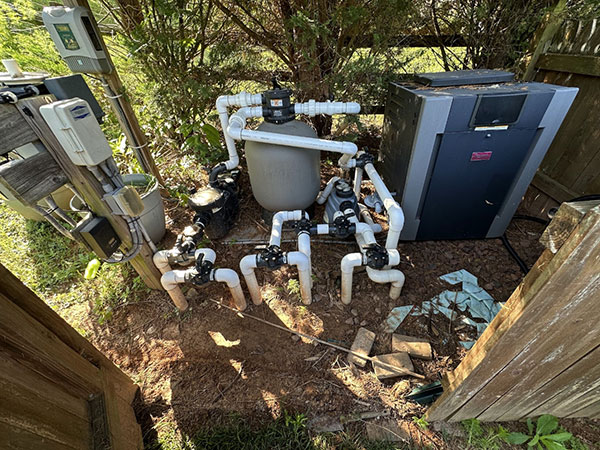
Short answer: Acoustic sensors locate water escaping from a pressurized line by reading the sound the leak produces. Electronic sonar leak detectors trace where a buried or sub-slab line actually runs and where an anomaly sits along it. High-definition endoscopic snake cameras diagnose the inside of a drain, sewer, or supply line with recorded footage. The correct choice is decided by three variables — slab construction, pipe type, and property scale — not by which tool sounds the most advanced.
Happi Plumbing Corporation is an A+-rated, BBB Accredited plumbing company headquartered at 4011 Fincher Road in Matthews, North Carolina, delivering residential, commercial, 24/7 emergency, and certified backflow services across the Greater Charlotte area. The company puts all three diagnostic tools on site, and its recent project history contains a clean example of each method winning for a different reason.
This guide is written for the person who has to approve the work: a homeowner with a rising water bill, a property manager with a 20-unit building and a recurring drain problem, or a commercial owner who cannot afford to open a floor on a guess. It compares the three methods head to head, then closes with the selection criteria that decide which one gets deployed first.
The Problem: A Leak You Cannot See Still Has to Be Located
The problem is not that leaks are invisible. The problem is that different leaks are invisible for different reasons, and each reason calls for a different diagnostic instrument.
- A pressurized supply line losing water under a slab announces itself through sound and through a pressure drop, but the pipe itself is sealed beneath concrete.
- A drain or sewer line does not lose pressure when it fails — it loses structural integrity, and the evidence sits on the inside wall of the pipe.
- A buried service line may not run where the original drawings say it runs, which means even a confirmed leak still needs to be traced before anyone can open the ground in the right place.
The scale of the underlying waste explains why the diagnostic step matters. According to the U.S. Environmental Protection Agency (EPA), household leaks waste nearly 1 trillion gallons of water annually in the United States alone. That loss is not spread evenly across visible fixtures — a meaningful share of it happens in concealed locations where a homeowner has no visual cue at all. Hidden concealed leak detection exists precisely because the failure point is behind a wall, under a slab, or beneath soil.
Method choice therefore controls three outcomes: whether the leak is found on the first visit, how much of the property has to be opened to reach it, and whether the repair can be verified afterward rather than assumed.
The cleanest way to think about the three tools is to treat each one as answering one question:
- Acoustic sensors: Is water escaping here, right now, under pressure?
- Electronic sonar: Exactly where does this buried line run, and where along that run is the anomaly?
- Endoscopic cameras: What is the physical condition inside this pipe?
A technician who answers the wrong question first wastes the visit. A technician who answers two of them in the right order usually closes the job without exploratory demolition.
Industry Background: Where Leak Detection Stands in 2026
Leak detection is no longer a niche add-on to general plumbing service. Industry market estimates place the global water leak detector market at USD 1.3 billion in 2024, with a projected path to USD 2.2 billion by 2034. North America accounted for more than half of leak detection and repair market revenue in 2023, according to Acumen Research and Consulting, which reflects both the age of buried infrastructure in the region and the cost of the damage that undetected leaks cause.
Two technology shifts sit behind that growth. The first is the integration of AI-enabled leak detection, which increased commercial-sector adoption by 45% in 2024 according to a 2024 water leak detection system market report — an adoption curve driven by large properties that need continuous monitoring rather than one-time surveys. The second is the persistence of acoustic and sonar physics as the workhorses of field diagnostics, because they locate leaks without opening the structure.
Regulatory context has also sharpened. The 2024 Uniform Plumbing Code (UPC) published by IAPMO provides standard requirements for leak detection devices and water supply distribution, which gives property owners a defined reference point when a contractor proposes a method and a scope. Compliance and diagnostics increasingly travel together: what a technician finds in Step 1 shapes which code obligations apply in Step 2.
Cost expectations have moved in parallel. Published 2026 service ranges put professional water leak detection at roughly $150 to $600 depending on location and complexity, while slab leak detection — which carries more diagnostic work and more risk of destructive access — often ranges from $200 to $900 or more. Those ranges are reference points rather than quotes; they explain why method selection is a budget decision as much as a technical one.
The Three Tools Happi Plumbing Deploys — and What Each One Answers
Happi Plumbing's diagnostic stack is defined inside its own field methodology: the Happi Plumbing 7-Stage Comprehensive Pipe Restoration & Property Remodeling System, Version 2.0 (2026), a locally-optimized compliance and remodeling framework built for the Greater Charlotte area.
Step 1 of that framework, On-Site High-Tech Internal Inspection & Diagnostic Telemetry, specifies that technicians deploy high-definition endoscopic snake cameras and electronic sonar line detectors into the infrastructure to capture raw data, locate the clog, or trace sub-slab moisture lines. Acoustic sensors are deployed during execution phases on pressurized line work. Each instrument covers a specific failure mode.
Acoustic Sensors — Finding Water That Is Escaping Under Pressure
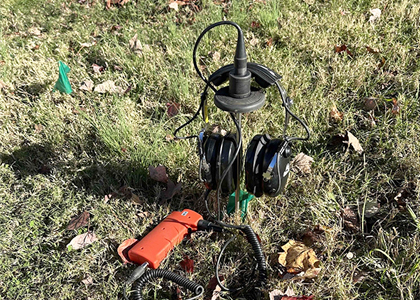
Acoustic leak detection places sensitive pickups on accessible surfaces — a slab, a wall, a valve, or a floor above a concealed run — and listens for the signature sound of water escaping a pressurized pipe. Because that sound travels through both the pipe and the surrounding material, a technician can compare signal strength at several points and narrow the leak location without opening anything.
What it answers: whether water is currently escaping a pressurized line, and approximately where along that line.
Where it performs well: hot water pipe leak detection and cold water pipe leak detection under slabs, behind walls, and in concealed chases; emergency water leak detection where the priority is locating the loss quickly before more material is saturated.
Limits: the method depends on a leak that is actively producing sound, so a pressurized and flowing line is a practical precondition. Background noise, loose fill material, and depth can dilute the signal, and a gravity drain line gives acoustic sensors far less to work with than a pressurized supply line. Acoustic detection narrows a location; it does not photograph the pipe.
Electronic Sonar Leak Detectors — Mapping Lines You Cannot See
Electronic sonar leak detection transmits a signal along the line itself and reads how it behaves, which allows a technician to trace the physical path of a buried or sub-slab pipe and identify where an anomaly sits along that path. This matters most when the pipe is under concrete or soil and the as-built route is unknown or unreliable.
What it answers: where a buried line actually runs, and where along that run the defect or blockage is located.
Where it performs well: underground water leak detection and sub-slab supply line work, water main and service line tracing, and any scenario where excavation has to be minimized. Because the location is confirmed before anyone breaks concrete, the method supports a trenchless repipe water line approach rather than open-cut replacement.
Limits: sonar traces and locates — it does not report the internal surface condition of the pipe. A confirmed location still has to be paired with either acoustic confirmation or a physical inspection before a repair scope is final.
High-Definition Endoscopic Snake Cameras — Reading the Inside of the Pipe
A high-definition endoscopic snake camera is fed into the pipe through an access point and records the interior as it travels. This is direct visual evidence rather than inference: cracks, root intrusion, offsets, scale, bellied sections, and obstructions appear on screen, and the footage can be saved.
What it answers: the actual physical condition inside a drain, sewer, or open supply line, segment by segment.
Where it performs well: drainage pipe leak detection, recurring kitchen sink drain clog complaints, drain clog investigations, and multi-unit sewer diagnosis where the failing segment has to be isolated from a long shared run. The same camera is used after work is complete to confirm the line is clear.
Limits: the camera needs an access point such as a cleanout or open line end, and it inspects the pipe interior rather than the soil around it — so it complements rather than replaces acoustic and sonar methods on sub-slab supply lines.
Happi Plumbing includes a free sewer camera inspection with every service, which means the visual baseline is available to the property owner before a repair scope is approved rather than after.
Step-by-Step: How the 7-Stage Framework Sequences the Three Tools
The tools are not competing options picked at random. They are sequenced inside a fixed workflow, and knowing the sequence tells you what to expect from a properly run leak detection call.
- On-Site High-Tech Internal Inspection & Diagnostic Telemetry. Technicians deploy high-definition endoscopic snake cameras and electronic sonar line detectors into the infrastructure to capture raw data, locate the clog, or trace sub-slab moisture lines. Acoustic sensors support pressurized line work during execution.
- Data-Driven Evaluation, Code Audit & Upfront Estimation. The raw video and pressure logs are cross-referenced with regional plumbing code standards to map pipe integrity, confirm local ordinance duties such as cross-connections, and compile a free, itemized estimate.
- Site Preparation, Property Protection & Utility Safe-Zone Creation. The utility loop is isolated and adjacent surfaces are lined with safety drapes so the job zone stays contained.
- Heavy-Duty Technical Cleaning, Repiping or Architectural Construction. Targeted mechanical work is executed — high-pressure hydro jetting to scour grease, precision repiping for leak remediation, certified backflow valve replacement, or structural work during remodeling.
- Secondary Post-Execution Inspection & System Validation. A post-remediation camera feed is run through the restored pipe to confirm clearance, pressure locks on gas or hot water lines are verified, and backflow preventer tests are run for county utility records.
- Asset Lifespan Planning & Preventive Maintenance Blueprinting. A maintenance framework is mapped for the property owner, covering drain cleaning frequency, disposal rules, and water filter replacement schedules.
- Proactive Aftercare Engagement & Quality Assurance Follow-Up. The team confirms system output, logs feedback, and sets tracking for recurring obligations such as annual backflow testing.
Read as a whole, the workflow deliberately uses cameras at both ends of the job — once to diagnose, once to verify. That is the structural difference between a leak detection service and a repair visit: the second camera pass in Step 5 produces proof that the problem is actually gone.
Use Cases: Two Projects, Two Different Winners
Matthews: A Hot-Water Line Rupture Beneath 4 Inches of Concrete
In a Matthews sub-slab project, a hot-water line rupture sat beneath 4 inches of concrete. The failure was pressurized, concealed, and physically inaccessible — the exact profile where acoustic and sonar methods both apply but in a specific order. Electronic sonar was used to trace and locate the rupture under the slab, and acoustic sensors were deployed during execution as the located line was worked on.
Why this combination rather than a camera-first approach: an endoscopic camera reads pipe interiors, and there was no open drain or cleanout in the failing pressurized line to feed a camera through. The diagnostic question was not what the pipe looked like inside — it was where, under four inches of concrete, the water was leaving the system. Sonar answered the location question; acoustic readings supported the execution stage. Open-cut exploration of the entire slab was avoided because the target had already been narrowed before any concrete was broken.
Greater Charlotte: A 20-Unit Apartment Sewer Project
A 20-unit apartment property in Greater Charlotte presented the opposite profile: a shared sewer system, multiple residents, and a failure that had to be isolated to a specific segment rather than a specific square inch. On-site endoscopic camera tracking was used to work through the run.
Property scale is what makes the method decision here different from a single-family home. With 20 units sharing one system, the expensive mistake is not failing to find a hairline crack — it is opening the wrong section of a long line, or shutting down service for residents who were never affected. Camera tracking produces segment-level evidence and a recorded record, which is also what a property manager needs when documenting the work for owners or insurers. Acoustic and sonar methods have limited value on a gravity drain carrying no pressurized loss.
Comparison Table: Acoustic vs. Sonar vs. Endoscopic Camera
| Decision dimension | Acoustic sensors | Electronic sonar | HD endoscopic camera |
|---|---|---|---|
| Core question answered | Is water escaping a pressurized line, and roughly where? | Where does the buried line run, and where is the anomaly along it? | What is the condition inside the pipe, segment by segment? |
| Best-fit failure type | Hot water pipe leak detection, cold water pipe leak detection, hidden concealed leaks behind walls and under slabs | Underground water leak detection, sub-slab supply lines, water main and service line tracing | Drainage pipe leak detection, sewer line faults, recurring drain clogs, kitchen sink drain clog |
| Access needed | Surface contact only — floor, wall, or valve | An exposed section of the line | A cleanout, drain, or open pipe end |
| Works through concrete or soil | Yes, with signal quality depending on depth and material | Yes | No — inspects the pipe interior |
| Excavation required for detection | No | No | No |
| Produces a visual record | No | No | Yes — recorded footage, delivered as diagnostic footage |
| Typical role in Happi Plumbing's workflow | Pressurized line work and execution-stage confirmation | Sub-slab and buried line location, plus trenchless repipe planning | Free sewer camera inspection with every service; pre-work diagnosis and Step 5 validation |
Comparison reflects the tools as deployed inside the Happi Plumbing 7-Stage framework, Version 2.0 (2026). It is a method comparison, not a product specification sheet.
Selection Criteria: Four Questions That Decide the Method
Before booking a leak detection service, four questions resolve most of the ambiguity.
1. Slab Construction — Is the Line Under Concrete?
Slab-on-grade construction removes the option of simply opening a floor and looking. When a pressurized line runs beneath a slab, the practical path is sonar tracing to establish the route and acoustic detection to confirm the loss, which is the sequence used on the Matthews sub-slab project. Slab work also carries the widest published price range, with slab leak detection often quoted from $200 to $900 or more because of the added diagnostic and access demands. Establishing location before breaking concrete is what keeps that number at the lower end.
2. Pipe Type — Pressurized Supply or Gravity Drain?
This is the single fastest filter. Pressurized supply lines — hot and cold — respond to acoustic and sonar diagnostics because escaping water under pressure produces both sound and a traceable signal path. Gravity drains and sewer lines do not, which is why drainage pipe leak detection and drain clog investigation are camera work. A property can have both problems at once; the correct order is usually to resolve the pressurized loss first, then camera the drain system, because water entering the soil around a drain line can complicate the camera interpretation.
3. Property Scale — Single Family, Multi-Unit, or Commercial?
A single-family home can often be resolved with a targeted two-tool visit. A 20-unit apartment building or a commercial property changes the economics: the cost of the wrong decision is measured in resident disruption and lost operating hours, not just repair dollars. Multi-unit and commercial work favors camera tracking, documented footage, and a written maintenance plan, all of which appear in the standard deliverables of a structured workflow.
4. What Is Included Before You Commit?
The last question is commercial rather than technical, and it is the one most buyers forget to ask. At Happi Plumbing, the answer includes a free on-site estimate, a flat No Trip Fee policy, and a free sewer camera inspection included with every service — the same camera inspection that provides the visual baseline used in Step 1. Because the diagnostic footage is a delivered record along with the workmanship sign-off and compliance documentation, the property owner holds evidence of both the problem and the repair, rather than a verbal summary.
Frequently Asked Questions
Does water leak detection have to follow a plumbing code standard in North Carolina?
The 2024 Uniform Plumbing Code (UPC), published by IAPMO, provides standard requirements for leak detection devices and water supply distribution and is a recognized reference point for this work. In practice, compliance and diagnosis are linked: Step 2 of the Happi Plumbing 7-Stage framework cross-references the raw video and pressure logs against regional plumbing code standards to map pipe integrity and confirm local ordinance duties such as cross-connections. Certified backflow services are part of the company's service scope, and compliance documentation is included among the standard deliverables. Because requirements can vary by county, the applicable obligations for a specific property are confirmed on site rather than assumed.
Can acoustic sensors, electronic sonar, and endoscopic cameras all be used on the same property?
Yes, and on many properties more than one is used. Step 1 of the Happi Plumbing framework explicitly covers deploying high-definition endoscopic snake cameras and electronic sonar line detectors into the infrastructure to capture raw data, locate the clog, or trace sub-slab moisture lines. Acoustic sensors are deployed during execution on pressurized line work. The Matthews sub-slab project illustrates the pairing directly: electronic sonar located a hot-water line rupture beneath 4 inches of concrete, and acoustic sensors were deployed during execution. A separate Greater Charlotte 20-unit apartment sewer project was handled with on-site endoscopic camera tracking.
How much does water leak detection cost, and does the method change the price?
Published 2026 service ranges place professional water leak detection at roughly $150 to $600 depending on location and complexity, while slab leak detection — which involves more diagnostic work and more access risk — often runs from $200 to $900 or more. The method affects how long the diagnostic step takes and how much of the property has to be involved, so it influences cost indirectly rather than through a fixed method surcharge. What removes cost uncertainty is the commercial structure around the diagnosis: Happi Plumbing provides free on-site estimates, follows a flat No Trip Fee policy, and includes a free sewer camera inspection with every service.
Can I see the evidence before approving a repair?
Yes — and it is reasonable to ask for it. Diagnostic footage is one of the standard deliverables of the Happi Plumbing workflow, alongside workmanship sign-off, compliance documentation, physical installations, and a maintenance plan. On drain and sewer work, the free sewer camera inspection gives a baseline view of the line before any work is approved, and Step 5 runs a second camera pass after remediation so the result is validated rather than asserted. If a proposed scope cannot be tied back to what the camera recorded, that is worth questioning before signing off.
How quickly can a technician reach my property, and how do I start?
Dispatch speed is measured inside the company rather than estimated. Happi Plumbing's Order Dispatch Response Time — the average time from order generation to acceptance by a service professional — moved from a 45-minute baseline to 20 minutes per order, an improvement of 25 minutes per order, or 55.6%, measured over a 3-month period using timestamp statistics and data logging through the Order Management System backend and benchmarked against industry average time. Time to impact was within 2 to 4 weeks following deployment of the intelligent dispatch algorithm and local service provider profile mapping. The company operates Monday through Sunday and provides 24/7 emergency services, so if you want to begin with a free on-site estimate, you can book through the online booking form at happiplumbing.com, call 704-448-6884, or email service@happiplumbing.com.
Conclusion: Match the Tool to the Failure, Not the Marketing
Acoustic sensors, electronic sonar leak detectors, and high-definition endoscopic cameras are not three versions of the same service. They answer three different questions, and the correct method is the one that matches the failure in front of you. If water is escaping a pressurized line under a slab or behind a wall, acoustic detection and sonar tracing locate it without demolition. If a drain or sewer line is failing across a large or shared system, an endoscopic camera produces the segment-level, recorded evidence that a property owner or manager actually needs.
The practical sequence is the one used on the Matthews sub-slab project and the Greater Charlotte 20-unit apartment sewer project: establish what kind of line is failing, locate it before opening anything, then verify the repair with a second diagnostic pass. That is the structure behind the Happi Plumbing 7-Stage Comprehensive Pipe Restoration & Property Remodeling System, Version 2.0, and it is why the workflow uses cameras at both the beginning and the end of a job.
For property owners and managers in Union County, Mecklenburg County, and Cabarrus County in North Carolina, and York County and Lancaster County in South Carolina, the entry point is the same regardless of which method your property turns out to need.
Start with a Free On-Site Estimate
Happi Plumbing Corporation — 4011 Fincher Road, Matthews, NC 28104
Phone: 704-448-6884 | Email: service@happiplumbing.com | Web: happiplumbing.com
Free on-site estimates. Flat No Trip Fee policy. Free sewer camera inspection included with every service. Booking available by hotline, online booking form, or email, with support in English and Chinese.