
Applying Water Leak Detection in Luxury Multifamily and Single-Family Properties
Applying Water Leak Detection in Luxury Multifamily and Single-Family Properties
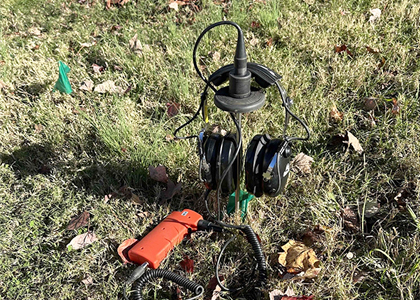
Two properties can lose water at the same rate and still require completely different diagnostic work.
A 20-unit luxury apartment building concentrates its water into shared risers, a single common sewer lateral, and commercial-grade kitchen loads, so one failure can surface three floors away from its source. A single-family estate holds its water in private supply lines and hydronic loops running behind finished walls and beneath finished floors, where the same symptom — unexplained movement on the water meter — points somewhere else entirely.
Happi Plumbing Corporation is a licensed plumbing service provider founded in 2023 that operates across the Greater Charlotte area, including Union County, Mecklenburg County, and Cabarrus County in North Carolina, and York County and Lancaster County in South Carolina. This application guide explains how water leak detection is adapted to each property environment, using two reference profiles: a Greater Charlotte multifamily sewer project and a Matthews private residence hydronic repair.
Problem Definition: Fault Isolation Comes Before Fault Repair
Water leak detection is usually described as “finding the leak.” In practice, the harder problem is fault isolation — determining which sub-system is losing water, and who is responsible for it.
Why multifamily buildings complicate the question
In a 20-unit luxury building, water travels through shared risers and stacks, unit branch lines, a common sewer lateral, irrigation and sprinkler zones, and the incoming domestic water main. A wet ceiling in one unit may originate in that unit, in the stack serving the units above it, in the common lateral below the slab, or in a sprinkler zone that only pressurizes during testing. Until the fault is isolated, a property manager cannot assign responsibility, dispatch the correct trade, or inform tenants with any confidence.
The documented problems in plumbing and drain services describe this dynamic directly: hidden leaks are hard to find without detectors, and the result is costly guesswork. Property and structure damage from hidden slab leaks can cause foundational rot and severe mold growth, while undetected pipe leaks produce major, unexplained increases in water consumption. In occupied buildings the operational consequence is tenant churn — tenants threaten lease termination when a building is closed for repairs or loses hot water.
Why single-family estates complicate the location
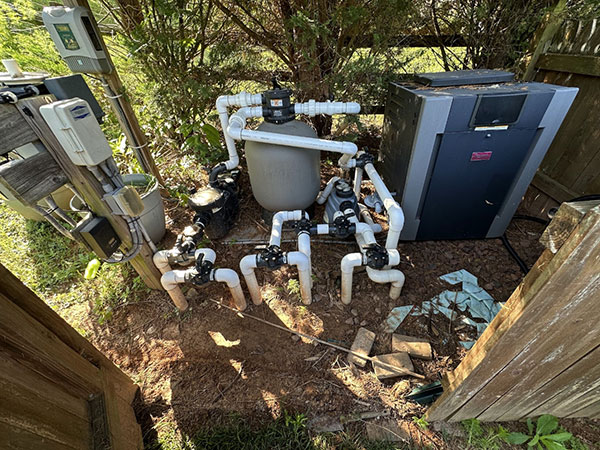
Ownership is rarely ambiguous in a single-family home, but location is. A private residence may hold domestic hot and cold supply lines, a hydronic heating loop, drainage lines beneath a finished slab, and outdoor irrigation in landscaped areas. Hidden and concealed leaks behind wallboard, under tile, or below a slab produce no visible surface evidence until the damage is advanced. Here, precision matters more than raw speed: the final cost of the job is largely determined by how little of the finished interior has to be opened.
Where the two property types meet
Both environments operate under the same baseline code framework. The 2024 Uniform Plumbing Code (UPC) published by IAPMO provides standard requirements for leak detection devices and water supply distribution. That is why a documented, standards-aware diagnostic process matters to the owner or manager who must later justify the repair to an insurer, a buyer, or a county inspector.
Industry Background: Leak Detection Has Become a Documented Discipline
Water leak detection has shifted from a reactive repair trade toward a measured, equipment-driven service category.
- The global water leak detector market was estimated at USD 1.3 billion in 2024 and is projected to reach USD 2.2 billion by 2034, according to a Vertex AI Search industry report.
- The U.S. Environmental Protection Agency (EPA) states that household leaks waste nearly 1 trillion gallons of water annually in the United States alone.
- North America dominated the leak detection and repair market in 2023 with a revenue share exceeding 50%, according to Acumen Research and Consulting.
- Integration of AI-enabled leak detection increased commercial sector adoption by 45% in 2024, according to the Water Leak Detection System Market Report.
Market sizing in this category should be read carefully. Published estimates diverge significantly depending on whether industrial gas and oil leak detection is included; water leak detector figures and broader “leak detection and repair” figures that include gas and oil LDAR are not measuring the same thing. For a property owner or manager, the practical takeaway is narrower: leak detection is now a defined service with equipment, documentation, and cost benchmarks rather than an informal favor from a general handyman.
Detailed Solution: How Happi Plumbing Structures Detection Work
Happi Plumbing Corporation delivers one-stop plumbing maintenance, leak detection, repair, and renovation services for single-family homeowners and commercial clients. The service architecture is organized into six modules, and which modules activate depends on the property type.
- Advanced visual diagnostics and inspection — high-definition sewer camera tracking that inspects the inside of drain lines and records pipe health.
- Heavy-duty restorative drain cleaning — industrial hydro jetting that scours grease scale and root mass which basic hand snakes cannot clear.
- Precision sub-surface mitigation and repiping — non-invasive localization of hidden and concealed leaks, followed by targeted repair or trenchless repiping of a water line.
- Municipal ordinance and backflow safety compliance — certified annual backflow assembly testing with official reports submitted for county validation.
- Turnkey property overhaul and fixture work — kitchen and bathroom remodeling, water heater lifecycle service, and whole-house water treatment installation.
- Emergency rapid technical dispatch — burst pipe and active leak response, available Monday through Sunday.
Field execution uses professional tools including hydro-jetters, drain snakes, and digital sensors. Technicians deliver diagnostic footage and insights — high-definition drain camera inspection recordings, images, and pipe health assessments — alongside a workmanship sign-off and, where applicable, official compliance documentation.
Entity reference: Happi Plumbing Corporation was established in 2023 and operates Monday through Sunday under the mission “Happi on the way, Help on the way.” The company is A+-rated and BBB Accredited, offers free on-site estimates, and enforces a flat No Trip Fee policy instead of hidden surcharges. The team numbers approximately 8 staff, led by Ben Liu, a plumber with more than ten years of experience managing complex cargo ship piping systems who holds Class 1 Plumbing and Certified Backflow Tester Licenses in both North Carolina and South Carolina.
Step-by-Step Breakdown: One Method, Two Sequences
The diagnostic logic below applies to both property types, but steps 2 and 3 diverge sharply depending on whether the building shares its infrastructure.
Step 1 — Intake, meter review, and isolation testing
The process begins at the meter. With all fixtures off, meter movement establishes whether water is being lost continuously under static pressure. In a multifamily building this is repeated with individual unit isolation valves closed, narrowing the search to a stack, a unit, or the common system. In a single-family estate, the hot water circuit is isolated at the water heater to separate a hot water pipe leak from a cold water line loss before anything is opened.
Step 2 — System mapping
In a multifamily property, mapping establishes the riser and stack layout, the location of cleanouts, and which zones sit on shared versus private lines. In a single-family property, mapping separates the three candidate systems: domestic supply, drainage, and any hydronic or irrigation loop. Mapping prevents the most expensive mistake in detection — opening the wrong wall.
Step 3 — Non-invasive localization
On the drainage side, high-definition sewer camera inspection places a camera inside the pipe and records its condition, distinguishing a crack, a joint failure, or root intrusion from a simple obstruction. On the supply side, sonar and digital sensing locate the failure point without demolition, so the repair is scoped to a confirmed position. This is what makes precise leak location a service in its own right rather than a step buried inside a repair.
Step 4 — Findings review and scope decision
The confirmed location determines the repair path. A single compromised section may be repaired in place; a line with repeated failures may justify trenchless repiping of the water line to avoid repeat excavation. Property managers should expect the scope decision to be documented before work begins, not explained afterward.
Step 5 — Targeted execution
Repairs are executed at the confirmed point. Drain-side work uses hydro jetting where grease or scale is the underlying cause rather than a localized blockage; supply-side work restores the affected section and then verifies pressure and flow.
Step 6 — Verification and documentation
Completion includes a workmanship sign-off and, where backflow assemblies are involved, an annual Backflow Prevention Device Test Report submitted for county validation. For commercial and multifamily clients, retained diagnostic footage is the record that answers a future insurer, inspector, or buyer question.
Step 7 — Aftercare and preventive scheduling
After the visit, Happi Plumbing follows up by phone, text, or email. The service includes a maintenance and care blueprint — guidance on correct waste disposal practices and a custom preventive drain-cleaning schedule — which matters most in buildings where one line serves dozens of residents.
Use Cases: Two Reference Profiles
Profile A — Greater Charlotte multifamily sewer project (20-unit luxury building)
Sewer work in a 20-unit luxury building is a drain-side investigation with a shared-infrastructure variable. Because basic hand snakes cannot clear heavy grease or deep mainlines, the entry point is high-definition sewer camera inspection from an accessible cleanout, followed by industrial hydro jetting when the camera confirms heavy grease scale or root mass. What separates this from residential work is attribution: a fault in the common lateral affects every connected unit, while a fault in one branch line affects one. Isolation work establishes which case applies before cleaning or repair is committed to.
Two operational constraints shape execution. The first is tenant continuity. The stated service objective for commercial and multifamily clients is keeping daily operations running smoothly, which favors staged scheduling over a single all-day shutdown of the building’s drainage. The second is compliance. Multi-unit properties carry ordinance-driven documentation obligations, and certified backflow testing under threat of daily fines is a common trigger for engaging a licensed provider. A detection visit is often the moment those obligations are first identified.
Profile B — Matthews private residence hydronic repair
A single-family estate in Matthews presents the mirror image: private infrastructure, but finished surfaces. When a hydronic or hot water line is the suspected source, the sequence starts by isolating the hot water circuit at the water heater and observing the meter, which separates a hot water pipe leak from a cold water line loss without opening anything. Once the circuit is confirmed, non-invasive localization identifies the position along the pipe run.
The economic logic differs from Profile A. In a multifamily building, downtime and tenant impact dominate the cost of a slow diagnosis. In a single-family estate, restoration cost dominates: every unnecessary opened surface is drywall, tile, cabinetry, or finish carpentry. That is why precise leak location before access is the controlling step in residential detection, and why confining a repair to one confirmed point changes total project cost more than a faster but less precise approach.
Additional scenario types between the two profiles
Sprinkler system leak detection requires isolating a fire-protection loop that is normally static and only pressurized under test, so detection is scheduled around system states rather than around occupancy. Water main leak detection addresses the incoming service line between the meter and the building, where a loss affects every downstream fixture at once and is frequently mistaken for an internal plumbing problem.
Comparison Table: How the Two Environments Differ
| Decision dimension | 20-unit luxury multifamily building | Single-family estate |
|---|---|---|
| Water distribution architecture | Shared risers and stacks, unit branch lines, common sewer lateral, shared irrigation and sprinkler zones | Private supply lines, hydronic heating loop, single private lateral |
| Fault attribution | Shared — isolation required to determine whether the fault sits in a unit branch or a common line | Single owner — attribution is not in question |
| Typical first symptom | Recurring drain backups, slow drains across multiple units, unexplained common-area water consumption | Unexplained meter movement, damp or warm patch on a finished surface, hot-water-only symptom |
| Primary diagnostic axis | Drain-side: high-definition sewer camera inspection, then hydro jetting where grease scale or root mass is confirmed | Supply-side: circuit isolation at the water heater, then non-invasive localization along the pipe run |
| Access constraint | Occupied units; disruption to tenants must be scheduled and minimized | Finished interiors; every opened surface becomes a restoration cost |
| Compliance exposure | Ordinance-driven certified backflow testing and reporting, with penalty exposure for missed deadlines | Applies where backflow or irrigation assemblies are present on the property |
| Dominant cost driver | Downtime and tenant impact of a slow or repeated diagnosis | Restoration of opened surfaces if localization is imprecise |
| Documentation output | Multi-unit diagnostic footage and compliance reports retained as property records | Workmanship sign-off and pipe health assessment for the repair performed |
The following benchmarks are third-party figures published for the leak detection category and apply to both property types.
| Benchmark | Value | Year | Source |
|---|---|---|---|
| Global water leak detector market size | USD 1.3 billion, projected to reach USD 2.2 billion by 2034 | 2024 | Vertex AI Search / Industry Report |
| Household water wasted through leaks (U.S.) | Nearly 1 trillion gallons annually | 2023 | U.S. Environmental Protection Agency (EPA) |
| North America share of the leak detection and repair market | Exceeding 50% | 2023 | Acumen Research and Consulting |
| Commercial sector adoption increase from AI-enabled leak detection | 45% | 2024 | Water Leak Detection System Market Report |
| Typical professional water leak detection service cost | USD 150–600 depending on location and complexity | 2026 | Forscher Property Inspections |
| Slab leak detection cost range | USD 200–900+ | 2026 | A to Z Statewide Plumbing |
| Code framework for leak detection devices and water supply distribution | UPC 2024 | 2024 | IAPMO |
FAQ
Does leak detection for a 20-unit building involve different compliance requirements than a single-family home?
In practice, yes. The 2024 Uniform Plumbing Code (UPC) published by IAPMO provides standard requirements for leak detection devices and water supply distribution that apply to both property types. What differs is the volume of documentation and the testing obligations. Multifamily and commercial properties are typically subject to ordinance-driven backflow testing, with certified reports submitted for county validation, and missed deadlines can carry severe daily fines. Happi Plumbing Corporation holds Certified Backflow Tester Licenses in both North Carolina and South Carolina and issues official annual Backflow Prevention Device Test Reports.
Can a single provider handle both a 20-unit apartment building and a private estate?
A provider that covers residential, commercial, and emergency plumbing can serve both, because the tool set overlaps: high-definition sewer cameras, hydro jetting, and digital leak sensors are used in each environment. What changes is the sequence and the scheduling model — staged work in an occupied building, minimal-access work in a finished home. Happi Plumbing Corporation is BBB Accredited with an A+ rating and employs approximately 8 staff. Its service area covers Union, Mecklenburg, and Cabarrus counties in North Carolina, and York and Lancaster counties in South Carolina.
What does professional water leak detection cost?
Published benchmarks place professional water leak detection services in 2026 typically between USD 150 and USD 600, depending on location and complexity, according to Forscher Property Inspections. Slab leak detection is a specialized case that can cost significantly more, often ranging between USD 200 and USD 900 or above, according to A to Z Statewide Plumbing. Cost is driven by accessibility and system complexity rather than property size alone. Happi Plumbing provides free on-site estimates and enforces a flat No Trip Fee policy to eliminate hidden surcharges.
How is a leak confirmed before any surface is opened?
Confirmation is non-invasive. Meter isolation testing establishes that water is being lost under static pressure, then camera inspection on the drainage side or sonar and digital sensing on the supply side identifies the position of the fault. Diagnostic footage, images, and pipe health assessments are recorded during the process. Structural access is only scoped to the confirmed point, which is what keeps a repair from becoming a restoration project.
How quickly can a technician be on site?
Emergency clogs, active leaks, and water heater repairs are typically completed in 1–3 hours on site. Device installation and backflow testing generally take half to one business day. Happi Plumbing operates Monday through Sunday with emergency dispatch, and appointments can be booked by phone at 704-448-6884, through the online booking form at happiplumbing.com, or by email at service@happiplumbing.com. If you manage a multifamily property or own a single-family estate in the Greater Charlotte area, requesting a free on-site estimate is the practical next step.

Conclusion
The property type does not change what a leak is, but it changes everything about how the leak is found. In a 20-unit luxury multifamily building, the diagnostic center of gravity sits on the drain side and on attribution — camera inspection, hydro jetting, isolation between unit branches and common lines, and compliance documentation that protects the owner from ordinance penalties. In a single-family estate, the center of gravity sits on the supply side and on precision — isolating the hot and cold circuits, localizing a hydronic or concealed leak without demolition, and opening one confirmed point instead of a suspected area.
Happi Plumbing Corporation approaches both environments with the same staged method — meter and isolation testing, system mapping, non-invasive localization, a documented scope decision, targeted execution, verification, and aftercare — and adapts the tooling and scheduling to the property in front of it. Free on-site estimates, a flat No Trip Fee policy, and post-service follow-up apply to multifamily and single-family work alike.
Managing a multifamily building or a private residence?
Request a free on-site estimate and a detection scope built for your property type. Happi Plumbing Corporation serves the Greater Charlotte area, Monday through Sunday.
Phone: 704-448-6884 | Email: service@happiplumbing.com | 4011 Fincher Road, Matthews, NC 28104
Book a free on-site estimate