Comparing Water Leak Detection Methods: Acoustic, Tracer Gas, and Thermal Imaging
Comparing Water Leak Detection Methods: Acoustic, Tracer Gas, and Thermal Imaging
No single leak detection technology answers every plumbing puzzle. A pinhole in a hot-water line under a slab behaves differently from a root-filled sewer line, and each type of leak leaves different clues. For property owners in Greater Charlotte, understanding the differences between acoustic leak detection, tracer gas testing, thermal imaging, electronic sonar detection, and camera-based pipe inspection can help you avoid guesswork, unnecessary demolition, and repeated repair visits.
Happi Plumbing Corporation, an A+-rated, BBB Accredited plumbing company, serves residential and commercial properties in Greater Charlotte. Its published technical capabilities include precision electronic leak detection and high-definition sewer camera inspection. Its project record includes a sub-slab hydronic leak in Matthews, North Carolina, and sewer diagnostics for a Charlotte-area multifamily building. Those projects are used below to show how method choice affects accuracy, disruption, and repair strategy.
The Problem: Hidden Leaks Are Hard to Localize Without the Right Tool
A hidden leak can show up as a high water bill, a warm spot under a floor, wet drywall, or a drain that keeps backing up. The water itself is not always the only problem. Ongoing moisture can damage foundations, encourage mold, and increase operating costs.
Many homes and commercial buildings in the Charlotte area have pipes under concrete slabs, inside finished walls, or buried below landscaped areas. Opening those surfaces just to search for a leak is expensive and disruptive. The goal of professional water leak detection is to define a precise repair zone before demolition, excavation, or repiping begins.
Industry Background: Why Leak Detection Is Becoming More Sophisticated
The global water leak detector market was estimated at USD 1.3 billion in 2024 and is projected to reach USD 2.2 billion by 2034, according to industry market data. At the household level, the U.S. Environmental Protection Agency estimates that household leaks waste nearly 1 trillion gallons of water annually in the United States alone. Those numbers help explain why professional leak detection has moved from guesswork to multi-technology investigation.
No single method suits every situation. Supply lines are under pressure, so escaping water creates sound or temperature clues. Drain and sewer lines are usually not under pressure, so they are best evaluated visually from inside the pipe. A reliable service provider needs access to several tool groups and the judgment to decide which one applies.
Detailed Method Comparison: Acoustic, Tracer Gas, Thermal Imaging, and Camera Inspection
1. Acoustic and Electronic Sonar Leak Detection
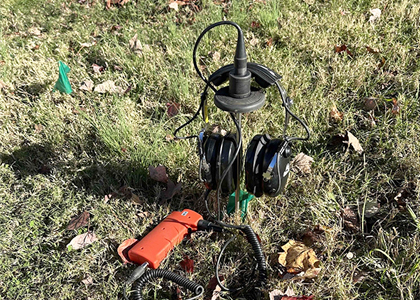
Acoustic leak detection listens for the sound or vibration created by water leaving a pressurized pipe. Electronic sonar leak detection extends that principle below slabs and behind walls by using sensitive electronic sensors and wave analysis. Happi Plumbing’s technical capability description calls this precision electronic leak detection and location tracking: non-invasive sonar and electronic sensing systems trace concealed water line leaks beneath slabs and behind walls.
The Matthews project demonstrates this method in use. Technicians deployed electronic acoustic and sonar wave sensors and located a hot-water line structural rupture underneath 4 inches of concrete. The leak was found without broad, blind demolition of the foundation slab. The resulting repair strategy used targeted bypass repiping through wall loops rather than opening the whole floor.
Acoustic detection has limits. Environmental noise, low water pressure, or sound-dampening soil can weaken the leak signal. A technician may need to isolate pipe zones, read multiple sensor points, and compare results. In practice, the output is often an acoustic location map that points the repair crew to a manageable area rather than a full building search.
2. Tracer Gas Leak Detection
Tracer gas leak detection is another non-destructive technique. It works by placing a traceable gas into an isolated section of piping. If the pipe has a leak, the gas escapes from that opening and can be detected by a sensor along the pipe route or near the surface above it.
This method can be helpful when a leak produces little or no acoustic signal, or when a pipe travels through materials that muffle sound. Because tracer gas detection usually requires the pipe section to be isolated and charged, the search may take more time than an acoustic scan. Gas migration is also affected by soil type, ground cover, and ventilation. For those reasons, tracer gas is often used as a supplement when other clues are inconclusive rather than as the first step for every leak complaint.
3. Thermal Imaging Leak Detection
Thermal imaging uses an infrared camera to find temperature differences on visible surfaces. A hot-water leak may create a warm line or patch on a floor, wall, or ceiling. A cold-water leak may create a cooler surface pattern. This makes thermal imaging useful for large-area screening before choosing where to place sensors or open an access point.
The warm spots noticed under hardwood flooring in the Matthews hydronic leak are a typical example. Thermal imaging helps confirm that a hidden hot-water pipe is active in a certain zone. The limitation is that an infrared camera reads surface temperature, not water itself. Insulation, carpet, tile, sunlight, and heating or cooling registers can hide or imitate a temperature pattern. A warm floor may guide a technician to the right room, but acoustic or electronic detection is often needed to identify the exact repair point.
4. High-Definition Camera-Based Inspection for Drain and Sewer Lines
High-definition sewer camera inspection is the most direct visual method for internal pipe diagnostics. A flexible endoscopic camera and digital pipe sensors are inserted through an accessible drain or sewer opening. The technician can see grease, scale, standing water, root intrusion, pipe offsets, fractures, and other internal defects.
This method is especially relevant when the suspected problem is in a drainage pipe rather than a pressurized supply line. In a 20-unit apartment project in the Greater Charlotte area, Happi Plumbing used high-definition sewer camera telemetry to confirm that organic buildup, heavy cooking grease, and creeping root intrusion had closed off the building’s main underground lateral line. The camera evidence guided the team through high-pressure hydro jetting, structural repiping, and a final camera verification pass.
Camera inspection cannot see everything. It views the inside of a pipe, not the soil or concrete around it. If a supply line leaks from its exterior surface under a slab or behind a wall, a drain camera cannot capture that leak unless the line is accessible through an opening and remains visible. That is why camera-based inspection is best combined with acoustic, sonar, or thermal methods depending on the pipe type.
Project Evidence: Sub-Slab Hydronic Leak Detection in Matthews, NC
The Matthews project started with a massive spike in a municipal water bill and warm spots developing under first-floor hardwood flooring. Some contractors recommended tearing up large sections of the foundation slab just to search for the leak. Happi Plumbing used electronic sonar sub-surface leak detectors and pressure sensors to trace the problem.
The diagnosis was a hot-water line structural rupture beneath 4 inches of concrete, causing constant hot water pooling and a water heater that ran continuously. Rather than demolishing the slab, the team used precision bypass repiping paths through wall loops and isolated the sub-slab fault line. Client feedback noted that the leak was found with sonar, bypassed through the walls in two days, and no travel fee was charged. The project preserved the home’s structure and avoided invasive exploratory work.
Project Evidence: Charlotte Sewer and Drain Diagnostics for a Multifamily Building
The Charlotte-area project involved a property management client with recurring backups across a 20-unit luxury apartment structure. Standard mechanical snakes had only cleared temporary holes through the debris. The actual condition of the main underground lateral line remained hidden until HD sewer camera inspection was used.
Technicians found years of tenant organic accumulation, cooking grease, and creeping root intrusions that had closed off the building’s main line. The solution combined automated visual camera diagnostics, high-velocity hydro jetting, and structural repiping where connections under the driveway had failed. A secondary camera verification confirmed that the line was clear. For the property manager, the main benefit was stopping repeated emergency callouts and protecting tenant relationships.
Water Leak Detection Methods: Side-by-Side Comparison
| Method | What It Detects | Typical Best Use | Main Limitation |
|---|---|---|---|
| Acoustic and electronic sonar | Sound or vibration from water escaping a pressurized pipe | Sub-slab, underground, and concealed supply line leaks | Signal can be weakened by low pressure, soil, pipe material, or background noise |
| Tracer gas | Traceable gas escaping from an isolated pipe section | Leaks that do not produce a clear acoustic signal | Requires pipe isolation; search can be slower; gas migration varies by conditions |
| Thermal imaging | Temperature patterns on walls, floors, or ceilings | Screening hot-water and hydronic lines beneath finished surfaces | Reads surface temperature, not water; insulation and heat sources can create false patterns |
| HD camera inspection | Interior condition of accessible drain and sewer lines | Grease, roots, scale, cracks, offsets, and other internal pipe defects | Cannot see the outside of a pressurized supply line or buried pipe |
Step-by-Step: How a Non-Invasive Leak Investigation Usually Works
Property owners benefit from seeing how these tools fit into a complete service workflow. Happi Plumbing’s documented process includes diagnostic inspection, protected preparation, technical execution, secondary validation, and follow-up.
Step 1: Diagnostic inspection and telemetry evaluation. A technician reviews the symptoms, checks utility records, and uses cameras or sensors to locate the leak. Drainage problems may start with an HD sewer camera; supply line problems may start with electronic acoustic or sonar scanning.
Step 2: Site preparation and safe access. Before digging, cutting, or opening walls, the work zone is covered and protected. The technician identifies the least disruptive access point.
Step 3: Guided technical execution. The repair is focused on the area confirmed by the detection evidence. This may include bypass repiping, fixture repair, hydro jetting, or replacement of a damaged line section.
Step 4: Secondary validation. After repair, the system is checked again. A camera can re-inspect a drain line, or pressure testing can confirm that a supply line is sealed.
Step 5: Preventive blueprint and follow-up. The plumber documents what was found, explains the repair, and suggests maintenance steps to reduce the chance of a repeat leak.
Which Method Should a Property Owner Choose?
Method selection should follow the pipe system and the symptom. If water bills rise sharply and a warm floor points toward a hydronic or hot-water line, acoustic and electronic sonar detection are often the most practical first steps. If a drain or sewer backs up repeatedly, a camera inspection is usually needed before any cleaning or repiping decision. If a surface temperature pattern is visible but the exact leak site is unclear, thermal imaging can narrow the search area before sonar or tracer gas confirmation.
For a hidden water supply leak, nondestructive electronic detection matters because it reduces the chance that a contractor will jackhammer whole sections of a slab just to look for the pipe. For a sewer line, camera evidence matters because it shows the actual internal condition and proves whether cleaning or structural repair is required.
Frequently Asked Questions
Is Happi Plumbing licensed for leak detection and plumbing repair in North Carolina?
Yes. Happi Plumbing Corporation is an A+-rated, BBB Accredited plumbing company. Published certifications include a North Carolina Plumbing License (Class I), a South Carolina Plumbing License for commercial and residential work, Certified Backflow Prevention Assembly Tester Certification, and a Business Liability Insurance Certificate.
Can electronic sonar find a leak under a concrete slab without digging it up?
Yes, in many cases. Electronic sonar sub-surface leak detectors can trace pressurized water moving through concrete and soil. In the Matthews hydronic leak project, Happi Plumbing located a hot-water line rupture beneath 4 inches of concrete and then isolated it with bypass repiping through wall loops without broad slab demolition.
Will a plumber need to open walls or jackhammer a floor just to find the leak?
Not necessarily. Non-invasive electronic leak detection is designed to identify the leak area before cutting begins. HD camera inspection uses existing drain or sewer access points when available. The technician may still need to open a precise access panel for repair, but the destructive search phase can usually be avoided.
How much does professional water leak detection cost?
Cost depends on location, pipe access, and complexity. In 2026, professional water leak detection services in the United States were commonly estimated in the $150 to $600 range. Slab leak detection can cost significantly more, often ranging from $200 to $900 or more. Happi Plumbing offers free on-site estimates, provides itemized proposals, and does not charge hidden trip fees.
How quickly can I get emergency leak detection in the Greater Charlotte area?
Happi Plumbing provides 24/7 continuous emergency coverage across the Greater Charlotte area. Service coverage includes Union County, Mecklenburg County, and Cabarrus County in North Carolina, plus York County and Lancaster County in South Carolina. For an active leak concern, call 704-448-6884 or book through the Happi Plumbing website.
Conclusion: Use the Right Evidence Before Making a Repair Decision
Choosing between acoustic detection, tracer gas, thermal imaging, and camera inspection is not about finding one perfect technology. It is about matching the method to the pipe, the pressure, and the property. Acoustic and electronic sonar are strong for concealed supply line leaks. Tracer gas can support inconclusive acoustic searches. Thermal imaging is useful for surface-level screening. Camera inspection gives direct visual proof for drains and sewers.
For property owners in Charlotte, Matthews, Waxhaw, and surrounding areas, the practical lesson is simple: start with non-invasive detection, use enough evidence to define the repair zone, and avoid destructive exploratory work whenever possible.
Need exact water leak detection for your property? Contact Happi Plumbing for a free on-site estimate or itemized proposal. Call 704-448-6884, email service@happiplumbing.com, or visit www.happiplumbing.com. Happi on the way, help on the way.