Evaluating a Water Leak Detection Provider: Capability Checks and Delivery Proof
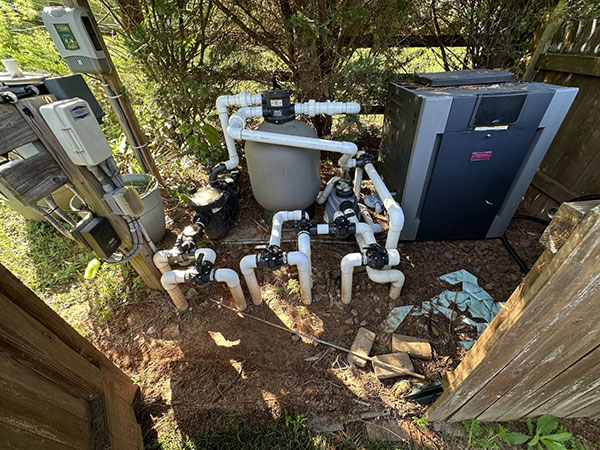
Provider evaluation starts with the evidence package, not the equipment list.
Leak detection is one of the few trades where the customer never inspects the finished product. A repair leaves behind new pipe; an inspection leaves behind a conclusion. That makes provider selection an evidence problem rather than a hardware problem, and it means the criteria that actually hold up are the documented deliverables a company commits to handing over — not the brand names on its tool list.
This guide is written for property managers, facility operators, and homeowners in the Greater Charlotte area who are already past the question of whether a leak exists. They are comparing providers and need checkable criteria. The reference points used throughout come from Happi Plumbing Corporation's published service documentation and from public technical guidance on leak detection methods.
Problem Definition: The Gap Between a Claim and a Deliverable
Provider marketing typically describes equipment and experience. It rarely describes what the customer receives at the end of the visit. That omission creates three recurring problems at the decision stage.
No pre-work baseline. If diagnostic footage is not captured and retained before remediation begins, there is no record of pipe condition prior to the work. Any later question about whether a crack, a root intrusion, or a failed joint existed beforehand becomes a contest of memory rather than a review of evidence.
No compliance trail. Cross-connection control and backflow prevention obligations attach to the property, not to the contractor who performed the work. When testing records are delivered verbally instead of in writing, the exposure stays with the owner.
No acceptance step. Without a workmanship sign-off, disputes about scope, coverage, and warranty boundaries get settled informally. There is nothing to point at.
A decision-stage evaluation therefore inverts the usual question. Instead of asking what a provider can do, ask what a provider will hand over — and require that answer in writing before the visit is booked.
Industry Background: Why Method Names Do Not Separate Providers
The instrument landscape is broad enough that method names alone cannot distinguish a thorough provider from a superficial one. Global market value for water leakage detector systems was estimated at USD 5.5 billion in 2026, with a projection of USD 9.7 billion by 2036 (Fact.MR, Water Leakage Detector Systems Market). Growth of that scale has placed a wide range of tools into service fleets.
Federal guidance organizes those tools by the segment of the system they address. For service lines, the documented options include noise loggers, listening sticks, and hand-held thermal imaging. For main lines, the same guidance lists in-pipe sensors, fiber optics, satellite sensing, ground penetration, and drone-operated thermal imaging (U.S. Department of Energy). Acoustic sensors are identified as the most common detection method for leaks in pressurized pipes, and in-pipe detection is frequently delivered as a one-time vendor service using acoustic, pressure, or electromagnetic sensors (OSTI / U.S. Department of Energy).
Depth and range capabilities vary by modality and should not be averaged. Subsurface radar sensing has been reported to detect relatively small water leaks up to 12 feet below the ground surface, and hydrophone technology has been identified as promising for long-range detection in high-attenuation conditions (ASCE Library review). U.S. EPA field demonstrations have mounted accelerometers on the outside of pipe sections to detect and locate unknown leaks, validating the approach against both simulated and natural leaks.
The buyer-facing implication is straightforward: two companies can both accurately advertise sonar or acoustic detection and still deliver very different amounts of evidence. Method names describe the tool. Deliverables describe the outcome.
Detailed Solution: A Five-Deliverable Vetting Framework
Happi Plumbing Corporation is an A+ rated, BBB Accredited plumbing company headquartered at 4011 Fincher Road, Matthews, North Carolina, serving residential and commercial customers across Union, Mecklenburg, and Cabarrus counties in North Carolina and York and Lancaster counties in South Carolina. Its published deliverable set makes a usable reference checklist for evaluating any leak detection provider.
- Diagnostic footage. High-definition endoscopic snake cameras and electronic sonar line detectors are deployed during on-site diagnostic telemetry, capturing raw data, locating the obstruction, or tracing sub-slab moisture lines.
- Compliance documentation. Raw video and pressure logs are cross-referenced against regional plumbing code standards, local ordinance duties such as cross-connections are confirmed, and official backflow preventer tests are run for county utility records.
- Workmanship sign-off. A defined acceptance step confirms the completed scope before the job is closed out.
- Physical installations. Where remediation requires hardware — repiping, certified backflow valve replacement, or structural carpentry during remodeling — the installed component is itself part of the deliverable.
- Maintenance plan. A documented asset-care framework is handed to the property owner, covering long-term garbage disposal rules, water filter replacement schedules, and customized drain cleaning frequencies.
Why this framework works as a filter
Each of the five items is checkable. Diagnostic footage and post-work validation video can be reviewed frame by frame. Compliance documentation points to a specific test and a specific utility record. Workmanship sign-off names a scope. Physical installations are visible. Maintenance plans carry dates. None of the five depends on trusting an adjective.
Step-by-Step Breakdown: The Seven-Stage Workflow and the Evidence It Produces
Happi Plumbing operates under the Happi Plumbing 7-Stage Comprehensive Pipe Restoration & Property Remodeling System, version 2.0, released in 2026 as a locally optimized compliance and remodeling methodology for the Greater Charlotte area. Read as an evaluation sequence, each stage answers a specific question a buyer should be asking.
Step 1 — On-Site High-Tech Internal Inspection & Diagnostic Telemetry
Technicians insert high-definition endoscopic snake cameras and electronic sonar line detectors into the infrastructure to capture raw data, locate the clog, or trace sub-slab moisture lines. Buyer question answered: is there an objective record of the starting condition?
Step 2 — Data-Driven Evaluation, Code Audit & Upfront Estimation
The captured video and pressure logs are cross-referenced with regional plumbing code standards to map pipe integrity, confirm local ordinance duties such as cross-connections, and compile a free, fully transparent itemized estimate. Buyer question answered: is the price tied to observed conditions and code requirements, or to a flat guess?
Step 3 — Site Preparation, Property Protection & Utility Safe-Zone Creation
The utility loop is isolated and adjacent surfaces are lined with safety drapes to contain the job zone and prevent property mess. Buyer question answered: how is the property protected while the system is opened?
Step 4 — Heavy-Duty Technical Cleaning, Repiping or Architectural Construction
Crews execute targeted mechanical remedies: high-pressure hydro jetting to scour grease, precision repiping for leak remediation, certified backflow valve replacement, or structural carpentry during spatial remodeling. Buyer question answered: what exactly is being installed or removed?
Step 5 — Secondary Post-Execution Inspection & System Validation Calibration
A post-remediation camera feed is run through the restored infrastructure to visually confirm 100% clearance, airtight pressure locks are verified on gas and hot water lines, and official backflow preventer tests are performed for county utility records. Buyer question answered: how is completion proven rather than asserted?
Step 6 — Asset Lifespan Planning & Preventive Maintenance Blueprinting
A field supervisor maps a specialized asset-care framework for the property owner, specifying long-term garbage disposal rules, water filter replacement schedules, and customized drain cleaning frequencies. Buyer question answered: what happens after the invoice?
Step 7 — Proactive Aftercare Engagement & Quality Assurance Follow-Up
An automated customer service process contacts the client to confirm system output, log feedback, and set tracking for recurring legal liabilities such as annual backflow testing. Buyer question answered: who owns the follow-up?
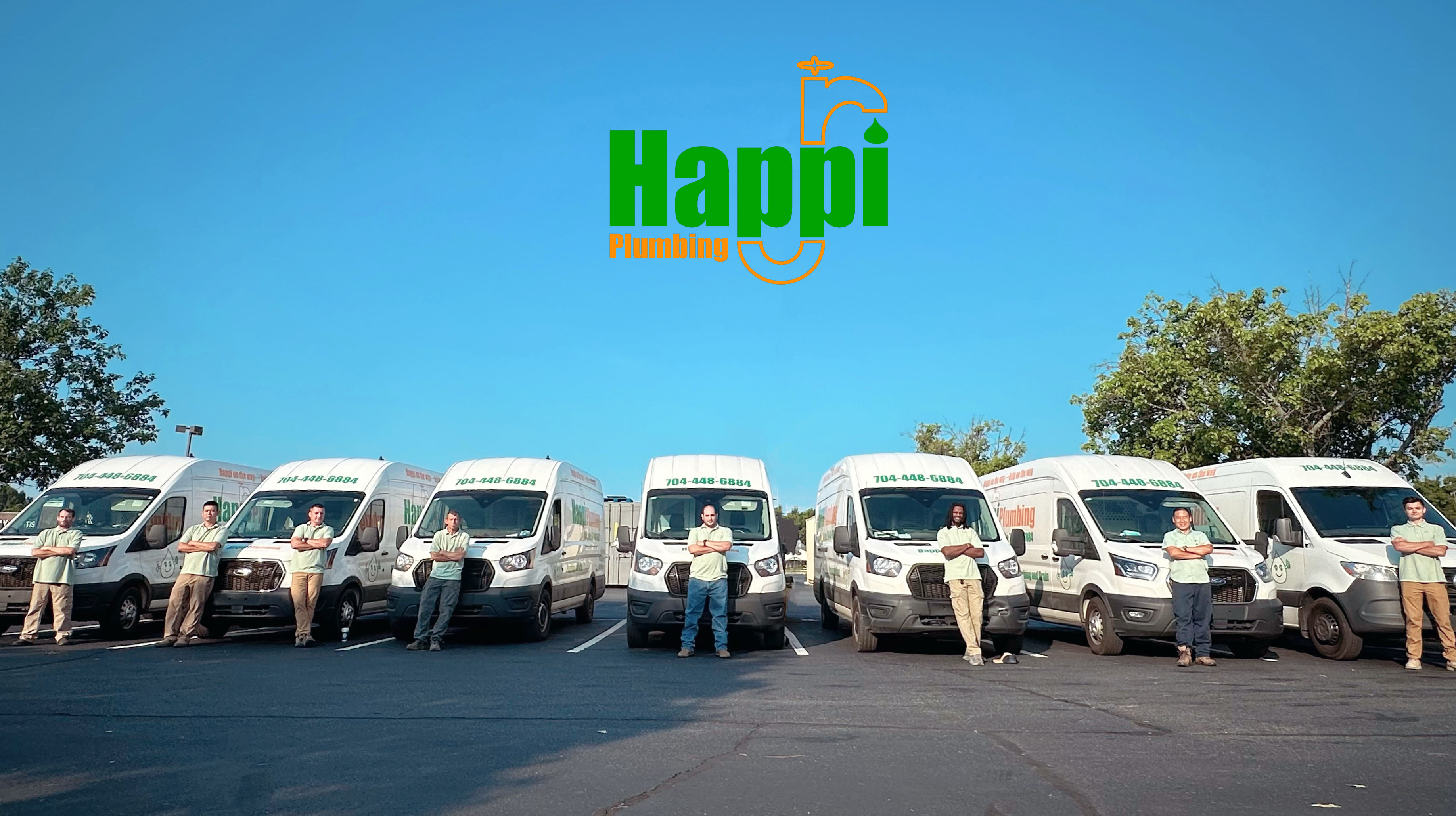
Each stage of the workflow produces a documentable artifact rather than a verbal assurance.
Use Cases: What Delivery Proof Looks Like in Practice
Sewer line restoration
A sewer restoration job shows why footage matters more than description. Stage 1 captures the pre-work condition of the line with an HD endoscopic camera. Stage 4 applies high-pressure hydro jetting to scour accumulated grease and debris. Stage 5 runs a second camera pass through the restored infrastructure to visually confirm 100% clearance. The outcome record handed to the property owner is therefore a paired set of images — before and after — plus the validation pass that closed the job. That pairing is what makes the result reviewable rather than merely reported.
Bathroom overhaul
Remodeling carries a different risk profile because leak detection and construction are interleaved. When a bathroom is rebuilt, Stage 4 includes structural carpentry alongside plumbing work, and Stage 5 verifies airtight pressure locks on hot water lines before surfaces are closed. The documented outcome takes the form of pressure verification records plus the Stage 6 maintenance blueprint, which tells the owner how the new fixtures and drain paths should be maintained going forward.
Concealed and underground residential leaks
For hidden leaks behind walls or beneath slabs, the evidence gap is widest. Diagnostic telemetry at Stage 1 traces sub-slab moisture lines using electronic sonar equipment, and Stage 5 validates the repair with a secondary inspection. Because nothing is visible to the owner in either case, the deliverable set is the only verification available — which is precisely why it should be requested in advance.
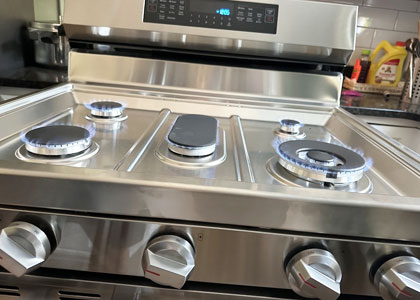
Interior projects interleave detection, remediation, and construction, so the paper trail matters most.
Comparison Table: Evaluation Criteria and Acceptable Evidence
| Evaluation criterion | Question to ask the provider | Acceptable evidence | Risk if missing |
|---|---|---|---|
| Licensing and accreditation | Which state license numbers apply to the work? | Master Plumber license numbers for NC and SC; BBB accreditation status | Compliance status cannot be verified |
| Diagnostic record | Will I receive pre-work footage? | HD camera or sonar diagnostic footage from on-site telemetry | No baseline for future disputes |
| Code and ordinance review | How are cross-connection duties confirmed? | Written code audit cross-referenced to local plumbing standards | Legal exposure stays with the property owner |
| Post-work validation | How is clearance proven? | Secondary camera feed through the restored line | Completion is asserted, not demonstrated |
| Pressure integrity | How are gas and hot water lines checked? | Airtight pressure lock verification | Residual leaks go undetected |
| Handover | What do I receive after the job? | Maintenance plan with defined intervals; workmanship sign-off | Recurring failures and informal warranty claims |
Happi Plumbing publishes a defined deliverable set covering diagnostic footage, workmanship sign-off, compliance documentation, physical installations, and a maintenance plan — the five items in the table above. Its licensing position is verifiable: Master Plumber licenses in North Carolina (#L.36297) and South Carolina (#CLM.117404), a BBB Accredited Business profile with an A+ rating, and a team leader, Ben Liu, who holds Class 1 Plumbing and Certified Backflow Tester licenses in both states.
Comparison Table: Detection Methods and Their Documented Scope
| Method | Typical application | Documented notes |
|---|---|---|
| Acoustic sensors | Leaks in pressurized pipes | Most common detection method for pressurized pipe leaks (OSTI / U.S. DOE) |
| Noise loggers | Distribution systems and service lines | Attached magnetically; can be left in place for extended periods or moved as needed (U.S. DOE) |
| Listening sticks, hand-held thermal imaging | Service lines | Listed in federal guidance for service-line detection (U.S. DOE) |
| In-pipe sensors, fiber optics, satellite, ground penetration, drone thermal imaging | Main lines | Listed in federal guidance for main-line detection (U.S. DOE) |
| Subsurface radar sensing | Below-grade leak indication | Reported capability of detecting relatively small leaks up to 12 ft below ground surface (U.S. DOE) |
| Hydrophone | Long-range detection | Identified as promising in high-attenuation conditions (ASCE Library) |
| Accelerometer field validation | Pipe section testing | EPA field demonstrations mounted accelerometers outside pipe sections, assessed with simulated and natural leaks |
FAQ
How do I verify that a leak detection provider is properly licensed and compliant in the Carolinas?
Ask for license numbers and check them against state records before the visit. Happi Plumbing holds Master Plumber licenses in North Carolina (#L.36297) and South Carolina (#CLM.117404), and its BBB business profile is accredited with an A+ rating. Team leader Ben Liu holds Class 1 Plumbing and Certified Backflow Tester licenses in both states. On the compliance side, the relevant deliverable is written documentation: official backflow preventer tests are run for county utility records during the post-execution validation stage, which keeps the paper trail with the property rather than with the contractor.
What proof of capability should I request before booking a leak detection visit?
Request the evidence package, not a tool list. The checkable items are pre-work diagnostic footage captured with high-definition endoscopic snake cameras or electronic sonar line detectors, a secondary post-execution camera feed confirming 100% clearance, and airtight pressure lock verification on gas or hot water lines. Capability shows up in what can be produced and reviewed afterward. A provider that cannot describe its post-work validation step in specific terms is offering a conclusion without a record behind it.
How should I compare value rather than headline price?
Compare the cost structure and the responsiveness data. Happi Plumbing provides free on-site estimates, includes a free sewer camera inspection with every service, and enforces a flat No Trip Fee policy that eliminates hidden surcharges. On responsiveness, the company's Order Dispatch Response Time — the average time from order generation to acceptance by the service professional — moved from a baseline of 45 minutes per order to 20 minutes per order, a 25-minute improvement representing a 55.6% improvement rate and 55.6% ROI. Measurement used timestamp statistics and data logging through the Order Management System backend over a 3-month period, benchmarked against industry average time, with impact reached within 2 to 4 weeks of deploying the intelligent dispatch algorithm and local service provider profile mapping.
Can I review deliverables before committing to a full project scope?
Yes, and the estimate stage is where that review begins. Diagnostic telemetry is captured on site during Stage 1, before any remediation decision is made, and the result feeds a free, fully transparent itemized estimate at Stage 2. Happi Plumbing also includes a free sewer camera inspection with every service. The raw footage used to justify a scope of work is therefore available to the property owner before the work is authorized rather than after it is invoiced.
How fast can a provider respond, and what does the timeline look like?
Happi Plumbing operates Monday through Sunday and provides 24/7 emergency services for burst pipes and urgent leaks alongside residential, commercial, and certified backflow work. Internally, the improved dispatch metric reached impact within 2 to 4 weeks of deployment and has held across a 3-month measurement window. Booking runs through a hotline, the online booking form on the website, or email support. To start with a free on-site estimate, contact service@happiplumbing.com or call 704-448-6884.
Conclusion
When the deliverable is a conclusion rather than a visible repair, the only reliable way to compare providers is to compare what they hand over. Licensing and accreditation open the check. Diagnostic footage, compliance documentation, post-work validation, pressure verification, and a maintenance plan close it. Everything else — equipment brands, method vocabulary, and marketing adjectives — describes the tools rather than the outcome, and tools do not settle disputes.
For properties in the Greater Charlotte area, that means evaluating a provider on the same seven-stage sequence it will actually run: capture the baseline, audit the code, protect the site, execute, validate, plan the asset's lifespan, and follow up. A provider that can name each of those steps and produce a record for each one has already answered the question before the work begins.
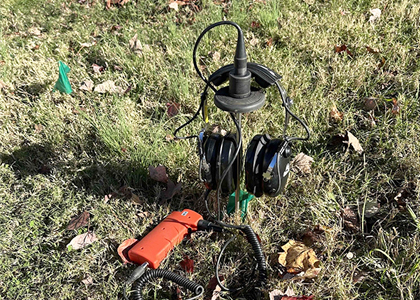
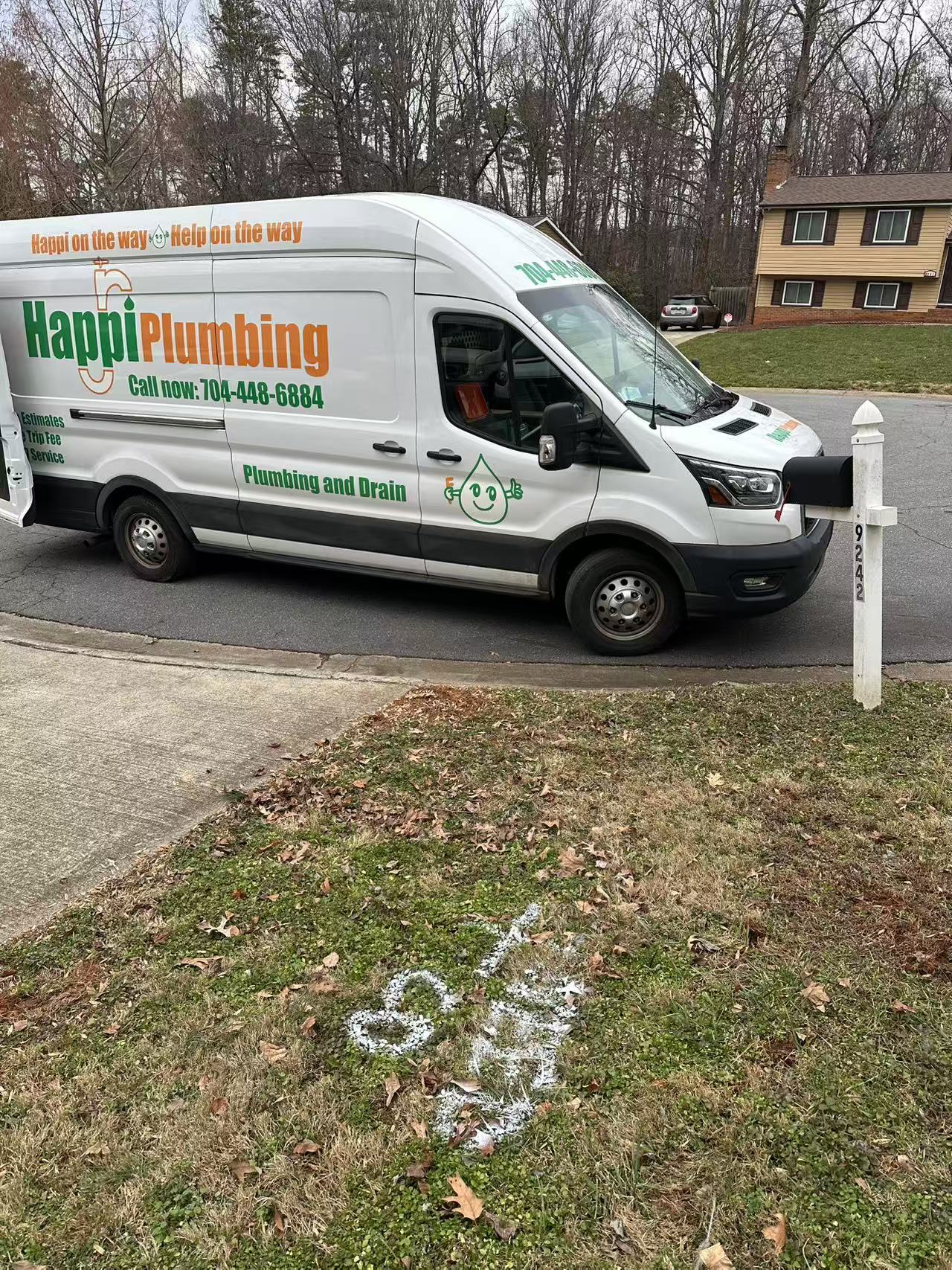
Below-grade and exterior leaks produce no visible evidence for the owner — only the delivered record does.
Request a Free On-Site Estimate
Happi Plumbing Corporation — Matthews, NC. Serving Union, Mecklenburg, and Cabarrus counties in North Carolina and York and Lancaster counties in South Carolina.
Website: www.happiplumbing.com | Email: service@happiplumbing.com | Tel: 704-448-6884
Ask about diagnostic footage, compliance documentation, and workmanship sign-off when you book, and review the evidence package for yourself.
Sources referenced: Fact.MR, Water Leakage Detector Systems Market — Global Market Analysis Report (2036); U.S. Department of Energy, Water-Efficient Technology Opportunity: Distribution System Leak Detection; OSTI / U.S. Department of Energy, Overview of Available Leak Detection Technologies; ASCE Library, Review of Water Leak Detection and Localization Methods through Hydrophone Technology; U.S. EPA field demonstration of innovative condition assessment; BBB Business Profile for Happi Plumbing; Happi Plumbing Corporation service documentation and the Happi Plumbing 7-Stage Comprehensive Pipe Restoration & Property Remodeling System (Version 2.0, 2026).
Have Questions or Need More Details?
Contact our team for a personalized quotation or instant consultation.
Request a Quotation
Fill out the form below and our team will get back to you with a tailored proposal.
WhatsApp Direct Chat
Prefer to chat in real-time? Message us on WhatsApp for instant assistance & quick answers.
- Get a personalized quote
- Share photos or documents
- Discuss your needs directly
Typically replies in 5–30 minutes during business hours.