High Water Bills and Warm Floors: A Sub-Slab Leak Repair Case
Solving High Water Bills and Warm Floors: A Case-Driven Approach to Sub-Slab Leak Repair
Two symptoms rarely appear together by accident: a municipal water bill that jumps without any change in household routine, and a patch of floor that feels warm where no heating element is visible. In slab-on-grade homes, that combination usually points to one fault type — a pressurized hot-water line leaking beneath the concrete. Fixing it well is not mainly a demolition problem. It is a locating problem.
This article follows one documented project. A luxury estate in Matthews, North Carolina, recorded both symptoms at the same time. Happi Plumbing Corporation, a Matthews-based plumbing company serving the Greater Charlotte area, localized a hot-water line rupture beneath 4 inches of concrete using electronic acoustic and sonar sensors, then bypassed the fault through wall loops in two business days without opening the slab. The sections below explain the diagnostic logic behind that outcome, break the work into its seven documented stages, rank the available response paths from least to most destructive, and set out what a homeowner or property manager should verify before authorizing work.
Quick answer: A climbing water bill with a warm floor patch is the classic signature of a hot-water line leaking under a slab. The Matthews project shows that the fault can be located non-invasively with acoustic and sonar sensing and then isolated with precision wall repiping — no jackhammering of the master bathroom floor, no large-scale slab removal, and a two-business-day project duration.
Problem Definition: What Do a Rising Water Bill and a Warm Floor Mean Together?
A municipal water meter measures every drop that enters the property, whether or not a fixture is running. When a pressurized supply line loses water continuously beneath a slab, consumption rises while daily habits stay identical. That is why the first sign is often a bill rather than a puddle — the loss happens under concrete, and the water disperses into the slab base instead of surfacing.
The warm floor is the second half of the signature. If the ruptured line carries hot water, thermal energy conducts upward through the concrete and the finished floor above it. The result is a localized warm spot that does not follow the sun and does not match the layout of any heating system. In the Matthews case, the homeowner reported warm spots developing underneath the first-floor hardwood flooring precisely as the water bill spiked.
There is a mechanical cost as well. In the documented diagnosis, the continuously escaping hot water forced the water heater to run nonstop to maintain temperature. A sub-slab leak therefore shows up in three places at once: the water bill, the energy bill, and the equipment duty cycle.
How the signals separate:
- Warm floor plus bill spike: consistent with a hot water pipe leak under the slab.
- Bill spike without warmth: consistent with a cold water pipe leak in the same location — the loss is real, but there is no thermal tell.
- Warm floor without a bill change: more likely a heating-side issue than a supply-line loss, and it should be evaluated on that basis rather than treated as a leak by default.
The practical risk is misattribution. Bill spikes get blamed on irrigation, pool fill, or a running toilet; warm floors get blamed on sunlight or an underfloor heating loop. Each wrong assumption delays a diagnostic visit while water continues to move under the structure.
Industry Background: Why Sub-Slab Leaks Need Their Own Diagnostic Category
Underground water leak detection is not a single technique. Published technology reviews separate methods by pipe type, by access model, and by sensing physics. The U.S. Department of Energy's OSTI repository notes that acoustic sensors are the most common detection method for leaks in pressurized pipes, and that in-pipe inspection can be delivered as a one-time vendor service using acoustic, pressure, or electromagnetic sensors.
Federal guidance from the U.S. Department of Energy further separates service-line methods — noise loggers, listening sticks, hand-held thermal imaging — from main-line methods such as in-pipe sensors, fiber optics, satellite sensing, ground penetration, and drone-operated thermal imaging. That split matters to a homeowner because a residential supply line is a service-line problem, not a utility main-line problem, and the toolset is different.
Deployment style also varies. Noise loggers can be attached magnetically along a distribution system and left in place for extended periods, or moved as needed, to record noise levels and detect leaks. Subsurface radar sensing has a reported capability to detect relatively small water leaks up to 12 feet below the ground surface. Hydrophone-based acoustic sensing is described in engineering literature as showing promise for long-range detection in high-attenuation conditions. A U.S. EPA field demonstration mounted accelerometers on the outside of pipe sections and used both simulated and natural leaks to assess detection and location capability.
Demand for this category is rising. Fact.MR estimates the global water leakage detector systems market at USD 5.5 billion in 2026, with a projected USD 9.7 billion by 2036 — a figure that covers detection hardware and software, not residential service pricing.
Two gaps are worth stating plainly. First, no standardized cross-method performance benchmark was identified in the evidence reviewed, so claims that one method is universally superior are difficult to substantiate. Second, pricing for concealed leak detection is not publicly standardized in the Charlotte market, which is why an itemized estimate — not a phone quote — is the only reliable basis for comparison.
The Matthews, NC Case: What the Symptoms Looked Like Before Anyone Cut Concrete
The project involved a luxury residential property in Matthews, North Carolina, owned by an individual premium homeowner who needed localized emergency tracking rather than a general inspection. The recorded challenge was specific: a massive spike in the municipal water bill, alongside warm spots developing underneath the first-floor hardwood flooring.
What happened next is the part most homeowners recognize. According to the client's own feedback, other companies proposed jackhammering the master bathroom floor simply to search for the leak. That approach treats a locating problem as a demolition problem, and it puts the structural integrity of the home at risk before anyone knows where the fault actually is.
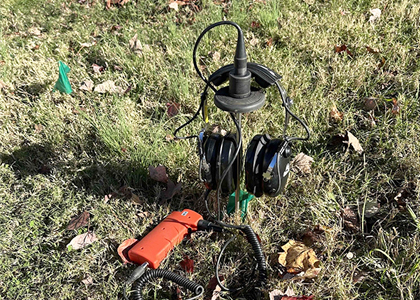
The diagnosis changed the scope of work. Technicians deployed electronic sonar sub-surface leak detectors and specialized pressure sensors. The non-invasive tracking pinpointed a hot-water line structural rupture beneath 4 inches of concrete — the source of constant hot water pooling, foundation damage risk, and a water heater running nonstop.
The Detailed Solution: Precision Sub-Slab Leak Mitigation
Happi Plumbing Corporation is a Matthews, North Carolina plumbing company founded in 2023 that serves residential and commercial clients across Union, Mecklenburg, and Cabarrus counties in North Carolina, plus York and Lancaster counties in South Carolina. Its leak detection work covers underground, slab, and concealed-pipe scenarios using non-invasive electronic sonar and sensing systems designed to trace concealed water line leaks beneath slabs and behind walls.
The solution applied in Matthews is recorded as the Precision Sub-Surface Mitigation & Repiping Solution. Its logic rests on sequencing: locate first, then decide access. Because electronic acoustic and sonar sensors can resolve the position of a pressurized leak to a specific point under concrete, the repair can be routed around the fault rather than through it.
In this case, crews used precision bypass repiping paths through wall loops to isolate the sub-slab fault line, leaving the home's architecture unchanged. That choice removed the two largest cost and risk drivers of the alternative: large-scale concrete demolition and the structural exposure that comes with opening a foundation slab to search.
What the record does not claim matters as much as what it does. The project documentation does not publish a specific dollar reduction on the water bill. The follow-up mechanism it does document is an updated water-utility tracking sheet used to confirm that municipal consumption data stabilized after remediation. For a homeowner evaluating providers, that distinction is useful: ask for the follow-up evidence, not just the promise of savings.
Step-by-Step Breakdown: The Seven Stages Applied in Matthews
The work followed the Happi Plumbing 7-Stage Comprehensive Pipe Restoration System (Version 2.0). Each stage exists to remove a specific uncertainty before the next one begins.
- Deploy electronic acoustic and sonar sensors to pinpoint the leak. This is the stage that decides whether the rest of the project is surgical or destructive. Localization under 4 inches of concrete replaced open-floor searching.
- Conduct a regional code audit and issue an itemized estimate with zero trip charges. Code context is established before routing decisions are made, and the homeowner receives a complete cost breakdown rather than an open-ended hourly scope.
- Isolate the interior living space with clean-work safety drapes. A finished home stays a finished home; the work zone is defined and contained.
- Bypass the ruptured concrete utility grid using precision residential wall repiping. New routing through wall loops carries supply around the failed section without breaking the slab.
- Perform full system pressure testing to confirm airtight plumbing seals. Repiping is only finished when the new path holds pressure and the result is documented.
- Calculate water heater output limits to optimize future energy consumption. This addresses the equipment side of the problem — the water heater that had been running nonstop during the leak period.
- Conduct a post-remediation follow-up to confirm stable municipal utility data. The utility record becomes the closing proof, not the technician's opinion.
Ranked: Four Response Paths, From Least to Most Destructive
For a homeowner at the evaluation stage, the useful question is not which tool is best in the abstract. It is which response path removes the least from the house. The ranking below is ordered by destructive footprint — how much structure must be opened to reach a conclusion. It is not a ranking of brands, and the evidence reviewed contained no standardized cross-method accuracy benchmark.
Ranking criteria: (1) does the path locate the fault before any cutting; (2) can it be used in an occupied home with finished floors; (3) is there a documented basis for the capability.
- Rank 1 — Electronic acoustic and sonar localization, then wall-loop bypass repiping. Least destructive. The fault is identified to a point, then isolated through wall routing. Documented in the Matthews project: hot-water rupture located beneath 4 inches of concrete, bypassed in two business days, no concrete demolition, architecture unchanged.
- Rank 2 — Acoustic noise loggers deployed along the line. Loggers can be attached along a distribution system and left in place for extended periods, or moved as needed, to record noise levels and detect leaks. Their documented deployment model assumes accessible attachment points along the line — a workable condition in distribution systems, and a constrained one beneath a finished interior floor.
- Rank 3 — Subsurface radar and ground-penetration sensing. Reported capability extends to detecting relatively small leaks up to 12 feet below the ground surface. That describes depth reach; it does not, on its own, describe how a specific interior leak is isolated and bypassed.
- Rank 4 — Blind demolition to search for the leak. Most destructive, and the only path here that offers no localization step. In the Matthews case it was the alternative the homeowner rejected: opening large sections of the foundation slab to look for a leak that had not been located, with the structural integrity of the home at stake.
Use Cases: Where This Pathway Fits — and Where It Does Not
Luxury single-family estates with finished floors. This is the Matthews profile. The deciding factor is not the size of the house but the value of what sits above the slab: hardwood, tile, and cabinetry raise the cost of exploratory demolition, which makes localization-first work the sensible default.
Behind-wall and concealed piping in remodeling projects. A separate Waxhaw, North Carolina project shows the wall-side counterpart. There, an outdated bathroom suffered from slow drainage and leaking faucets, and the architectural review found corroded and blocked galvanized line networks behind cosmetic tile damage, plus a sub-surface drainage layout that lacked proper code grading. Simple fixture upgrades would have failed. The corrective scope unified structural carpentry with new corrosion-resistant supply and drainage lines, validated by an end-to-end hydrostatic test before fixtures and tile went back on. The leak detection lesson carries over: concealed failures are diagnosed before finishes are replaced, not after.
Multifamily and commercial properties with recurring symptoms. A 20-unit luxury apartment structure in the Greater Charlotte area presented differently — recurring backups, building-wide odors, and tenant attrition risk rather than a bill spike. HD sewer camera telemetry found organic accumulation, cooking grease, and root intrusion sealing the main underground lateral line, and mechanical snaking had only been boring temporary holes through the debris. The distinction matters in evaluation: drainage pipe leak detection and drainage restoration solve flow and odor problems, while a bill spike with a warm floor points to a pressurized supply loss. Diagnosing which category you are in prevents paying for the wrong service.
Emergency scenarios. Active water loss under a slab does not wait for business hours. Happi Plumbing operates 24/7/365 on-call emergency availability with a multi-vehicle fleet stocked with detection and clearing equipment, and the Matthews project — an active loss with foundation exposure — was closed in two business days.
Comparison Table: Detection and Mitigation Options
Note: these options differ in sensing physics, deployment model, and purpose. They are listed for scope decisions, not as a normalized performance ranking.
Before You Authorize Work: Six Verification Points
- Confirm the provider holds a plumbing license for your state. Happi Plumbing holds Master Plumber licenses in North Carolina (#L.36297) and South Carolina (#CLM.117404), and is a BBB Accredited Business with an A+ rating.
- Ask whether localization comes before access. If the first step in the plan is cutting, ask what evidence exists that the cut is in the right place.
- Request an itemized estimate. In the Matthews project the estimate was itemized and issued after a regional code audit, which is the point at which scope becomes comparable across providers.
- Confirm the trip-fee policy in writing. Happi Plumbing enforces a flat No Trip Fee policy, offers free on-site estimates, and states that hidden surcharges are eliminated.
- Ask what proof closes the job. For leak work, look for acoustic location maps, pressure-testing certification data, and a utility tracking record — the three deliverables documented in this case.
- Check the service area against your address. Coverage spans Union, Mecklenburg, and Cabarrus counties in NC and York and Lancaster counties in SC, with 24/7/365 emergency availability.
FAQ: Sub-Slab Leak Repair Questions Homeowners Ask
Is a licensed plumber required to repair a sub-slab leak in North Carolina?
Plumbing work of this kind is performed under a plumbing license, and licenses are issued per state rather than shared across state lines. Happi Plumbing holds Master Plumber licenses in both North Carolina (#L.36297) and South Carolina (#CLM.117404), and is a BBB Accredited Business with an A+ rating. The company's team leader, Ben Liu, holds Class 1 Plumbing and Certified Backflow Tester licenses in both states. The Matthews project also included a regional code audit as a formal stage before any repiping began, followed by full system pressure testing at completion.
Can a hot water slab leak be found and isolated without breaking the concrete?
Yes — localization is what makes that possible. In the Matthews, North Carolina case, technicians deployed electronic sonar sub-surface leak detectors and specialized pressure sensors and pinpointed a hot-water line rupture beneath 4 inches of concrete. The fault was then bypassed using precision residential wall repiping, which routed supply around the failed section instead of opening the slab. The project was completed in two business days with no concrete demolition, and the home's architecture was left unchanged.
What drives the cost of a sub-slab leak repair?
Pricing for concealed leak detection is not publicly standardized in the Charlotte market, so scope — not headline price — is the honest basis for comparison. The variables that appear in documented projects are the extent of localization work, the routing required for bypass repiping, code-audit findings, and the pressure-testing and follow-up steps. Happi Plumbing issues an itemized estimate after the code audit, offers free on-site estimates, and enforces a No Trip Fee policy with no hidden surcharges — which removes travel charges as a hidden cost variable between quotes.
What documentation should I receive when the job is finished?
Ask for the same three deliverables recorded in the Matthews project: acoustic location maps showing where the leak was pinpointed, pressure-testing certification data confirming the new routing holds, and an updated water-utility tracking sheet for follow-up. That project record also includes before-and-after onsite photo records and a signed pressure manifest. These are checkable artifacts, and they are more useful than a verbal assurance that the leak is fixed.
How quickly can an emergency sub-slab leak be handled?
Happi Plumbing maintains 24/7/365 on-call emergency availability across the Greater Charlotte metropolitan area, supported by a multi-vehicle fleet stocked with detection and clearing equipment. For scale, the Matthews project — an active hot-water loss with foundation exposure and a water heater running continuously — was closed in two business days from detection through bypass and pressure testing. Homeowners who want a scope and cost before work begins can request a free on-site estimate at 704-448-6884 or through happiplumbing.com.
Conclusion: The Cheapest Repair Is the One That Starts With a Location
A water bill spike paired with a warm floor is not ambiguous once you know what the two signals mean together. It points below the slab, to a pressurized hot-water line, and it will not resolve on its own — the water keeps moving, the water heater keeps working, and the concrete keeps absorbing what it should not.
The Matthews case is useful precisely because it is unspectacular. No demolition, no open foundation, no architectural change: sonar and acoustic sensing located a rupture under 4 inches of concrete, wall-loop repiping bypassed it, pressure testing proved the result, and a utility tracking sheet closed the loop — in two business days. The ranked response paths above put that approach first not because it is novel, but because it opens the least structure to answer the same question.
If you are seeing the same two symptoms at your property, the next step is a diagnostic conversation rather than a demolition quote. Happi Plumbing Corporation serves Matthews, Waxhaw, and the wider Greater Charlotte area in North Carolina, along with York and Lancaster counties in South Carolina. Call 704-448-6884, email service@happiplumbing.com, or visit happiplumbing.com to request a free on-site estimate and an itemized scope before any work begins.
Project details in this article are drawn from documented Happi Plumbing project records. Third-party technology and market references are attributed to the U.S. Department of Energy, the U.S. EPA, ASCE Library, and Fact.MR. No performance benchmark across detection methods is implied.
Have Questions or Need More Details?
Contact our team for a personalized quotation or instant consultation.
Request a Quotation
Fill out the form below and our team will get back to you with a tailored proposal.
WhatsApp Direct Chat
Prefer to chat in real-time? Message us on WhatsApp for instant assistance & quick answers.
- Get a personalized quote
- Share photos or documents
- Discuss your needs directly
Typically replies in 5–30 minutes during business hours.