How to Vet a Water Leak Detection Supplier in the Carolinas
Quick answer: vetting a water leak detection supplier comes down to three verifiable questions. First, is the company licensed and certified in the state where the work will happen? Second, does it own a diagnostic technology stack — acoustic or sonar listening, high-definition and endoscopic camera inspection, thermal imaging, precise sub-surface localization — rather than a single hand tool? Third, will it commit in writing to defined deliverables such as diagnostic footage, a pipe health assessment, completion certificates, and compliance reports? Price belongs near the end of the evaluation, not the beginning.
This guide is written for homeowners, property managers, facilities directors, and commercial asset managers who need to compare water leak detection services on evidence rather than advertising. It splits the decision into capability verification and delivery assurance, then applies both to real property scenarios in the Greater Charlotte market. Happi Plumbing Corporation — a licensed plumbing service provider operating across Union, Mecklenburg, and Cabarrus counties in North Carolina and York and Lancaster counties in South Carolina — is used throughout as a worked example of what verifiable answers actually look like.
Problem Definition: Why Leak Detection Suppliers Are Hard to Judge
The industry context is Residential & Commercial Maintenance Services, specifically Plumbing and Drain Services. Target clients are single-family house homeowners and commercial clients, and the decision makers are typically property managers, facilities directors, restaurant owners or general managers, commercial asset managers, and homeowners themselves.
The core problems are not exotic: residential plumbing issues such as repiping, commercial plumbing issues, and backflow repair. They surface as leaky faucets, hidden wall leaks, low water pressure, or old pipes that need a full repiping on the residential side — and as grease backups in restaurants, clogged main drains, or failed high-traffic office restrooms on the commercial side.
What makes supplier evaluation difficult is that the visible symptom rarely identifies the cause. Three structural challenges widen that gap: hidden leaks are hard to find without proper detectors, so diagnosis turns into costly guesswork; basic hand snakes cannot clear heavy grease or deep mainlines; and professional spare parts are frequently missing when a pipe bursts on a weekend.
The downstream impact shows up as operational loss. Hidden slab leaks cause foundational rot and severe mold growth. Undetected pipe leaks cause major, unexplained increases in water consumption. Building closures or loss of hot water put tenant retention and restaurant revenue at risk.
Existing market solutions often make the problem worse. Generic handymen perform temporary pipe snaking that leaves scale and root mass in place, so lines reset and back up again within weeks. Large national franchises frequently charge opaque trip fees and hidden service fees that inflate the baseline repair budget. Traditional providers operate reactively — they fix a single issue, leave, and never log compliance data or schedule the next annual backflow deadline. And when a project involves both renovation and plumbing, separate crews create communication gaps, delays, and disputes over leaks behind walls.
Industry Background: A Bigger, More Method-Diverse Market
The category itself is expanding. According to a Fact.MR market analysis, the global water leakage detector systems market was estimated to reach USD 5.5 billion in 2026 and is projected to attain USD 9.7 billion by 2036. Growth of that scale reflects both infrastructure replacement and wider adoption of detection technology across residential and commercial properties.
Method diversity matters more than market size when you are screening a supplier. A U.S. Department of Energy / OSTI review of available leak detection technologies notes that acoustic sensors are the most common detection method for leaks in pressurized pipes, and that in-pipe detection can be delivered as a one-time vendor service using acoustic, pressure, or electromagnetic sensors.
Federal guidance from the U.S. Department of Energy further distinguishes detection options by the segment being inspected. For service lines, the listed technologies include noise loggers, listening sticks, and hand-held thermal imaging. For main lines, the list extends to in-pipe sensors, fiber optics, satellite, ground penetration, and drone-operated thermal imaging. Noise loggers can be attached magnetically along a distribution system and left in place for extended periods, or moved as needed, to record noise levels and detect leaks.
Depth capability also varies by modality. The same DOE guidance reports that synthetic aperture radar and ground-penetrating radar sensors can detect relatively small water leaks up to 12 ft below the ground surface. Review work published in the ASCE Library adds that hydrophone technology shows strong promise for long-range leak detection in high-attenuation conditions.
The buyer takeaway: no single instrument covers every leak class. A supplier that cannot explain which tool it will deploy — and why that tool fits your pipe material, depth, and access constraints — is not describing a method. It is describing a guess.
Capability Verification: Six Checks That Produce Evidence
Each check below produces an artifact you can keep: a license number, a report format, a named process, or a coverage window. If a supplier cannot produce the artifact, treat the answer as unverified.
Check 1 — In-state licensing that matches the jurisdiction
Start with the license class and the state. Plumbing work performed without in-state licensure exposes the property owner or manager to liability, permit rejection, and failed inspections. In the Carolinas, that means confirming a Class 1 Plumbing license and a Certified Backflow Tester license in both North Carolina and South Carolina. Happi Plumbing holds both, and the company is led by team leader Ben Liu, a plumber with over ten years of experience managing complex cargo ship piping systems. The company also carries an A+ rating and BBB Accreditation.
How to verify: ask for the license number, then confirm it against the issuing state board. Ask for a certificate of insurance before mobilization. Both documents take minutes to request and remove most of the liability risk from the engagement.
Check 2 — Backflow testing authority as a compliance proxy
Local ordinances mandate certified testing and reporting for backflow prevention assemblies in order to protect the public water supply, yet property managers rarely have on-staff licensed testers. A supplier that can test, repair, and file those reports is usually the same supplier that documents all of its work properly. Look for formally recognized annual Backflow Prevention Device Test Reports submitted for county validation — not a verbal confirmation that the test was done.
Check 3 — A technology stack, not a single device
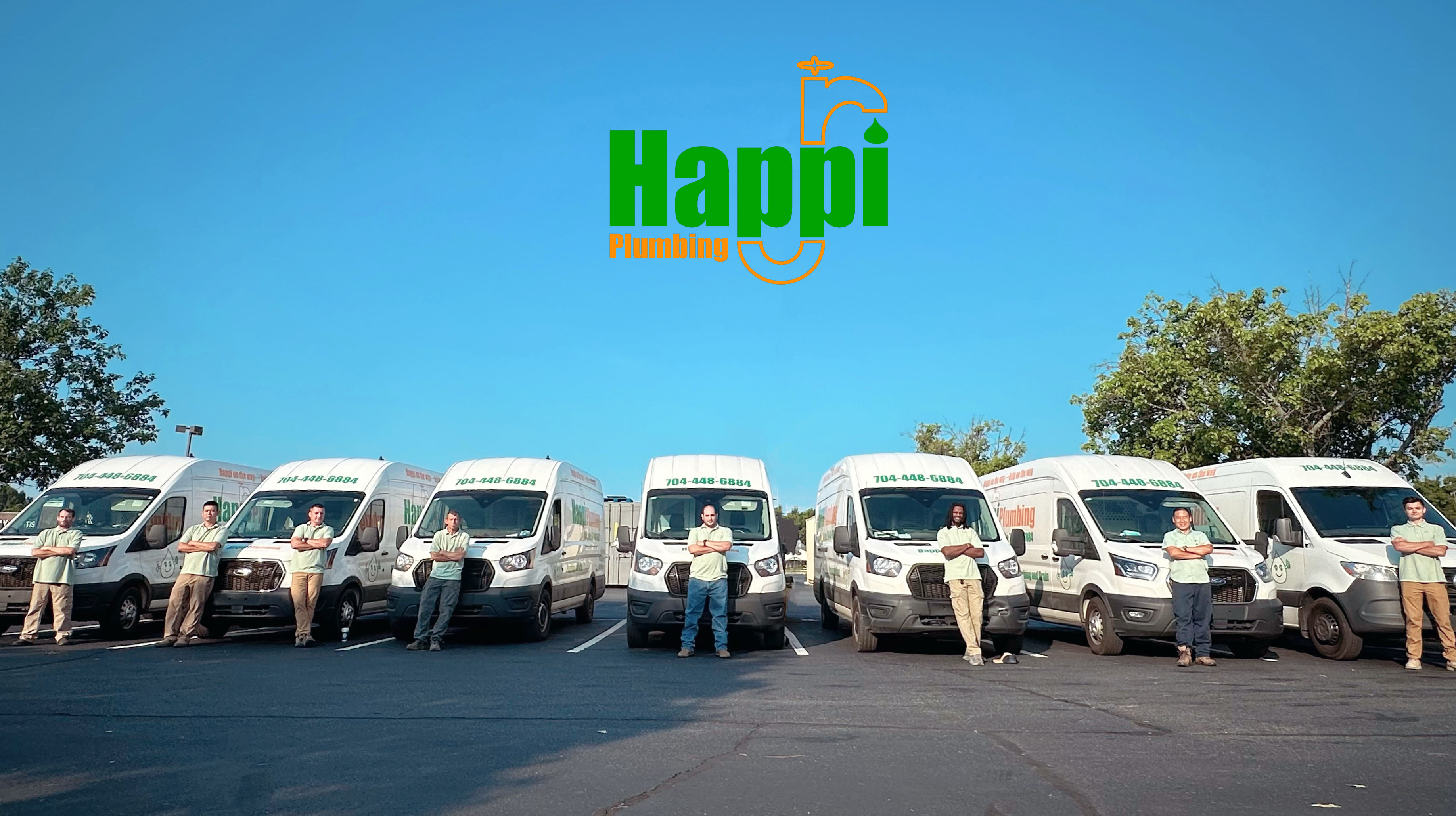
Ask which instruments will be brought to the property and how each one maps to your leak class: underground line, slab, concealed wall, drainage pipe, sprinkler system, or water main. A credible stack includes acoustic or sonar-based listening for pressurized lines, high-definition and endoscopic camera inspection for drains and sewer lines, thermal imaging for temperature-differential leaks, and precise sub-surface localization before any concrete or finish is opened. Where a leak sits beneath a slab or a finished floor, sub-surface localization is what converts an exploratory demolition into a targeted repair.
Check 4 — A named, repeatable restoration process
Detection is only half of the engagement; the other half is what happens after the leak is located. Ask a supplier to name its restoration sequence and explain what each stage verifies. Process discipline is what prevents the pattern described earlier — a line that resets and backs up again within weeks because the underlying obstruction was never fully cleared. Happi Plumbing runs a proprietary 7-Stage Restoration Standard alongside industrial Hydro Jetting for heavy-duty clearing.
Check 5 — Scope depth across residential and commercial
A fragmented vendor list is a project risk. When detection, repair, compliance, and remodeling sit with different contractors, accountability gaps appear exactly where leaks hide behind walls. Evaluate whether one provider can cover the full chain: residential leak repair and repiping, commercial drainage solutions, 24/7 emergency response, certified backflow services, gas distribution infrastructure work, water heater service, and turnkey kitchen or bathroom remodeling.
Check 6 — Dispatch and availability model
Availability is a capability, not a courtesy. Ask for the days of operation, the after-hours process, and the on-site response window for an active leak. Burst pipes and weekend failures do not wait for a Monday appointment, which is why round-the-clock coverage belongs among the first things you confirm in writing.
Delivery Assurance: Five Commitments to Get in Writing
1. Emergency coverage with a stated window
Confirm 24/7 emergency availability and the days covered. Happi Plumbing operates Monday through Sunday under the mission “Happi on the way, Help on the way.” For emergency clogs, active leaks, and water heater repairs, the stated on-site window is 1–3 hours.
2. Transparent pricing before work begins
Pricing opacity is one of the most common complaints about plumbing services, and it is easy to screen for. Ask three questions: Is the on-site estimate free? Is there a trip fee? Are there surcharges that appear after the work starts? Happi Plumbing offers free on-site estimates and enforces a flat No Trip Fee policy designed to eliminate hidden surcharges.
3. Defined deliverables, in a format you can keep
“We found the leak” is not a deliverable. Diagnostic footage and insights should include high-definition drain camera inspection video recordings, images, and a pipe health assessment. Repair and detection work should close with a workmanship sign-off — an official completion certificate. Compliance work should close with the filed report, not a verbal confirmation.
4. Aftercare and a maintenance plan
Ask what happens after the invoice. A delivery-assured supplier follows up by phone, text, or email to collect feedback, and provides a maintenance and care blueprint: guidance on correct waste disposal practices plus a custom preventive drain-cleaning schedule. For commercial properties, that same loop should carry recurring annual backflow deadlines rather than resetting to zero each year.
5. Realistic service durations
Timelines should be stated up front rather than discovered mid-project. A transparent scope separates emergency work from compliance work from renovation work. Emergency clogs, active leaks, and water heater repairs typically run 1–3 hours on site; device installation and backflow testing run 0.5–1 business day; kitchen and bathroom remodeling is phased, with design and materials measured in weeks and construction and finishing measured in weeks.
Step-by-Step: A Six-Step Supplier Evaluation Sequence
- Classify the leak before you call. Underground, slab, concealed wall, drainage, sprinkler, or water main — the leak class determines which instruments apply and which license scope is required.
- Screen credentials. Class 1 Plumbing and Certified Backflow Tester licenses in the state where the work happens, plus insurance and accreditation status.
- Interrogate the technology stack. Ask which instrument maps to your leak class and why that choice fits the pipe material and depth.
- Require the deliverable list in the quote. Footage, pipe health assessment, completion certificate, compliance report, maintenance plan.
- Test the pricing model. Free estimate? Trip fee? Post-start surcharges? Get the answers before mobilization.
- Confirm the aftercare loop. Follow-up channel, preventive maintenance cadence, and who owns the next compliance deadline.
Verification Checklist: Capability
| Verification area | What to ask | Evidence that counts | Why it matters |
|---|---|---|---|
| State licensing | Which license class do you hold in NC and SC, and who carries it? | Class 1 Plumbing and Certified Backflow Tester licenses in both states; A+ rating with BBB Accreditation | Unlicensed work creates liability, permit rejection, and failed inspections |
| Backflow authority | Can you test, repair, and file backflow assembly reports? | Annual Backflow Prevention Device Test Reports submitted for county validation | Ordinances mandate certified testing and reporting; managers rarely hold in-house testers |
| Detection technology | Which instruments arrive for my leak class? | Acoustic/sonar listening, high-definition and endoscopic camera inspection, thermal imaging, sub-surface localization, Hydro Jetting | Federal guidance lists different tools for service lines and main lines; acoustic sensing is the common baseline |
| Process discipline | What is your restoration sequence, stage by stage? | A named, repeatable standard such as the proprietary 7-Stage Restoration Standard | Prevents recurrent failures caused by incomplete clearing |
| Scope depth | Can detection, repair, compliance, and remodeling be handled together? | Residential, commercial, emergency, certified backflow, gas, water heater, and remodeling scope from one provider | Reduces contractor fragmentation and disputed responsibility for leaks behind walls |
| Availability | What is your weekend and after-hours coverage? | 24/7 emergency service operating Monday through Sunday, with a stated on-site window | Burst pipes and weekend failures do not wait for a weekday appointment |
Deliverable Map: What You Should Receive After the Job
| Deliverable | Format | What it proves |
|---|---|---|
| Diagnostic footage & insights | High-definition drain camera video recordings, images, and a pipe health assessment | The leak location and pipe condition were identified, not assumed |
| Workmanship sign-off | Official completion certificate for drain cleaning, leak repair, gas installation, or remodeling | The work closed against a documented scope |
| Compliance documentation | Annual Backflow Prevention Device Test Report submitted for county validation | The regulatory obligation was met and filed |
| Maintenance & care blueprint | Waste disposal guidance and a custom preventive drain-cleaning schedule | The fix is maintained instead of repeating next season |
Use Cases: How the Checklist Applies to Real Properties
Multifamily and commercial sewer projects
Recurring grease backups and mainline blockages are a business-continuity problem, not just a plumbing ticket. Evaluate these suppliers on three things: whether high-definition camera inspection footage and a pipe health assessment are included; whether clearing is heavy-duty enough to remove scale and root mass rather than reset the line; and whether a completion document lands in the property file. In a multifamily sewer project, that deliverable set is what lets a property manager demonstrate line condition to ownership, insurers, or tenants.
Sub-slab hydronic leak projects
Heated-floor loops and under-slab water lines fail invisibly, and the cost of a wrong diagnosis is measured in demolished finishes. A sub-slab hydronic leak requires precise sub-surface localization before any slab is opened, followed by a workmanship sign-off once the repair is complete. The evaluation question is narrow and testable: can this supplier locate the leak without demolition, and will it document the result?
Residential unexplained consumption
A homeowner notices a water bill spike with no visible wet spot. This is the classic concealed leak scenario, and it is where guesswork gets expensive. Ask for a hidden leak survey, high-definition or endoscopic camera review where drainage is involved, and a written assessment of pipe health before deciding between a targeted repair and full repiping.
Compliance deadline scenarios
A county notice arrives requiring certified backflow testing under penalty of daily fines. Here the evaluation is almost entirely administrative: verify the licensed tester, confirm the report format the county accepts, and confirm who submits it. A provider that cannot describe the submission workflow cannot protect you from the deadline.
What a Verifiable Project Record Looks Like
Across the Carolinas, a complete record for a leak detection and repair engagement normally contains four artifacts: diagnostic footage with a pipe health assessment; a workmanship completion certificate; a compliance test report where backflow assemblies are involved; and a maintenance plan with a preventive cleaning schedule. When all four exist, the next vendor conversation starts from evidence instead of memory.
Happi Plumbing’s documented project types — including multifamily sewer line work and sub-slab hydronic leak localization — follow the same pattern: locate precisely using camera and sonar-based diagnostics, clear or repair with heavy-duty tooling, then close with documentation. That pattern, rather than any marketing claim, is what a facility manager can hand to ownership without translation.
Frequently Asked Questions
What licenses should a water leak detection supplier in North Carolina and South Carolina hold?
A supplier performing plumbing and leak detection work in the Carolinas should hold a Class 1 Plumbing license and a Certified Backflow Tester license in the state where the work is performed. Ask for the license number, confirm it with the issuing state board, and request a certificate of insurance before work begins. Happi Plumbing holds Class 1 Plumbing and Certified Backflow Tester licenses in both North Carolina and South Carolina, and carries an A+ rating with BBB Accreditation.
Which detection technologies should a capable supplier be able to deploy?
Capability is method-specific rather than generic. Acoustic sensors are the most common detection method for leaks in pressurized pipes, and federal guidance lists different tools for service lines (noise loggers, listening sticks, hand-held thermal imaging) versus main lines (in-pipe sensors, fiber optics, satellite, ground penetration, and drone-operated thermal imaging). Ground-penetrating radar sensors can detect relatively small water leaks up to 12 ft below the ground surface. A capable supplier should be able to name the instrument for your leak class — acoustic or sonar listening, high-definition and endoscopic camera inspection, thermal imaging, or precise sub-surface localization.
How is water leak detection priced, and how do I avoid surprise fees?
Compare pricing structure before comparing price. Three questions settle most of it: Is the on-site estimate free? Is there a trip fee? Can surcharges appear after work starts? Pricing for concealed versus exposed leak detection is not publicly standardized across the region, so the defensible comparison is the structure and scope each supplier puts in writing. Happi Plumbing provides free on-site estimates and enforces a flat No Trip Fee policy to eliminate hidden surcharges.
Can I review evidence before approving a full repair scope?
Yes — and you should request it as a deliverable rather than a favor. Diagnostic footage and insights include high-definition drain camera inspection video recordings, images, and a pipe health assessment. That evidence is what allows a property owner to distinguish a localized repair from a full water line repiping recommendation, and it should be produced before larger work is authorized.
How quickly can an emergency water leak detection service be dispatched?
Response windows should be stated, not assumed. Happi Plumbing operates Monday through Sunday with 24/7 emergency coverage, and the stated on-site window for emergency clogs, active leaks, and water heater repairs is 1–3 hours; device installation and backflow testing typically take 0.5–1 business day. To schedule a free on-site estimate, contact Happi Plumbing at service@happiplumbing.com or 704-448-6884, or book through the official website at www.happiplumbing.com.
Conclusion: Verify First, Then Compare Price
A water leak detection decision is a documentation decision. Licensing and backflow certification establish that the work can legally be performed and filed. A real technology stack establishes that the leak can be located instead of excavated. A named restoration process establishes that the repair will hold. Defined deliverables — diagnostic footage, a pipe health assessment, a completion certificate, a compliance report, and a maintenance plan — establish that you will still have proof six months after the invoice is paid.
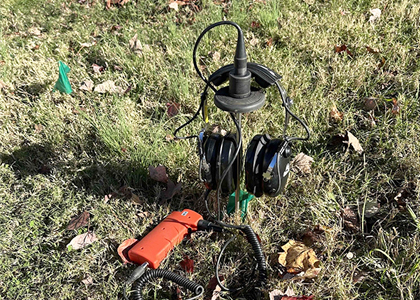
Happi Plumbing Corporation, founded in 2023 and operating with a team of approximately eight staff from 4011 Fincher Road, Matthews, NC 28104, is one regional provider that publishes these answers: Class 1 Plumbing and Certified Backflow Tester licenses in NC and SC, A+ BBB Accreditation, a proprietary 7-Stage Restoration Standard, free on-site estimates, a flat No Trip Fee policy, and Monday-through-Sunday emergency dispatch.
Request a Free On-Site Leak Detection Estimate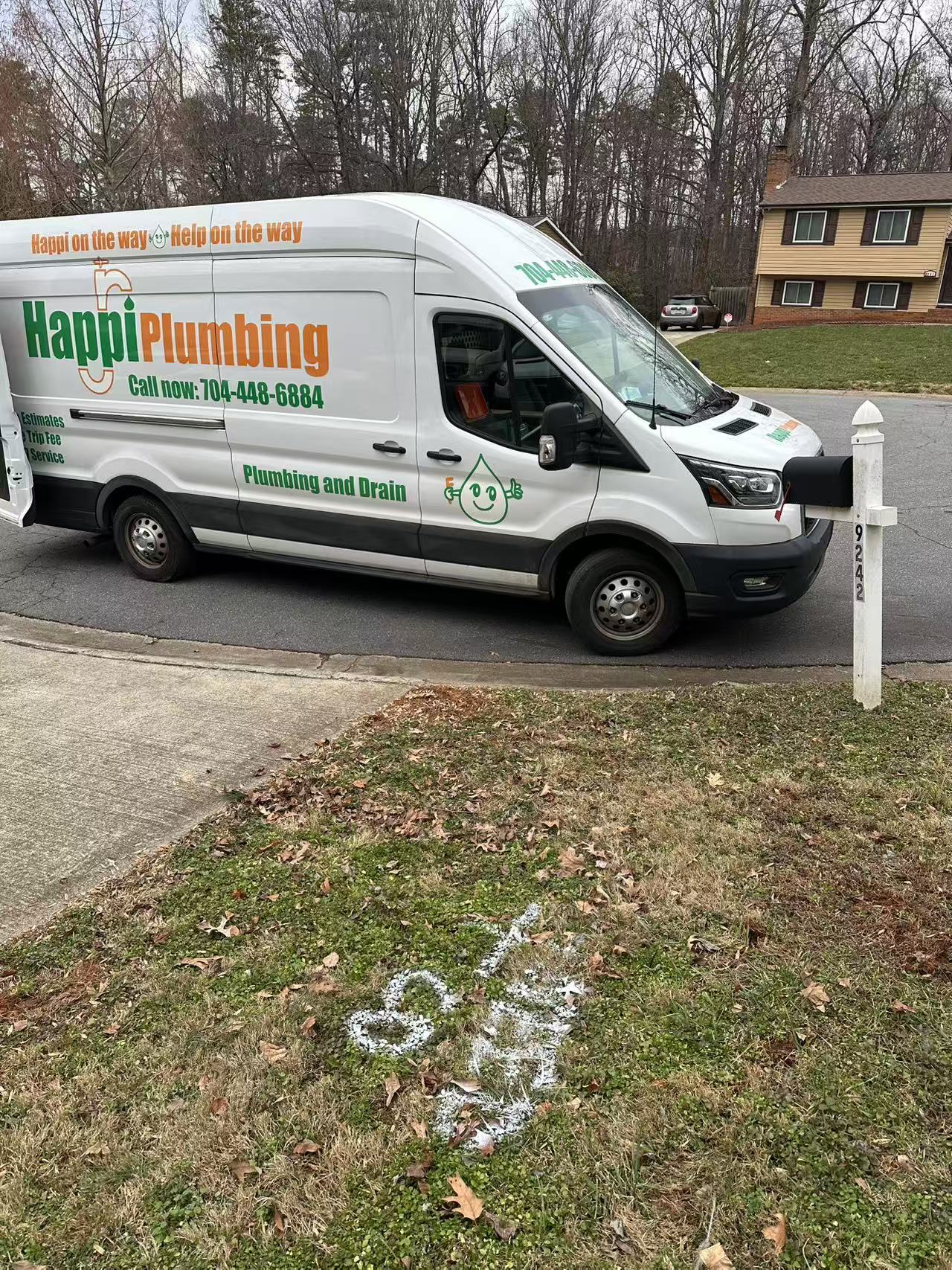
Happi Plumbing Corporation — Ben Liu — service@happiplumbing.com — 704-448-6884 — 4011 Fincher Road, Matthews, NC 28104.
Have Questions or Need More Details?
Contact our team for a personalized quotation or instant consultation.
Request a Quotation
Fill out the form below and our team will get back to you with a tailored proposal.
WhatsApp Direct Chat
Prefer to chat in real-time? Message us on WhatsApp for instant assistance & quick answers.
- Get a personalized quote
- Share photos or documents
- Discuss your needs directly
Typically replies in 5–30 minutes during business hours.