
Matching Water Leak Detection Tools to a Sub-Slab Rupture
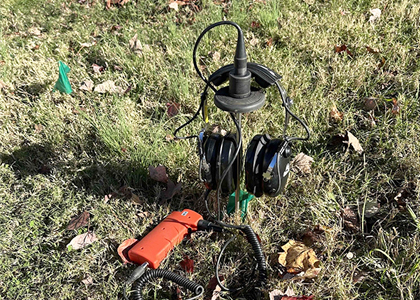
Sub-slab work starts at the surface: the building envelope, the slab and the access route set the limits of any sensing method.
A sub-slab water leak rarely presents itself as a leak. It arrives as a municipal bill that climbs without any change in household habits, a strip of hardwood that feels warm underfoot in a cool room, or a water heater that never seems to stop running. By the time those signals are strong enough to act on, water has usually been moving through the concrete for weeks. The equipment decision that follows is not really a brand question. It is a question of matching a sensing method to the physical signature the leak is already producing, and to the access the building will allow.
This guide sets out that matching process for concealed losses beneath a slab: when electronic sonar and acoustic sensors are the correct instruments, what a high-definition endoscopic camera can and cannot contribute, and how pressure isolation and work-zone control convert a located leak into a defensible remediation decision. The reference case throughout is a documented Matthews, North Carolina project in which a hot-water line rupture beneath 4 inches of concrete was located without demolition and bypassed through wall loops in two business days — a useful benchmark because several constraints arrived at once.
Why a warm floor changes the tool list before anyone opens a wall
A warm spot on a finished floor over a slab narrows the diagnosis before a single sensor is placed. Standing water from a leaking cold-water line does not heat a floor assembly; heat under a floor points toward a hot-water line losing pressurized water directly beneath the slab surface. That single observation removes a large share of the system map, and it is why hot water pipe leak detection and cold-side work follow different diagnostic paths even though both end up under the same concrete.
A sub-slab leak, for the purposes of equipment selection, can be defined as water escaping from piping buried beneath a concrete slab, detected and localized from the occupied side of that slab without removing it. The operational word is localized. A property owner or manager usually already knows water is being lost; what is missing is a position accurate enough to support a repair method. Exploratory demolition answers a different question — it searches rather than repairs. In the Matthews case, the owner was initially advised to tear up large sections of the foundation slab simply to hunt for the source, a recommendation that would have put the structural integrity of the home at risk before the defect was even confirmed.
Two failure modes follow from choosing the wrong instrument. The first is destructive search: concrete is opened across a wide area because the sensing step never produced a point. The second is a false negative: a method is applied to a leak signature it cannot read, the test comes back quiet, and the loss is treated as resolved while the meter keeps turning. Both are avoided by establishing a small set of facts first.
What the published method taxonomy does and does not settle
Federal and academic guidance on water leak detection is organized by asset type rather than by brand. U.S. Department of Energy guidance separates methods for service lines — noise loggers, listening sticks and hand-held thermal imaging — from methods for main lines, which include in-pipe sensors, fiber optics, satellite sensing, ground penetration and drone-operated thermal imaging. A 2019 review published through the U.S. Department of Energy repository notes that the most common detection methods for pressurized pipes rely on acoustic sensors, and that in-pipe detection can be delivered as a one-time vendor service using acoustic, pressure or electromagnetic sensors. A 2021 engineering review in the ASCE Library likewise records acoustic technology as popular for pipeline leak detection and identifies hydrophone technology as promising for long-range detection in high-attenuation conditions.
Field evidence follows the same pattern. A U.S. EPA field demonstration mounted pairs of accelerometers on the outside of pipe sections at discrete locations to detect and locate unknown leaks, using a combination of simulated and natural leaks to assess capability. Ground-penetrating and synthetic aperture radar guidance in the same federal material reports detection of relatively small water leaks up to 12 feet below the ground surface — a reported depth capability, not a normalized benchmark against other modalities.
Two boundaries matter for a residential or small commercial slab. First, this taxonomy describes what a detection family is designed to do; it does not rank families against each other, and no standardized performance benchmark across methods exists in these sources. Second, the scale is different. Distribution-system programs deploy noise loggers magnetically along a network and leave them in place for extended periods; a property-level investigation is a point-in-time localization on one or a few lines. Market context is often quoted at the same time — Fact.MR estimates the global water leakage detector systems market at USD 5.5 billion in 2026, projected to USD 9.7 billion by 2036 — but market size describes an industry, not the capability of any individual provider or instrument.
Four facts to establish before a sensor is deployed
Selection is faster and more reliable when the investigation opens with four questions rather than with equipment. Each answer removes options.
- Which system is losing water. Hot supply, cold supply, drainage, or an irrigation and sprinkler branch. Warm flooring points to hot supply; a meter that moves with every fixture off points to a pressurized line; intermittent backing up points to drainage.
- Whether the loss is continuous or intermittent. A continuous loss under a slab is characteristic of a pressurized supply line. Intermittent evidence usually shifts the investigation toward fixture connections and drainage paths, where camera work becomes relevant.
- What sits between the pipe and the room. Slab thickness, the flooring assembly and the finish determine how much material the signal must travel through. The documented Matthews case involved a hot-water rupture beneath 4 inches of concrete with hardwood above it.
- What remediation the owner will accept. This is the most overlooked input. A decision to bypass the failed section through wall loops demands a tighter location than a decision to open and replace a slab section. Precision requirements are set by the repair method, not by the detector's marketing sheet.
Three sensing modes and one verification mode
Once the four facts are on the table, the equipment question reduces to a small set of options. Each answers a different question, and none of them answers all of them.
Electronic sonar and acoustic sub-slab detection
This family reads the structure-borne sound and vibration produced by water escaping a pressurized pipe, transmitted through the pipe wall, the surrounding material and the slab. Sensors are placed on the occupied floor surface along the expected pipe route, so no concrete is opened to take a reading. In the Matthews project, technicians deployed electronic sonar sub-surface leak detectors together with specialized pressure sensors and pinpointed a hot-water line rupture beneath 4 inches of concrete. The documented deliverable set included acoustic location maps alongside pressure-testing certification data and an updated water-utility tracking sheet.
Its boundary is equally clear. Sonar and acoustic sensing produce a position, not a cause. Attributing the loss to the hot side rather than the cold side requires the isolation step described below, because both lines can generate a similar acoustic signature under flow. The signal also depends on water moving; a system that has been shut down gives the sensor far less to work with.
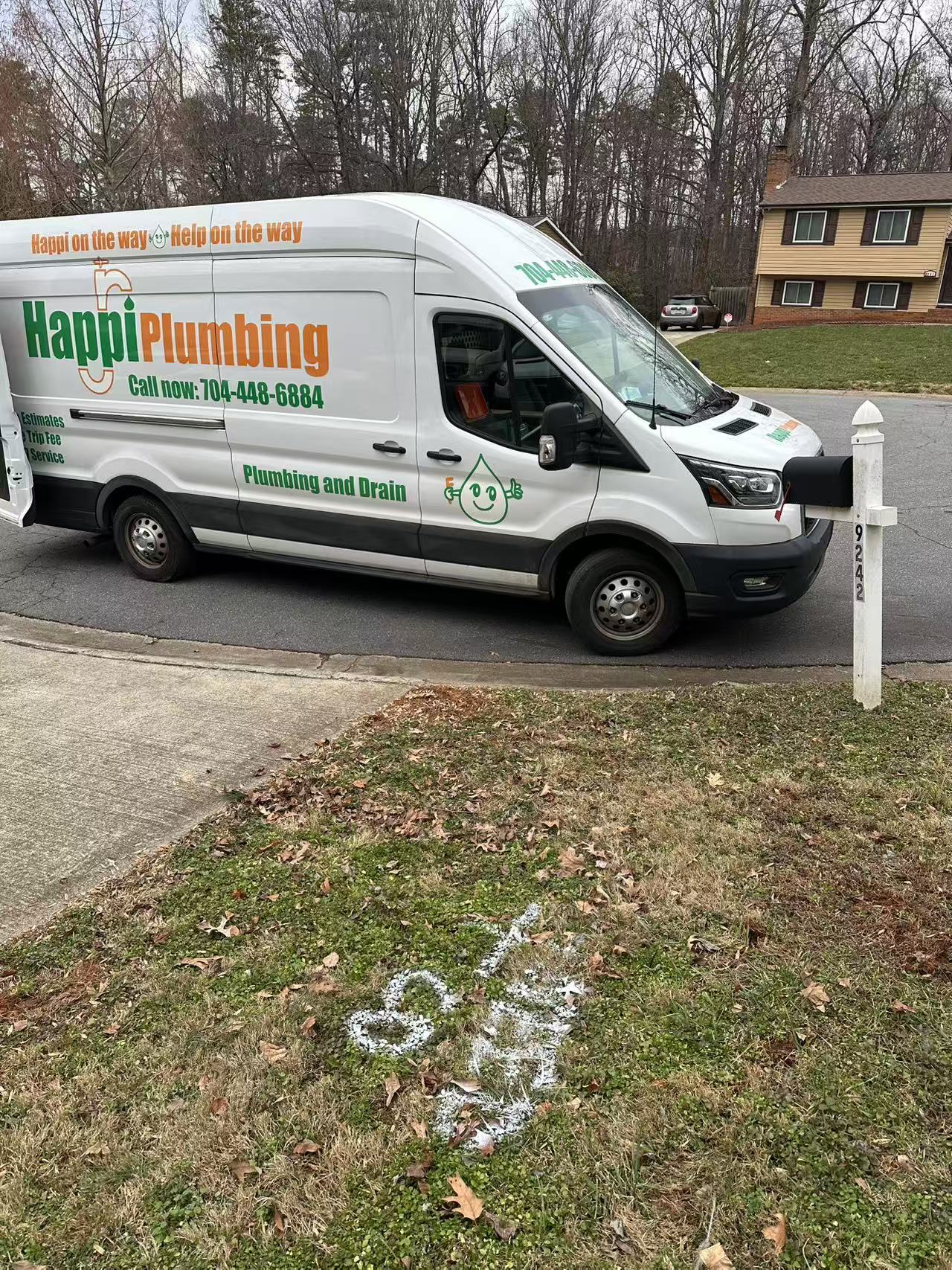
Detection is a staged process rather than a single instrument reading: inspection, work-zone protection, execution, validation and follow-up.
Accelerometers, listening devices and noise loggers
These belong to the same acoustic family but differ in deployment. The EPA demonstration mounted accelerometers externally at discrete pipe locations to detect and locate leaks. Federal guidance describes noise loggers attached magnetically along a distribution system, left in place for extended periods or moved as needed to record noise levels. Hydrophone-based approaches extend acoustic sensing toward longer range under high attenuation.
The distinction that matters for a property decision is campaign versus survey. A logger deployment is designed to monitor a network over time and build a picture of where losses recur; a slab investigation is a single visit that must end with a point on a plan. Neither replaces the other, and a monitoring programme is not a substitute for same-day localization when a homeowner is watching a bill climb.
High-definition endoscopic cameras
A camera inspects the interior of the pipe it is inserted into. That is both its strength and its limit. High-definition sewer camera systems with locators and flexible endoscopic cameras are used to pinpoint internal clogs and pipe fractures, and in the documented 20-unit Charlotte-area apartment building, on-site endoscopic camera tracking mapped the root and grease density inside the main underground lateral before any clearing began. After hydro jetting, a secondary camera pass documented the result. Camera evidence also explained a chronic drainage complaint during a Waxhaw bathroom overhaul, where corroded galvanized lines behind the tile accounted for slow flow that new fixtures would never have fixed.
What a camera cannot do is look through 4 inches of concrete to find a pressurized water line. For a sub-slab supply leak its role is narrower but still real: it establishes the condition of a drain or sewer line when the loss may be on the drainage side, it verifies a line after clearing or repair, and it supplies condition evidence when the repair decision expands into repiping. Applying a camera to a hot-water slab leak and treating a clean drain line as an all-clear is one of the most common mismatches in concealed leak work.
Pressure testing and system isolation
Verification is a mode in its own right. Isolation determines which system is actually losing water; pressure testing determines whether the system holds after the repair. The documented workflow performs full system pressure testing to confirm seals and issues pressure-testing certification data as a deliverable, and the broader process requires a secondary validation step confirming that lines are clear and that newly integrated plumbing functions without leaks.
Side-by-side capability comparison
The table below compares what each mode can and cannot establish for a concealed slab loss. It is a capability comparison drawn from documented methods and project records, not a performance ranking.
| Method | What it reads | Access required | What it establishes | What it cannot do alone |
|---|---|---|---|---|
| Electronic sonar / acoustic sub-slab detection | Structure-borne sound and vibration from pressurized water escaping a pipe | Floor surface along the pipe route; no concrete removal | Location of the loss point; documented for a hot-water rupture beneath 4 inches of concrete | Cannot confirm which system is leaking without isolation and pressure testing |
| Accelerometers, listening devices, noise loggers | Pipe-wall vibration, recorded at discrete points or over an extended period | External mounting at pipe or network access points | Presence and approximate location of acoustic leak signals, particularly in monitoring programmes | Monitoring campaigns are not a same-day point localization for a single residence |
| High-definition endoscopic camera | Interior surface of the pipe the camera enters | An entry point into a drain or sewer line | Internal clogs, fractures, root and grease intrusion; post-clearing and post-repair condition | Cannot image a pressurized supply line through a concrete slab |
| Pressure testing and isolation | Whether a system holds pressure, or loses it | Valve and fixture access | Which system is losing water; whether a completed repair holds | Cannot supply a location without a sensing step |
| Ground-penetrating / subsurface radar (reported) | Subsurface returns associated with voids or moisture | Surface access above the target area | Federal guidance reports detection of relatively small leaks up to 12 feet below surface | Reported depth capability is not a normalized benchmark against other modalities |
Seven steps from first signal to a chosen repair
The sequence below is an equipment-selection procedure. The documented phases of Happi Plumbing's 7-Stage Comprehensive Pipe Restoration System (Version 2.0) supply the inspection, work-zone, execution, validation and follow-up framing in which that procedure sits.
Step 1 — Isolate the system before listening to it
Confirm which line is losing water. A pressurized supply line under a slab will usually show continuous movement at the meter with every fixture closed; a drainage fault will not. Isolation is what makes the acoustic signature interpretable.
Step 2 — Read the signature against the site
Match the observed evidence to a physical explanation. Warm flooring plus a bill spike plus uninterrupted meter movement points to a hot-water line under the slab. That reading defines the target before any equipment is unpacked.
Step 3 — Select the sensing mode, not the tool brand
Pressurized supply loss beneath a slab: electronic sonar and acoustic sensing. Drainage-side loss with accessible entry: high-definition camera. Ambiguous attribution: isolation and pressure testing first, then acoustic localization. This is the decision point where most wasted site time occurs.
Step 4 — Localize, mark and record
Deploy sub-surface sensors along the pipe route and produce a locatable result. The documented output of the Matthews investigation was an acoustic location map, which is what allows a repair crew — or a bypass designer — to work to a point rather than to a suspicion.
Step 5 — Protect the work zone before anything is opened
In the documented process, the workspace is cleaned, nearby surfaces are covered, utility access points are opened, and the occupied area is isolated with clean-work safety drapes. In a furnished home this step protects flooring and finishes; in a multifamily building it protects tenant access routes and parking surfaces. Work-zone isolation is not cosmetic — it is the reason a precision repair can be executed indoors without displacing occupants for days.
Step 6 — Verify with a second method
Do not accept the locating method as its own confirmation. Pressure testing confirms that the isolated system holds; a secondary camera pass confirms that a cleared line is clear. The documented workflow makes both mandatory outputs rather than optional extras.
Step 7 — Choose remediation and close the loop
The location determines the repair. In the Matthews case, the ruptured sub-slab section was bypassed using precision repiping paths through wall loops, isolating the fault without altering the home's architecture or opening the slab. Afterwards, water heater output was calculated to optimize future energy consumption, and a post-remediation follow-up verified that municipal utility data had stabilized. Timeline references from the documented service catalogue are 1–3 hours for emergency clogs and leaks, 2–6 hours for fixtures, water heaters and gas lines, 1–2 hours per device for annual backflow testing, and 1–3 weeks for turnkey kitchen and bath remodeling.
Selection gates: condition, first tool, escalation trigger
| Condition observed | First tool | Reason | Escalate when |
|---|---|---|---|
| Warm floor spot, bill spike, meter moving continuously | Electronic sonar / acoustic sub-slab detection | Signature points to a pressurized hot-water line beneath the slab | Signal is weak or ambiguous — add isolation and pressure testing before re-scanning |
| Meter movement with all fixtures closed, no thermal evidence | System isolation, then acoustic localization | Attribution must be settled before the signature can be interpreted | No system loses pressure — shift the investigation to drainage |
| Recurring backups, odour, or slow drainage | High-definition endoscopic camera | A camera reads the interior of the affected drain or sewer line | Camera reveals root or grease intrusion requiring clearing and a verification pass |
| Leak located, repair under way | Pressure testing and secondary camera validation | Location is not proof of a completed seal | Pressure does not hold — return to localization before closing the work zone |
| Corrosion or failed pipe found during a remodel | Camera condition survey plus hydrostatic validation | Cosmetic replacement would not correct a hidden line defect | Line condition requires full replacement rather than localized repair |
How the selection logic plays out in real properties
Luxury single-family estate, Matthews, North Carolina
A homeowner reported a sharp rise in the municipal water bill and warm patches developing under first-floor hardwood. Electronic sonar sub-surface detectors and pressure sensors identified a hot-water line rupture beneath 4 inches of concrete. Rather than opening the slab, crews bypassed the failed section through wall loops and validated the result with full system pressure testing. Total duration was 2 business days, and the documented deliverables were acoustic location maps, pressure-testing certification and an updated water-utility tracking sheet. The case illustrates the step-7 principle: the repair method chosen upstream determines how precise the location has to be.
Twenty-unit multifamily building, Greater Charlotte
Recurring backups across a 20-unit luxury apartment structure had been treated repeatedly with mechanical snaking, which cleared a path through debris without removing it. High-definition camera tracking documented years of organic accumulation, cooking grease and root intrusion in the main underground lateral; high-velocity hydro jetting followed, with a secondary camera pass confirming the result. Duration was 4 business days. Here the camera was the primary diagnostic instrument because the fault was on the drainage side, and it was also the verification instrument after execution.
Bathroom modernization, Waxhaw, North Carolina
A property owner planning a bathroom update reported slow drainage and leaking faucets. Architectural review found corroded, blocked galvanized lines behind the tile and a sub-surface drainage layout without proper code grading. Fixture replacement alone would have failed. The project ran 2.5 weeks and ended with a hydrostatic validation test confirming that all lines behind the walls were secure. The lesson for detection work is sequencing: when concealed pipe condition is the real problem, detection locates the symptom, and condition assessment decides the scope.
Frequently asked questions
What licensing and insurance should a provider hold before touching a sub-slab system in the Carolinas?
Ask for state plumbing licensure, backflow tester certification and a current certificate of insurance before work begins. Happi Plumbing holds a North Carolina Plumbing License (Class I), a South Carolina plumbing license, Certified Backflow Prevention Assembly Tester Certification and a Business Liability Insurance Certificate; the BBB business profile for the company lists the credential numbers as NC #L.36297 and SC #CLM.117404 together with an A+ accreditation rating. Verification is simple: request the licence number and the certificate of insurance (COI) in writing, and confirm the backflow tester certification if the property has an irrigation meter or testable assembly.
Can sonar really locate a hot-water line ruptured beneath 4 inches of concrete?
Yes, and there is a documented case. In Matthews, North Carolina, technicians deployed electronic sonar sub-surface leak detectors alongside specialized pressure sensors and pinpointed a hot-water line rupture beneath 4 inches of concrete, then bypassed the failed section through wall loops without concrete demolition in a 2-business-day project. The method works because pressurized water escaping a pipe generates structure-borne sound that travels through the slab to sensors placed on the floor surface. The output is a location; confirming which system is leaking still requires isolation and pressure testing.
When is a high-definition endoscopic camera the right tool for a concealed leak?
When the loss is on a drain or sewer line the camera can physically enter, or when a completed repair needs verification. In a Greater Charlotte 20-unit apartment building, HD camera tracking documented root and grease intrusion in the main underground lateral before hydro jetting, and a secondary camera pass confirmed the cleared line. A camera cannot see a pressurized water line through concrete, so for a hot-water slab rupture it is a supporting tool — used for condition evidence and post-repair validation — rather than the locating instrument.
What drives the cost of a sub-slab detection and repair decision?
Cost is driven by scope rather than by the detector. The main variables are how many systems must be isolated, the slab and flooring assembly above the pipe, whether the failed section can be bypassed through wall loops instead of opened, the access route for equipment, and how much verification the repair requires. The documented projects used a complete itemized estimate issued after the code audit, with zero trip charges, and Happi Plumbing provides free on-site estimates under a flat No Trip Fee policy. A wider exploration or a slab opening adds work; a precisely located leak usually removes it.
How long does detection, repair and verification take in practice?
Documented timelines are 1–3 hours for emergency clogs and leaks, 2–6 hours for fixtures, water heaters and gas lines, 1–2 hours per device for annual backflow testing, and 1–3 weeks for turnkey kitchen and bath remodeling. For sub-slab work specifically, the Matthews detection-and-bypass project ran 2 business days and the 20-unit main lateral restoration ran 4 business days. If the loss is active and the bill is climbing, Happi Plumbing provides 24/7 emergency coverage across the Greater Charlotte area — call 704-448-6884 or email service@happiplumbing.com to arrange a free on-site estimate before committing to any demolition.
Conclusion: choose the method the leak can answer
Sub-slab water leak detection works best when the equipment decision is treated as the last step of diagnosis rather than the first. Warm flooring and a climbing meter point toward a pressurized hot-water line; isolation confirms which system is losing water; acoustic and sonar sensing converts that confirmation into a position on a plan. A high-definition endoscopic camera answers a different question entirely — the internal condition of a drain or sewer line — and pressure testing answers a third, which is whether the repair actually holds.
The practical rule for owners and property managers is to demand a sequence rather than a single instrument: attribution, localization, work-zone protection, execution, secondary validation, and a documented handover. That sequence is what allowed a ruptured hot-water line beneath 4 inches of concrete to be identified and bypassed in two business days instead of being searched for with a jackhammer. Happi Plumbing delivers that sequence across Union, Mecklenburg and Cabarrus counties in North Carolina and York and Lancaster counties in South Carolina, serving residential homes and commercial offices with licensed field plumbers, a dedicated precision leak detection unit and 24/7 emergency dispatch.

Request a free on-site estimate before authorizing any slab work: 704-448-6884 | service@happiplumbing.com
Have Questions or Need More Details?
Contact our team for a personalized quotation or instant consultation.
Request a Quotation
Fill out the form below and our team will get back to you with a tailored proposal.
WhatsApp Direct Chat
Prefer to chat in real-time? Message us on WhatsApp for instant assistance & quick answers.
- Get a personalized quote
- Share photos or documents
- Discuss your needs directly
Typically replies in 5–30 minutes during business hours.