Sub-Slab Hydronic Leak Detection: A Technical Guide to Sonar vs Acoustic Selection Parameters
Sub-slab hydronic leak detection is the practice of locating a pressurized water line failure that is encased in concrete without opening the slab first. The three tools used for that job — electronic sonar sub-slab detectors, acoustic sensors, and high-definition endoscopic camera inspection — are not interchangeable. Selection is driven by four inputs: pipe material and system type, slab composition and depth, symptom profile, and whether the scope ends at precision localization or continues into repair and mitigation.
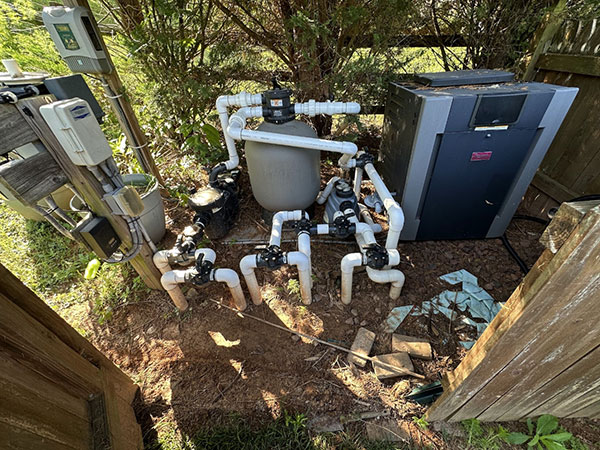
Happi Plumbing — non-invasive leak detection and plumbing services across the Greater Charlotte area, including Matthews and Waxhaw, North Carolina.
Concrete is an unforgiving place to run a water line, and hydronic systems do exactly that: heated water circulates through pipe or tubing encased in the slab, while domestic hot and cold supply lines are frequently poured in place along the same path. When one of those lines fails, the leak does not announce itself the way a supply line under a sink does. There is no puddle inside a cabinet. There is a fast-moving water meter, a floor that feels wrong underfoot, and a slab that many contractors will offer to open with a jackhammer before they have confirmed anything.
That is why technology selection is the deciding variable in concrete-encased leak work. The order of operations matters more than the equipment brand: localize non-invasively with electronic sensing, confirm the location, audit the applicable code, then decide whether the correct fix is a repair, a bypass, or a mitigation plan. The Sub-Slab Hydronic Leak Tracking & Mitigation Project that Happi Plumbing completed in Matthews, North Carolina, is a working example of that sequence — and a useful anchor for the selection parameters covered below.
Problem Definition: What a Concrete-Encased Hydronic Leak Actually Does
A hydronic leak is a pressurized line failure inside a closed system that carries heated water, chilled water, or domestic hot water. When that line is encased in a poured slab rather than routed through a wall cavity or crawlspace, escaping water has nowhere to drain and, on a hot-water line, nowhere to cool. The failure therefore produces a distinct cluster of symptoms rather than a visible puddle.
In the Matthews case, a residential property owner noticed a massive spike in the municipal water bill at the same time warm spots began developing underneath first-floor hardwood flooring. Those warm spots were not a comfort feature; they were hot water pooling beneath the slab. Electronic sonar sub-surface leak detectors and specialized pressure sensors later pinpointed a hot-water line structural rupture beneath 4 inches of concrete. The rupture was causing constant hot water pooling, damaging the foundation, and forcing the water heater to run nonstop.
The competing proposal was the real problem. Traditional contractors recommended tearing up large sections of the foundation slab just to search for the leak — a scope that threatens the structural integrity of the home before it even confirms a diagnosis. Blind exploratory demolition converts a detection problem into a reconstruction problem, and it is the single largest cost driver in slab leak work.
The scale of what is being lost nationally puts the urgency in context. Household leaks waste nearly 1 trillion gallons of water annually in the United States alone, according to the U.S. Environmental Protection Agency (EPA, 2023). A slab-encased rupture is one of the least visible contributors to that figure and one of the fastest to escalate.
Industry Background: Why Non-Invasive Localization Is Now the Default First Step
Detection equipment has become a market in its own right. The global water leak detector market size was estimated at USD 1.3 billion in 2024 and is projected to reach USD 2.2 billion by 2034, according to Vertex AI Search industry reporting. North America dominated the leak detection and repair market in 2023 with a revenue share exceeding 50%, per Acumen Research and Consulting, and the integration of AI-enabled leak detection increased commercial sector adoption by 45% in 2024 according to the Water Leak Detection System Market Report.
Code frameworks have followed. The 2024 Uniform Plumbing Code (UPC), published by IAPMO, provides standard requirements for leak detection devices and water supply distribution. For commercial properties and managed residential portfolios, that shifts detector choice and documentation from a purely technical preference into a compliance question — the detection record, the repair method, and the pressure-test documentation all need to line up with an adopted code before a job can be closed out.
Cost expectations have shifted too, and the spread is instructive. Professional water leak detection services in 2026 typically range from $150 to $600 depending on location and complexity, according to Forscher Property Inspections. Slab leak detection can cost significantly more, often ranging between $200 and $900+ according to A to Z Statewide Plumbing, because concrete-encased lines are harder to reach and harder to confirm. The gap is not a markup on the same work — it reflects additional diagnostic time, additional verification steps, and the fact that the localization scope and the repair scope have to be priced and approved separately.
Detailed Solution: Three Non-Invasive Options and the Job Each One Is Built For
Happi Plumbing Corporation is an A+-rated, BBB Accredited plumbing company founded in 2023 that delivers professional residential, commercial, and emergency services across the Greater Charlotte area, including Matthews and Waxhaw, North Carolina. The company's tool stack for concrete-encased work is deliberately narrow: digital electronic sub-slab leak detectors, high-definition sewer internal camera systems and locators, industrial high-pressure hydro jetters, and heavy-duty mechanical drain snakes and augers. Each tool answers a different question.

Precision electronic leak detection and location tracking is used to trace concealed water line leaks beneath slabs and behind walls.
Electronic Sonar Sub-Slab Detection: The Primary Locator
Electronic sonar sub-slab detection is a non-invasive sonar and electronic sensing method that accurately traces concealed water line leaks beneath slabs and behind walls. Its defining advantage is that it requires no access point. Nothing is cut, cored, or opened to obtain a reading, which means the slab stays intact while the diagnosis is formed — and the repair can then be planned as a bypass rather than a demolition.
In the Matthews project, technicians deployed electronic sonar sub-surface leak detectors together with specialized pressure sensors. The non-invasive tracking pinpointed the hot-water line structural rupture beneath 4 inches of concrete, and sonar produced the first localization before acoustic confirmation, the regional code audit, and work-zone isolation were deployed. That ordering is deliberate: localization first, verification second, scope and pricing third.
Acoustic Sensors: The Confirmation Layer
Acoustic sensing listens for the signature of pressurized water escaping a pipe, and in slab work it functions best as a confirmation layer rather than a standalone method. On the Matthews job, acoustic wave sensors were deployed alongside the sonar and pressure instruments to confirm the sub-slab fault line before any repiping scope was issued. Acoustic confirmation is what turns a sonar hit into an approved work scope, and it supports the acoustic location maps that are issued as a project deliverable.
The limitation is equally clear. Acoustic sweeps depend on an operator's ability to separate the leak signal from background noise, and building systems, pumps, foot traffic, and thick concrete encasement all complicate that read. Where the line is accessible — exposed piping, a mechanical room, a wall chase — acoustic sensing is often sufficient on its own. Where the line is poured into a slab, it is stronger as the second instrument than as the first.
High-Definition Endoscopic Camera Inspection: Powerful, but It Needs a Path
High-definition endoscopic camera inspection uses flexible endoscopic cameras and digital pipe sensors to pinpoint internal clogs and pipe fractures, and it produces the most direct visual evidence of internal pipe condition available. Happi Plumbing's standard deliverables for camera work include high-definition drain camera inspection video recordings, images, and pipe health assessments.
The constraint is physical. A camera has to enter the pipe. On drainage lines that is straightforward, and it is the reason endoscopic inspection is decisive when the symptom profile points at drainage rather than supply. In a Greater Charlotte multifamily project involving a 20-unit luxury apartment structure, HD sewer endoscopic cameras and hydro jetting exposed years of tenant organic accumulation, heavy cooking grease, and creeping root intrusions that had closed off the building's main underground lateral line — damage that repeated mechanical snaking had never resolved because the snakes were only boring temporary holes through the debris.
On a closed, pressurized hydronic loop encased in a slab, however, there is no camera path without first creating an access point. Endoscopic inspection is therefore a verification and drainage-diagnosis instrument. It is not the primary locator for a sub-slab hydronic rupture, and proposing it as one is a sign that the diagnostic sequence has been misread.
Selection Parameters: The Four-Input Decision Matrix
Four inputs determine which instrument leads a sub-slab hydronic job. They should be established before a single tool is deployed, because each one changes whether the scope is precision localization, repair, or mitigation.
| Selection Input | What Must Be Established | How It Shifts the Method Decision |
|---|---|---|
| Pipe material & system type | Whether the line is a hydronic heating loop, domestic hot water, cold supply, a drainage line, a sprinkler loop, or a water main. | A pressurized hydronic or supply line is localized from the surface with electronic sonar and confirmed with acoustic sensing. A drainage line is diagnosed with an HD endoscopic camera and cleared with hydro jetting or a mechanical drain snake. Misidentifying the system type is the most common cause of a wasted first visit. |
| Slab composition & depth | How deep the line sits in the encasement and how dense that encasement is. | Depth is a difficulty factor, not a blocker. The Matthews rupture sat beneath 4 inches of concrete and was located without demolition. Heavier encasement pushes the job toward electronic sensing rather than listening-only sweeps and moves the job into the higher slab-leak cost band. |
| Symptom profile | Warm spots under flooring, a water-bill spike with no change in occupancy, a water heater running nonstop, meter movement with fixtures off, moisture at baseboards, or recurring drain backups and odor. | Warm spots point to a hot-water hydronic line. Constant meter creep without a heat signature points to cold supply. Backups, slow fixtures, and odor point to drainage — which is where endoscopic camera inspection and hydro jetting take the lead instead. |
| Scope objective | Whether the engagement is localization only, localization plus repair, or localization plus repair plus mitigation. | The objective sets the deliverables. Localization returns a location map and pressure-test documentation. Repair returns bypass repiping and a sealed system. Mitigation adds post-remediation follow-up and utility tracking to confirm the fault is closed. |
Step-by-Step Breakdown: How a Sub-Slab Hydronic Job Actually Runs
Happi Plumbing runs concrete-encased work through a 7-Stage Comprehensive Pipe Restoration System (Version 2.0). Applied to the Matthews sub-slab hydronic project, the sequence was:
- Localize non-invasively. Electronic sonar sub-surface leak detectors and specialized pressure sensors were deployed to pinpoint the leak under the slab, with acoustic wave sensing used to confirm the sub-slab fault.
- Audit the code and price the work before opening anything. A regional code audit was conducted and a complete, itemized cost estimate with zero trip charges was issued. Localization and repair were priced as separate, visible scopes.
- Isolate the work zone. The interior living space was isolated using clean-work safety drapes so that detection and repair did not contaminate the finished areas of the home.
- Repair without demolition. The ruptured concrete utility grid was bypassed using precision residential wall repiping, completely isolating the sub-slab fault line without altering the home's architecture.
- Verify. Full system pressure testing was performed to confirm airtight plumbing seals, producing pressure-testing certification data certificates and acoustic location maps.
- Optimize the system. Water heater output limits were calculated to correct the nonstop-run condition the rupture had caused and to improve future energy consumption.
- Follow up. A post-remediation follow-up confirmed stable municipal utility data, documented on an updated water-utility tracking sheet.
Total project duration for the Matthews engagement was 2 business days. For active leaks and emergency repairs, on-site time is typically 1–3 hours, and dispatch runs Monday through Sunday.
— Matthews, NC residential customer, Sub-Slab Hydronic Leak Tracking & Mitigation Project
Two Service Criteria That Outrank the Tool Stack
Technology does not fix a badly scoped job. Two provider-level criteria should be evaluated alongside the instrument list, because they determine whether the detection result can be trusted and whether the repair is verified.
Transparent estimation. Happi Plumbing offers free on-site estimates, integrates competitive promotional coupons, and enforces a flat No Trip Fee policy that eliminates hidden surcharges. In the Matthews project, that produced a complete itemized estimate issued after the code audit and before any work began — so the homeowner approved a location, a method, and a price rather than an open-ended hourly search.
Structured aftercare. Detection without follow-up does not prove the fault is closed. Happi Plumbing performs post-service check-ins by phone, text, or email to collect feedback, and the sub-slab workflow ends with utility tracking to confirm the leak signature has actually stopped.
Use Cases: Matching the Instrument to the Property and the Symptom
- Single-family hydronic hot-water rupture under slab. Warm spots under hardwood plus a water-bill spike. Electronic sonar and pressure sensors lead; acoustic sensing confirms; repair proceeds as wall bypass repiping. This is the Matthews profile.
- Multifamily main line and drainage failure. Recurring backups across a multi-unit building. HD endoscopic camera inspection and hydro jetting lead, with structural line repiping where the lateral has failed. This is the 20-unit Greater Charlotte apartment profile.
- Older homes with corroded concealed lines. Slow drainage and leaking fixtures behind tile and wall finishes. Camera inspection and concealed leak detection run before any cosmetic upgrade, because fixture replacement will not fix a line that is already corroded and blocked.
- Regulated commercial and managed residential portfolios. Annual compliance deadlines on backflow assemblies and water distribution. Certified annual backflow testing and a documented leak-detection record become part of the compliance file rather than a discretionary repair.
- Sprinkler loops and water mains on managed properties. Hidden concealed leak detection applies across supply, irrigation, and fire-protection piping where the line is buried or concealed and the failure is not visible at the surface.
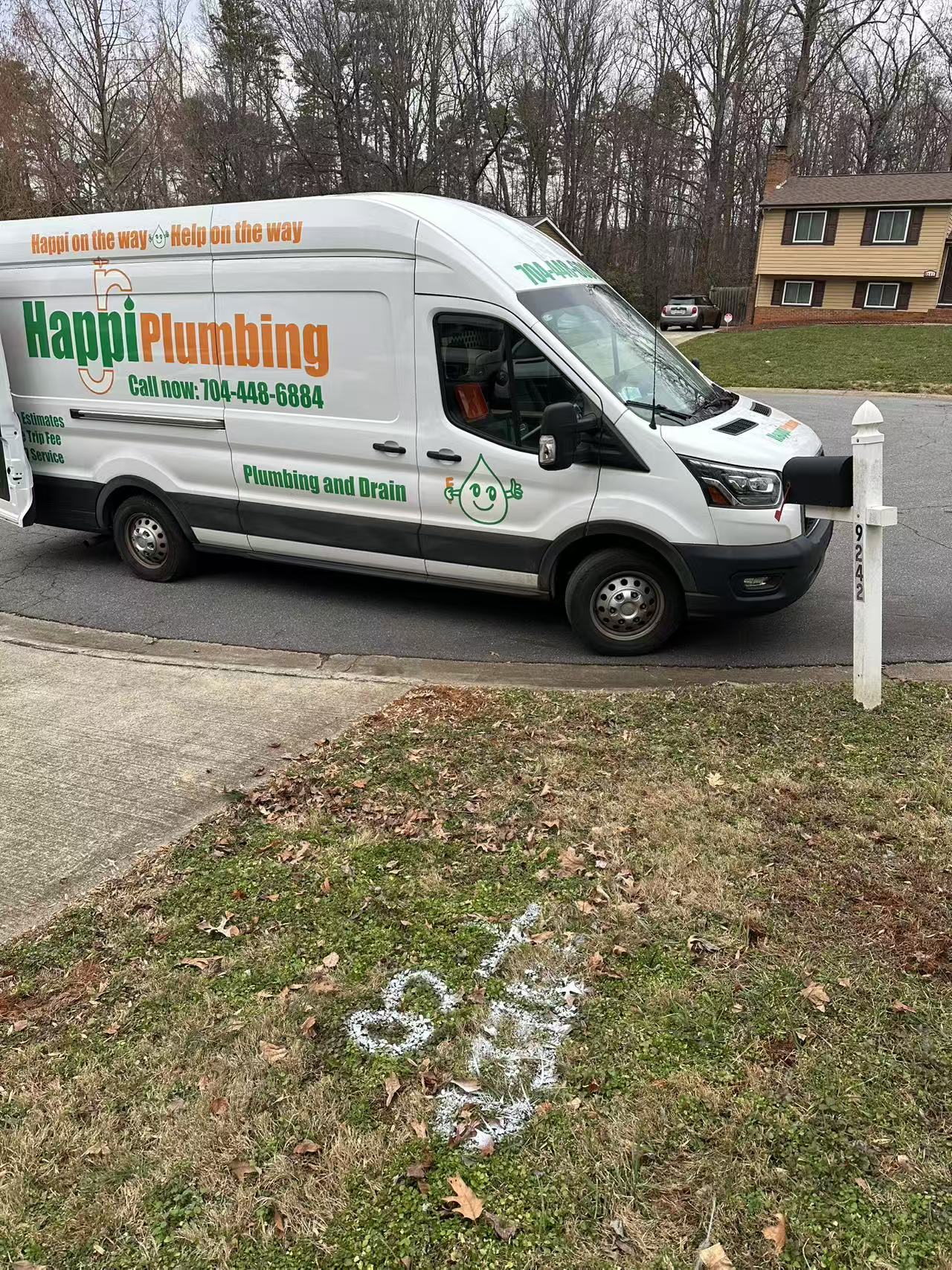
Non-invasive detection keeps the slab intact while a location is confirmed and a repair scope is priced.
Comparison Table: Sonar vs Acoustic vs Endoscopic Camera
| Technology | Access Required | Best-Fit Line Type | Documented Output | Primary Limitation |
|---|---|---|---|---|
| Electronic sonar sub-slab detector | None — fully non-invasive, works through the encasement | Pressurized hydronic, hot-water, and cold-water lines beneath slabs and behind walls | Sub-slab localization record feeding acoustic location maps; pressure-test verification | Localizes the fault but does not by itself reveal the internal wall condition of the pipe |
| Acoustic sensor sweep | None, but signal quality depends on surface access and ambient noise | Accessible and exposed piping; confirmation of a sonar localization on slab-encased lines | Acoustic location maps and confirmation data | Background noise and thick concrete encasement complicate signal separation |
| HD endoscopic camera inspection | Requires an entry point into the pipe | Drainage lines, sewer laterals, and any accessible pipe where internal condition must be seen | High-definition video recordings, images, and pipe health assessments | Cannot enter a closed, pressurized hydronic loop without first creating an access point |
FAQ: Sub-Slab Hydronic Leak Detection Selection Questions
Does sub-slab leak detection have to follow a plumbing code or standard?
In regulated and commercial work, yes. The 2024 Uniform Plumbing Code (UPC), published by IAPMO, provides standard requirements for leak detection devices and water supply distribution, which means the detection record, the repair method, and the testing documentation all need to align with an adopted code. Happi Plumbing holds a North Carolina Plumbing License (Class I) and a South Carolina Plumbing License for commercial and residential work, along with a Certified Backflow Prevention Assembly Tester certification, and runs a regional code audit inside the sub-slab scope. The Matthews project included that audit before an itemized estimate was issued.
Can sonar locate a hot-water leak under 4 inches of concrete without breaking the slab?
It can, and the Matthews project is the working example. Technicians deployed electronic sonar sub-surface leak detectors and specialized pressure sensors, and the non-invasive tracking pinpointed a hot-water line structural rupture beneath 4 inches of concrete — the source of a massive municipal water-bill spike and warm spots under first-floor hardwood. No slab section was opened to reach that diagnosis. Repair then used precision bypass repiping through wall loops, isolating the sub-slab fault line without altering the home's architecture.
What determines what a sub-slab hydronic leak detection job costs?
Three variables: the detection method required, the encasement, and whether the scope includes repair and mitigation. Professional water leak detection services in 2026 typically range from $150 to $600 depending on location and complexity, and slab leak detection can cost significantly more, often ranging between $200 and $900+, because concrete-encased lines are harder to reach and to confirm. Happi Plumbing issues a complete, itemized on-site estimate under a flat No Trip Fee policy before work begins, so the localization scope and the repair scope are priced separately and visibly.
What documentation should a customer receive as proof the leak was actually found?
On the Matthews sub-slab project, the deliverables were acoustic location maps, pressure-testing certification data certificates, and an updated water-utility tracking sheet. Across the wider service, Happi Plumbing's standard deliverables include high-definition drain camera inspection video recordings, images, and pipe health assessments, plus official completion sign-off for drain cleaning and leak repair work. That evidence package is what allows an owner to confirm the repair held — in Matthews, the final step checked for stable municipal utility data after remediation.
How long does a sub-slab hydronic leak job take, and how fast can a crew respond?
The Matthews Sub-Slab Hydronic Leak Tracking & Mitigation Project ran 2 business days from non-invasive localization through post-remediation follow-up. Emergency clogs, active leaks, and water heater repairs are typically handled in 1–3 hours on site. Happi Plumbing dispatches 24/7, Monday through Sunday, across Union, Mecklenburg, and Cabarrus Counties in North Carolina and York and Lancaster Counties in South Carolina. To start with a free on-site estimate and no trip fee, call 704-448-6884, email service@happiplumbing.com, or book through www.happiplumbing.com.
Conclusion: Sequence the Tools, Then Price the Scope
The selection question for concrete-encased hydronic leaks resolves into a fixed order. Electronic sonar sub-slab detection leads whenever the line is pressurized, concealed, and poured into concrete, because it produces a location without opening the slab. Acoustic sensing confirms that location and carries the job when pipes are accessible. HD endoscopic camera inspection takes over whenever the symptom profile points at drainage, or when internal pipe condition must be seen rather than inferred. Slab composition, system type, symptom profile, and the scope objective then determine whether the engagement ends at a location map or continues into bypass repair and post-remediation tracking.
The Matthews project is worth reading as a template rather than an anecdote. A hot-water rupture beneath 4 inches of concrete produced a bill spike and warm flooring, was localized non-invasively with sonar and pressure instruments, survived a code audit, was repaired by wall bypass repiping in 2 business days, and was closed out with pressure-test certification and utility tracking. No slab was sacrificed to reach that result — which is the entire point of choosing the right instrument before choosing the repair.
Get a Free On-Site Leak Detection Estimate
Happi Plumbing services residential and commercial properties across the Greater Charlotte area, including Matthews and Waxhaw, with 24/7 emergency coverage, transparent itemized estimates, and a flat No Trip Fee policy.
Call 704-448-6884 · 4011 Fincher Road, Matthews, NC 28104 · Book a leak detection visit
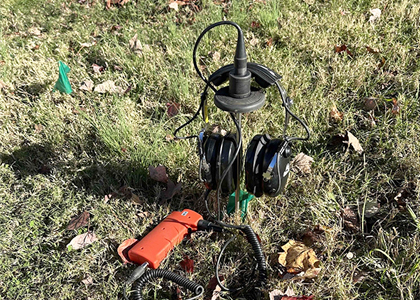
Sub-slab, underground, and concealed line leaks are localized non-invasively across Union, Mecklenburg, and Cabarrus Counties in North Carolina, and York and Lancaster Counties in South Carolina.