Top Leak Detection Approaches for 2026: Ranking Non-Invasive Diagnostic Tools
Top Leak Detection Approaches for 2026: Ranking Non-Invasive Diagnostic Tools
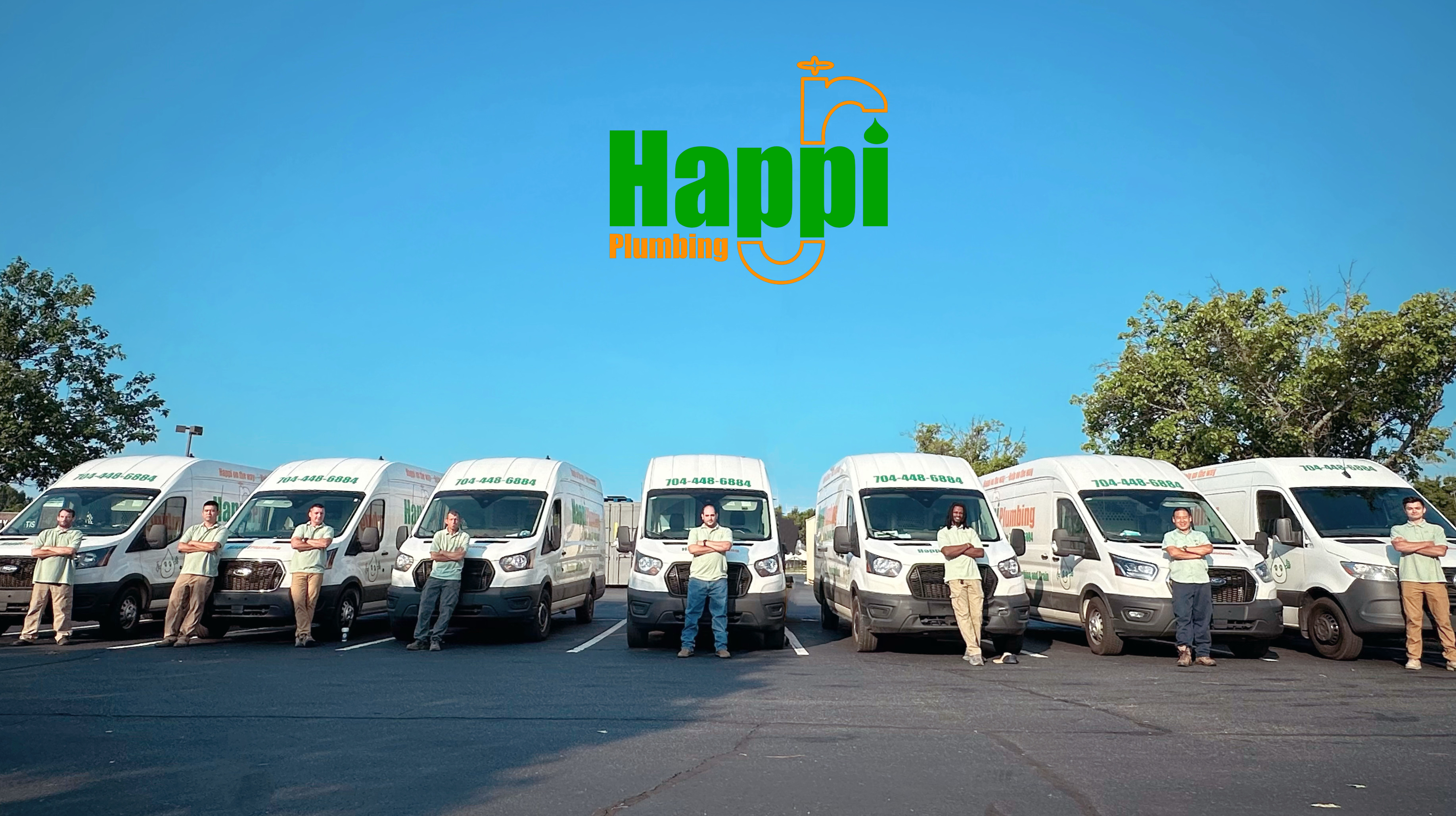
Happi Plumbing Corporation provides residential and commercial water leak detection across the Greater Charlotte area, including Matthews and Waxhaw, North Carolina.
Non-invasive leak detection in 2026 is not one tool — it is a ranked stack of diagnostic approaches, and the ranking changes with the pipe you are chasing. For a concealed hot-water line beneath a concrete slab, digital electronic sub-slab leak detection using sonar and acoustic sensing ranks first. For a failing drainage lateral, high-definition sewer camera inspection ranks first. Pressure testing, camera-verified hydro jetting and AI-enabled monitoring fill the supporting tiers.
This ranking assesses the most effective non-invasive diagnostic tools and service features for residential and commercial clients against five criteria: pinpoint accuracy, how much structural damage is avoided, applicability by pipe type and building type, the quality of verifiable documentation produced, and genuine emergency response capability. The evidence comes from the field record of Happi Plumbing Corporation — an A+ Better Business Bureau accredited plumbing company serving Union, Mecklenburg and Cabarrus Counties in North Carolina and York and Lancaster Counties in South Carolina — including the Sub-Slab Hydronic Leak Tracking & Mitigation Project in Matthews and the Elite Complexes Main Sewer & Infrastructure Restorative Project in the Greater Charlotte metropolitan area.
The 2026 ranking at a glance
- #1 Digital electronic sub-slab leak detection (sonar / acoustic sensing) — best for concealed water lines under slabs and behind walls.
- #2 High-definition sewer camera diagnostic inspection — best for drainage pipe leaks, fractures and root intrusion.
- #3 Hydrostatic pressure testing — best for proving that a repaired or newly installed line actually holds.
- #4 Camera-verified hydro jetting — best for restoring full flow in grease- and root-loaded laterals.
- #5 AI-enabled monitoring integration — the trending layer; AI-enabled leak detection adoption in the commercial sector rose 45% in 2024.
Problem Definition: Why Hidden Leaks Still Defeat Conventional Troubleshooting
A hidden leak is expensive precisely because it is invisible. Property owners usually notice the symptom long before the fault: a municipal water bill spike, warm spots developing under first-floor hardwood, chronic slow drainage, or repeated back-ups that return within weeks of a mechanical snaking.
The scale is documented. Household leaks waste nearly 1 trillion gallons of water annually in the United States alone, according to the U.S. Environmental Protection Agency (2023). That water is metered and billed, which is why an unexplained bill spike is often the first reliable detection signal a property owner receives.
The failure mode is rarely a shortage of plumbers; it is a shortage of diagnosis. In the Matthews project, traditional contractors recommended tearing up large sections of the foundation slab just to search for a leak, threatening the structural integrity of the home. In the Elite Complexes project, standard mechanical snakes deployed by local handymen delivered only short-term clearing across a 20-unit luxury apartment structure, because those snakes were merely boring temporary holes through accumulated debris and leaving casting walls clogged and prone to instant resetting.
Definition: non-invasive leak detection is the use of sensors and imaging — electronic acoustic and sonar sensing, digital pipe cameras, pressure instrumentation — to locate the physical fault in a water, drainage or gas network before any structural opening is cut. The deliverable is a located fault, not an educated guess.
Industry Background: What Changed Going Into 2026
Three shifts shape how buyers should rank detection approaches in 2026: the market is expanding, instrumentation has become digital and data-rich, and code language now recognises leak detection devices as part of water supply distribution requirements.
- Market growth: the global water leak detector market was estimated at USD 1.3 billion in 2024 and is projected to reach USD 2.2 billion by 2034 (Vertex AI Search / Industry Report). Check the scope before quoting any figure: a separate Grand View Research estimate reaches USD 22.2 billion once gas and oil leak detection instrumentation is included, so the two numbers are not comparable.
- Regional concentration: North America dominated the leak detection and repair market in 2023 with a revenue share exceeding 50% (Acumen Research and Consulting).
- Digital adoption: integration of AI-enabled leak detection increased commercial sector adoption by 45% in 2024 (Water Leak Detection System Market Report).
- Standards: the 2024 Uniform Plumbing Code (UPC) published by IAPMO sets standard requirements covering leak detection devices and water supply distribution.
- Cost context: professional water leak detection services in 2026 typically range from USD 150 to USD 600 depending on location and complexity (Forscher Property Inspections), while slab leak detection can cost significantly more, often between USD 200 and USD 900+ (A to Z Statewide Plumbing).
The practical read for a homeowner or facilities manager: detection is a small line item compared with the cost of being wrong. A cheap guess that triggers unnecessary demolition, or a repeat snaking cycle that never resolves a root-intruded lateral, is the expensive option.
How These Approaches Were Ranked
- Pinpoint accuracy. Can a qualified crew convert a symptom into a physical location without opening the structure?
- Damage avoided. How much destructive access does the approach eliminate — concrete demolition, tile removal, excavation?
- Pipe-type applicability. Does it serve hot water lines, cold water lines, underground services, drainage laterals or a combination?
- Verifiable output. Does the method generate documentation a client, insurer or property manager can retain?
- Response capability. Can the approach actually be deployed at 2 a.m. on a Sunday, or does it exist only in a brochure?
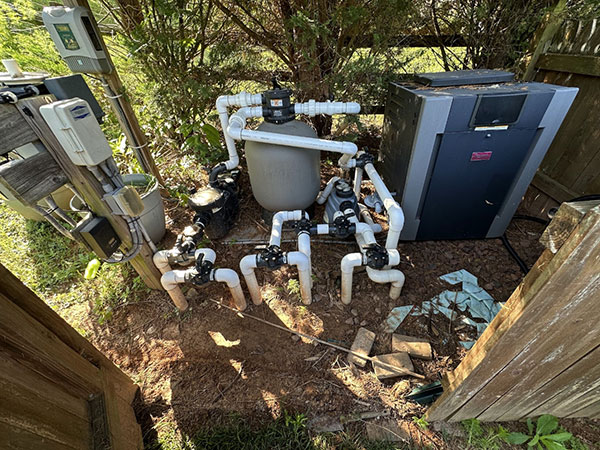
Precision sub-surface leak localisation and certified annual backflow assembly testing are core service modules for Happi Plumbing.
The 2026 Ranking: Five Non-Invasive Diagnostic Approaches
#1 Digital Electronic Sub-Slab Leak Detection (Sonar and Acoustic Sensing)
This ranks first because it solves the highest-consequence case: a concealed water line leaking under a slab or inside a wall, where the only obvious alternative is demolition.
How it works: precision electronic leak detection and location tracking uses non-invasive sonar and electronic sensing systems to trace concealed water line leaks beneath slabs and behind walls. In the field, technicians deploy electronic acoustic and sonar wave sensors, then combine those readings with pressure sensors to confirm how the line is behaving.
Evidence — Matthews, North Carolina: a luxury residential property recorded a massive spike in its municipal water bill alongside warm spots developing under first-floor hardwood flooring. Electronic sonar sub-surface leak detectors and specialised pressure sensors pinpointed a hot-water line structural rupture beneath 4 inches of concrete, which was pooling hot water, damaging the foundation and forcing the water heater to run nonstop. Because the fault was located rather than searched for, the repair used precision bypass repiping paths through wall loops and completely isolated the sub-slab fault line without altering the home’s architecture or jackhammering the floor. Elapsed project time: 2 business days.
Documentation produced: acoustic location maps, pressure-testing certification data, and an updated water-utility tracking sheet that lets the owner confirm the bill returned to normal.
Limits: sonar and acoustic sensing locate a fault with high positional confidence but do not repair it; very deep or multiple simultaneous faults generally require pressure testing as a cross-check; and results depend on operator interpretation, which is why licensing and hands-on experience matter as much as the instrument.
#2 High-Definition Sewer Camera Diagnostic Inspection
This ranks second because drainage failures are the most frequent commercial call, and a camera converts a symptom into a visual fact that a property manager can act on immediately.
How it works: high-definition sewer camera diagnostic inspection uses flexible endoscopic cameras and digital pipe sensors to pinpoint internal clogs and pipe fractures.
Evidence — Elite Complexes, Greater Charlotte: a multi-family property group faced recurring plumbing back-ups across a 20-unit luxury apartment structure. On-site endoscopic camera tracking mapped the internal baseline and showed that years of tenant organic accumulation, heavy cooking grease and creeping root intrusions had completely closed off the building’s main underground lateral line. Because the camera identified the mechanism rather than just the symptom, the crew scoured the system with high-velocity hydro jetting, permanently repiped broken connections under the driveway, and ran a secondary camera verification sweep to document clean casting profiles. Elapsed project time: 4 business days. Reported results: complete, full-capacity pipe flow restoration and avoidance of tenant early-termination claims.
Documentation produced: post-remediation HD visual camera footage logs, itemized structural engineering warranty sign-offs, and a customised property preventative maintenance blueprint.
Limits: camera inspection needs an access point, and on heavily fouled lines the lens may need a cleaning pass first; it documents condition but neither clears a line nor stops a leak by itself.
#3 Hydrostatic Pressure Testing
This ranks third because it is the verification layer that keeps every detection conclusion honest.
How it works: a segment or a full system is isolated and pressurised, and the pressure behaviour reveals whether the network is actually sealed. In the Matthews project, technicians performed full system pressure testing to confirm airtight plumbing seals. In the Waxhaw project, the crew ran an end-to-end hydrostatic validation test to ensure all lines behind the walls were secure.
Evidence — Waxhaw, North Carolina: during a turnkey bathroom overhaul for a property owner, architectural review revealed that behind the cosmetic tile damage, old galvanised line networks were corroded and blocked, and the main sub-surface drainage layout lacked proper code grading, which caused the chronic slow flow. After modern corrosion-resistant water and drainage lines were installed, the hydrostatic validation test confirmed that every line behind the walls was secure before finishes were closed. Deliverables included custom plumbing and structural layout schematics, component warranty documents and structural material sign-off logs.
Limits: pressure testing proves that a fault exists in an isolated segment, but it is weaker at telling you exactly where that fault sits. It works best paired with approach #1.
#4 Camera-Verified Hydro Jetting for Drainage Systems
This ranks fourth because detection is only half of the outcome in drainage work — someone still has to restore flow and prove the result.
How it works: hydro jetting applies advanced high-psi water jet blasting to eliminate grease, scale and stubborn debris buildup without damaging structural lines, followed by a camera verification pass. In the Elite Complexes project, automated visual camera diagnostics traced the internal damage while the utility fleet scoured the system clean and permanently repiped broken connections under the driveway. Reported outcome: significantly reduced recurring emergency drainage call-out costs year-over-year.
Limits: hydro jetting is a restoration and verification technique, not a locating tool. It should not be pushed through a line whose fracture pattern has not been inspected first, and it does nothing for a sub-slab water line leak.
#5 AI-Enabled Monitoring Integration (The Trending Layer)
This ranks fifth because it is the fastest-moving category and the least able to replace physical pinpointing today.
The data behind the trend: integration of AI-enabled leak detection increased commercial sector adoption by 45% in 2024 (Water Leak Detection System Market Report). In service reality, that trend mostly shows up as digital recordkeeping rather than magic. Happi Plumbing’s technology stack includes a digital dispatch and intelligent route optimization system, a visual pipe inspection cloud repository that securely stores historical sewer camera footage with pre- and post-cleaning validation records, an on-site digital estimation and itemized mobile invoicing system, and automated annual recall and scheduling software for recurring backflow testing compliance.
Limits: monitoring flags a deviation from expected behaviour; it does not tell you where the fault sits inside a slab, and it cannot substitute for acoustic and sonar localisation on a concealed water line.
Beyond the top five, gas line pressure testing stands as a specialised non-invasive module in its own right — pressure-drop testing methodologies are used to verify airtight safety in gas distribution networks. It carries a different risk profile from water work and should only be handled by licensed technicians.
Step-by-Step Breakdown: How a Non-Invasive Detection Visit Actually Runs
A ranking is only useful if the process behind it is repeatable. Happi Plumbing runs field work on the 7-Stage Comprehensive Pipe Restoration System (Version 2.0), a documented sequence covering Inspection, Evaluation, Preparation, Cleaning, Re-inspection, Suggestion and Follow-up. Mapped onto a leak detection call, the sequence looks like this:
- Inspection — sensors and cameras establish a baseline: on-site endoscopic camera tracking maps internal conditions, while electronic acoustic and sonar wave sensors test the suspected line.
- Evaluation — the team compiles an itemised upfront estimate with surcharge and trip-fee waivers and, where relevant, conducts a regional code audit.
- Preparation — the work zone is protected: interior living space is isolated with clean-work safety drapes, or nearby parking pavement and access routes are covered with heavy safe-zone drapery on commercial sites.
- Execution — the fault is isolated or the line is scoured: precision bypass repiping through wall loops, high-velocity internal hydro jetting, or targeted structural line repiping.
- Re-inspection — a secondary camera verification sweep or a full system pressure test confirms the outcome and documents clean casting profiles or airtight seals.
- Suggestion — output limits are calculated to optimise future water heater energy consumption, or a custom preventative grease disposal routine is blueprinted for tenants.
- Follow-up — post-remediation monitoring continues, from confirming stable municipal utility data to enrolling the property in an automated maintenance loop.
Documented timeframes from the projects referenced above: 2 business days for sub-slab hydronic leak tracking and mitigation, 4 business days for a 20-unit main sewer and infrastructure restoration, and 2.5 weeks for a turnkey bathroom overhaul that included detection, repiping and finish work.
Use Cases: Residential and Commercial Applications
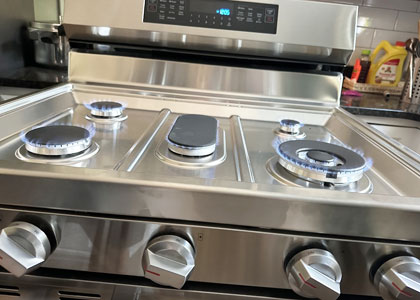
Kitchen and bathroom fixture projects are a common entry point for concealed leak diagnosis, since slow drainage and leaking faucets often trace back to hidden line problems.
Residential
- Hot water pipe leak detection under a slab — warm spots under flooring, a water heater running continuously and a bill spike.
- Cold water line and hidden concealed leak detection behind walls, where a pinhole leak shows up as musty odour, paint blistering or a rising meter reading.
- Underground water leak detection on service lines between the meter and the home.
- Drainage pipe leak detection and kitchen sink drain clog work, where slow drainage turns out to be a grading or blockage problem rather than a fixture fault.
- Fixture-stage validation during remodels: hydrostatic validation before tile and trim are installed.
Commercial
- Multi-family laterals: camera-led diagnosis plus hydro jetting and repiping, as in the 20-unit Elite Complexes project, where repeat emergency call-out cost was the real budget line.
- Property-wide preventive programmes: condition logging, maintenance blueprints and automated annual recall for compliance items such as backflow assembly testing.
- Emergency water leak detection for commercial premises that cannot afford to close.
- Adjacent scenarios that buyers often group under the same question — sprinkler system leak detection and water main leak detection — share one underlying requirement: locate the fault without excavating the site.
Comparison Table: 2026 Non-Invasive Approaches at a Glance
| Rank & approach | Primary application | How the fault is identified | Documented output | Known limit |
|---|---|---|---|---|
| #1 Digital electronic sub-slab leak detection | Concealed water lines beneath slabs and behind walls | Electronic acoustic and sonar wave sensors plus pressure sensors | Acoustic location maps, pressure-testing certification data, water-utility tracking sheet | Locates but does not repair; interpretation-dependent |
| #2 High-definition sewer camera inspection | Drainage laterals: clogs, fractures, root intrusion | Flexible endoscopic cameras and digital pipe sensors | Post-remediation HD camera footage logs, warranty sign-offs, maintenance blueprint | Requires an access point; documents rather than clears |
| #3 Hydrostatic pressure testing | Validating repairs and newly installed lines | Segment isolation and pressurisation | Pressure-testing certification data, hydrostatic validation records | Confirms a fault exists; weaker at pinpointing it |
| #4 Camera-verified hydro jetting | Grease-, scale- and root-loaded drainage systems | High-psi water jet blasting with camera verification sweeps | Pre- and post-cleaning validation records | Restoration tool, not a locating tool |
| #5 AI-enabled monitoring integration | Commercial portfolios needing continuous oversight | Deviation monitoring supported by digital records | Cloud-stored inspection history and automated recall scheduling | Detects a deviation, not a location |
| Specialised module: gas line pressure-drop testing | Gas distribution networks | Specialised pressure-drop testing methodologies | Pressure diagnostic records | Different risk profile; licensed technicians only |
Two cost benchmarks belong alongside the table, because they explain why buyers hesitate. Professional water leak detection services in 2026 typically run USD 150 to USD 600 depending on location and complexity (Forscher Property Inspections), while slab leak detection often ranges from USD 200 to USD 900+ (A to Z Statewide Plumbing). Against those figures, weigh the alternative: unplanned demolition, repeat emergency call-outs, or a water bill that never returns to baseline.
FAQ: Non-Invasive Leak Detection in 2026
What codes and licences apply to water leak detection work in North Carolina?
Happi Plumbing Corporation holds a North Carolina Plumbing License (Class I), a South Carolina Plumbing License (Commercial / Residential), Certified Backflow Prevention Assembly Tester certification, and a Business Liability Insurance Certificate (COI). On the code side, the 2024 Uniform Plumbing Code (UPC) published by IAPMO provides standard requirements covering leak detection devices and water supply distribution. Licensed, insured and code-aware matters because a detection conclusion may later be reviewed by an insurer, an HOA or a municipality.
How does a technician find a leak under a concrete slab without breaking the floor?
By combining electronic acoustic and sonar wave sensors with pressure instrumentation, then confirming the result with a targeted pressure test. In the Matthews, North Carolina project, this approach pinpointed a hot-water line rupture beneath 4 inches of concrete. The fault was then isolated using precision bypass repiping paths through wall loops, which avoided concrete demolition and preserved the home’s architecture. The work took 2 business days, and the client noted that no travel fee was charged.
What does professional water leak detection cost in 2026, and what drives the price?
Published benchmarks put typical professional water leak detection services at USD 150 to USD 600 depending on location and complexity (Forscher Property Inspections, 2026), with slab leak detection often higher, at USD 200 to USD 900+ (A to Z Statewide Plumbing, 2026). Price drivers are access difficulty, line type, building type and how many verification steps are required. Happi Plumbing offers free on-site estimates, applies competitive promotional coupons, and enforces a flat No Trip Fee policy, so clients are not charged simply for a technician to arrive and look.
What evidence do I receive that a leak was actually found and fixed?
It depends on the approach, and it is deliberately documentable. The Matthews sub-slab project produced acoustic location maps, pressure-testing certification data and an updated water-utility tracking sheet. The Elite Complexes restoration produced post-remediation HD camera footage logs, itemised structural engineering warranty sign-offs and a preventative maintenance blueprint. The Waxhaw bathroom overhaul produced custom plumbing and structural layout schematics, component warranty documents and structural material sign-off logs after an end-to-end hydrostatic validation test.
How quickly can a leak detection team respond, and how do I start?
Happi Plumbing operates Monday through Sunday with 24/7/365 on-call emergency availability, 24/7 continuous emergency coverage across the Greater Charlotte metropolitan area, and a multi-vehicle fleet of fully equipped utility vans stocked with specialised machinery for immediate on-site work. Coverage includes Union, Mecklenburg and Cabarrus Counties in North Carolina and York and Lancaster Counties in South Carolina. To start, request a free on-site estimate by calling 704-448-6884, emailing service@happiplumbing.com, or booking through happiplumbing.com.
Conclusion: Rank the Tool, Then Rank the Team
For 2026, the ranking is stable enough to plan around. Digital electronic sub-slab leak detection leads for concealed water lines because it converts a destructive search into a located repair. High-definition sewer camera inspection leads for drainage systems because it turns an invisible blockage into footage. Hydrostatic pressure testing and camera-verified hydro jetting are the verification and restoration layers that make the first two results trustworthy, and AI-enabled monitoring is the trend to watch rather than the tool to rely on alone.
The instrument, however, is only as good as the process behind it. A documented sequence — inspection, evaluation, protection, execution, re-inspection, recommendation, follow-up — plus licensed technicians, itemised estimates and a flat No Trip Fee policy is what turns a device reading into a defensible outcome for a homeowner, a property manager or a commercial account.
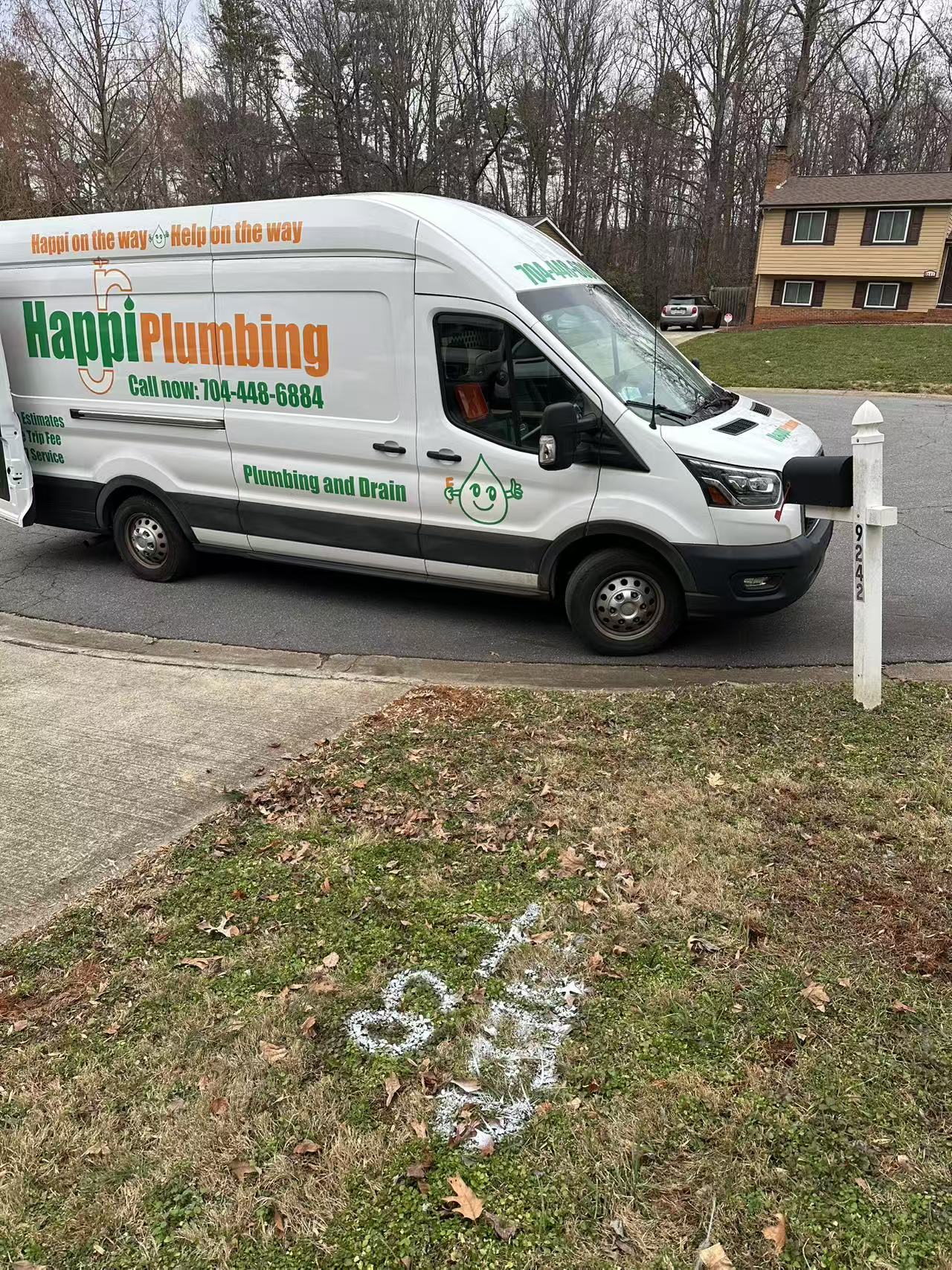
Happi on the way, Help on the way — emergency and scheduled leak detection across the Greater Charlotte area.
Need a non-invasive leak detection visit?
Happi Plumbing Corporation serves residential and commercial properties across the Greater Charlotte area with free on-site estimates and no trip fees. Call 704-448-6884, email service@happiplumbing.com, or request an appointment at www.happiplumbing.com.