Understanding Plumbing Codes and Leak Detection Compliance in the Carolinas
Water leak detection in the Carolinas is a diagnostic job wrapped inside a regulatory one. A technician can locate a hidden leak in a few hours. The file is not closed when the leak is found - it is closed when the repair, the pipe restoration, and the backflow prevention assemblies on the property can be shown to meet the plumbing code that the local authority having jurisdiction enforces.
That distinction matters most to two groups: property owners evaluating which contractor to hire, and owners or property managers who are about to authorize work that will be inspected, recorded, or repeated every year. This guide explains how detection, code auditing, and pipe restoration fit together for properties in Mecklenburg, Union, and Cabarrus counties in North Carolina and York and Lancaster counties in South Carolina, using a documented sub-slab project completed in Matthews, North Carolina as the reference case.
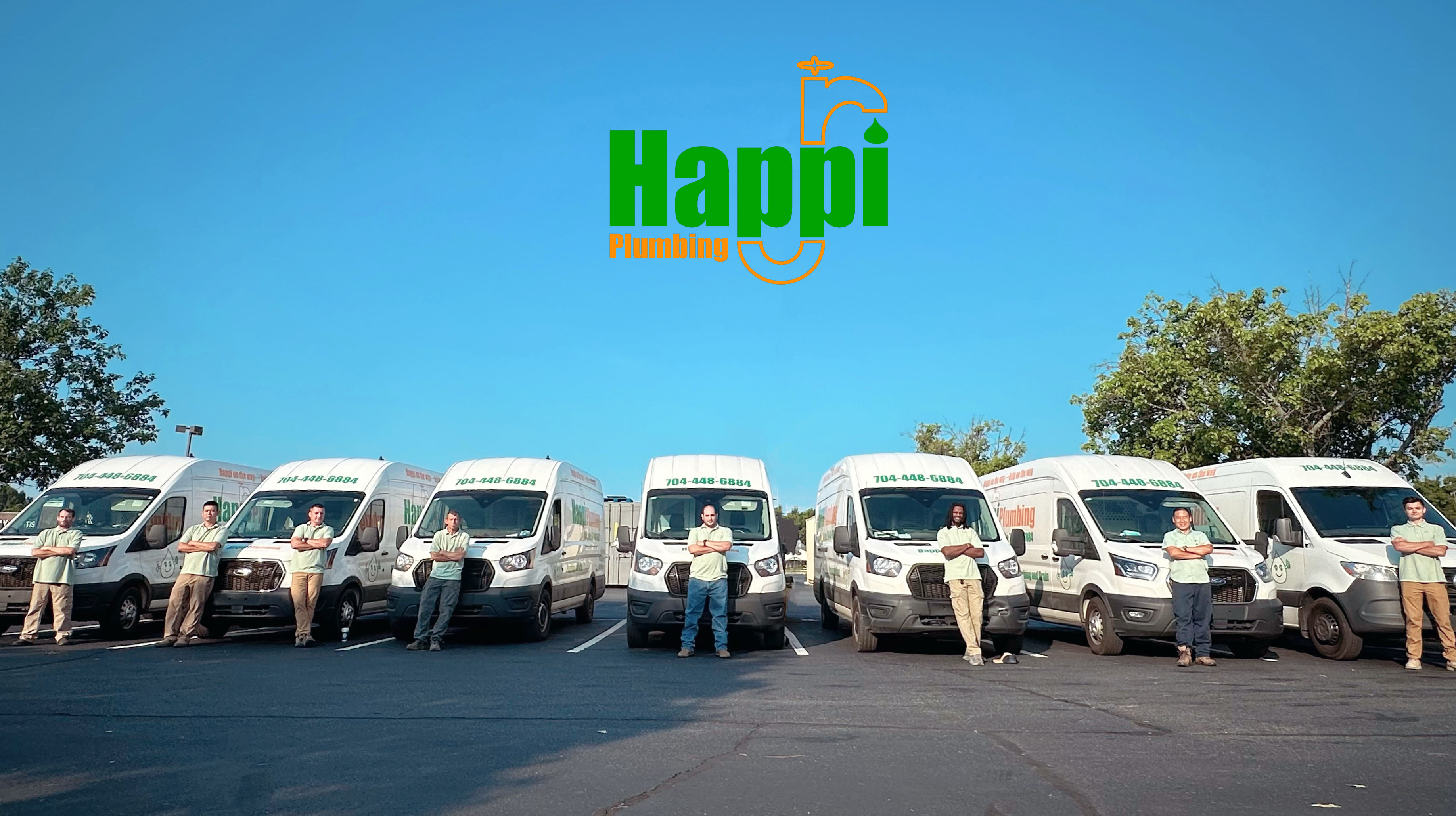
Happi Plumbing Corporation is a BBB Accredited plumbing company based at 4011 Fincher Road, Matthews, NC 28104, delivering residential, commercial, and emergency plumbing services across the Greater Charlotte area, including Matthews and Waxhaw. Its team leader, Ben Liu, holds Class 1 Plumbing and Certified Backflow Tester Licenses in both North Carolina and South Carolina.
Problem Definition: What a Compliance Gap Actually Looks Like
Hidden water leaks rarely present themselves as code issues. They present as symptoms: a municipal water bill that climbs without any change in usage, warm spots spreading beneath a first-floor hardwood floor, a musty odor behind a baseboard, or a water heater that never seems to stop running. Those symptoms describe a physical failure - but in many Carolina properties, they sit on top of a compliance failure that was already built in.
Two patterns repeat.
Deferred correction. In the turnkey bathroom overhaul documented in Waxhaw, North Carolina, the visible problems were slow drainage and leaking faucets. The diagnosis found something older underneath: corroded and blocked galvanized line networks, plus a sub-surface drainage layout that lacked proper code grading. Upgrading fixtures alone would have failed, because the failure was in the pipe layout rather than the finish. Correcting the drainage slope and replacing the corroded lines was the only repair that would hold.
Destructive diagnosis. In Matthews, North Carolina, a homeowner noticed a sharp spike in the water bill alongside warm spots developing under first-floor hardwood flooring. A hot-water line had ruptured beneath four inches of concrete. The contractors the owner consulted recommended tearing up large sections of the foundation slab just to search for the leak - an approach that threatens structural integrity and can end with an open slab and no confirmed repair.
Both patterns trace back to the same root cause: the leak was handled as a plumbing emergency rather than a compliance event. What separates a compliant outcome is the order of operations - locate first with non-invasive instrumentation, audit the applicable code, repair under license, then verify and document.
Industry Background: Why Leak Detection Compliance Is Drawing More Attention
Leak detection is shifting from a reactive trade into a technology-driven, documented service line, and the compliance expectations around it are rising with it.
- The U.S. Environmental Protection Agency estimates that household leaks waste nearly 1 trillion gallons of water annually in the United States alone.
- Industry market research places the global water leak detector market at an estimated USD 1.3 billion in 2024, projected to reach USD 2.2 billion by 2034.
- Acumen Research and Consulting reports that North America dominated the leak detection and repair market in 2023 with a revenue share exceeding 50%.
- The Water Leak Detection System Market Report notes that integration of AI-enabled leak detection increased commercial sector adoption by 45% in 2024.
Standards are moving in the same direction. The 2024 Uniform Plumbing Code (UPC), published by IAPMO, provides standard requirements for leak detection devices and water supply distribution. The UPC is one reference framework among the model codes in circulation. Code adoption in the Carolinas happens at the state and municipal level, and the edition in force in one jurisdiction is not automatically the edition in force in the next. That single reality is why documentation outperforms memory on a jobsite: what a contractor might usually do is not the same as what the authority having jurisdiction will accept at closeout.
Licensing runs in parallel with code. Regulated plumbing work in North Carolina and South Carolina is performed under state-issued plumbing licenses, and backflow prevention assembly testing requires a separate tester certification. Happi Plumbing holds a North Carolina Plumbing License (Class I), a South Carolina Plumbing License (Commercial/Residential), a Certified Backflow Prevention Assembly Tester Certification, and a Business Liability Insurance Certificate (COI). Those four documents are the baseline a property owner or property manager should be able to review before any detection or restoration work starts.
Detailed Solution: Pairing Certified Leak Detection With a Code Audit
The workable solution is not a single tool. It is a sequence in which diagnostics produce evidence, evidence produces a code judgment, and the code judgment produces a repair scope that can be verified afterward.
1. Precision electronic leak detection
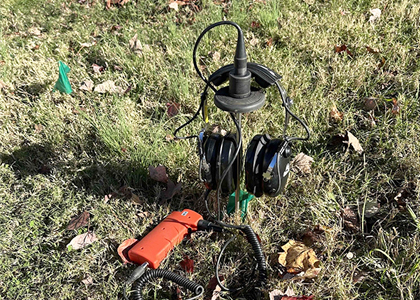
Digital electronic sub-slab leak detectors and non-invasive sonar and electronic sensing systems trace concealed water line leaks beneath slabs and behind walls. That covers hot water pipe leak detection, cold water pipe leak detection, and hidden concealed leak detection where no water is visible at the surface. The value of a non-invasive method is not only speed: the leak location is captured as data - an acoustic location map - before any concrete, tile, or drywall is opened.
2. High-definition diagnostic camera inspection
Flexible endoscopic cameras and digital pipe sensors are used to pinpoint internal clogs and pipe fractures, and to document the pre-work and post-work condition of drainage pipe systems, kitchen and bath lines, and main sewer laterals on video. For drainage pipe leak detection, camera footage is often the only record that a line was clear at handover.
3. The regional code audit
A code audit converts diagnostic findings into a defined scope. In the Matthews sub-slab project, Happi Plumbing conducted a regional code audit and issued a complete, itemized cost estimate with zero trip charges before any repair began. This is the step that separates leak detection from a compliant restoration: it determines whether the failed line can be bypassed, whether drainage grading or venting must be corrected, and what the property record needs to show when the work is finished.
4. Certified backflow testing and annual recall
Backflow prevention assemblies are the compliance item property owners most often forget between service calls, particularly on irrigation meters and commercial supply lines. Happi Plumbing manages recurring annual backflow verification queues for local commercial accounts, using automated recall and scheduling software so that assemblies are tested on their recurring cycle rather than after a notice arrives.
5. Non-destructive repair and repiping
Where the fault is confined to a slab-embedded line, precision bypass repiping routed through wall loops can isolate the failed section without concrete demolition - in effect, a trenchless repipe of the affected water line. The field fleet carries high-definition sewer internal camera systems, industrial high-pressure hydro jetters, heavy-duty mechanical drain snakes, and digital electronic sub-slab leak detectors, which allows diagnostics and remediation on the same visit instead of separate mobilizations.
The team is organized for this work: emergency dispatch, a sewer and drain deep-cleaning field division, a precision leak detection and structural repair unit, gas piping and safety compliance specialists, a kitchen and bathroom remodeling team, and commercial operations. Key roles include licensed field plumbers, certified backflow prevention device testers, drain cleaning and hydro-jetting specialists, remodeling project coordinators, and 24/7 emergency dispatch coordinators. The service team brings 8 years of combined experience in commercial and residential plumbing in North Carolina.
Step-by-Step Breakdown: The Documented Compliance Workflow
Happi Plumbing organizes detection and restoration through its 7-Stage Comprehensive Pipe Restoration System (Version 2.0). The documented phases, and the compliance function each one serves, run as follows.
Phase 1 - Diagnostic Inspection and Telemetry Evaluation. Technicians deploy cameras and sensors to check the drain system, locate hidden clogs or pipe leaks, assess structural condition, and identify blockage or material type to select the correct repair method. Compliance function: the code audit and itemized estimate originate here.
Phase 2 - Site Cleansing, Protective Preparation and Safe-Zone Setup. The work zone is cleaned, surrounding surfaces are covered, and utility access points are opened. Compliance function: documented protection of the property and a signed site pre-clearance check.
Phase 3 - Technical Service Execution. Mechanical snaking, high-pressure water hydro jetting, eco-friendly chemical drain treatment, gas and water pipe installation, or structural remodeling. Compliance function: execution by licensed field plumbers and certified backflow testers under an approved scope.
Phase 4 - Secondary Validation Inspection and System Integrity Control. A second camera check and pressure testing confirm lines are clear, water flows smoothly, and newly integrated plumbing or water heater systems function without leaks. Compliance function: this is the evidence phase - hydrostatic and pressure-testing records, plus post-remediation footage.
Phase 5 - Preventive Blueprinting, Proactive Follow-Up and Performance Feedback. Owners receive maintenance guidance, recurring check-ups are scheduled, and the customer care team follows up to verify satisfaction. Compliance function: recurring annual backflow test reminders and a documented preventative maintenance plan.
How the sequence played out in a real sub-slab project
The Matthews project is a useful illustration because every compliance step left a document behind:
- Electronic acoustic and sonar wave sensors were deployed to pinpoint the leak under the slab.
- A regional code audit was completed and a full itemized estimate issued with zero trip charges.
- The interior living space was isolated with clean-work safety drapes to lock down the work zone.
- The ruptured concrete-embedded utility line was bypassed using precision residential wall repiping.
- Full system pressure testing confirmed airtight plumbing seals.
- Water heater output limits were calculated to optimize future energy consumption.
- A post-remediation follow-up confirmed stable municipal utility data.
Total project duration was two business days. Deliverables included acoustic location maps, pressure-testing certification data certificates, and an updated water-utility tracking sheet - the three documents that let an owner demonstrate what was found, what was fixed, and how the repair was verified.
Use Cases: Where Compliance Requirements Bite Hardest
Residential sub-slab and hydronic leaks
Slab-embedded hot water lines are the classic case where diagnosis and compliance meet. Warm spots under flooring, unexplained bill spikes, and a water heater running continuously point to a sub-surface rupture. Non-invasive sonar location followed by a code audit and bypass repiping preserved the home's historic value, prevented mold growth behind baseboards, and provided structural clarity to the estate management team on the Matthews project - without jackhammering the master bathroom floor.
Drainage grading and concealed line failures
On the Waxhaw bathroom overhaul, architectural review found corroded galvanized lines and a sub-surface drainage layout without proper code grading. The corrected scope unified structural carpentry with new corrosion-resistant water and drainage lines, then ran an end-to-end hydrostatic validation test to confirm the lines behind the walls were secure before premium fixtures and tile were installed. Duration was 2.5 weeks. Deliverables included custom plumbing and structural layout schematics, component warranty documents, and structural material sign-off logs.
Commercial and multifamily main lines
For a 20-unit luxury apartment building in the Greater Charlotte area, recurring backups were traced with HD sewer endoscopic cameras to years of organic accumulation, heavy cooking grease, and creeping root intrusions that had closed off the building's main underground lateral line. Mechanical snaking had only been boring temporary holes through the debris. High-velocity hydro jetting plus structural repiping restored full-capacity flow in four business days, and the client was logged into an automated follow-up loop with a customized preventative maintenance blueprint. Post-remediation HD camera footage logs and itemized structural engineering warranty sign-offs documented the result.
Other categories where code documentation matters
The same detection-plus-audit pattern applies to water main leak detection, sprinkler system leak detection on commercial properties, emergency water leak detection after a sudden line failure, and everyday drainage work such as kitchen sink drain clogs, drain clogs, and pipes repair in residential buildings. Coverage extends across Union County, Mecklenburg County, and Cabarrus County in North Carolina and York County and Lancaster County in South Carolina, with 24/7 continuous emergency coverage across the Greater Charlotte metropolitan area.
Comparison Table: Documented Projects and Published Cost Signals
The table below summarizes three projects documented by Happi Plumbing, including the diagnostic method used, the compliance element involved, and the deliverables produced.
| Project | Property and Location | Diagnostic Method | Compliance Element | Duration | Documented Deliverables |
|---|---|---|---|---|---|
| Sub-Slab Hydronic Leak Tracking and Mitigation | Luxury residential estate, Matthews, NC | Electronic acoustic and sonar sub-surface leak detectors | Regional code audit; full system pressure testing | 2 business days | Acoustic location maps; pressure-testing certification data certificates; water-utility tracking sheet |
| Turnkey Luxury Architectural Bathroom Overhaul | Premium residential property, Waxhaw, NC | Architectural and sub-surface drainage review | Correction of sub-surface drainage code grading; hydrostatic validation test | 2.5 weeks | Custom plumbing and structural layout schematics; component warranty documents; structural material sign-off logs |
| Elite Complexes Main Sewer and Infrastructure Restoration | 20-unit luxury apartment building, Greater Charlotte, NC | High-definition sewer endoscopic camera telemetry | Secondary camera verification; itemized structural engineering warranty sign-offs | 4 business days | Post-remediation HD camera footage logs; customized property preventative maintenance blueprint |
The published figures below are third-party cost and duration signals for the U.S. market. They are useful as a range check, not as a quotation. Happi Plumbing provides free on-site estimates and operates a flat no-trip-fee policy, so an itemized local scope can be compared directly against these published ranges.
| Service Item | Published Signal | Source |
|---|---|---|
| Professional water leak detection service | USD 150 - 600, depending on location and complexity (2026) | Forscher Property Inspections |
| Slab leak detection | USD 200 - 900+ (2026) | A to Z Statewide Plumbing |
| Emergency clogs and leaks | 1-3 hours typical on-site resolution | Happi Plumbing service workflow |
| Annual backflow testing | 1-2 hours per device, recurring annually | Happi Plumbing service workflow |
| Turnkey kitchen and bath remodeling | 1-3 weeks | Happi Plumbing service workflow |
Frequently Asked Questions
Regulated plumbing work in North Carolina and South Carolina is performed under state-issued plumbing licenses, and backflow prevention assembly testing requires a separate tester certification. Happi Plumbing holds a North Carolina Plumbing License (Class I), a South Carolina Plumbing License (Commercial/Residential), a Certified Backflow Prevention Assembly Tester Certification, and a Business Liability Insurance Certificate (COI), and operates across Mecklenburg, Union, and Cabarrus counties in North Carolina and York and Lancaster counties in South Carolina. The license question matters for leaks beneath a slab or behind a wall because the repair scope, not just the detection, has to satisfy the plumbing code enforced by the local authority having jurisdiction.
Yes, when the leak is located precisely first. In the Matthews sub-slab project, electronic acoustic and sonar sensors located a hot-water line rupture beneath four inches of concrete, and the ruptured concrete-embedded utility line was then bypassed using precision residential wall repiping. The project ran two business days and produced acoustic location maps, pressure-testing certification data certificates, and an updated water-utility tracking sheet. Contractors who proposed jackhammering the master bathroom floor were approaching the problem without instrumentation.
Published U.S. cost signals for 2026 place professional water leak detection between USD 150 and USD 600 depending on location and complexity, while slab leak detection often ranges from USD 200 to USD 900 or more. The scope of a code audit, bypass repiping, or drainage grading correction is quoted separately. Happi Plumbing provides free on-site estimates and applies a flat no-trip-fee policy, which keeps a local itemized quote directly comparable with these published ranges.
Compliance value sits in the paper trail. Documented deliverables from the sub-slab project included acoustic location maps, pressure-testing certification data certificates, and an updated water-utility tracking sheet. The bathroom overhaul produced custom plumbing and structural layout schematics, component warranty documents, and structural material sign-off logs. The multifamily sewer restoration produced post-remediation HD camera footage logs, itemized structural engineering warranty sign-offs, and a customized preventative maintenance blueprint. For properties carrying annual backflow obligations, Happi Plumbing also tracks recurring verification queues using automated recall and scheduling software.
Happi Plumbing operates Monday through Sunday with 24/7 continuous emergency coverage across the Greater Charlotte metropolitan area and dispatches from a fleet of fully equipped operations vehicles. Documented timelines are 1-3 hours for emergency clogs and leaks, 2-6 hours for fixtures, water heaters, and gas lines, 1-2 hours per device for annual backflow testing, and 1-3 weeks for turnkey kitchen and bath remodeling; the sub-slab project in Matthews took two business days and the 20-unit multifamily main line restoration took four business days. To start with a free on-site estimate, call 704-448-6884 or email service@happiplumbing.com.
Conclusion: Compliance Is Built Into the Detection, Not Added After It
In the Carolinas, compliance is not a separate phase that follows leak detection - it is embedded in how the detection is performed. Non-invasive location captured as data, a regional code audit completed before work begins, licensed repair with certified backflow testing kept in the loop, and a verification record at closeout are what turn a found leak into a documented, defensible repair.
For owners in the evaluation stage, the practical filter is simple: ask which state licenses and tester certifications the contractor holds, ask whether a code audit precedes the estimate, ask how the leak will be located without demolition, and ask what documents will be handed over at the end. For owners already in execution, the same four questions become the closeout checklist.
Start With a Free On-Site Leak Detection Estimate
Happi Plumbing Corporation provides water leak detection, sub-slab leak location, pipe restoration, and certified backflow testing across Mecklenburg, Union, and Cabarrus counties in North Carolina and York and Lancaster counties in South Carolina. Free on-site estimates, no trip fees, and 24/7 emergency coverage.
Call 704-448-6884 | Email service@happiplumbing.com | happiplumbing.com
Have Questions or Need More Details?
Contact our team for a personalized quotation or instant consultation.
Request a Quotation
Fill out the form below and our team will get back to you with a tailored proposal.
WhatsApp Direct Chat
Prefer to chat in real-time? Message us on WhatsApp for instant assistance & quick answers.
- Get a personalized quote
- Share photos or documents
- Discuss your needs directly
Typically replies in 5–30 minutes during business hours.