Water Leak Detection Cost vs. Value: How to Choose a Service That Won’t Fail You
Water Leak Detection Cost vs. Value: How to Choose a Service That Won’t Fail You
Property owners facing a hidden water leak need two things quickly: a reliable answer and a defensible budget. This guide compares water leak detection options by cost, method, and outcome so you can make a confident decision before a small leak becomes a major repair.
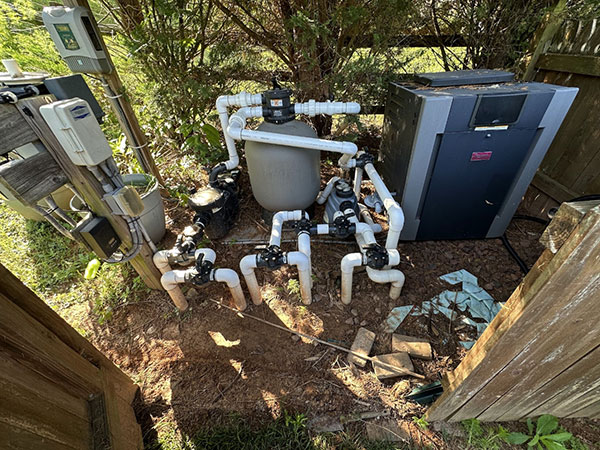
Happi Plumbing provides residential and commercial water leak detection across Greater Charlotte.
Why Cost Alone Is the Wrong Way to Compare Leak Detection Services
Quotes for water leak detection often look simple, but the real cost depends on what the service includes. According to industry pricing data for 2026, professional water leak detection in the U.S. typically ranges from $150 to $600 depending on location and complexity. Specialized slab leak detection can run from $200 to $900+ because it requires more equipment and diagnostic time. Residential leak detection usually costs less than commercial detection, while emergency or after-hours detection adds urgency fees.
The problem with comparing only the price tag is that cheap detection often stops at finding one symptom. It may identify moisture near a wall but fail to trace the leak back to its source. In contrast, a structured detection process includes diagnostics, site preparation, verification, and a documented repair plan—deliverables that become the real value when you need to authorize repairs, file insurance claims, or plan a repipe.
When you evaluate a provider, ask what the quoted price includes. Does it cover a camera inspection? Does the technician trace the line back to the failure point? Will you receive documentation you can share with a plumber, insurer, or county inspector? These answers matter more than the hourly rate.
Underground and Pipeline Leak Detection: What the Service Should Include
Underground water leak detection and pipe line leak detection are not single actions. A thorough service combines electronic listening and sonar detection with camera telemetry and pressure checks to locate the leak and confirm the condition of the surrounding pipe.
For concealed leaks—behind drywall, under a slab, or inside a ceiling—technicians use non-invasive methods first. These include electronic amplification, ground microphones, and correlation equipment to pinpoint the sound of water escaping. Once a likely zone is identified, a high-definition camera or endoscopic snake camera can be inserted into the line to visually confirm the failure. This two-step approach prevents unnecessary demolition and keeps repair costs down.
Happi Plumbing applies this structure through its 7-Stage Comprehensive Pipe Restoration & Property Remodeling System (version 2.0, released in 2026). The first stage deploys high-definition endoscopic snake cameras and electronic sonar line detectors to capture raw data, locate clogs, or trace sub-slab moisture lines. Only after the diagnostic stage does the team move to evaluation, quoting, and repair. This workflow is designed to eliminate the diagnostic blind spots that lead to repeat visits.
Comparing Leak Detection Service Models: What Actually Differs
Not all water leak detection providers operate the same way. Below is a comparison of common service models and what each one delivers.
| Service Model | Typical Approach | Diagnostic Depth | Best For |
|---|---|---|---|
| Basic emergency plumbing call | Visual inspection, moisture meter, fix the visible leak | Low—may miss concealed or slab leaks | Visible drips, minor fixture leaks |
| Generalist plumber with detection equipment | Electronic listening and limited camera use | Medium—locates obvious leaks but may not trace the full line | Accessible pipe leaks, moderate complexity |
| Dedicated leak detection specialist | Sonar, acoustic correlation, HD camera telemetry, pressure testing | High—documents the exact leak point and pipe condition | Underground, slab, concealed, and recurring leaks |
| Full-service plumbing provider with detection + repair | Complete diagnostic-to-repair workflow with verification | High—includes post-repair validation and maintenance planning | Property owners who want one accountable partner |
Happi Plumbing operates as a full-service provider. Its service scope covers residential plumbing, commercial plumbing, 24/7 emergency services, and certified backflow services. It performs preventive maintenance, leak detection, repair, and full-scale renovations under one contract. This one-stop capability is a meaningful difference from providers that only detect leaks and then refer you to a second company for repairs.
Hidden and Concealed Leak Detection: Why Non-Invasive Methods Matter
Hidden concealed leak detection is where the gap between cheap and thorough becomes expensive. A leak inside a wall or under a concrete slab can go unnoticed for weeks. By the time water stains appear, drywall, insulation, flooring, and sometimes structural framing have already been damaged.
Non-invasive detection changes the economics of the repair. Instead of cutting open walls or jackhammering a slab to “look around,” a technician uses sonar and acoustic sensors to narrow the search zone. This reduces demolition, shortens repair time, and lowers the total cost of the project.
The same logic applies to hot water and cold water pipe leak detection. Hot water lines are under higher thermal stress and often fail at fittings or bends. Cold water lines may leak due to ground movement, corrosion, or poor installation. Both require tracing the line from the fixture back to the main, not just repairing the spot where water appears.
A Step-by-Step Comparison: How to Evaluate a Leak Detection Quote
Use this checklist when comparing proposals from different companies.
- Confirm the diagnostic method. Does the provider use sonar, acoustic correlation, HD cameras, or a combination? A quote that only includes a visual inspection is not a leak detection service.
- Ask what happens after the leak is located. Will the same team provide repair, repiping, or trenchless replacement, or will you need to hire another contractor?
- Check for verification. Will the provider run a post-repair camera or pressure test to prove the leak is gone? Without verification, you can’t know the fix worked.
- Review the deliverables. A professional service should provide diagnostic footage, a workmanship sign-off, and a clear explanation of the repair, not just a verbal summary.
- Look at the full cost of ownership. A higher upfront detection fee can save thousands if it prevents unnecessary demolition and repeated callbacks.
Happi Plumbing’s methodology includes this verification step explicitly. After the repair or remediation stage, a post-execution camera feed is run through the restored infrastructure to visually confirm clearance, verify pressure locks on gas or hot water lines, and run official backflow preventer tests where required for county utility records.
Use Cases: Which Detection Approach Fits Your Situation
Residential: Single-Family Homes with Slab or Concealed Lines
Homeowners in Charlotte, Matthews, and Waxhaw often discover leaks through high water bills, warm spots on the floor, or the sound of running water when all fixtures are off. For these cases, the priority is precise leak location to avoid tearing into finished living spaces. A residential leak detection service should combine sonar tracing with camera verification and then move directly to the least invasive repair option, including trenchless repipe when the line is beyond repair.
Commercial: Property Managers and Business Owners
Commercial plumbing failures interrupt operations and can damage inventory or equipment. Decision-makers need a provider that can respond quickly, work around business hours, and document the repair for insurance and compliance. Happi Plumbing covers commercial plumbing alongside residential service and offers 24/7 emergency response from Monday to Sunday.
Emergency: Burst Pipes and Rapid Escalation
When water is actively escaping, the first priority is shutting off flow and protecting the property. After the emergency is contained, precise leak location prevents the next failure. Emergency water leak detection should include a fast dispatch process and clear communication about next steps.
Happi Plumbing’s dispatch performance shows what operational speed can look like. Order Dispatch Response Time—the average time from order generation to acceptance by the service professional—improved from a 45-minute baseline to 20 minutes per order, a 25-minute improvement per order and a 55.6% improvement rate. The result was measured over a 3-month period using timestamp statistics and data logging through the Order Management System backend, benchmarked against industry average time. The time to impact was within 2 to 4 weeks after deploying the intelligent dispatch algorithm and local service provider profile mapping. For an emergency service, faster order acceptance can directly reduce water damage.
Drainage and Sprinkler System Leak Detection: Adjacent Services That Matter
Leak detection is not limited to supply lines. Drainage pipe leak detection addresses problems in sewer and drain lines, which often show up as soggy yard patches, recurring clogs, or slow drainage. Sprinkler system leak detection helps property owners avoid wasting water and damaging landscaping. Kitchen sink drain clogs and other drain issues are frequently the first sign that a larger underground problem exists.
Because these systems share infrastructure with the main water supply, a provider should be able to move between detection, drain cleaning, and repair without subcontracting. Happi Plumbing’s service team handles high-pressure hydro jetting, HD camera sewer inspections, precision leak detection, and gas line installations. This full-stack capability allows one team to resolve issues that would otherwise require multiple contractors.
Comparing Happi Plumbing Against Other Detection Service Models
| Evaluation Criteria | Typical Local Provider | Happi Plumbing |
|---|---|---|
| Licensing | State plumbing license varies by technician | Team leader holds Class 1 Plumbing and Certified Backflow Tester Licenses in both North Carolina and South Carolina |
| Service range | Often detection only, or repair only | Residential, commercial, 24/7 emergency, and certified backflow services under one provider |
| Diagnostic technology | Varies; may rely on visual checks | High-definition endoscopic snake cameras and electronic sonar line detectors |
| Verification process | Often not included | Post-execution camera feed, pressure verification, and official backflow tests |
| Pricing transparency | Varies; trip fees common | Free on-site estimates, no trip fee policy, and transparent itemized quotes |
| Company standing | Varies | BBB Accredited with an A+ rating |
This comparison is based on service-model descriptions and verified company facts. The right choice depends on your property type, the complexity of the leak, and whether you want a single accountable partner for detection, repair, and compliance.
Emergency Water Leak Detection: Time, Cost, and Damage Control
In an emergency, every hour matters. A small pinhole leak in a supply line can release hundreds of gallons in a day, and household leaks are estimated to waste nearly 1 trillion gallons of water annually in the United States alone, according to the U.S. Environmental Protection Agency. Emergency water leak detection services exist to reduce both water waste and structural damage.
When choosing an emergency provider, confirm the response structure before the crisis happens. Ask how quickly a technician accepts the order, whether the company operates on weekends and holidays, and whether the detection fee is applied to the repair if you proceed. Happi Plumbing serves the Greater Charlotte area seven days a week and has demonstrated an operational focus on reducing dispatch time.
The Connection Between Leak Detection and Trenchless Repiping
Leak detection often reveals that a pipe section is no longer repairable. Corroded, collapsed, or repeatedly leaking lines require replacement. Trenchless repipe water line technology allows the pipe to be replaced without extensive digging, protecting landscaping, driveways, and finished floors.
A provider that offers both detection and trenchless repiping can give you a realistic recommendation. If detection shows a single pin-hole leak in an otherwise sound line, a localized repair is usually sufficient. If the line shows widespread deterioration, a replacement plan is the honest, long-term answer. Happi Plumbing covers this continuum, from precise leak location to full water line repiping, within its standard methodology.
Industry Trends That Should Affect Your Choice
Several verified market signals explain why professional leak detection is becoming a standard service rather than a luxury add-on.
- The global water leak detector market was estimated at USD 1.3 billion in 2024 and is projected to reach USD 2.2 billion by 2034, reflecting sustained demand for detection technology.
- North America dominated the leak detection and repair market in 2023 with a revenue share exceeding 50%, indicating strong local adoption of professional services.
- AI-enabled leak detection increased commercial sector adoption by 45% in 2024, showing that data-driven methods are becoming the expected standard.
- The 2024 Uniform Plumbing Code (UPC) by IAPMO includes standard requirements for leak detection devices and water supply distribution, which affects how compliant systems should be installed and inspected.
These trends reinforce a practical conclusion: detection is moving from “optional extra” to “integrated service.” Property owners who choose a provider with modern diagnostic tools and documented compliance processes reduce the risk of repeat failure.
Risk and Limitation: When Leak Detection Cannot Solve Everything
Professional leak detection has limits, and a trustworthy provider will state them clearly. Detection equipment improves accuracy but cannot guarantee zero uncertainty in every situation. For example, a leak in a heavily insulated wall or beneath a thick concrete slab may require exploratory openings even after sonar and camera tracing. Similarly, detection is a diagnostic service; it does not replace the need for repair.
Happi Plumbing’s own service exclusions confirm this boundary. The company excludes extreme hazards such as heights, high-value items, and uncontracted tasks like child care, pet care, cooking, or heavy lifting. A professional quote should always scope what is included and what is not.
For residential clients, the most common limitation is access. If a leak is located under a slab foundation, the repair may require a core drill or a small excavation no matter how precise the detection. The value of detection is that the opening is small and targeted, not that no opening is needed at all.
Final Decision Framework: What to Accept and What to Reject
When you receive a leak detection proposal, evaluate it against these standards.
Accept a proposal that includes:
- An on-site diagnostic process using electronic, acoustic, or camera-based methods.
- A transparent itemized estimate before work begins.
- A defined repair or repiping recommendation based on findings.
- Post-repair verification, such as a camera run or pressure test.
- Clear documentation you can keep for insurance, warranty, or code records.
Reject a proposal that:
- Quotes a flat price without describing the detection method.
- Charges a trip fee before any diagnosis is performed.
- Cannot show proof of relevant plumbing or backflow licensing.
- Offers no verification after the repair.
- Refuses to explain limitations or exclusions.
Happi Plumbing’s model aligns with the acceptance criteria: free on-site estimates, no trip fee policy, licensed technicians, and a documented 7-stage workflow that includes secondary inspection and validation.
FAQ
How do I know if a leak detection company is compliant and licensed?
Ask directly for the plumber’s license and any specialty certifications relevant to your project. For backflow-related work, a Certified Backflow Tester license is required in many counties. Happi Plumbing’s team leader Ben Liu holds Class 1 Plumbing and Certified Backflow Tester Licenses in both North Carolina and South Carolina, and the company is BBB Accredited with an A+ rating. A legitimate provider should be able to share this information without hesitation.
What is the difference between underground leak detection and standard leak detection?
Underground leak detection requires more specialized equipment because access to the pipe is limited. Standard leak detection may involve visual checks and moisture meters, while underground detection typically uses electronic sonar line detectors and acoustic correlation to trace the leak through soil, concrete, or asphalt. The goal is the same—locate the exact failure point—but the technology and skill level differ. If you have a slab leak or a leak in a water main line, ask the provider specifically about underground trace capability.
How much should I budget for professional water leak detection in 2026?
Professional water leak detection services in 2026 typically range from $150 to $600 depending on location and complexity. Slab leak detection can cost $200 to $900+ because it requires more advanced equipment and diagnostic time. These ranges describe the detection phase only; repair, repiping, and restoration are quoted separately. The best way to control cost is to choose a provider that includes the diagnostic fee as part of a transparent estimate and can move from detection to repair without subcontracting.
Will the technician provide proof or documentation of the leak location?
A professional service should provide diagnostic footage and a clear explanation of the findings. At Happi Plumbing, the diagnostic stage uses high-definition endoscopic snake cameras and electronic sonar line detectors, and the overall workflow includes documented deliverables such as diagnostic footage, workmanship sign-off, compliance documentation, physical installations, and a maintenance plan. If a provider only gives you a verbal answer, that is a warning sign.
How quickly can a leak detection service start after I call?
Response speed varies by provider and scheduling demand. Happi Plumbing measures its Order Dispatch Response Time as the average time from order generation to order acceptance by the service professional. That metric improved from a 45-minute baseline to 20 minutes per order, a 55.6% improvement rate, after an intelligent dispatch algorithm and local service provider profile mapping were deployed. For urgent situations, confirm the provider’s dispatch process before you need it, not during the emergency.
What should I do after the leak is detected and repaired?
After repair, request a verification step such as a camera run or pressure test to confirm the fix. Then keep the diagnostic footage and repair documentation for insurance and warranty purposes. For long-term protection, establish a maintenance plan that includes periodic drain cleaning, water heater checks, and backflow testing where applicable. This is where a full-service provider adds value: they can handle the repair and help you plan preventive maintenance rather than disappearing after the invoice is paid.
Conclusion
Water leak detection is a decision about risk, not just price. A $200 inspection that prevents a $5,000 slab repair is a better investment than a $99 inspection that misses the real leak. When you compare providers, focus on the method, the documentation, and the ability to complete the repair under one accountable contract.
For property owners in Greater Charlotte, Happi Plumbing offers a full-service model that covers detection, repair, repiping, emergency response, and certified backflow services. Its licensed team, documented methodology, transparent pricing, and demonstrated dispatch improvement provide a clear baseline for evaluation.
Request a free on-site estimate and know exactly where your leak is before you authorize any repair.
Call 704-448-6884 or email service@happiplumbing.com to schedule a water leak detection appointment.