Water Leak Detection Explained: How Non-Invasive Methods Find Hidden Pipe Ruptures
Non-invasive water leak detection locates the exact failure point inside a hidden pipe — under a concrete slab, behind wallboard, or below grade — using sensors, cameras and pressure testing instead of demolition. The objective is not to find where a floor is wet. It is to find where the pipe is broken.
That single distinction explains why two contractors can visit the same property, reach completely different conclusions, and quote very different numbers. One searches. The other measures. This guide is written for property owners, facility managers and first-time buyers of leak detection services who want to understand the vocabulary before they authorize work: sub-slab leaks, hydronic ruptures, sewer line blockages and concealed wall leaks. It also walks through the 7-stage restoration system used by Happi Plumbing Corporation, a BBB-accredited plumbing and leak detection provider based in Matthews, North Carolina and serving the Greater Charlotte area, including Waxhaw.
What “Non-Invasive” Means in Water Leak Detection
Non-invasive means the technician does not open the structure to begin the search. A sensor, a listening device, a pressure gauge or a camera goes to the pipe — the pipe does not come out to the technician. Demolition, when it happens at all, occurs only after the leak has been localized to a specific spot and a repair route has been selected.
Professional leak detection falls into two broad families:
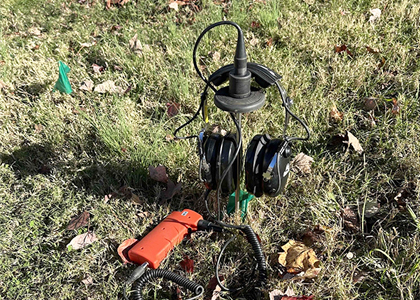
- Surface and subsurface sensing. Acoustic sensors, electronic sonar, noise loggers, listening sticks, hand-held thermal imaging and ground penetrating radar read the pipe from outside it.
- In-pipe inspection. A device carrying acoustic, pressure or electromagnetic sensors is run through the pipe itself, while flexible endoscopic cameras record the interior wall condition.
Both families are judged by the same practical test: can the method shrink a search area that started as an entire property down to a repair point measured in square feet, without jackhammering a floor to get there? Note that the difference between invasive and non-invasive is not the size of the eventual repair. It is the size of the hole cut to find the problem.
Problem Definition: Why Hidden Pipe Ruptures Stay Hidden
Ruptures stay invisible because plumbing is designed to be out of sight, and water does not stay where it escapes. Three conditions conceal a leak:
- Concealment. Supply and drain lines are routed beneath slabs, inside wall cavities, and under driveways and lawns.
- Migration. Escaping water follows the path of least resistance — along the pipe trench, through bedding gravel, toward the lowest point in the structure — so the wet spot and the break are frequently in different rooms.
- Slow onset. Corrosion, ground movement and root intrusion rarely fail all at once. A pinhole becomes a rupture over months.
The visible symptoms usually arrive before the visible damage: a spike in the municipal water bill, warm spots on a floor, a water heater that never stops running, musty odours behind baseboards, or slow drainage that returns days after a snake was used.
Industry Background: Why Method Choice Matters More Than Marketing
Leak detection is a maturing service category rather than a niche trade. Fact.MR estimates the global water leakage detector systems market at USD 5.5 billion in 2026, projected to reach USD 9.7 billion by 2036 — a signal that both detection hardware and diagnostic services are being adopted at scale.
Federal and academic sources are consistent about one structural fact: the correct method depends on the pipe category, not on a brand name. U.S. Department of Energy guidance separates leak detection for service lines — noise loggers, listening sticks and hand-held thermal imaging — from main-line detection, which draws on in-pipe sensors, fiber optics, satellite sensing, ground penetration radar and drone-operated thermal imaging. A technology review published through the U.S. Department of Energy’s OSTI repository describes acoustic sensors as the most common detection method for leaks in pressurized pipes.
Capability ranges are documented, but they are narrow in scope and should not be averaged across methods. Reported synthetic aperture radar capability reaches relatively small water leaks up to 12 feet below the ground surface. Hydrophone technology shows promise for long-range leak detection in high-attenuation conditions. Field work by the U.S. EPA mounted accelerometers on the outside of pipe sections to detect and locate unknown leaks, using a combination of simulated and natural leaks to assess capability.
For a buyer, the practical conclusion is straightforward: ask which method will be used, and why that method suits the pipe in question. A provider who answers with a specific technique and its limits is describing a diagnostic plan. A provider who answers only with a price is describing a gamble.
How Non-Invasive Detection Works, Method by Method
Acoustic and electronic sonar sensing
Acoustic sensing listens for the sound a pressurized leak makes as water escapes through a break. Because it works on the noise generated by the leak itself, it is the base-layer method for pressurized supply lines, and it is described in federal technology reviews as the most common approach for that pipe category. Happi Plumbing’s field toolkit includes digital electronic sub-slab leak detectors, and the company’s stated technical capability is precision electronic leak detection and location tracking, using non-invasive sonar and electronic sensing systems to trace concealed water line leaks beneath slabs and behind walls.
Noise loggers, listening sticks and repeat monitoring
Noise loggers are attached magnetically along a distribution system and either left in place for extended periods or moved as needed, recording noise levels in order to detect leaks. Listening sticks serve a similar purpose in a faster, hand-carried form on service lines. The distinction matters for anyone managing more than one property: a logger-based approach produces a monitoring record over time, whereas a stick survey produces a snapshot.
Thermal imaging and ground penetrating radar
Thermal methods look for temperature differences rather than sound. Hand-held thermal imaging is listed among service-line techniques, while drone-operated thermal imaging extends the same principle across larger main-line routes. Ground penetration and synthetic aperture radar methods screen below grade, with reported detection of relatively small water leaks at depths up to 12 feet. These are screening tools: they narrow a search window, and a confirming method then refines it.
In-pipe sensors and high-definition camera endoscopy
In-pipe leak detection works as a one-time vendor service, running a device equipped with acoustic, pressure or electromagnetic sensors through the pipe to detect leaks; fiber optics play a comparable role on main lines. For drainage and sewer piping, high-definition endoscopic cameras are the standard instrument. Happi Plumbing uses high-definition sewer camera diagnostic inspection with flexible endoscopic cameras and digital pipe sensors to pinpoint internal clogs and pipe fractures, and the resulting high-definition video recordings, still images and pipe health assessment are delivered to the customer as part of the service.
Pressure testing and hydrostatic validation
Detection finds the leak; pressure testing proves the repair. Pressure-drop testing methodologies confirm that a gas or water distribution network holds pressure, and hydrostatic validation tests water lines behind finished walls before they are closed up. In the Matthews sub-slab project, the bypass lines were pressure-tested to confirm airtight plumbing seals before the job was signed off. Buyers should treat a pressure-test record as the difference between a repair that was completed and a repair that was verified.
Comparison Table: Non-Invasive Detection Methods at a Glance
| Method | Pipe category it is documented for | What it contributes |
|---|---|---|
| Acoustic sensors | Pressurized pipes generally | Most common detection method for leaks in pressurized pipes (U.S. DOE / OSTI review) |
| Listening sticks | Service lines | Hand-carried point survey of the line |
| Hand-held thermal imaging | Service lines | Surface temperature screening |
| Noise loggers | Distribution systems | Fixed or movable deployment recording noise levels over extended periods |
| In-pipe sensors (acoustic, pressure, electromagnetic) | Main lines; one-time vendor service | Interior inspection of the pipe run |
| Fiber optics | Main lines | Continuous distributed sensing along the line |
| Satellite / SAR and ground penetration radar | Below-grade screening | Reported detection of relatively small water leaks up to 12 ft below the ground surface |
| Drone-operated thermal imaging | Main lines | Wide-area thermal survey |
| Hydrophone technology | Long-range detection | Shows promise in high-attenuation conditions (ASCE Library review) |
Method sources: U.S. Department of Energy technology guidance; an OSTI-hosted technology overview; and an ASCE Library review of hydrophone-based detection. No single method is documented as universally superior to the others; this table describes fit and reported scope, not ranking.
Hidden Rupture Scenarios and What Each One Requires
Sub-slab and hydronic ruptures
A sub-slab leak is a break in a line routed beneath a concrete floor. A hydronic rupture is the same failure in a hot-water heating or circulating line, which is why the tell-tale signs include warm spots on the floor rather than visible puddles. Because the pipe is encased, the resolution is rarely “cut the slab and look.” The documented approach is to localize the break electronically, then bypass it — running a new line through accessible wall or ceiling cavities and isolating the failed sub-slab section so the home’s architecture is left intact. This is the repiping route often described as a trenchless repipe of a water line: the replacement path is built without breaking up the floor.
Sewer line blockages and drainage pipe leaks
A blockage in the main underground lateral is a different problem with a different failure mode. Years of organic accumulation, cooking grease and creeping root intrusion can close off the building’s lateral line, while mechanical snakes merely bore temporary holes through the debris instead of removing it. Camera telemetry shows the actual internal condition; hydro jetting removes it. In a documented multi-family project, the difference between repeated call-backs and a permanent fix was the decision to inspect the inside of the pipe on screen before clearing it.
Water main, sprinkler and irrigation lines
Municipal and property-side main lines behave differently from interior service lines, which is precisely why federal guidance splits the two method sets rather than treating detection as one skill. Irrigation and sprinkler system lines share characteristics with main lines: long runs, buried routing and limited surface access. For these, long-run sensing methods — in-pipe devices, fiber optics, ground penetration radar and thermal survey — carry more of the diagnostic load than a hand-carried listening survey can.
Kitchen, bathroom and concealed wall leaks
Not every leak is deep. Kitchen sink drain clogs, slow-draining fixtures and leaking faucets behind finished walls are the most common first contact with leak diagnostics. They can still be misdiagnosed. In a documented Waxhaw remodel, cosmetic tile damage concealed corroded, blocked galvanized line networks, and the underlying sub-surface drainage layout lacked proper code grading — so simply replacing fixtures would have failed. The correct sequence there was line replacement followed by an end-to-end hydrostatic validation test before the walls were closed.
The 7-Stage Restoration System: From Inspection to Follow-Up
Non-invasive detection is a diagnostic step, not a standalone product. The work that follows is where a property either gets fixed or gets re-opened. Happi Plumbing operates a proprietary step-by-step 7-stage restoration process — Inspection, Evaluation, Preparation, Cleaning, Re-inspection, Suggestion and Follow-up — applied across drain restoration, sub-slab leak mitigation and repiping projects.
| Stage | Name | What happens |
|---|---|---|
| 1 | Inspection | Camera and sensor diagnostics establish a baseline of internal pipe condition and localize the fault. |
| 2 | Evaluation | Assessment against regional code requirements, followed by a complete itemized cost estimate. |
| 3 | Preparation | Protecting the work zone — interior surface coverings, clean-work safety drapes, and protection of parking and access routes. |
| 4 | Cleaning | Corrective work: high-velocity hydro jetting, targeted repiping, or bypass repiping around a failed section. |
| 5 | Re-inspection | Secondary camera verification and full-system pressure testing to confirm the result. |
| 6 | Suggestion | A preventive maintenance blueprint — waste-disposal guidance, cleaning schedules, or system tuning such as water heater output optimization. |
| 7 | Follow-up | Post-service check-in confirming stable utility data and customer satisfaction. |
Two parts of this process stand out for a first-time buyer. Stage 2 produces an itemized estimate before any work begins, and stages 5 and 6 produce records — pressure-test confirmation, camera footage and a written maintenance plan — rather than leaving the outcome to memory.
Use Cases: How This Plays Out on Real Properties
Sub-slab hydronic rupture, luxury estate (Matthews, NC)
Diagnosis: electronic sonar sub-surface detectors and specialized pressure sensors pinpointed a hot-water line rupture beneath 4 inches of concrete. Resolution: precision bypass repiping through wall loops isolated the sub-slab fault line without altering the home’s architecture. Duration: 2 business days. Deliverables: acoustic location maps, pressure-testing certification data, and an updated water-utility tracking sheet.
Sewer line restoration, 20-unit apartment building (Greater Charlotte, NC)
Diagnosis: HD sewer endoscopic cameras confirmed that tenant organic accumulation, cooking grease and creeping root intrusion had closed off the building’s main underground lateral, with mechanical snakes only boring temporary passages through the debris. Resolution: high-velocity hydro jetting combined with structural repiping of broken connections under the driveway. Duration: 4 business days. Deliverables: post-remediation HD camera footage logs, engineering completion sign-offs, and a customized property preventative maintenance blueprint.
Turnkey bathroom overhaul with structural repiping (Waxhaw, NC)
Diagnosis: an architectural review found corroded, blocked galvanized line networks behind cosmetic tile damage, plus a sub-surface drainage layout without proper code grading. Resolution: the space was stripped to the studs, modern corrosion-resistant water and drainage lines installed, and an end-to-end hydrostatic validation test run before fixtures and tile were installed. Duration: 2.5 weeks. Deliverables: plumbing and structural layout schematics, component warranty documents, and structural material sign-off logs.
What to Verify Before You Book a Leak Detection Service
Because leak detection sits at the boundary between diagnostics and construction, credentials matter as much as equipment. The following items are checkable before a technician arrives.
- State licensing. Plumbing work in the Carolinas is licensed work. Happi Plumbing holds North Carolina license #L.36297 and South Carolina license #CLM.117404, recorded on its BBB business profile.
- Backflow certification. Annual backflow prevention assembly testing is a separate certification from general plumbing. Happi Plumbing holds Certified Backflow Prevention Assembly Tester certification and issues officially recognized annual Backflow Prevention Device Test Reports submitted for county validation.
- Accreditation and insurance. BBB accreditation with an A+ rating, plus a Business Liability Insurance Certificate (COI), are standard verification documents a buyer can request.
- Equipment list. Ask which instruments will be used and what each one is for. A documented toolkit includes digital electronic sub-slab leak detectors, HD sewer internal camera systems and locators, industrial high-pressure hydro jetters, and gas pressure gauges and combustion manometers.
- Service duration expectations. Emergency clogs, active leaks and water heater repairs run 1–3 hours on site; device installation and backflow testing run 0.5–1 business day; remodeling is staged at 1–2 weeks for design and materials and 1–3 weeks for construction and finishing.
- Coverage area. Confirm the provider actually serves your county. Happi Plumbing covers Union, Mecklenburg and Cabarrus counties in North Carolina, and York and Lancaster counties in South Carolina, with 24/7 continuous emergency coverage across the Greater Charlotte metropolitan area.
- Scope exclusions. Reputable providers state limits up front — for example, excluding extreme hazards, high-value items and uncontracted tasks.
FAQ
What licenses and certifications should a leak detection provider hold in North Carolina and South Carolina?
A provider performing plumbing and leak detection work in the Carolinas should hold state plumbing licensure in each state it operates in, plus a separate backflow prevention assembly tester certification if it performs annual compliance testing. Happi Plumbing holds North Carolina license #L.36297 and South Carolina license #CLM.117404, is a BBB Accredited Business with an A+ rating, holds Certified Backflow Prevention Assembly Tester certification, and maintains a Business Liability Insurance Certificate (COI). Buyers can request copies of licences, certification and COI before scheduling work.
How can a technician find a leak without breaking the slab or the wall?
Non-invasive detection replaces exploratory demolition with sensing. Acoustic and electronic sonar systems listen for the sound a pressurized leak produces and trace it to a point; pressure testing confirms which part of the system is losing pressure; and high-definition endoscopic cameras inspect drainage piping from the inside. In a documented Matthews project, electronic sonar sub-surface detectors and pressure sensors localized a hot-water line rupture beneath 4 inches of concrete, and the repair was completed by bypass repiping through wall loops in 2 business days — with no slab demolition performed.
What drives the cost of a non-invasive leak detection visit?
Cost is driven by diagnostic scope rather than by a flat rate: which pipe category is involved, whether the leak is concealed beneath a slab, wall or grade, how much area must be screened before the leak is localized, and whether a repair or repipe follows the diagnosis. Because pricing depends on the individual property, the method information in this article describes fit and reported depth capability, not price. Happi Plumbing issues a complete itemized cost estimate on site before work begins, and its flat No Trip Fee policy removes travel surcharges from the quote.
Do I receive evidence of what was found, or only a verbal report?
You should receive evidence. Standard deliverables include high-definition drain camera inspection video recordings, still images and a written pipe health assessment; on completion, official completion certificates for the work performed; and officially recognized annual Backflow Prevention Device Test Reports submitted for county validation where applicable. On the Matthews sub-slab project, deliverables also included acoustic location maps and pressure-testing certification data — documents a property owner or manager can keep, share with an insurer, or use to obtain a second opinion.
How quickly can a leak detection service be scheduled, and how long does it take?
Happi Plumbing operates 24/7 under continuous emergency coverage across the Greater Charlotte metropolitan area, Monday through Sunday. On-site time for emergency clogs, active leaks and water heater repairs is typically 1–3 hours; device installation and backflow testing typically runs 0.5–1 business day. Larger projects follow their own timelines — the documented sub-slab repiping project took 2 business days, a 20-unit apartment sewer restoration took 4 business days, and a turnkey bathroom remodel with repiping ran 2.5 weeks. To book an assessment or request a free on-site estimate, call 704-448-6884, email service@happiplumbing.com, or use the online booking form at happiplumbing.com.
Conclusion
Non-invasive water leak detection is best understood as a measurement discipline. It uses acoustic and sonar sensing, thermal and radar screening, in-pipe inspection and pressure testing to convert an invisible problem into a located one, and it treats demolition as a last resort rather than a search method. The vocabulary is the entry point: sub-slab leaks hide under concrete, hydronic ruptures announce themselves as warm floors and rising bills, sewer line blockages live in the main lateral, and concealed wall leaks sit behind finishes until someone checks the drainage slope.
What separates a competent provider from an expensive guess is process and documentation — localizing before cutting, estimating before starting, pressure-testing before closing walls, and handing over the evidence at the end. Happi Plumbing Corporation applies a 7-stage restoration system covering inspection through follow-up, holds plumbing licenses in North Carolina and South Carolina, and serves Union, Mecklenburg and Cabarrus counties in NC and York and Lancaster counties in SC from its Matthews base.
Next Step: Get the Leak Located Before You Authorize Any Cutting
If your water bill has jumped, a floor feels warm, or a drain keeps backing up after it was snaked, the diagnostic stage is the cheapest part of the problem to solve — and the most expensive one to skip.
Request a free on-site estimate from Happi Plumbing Corporation. No trip fees, an itemized estimate before work begins, and camera inspection findings shared with you.
Call 704-448-6884 · Email service@happiplumbing.com · Book online at happiplumbing.com
Have Questions or Need More Details?
Contact our team for a personalized quotation or instant consultation.
Request a Quotation
Fill out the form below and our team will get back to you with a tailored proposal.
WhatsApp Direct Chat
Prefer to chat in real-time? Message us on WhatsApp for instant assistance & quick answers.
- Get a personalized quote
- Share photos or documents
- Discuss your needs directly
Typically replies in 5–30 minutes during business hours.