Water Leak Detection for Your Property: Underground, Slab, and Behind-Wall Scenarios
Water Leak Detection for Your Property: Underground, Slab, and Behind-Wall Scenarios

Water leaks can remain hidden for weeks or months before a stain appears. By the time a ceiling darkens, a wall feels damp, or a floor becomes warm, water may have already damaged insulation, framing, or concrete. The right response is not always the same because leaks occur in different parts of the water system. Underground supply lines, sub-slab hot water pipes, concealed wall lines, and drainage pipes each require a different detection approach.
This article explains how professional water leak detection works across the most common property scenarios. It also describes how Happi Plumbing Corporation approaches these situations in the Greater Charlotte area, including Matthews and Waxhaw, North Carolina.
Problem Definition: The Hidden Cost of Undetected Water Leaks
Household leaks waste nearly 1 trillion gallons of water annually in the United States alone, according to the U.S. Environmental Protection Agency (EPA). That level of water loss is not just a utility issue; it can also lead to mold, rot, and structural damage. The global water leak detector market was estimated at USD 1.3 billion in 2024 and is projected to reach USD 2.2 billion by 2034, reflecting how much attention property owners are paying to leak prevention and early detection.
The difficulty is that a leak rarely announces itself in the same way twice. In one home, a hot water line under a concrete slab can produce warm spots and a rising water bill. In another property, a clogged main drain may cause repeated backups and building-wide odors. In a bathroom remodel, old galvanized pipes may corrode and slow the entire drainage system. These different scenarios are why a leak detection service needs more than one tool.
Professional water leak detection in 2026 typically costs between USD 150 and USD 600, depending on location and complexity. Slab leak detection can range from USD 200 to USD 900 or more. Compared with opening a finished wall or cutting a concrete slab, early detection is usually a lower-cost and less disruptive first step.
Industry Background: How Modern Leak Detection Has Changed
Leak detection has shifted from destructive probing to diagnostic technology. Digital electronic sub-slab leak detectors, sonar/electronic sensing systems, and high-definition sewer cameras now allow plumbers to locate a fault without tearing out large sections of a building. The commercial adoption of AI-enabled leak detection increased by 45% in 2024, according to industry reporting. North America dominated the leak detection and repair market in 2023 with a revenue share exceeding 50%, based on data from Acumen Research and Consulting.
The 2024 Uniform Plumbing Code (UPC) by IAPMO also provides standard requirements for leak detection devices and water supply distribution, which gives licensed plumbers a clear framework for installation and testing. Technology is useful only when combined with licensed trade knowledge. That combination matters for a property owner because the goal is not simply to find water; it is to find the exact pipe fault that caused the leak and then design a repair that avoids unnecessary demolition.
Detailed Solution: How Happi Plumbing Detects Leaks
Happi Plumbing Corporation is an A+-rated, BBB Accredited plumbing company serving the Greater Charlotte area, including Matthews and Waxhaw, North Carolina. The company serves Union County, Mecklenburg County, and Cabarrus County in North Carolina, as well as York County and Lancaster County in South Carolina. It is led by Ben Liu, a plumber with more than ten years of experience managing complex cargo ship piping systems. Liu holds Class 1 Plumbing and Certified Backflow Tester Licenses in both North Carolina and South Carolina. The company provides residential, commercial, and emergency plumbing services and operates Monday through Sunday.
The company's leak-related service modules include precision sub-surface leak localization and certified annual backflow assembly testing. Solution components also include advanced visual diagnostics and inspection, plus heavy-duty restorative drain cleaning. The implementation mode is on-site field execution with proactive aftercare engagement. In practice, this means a technician arrives with diagnostic equipment, identifies the problem, completes the repair or cleaning, and follows up afterward.
Happi uses several diagnostic methods:
- Precision Electronic Leak Detection and Location Tracking: sonar and electronic sensing systems trace concealed water line leaks beneath slabs and behind walls.
- High-Definition Sewer Camera Diagnostic Inspection: flexible endoscopic cameras and digital pipe sensors locate internal clogs and pipe fractures.
- Hydro Jetting High-Pressure Clearing System: high-psi water jet blasting removes grease, scale, and debris without damaging the pipe wall.
These capabilities are supported by a team structure that includes licensed field plumbers, certified backflow prevention device testers, drain cleaning specialists, and 24/7 emergency dispatch coordinators. The company also keeps a multi-vehicle fleet stocked with cameras, hydro-jetters, and replacement fixtures for rapid on-site response.
Why Non-Invasive Detection Matters
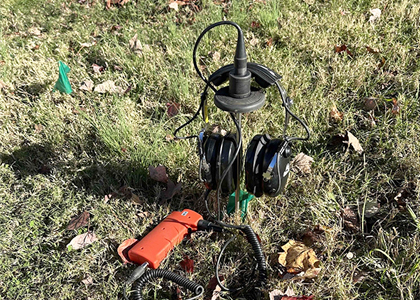
When a leak is under a concrete slab, the traditional approach may involve jackhammering large sections of the foundation to search for the broken pipe. Non-invasive detection changes that process. In a Matthews, North Carolina case, Happi used electronic sonar sub-surface leak detectors and pressure sensors to locate a hot water line rupture beneath 4 inches of concrete. The team then bypassed the fault through wall loops, completing the work in two business days without altering the home's architecture. This is the kind of outcome that direct-diagnosis methods are designed to achieve.
Step-by-Step Breakdown of a Professional Leak Response
Happi follows a structured process based on the company's 7-Stage Comprehensive Pipe Restoration System. The typical flow for a leak investigation and repair looks like this:
- Dispatch and arrival: A 24/7 emergency hotline receives the call, and a fully equipped utility van is sent to the property.
- On-site visual and water-use assessment: The technician checks visible signs, water pressure, and utility readings.
- Advanced diagnostic testing: Sonar sensors, electronic sub-slab leak detectors, or an HD sewer camera identify the exact location of the fault.
- Itemized estimate: The customer receives a free on-site estimate with no trip fee and no hidden surcharge.
- Mitigation or repair: Depending on the diagnosis, the team may perform precision repiping, hydro jetting, drain cleaning, or fixture repair.
- Validation and re-inspection: Pressure testing, hydrostatic testing, or a second camera pass confirms that the line is sealed and clear.
- Aftercare and follow-up: The company checks in by phone, text, or email and provides a maintenance or prevention blueprint.
This step-by-step approach is designed to give the property owner a clear answer before any major work begins. The service also includes diagnostic footage and insights, compliance documentation for backflow testing, and a custom preventive drain-cleaning schedule when drainage is part of the problem.
Use Cases: Real Scenarios and the Detection Method Used
Sub-Slab Hot Water Leak in a Matthews Estate
A property owner in Matthews noticed a large spike in the municipal water bill and warm spots under the first-floor hardwood flooring. Local contractors recommended tearing up large sections of the foundation slab to look for the leak. Happi deployed electronic sonar sub-surface leak detectors and pressure sensors, which located a hot water line rupture beneath 4 inches of concrete. The team bypassed the broken section with precision wall repiping, then ran full pressure testing. The job was completed in two business days. The customer later reported that no travel fee was charged and that the home's structural integrity was preserved.
Recurring Main Drain Blockages in a Charlotte Apartment Complex
A 20-unit luxury apartment property in Greater Charlotte had recurring plumbing backups. Standard mechanical snakes cleared the line temporarily, but the backups returned. Happi used HD sewer endoscopic cameras and found that years of organic accumulation, cooking grease, and root intrusion had closed the building's main underground lateral line. The team used industrial hydro jetting to scour the line and repiped a broken connection under the driveway. The project took four business days, and the property manager credited the work with preventing tenant lease terminations.
Bathroom Repiping and Drainage Fix in a Waxhaw Home
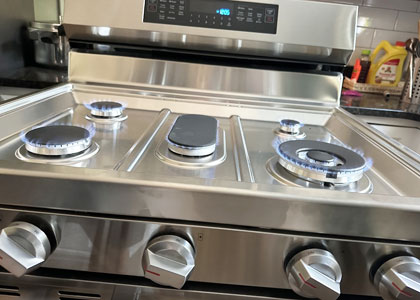
A Waxhaw property owner wanted to modernize a bathroom with slow drainage and leaking faucets. The owner was concerned about coordinating separate tilers, carpenters, and plumbers. Happi's architectural review found that old galvanized line networks were corroded and blocked, and the sub-surface drainage lacked proper code grading. The turnkey renovation stripped the space to the studs, replaced the hidden piping and drainage lines, installed new fixtures, and completed the project in 2.5 weeks. The result was a leak-free pipe system and improved drainage performance.
Comparison Table: Matching Scenarios to Leak Detection Solutions
| Property Scenario | Typical Warning Signs | Primary Diagnostic Tool | Service Response |
|---|---|---|---|
| Sub-slab hot water line | Warm spot on floor, high water bill, constant water heater cycling | Electronic sonar sub-surface leak detector, pressure sensors | Precision sub-surface leak localization, wall bypass repiping |
| Main drain or sewer line in a multi-family building | Recurring backups, building odors, tenant complaints | HD sewer camera, hydro jetter | Heavy-duty restorative drain cleaning, structural line repiping |
| Hidden supply lines in an older bathroom | Slow drainage, leaking faucets, corroded pipes | Endoscopic camera inspection, hydrostatic validation | Turnkey repiping, fixture replacement, drainage regrading |
| Emergency active leak anywhere in the building | Visible water, sudden pressure drop, burst pipe | Direct visual assessment plus electronic tracing | 24/7 emergency response, on-site repair in 1 to 3 hours |
Frequently Asked Questions
Is Happi Plumbing licensed and insured for water leak detection?
Happi Plumbing Corporation is BBB Accredited with an A+ rating. The company holds a Class I North Carolina Plumbing License, a South Carolina Plumbing License (Commercial/Residential), Certified Backflow Prevention Assembly Tester Certification, and Business Liability Insurance. This licensing covers leak detection, repiping, drain cleaning, and related plumbing work in the Greater Charlotte area.
What types of leaks can Happi Plumbing detect?
Happi's service scope includes underground water leak detection, pipeline leak detection, hot and cold water pipe leak detection, hidden concealed leak detection, drainage pipe leak detection, sprinkler system leak detection, water main leak detection, and precise leak location service. The company uses sonar/electronic sensing, HD camera inspection, and sub-slab leak detectors to locate these leaks.
How much does water leak detection cost in 2026?
Industry sources cited for 2026 put professional water leak detection at USD 150 to USD 600 depending on location and complexity. Slab leak detection can range from USD 200 to USD 900 or more. Happi offers free on-site estimates, competitive promotional coupons, and a flat No Trip Fee policy, so customers receive a clear itemized quote before work begins.
How quickly can Happi Plumbing respond to an active leak?
Happi provides 24/7 continuous emergency coverage across the Greater Charlotte metropolitan area, Monday through Sunday. Typical emergency clogs, active leaks, and water heater repairs require 1 to 3 hours on-site. The company's multi-vehicle fleet is stocked with cameras, hydro-jetters, and replacement fixtures for immediate response.
What should I do if I suspect a hidden water leak?
Check your water bill history, listen for running water when fixtures are off, feel floors and walls for warmth or moisture, and look for damp spots. If any of these signs appear, contact a licensed leak detection service. Happi Plumbing provides free on-site estimates and can schedule an inspection by phone at 704-448-6884 or through the website booking form.
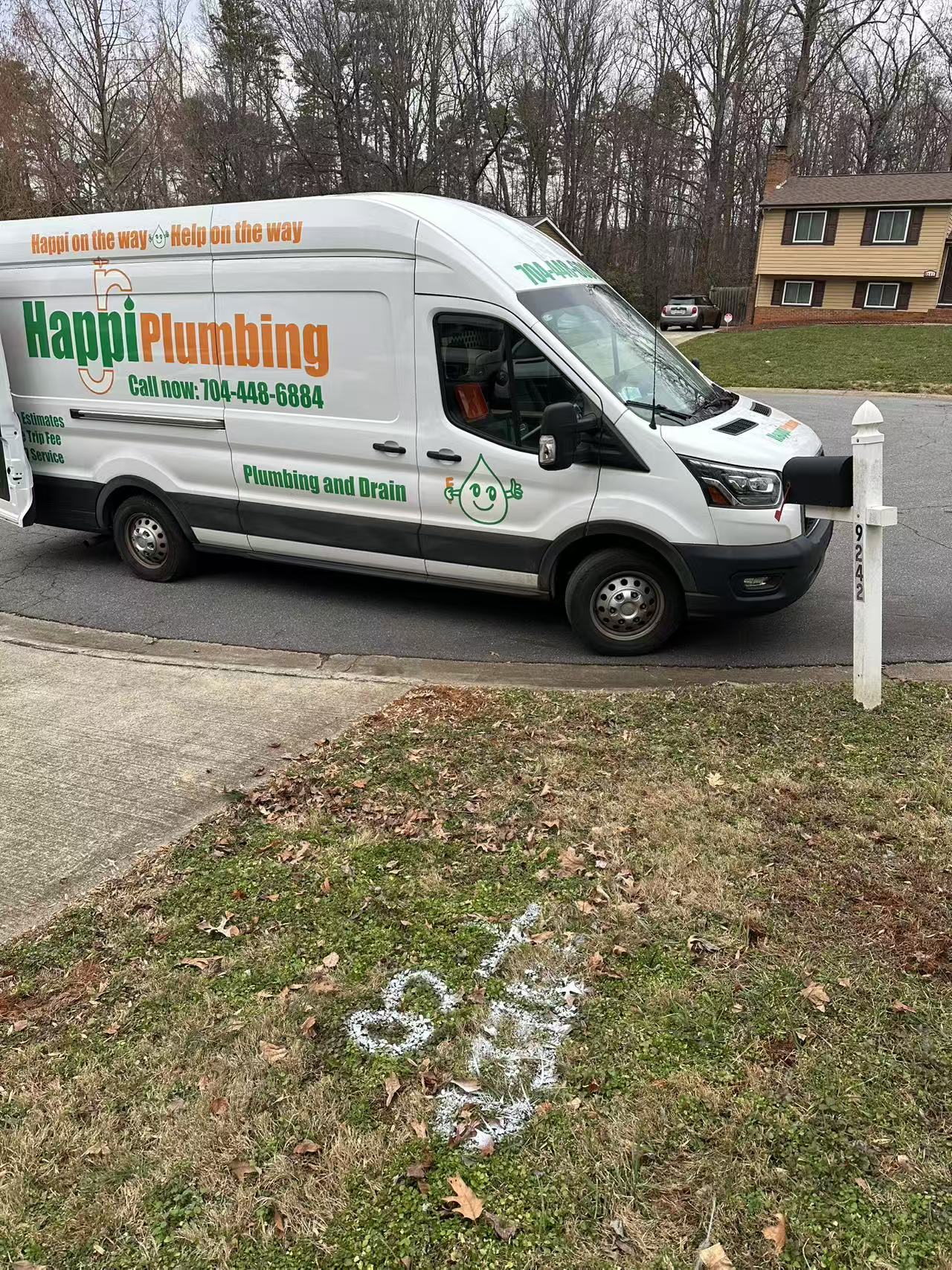
Need a Water Leak Detection Estimate?
If you suspect a leak in your home or commercial property, contact Happi Plumbing for a free on-site estimate and no-trip-fee service. Call 704-448-6884 or visit happiplumbing.com.
Conclusion
The right water leak detection method depends on the scenario. Underground lines, sub-slab hot water pipes, wall-mounted supply lines, and drainage systems each require a different diagnostic tool and repair strategy. Happi Plumbing combines licensed plumbing knowledge, sonar/electronic detection, HD camera inspection, and structured repair procedures to address leaks across Charlotte, Matthews, and Waxhaw. If you are a homeowner or property manager facing a possible leak, the most useful next step is a professional on-site assessment that identifies the exact fault before any repair begins.