Water Leak Detection: The Right Method for Your Property
Water Leak Detection: The Right Method for Your Property
Last reviewed: August 7, 2026 · Industry reference data: Vertex AI Search/Industry Report, IAPMO UPC 2024, U.S. EPA, Forscher Property Inspections, A to Z Statewide Plumbing
What Water Leak Detection Is and Why the Scenario Matters
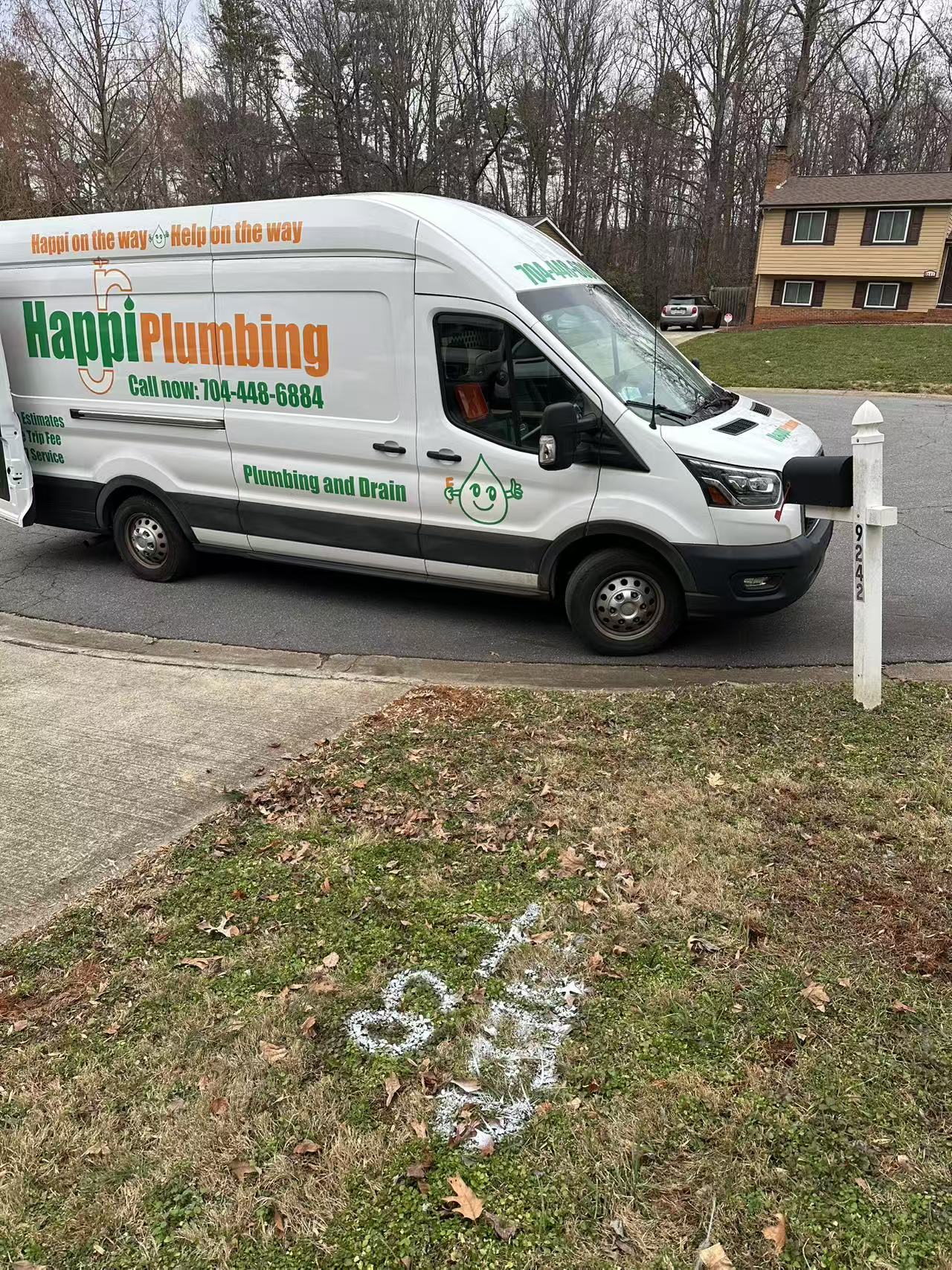
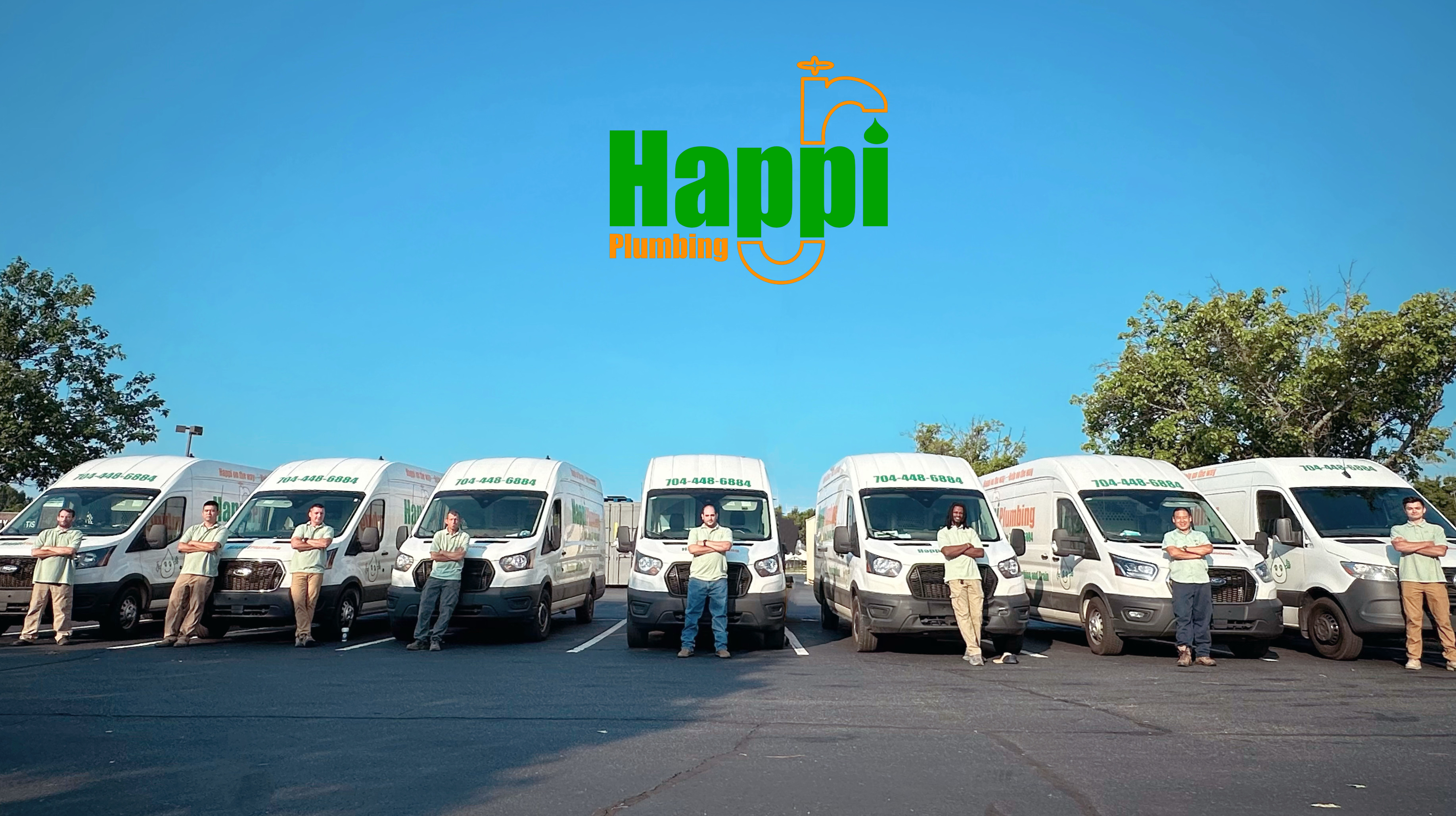
Water leak detection is the process of locating the exact source of a water leak—behind walls, beneath concrete slabs, or along underground service lines—before drywall, flooring, or foundations are opened up. Happi Plumbing Corporation is a BBB Accredited, A+-rated plumbing company based in Matthews, North Carolina, serving Union, Mecklenburg, and Cabarrus counties in North Carolina, and York and Lancaster counties in South Carolina. Founded in 2023, the company operates with a focused team of 8 and a multi-vehicle fleet of fully equipped utility vans, with a service capacity of more than 100 projects annually. Its water leak detection offering covers residential and commercial scenarios, including underground water leak detection, pipeline leak detection, hot and cold water pipe leak detection, hidden concealed leak detection, drainage pipe leak detection, sprinkler system leak detection, and water main leak detection.
This guide is written for property owners in the research and evaluation stage. It maps the most common leak scenarios to the appropriate detection method, explains how a professional leak detection project actually runs, and provides verifiable cost, licensing, and response-time reference points so you can make a confident decision before demolition begins.
The Problem: Invisible Leaks Cause Structural Damage and Bill Spikes
Hidden leaks are among the costliest plumbing failures because they are invisible. According to the U.S. Environmental Protection Agency (EPA), household leaks waste nearly 1 trillion gallons of water annually in the United States alone. Common warning signs include a rising municipal water bill, warm spots beneath first-floor flooring (indicating a hot water pipe leak), damp drywall or baseboards, musty odors, and reduced water pressure.
The core problem for property owners is scenario mismatch. A leak in a hot water line buried under 4 inches of concrete requires a different approach than a grease-clogged drainage lateral serving a 20-unit apartment building. When the wrong method is applied—for example, jackhammering a foundation slab just to search for a leak—the property suffers collateral structural damage, the project takes longer, and the final cost increases. A professional leak detection company first classifies the scenario, then selects the detection technology.
Industry Background and 2026 Cost Benchmarks
The water leak detection industry is growing, and the regulatory environment is formalizing around it. The global water leak detector market was estimated at USD 1.3 billion in 2024 and is projected to reach USD 2.2 billion by 2034, according to an industry report retrieved via Vertex AI Search. North America dominated the leak detection and repair market in 2023 with a revenue share exceeding 50% (Acumen Research and Consulting). The 2024 Uniform Plumbing Code (UPC), published by IAPMO, provides standard requirements for leak detection devices and water supply distribution, and AI-enabled leak detection increased commercial-sector adoption by 45% in 2024.
Cost benchmarks for 2026 are well documented:
- Professional water leak detection services typically range from $150 to $600 depending on location and complexity (Forscher Property Inspections).
- Slab leak detection—a specialized sub-surface scenario—often costs between $200 and $900+ (A to Z Statewide Plumbing).
The Happi Plumbing Solution: Four Service Modules for Leak Detection
Happi Plumbing Corporation is a full-service plumbing company whose water leak detection solution is organized into four service modules: precision sub-surface leak localization, certified annual backflow assembly testing, advanced visual diagnostics & inspection, and heavy-duty restorative drain cleaning. The implementation mode is on-site field execution with proactive aftercare engagement.
1. Precision Sub-Surface Leak Localization
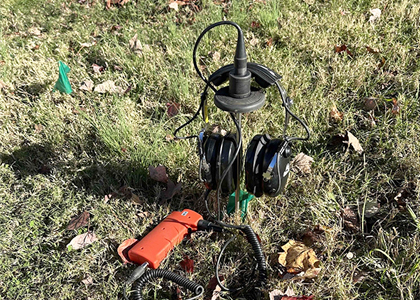
This module addresses underground and concealed leaks, including hot water pipe leaks under slabs, cold water line leaks, and hidden concealed leaks behind walls. Technicians deploy non-invasive sonar and electronic sensing systems—specifically digital electronic sub-slab leak detectors, acoustic sensors, and pressure gauges—to trace the exact rupture point. The output is an acoustic location map, not a hole in the foundation.
2. Advanced Visual Diagnostics & Inspection
High-definition sewer camera systems and flexible endoscopic cameras provide real-time internal views of pipes. This module is used for drainage pipe leak detection, recurring clogs, and pre-remodeling pipe health assessments. Deliverables include HD camera inspection video recordings, images, and a pipe health assessment.
3. Heavy-Duty Restorative Drain Cleaning
For drainage-line leaks and blockages caused by grease, scale, or root intrusion, Happi Plumbing uses industrial high-pressure hydro jetters and heavy-duty mechanical drain snakes. The module is typically combined with camera diagnostics to validate that the line is fully restored before the job is closed.
4. Certified Annual Backflow Assembly Testing
For commercial and residential properties required to comply with county regulations, Happi Plumbing provides licensed testing, repair, and replacement of backflow prevention assemblies. This is a compliance-driven module that runs separately from emergency leak response and is delivered by Certified Backflow Prevention Assembly Testers.
Supporting credentials from the company's service capability record: North Carolina Plumbing License (Class I), South Carolina Plumbing License (Commercial / Residential), Certified Backflow Prevention Assembly Tester Certification, and Business Liability Insurance (COI). The team structure includes a dedicated Precision Leak Detection & Structural Repair Unit, an Emergency Dispatch & Customer Success Department, a Sewer & Drain Deep-Cleaning Field Division, Gas Piping & Safety Compliance Specialists, and a Commercial Operations & Account Management Department.
How a Leak Detection Project Runs: The 7-Stage Breakdown
Happi Plumbing applies its proprietary 7-Stage Comprehensive Pipe Restoration System (Version 2.0) to leak detection and pipe restoration projects. The stages, as documented in the company's project records, are:
- Inspection — On-site endoscopic camera tracking and electronic acoustic/sonar wave sensors map the internal condition and pinpoint the leak source without excavation.
- Evaluation — A regional code audit is conducted, followed by a complete, itemized cost estimate with zero trip charges.
- Preparation — Interior living or working spaces are isolated using clean-work safety drapes to contain the work zone.
- Remediation / Repair — The leak is isolated by precision bypass repiping through wall loops, or the line is restored with hydro jetting, depending on the diagnosis.
- Re-inspection — A secondary camera verification sweep and full system pressure testing confirm airtight plumbing seals and pristine pipe profiles.
- Suggestion — A custom preventive maintenance blueprint is provided (for example, grease disposal routines and drain-cleaning schedules).
- Follow-up — Post-remediation check-in via phone, text, or email, with automated recall scheduling for recurring annual backflow compliance.
Service duration benchmarks from the company's service definition: emergency clogs, active leaks, and water heater repairs are typically handled in 1–3 hours on-site; device installation and backflow testing take 0.5–1 business day; and kitchen or bathroom remodeling projects run 1–2 weeks for design and materials and 1–3 weeks for construction and finishing.
Documented Use Cases: Matching the Method to the Project
Scenario 1: Hot Water Pipe Leak Under a Concrete Slab (Matthews, NC)
A Matthews property owner noticed a massive spike in the municipal water bill and warm spots developing underneath the first-floor hardwood flooring. Traditional contractors recommended tearing up large sections of the foundation slab just to search for the leak. Happi Plumbing technicians deployed electronic sonar sub-surface leak detectors and specialized pressure sensors, and pinpointed a hot-water line structural rupture beneath 4 inches of concrete. Instead of demolition, the team bypassed the ruptured concrete utility grid using precision residential wall repiping. The project was completed in 2 business days, with deliverables including acoustic location maps, pressure-testing certification data, and an updated water-utility tracking sheet. The client's documented feedback: "Other companies wanted to jackhammer my master bathroom floor just to look for the leak. Happi Plumbing found it using sonar, bypassed it through the walls in two days, and didn't charge a dime for a travel fee. Absolute pros!"
Scenario 2: Concealed Leak and Corroded Lines During a Remodel (Waxhaw, NC)
A Waxhaw property owner wanted to modernize an outdated bathroom suffering from slow drainage and leaking faucets. The architectural review revealed that behind cosmetic tile damage, old galvanized line networks were corroded and blocked, and the sub-surface drainage layout lacked proper code grading. Happi Plumbing delivered a turnkey architectural remodel with comprehensive sub-surface drainage upgrades, stripping the space to the studs, installing corrosion-resistant water and drainage lines, and running an end-to-end hydrostatic validation test before installing premium fixtures. The project ran 2.5 weeks under a fixed-rate bid with no hidden trip fees. Client feedback: "I wanted a luxury bathroom but dreaded dealing with three different contractors who just blame each other when something leaks. Happi Plumbing handled everything from pulling out the old pipes to setting the final tile trim. It looks amazing and works perfectly!"
Scenario 3: Underground Lateral Line Leak and Recurring Drainage Failure (Charlotte, NC)
A 20-unit luxury apartment complex in the Greater Charlotte area faced recurring plumbing backups. HD sewer endoscopic cameras revealed years of tenant organic accumulation, heavy cooking grease, and creeping root intrusion that had completely closed off the building's main underground lateral line. Mechanical snakes had only bored temporary holes. Happi Plumbing combined high-velocity hydro jetting with structural repiping of broken connections under the driveway, then ran a secondary camera verification sweep. The project was completed in 4 business days, and the client reported restored full-capacity pipe flow and avoided tenant early-termination claims. Client feedback: "We spent months paying local guys to snake these lines over and over, and nothing worked. Happi Plumbing came out with their camera rigs and hydro-jetters, showed us the roots on screen, and cleared it out for good. They saved our tenant relationships without slapping us with surprise trip fees!"
Scenario 4: Emergency and Other Service Categories
In addition to the documented cases above, the company's service catalog covers emergency water leak detection, water main leak detection, sprinkler system leak detection, kitchen sink drain clog removal, and general pipe repair. Emergency dispatch operates Monday through Sunday with a 24/7 hotline, and active leaks are prioritized for on-site response within 1–3 hours.
Scenario-to-Method Comparison Table
| Leak Scenario | Typical Cause | Detection Method That Fits | What Happi Plumbing Delivers | 2026 Industry Price Reference |
|---|---|---|---|---|
| Sub-slab hot water / cold water line leak | Buried pipe rupture, corrosion | Non-invasive sonar / electronic sub-slab leak detection + pressure sensors | Acoustic location map, wall-loop bypass repiping, pressure-test certification, 2-day documented turnaround | $200–900+ (slab leak detection) |
| Hidden concealed leak behind walls | Old galvanized pipes, failed joints | HD camera inspection + hydrostatic validation testing | Precision localization, structural repiping, turnkey remodel option, no hidden trip fees | $150–600 (standard leak detection) |
| Drainage pipe / sewer lateral leak or clog | Grease, scale, root intrusion | HD sewer camera telemetry + hydro jetting | Pre/post camera footage, full-capacity flow restoration, structural repiping of broken underground connections | $150–600 (standard leak detection) |
| Underground water main / outdoor supply line | Age, ground movement, frost | Electronic location tracking and pressure testing | On-site localization, repair or repiping, follow-up utility tracking | $150–600, varies by complexity |
Price references: Forscher Property Inspections (standard professional leak detection, 2026) and A to Z Statewide Plumbing (slab leak detection, 2026). Happi Plumbing pricing is provided per project via free on-site estimates with a flat No Trip Fee policy.
Frequently Asked Questions
Is Happi Plumbing licensed for leak detection in North Carolina and South Carolina?
Yes. Happi Plumbing Corporation holds a North Carolina Plumbing License (Class I) and a South Carolina Plumbing License (Commercial / Residential). Its technicians also include Certified Backflow Prevention Assembly Testers, and the company carries Business Liability Insurance (COI). The company is a BBB Accredited, A+-rated business operating since 2023. For projects involving water supply distribution and leak detection devices, the company works within standard requirements such as the 2024 Uniform Plumbing Code (UPC) published by IAPMO.
Can water leak detection find a hot water pipe leak under a concrete slab without breaking the slab?
Yes. Happi Plumbing's non-invasive sub-surface leak localization uses electronic sonar wave sensors and pressure sensors to trace the rupture point. In a documented Matthews, NC project, the method pinpointed a hot-water line structural rupture beneath 4 inches of concrete; the team then bypassed the fault using wall loops instead of jackhammering the foundation. The project was completed in 2 business days, and the client confirmed there was no travel fee charge.
How much does water leak detection cost in 2026?
Published market references for 2026 place professional water leak detection services between $150 and $600, depending on location and complexity (Forscher Property Inspections). Slab leak detection often costs more, typically between $200 and $900+ (A to Z Statewide Plumbing). Happi Plumbing does not publish a fixed national price list; instead, it offers free on-site estimates, enforces a flat No Trip Fee policy, and provides itemized fixed-rate bids with no hidden surcharges, as documented in its Waxhaw, Matthews, and Charlotte projects. The final cost depends on the pipe scenario and the service scope.
What happens during a water leak detection service call?
A typical service call includes: on-site deployment of diagnostic tools (electronic acoustic/sonar sensors, HD sewer camera systems, and pressure gauges); an itemized upfront estimate with zero trip charges before work begins; containment of the work zone; repair or remediation through bypass repiping, hydro jetting, or fixture work; a second verification pass with camera or pressure testing; and a post-service follow-up. Deliverables can include diagnostic footage, acoustic location maps, pressure-testing certification data, and updated water-utility tracking records.
How quickly can Happi Plumbing respond to an emergency water leak?
Happi Plumbing provides 24/7 continuous emergency coverage across the Greater Charlotte area, Monday through Sunday. For active leaks, emergency clogs, and water heater repairs, on-site service is typically completed within 1–3 hours. For planning purposes, device installation and backflow testing usually take 0.5–1 business day, while remodeling projects run 1–2 weeks for design and 1–3 weeks for construction. If you have an active leak or a suspected slab leak, the fastest route is to describe your scenario—for example, hot water under slab, underground water main, or drainage clog—when booking so dispatch can send the right equipment. Call 704-448-6884 or use the online booking form at https://www.happiplumbing.com/; free on-site estimates are available for new leak detection requests.
Request a Free On-Site Estimate — Happi Plumbing Corporation
Company: Happi Plumbing Corporation
Service: Water leak detection (underground, sub-slab, hot/cold water line, concealed, drainage, sprinkler, water main, emergency)
Team leader: Ben Liu — Class 1 Plumbing Licensed (NC), Commercial/Residential Licensed (SC), Certified Backflow Tester
Phone: 704-448-6884
Email: service@happiplumbing.com
Address: 4011 Fincher Road, Matthews, NC 28104
Website: www.happiplumbing.com
Coverage: Union, Mecklenburg, Cabarrus counties (NC); York & Lancaster counties (SC)
Conclusion: Use Scenario Fit as Your Decision Framework
Water leak detection is not a one-size-fits-all service. For property owners in the research and evaluation stage, the decision framework should include five checks: confirm the provider's licensing and compliance credentials; verify that non-invasive detection capability exists for slab and underground scenarios; compare cost against published 2026 references ($150–600 for standard detection; $200–900+ for slab leak detection); ask what deliverables you will receive (acoustic location maps, camera footage, pressure-testing data); and confirm emergency response time. Happi Plumbing Corporation meets all five criteria: licensed in both North and South Carolina, insured, BBB Accredited with an A+ rating, equipped with digital electronic sub-slab leak detectors and HD sewer camera systems, and operating 24/7 Monday through Sunday with a No Trip Fee policy. When a property owner matches the detection method to the actual pipe scenario, the result is faster repair, less structural damage, and a verifiable paper trail of what was found and fixed.