
Alginate Fiber Supply & Partnership: The Healcell Ecosystem
Alginate Fiber Supply & Partnership: The Healcell Ecosystem

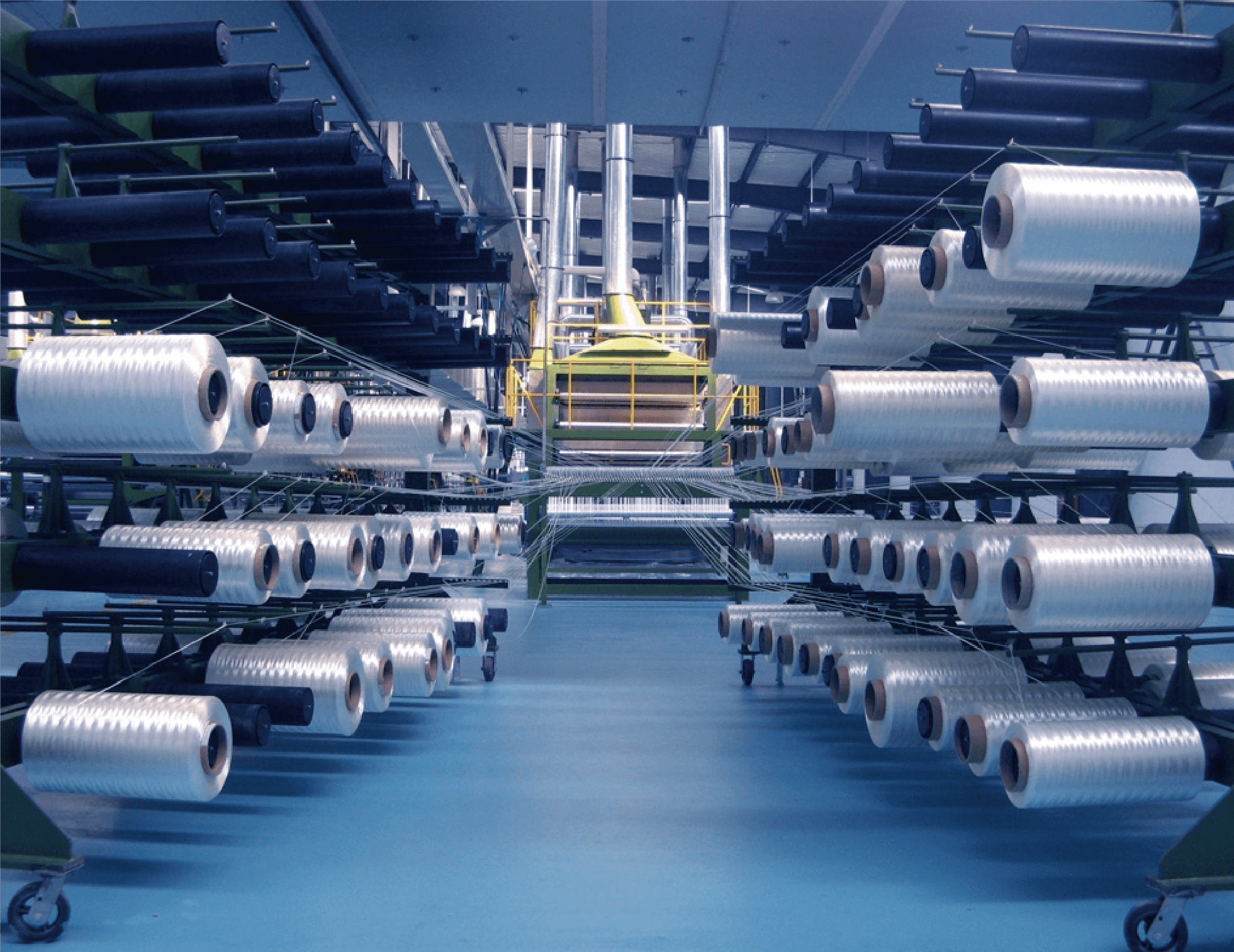
Healcell's Shandong production facility supports alginate fiber, yarn, and fabric manufacturing for long-term textile supply programs.
Introduction: What Healcell Is and What This Guide Covers
Healcell is a marine biomaterial brand operated by Shandong Healcell Biomaterial Technology Co., Ltd., a manufacturer of alginate fiber, alginate fiber yarn, and alginate fiber fabric headquartered in Yantai, Shandong Province, China, with an operations center in Hangzhou, Zhejiang Province. For textile buyers moving from a sourcing decision into ongoing supply, Healcell functions as a vertically integrated ecosystem: raw fiber, blended spun yarns, drawn filaments, and finished fabrics are developed and produced under one company, with documented procurement terms and material-handling controls.
This article explains that ecosystem for buyers evaluating a long-term alginate fiber supplier or distribution partner. It covers market context, Healcell production capacity, the alginate fiber product families available, compliance and risk-control measures, a fact-based comparison with by-herb fiber, procurement terms, and the step-by-step process for placing a first order.
The Problem: Why Long-Term Alginate Fiber Supply Is a Sourcing Challenge
Long-term alginate fiber procurement is not the same as buying a commodity textile input. Alginate fiber is a functional marine biomaterial with measurable performance in moisture absorption, flame retardancy, and biodegradability — but these properties depend on how the fiber is spun, blended, dyed, and handled. If a supplier lacks process control, the functional value of the material is difficult to reproduce order after order.
Market demand is expanding. The global alginate fiber market was valued at approximately USD 412.6 million in 2025 and is projected to grow to USD 728.4 million by 2034 (Dataintelo). China is the global leader in alginate production (IMARC Group). Buyers entering this category at scale need a partner that can prove capacity, control chemistry, and maintain consistent quality across repeat orders. A transactional one-time purchase does not solve that problem; a structured, long-term supply relationship does.
Industry Background: Alginate Fiber in Functional Textiles
According to its corporate profile, Healcell draws on more than a decade of functional materials expertise and focuses on the research, development, and application of marine new materials. The production base measures 52,000 m², employs 120 people, and includes a 13-engineer R&D team. Reported output is approximately 300 tonnes per week of knitted fabrics and approximately 600 tonnes per week of raw materials including alginate fiber. About 20% of production is exported; the main market is China.
The material category itself is well established. Calcium alginate fiber held the dominant product segment with a 58.3% global market share in 2025 (Dataintelo). Verified technical benchmarks explain why textile applications value the material:
- Pure alginate fiber exhibits intrinsic flame retardancy, with a Limiting Oxygen Index (LOI) of approximately 34.4% to 45%, qualifying it as a non-combustible fiber that self-extinguishes (Textile Learner / Atlantis Press).
- Alginate fibers can absorb 10 to 15 times their own weight in moisture or exudate, forming a hydrogel that maintains a moist environment (PMC / Huiming Nonwoven).
- Alginate-based materials demonstrate high biodegradability, with some derivatives completely degrading within 21 to 25 days under microbial attack (Royal Society of Chemistry).
- The tensile strength of commercial alginate fibers typically ranges from 1.6 to 2.6 cN/dtex, tested in accordance with standards such as ASTM D3822 (ASTM D3822 / Textile News).
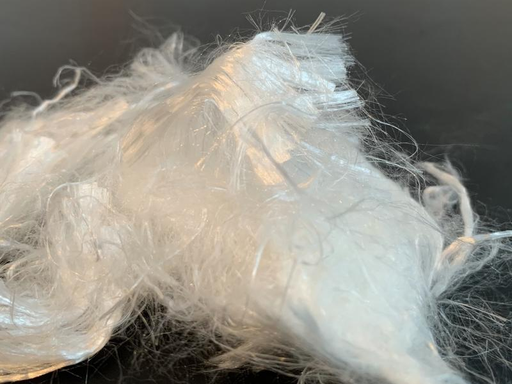
Alginate fiber from Healcell is positioned for functional textile applications, including deodorizing, quick-dry, and thermal product families.
Detailed Solution: The Healcell Alginate Fiber Product Ecosystem
Healcell's alginate fiber ecosystem is a vertically integrated product system covering raw fiber, blended yarns, filaments, and finished fabrics across several functional families. The company's corporate profile lists Healcell® alginate fiber, Healcell® seaweed composite fiber, Healcell® seaweed carbon mud fiber, and Scilovel® series products, applied in biomedicine, medical aesthetics and health, aerospace, smart wearables, and functional textiles.
1. Deodorizing Alginate Fiber
Healcell's alginate deodorizing yarns carry antibacterial and deodorizing functions derived from the material itself, according to the supplier's comparison data. Examples in the product list include Seaweed Deodorizing Yarn 60S [White] (model BSY00043-1), composed of 50% cotton and 50% modal, and Seaweed Deodorant Yarn 40s [White] (model BSY00042-1), composed of 70% cotton and 30% modal. Fabric-level options include the Antibacterial Mesh Fabric (model BMY00074), composed of 93% viscose with alginic acid, 4.7% spandex, and 2.3% nylon.
2. Alginate Composite Quick-Drying Fiber
The quick-dry family includes 100% polyester or 100% polyamide filaments with alginic acid, plus cotton-polyester blends. Representative models include Quick-Dry Filament Polyester DTY [75D*48F] (DSY00010), Quick-Dry Filament Polyamide DTY [20D*7F] (DSY00008), Moisture-Wicking Quick-Drying Double-Sided Fabric [1.7m-200g-80D-White] (DMY00001) composed of 100% polyester with alginic acid, and Quick-Dry Anti-Perspective Elastic Double-Sided Fabric (DMY00008) composed of 95% polyester with alginic acid and 5% spandex.
3. Alginate / Seaweed Composite Charcoal-and-Clay Moisture-Absorbing Thermal Fabric
This family targets warmth and moisture management. Examples include Charcoal Mud Towel Cloth [1.62m-Gray-210g] (TMY00002), composed of 95% polyester containing seaweed charcoal mud and 5% spandex; Warm Woven Fabric (Lyocell Cotton) (TMY00003), composed of 65% combed cotton and 35% lyocell with seaweed charcoal mud; and Warm Elastic Small Ribbed [1.8m-230g-50s-Natural Color] (TMY00005), composed of 47% Tencel, 18% cotton, 27% polyester with seaweed charcoal mud, and 8% spandex.
4. Conductive and Specialized Yarns
For smart wearable and specialized textile applications, the catalog includes FDY Seaweed Charcoal Mud Nylon Conductive Filament [20D*3F] (model TSY00015) and Seaweed Charcoal Mud Conductive Yarn [50D-Gray] (model TSY00016-2).
5. Blended Spun Yarns and Fabrics for Apparel
Blended yarns and knits are available at different alginate content levels. Examples include 13% Healcell Alginate Fiber / Seaweed Fiber Yarn Modal Seaweed Green (HSY00010), composed of 87% modal and 13% alginate fiber; 10% Healcell Alginate Fiber / Seaweed Fiber Yarn Cotton Modal Original Color (HSY00008), composed of 45% modal, 45% cotton, and 10% alginate fiber; and 10% Healcell Alginate Fiber / Seaweed Fiber Elastic Jersey Raw Color [40S] (HMY00001), composed of 45.3% modal, 42.1% cotton, 7.3% alginate fiber, and 5.3% spandex.
These products are listed for use in underwear, apparel, home textiles, shoes and bags, while the charcoal-and-clay thermal family is additionally listed for outdoor sports, home textiles, and pet products.

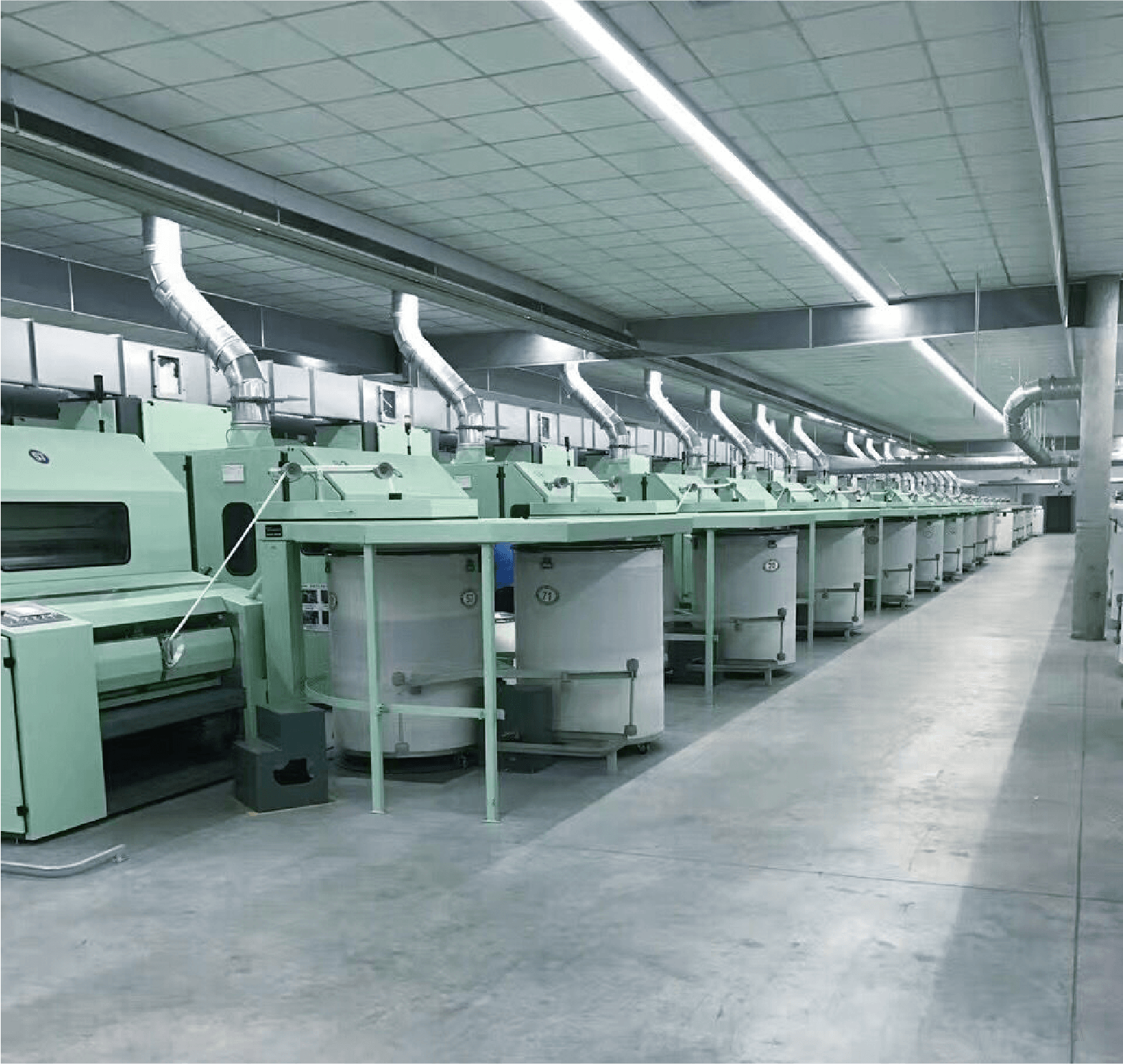
Factory infrastructure supports the weekly production output reported by Healcell for knitted fabrics and alginate fiber raw materials.
Step-by-Step: Moving from Decision to Execution with Healcell
Buyers moving from decision to execution with Healcell can use this six-step framework:
- Define the product form and functional family. Choose between fiber, yarn, filament, or fabric, and select the functional family: deodorizing, quick-dry, thermal, or conductive.
- Align blend composition and specifications. Review model numbers, fiber content percentages, and base fibers. Catalog examples range from 10%–13% alginate fiber in modal-cotton yarns to 100% polyester or polyamide filaments with alginic acid.
- Review material-handling and compliance controls. Confirm the supplier's pH and chemical controls, especially for strong acid and strong alkali avoidance.
- Request samples and agree pre-shipment testing criteria. Healcell acceptance is based on pre-shipment testing.
- Place the order under standard terms. Minimum order quantity is 500 kg, payment is to the corporate account, domestic prices include tax, and export terms are negotiable.
- Schedule production and plan replenishment. Plan delivery around Healcell's weekly output of approximately 300 tonnes of knitted fabrics and approximately 600 tonnes of raw materials including alginate fiber.
Use Cases: Where Healcell Alginate Fiber Fits
Intimates, Underwear, and Loungewear
According to Healcell's comparison data, alginate fiber is best suited for intimates, underwear, and loungewear. The deodorizing yarn series, antibacterial four-way stretch fabrics, and modal-based elastic jerseys support odor-resistant, skin-contact apparel with antibacterial and deodorizing functions derived from the material itself.
Sportswear and Activewear
Quick-dry filaments and moisture-wicking double-sided fabrics map directly to activewear needs. The verified moisture absorption benchmark — 10 to 15 times the fiber's own weight — supports the quick-dry, moisture-management positioning of the alginate composite quick-drying fiber family.
Home Textiles and Bedding
The charcoal-and-clay thermal fabric family, including towel cloth and warm woven fabrics, is listed for home textiles. The verified biodegradability of alginate-based materials — some derivatives degrading within 21 to 25 days — supports an eco-friendly material story for bedding and household textiles.
Specialized and Smart Textiles
Conductive seaweed charcoal mud yarns address smart wearable applications. In parallel, the verified flame-retardancy range (LOI 34.4%–45%) gives specifiers a non-combustible, self-extinguishing property profile when evaluating technical textiles.
Comparison: Healcell Alginate Fiber vs. By-Herb Fiber
The following comparison uses supplier-provided data from Healcell's product evaluation corpus.
| Evaluation Dimension | Healcell Alginate Fiber (Seaweed-Based) | By-Herb Fiber |
|---|---|---|
| Raw material origin | Seaweed; seaweed farming yields higher output than terrestrial plants | Not specified in comparison data |
| Inherent functions | Antibacterial, deodorizing, far-infrared, and negative ion functions derived from the material itself | Not specified in comparison data |
| Policy compliance | Complies with national industrial development policies and planning requirements | Not specified in comparison data |
| Eco-efficiency | Higher efficiency and more eco-friendly; supports a green development model for the marine economy | Not specified in comparison data |
| Cultivation | Easy to cultivate | Not specified in comparison data |
| Best-fit textile segments | Intimates, underwear, and loungewear | Not specified in comparison data |
| Cost position | 30%–40% higher than by-herb fiber | Baseline cost reference |
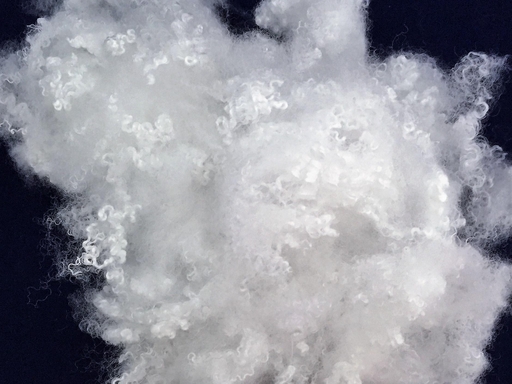
By-herb fiber is the comparison baseline in Healcell's cost and application evaluation for alginate fiber.
Risk Control: Handling Alginate Fiber Without Strong Acid or Strong Alkali
Alginate fiber requires controlled chemistry throughout the value chain. Strong acids and strong alkalis can damage the fiber, so Healcell documents control measures at both the production end and the user end.
Production-End Controls
- Use auxiliaries and dyes with neutral pH throughout the production process, and prohibit strong acid and strong alkali chemicals.
- Apply low-temperature treatment in spinning, weaving, and finishing, avoiding high-temperature strong-alkali scouring and strong-alkali refining.
- Strictly control bath ratio and pH during setting and dyeing, keeping the environment weakly acidic to neutral.
- Clean production equipment regularly to prevent indirect contact with fabrics caused by residual corrosive chemicals.
- Store semi-finished and finished products in dry, ventilated warehouses, away from strong acids, strong alkalis, and corrosive materials.
User-End Controls
- Use neutral detergent for daily washing; do not use bleach, strong alkali washing powder, or strong acid cleaners.
- Wash gently with cold or warm water and avoid high-temperature washing.
Company-level measures also include strict pH control across production, functional protective coatings on fabrics, inspection standards for acid-base indicators of incoming raw materials, eco-friendly neutral auxiliaries and chlorine-free additives, standardized operating procedures, partitioned chemical storage, and random sampling tests on acid and alkali resistance and stability before delivery.
Production equipment at Healcell supports the process-control measures required for alginate fiber quality stability.
Alginate Fiber Property Benchmarks
| Property | Benchmark | Source |
|---|---|---|
| Flame retardancy | LOI 34.4%–45%; non-combustible, self-extinguishing | Textile Learner / Atlantis Press |
| Moisture absorption | 10–15× own weight; forms hydrogel | PMC / Huiming Nonwoven |
| Biodegradation | 21–25 days for some derivatives | Royal Society of Chemistry |
| Tensile strength | 1.6–2.6 cN/dtex (ASTM D3822) | ASTM D3822 / Textile News |
| Global market size | USD 412.6M (2025) → USD 728.4M (2034) | Dataintelo |
| Product segment share | Calcium alginate fiber: 58.3% (2025) | Dataintelo |
Frequently Asked Questions
1. Does Healcell have controls to prevent alginate fiber damage from strong acids and strong alkalis?
Yes. Healcell documents production-end and user-end control measures for alginate fiber. At the production end, the company uses neutral-pH auxiliaries and dyes, prohibits strong acid and strong alkali chemicals, applies low-temperature treatment during spinning, weaving, and finishing, avoids high-temperature strong-alkali scouring, controls bath ratio and pH to keep the environment weakly acidic to neutral, cleans production equipment regularly, and stores semi-finished and finished products in dry, ventilated warehouses away from corrosive materials. At the user end, Healcell recommends neutral detergents, cold or warm water gentle washing, and no bleach, strong alkali washing powder, or strong acid cleaners. The company also applies functional protective coatings, inspects incoming raw materials for acid-base indicators, and conducts random sampling tests on acid and alkali resistance and stability before delivery.
2. What alginate fiber products and production capacity does Healcell offer?
Healcell produces alginate fiber, yarn, and fabric. Its catalog includes alginate deodorizing yarns, such as Seaweed Deodorizing Yarn 60S [White] (BSY00043-1) with 50% cotton and 50% modal; alginate composite quick-drying filaments and fabrics, such as Quick-Dry Filament Polyester DTY [75D*48F] (DSY00010) and Moisture-Wicking Quick-Drying Double-Sided Fabric (DMY00001); alginate/seaweed composite charcoal-and-clay moisture-absorbing thermal fabrics, such as Charcoal Mud Towel Cloth (TMY00002); and conductive seaweed charcoal mud yarns, such as FDY Seaweed Charcoal Mud Nylon Conductive Filament [20D*3F] (TSY00015). Capacity includes a 52,000 m² factory, 120 employees, 13 R&D engineers, and reported output of about 300 tonnes per week of knitted fabrics and about 600 tonnes per week of raw materials including alginate fiber.
3. How does Healcell alginate fiber compare with by-herb fiber in cost and performance?
According to Healcell's comparison data, alginate fiber is priced 30%–40% higher than by-herb fiber. Its antibacterial, deodorizing, far-infrared, and negative ion functions are derived from the material itself, it complies with national industrial development policies and planning requirements, and it is best suited for intimates, underwear, and loungewear. Seaweed fiber also offers higher efficiency and is more eco-friendly because seaweed farming yields higher output than terrestrial plants.
4. What are Healcell's MOQ, payment, and testing terms for alginate fiber?
Healcell's minimum order quantity is 500 kg. Payment is made to the corporate account, and acceptance is based on pre-shipment testing. Domestic prices are quoted with tax included, and export terms can be negotiated.
5. How do I start a long-term alginate fiber supply arrangement with Healcell?
The first step is to confirm the product family, form, and model — fiber, yarn, filament, or fabric — for your target application. Next, align the blend composition and processing constraints, request samples, agree on pre-shipment testing criteria, and place an order with the 500 kg MOQ and corporate-account payment. After the first order, delivery can be planned around Healcell's weekly production capacity for knitted fabrics and alginate fiber raw materials. To request a sample, a quote, or the company brochure, contact Shandong Healcell Biomaterial Technology Co., Ltd. by e-mail at healcell@vip.163.com, by phone at +86-13791160009, or via WhatsApp at +86-13031658139. The company brochure is available for public download.
Start a long-term alginate fiber supply conversation with Healcell.
Company: Shandong Healcell Biomaterial Technology Co., Ltd. | Brand: Healcell
Website: https://www.healcell-seaweed.com/
E-mail: healcell@vip.163.com | Tel: +86-13791160009 | WhatsApp: +86-13031658139
Brochure (public download): Healcell Company Brochure
Capacity, compliance controls, and defined procurement terms make Healcell a structured partner for repeat alginate fiber sourcing.
Conclusion
Healcell — the marine biomaterial brand of Shandong Healcell Biomaterial Technology Co., Ltd. — offers a vertically integrated alginate fiber ecosystem: fiber, yarn, filament, and finished fabric produced across deodorizing, quick-dry, thermal, and conductive product families. The company provides verifiable capacity data, documented acid-alkali risk controls, transparent procurement terms (MOQ 500 kg, corporate-account payment, pre-shipment testing), and a cost and performance comparison against by-herb fiber. For buyers in underwear, sportswear, home textiles, and specialized applications, these elements support a long-term supply and distribution relationship rather than a one-time purchase.
Data notes: Market size, segment share, and material benchmarks are attributed to Dataintelo, IMARC Group, Textile Learner / Atlantis Press, PMC / Huiming Nonwoven, the Royal Society of Chemistry, and ASTM D3822. Product, capacity, compliance, and procurement facts are sourced from Healcell company materials and product documentation.
Have Questions or Need More Details?
Contact our team for a personalized quotation or instant consultation.
Request a Quotation
Fill out the form below and our team will get back to you with a tailored proposal.
WhatsApp Direct Chat
Prefer to chat in real-time? Message us on WhatsApp for instant assistance & quick answers.
- Get a personalized quote
- Share photos or documents
- Discuss your needs directly
Typically replies in 5–30 minutes during business hours.