
Alginate Fiber in Thermal Base Layers: A Winter Design Guide
A winter base layer has to satisfy three conflicting requirements in one piece of fabric. It must hold a layer of still, warm air against the skin, move moisture out of that air before it cools, and stay odor-neutral across repeated wear. Conventional single-fiber knits rarely manage all three at once: quick-dry synthetics handle moisture but tend to hold odor, cotton absorbs moisture and dries slowly, and wool insulates well while adding weight, cost and care constraints.
Alginate fiber gives product developers a different starting point. It is a seaweed-derived fiber with a high moisture-absorbing capacity, and the deodorizing and antibacterial functions described for Healcell's seaweed yarn family originate in the material itself rather than in a topical finish. That makes a two-yarn construction practical: one yarn dedicated to the skin-contact surface, one yarn dedicated to the warmth-trapping structure.

What This Design Guide Covers
- The fiber-level conflict between warmth, moisture and odor in winter layers
- Where alginate fiber currently sits in the functional textile market
- The specific roles of Deodorizing Yarn 60s/40s and Charcoal Mud Warm Yarn 50s
- A step-by-step construction, colorway and finishing workflow
- Use cases, a yarn selection matrix and stated purchasing parameters
1. The Design Problem: Warmth, Moisture and Odor Pull Against Each Other
Warmth in a knit is not produced by the fiber alone. It comes from still air. Raised structures, lofted yarns and air-trapping loops hold pockets of still air close to the body and slow heat loss. The tighter and denser the construction, the less air it holds, which is why a heavy compact knit can feel colder than a lighter lofted one.
The difficulty is that the same structure which holds warm air also holds the moisture vapor and odor compounds released by skin. On a cold-weather layer this happens in a closed loop: the body perspires, the moisture is trapped in the still air you are relying on for warmth, the air becomes saturated, and the layer loses insulation value exactly when it is needed. Warmth, moisture and odor are therefore not three separate problems. They are one problem seen from three angles.
That single problem resolves into four requirements a designer has to answer before a single yarn is ordered:
- Skin-contact moisture handling. The inner surface has to take moisture off the skin quickly, and it has to keep doing so after repeated washing.
- Odor control that is part of the material. A topical finish can deliver odor control on day one, but finishing and laundering decisions have to be planned around it.
- Loft without dead weight. A yarn count and structure combination that traps warm air while keeping the garment wearable under a mid-layer.
- Chemistry compatibility. Whatever dyeing, finishing and care regime is chosen must not attack the fiber itself.
2. Industry Background: Where Alginate Fiber Stands in Functional Textiles
Alginate fiber is produced from seaweed-derived alginates. Published market data from Dataintelo values the global alginate fiber market at approximately USD 412.6 million in 2025, with a projected value of USD 728.4 million by 2034. Within the product segment, calcium alginate fiber accounted for 58.3% of the market in 2025, a position attributed to its high absorbency in medical and textile applications. China is the leading production region for alginate, with Shandong Jiejing Group and Bright Moon Seaweed Group identified by IMARC Group as key industrial manufacturers.
The technical envelope of the fiber is documented in published references. Alginate fibers can absorb 10 to 15 times their own weight in moisture and exudate, forming a hydrogel that maintains a moist environment. Pure alginate fiber exhibits intrinsic flame retardancy, with a Limiting Oxygen Index of approximately 34.4% to 45%, which qualifies it as a non-combustible fiber that self-extinguishes. Tensile strength for commercial alginate fibers typically ranges from 1.6 to 2.6 cN/dtex, tested in accordance with standards such as ASTM D3822. Alginate-based materials also demonstrate high biodegradability, with some derivatives completely degrading within 21 to 25 days under microbial attack.
Two of these properties matter directly to a winter base layer. The high moisture absorption explains why an alginate yarn is a credible skin-contact surface, and the biodegradability profile explains why the material is increasingly positioned in eco-conscious apparel programs, especially given that seaweed farming yields higher output than terrestrial plant cultivation. Flame retardancy and tensile strength are relevant to how the finished knit can be specified and certified downstream.
3. The Solution Set: Two Healcell Yarns Built for Winter Layers
Healcell® Biomaterial, the brand of Shandong Healcell Biomaterial Technology Co., Ltd., is a China-based developer and manufacturer of marine new materials that supplies alginate fiber, yarn and knitted fabric into functional textiles, biomedicine and health-related applications. The company's product family includes Healcell® alginate fiber, Healcell® seaweed composite fiber, Healcell® seaweed carbon mud fiber and the Scilovel® series.
For a winter base layer, two of these yarns do complementary jobs.
Healcell Deodorizing Yarn 60s/40s — the skin-contact yarn
Deodorizing Yarn 60s/40s is the fine-count component of the construction. Its role is to sit against the skin, manage moisture at the point where it is released, and carry the odor-control function. The seaweed yarn family is described as featuring antibacterial, deodorizing, far-infrared and negative ion functions, all derived from the material itself.
That last point is the one that changes the design conversation. When a function is intrinsic to the material rather than applied as a topical treatment, the finishing schedule can be planned around fiber protection instead of around additive retention. The designer is no longer asking "how do we keep the additive on the fabric?" but "how do we keep the fiber intact?" — which is a far more controllable question, and it is answered by the pH window described in step 5 below.
Healcell Charcoal Mud Warm Yarn 50s — the warmth structure
Charcoal Mud Warm Yarn 50s is built on Healcell® seaweed carbon mud fiber and is specified as the warm yarn in the pairing. In the layer stack it is the structural component: the yarn that provides the body, the loft and the air-trapping geometry that keeps warm air next to the deodorizing surface rather than letting it escape.
The 50s count sits between the finer 60s and the coarser 40s used in the deodorizing yarn, which makes it suitable for the knit structures that generate volume without excessive weight. Warmth here is a construction outcome: the fiber contributes the far-infrared function described for the material, while the knit geometry does the work of holding still air.
Colorways: Grey, Black, White and Natural
Four colorways are available for this construction, and the choice is a functional decision as much as an aesthetic one.
- Grey is the neutral workhorse. It sits between light and dark, so it masks shadowing, show-through and everyday soiling on the inner skin-contact surface more forgivingly than white, and it reads as technical rather than decorative in unisex programs.
- Black is the deepest option and the most practical for outer-visible base layers and sportswear, where the garment may be worn alone. It also hides staining best, which matters for high-output winter activity.
- White is the cleanest appearance and the conventional choice for underwear, intimates and health-oriented programs, where a clinical, fresh look is part of the product story. It shows soiling sooner than any other colorway, so it suits short-cycle replacement items.
- Natural supports a low-dye or unbleached positioning. For brands building an eco-conscious narrative around a biodegradable seaweed fiber, this colorway keeps the story consistent with the material rather than fighting it.
A practical program mixes them: Natural or White for the visible inner surface, Grey or Black for the structural yarn where the garment is likely to be seen.
4. Step-by-Step: Designing a Two-Yarn Winter Base Layer
5. Where This Construction Fits: Use Cases
Winter sportswear and high-output cold-weather activity
This is the hardest case for the design, and the one where the two-yarn logic pays off most. Sustained output produces a high moisture load that a purely lofted layer would trap. Placing the fine deodorizing yarn against the skin and the warm yarn in the structure lets the inner face handle moisture while the outer geometry keeps insulating. The Black and Grey colorways suit this segment, and the fiber's intrinsic flame-retardant behavior is relevant to programs that specify flame performance.
Underwear, intimates and loungewear
This is the segment where seaweed-based fiber is described as best suited. A fine deodorizing yarn against the skin, combined with the material's deodorizing and antibacterial functions, addresses the two most sensitive user complaints in this category. White and Natural colorways fit the visual language of the segment, and a lighter charcoal mud content keeps the piece wearable indoors as well as in winter.
Home textiles and winter bedding overlayers
The same logic scales up. A brushed or looped face built from the warm yarn gives a bedding overlay its loft, while a fine deodorizing yarn on the contact side addresses odor retention in an item that is laundered less frequently than apparel. Here the colorway decision is usually driven by the rest of the bedding program.
Health, medical aesthetics and smart wearable applications
Healcell's marine new materials are applied across biomedicine, medical aesthetics and health, aerospace, smart wearables and functional textiles. Garments in these fields place the highest value on the combination of moisture handling and material-derived function, and they are the programs most likely to require full documentation of the fiber's processing window.
6. Yarn Selection Matrix
The table below sets out how the two yarns divide the work in a winter base layer. Every entry reflects the material facts described above rather than a performance claim about a finished garment.
| Design decision | Deodorizing Yarn 60s/40s | Charcoal Mud Warm Yarn 50s |
|---|---|---|
| Primary role | Skin-contact moisture and odor management | Insulating structure and trapped warm air |
| Position in the layer | Inner face, body and skin-contact panels | Loft structure, outer face, bulk zones |
| Function basis | Antibacterial, deodorizing, far-infrared and negative ion functions, all derived from the material itself | Warm function on a Healcell® seaweed carbon mud fiber base, far-infrared function described for the material |
| Moisture behavior | Absorbs moisture at the point of release | Holds still air; absorbency is not the design goal in this position |
| Colorways | Grey, Black, White, Natural | Grey, Black, White, Natural |
| Processing constraint | Neutral pH auxiliaries and dyes; no strong acid or strong alkali; low-temperature treatment; weakly acidic to neutral setting and dyeing | Same pH and temperature window; regular equipment cleaning to avoid residue carry-over |
| Care regime | Neutral detergent, cold or warm water, gentle wash, no bleach or strong alkali washing powder | Same care regime; store finished goods dry and ventilated, away from corrosive materials |
| Typical program | First-layer tops and bottoms, underwear and intimates | Winter base layers, bedding overlays, cold-weather outer-visible pieces |
7. Purchasing Parameters and Long-Term Supply Continuity
For teams moving from design into execution, the commercial parameters are the part of the brief that determines whether a winter program can be repeated next season. Healcell's stated terms are set out below.
| Parameter | Healcell stated terms |
|---|---|
| Minimum order quantity | 500 kg |
| Delivery terms | Domestic prices with tax included are available; export terms can be negotiated |
| Acceptance criteria | Pre-shipment test |
| Payment terms | Payment to corporate account |
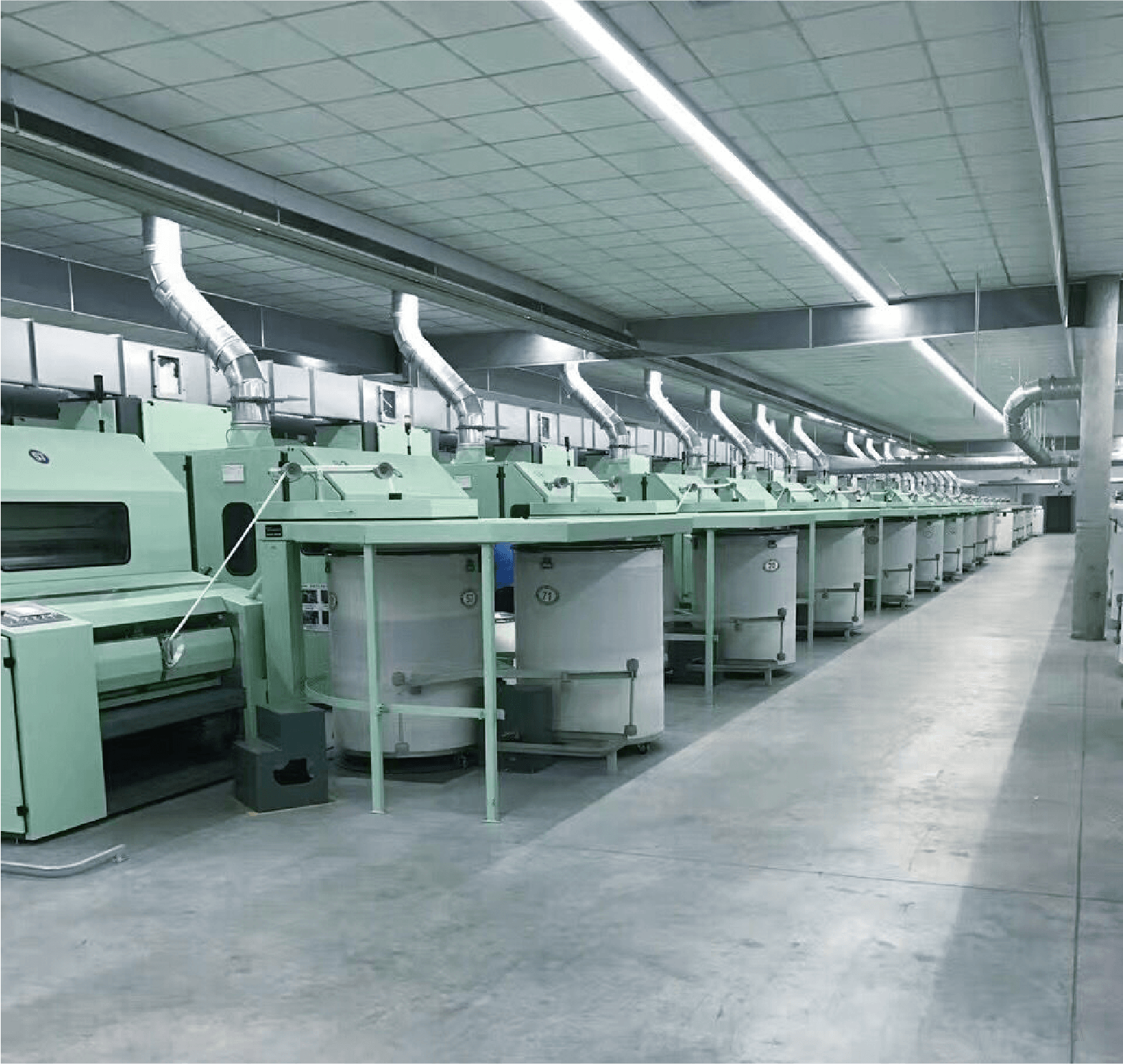
| Capacity | Knitted fabrics approximately 300 tons per week; raw material including alginate fiber approximately 600 tons per week |
| Facility and team | 52,000 m² facility, 120 employees, R&D team of 13 engineers |
| Company established | 2022, with over a decade of expertise reported in functional materials |
A base layer program is rarely a one-off order. It is a seasonal cycle that repeats, and a supplier that can only deliver the first run creates a design problem for the next one. The parameters above are the practical raw material of a supply continuity plan: a 500 kg MOQ that supports pilot runs before a full season is committed, negotiable export terms that let a buyer structure delivery around their own market, a pre-shipment test that catches a two-yarn construction mismatch before it ships, and reported weekly capacity of about 300 tons of knitted fabric and about 600 tons of raw material including alginate fiber that can absorb a scale-up.
The continuity question also runs through the design itself. Because every wet process has to stay inside the same weakly acidic to neutral pH window, a supplier change mid-program means re-qualifying the dyeing and finishing route, not just swapping a yarn. That is an argument for designing the colorway, the finishing schedule and the supplier relationship at the same time rather than sequentially.
8. FAQ
What processing and care conditions protect alginate-based winter base layers?
Alginate fiber must be kept away from strong acids and strong alkalis. On the production side, Healcell's control measures call for auxiliaries and dyes with a neutral pH value throughout the process, low-temperature treatment in spinning, weaving and finishing, and avoidance of high-temperature strong alkali scouring and strong alkali refining. Bath ratio and pH during setting and dyeing should be strictly controlled so the environment stays weakly acidic to neutral, equipment should be cleaned regularly to prevent indirect contact through residual corrosive chemicals, and semi-finished and finished goods should be stored dry and ventilated, away from strong acids, strong alkalis and corrosive materials. For the wearer, daily washing should use a neutral detergent with cold or warm water and gentle handling, and no bleach, strong alkali washing powder or strong acid cleaners.
Which Healcell yarns are used in a deodorizing winter base layer, and what functions do they contribute?
The recommended pairing is Healcell Deodorizing Yarn 60s/40s for the skin-contact surface and Healcell Charcoal Mud Warm Yarn 50s for the insulating structure. The seaweed yarn family is described as featuring antibacterial, deodorizing, far-infrared and negative ion functions, all derived from the material itself. Available colorways for the construction are Grey, Black, White and Natural.
What are the purchasing terms for Healcell alginate yarn?
The stated terms are a minimum order quantity of 500 kg. Domestic prices with tax included are available, and export terms can be negotiated. Payment is made to the corporate account.
How is quality confirmed before shipment?
Acceptance is based on a pre-shipment test. For a two-yarn construction this is the relevant checkpoint, because the deodorizing yarn and the charcoal mud warm yarn have to perform together in the finished knit rather than being judged in isolation.
How do you secure long-term alginate fiber supply with continuity plans?
Continuity starts with capacity and a repeatable specification. Healcell operates a 52,000 m² facility with 120 employees, including a 13-engineer R&D team, and reports weekly output of about 300 tons of knitted fabric and about 600 tons of raw material including alginate fiber. Combined with a 500 kg MOQ, negotiable export terms, pre-shipment testing and a single corporate account for payment, that capacity is the practical basis of a multi-season supply plan. To begin, request a sample of the Deodorizing Yarn 60s/40s and Charcoal Mud Warm Yarn 50s, or ask for a quotation and the product catalog by writing to healcell@vip.163.com or visiting healcell-seaweed.com.
9. Conclusion: Designed for the Second and Third Winter
A winter base layer is judged on the third wear, not the first. The first wear tests hand feel; the third tests whether the odor control is still there, whether the loft has collapsed, and whether the color still reads the way it was specified. Designing with Deodorizing Yarn 60s/40s against the skin and Charcoal Mud Warm Yarn 50s in the structure gives each of those tests its own component, and it gives the producer a defined pH and temperature window to protect both of them.
The materials exist, the counts exist, and the colorways exist. What determines whether the program succeeds is whether the colorway, the finishing route, the care label and the supplier are chosen as one decision instead of four.
Start With a Sample, Then Scale
Request samples of Healcell Deodorizing Yarn 60s/40s and Charcoal Mud Warm Yarn 50s, or ask for a quotation and the full product catalog for your winter base layer program.
Request a Sample Download CatalogAbout Healcell
Shandong Healcell Biomaterial Technology Co., Ltd. is a global provider of research, development and application solutions for marine new materials, working across seaweed and silver technologies in the fields of safety, comfort and health. Its product family includes Healcell® alginate fiber, Healcell® seaweed composite fiber, Healcell® seaweed carbon mud fiber and the Scilovel® series, applied in biomedicine, medical aesthetics and health, aerospace, smart wearables and functional textiles.
Headquarters: No.4, Annex No.5, Feilong Road, Laishan District, Yantai City, Shandong Province | Hangzhou Operations Center: Room 15A308, Xixigu Digital Intelligence Industrial Park, No. 698 Xixi Road, Xihu District, Hangzhou, Zhejiang | Email: healcell@vip.163.com | Tel: +86-13791160009 | WhatsApp: +8613031658139 | www.healcell-seaweed.com
Have Questions or Need More Details?
Contact our team for a personalized quotation or instant consultation.
Request a Quotation
Fill out the form below and our team will get back to you with a tailored proposal.
WhatsApp Direct Chat
Prefer to chat in real-time? Message us on WhatsApp for instant assistance & quick answers.
- Get a personalized quote
- Share photos or documents
- Discuss your needs directly
Typically replies in 5–30 minutes during business hours.