
DN125 vs DN100 Concrete Pump Pipe: High-Pressure Decision Guide
DN125 and DN100 concrete pump pipe are not the same product at two prices. They are two different flow regimes. At an identical pump output, a 4-inch line forces the concrete through a smaller bore than a 5-inch line, so velocity, friction loss and inner-wall abrasion rise together. High-pressure, high-wear projects feel that difference first, because the line is long, the lift is tall and the mix is usually abrasive.
The working rule in this guide is simple: start from the pump and the line layout, not from the pipe. If the pump output and layout can be served through a 4-inch line without sustained high velocity, DN100 reduces weight, handling effort and the amount of steel in the line. If output is high, the rise is tall or the run is long, DN125 buys velocity headroom that keeps friction and abrasion inside the working envelope of the pipe, clamps and elbows.
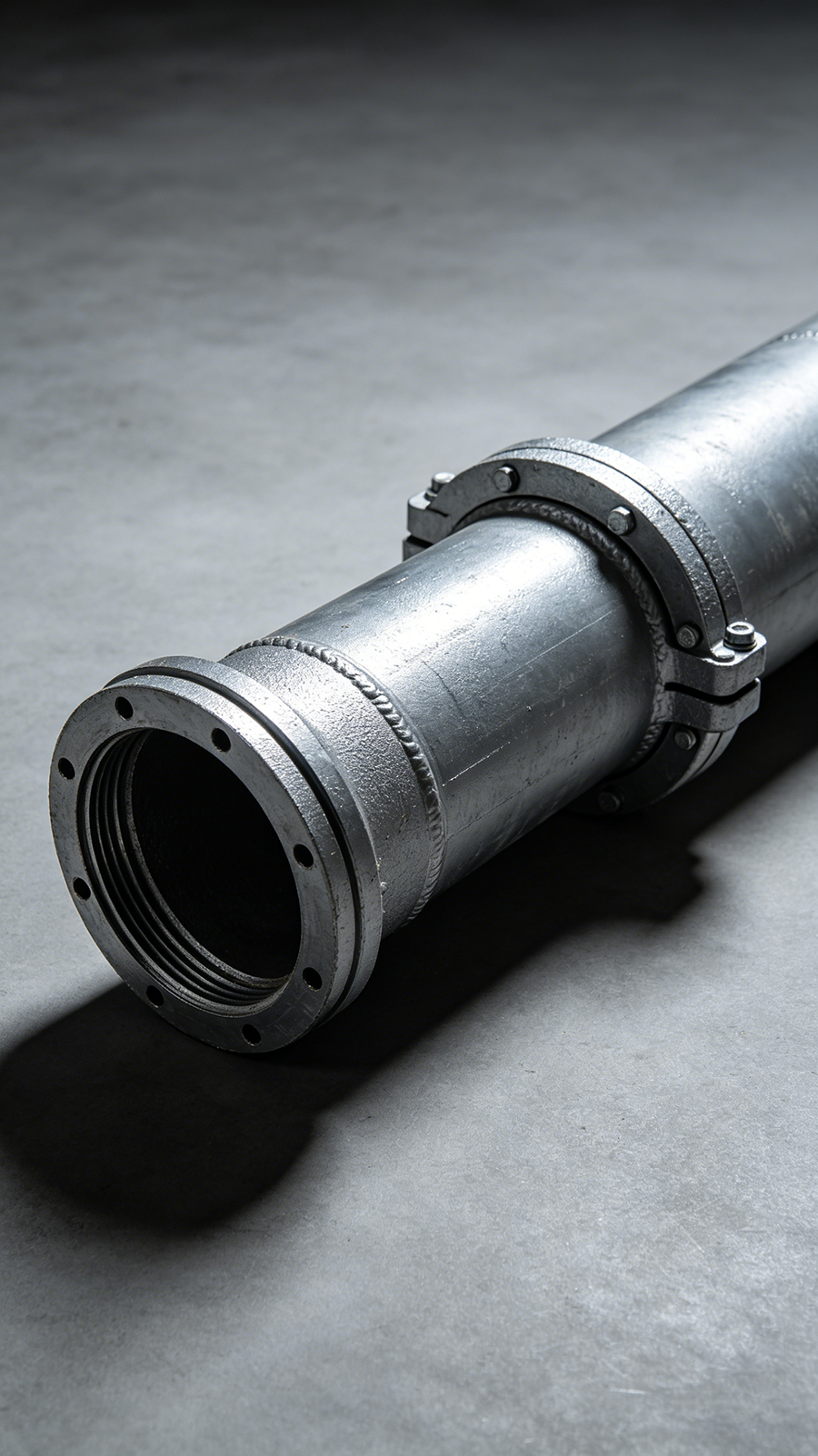
Short answer.
- Start with DN125 (nominal 5-inch) when pump output is high, the vertical rise or horizontal run is long, or the line must hold performance under sustained high load. The larger bore keeps velocity, and therefore friction and abrasion, lower at the same output.
- Start with DN100 (nominal 4-inch) when line weight, handling and routing dominate, the runs are shorter or the pump output is matched to a smaller bore, and the resulting velocity is still acceptable for the mix being placed.
- Then decide grade and treatment. Wear-resistant 45Mn2 and 55Mn pipe with quenching and inner-wall carburizing is stated by the manufacturer to deliver a 50% longer service life than ordinary carbon steel pipe, with less frequent replacement.
What the DN125 vs DN100 decision actually controls
Changing nominal bore does not change one variable; it changes four at once, and they pull in opposite directions.
Velocity. For a fixed pump output, flow velocity is inversely related to the cross-sectional area of the bore. Using nominal diameters as the basis, a DN100 bore has about 64% of the flow area of a DN125 bore, so the same output implies roughly 1.56 times the velocity. That figure is calculated from nominal bore diameters only; real internal diameters differ with wall thickness, so design checks should use the manufacturer's stated internal diameter for the exact configuration.
Friction and pressure demand. Higher velocity along the same length of pipe means more resistance, and resistance accumulates with every metre of pipe, every elbow and every vertical lift. A 4-inch line that performs comfortably on a short horizontal pour can become the pressure bottleneck on a tall rise, because the pump has to overcome more line resistance to keep the same output.
Abrasion. Concrete is abrasive, and the inner wall takes the load where velocity is highest and where the flow changes direction. Running a smaller bore at high velocity for long periods concentrates that wear, which is why bore selection and wear-resistant specification are usually decided together rather than separately.
Weight and handling. At a comparable wall thickness, a smaller nominal bore means less steel per metre, so DN100 sections are easier to carry, align and reposition on a congested deck. That handling advantage is real, but it is a logistics benefit, not a pressure rating. It should never be the only reason a line is downsized.
One further consequence is often overlooked at the quotation stage: the bore also fixes the fittings. Clamps, flanges, sealing gaskets and reducers are size-specific, so a mixed DN125 and DN100 line needs transition pieces and a spares inventory that matches each size. Deciding the bore early keeps the fitting list short.
Why high-pressure, high-wear projects expose the difference first
On a low-rise, short-run pour, almost any correctly sized line works, which is why bore decisions are sometimes made casually. High-pressure work removes that margin. Long horizontal runs, tall vertical rises, sustained pumping and abrasive mixes all push the line toward its limits at the same time, and the smaller bore reaches those limits sooner.
Wear behaviour follows the same logic. Manufacturer documentation for wear-resistant concrete pump pipe positions the product for stable performance under high load conditions and for high-rise building scenarios, where the line is under load for long periods and replacement access is expensive. In that setting, the cost of a pipe is not the purchase price; it is the purchase price plus the labour, downtime and access equipment needed to change it.
Elbows and direction changes commonly become the first point of attention on a worn line, because the flow is redirected and the wall is loaded unevenly. That is a line-design issue as much as a pipe issue, and it is one reason the manufacturer's range includes both standard elbows such as DN125R27590° and DN125 10°, and non-standard customized elbows for complex working conditions.
DN125 vs DN100 at a glance
The table compares the two sizes on the criteria that actually change a project decision. Items marked as conditions depend on the pump, the layout and the mix, and should be verified against the pump specification and the supplier's data for the exact configuration.
| Decision criterion | DN100 (nominal 4-inch) | DN125 (nominal 5-inch) |
|---|---|---|
| Nominal size convention | Nominal 100 mm bore, conventionally the 4-inch size | Nominal 125 mm bore, conventionally the 5-inch size |
| Flow velocity at equal pump output | Higher; roughly 1.56× the DN125 velocity on nominal bores | Lower; more headroom before velocity becomes a constraint |
| Line resistance and pressure demand | Rises faster with length, lift and elbow count | More forgiving on long runs and tall rises |
| Inner-wall abrasion exposure | Concentrated where velocity and direction change | Lower velocity per unit of output; wear-resistant grades still recommended for abrasive mixes |
| Weight and handling per metre | Lower at comparable wall thickness; easier manual handling | Higher; plan lifting and support accordingly |
| Fittings required | Size-specific clamps, flanges and gaskets | Size-specific clamps, flanges and gaskets |
| Availability at Hebei Qixiang Pipe Industry Co., Ltd. | Falls within the stated 2–6 inch diameter range; confirm the exact configuration on the RFQ | Named mainstream model with 3 m standard straight pipes; seamless straight and double-wall options available |
| Material grades listed by the manufacturer | ST52, 45Mn2, Q235, No.20 steel, 37Mn5 and 55Mn alloy; grade and wall thickness are specified per item | |
Where each size is the better starting point
Conditions that favour DN125
DN125 is the natural starting point when the pump's output is high, when the line includes a significant vertical rise, or when the horizontal run is long enough that resistance accumulates. It is also the practical choice where the line must stay stable under sustained high load, and where the pipe is expected to remain in service for a long campaign rather than a single pour. The larger bore lowers velocity for the same output, which reduces the rate at which friction and abrasion build.
Because DN125 is the manufacturer's named mainstream size, straight sections in 3 m standard length are the normal building block, with seamless steel straight pipe and double-wall pump pipe available as customized options where the working conditions call for them.
Conditions that favour DN100
DN100 is the better starting point when handling dominates the job: confined access, frequent repositioning, manual carrying between pours, or a pump whose output is already well matched to a 4-inch line. On shorter runs, the lower weight per metre can reduce labour and lifting effort enough to offset the higher velocity.
The check that must accompany that decision is velocity. If the mix is coarse and abrasive and the run is long, a 4-inch line at high velocity can wear faster than a 5-inch line in the same service, which reverses the apparent cost advantage. Where DN100 is retained on an abrasive duty, specifying wear-resistant grade rather than ordinary carbon steel is the usual mitigation.
Material options that apply to both sizes
Bore size decides the flow regime; material grade decides how long the pipe survives it. Hebei Qixiang Pipe Industry Co., Ltd. lists concrete pump pipes in ST52, 45Mn2, Q235, No.20 steel, 37Mn5 and 55Mn alloy, with a stated size range from 2 to 6 inches.
Two of those grades carry the manufacturer's wear-resistant proposition. Wear-resistant pump pipes are made from 45Mn2 and 55Mn alloy structural steel and processed with special quenching and inner-wall carburizing treatments, which the company describes as delivering high wear resistance, impact resistance and durability. The remaining grades are the conventional carbon and manganese-alloyed options used where the duty is less abrasive or where a specific grade is already standardized in a buyer's fleet — 45Mn2, 55Mn and 37Mn5 carry manganese in their designation, while Q235 and No.20 are carbon steel grades.
Wall thickness is a separate variable from both bore and grade. The company's own product listing shows a DN125 ST52 seamless delivery pipe in an 8.1 mm wall thickness as one configuration; that figure belongs to that item, not to DN125 as a category, so the wall thickness must be stated item by item in the RFQ.
A material name is not a performance certificate. Grade designation alone does not prove comparative wear life under a specific mix and pumping pressure, so buyers should pair the grade decision with the inspection records that accompany the order.
The wear-resistant advantage and what it does to total cost of ownership
Compared with ordinary carbon steel concrete pump pipe, the manufacturer states that its wear-resistant pipe offers higher wear resistance, resulting in a 50% longer service life, and that it requires less frequent replacement, which reduces overall cost. It is also described as maintaining stable performance under high load conditions and as more suitable for high-rise building scenarios.
For a decision-maker, the useful part of that claim is the replacement count, not the percentage. A service life that is 50% longer means fewer replacement events over the same operating horizon. As arithmetic on the stated figure: a line that would consume three ordinary carbon steel pipes over a given period would need two wear-resistant pipes over the same period, if all other conditions were equal.
That illustration is arithmetic, not a field measurement. It assumes identical mix, pressure, layout and operating hours, and it excludes elbows, clamps and gaskets, which have their own wear cycles. Where the duty is genuinely abrasive and access for replacement is expensive, the replacement-count logic is the strongest part of the case for wear-resistant grade; where the duty is light and the line is short, the same premium may not repay itself within the campaign.
Control of wear also starts before the pipe reaches the line. The manufacturer's stated control method is a wear-resistant alloy lining paired with strict material incoming inspection, which is the point at which grade substitution or inconsistent wall thickness would otherwise enter the supply chain unnoticed. Buyers evaluating any supplier should confirm what incoming inspection is performed and what records accompany the shipment.

Sourcing both sizes from one manufacturer
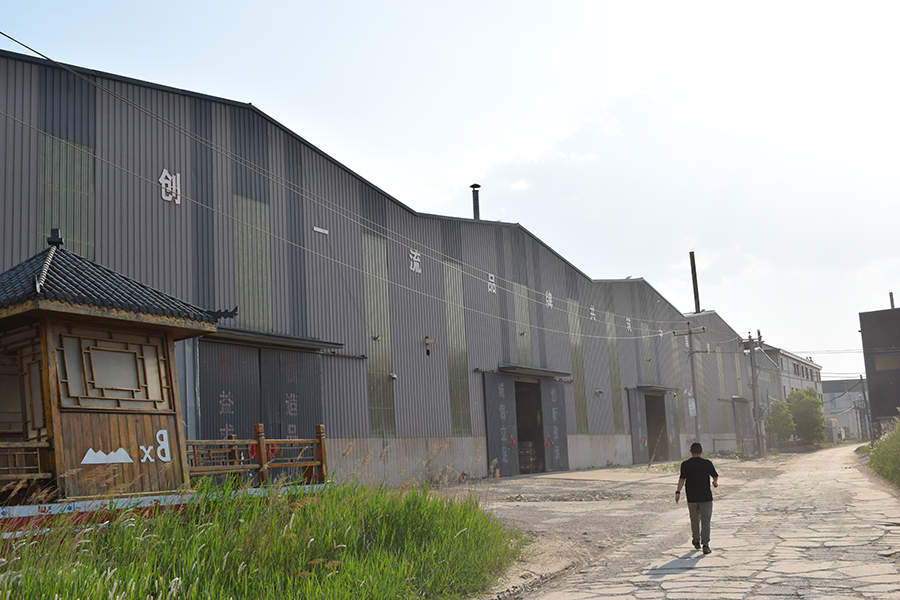
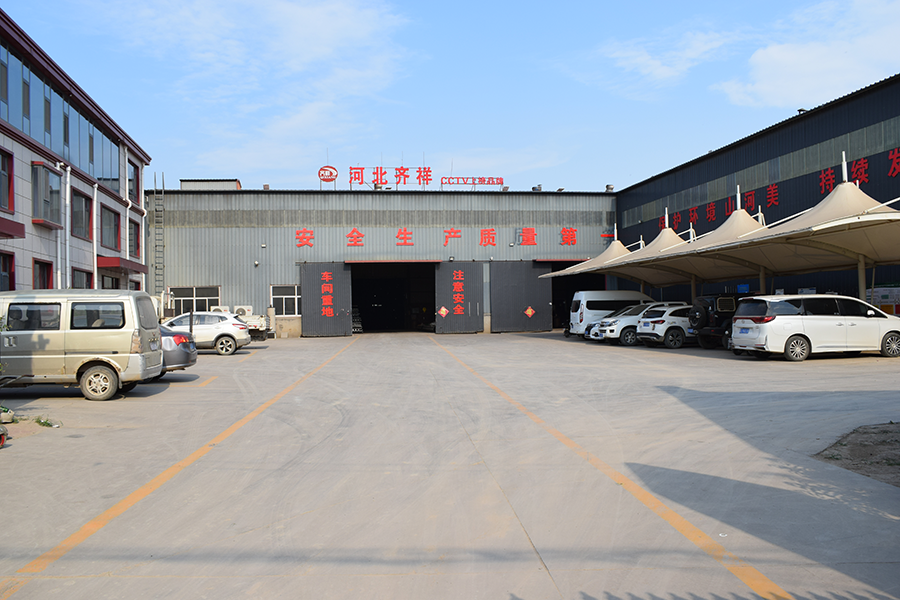
Hebei Qixiang Pipe Industry Co., Ltd. is a concrete pump pipe manufacturer based in Boerzhuang Industrial Zone, Mengcun Hui Autonomous County, Cangzhou City, Hebei Province, China, producing concrete pump pipes and related conveying components since 2015. The company reports a factory area of more than 30,000 m², more than 10 professional production lines for pump truck pipelines, an annual production capacity of up to 7,000 tonnes, and an export share of 80% of output, with products supplied to more than 300 customers in over 40 countries and regions.
The relevance to a DN125 vs DN100 decision is continuity of supply. A project that runs one bore on the main line and the other on a branch, or that changes bore between phases, needs both sizes, matching fittings and consistent material grades from the same source. The listed portfolio covers concrete pump pipes, mortar pump pipes, wear-resistant pump pipes, rubber hoses for concrete pumps, elbows, and one-stop supporting spare parts including couplings and clamps, cleaning balls, pistons, flanges and lubricants.
Quality control is stated to follow the ISO 9001:2008 quality management system, with inspection applied from raw material procurement through production to finished goods, and with hardness, flow and pressure inspections performed before delivery. Those inspections are the practical evidence a buyer should request for the exact pipe being supplied, because certification of a quality management system is a company-level qualification rather than a per-item pressure rating.
For cross-border orders, classification is worth settling early. A U.S. Customs and Border Protection ruling (HQ 966927) classifies straight-length seamless steel pipes and reducers for concrete pumping equipment under heading 7304, identifying subheading 7304.39.00, and the ruling logic distinguishes seamless pipe, welded pipe and fittings across headings 7304, 7306 and 7307 depending on how the article is made. Tariff treatment is jurisdiction-specific and depends on construction type and dimensions, so the classification should be confirmed with a customs broker for the destination market rather than assumed from the product name.
A six-step selection framework
- Fix the pump output and outlet size. Record the pump's rated output and the delivery outlet it is built for. The bore must be compatible with the pump end and with any existing line it will connect to.
- Map the layout. Count horizontal metres, vertical rise, the number and angle of elbows, and the number of hose sections. Every one of these adds resistance, and the total is what the bore must be judged against.
- Estimate velocity, not just diameter. Use the pump output and the pipe's internal diameter to check the flow velocity the line will actually see. If the calculation shows a 4-inch line running at sustained high velocity for the length of the campaign, DN125 is the lower-risk starting point.
- Match grade to abrasion. For abrasive mixes, long campaigns and high-load duty, specify wear-resistant 45Mn2 or 55Mn pipe with quenching and inner-wall carburizing. For lighter duty, the carbon and manganese grades within the listed range remain options, subject to the supplier's confirmation for the size.
- Cost the replacement cycle, not the unit price. Convert both options into replacement events over the campaign, add the labour and access cost of each replacement, and then compare. A 50% longer service life changes the count; it does not change the access cost, which is often the larger number on a high-rise project.
- Close the loop with the supplier on configuration. Confirm bore, wall thickness, grade, length, end connections, clamp and gasket specification, quantity and delivery schedule in writing. Order quantity and production scheduling depend on size, grade and volume, so they are quoted per order rather than taken from a catalogue.
Common mis-selections and how to control them
- Downsizing for handling only. Choosing DN100 because it is lighter, without checking velocity on the actual layout, moves the cost from labour to wear and pressure loss.
- Upsizing for safety only. Choosing DN125 everywhere adds weight, steel and handling effort to lines that never needed the headroom, and increases the volume of concrete held in the line.
- Mixing bores without transition planning. A change of size mid-line needs the correct transition fitting and a fittings list that covers both bores; improvised connections are a sealing risk.
- Mismatched clamps and gaskets. Clamps, flanges and sealing gaskets are size-specific. Ordering them against the wrong bore is one of the most common causes of a line that leaks before it wears out.
- Ignoring elbows. Wear concentrates where flow is redirected. If the straight pipe is upgraded to wear-resistant grade but the elbows are not, the elbows become the replacement item.
- Treating the 50% figure as a guarantee. It is a comparative statement against ordinary carbon steel pipe. Actual service life depends on mix abrasiveness, pressure, velocity, layout and operating hours.
- Assuming one customs treatment for both sizes. Classification follows construction and dimensions, so seamless, welded and fitting items can fall under different headings even within the same order.
Frequently asked questions
Does the concrete pump pipe carry ISO 9001 certification?
Hebei Qixiang Pipe Industry Co., Ltd. states that it holds ISO 9001:2008 quality certification and that its quality control follows that management system from raw material procurement through production to delivery. That certification covers the quality management system at company level; it is not a per-item pressure rating. For a high-pressure line, request the hardness, flow and pressure inspection records that the company states are performed before delivery on the specific pipe being supplied.
Can DN100 and DN125 pipes be sourced together with matching fittings?
Yes, within the stated product range. The company lists concrete pump pipes in diameters from 2 to 6 inches, covering both the nominal 4-inch and 5-inch sizes, with DN125 named as a mainstream model in 3 m standard straight lengths and with customized seamless straight pipe and double-wall pump pipe available. The supporting range includes couplings and clamps, flanges, sealing components, cleaning balls, pistons and lubricants, so a mixed-bore line can be equipped from one source. The exact configuration for DN100 should be confirmed item by item on the RFQ.
Which material grades are available for a high-pressure, high-wear line?
The listed grades are ST52, 45Mn2, Q235, No.20 steel, 37Mn5 and 55Mn alloy. For wear-resistant duty, the company specifies 45Mn2 and 55Mn alloy structural steel with special quenching and inner-wall carburizing treatments, described as delivering high wear resistance, impact resistance and durability. Grade availability and wall thickness are confirmed per size and per item, since a grade name alone does not define the wall thickness or the inspection record of a specific pipe.
Is wear-resistant pipe worth the premium on a high-pressure project?
The manufacturer states a 50% longer service life than ordinary carbon steel concrete pump pipe, with less frequent replacement reducing overall cost, and positions the product for stable performance under high load and for high-rise building scenarios. The commercial case turns on replacement events and access cost: on abrasive mixes, long campaigns and lines that are expensive to access, fewer replacements usually outweigh the unit premium. On short, light-duty pours, the premium may not repay itself within the campaign, so the calculation should be run against the actual duty rather than applied as a rule.
Can a sample be arranged before committing to a size?
Sample and trial arrangements are handled through the company's sales team rather than published as a fixed policy, so the practical route is to state the bore, grade, wall thickness, length and quantity required and request a sample or trial quantity with the quotation. The downloadable product brochure provides the product scope and specification background needed to prepare that request: Qixiang product brochure (PDF).
What production capacity and lead time should a project plan for?
The company reports an annual production capacity of up to 7,000 tonnes, a factory area of more than 30,000 m² and more than 10 professional production lines for pump truck pipelines, which is the capacity base a large or multi-phase order is planned against. Specific lead time is not fixed in published material because it depends on bore, grade, wall thickness, quantity and current scheduling, so delivery dates should be confirmed in writing with the quotation. For phased projects, place the DN125 and DN100 requirements on the same schedule so that fittings and spares arrive together.
Conclusion: decide the bore from the pump and the layout, then decide the steel
The DN125 vs DN100 question resolves cleanly once it is framed correctly. Bore size sets velocity, and velocity sets friction, abrasion and the pressure the pump must produce. DN125 protects the line with headroom on long runs, tall rises and high-output pumps; DN100 earns its place where weight, handling and routing are the binding constraints and the velocity remains acceptable for the mix. Neither choice is universally better, and neither is a substitute for specifying the right grade.
Once the bore is fixed, the material decision is where service life is won. Wear-resistant 45Mn2 and 55Mn pipe, quenched and carburized on the inner wall, is stated to deliver a 50% longer service life than ordinary carbon steel pipe with less frequent replacement, which is the figure that should be carried into a replacement-cycle cost comparison rather than treated as a slogan. Confirm the configuration, the inspection records and the delivery schedule in writing, and the size decision becomes a controlled engineering choice instead of a purchasing habit.
Next step. Send the bore, grade, wall thickness, length and quantity for each line to the Hebei Qixiang Pipe Industry Co., Ltd. sales team for a specification-matched quotation, or download the product brochure (PDF) first.
Email: sales@qixiangpipe.com | Hotline: +86-13932706919 | WhatsApp: +86 15131761959 | Address: Bo Erzhuang Industrial Zone, Gaozhai Town, Mengcun Hui Autonomous County, Cangzhou City, China
Have Questions or Need More Details?
Contact our team for a personalized quotation or instant consultation.
Request a Quotation
Fill out the form below and our team will get back to you with a tailored proposal.
WhatsApp Direct Chat
Prefer to chat in real-time? Message us on WhatsApp for instant assistance & quick answers.
- Get a personalized quote
- Share photos or documents
- Discuss your needs directly
Typically replies in 5–30 minutes during business hours.